REVIEW · BERLIN
Private Walking Tour Berlin Third Reich Hitler and World War II
Book on Viator →Operated by Insider Tour Berlin · Bookable on Viator
Berlin gets heavy on this guided walk. This private tour strings together the places that shaped Hitler’s reign and Germany’s darkest years, from propaganda-era power centers to Holocaust remembrance. I especially like the hotel pickup and drop-off (you waste less time on logistics), and I also love that it’s private, so your guide can set a pace that fits your group and your questions.
The one drawback to flag upfront: you’ll spend hours outside and the subject matter is emotionally intense. Plan for cold weather, long sight-by-sight stops, and a careful pace that keeps you from feeling rushed through memorial spaces.
In This Review
- Key things that make this tour work
- How a 3–4 hour route in central Berlin keeps you focused
- Starting in Tiergarten: Soviet Memorial and the Battle of Berlin context
- Wilhelmstraße stops: where Nazi decision-making happened
- Topography of Terror and the German Resistance Memorial Center
- Bebelplatz book burning and the Reichstag’s Nazi-era role
- Holocaust Memorial to the Murdered Jews of Europe and Anhalter Bahnhof
- T4 euthanasia memorial, Führerbunker, and what Berlin’s final months looked like
- Moltkebrücke and the Soviet crossing at WWII’s turning point
- Who this private Third Reich tour is for
- Should you book this Berlin Third Reich and WWII walking tour?
Key things that make this tour work
- Hotel pickup and drop-off: fewer map headaches and less time herding your group through stations.
- Private format: you can ask follow-ups without waiting for a big group.
- A route that connects “power” to “persecution”: Nazi administration sites sit next to repression and resistance.
- Memorials are treated as part of the story: you’re not just sightseeing names and dates.
- You’ll see WWII’s end, too: Soviet crossings and the final days sit in the same day as later remembrance sites.
- Guides get praised for pacing and clarity: people call out guides like Emma, Jasper, Simon, Jimmy, and Daniel for making the day flow.
How a 3–4 hour route in central Berlin keeps you focused
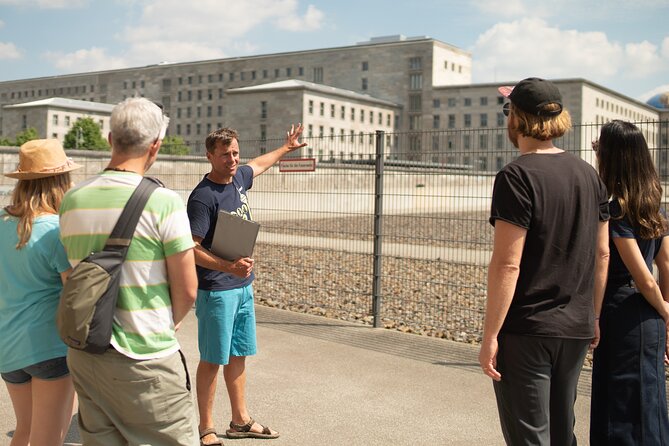
This is built like a walking storyline: short stops, clear context, and enough time at each site to understand what you’re looking at. The tour generally runs about 3 to 4 hours, with most stops clocking in around 10 to 20 minutes, which is a realistic tempo for memorials and outdoor locations in Berlin.
Because it’s private, you’re not stuck listening to a single monologue while someone else’s interests win the day. Several reviews highlight guides tailoring the walk, including Emma (who adjusted pace and focus) and Daniel (who quickly mapped the day to what the group wanted). If you’re the type who likes to ask questions, this format is a big win.
One practical note: expect a solid walk. One review specifically mentioned around 10,000 steps, so wear shoes you’d trust for a long day, not just “nice sightseeing sneakers.”
You can also read our reviews of more walking tours in Berlin


Starting in Tiergarten: Soviet Memorial and the Battle of Berlin context
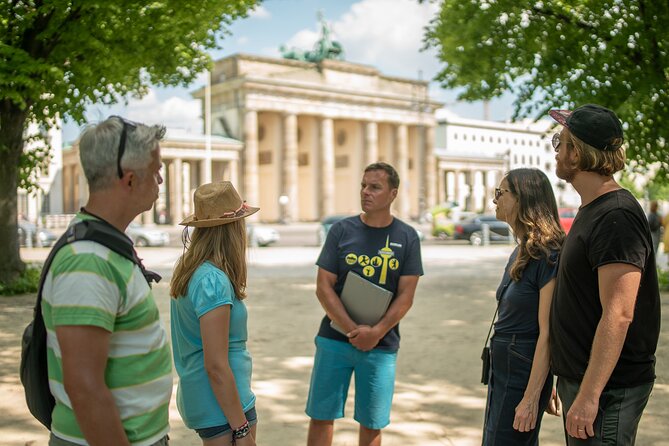
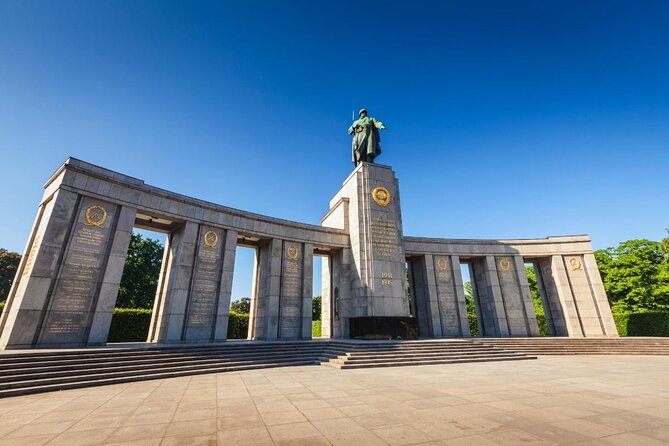
You begin at the Soviet Memorial in Tiergarten, inaugurated in 1949. It’s not just a monument; it’s a reminder that Berlin’s story in 1945 is tied to the Soviet Army’s role in defeating Nazi Germany—so your guide can frame the end of the war before looping back to how the regime operated.
What makes this stop stand out is the architecture: the memorial features a large figure of a soldier with a sword and shield, built to communicate victory and sacrifice. If you’ve only read about WWII from one angle, this is a useful correction—and it sets up later stops like Moltkebrücke and the final-days atmosphere around the Führerbunker.
A small consideration: since it’s a memorial setting, you’ll want a slower headspace here. Even if the day is “guided,” you’ll still feel the silence and weight of the place.
Wilhelmstraße stops: where Nazi decision-making happened
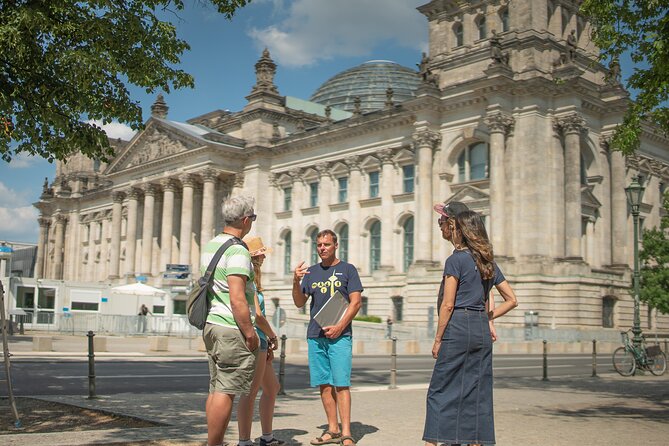
Next you shift into Wilhelmstraße, the corridor that functioned like a nerve center for Nazi administration. Your guide points out the way government buildings concentrated power in one area, and how that structure supported war planning and repression.
Two stops do a lot of heavy lifting here:
- Detlev-Rohwedder-Haus / Aviation Ministry site: This building began in the 1930s connected to Reichsbank headquarters, then later became the Ministry of Aviation under Hermann Göring. Your guide ties the building to the regime’s economic and political machinery—then connects the postwar transformation into today’s German Federal Treasury.
- The broader Wilhelmstraße walk: you’ll get the “how it worked” overview—ministries and offices along the street, plus the atmosphere of parades and propaganda that helped lock Nazi control in place.
I like this segment because it’s concrete. You can literally look at a structure and understand why paperwork, leadership decisions, and bureaucracy mattered as much as weapons.
Topography of Terror and the German Resistance Memorial Center
This is where the day pivots from power to harm—and from victimhood to moral resistance.
At Topography of Terror, you visit the outdoor grounds and the exhibition tied to the former SS and Gestapo headquarters. Expect photographs, documents, and testimonies that explain how the Nazi regime rose and then used political repression and terror against dissenters. It’s intense, but it also helps you connect the dots between ideology and lived experience.
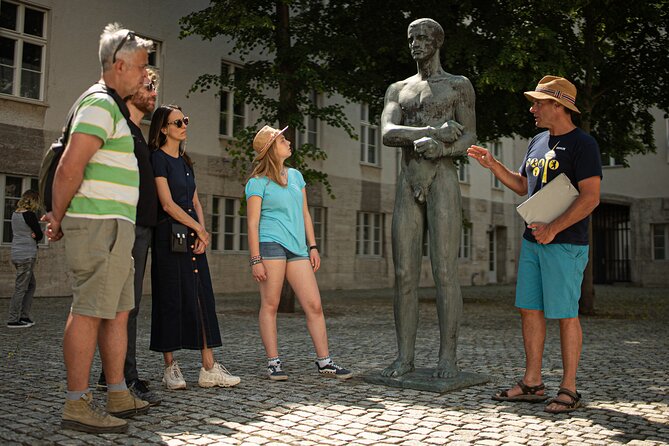
Then you continue to the German Resistance Memorial Center at the Bendlerblock. Instead of focusing only on state violence, this stop highlights resistance movements, including key figures such as Claus von Stauffenberg and the July 20, 1944 assassination attempt on Hitler. The memorial is designed as a space to think about human rights and the cost of speaking up under tyranny.
A useful way to handle these back-to-back stops: let your guide’s pacing work for you. One review praised Simon for explaining sites clearly and also for giving suggestions for revisiting certain memorials more deeply the next day. If your guide offers follow-up ideas, take them—especially after Topography of Terror, where your brain may need time to absorb everything.
Bebelplatz book burning and the Reichstag’s Nazi-era role
Next comes Bebelplatz, known for the book burning on May 10, 1933, when Nazi authorities destroyed thousands of works labeled un-German. This isn’t just a grim detail; your guide helps connect censorship to the broader strategy of controlling thought and public life.
The square also includes major surroundings—like the State Opera House and Humboldt University—and a memorial beneath the square with empty bookshelves, designed to symbolize lost literature. It’s one of the stops where Berlin’s layers feel especially tangible: academic prestige above, cultural erasure below.
After that, you visit the Reichstag Building. Your guide focuses on how it was entangled with Nazi events, including the Reichstag Fire in 1933—an episode the Nazis exploited to consolidate power and suppress opposition. You’ll also learn about damage during WWII and the building’s later restoration as a symbol of democracy.
One practical consideration: Reichstag admission is not included, so you may need to account for that separately. Also, plan for the fact that this stop can feel “political” in a different way than the memorial sites—still serious, but more about the state and its public face.
You can also read our reviews of more private tours in Berlin

Holocaust Memorial to the Murdered Jews of Europe and Anhalter Bahnhof
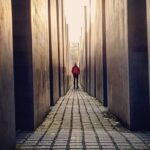
The emotional center of this route is the Memorial to the Murdered Jews of Europe. Officially titled the Memorial to the Murdered Jews of Europe, it uses 2,711 concrete slabs in a grid, forming a disorienting space meant to reflect the scale and complexity of memory. Your guide should explain the design choices and the historical context of the Holocaust, including how Nazi policies impacted European Jewry.
I like that the experience asks you to slow down. When a memorial forces you to move through space differently, you’re less likely to treat it like a quick photo stop.
Then you walk to Anhalter Bahnhof, a major former railway terminal. The story here is about movement and separation: your guide explains how the station played a role in deportations and how it served as a departure point for Jews sent to concentration camps. Today, memorials and exhibits commemorate the victims and give context to the experiences of people who passed through the station’s gates.
If your group includes kids or teens, this is also a stop where a good guide can help make sense of what you’re seeing without simplifying it. Multiple reviews mention guides teaching in ways that worked for younger visitors and kept the day engaging.
T4 euthanasia memorial, Führerbunker, and what Berlin’s final months looked like
This portion takes you into darker specifics and then into the regime’s last refuge.
First, you visit the T4 Memorial for the Victims of the Nazi Euthanasia Program at Tiergartenstraße 4. Your guide explains that the T4 program targeted people labeled “unworthy of life,” including individuals with disabilities and those with mental illnesses. You’ll see displays and learn the history and impact—plus the ethical questions that still haunt the subject today.
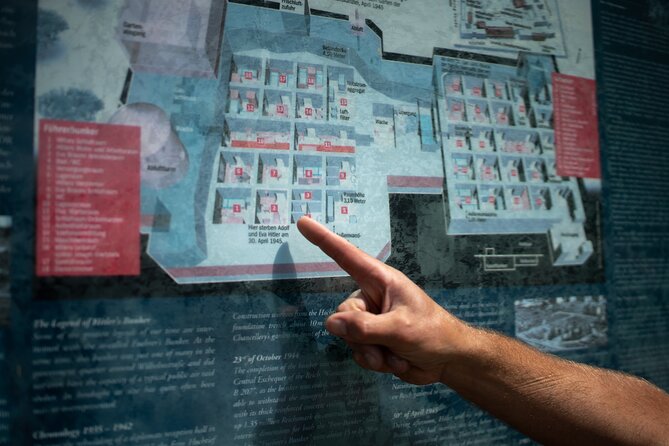
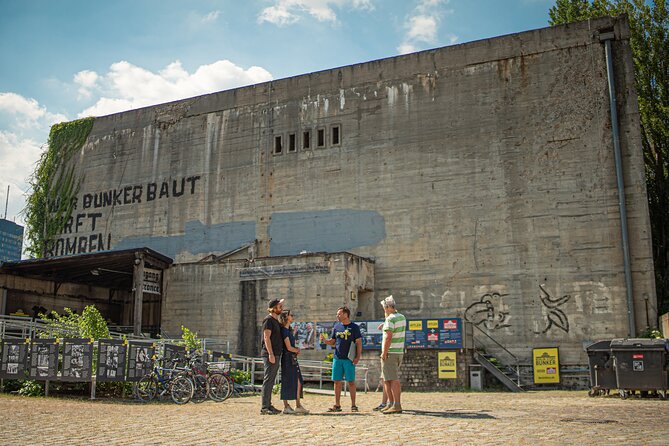
Then you stand above the Führerbunker (Hitler Bunker). This underground complex beneath the Reich Chancellery served as Adolf Hitler’s last refuge during the last months of WWII. Your guide outlines the bunker’s layout and what happened there as the Allies closed in, with an emphasis on the atmosphere of despair and the final decisions made by Nazi leadership.
These two stops can feel almost like they’re asking different kinds of questions. T4 forces you to face state-sanctioned murder disguised as policy. The Führerbunker forces you to confront the end of a criminal system from inside its final mind-set.
A practical tip: dress for cold and slow movement. Reviews mention guides keeping the pace workable even on nasty weather days, but the content doesn’t speed up just because your toes feel frozen.
Moltkebrücke and the Soviet crossing at WWII’s turning point
The day culminates (or near-culminates) with Moltkebrücke, the bridge connected to one of Berlin’s final operational moments. Your guide explains that in April 1945, Soviet forces crossed the bridge during their assault on Berlin, creating a pivotal route into the city. You’ll hear about fierce fighting nearby and what that advance meant for Berlin’s future.
This stop works well as a “spine” for everything you’ve heard earlier. It’s not only remembrance; it’s geography tied to military movement. You can see the bridge, but you’re also thinking about the speed of collapse and the way front lines rewrite a city in weeks.
The benefit here is closure. You end with a clearer sense of how the war changed Berlin quickly—then your guide has enough context to link back to earlier themes like propaganda, bureaucracy, and repression.
Who this private Third Reich tour is for
This is a strong fit if you want a guide to connect the dots between power, persecution, and aftermath in one focused walk. It’s also ideal if you dislike the “random order” problem of self-guided touring. A private guide keeps the sequence meaningful: Soviet memory first, Nazi administration and terror next, resistance and censorship alongside Holocaust remembrance, then the final days.
You’ll likely enjoy it most if you:
- want a structured route through central Berlin’s WWII-era sites
- value a pace you can adjust by asking questions
- prefer context over quick photo stops
It can be less ideal if your group needs a light, casual sightseeing day. This tour isn’t built to distract you from heavy themes.
Should you book this Berlin Third Reich and WWII walking tour?
Yes, if you’re ready for a guided, story-driven walk through the places where Nazi power operated and where Berlin remembers the victims and the resistance. The value is strongest when you add up the practical extras—hotel pickup and drop-off, a professional guide, and free entry at many stops—plus the fact that it’s private, so you get a real exchange rather than a crowded shuffle.
Book it with a simple plan: wear warm layers, bring patience for memorial spaces, and give yourself time to absorb what you see. If you want to get more out of it, ask your guide for tips on where to return for a second look afterward. Guides like Emma, Simon, and Daniel have been praised for exactly that kind of thoughtful pacing and follow-through.