Berlin’s history walks beside you. This 3-hour route is built to help you connect the dots between the Nazi era and the Cold War, with stops that explain what happened where you’re standing—Palace of Tears, Checkpoint Charlie, Wall remnants, and the Holocaust Memorial. You finish at the Brandenburg Gate area, so the story lands right in the center of modern Berlin’s identity.
I especially love how the guide turns big, scary events into clear, human-scale explanations without turning the walk into a lecture. I also like the mix of well-known icons (Brandenburg Gate, Checkpoint Charlie, Memorial to the Murdered Jews of Europe) with quick “look closer” moments like the Book Burning Memorial at Bebelplatz and the Topography of Terror Wall trace.
The main drawback is that it’s a long walk with lots of information, and a few sections can feel rushed if your group wants extra photo time. Wear good shoes, keep an eye on the guide, and expect short stops rather than long sightseeing breaks.
In This Review
- Key things I’d bank on
- How This 3-Hour Route Gets You Oriented Fast
- Meeting Point, Group Size, and the Real Walk Distance
- Friedrichstraße to Palace of Tears: From Commuters to Escape Routes
- Neue Wache and Humboldt University: War Memorial Meets Thinking City
- Museum Exteriors and Grand Buildings: Sightseeing Without Ticket Headaches
- Stadtschloss Berlin (Humboldt Forum) and Bebelplatz: Modern Berlin Meets Brutal Memory
- Staatsoper, Konzerthaus, and Gendarmenmarkt: A Break in Tone (With Meaning)
- Checkpoint Charlie to Topography of Terror: The Cold War You Can Point To
- Hitler’s Bunker Area and the Holocaust Memorial: Where the Tour Turns Serious
- Brandenburg Gate and Pariser Platz: Ending With Peace, Not Just Pictures
- Price and Value: What $24.07 Really Buys You
- Who Should Book This Walk, and Who Might Want Something Else
- Should You Book This Berlin Iconics and Cold War Sights Tour?
- FAQ
- How long is the walking tour?
- What’s the meeting and ending area?
- Is the tour in English?
- What’s the price per person?
- Are museum tickets included?
- How big is the group?
- Do I need to arrive early?
- Can I cancel for a full refund?
- Are service animals allowed?
Key things I’d bank on
- A guided story from Nazi Germany to the Berlin Wall in about three hours, with the right stops at the right time
- Cold War checkpoints made understandable, including Palace of Tears (Traenenpalast) and Checkpoint Charlie
- Serious memorials with context, especially the Memorial to the Murdered Jews of Europe and the Fuhrerbunker site
- Iconic architecture and squares without needing museum tickets, from Humboldt University to Gendarmenmarkt
- A finish at Brandenburg Gate / Pariser Platz that helps you orient your whole trip afterward
How This 3-Hour Route Gets You Oriented Fast
If you’re new to Berlin, this is the kind of tour that helps you start with clarity, not just postcards. Berlin can feel like a city of layers—Prussian-era buildings next to Cold War scars next to modern glass. This walk gives you a timeline you can hold onto, so later, when you see the same buildings on your own, you’ll know why they mattered.
The pacing is designed for walking and listening. You move from stop to stop with short explanations, then you’re allowed to look and take photos. The best part is that the guide doesn’t just name places; they explain the “what was this used for” angle, which makes the city feel less random.
You can also read our reviews of more tours and experiences in Berlin.


Meeting Point, Group Size, and the Real Walk Distance
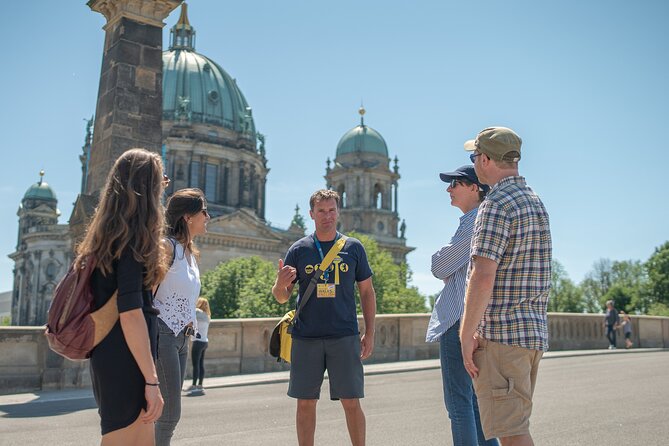
You meet with your local English-speaking expert guide near the central rail area (the instructions provided point you to Friedrichstraße / the Reichstag area), and you end near Brandenburg Gate and Pariser Platz. Either way, the practical tip is the same: arrive early enough to find the group and settle in. One of the most common tour frustrations is not meeting up fast.
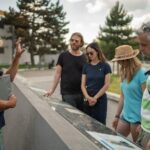
Group size is capped at 25, which usually keeps the experience feeling personal enough for questions. Still, Berlin has crowds in the core sights, and everyone wants a photo at the same moments—especially at Checkpoint Charlie and the Brandenburg Gate area. I’d plan to keep moving when the group moves, and if you need a longer photo moment, it helps to ask in a quick, friendly way before the crowd pressure builds.
In the reviews, I saw a clear theme: it’s about right for most people, but you should assume you’ll be on your feet. One reviewer even called out that it works out to around a few miles total—so skip blister experiments and bring comfortable footwear.
Friedrichstraße to Palace of Tears: From Commuters to Escape Routes
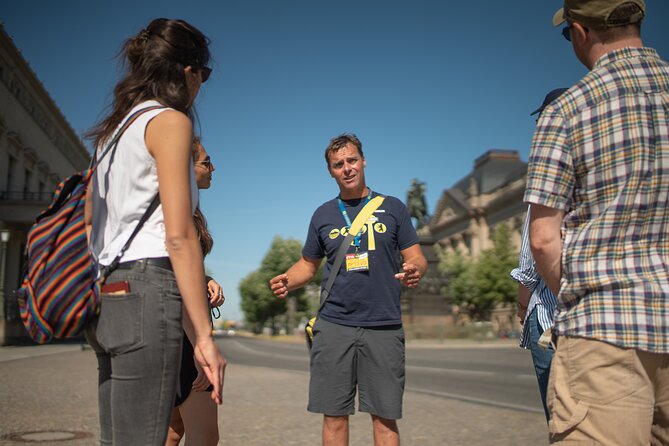
The tour opens near Berlin Friedrichstraße station, a smart starting point because Friedrichstraße sits in the middle of where Berlin’s movement and control systems intersected. You’re not just hearing history; you’re watching the city’s layout make sense.
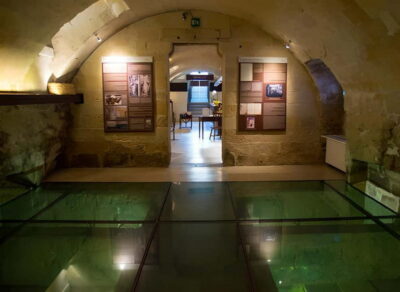
Then you hit Palace of Tears, also called Traenenpalast. This is one of those places where the Cold War stops being abstract. The guide frames it as an international checkpoint experience—an emotional counterpoint to the formal language of borders. Even if you’ve read about Berlin’s division before, this stop helps you understand what separation meant in everyday reality.
Neue Wache and Humboldt University: War Memorial Meets Thinking City
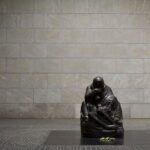
Next comes Neue Wache, a national memorial site reflecting on war and tyranny. The value here is the way it changes your tone. You go from checkpoints and divisions into a place meant for reflection. If you’re the type of traveler who gets restless at memorials, you’ll still benefit here because the guide supplies the framing that makes the space readable.
After that, you walk to Humboldt University, tied to Marx, Engels, and Einstein. This stop is quick but useful. It’s a reminder that Berlin wasn’t only a stage for dictators and borders. It was also a place where major ideas formed—and that matters when you think about how ideologies spread.
Museum Exteriors and Grand Buildings: Sightseeing Without Ticket Headaches
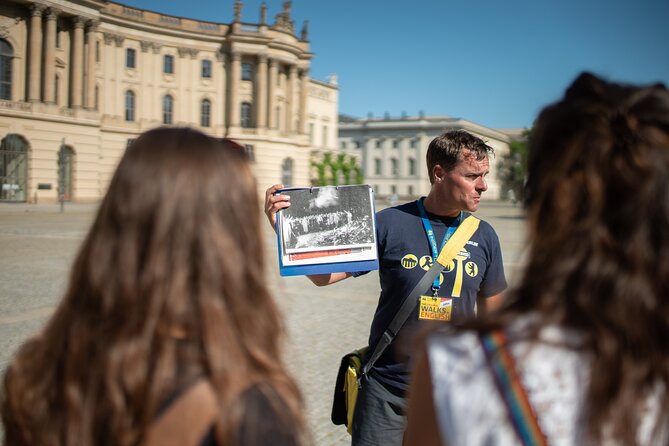
A big part of the tour’s value is that you see major museum and landmark exteriors without getting stuck buying multiple tickets on the spot.
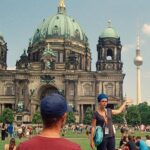
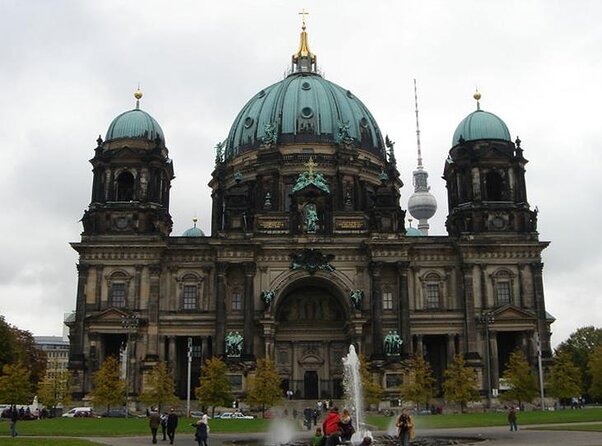
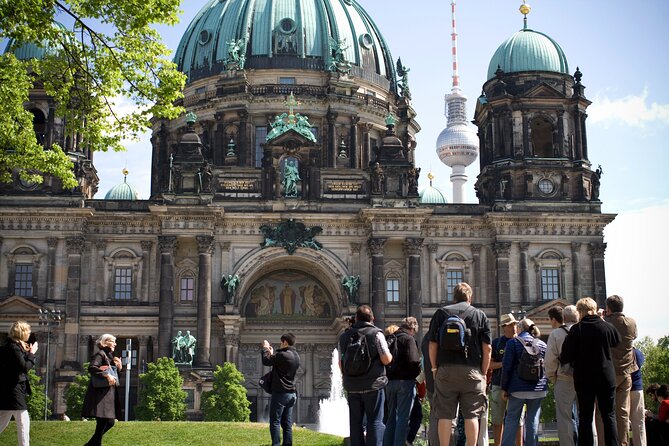
At Berliner Dom, you’ll get oriented around the biggest church in Berlin, plus the broader area around Lustgarten, City Palace (Stadt Schloss), and the Humboldt Forum. Then you pass by the museum cluster shaped by the architecture around Museum Island: Pergamonmuseum, Neues Museum, and Altes Museum. The tour doesn’t include admission for these museums, so you’re mostly getting context and a sense of what you’ll want to return for.
If you’re planning a museum day later, this tour is a good primer. You’ll remember the names and styles, and you’ll know which collections match your interests—Islamic art and the famous gates at Pergamonmuseum, or ancient Egyptian highlights at Neues Museum, for example.





Stadtschloss Berlin (Humboldt Forum) and Bebelplatz: Modern Berlin Meets Brutal Memory
At Stadtschloss Berlin, you see the rebuilt feel of the Humboldt Forum and the reconstructed Hohenzollern palace concept. It’s a controversial-but-important kind of site in Berlin: a reminder that the past is never just “over.” It’s curated, rebuilt, argued about, and used.
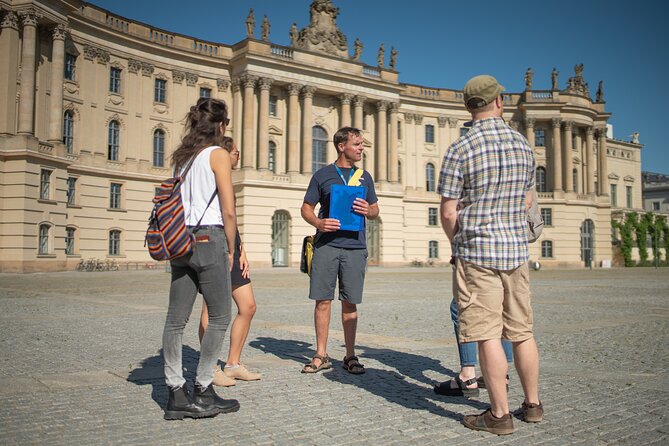
Then you reach Bebelplatz, an 18th-century square that looks beautiful at first glance. The key is that the guide flips the mood with the Book Burning Memorial there. Standing on that specific spot changes how you look at public spaces: a lovely square becomes a witness to Nazi-era censorship in 1933. It’s one of the more memorable moments on the route because it’s both concrete and chilling.
Staatsoper, Konzerthaus, and Gendarmenmarkt: A Break in Tone (With Meaning)
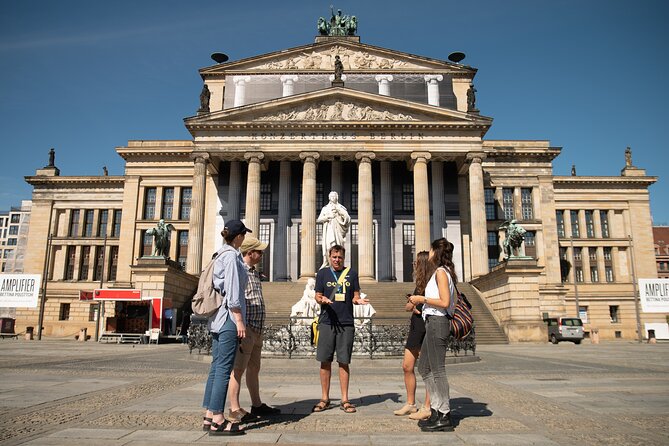
Between the darkest stops, Berlin also shows off its cultural stage. You walk past the Staatsoper and the Konzerthaus, both tied to the work and ambition of earlier centuries. These sections are short, but they help you breathe—then your brain is ready again for the Cold War material later.
At Gendarmenmarkt, the guide explains the area’s roots in religious tolerance, with the French and German cathedrals framing the square. Even if you’re not a classical music fan, this stop gives you a sense of how Berlin tried to build public order and shared space in earlier eras.
Checkpoint Charlie to Topography of Terror: The Cold War You Can Point To
Checkpoint Charlie is the stop most people recognize, but here’s the trick: the guide helps you see it as more than a tourist photo spot. You learn how it functioned as a crossing point between East and West Berlin, and you understand why it mattered so much during tension between the superpowers.
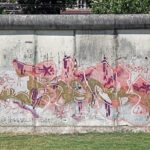
After that, you visit Topography of Terror, with a 200-meter piece of the Berlin Wall to look at. This is where the tour does a great job making the Wall feel physical. You’re not just hearing dates; you can point to a section and picture the restrictions, the patrol reality, and the risk people faced.
Hitler’s Bunker Area and the Holocaust Memorial: Where the Tour Turns Serious
This is the heavy section, and the guide handles it with care. You stand at the Fuhrerbunker site area—described as where Hitler spent the last days of WWII. It’s a strange feeling to stand above a place associated with so much destruction, but that’s exactly why it belongs on a tour like this: Berlin’s history isn’t neat, and the map includes the worst parts.
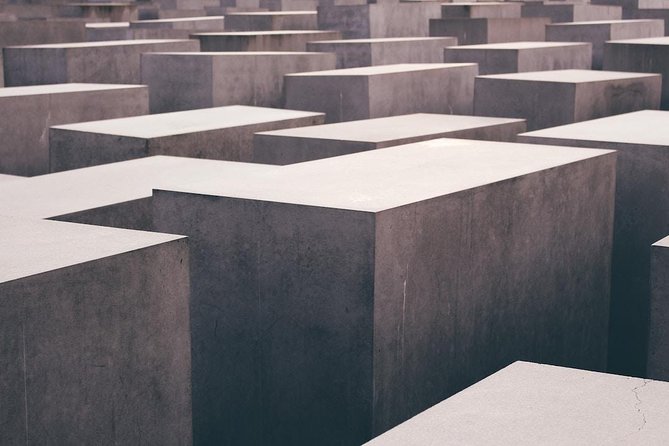
Then you walk through the Memorial to the Murdered Jews of Europe. The design forces stillness. You don’t “pass through” it so much as move slowly while absorbing what it represents. A strong guide makes a difference here. In the reviews I saw, guides like Grayson were singled out for the way they explained the Holocaust with emotional honesty, not sensationalism.
My practical advice: don’t rush this segment. If you rush, you miss what it’s trying to do.
Brandenburg Gate and Pariser Platz: Ending With Peace, Not Just Pictures
The tour ends with Brandenburg Gate, one of Berlin’s most important monuments. The guide frames it as a Cold War symbol of division that has since become a national symbol of peace and unity. That’s not just a slogan—standing there, you can feel how Berlin reframed itself after the Wall era.
From there, you finish around Pariser Platz, where you get views of major embassies and the Hotel Adlon area. This final stretch is helpful because it ties the story to today’s geography. You leave with a mental map you can use when you’re hungry for more—whether that means seeing the Reichstag area again, exploring museums you skipped, or simply walking the streets with better questions.
Price and Value: What $24.07 Really Buys You
At about $24.07 per person for a 3-hour guided walk, the value is mostly about time and context. You could spend days in Berlin and still feel like you don’t understand the relationship between Nazi rule, wartime destruction, and the Cold War division—but this route compresses that “big picture” into a walk you can actually finish in one afternoon.
Also, the tour includes a local English-speaking expert guide and uses a mobile ticket, so you’re paying for guidance and interpretation, not just transportation. With the kind of stops on the route—Palace of Tears, Checkpoint Charlie, Berlin Wall remnants, the Holocaust Memorial—having someone connect the dots while you’re there matters a lot.
If you’re deciding between doing this and piecing together history from apps, I’d pick the guided version. Berlin’s places reward a story, and the guide’s explanations turn landmarks into meaning.
Who Should Book This Walk, and Who Might Want Something Else
Book it if:
- You want a fast, structured intro to Berlin’s WWII and Cold War story
- You like hearing context while standing in front of the actual sites
- You plan to do more exploring after the tour and want a mental map first
Consider a different option if:
- You hate walking and want fewer stops
- You’re very photo-focused and need long pauses at each landmark
- You get overwhelmed by heavy topics and prefer to go at a slower pace with fewer memorial sites
One more practical note from the reviews: the guides often welcome questions. Names like Joseph, Klaus, Hannah, Simon, Tina, Jimmy, Giles, and Ru came up positively, with people praising clear English and the ability to ask things. If you want to learn actively, this kind of tour rewards that habit.
Should You Book This Berlin Iconics and Cold War Sights Tour?
Yes—if you want the most efficient way to understand Berlin beyond the obvious postcards. This is a strong first-day or first-2-days move because it gives you context for almost everything you’ll see later: why borders existed, what people risked, how the city remembers, and how it rebuilt.
My “smart booking” tip: book sooner rather than later. It’s been booked well in advance on average, which usually means popular tour days can fill up.
And if you do book: come ready to walk, come ready to listen, and give yourself permission to slow down at the memorials. That’s where the tour becomes more than sightseeing.
FAQ
How long is the walking tour?
It runs for about 3 hours.
What’s the meeting and ending area?
You start at a central meeting point near Reichstagufer 17, 10117 Berlin and your tour ends at Brandenburg Gate on Pariser Platz, 10117 Berlin.
Is the tour in English?
Yes, the tour is offered in English.
What’s the price per person?
The price is listed as $24.07 per person.
Are museum tickets included?
Some stops note admission is not included, such as Berliner Dom, Pergamonmuseum, Neues Museum, Altes Museum, and the Aviation Ministry area. Other stops list admission as free.
How big is the group?
The tour has a maximum of 25 travelers.
Do I need to arrive early?
Yes. The instructions say to be at the meeting point 15 minutes before the tour begins.
Can I cancel for a full refund?
You can cancel for a full refund if you cancel at least 24 hours in advance of the experience start time.
Are service animals allowed?
Yes, service animals are allowed.