REVIEW · BERLIN
Small Group Walking Tour: “Wild Kreuzberg”
Book on GetYourGuide →Operated by BBT-Sightseeing & More · Bookable on GetYourGuide
Kreuzberg has layers, and this walk shows them fast. You start at Kottbusser Tor, where everyday crowds and night-life energy collide right in the middle of the city’s U1 overground rails.
I love how the tour keeps you moving through real street scenes instead of just reading plaques, and you end up seeing the neighborhood’s mix up close.
One of my favorite parts is the stop-and-explain pace around the Museum of Objects and Mariannenplatz, where mass production meets Berlin’s DIY creativity at Bethanien. You get to connect what you’re seeing with why it mattered.
A possible drawback: this is an outdoor walk in all weathers, so you’ll want comfortable shoes and to be ready for rain (ponchos are provided).
In This Review
- Key things you’ll notice on Wild Kreuzberg
- From Kottbusser Tor: watching Kreuzberg happen in real time
- The early stops: Kreuzberg Museum and Sozialpalast context you can feel
- Oranienstraße (SO36): where the punk past still shows up
- A pause with purpose: Berlin’s Home for the Blind and coffee at Oranienhöfen
- Museum of Objects to Bethanien: mass production meets creative survival
- St. Thomas Church, Fontane-Apotheke, and the power of specific landmarks
- Oberbaumbrücke: the East–West bridge moment on foot
- Görlitzer Park to the finish at Görlitzer Bahnhof
- Walking route logistics: duration, weather, and shoe choice
- Price and value: what $24 buys you in Kreuzberg
- Who this Wild Kreuzberg tour is best for
- Should you book Wild Kreuzberg walking tour?
- FAQ
- How long is the Wild Kreuzberg walking tour?
- What is the price per person?
- Where do we meet for the tour?
- What is the nearest U-Bahn station?
- What language is the guide?
- Is the tour in bad weather?
- Is food included in the ticket price?
- Is there a coffee stop on the tour?
- Who is this tour suitable for?
- Can I get a refund if I need to cancel?
- Is advance payment required?
Key things you’ll notice on Wild Kreuzberg
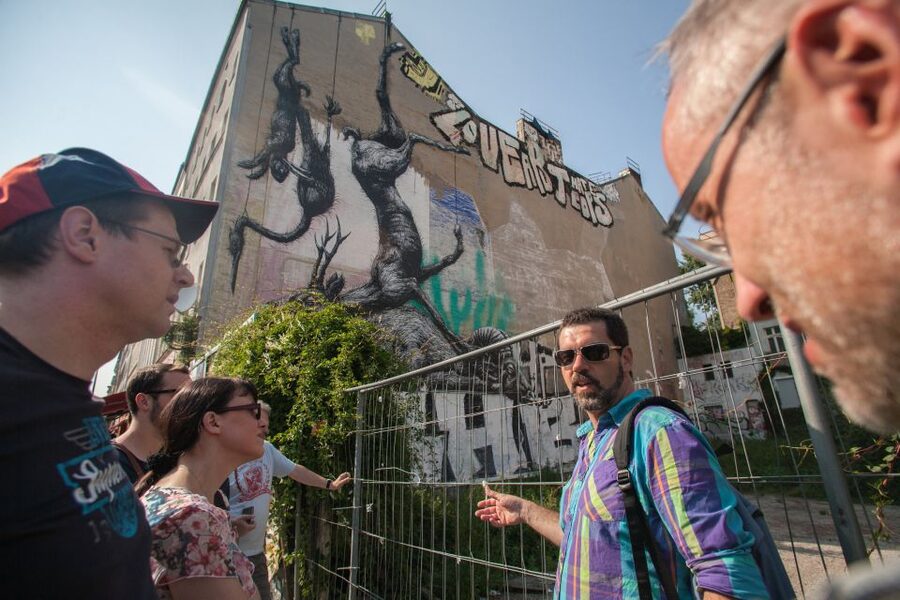
- Kottbusser Tor’s U1 rails cut straight through the vibe of the square
- Oranienstraße/SO36 feels like Berlin’s punk-era afterimage, still alive on the street
- Museum of Objects + Mariannenplatz link everyday industry to visual culture
- Bethanien and Rauchhaus show how a former hospital and an art squat changed roles over time
- Fontane-Apotheke adds a classic, recognizable local landmark to the route
- Görlitzer Park’s station-history turns a stroll into a time-skip
From Kottbusser Tor: watching Kreuzberg happen in real time
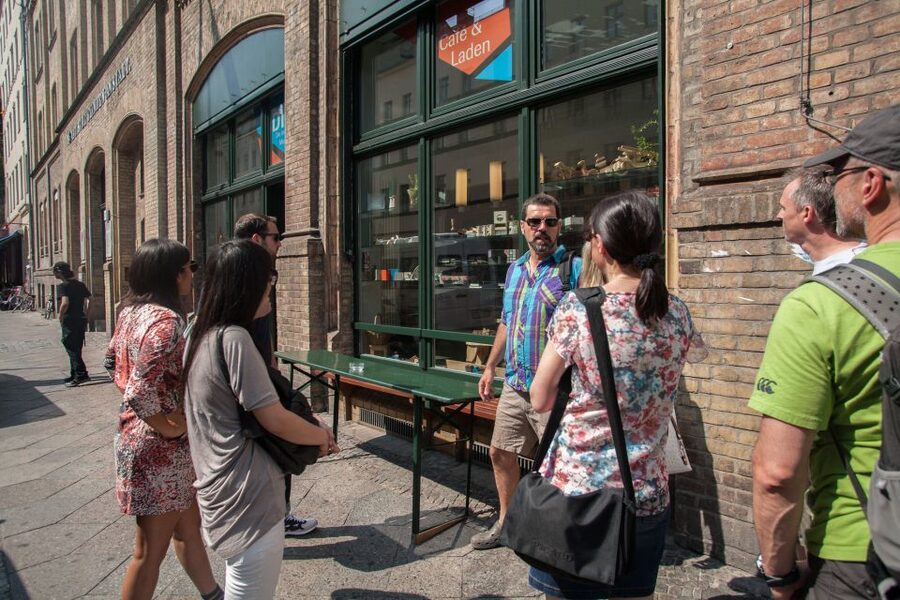
If you want Berlin that feels lived-in, start at Kottbusser Tor. This square is the kind of place where the street does its own theater: you’ll see a Turkish market vibe, Arabic restaurants and bistros, and a constant flow of people moving between chic cafés and alternative clubs and bars. Even the layout tells a story. The U1 overground rails divide the square down the middle, so you don’t just visit Kreuzberg—you watch the neighborhood work as you walk through it.
I like tours that help you read what you’re seeing. This one does that without turning every corner into a lecture. You also get big “where am I?” orientation fast as you move from the square toward imposing older buildings from the early 1900s, plus the Adalbertstraße skyscrapers that stand out against the older fabric around them. It’s a useful contrast: Kreuzberg isn’t stuck in one decade.
You can also read our reviews of more walking tours in Berlin
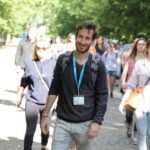
The early stops: Kreuzberg Museum and Sozialpalast context you can feel
As the route moves past major landmarks, you’ll also catch a sense of how Kreuzberg became what it is through the decades. Along the way, you’ll come across the Kreuzberg Museum and the Sozialpalast, which helps the tour avoid the common trap of only showing street aesthetics. Instead, it points you toward what shaped the area socially and politically—without needing you to be a Berlin expert.
This is where you’ll start appreciating the “small group walking tour” format. In a group like this, your guide can slow down when the details matter—what you should notice, and what to ignore. You don’t feel rushed, and you don’t feel lost. If you like tours that give you a framework in under a few hours, this one fits the bill.
Oranienstraße (SO36): where the punk past still shows up
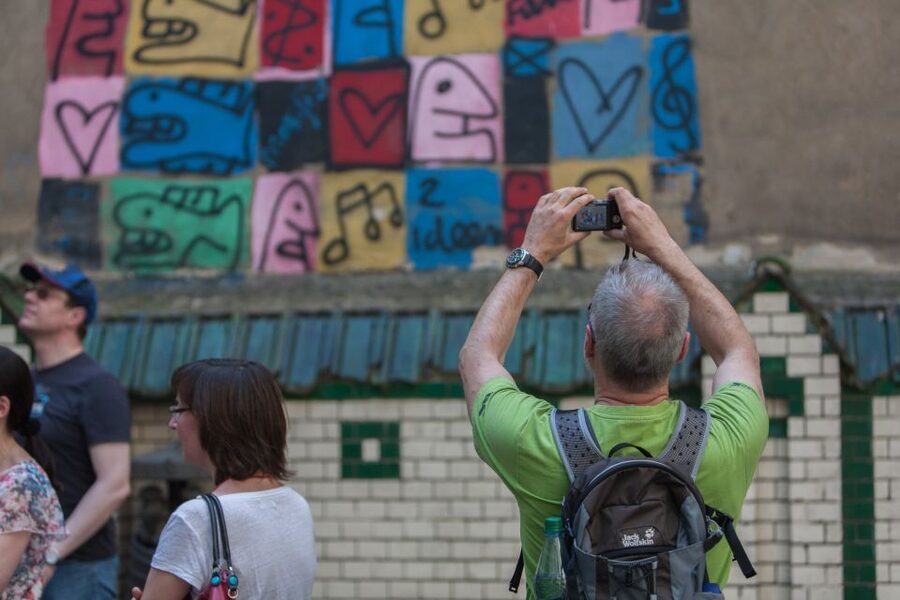
Next comes the heart of the walk: Oranienstraße, long associated with the former SO36 postal district. The tour leans into the “punk district” reputation in a way that feels practical. You’re not asked to romanticize it; you’re shown how today’s restaurants, bars, shops, and street life carry echoes of that era. That’s a big difference.
You’ll also hit the kind of storefront mix that makes Kreuzberg feel like a neighborhood, not a theme park: Comic shops and boutiques show up alongside places that feel designed for going out tonight. This is the stretch where you’ll probably look up more, not less. When streets stay busy and identities stay mixed, the details are always moving.
A pause with purpose: Berlin’s Home for the Blind and coffee at Oranienhöfen
One of the tour’s best pacing choices is the stop at the Berlin Home for the Blind. It’s a reminder that this neighborhood isn’t only about style and nightlife. It’s also about community institutions—places that serve real needs in real lives.
Then you shift to something wonderfully normal: you relax over coffee at Oranienhöfen. That break matters more than you might think. A 2.5-hour walk can get intense, especially in rain or cold, and a guided tour works best when your brain has a moment to reset. This stop also gives you a human center to the walk. You go from watching the neighborhood’s energy to sitting with it for a minute, and that makes everything after it easier to absorb.
Museum of Objects to Bethanien: mass production meets creative survival
If you only remember one “idea” from this tour, it might be the connection between everyday goods and the story behind them. The Museum of Objects focuses on the history of mass production, which is a surprisingly strong theme for Kreuzberg. It reframes what a city’s streets contain: not just buildings and people, but the whole system that manufactures the objects we live with.
From there, you walk to Mariannenplatz. This square sets you up for the tour’s next standout: Bethanien, an art squat housed in a former hospital. The guide’s storytelling here is exactly the kind of contrast that makes this area so interesting—institutions and functions changing hands over time, with art and community taking on roles that older buildings can still hold.
Right next door is the Rauchhaus, where you’ll see more traces of squatters’ life from days gone by. You’re not just passing by graffiti and odd doors. The tour gives you a way to understand why these spaces became important, and how they shaped the creative reputation Kreuzberg has today.


St. Thomas Church, Fontane-Apotheke, and the power of specific landmarks
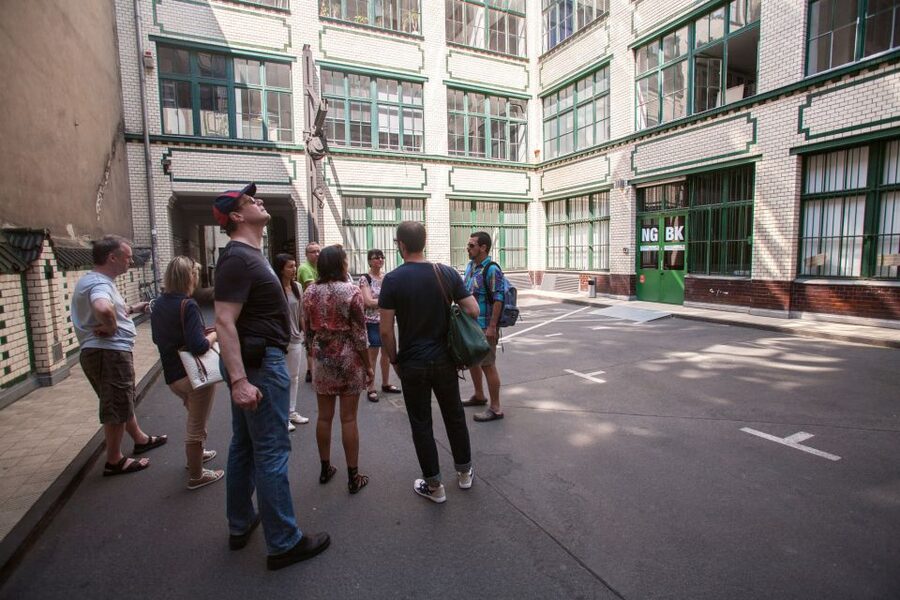
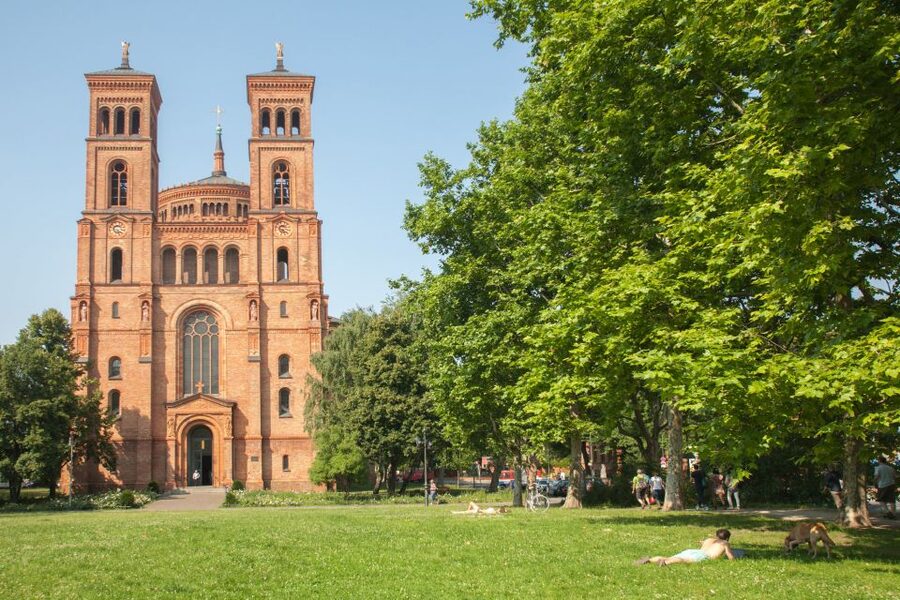
This tour doesn’t treat Kreuzberg like one long block. You get a scatter of landmarks that make the neighborhood feel mapped. St. Thomas Church, Berlin is one of those stops—religious architecture gives you another layer of context while you’re still surrounded by the alternative energy of the streets.
Then comes a very practical, very Berlin kind of landmark: the Fontane-Apotheke. A well-known pharmacy might sound like a random detour, but it works as a “daily life” anchor. When your tour includes at least one place that looks like it belongs to locals’ routines, the neighborhood feels less like a set and more like a place people actually live. It’s a small detail that makes a big difference.
Along the way you’ll also stop at Feuerbrunnen and pass through Wrangelkiez. Even without turning every stop into a museum-style deep dive, these names give your walk structure. You end up walking with a mental map, not just vibes.
Oberbaumbrücke: the East–West bridge moment on foot
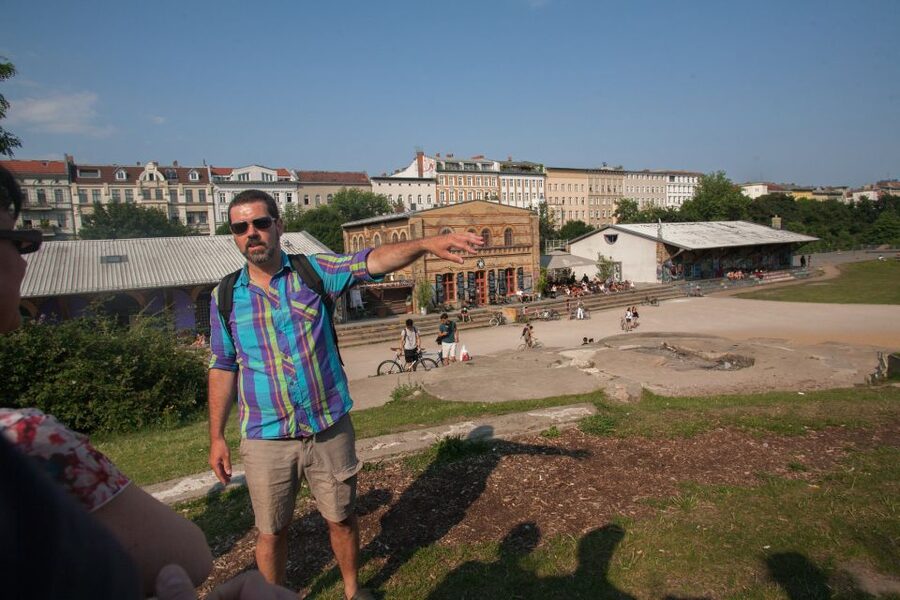
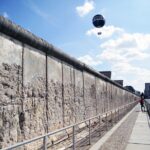
One of the tour’s symbolic beats happens at Oberbaumbrücke, described here as linking East and West Berlin. Walking up to a bridge like this late in a short tour is smart. You’ve already been through a lot of neighborhood texture—market energy, counterculture streets, institutional stops—and then you get a larger-scale reminder: Berlin’s story isn’t only local. It’s also divided, bridged, and reconnected.
This is a good moment to slow down. If you’re the kind of person who likes photos, this is one of your easiest spots. If you’re more interested in atmosphere, it’s still worth taking a breath before moving on.
Görlitzer Park to the finish at Görlitzer Bahnhof
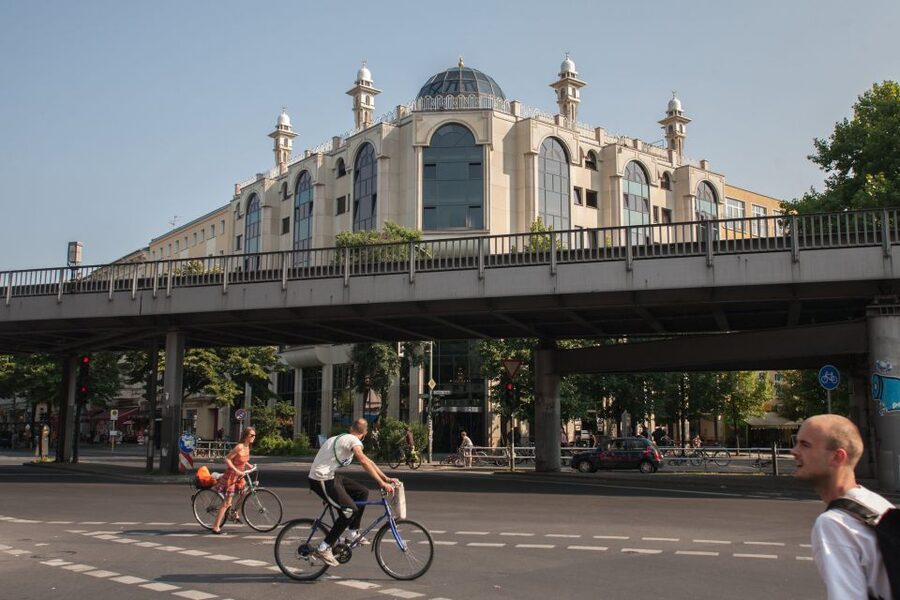
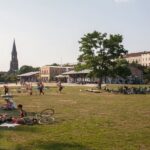
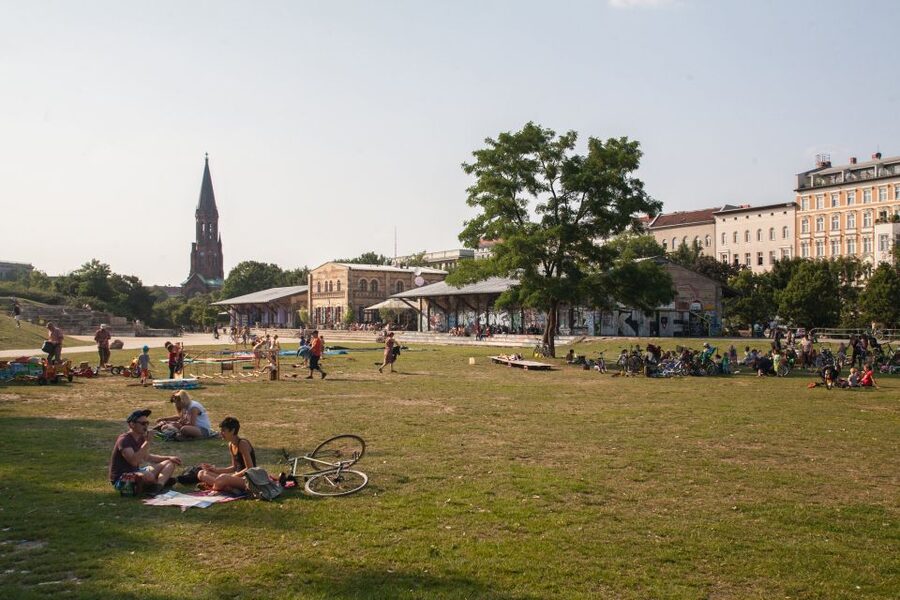
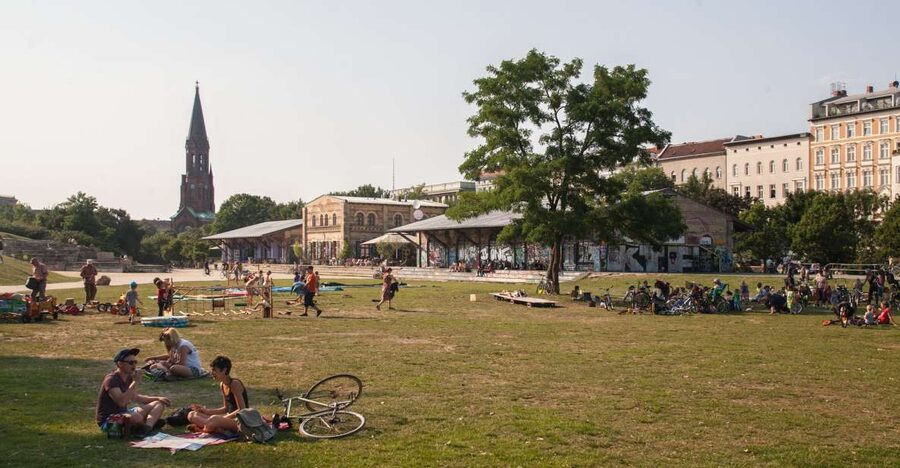
The tour ends with a shift in feeling as you head toward Görlitzer Park. Here you’ll learn that the park was previously a train station. That kind of past-to-present transformation is what Berlin does better than most places. It also fits the tour’s bigger theme: spaces change jobs over time.
From there you continue toward the finish at Görlitzer Bahnhof. Ending at a transport hub is practical. You finish with an easy way to move on, whether you’re heading back to your hotel or continuing the day exploring beyond Kreuzberg.
And if you like your tours to include at least one “big-name area” at the end, you also reach the East Side Gallery zone along the route. Even if you’re not there for art, it’s one more anchor tying this walk back into the wider story of Berlin.
Walking route logistics: duration, weather, and shoe choice
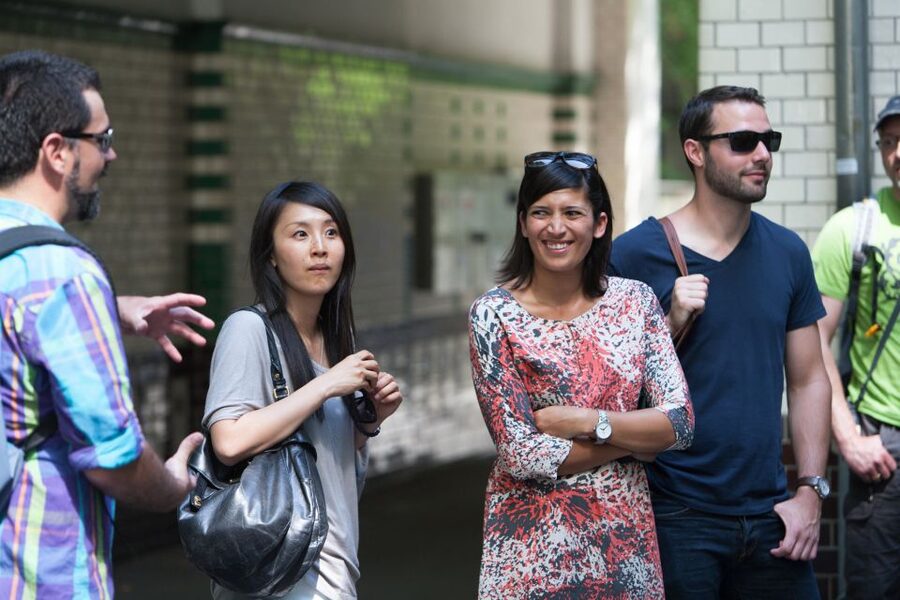
This is a 2.5-hour small group walking tour, so it’s designed for people who want context without spending half a day. The route is in all weathers. That matters in Berlin. A chilly rain can make even a fun walk feel like a chore if you don’t plan for it.
So yes, bring comfortable shoes. And if it’s wet, plan on the rain poncho being part of the experience. In cold snaps, something as simple as having a guide who keeps everyone moving at a steady pace becomes part of the value, not just the scenery.
Price and value: what $24 buys you in Kreuzberg
At $24 per person, this is a bargain if you want guided context for a neighborhood that can otherwise swallow your time without giving you a clear story. The price includes a city guide plus duties and a rain poncho if needed.
Food and drink are not included, so you’ll want to budget a stop of your own if coffee doesn’t satisfy your cravings. But the walk already builds in a coffee break at Oranienhöfen, which is a smart trade. It’s not just “watching,” it’s “walking with recovery time,” so you finish feeling like you learned something and still enjoyed yourself.
Who this Wild Kreuzberg tour is best for
I’d book this if you:
- want a Kreuzberg Berlin small group experience that feels like a guided neighborhood walk, not a bus tour
- like stops with specific identities (museum, pharmacy, church, park) instead of only sweeping views
- want a mix of street life and social-historical context, including mass production and the story around Bethanien and the Rauchhaus
- enjoy walking but don’t want something so long you’re tired before the best part
It’s also a good choice if you’re pairing Kreuzberg with another Berlin day and want a structured way to orient yourself around key locations like Kottbusser Tor, Mariannenplatz, Oberbaumbrücke, and Görlitzer Park.
Should you book Wild Kreuzberg walking tour?
If you’re looking for a short, guided way to understand why Kreuzberg feels the way it does, this walk is a strong bet. The route does a nice job of moving between everyday landmarks and symbolic ones: street-level culture at Kottbusser Tor, the Museum of Objects theme of mass production, and then the East–West storytelling at Oberbaumbrücke.
I’d pass only if you dislike walking outdoors in cold or rain. This tour doesn’t pretend weather won’t happen. As long as you dress for it, the mix of neighborhood texture, guided context, and a sensible 2.5-hour pace makes it a high-value Berlin plan.
FAQ
How long is the Wild Kreuzberg walking tour?
The tour lasts 2.5 hours.
What is the price per person?
It costs $24 per person.
Where do we meet for the tour?
Meet at 137 Skalitzer Straße, in front of Gold Exchange and next to REWE.
What is the nearest U-Bahn station?
Kottbusser Tor (lines U1 and U8) is the nearest station.
What language is the guide?
The live tour guide speaks German.
Is the tour in bad weather?
Yes, it takes place in all weathers. If it’s rainy, a rain poncho is distributed.
Is food included in the ticket price?
No, food and drink are not included.
Is there a coffee stop on the tour?
Yes, you’ll have a chance to relax over a coffee in Oranienhöfen.
Who is this tour suitable for?
It’s a walking tour, so it’s best for people comfortable with walking and visiting multiple stops over 2.5 hours.
Can I get a refund if I need to cancel?
You can cancel up to 24 hours in advance for a full refund. For groups of 3 or more, the cancellation deadline is 3 days before the scheduled tour.
Is advance payment required?
You can reserve now & pay later, meaning you pay nothing today.