REVIEW · BERLIN
Berlin Private Complete History All Day Walking Tour
Book on Viator →Operated by Birchys Berlin Tours · Bookable on Viator
Berlin’s story is written in stone. This private all-day walk strings together major WWII and Cold War sites into one clear route, so the city’s modern layout makes more sense fast. You’ll hit the headline places like the Brandenburg Gate and Checkpoint Charlie, plus darker stops that explain how Berlin changed, broke, and rebuilt.
What I like most is the format: it’s truly private, so your guide can answer your questions on the spot instead of speaking into a crowd. Guides such as Rhys, Eugen, Ciaran, Darren, and Paul are repeatedly praised for being flexible with pace and for keeping the details understandable, not stuck in a lecture.
One heads-up: it’s a long walk (about six hours), and the subject matter gets intense in places (holocaust sites, terror headquarters, and the Fuhrerbunker area). Plan for a steady pace and emotional stamina, and bring your own food/drink since none is included.
In This Review
- Why this private WWII-and-Cold-War walking loop works so well
- A route from Ebertstraße to Alexanderplatz that keeps you moving
- Brandenburg Gate and the Reichstag: symbols before, during, and after the Nazis
- Tiergarten, the Soviet Memorial, and the Victory Column: West Berlin gets its own scars
- Holocaust Memorial to the Fuhrerbunker site: how the tour handles heavy ground
- From the Aviation Ministry to Topography of Terror: Nazi bureaucracy made physical
- Berlin Wall memorial and Checkpoint Charlie: the Cold War you can touch
- Gendarmenmarkt, Bebelplatz, and Humboldt University: Berlin’s smarter side
- Unter den Linden and Museum Island: Neue Wache, Deutsches Historisches Museum, and Humboldt Forum
- St. Mary’s Church and Alexanderplatz: ending with continuity and change
- Value for the price: when this $253.95 private tour pays off
- My practical tips so the day feels good
- Should you book this Berlin history walk?
- FAQ
- What’s the duration of the Berlin Private Complete History all-day walking tour?
- Where does the tour start and where does it end?
- Is transportation included?
- Is the tour private?
- What language is the tour offered in?
- What’s included in the price?
- Are food and drinks included?
- Are admission tickets included for the stops?
- Is there a cancellation option?
Why this private WWII-and-Cold-War walking loop works so well
Berlin can be tough to sort out on your own. The city is full of monuments, plaques, and rebuilt spaces, but you need the timeline to connect the dots. This tour’s big strength is that it follows a logical chain: imperial and pre-Nazi symbols, the Nazi era and its violence, the Soviet footprint, then the Berlin Wall and Cold War theater, and finally reunification-era institutions.
Because it’s private, you get fewer “passenger-on-a-coach” moments and more “talk with a local historian” moments. The route is built for walkability, so you can keep your bearings while you’re learning. In reviews, guides are also described as patient, good with mixed-age groups, and willing to adjust if someone needs a shorter pause. You’re not just collecting photos; you’re learning what each place meant at the time.
A route from Ebertstraße to Alexanderplatz that keeps you moving
The tour starts at Ebertstraße 24, 10117 Berlin and ends at Alexanderplatz (10178). There’s pickup, but it’s on foot with the guide, not by vehicle. That matters: you’ll be walking the whole way, and the pace is set to your group.
Expect lots of short stops rather than one long museum session. The timing at each location is designed for quick context plus time to look, take a picture, and ask follow-ups. Reviews also hint that the day can “fly by” when the guide keeps the conversation active and the pacing calm. Since food and drinks aren’t included, I’d plan to treat breaks like part of the tour rather than hoping you’ll stumble into lunch on time.
You can also read our reviews of more walking tours in Berlin


Brandenburg Gate and the Reichstag: symbols before, during, and after the Nazis
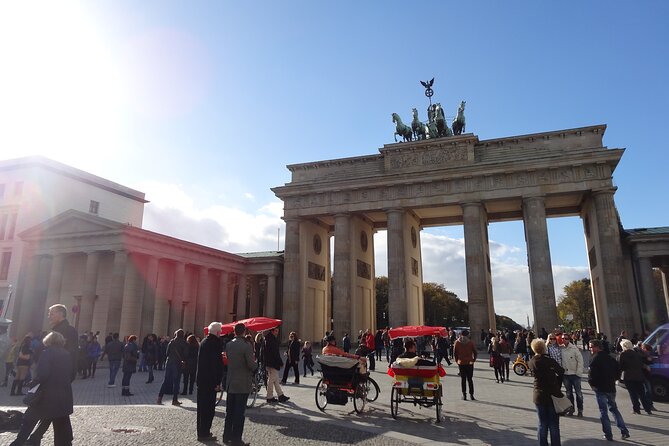
You start at the Brandenburg Gate, one of Europe’s most recognizable gates. What makes this stop click is the way your guide frames it: you’re not just learning who built it—you’re learning why it became a focal point for Berlin’s shifting political identities. The Cold War angle is central here, since divided Berlin turned the gate into something more than architecture.
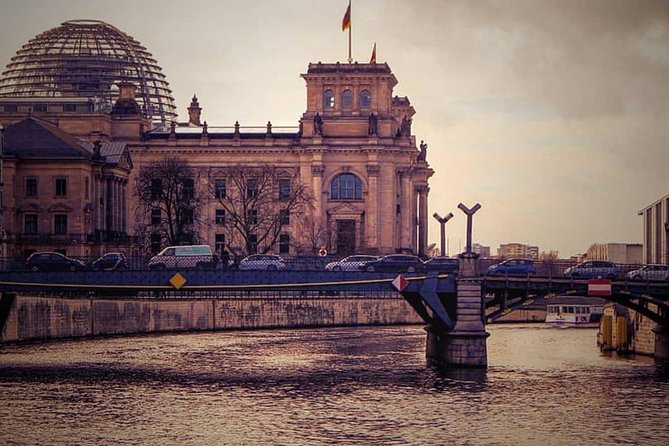
From there you move to the Reichstag Building. You’ll stand in view and get the story behind its rise and its role in the early 1930s period when Nazi dictatorship solidified. Then the tour carries you into the brutal endgame of WWII in Berlin—fighting, damage, and what came after. This is one of those stops where it helps to ask questions in real time, because the building’s modern “headline” status makes it easy to miss the historical weight.
If you care about how power reshapes cities, these two stops do that job quickly. You leave this section knowing why Berlin kept certain landmarks and why others were reinterpreted.
Tiergarten, the Soviet Memorial, and the Victory Column: West Berlin gets its own scars
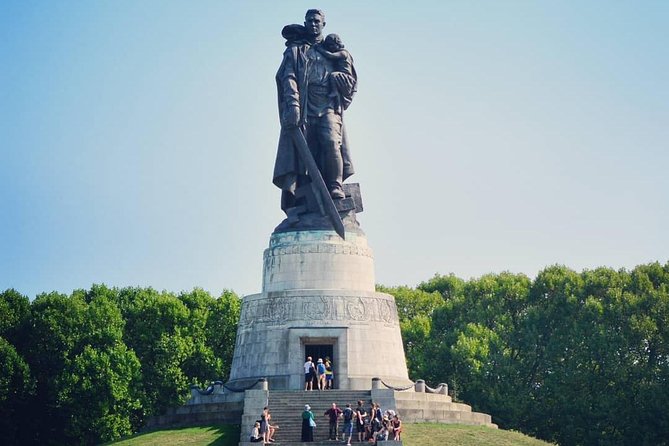
Next comes the Soviet Memorial in Tiergarten, highlighted as the only Soviet memorial located in West Berlin. That alone is a useful fact for understanding Cold War logic: borders didn’t only divide neighborhoods—they influenced what could be remembered, where, and how. Your guide talks about the memorial’s construction and even the unexpected origin of some materials, plus the symbolism and the controversies tied to it.
Then you walk through Tiergarten, Berlin’s largest park, and you get a quick lesson in how parks evolve with the eras around them. It’s easy to think of parks as timeless, but here you learn how major Berlin events affected the park itself.
From a distance, you’ll see the Victory Column. Since you only get a short look, it works best if you treat it like a “visual bookmark.” Your guide explains when and why it was constructed, and even points out where it once used to be located—one of those details that makes you see the city as a living map, not a fixed postcard.
Holocaust Memorial to the Fuhrerbunker site: how the tour handles heavy ground
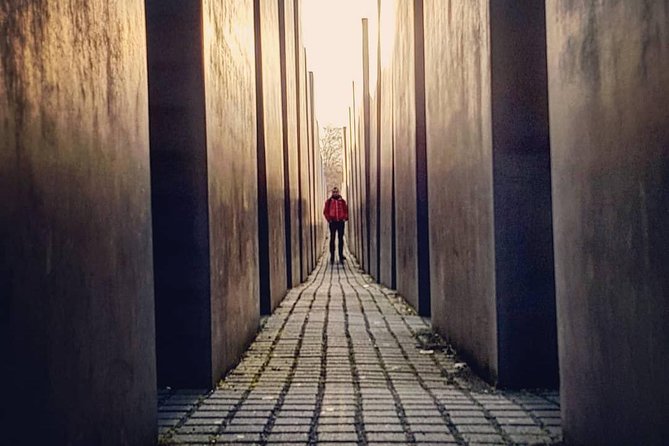
The Memorial to the Murdered Jews of Europe is the kind of place where you don’t need theatrics. It’s simply big, intentional, and impossible to ignore. Your guide’s job here is practical: you’ll get help understanding what the memorial represents and why it was created, so your visit feels grounded instead of vague.
After that, the tour goes to the Fuhrerbunker site—described as the infamous location tied to Hitler’s final days. Even if you’re not looking for shock value, this stop adds the missing piece: how the Nazi regime ended in Berlin, and how the city’s geography became part of the final collapse.
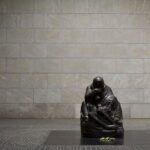
A useful detail on this day is that the tour includes Johann Georg Elser’s sculpture, focusing on the man who came close to changing world history. This gives you a different angle on resistance, one that’s less about armies and more about a single person’s attempt to disrupt a tyrant’s plans.
I’d treat this whole segment as your “slow-down zone.” The history is intense, and short pauses to gather yourself make the rest of the day easier.
From the Aviation Ministry to Topography of Terror: Nazi bureaucracy made physical
After the bunker area, you head to the Aviation Ministry of Berlin, a large building that’s been in continuous use since 1936. That continuity is important. Your guide frames it as a witness to the 20th century’s turbulence—exactly the kind of setting where you can imagine how politics and daily administration overlapped.
Then comes Topography of Terror, where the tour enters the site of the former SS, Gestapo, and SD headquarters. This is one of the most direct “evil with a street address” stops on the route. You’ll learn what happened there during Nazi Berlin and what the site became after the war.
This part of the walk is where I’d focus on questions like: What roles did these organizations play? How did ordinary systems enable extraordinary violence? If you ask that kind of thing, the tour structure helps because each site adds one more layer to the same story.
You can also read our reviews of more private tours in Berlin


Berlin Wall memorial and Checkpoint Charlie: the Cold War you can touch
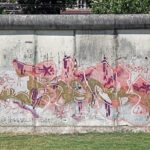
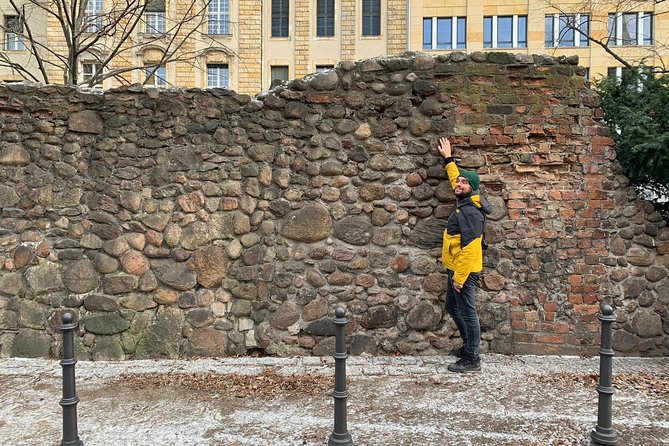
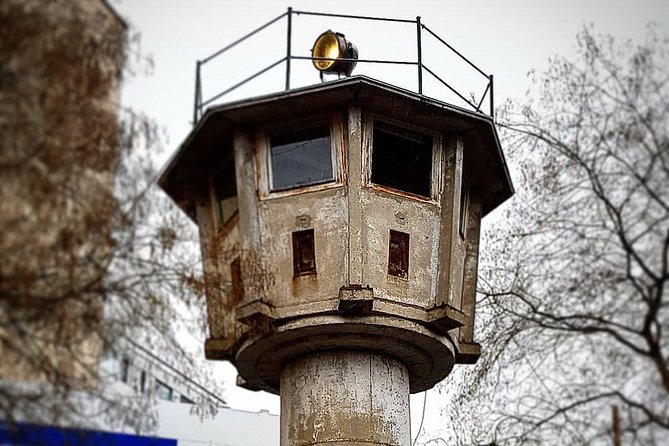
The Memorial of the Berlin Wall gives you a real section of wall and the story behind its construction—when, how, and what it meant day to day. Your guide also shares accounts of escapes and tragic deaths linked to the wall. Because the tour spends about 15 minutes here, it’s a strong “context plus conscience” stop rather than a long research session.
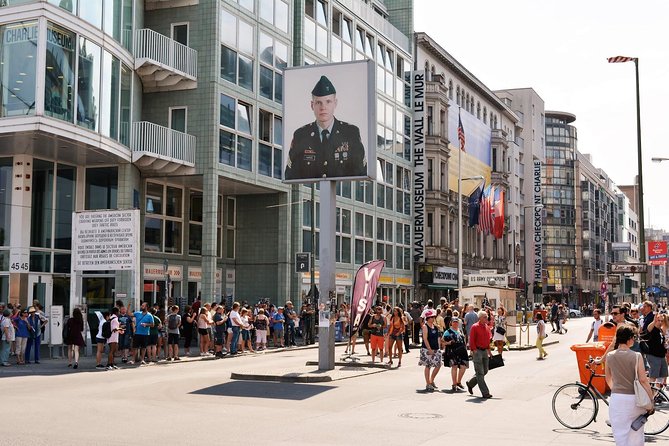
Then you arrive at Checkpoint Charlie, the most famous checkpoint in Berlin and an iconic Cold War location. Even if you’ve seen it in photos, the value comes from the guide’s explanation of why the crossing mattered and how the Cold War played out in visible, human ways.
Right after, the route strolls along Friedrichstraße, once known as Cabaret Mile. That change of pace is useful. You’re reminded that even under political pressure, people still lived, entertained, and tried to be human.
Gendarmenmarkt, Bebelplatz, and Humboldt University: Berlin’s smarter side
After the heavy Cold War stops, the tour shifts toward cultural and educational landmarks.
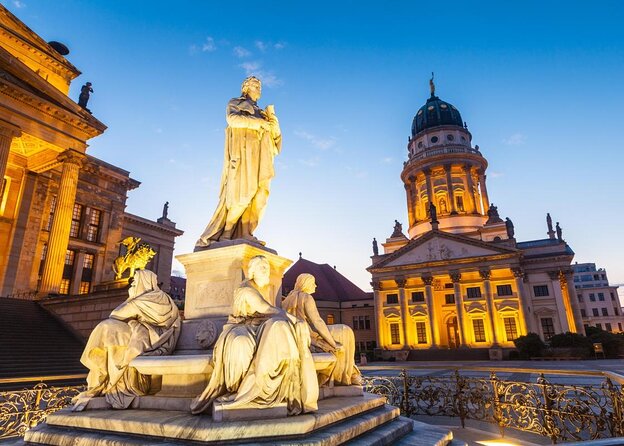
You’ll visit Gendarmenmarkt, described as one of Berlin’s most beautiful squares. Your guide covers its origins and how it developed into an architectural highlight. This stop works well if you’re the type who likes to see how Berlin’s power and pride were built through design.
Next is Bebelplatz, surrounded by 18th-century buildings. You’ll hear about the area’s major landmarks—St. Hedwig’s Cathedral, Humboldt University’s law faculty, and the City Opera House. The place also connects to the Nazi book burnings, with a memorial in the square that’s meant to make you think.
At Humboldt University (Humboldt-Universität), you’ll get quick context on the university and on who the Humboldts were. It’s a neat contrast to the earlier stops: the same city that enabled propaganda also became a place for study, debate, and education.
Unter den Linden and Museum Island: Neue Wache, Deutsches Historisches Museum, and Humboldt Forum
This section is where Berlin’s timeline stretches even further. You go to Neue Wache, which you can enter. Your guide frames it as a political “weathervane,” then shows the building’s current form as a moving memorial. Even with limited time, the emphasis on how meaning shifts over the years is what makes it memorable.
Then you’ll stop outside Deutsches Historisches Museum on Unter den Linden, described as the oldest surviving building on that avenue. From there, you reach Museum Island, a UNESCO World Heritage area. You’ll get an overview of how the island developed, including the museums, cathedral, and architects involved.
Finally, you visit Humboldt Forum, where you’ll learn its complicated history. This is another “Berlin as an argument” stop: not everything is settled. Not everything agrees. But the city keeps the debate visible.
St. Mary’s Church and Alexanderplatz: ending with continuity and change
To wrap up, you visit St. Mary’s Church (St. Marienkirche). The tour includes a look and possibly time inside, described as Berlin’s oldest church still in continuous use and a survivor worth seeing. The architecture and endurance are the point here, especially after spending the day in sites tied to destruction and reconfiguration.
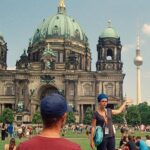
Then you finish at Alexanderplatz, rebuilt after WWII as the capital of the DDR. It’s a strong ending because it shows what “rebuilding” actually means: new design, new political messaging, and new daily life.
If you want the fastest way to decide where to spend more time later, ending in Alexanderplatz helps. You’ll know what you want to revisit—whether it’s a museum area on Museum Island, memorials you need more time with, or specific streets you now understand better.
Value for the price: when this $253.95 private tour pays off
At $253.95 per person for about six hours, this is not a budget walking tour. But it also isn’t “pay extra for nothing.” You’re paying for three things the self-guided route can’t give you:
First, the private format. With a private guide, you can ask follow-ups at each stop instead of saving questions for the end.
Second, the structure. Short, frequent stops across major sites help you learn connections quickly. Berlin’s history is layered, so a route that forces the timeline into one day can save you time later.
Third, the focus on big WWII and Cold War anchors. The tour hits major landmarks across both eras—Brandenburg Gate, Reichstag, Soviet Memorial, Holocaust Memorial, Fuhrerbunker site area, Topography of Terror, the Wall memorial, and Checkpoint Charlie—plus “Berlin after” through museum and university stops.
Is it worth it if you only want one or two highlights? Probably not. But if you want to leave with a coherent sense of what happened in Berlin and why it still matters, the price starts to look fair fast.
My practical tips so the day feels good
Since this is a full walking day with lots of stops, don’t treat it like a casual stroll. Wear comfortable shoes and pace yourself early, because the emotional intensity ramps up mid-tour. You’ll likely spend more time thinking at certain monuments than at others, and that’s normal.
Also, because there’s no food or drinks included, plan to grab something before you start or carry a snack strategy. The route ends at Alexanderplatz, which is convenient for continuing your day, but that doesn’t replace lunch.
Finally, don’t be shy with questions. The guides highlighted in reviews are described as flexible and responsive, including tailoring the day to interests and pace. If you want a specific angle—WWII, Cold War, architecture, or how memory is shaped—ask for it early.
Should you book this Berlin history walk?
Book it if you fit one of these profiles:
- You’re in Berlin for a short time and want to get your bearings fast with WWII and Cold War context.
- You want a private guide who can answer questions as you walk, with flexibility on pacing.
- You like learning through landmarks, not just through museum rooms.
Consider skipping or choosing a different format if:
- You don’t want emotionally heavy stops in one day.
- You prefer slower, longer museum visits and less walking.
- You want a cheaper option and are comfortable building your own timeline from guidebooks.
If you want one day that turns Berlin from confusing to connected, this is a strong pick.
FAQ
What’s the duration of the Berlin Private Complete History all-day walking tour?
The tour is about 6 hours.
Where does the tour start and where does it end?
It starts at Ebertstraße 24, 10117 Berlin and ends at Alexanderplatz, 10178 Berlin.
Is transportation included?
No. It’s a walking tour with no vehicles, and pickups are done on foot by the guide.
Is the tour private?
Yes. It’s private, so only your group participates.
What language is the tour offered in?
The tour is offered in English.
What’s included in the price?
It includes an expert tour guide and visits to iconic historical sites.
Are food and drinks included?
No. Food and drinks are not included.
Are admission tickets included for the stops?
The stop details list admission tickets as free.
Is there a cancellation option?
Free cancellation is available up to 24 hours in advance for a full refund.