REVIEW · BERLIN
Berlin: Sightseeing Walking Tour of the Top 20 Attractions
Book on GetYourGuide →Operated by TOURGUIDEME BERLIN · Bookable on GetYourGuide
Berlin’s hard history walks right up to you. In just 3 hours with a private guide, you’ll connect major landmarks from the Brandenburg Gate to Checkpoint Charlie and the Museum Island area, all through story-driven street talk and a little Berlin-style humor.
What I like most is how the route feels purposeful rather than random. You’re led to see the city’s big turning points, including longer Wall sections and Cold War sites, so the past isn’t floating off in separate exhibits.
One thing to plan for: it’s about 6 km of walking, so if you’re not used to steady city strolling, you’ll feel it by the end.
Key things that make this tour worth your time
- Top 20 in 3 hours: a longer circuit than the common shorter “hits” tours, without turning into a marathon
- Nazi and Cold War stops: Checkpoint Charlie, and the Topography of Terror on the former Gestapo grounds
- Humor with substance: dry jokes and street-level context that make politics easier to hold in your head
- Built for questions: you can steer the pace toward what you care about, then get practical tips for afterwards
- Photo-friendly timing: the pace allows you to pause at key sights rather than only rushing through
In This Review
- How the Top 20 Berlin Walk Fits a Whole City into 3 Hours
- Starting at Paul-Löbe-Haus: The Right First Step for a Big-Day Berlin Plan
- Chancellery, Reichstag, Holocaust Memorial: Where Berlin’s Power Becomes Personal
- Potsdamer Platz to Checkpoint Charlie: Cold War Berlin Gets Real on the Street
- Martin-Gropius-Bau to Topography of Terror: Nazi and Gestapo History Without the Fog
- Gendarmenmarkt and Bebelplatz: Architecture With a Chilling Reminder
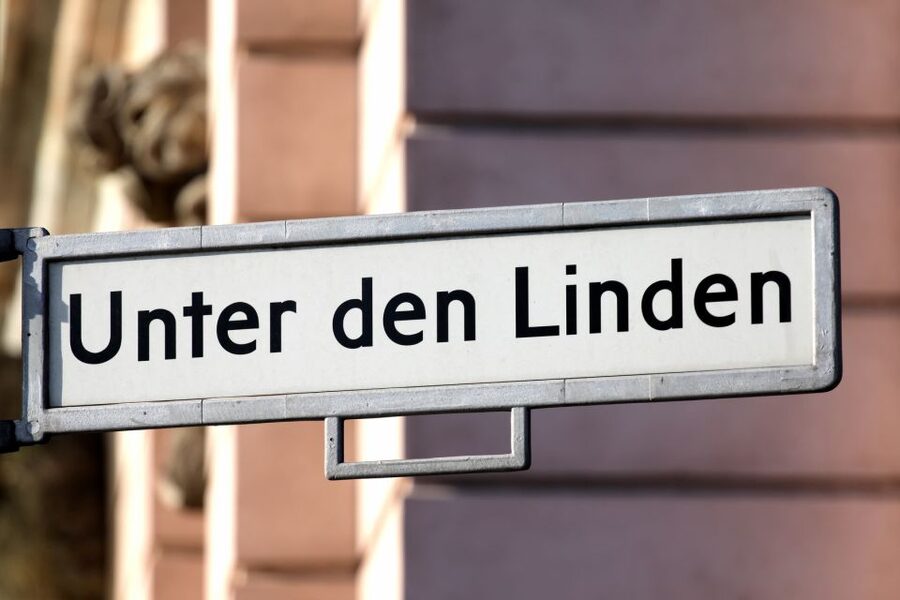
- Unter den Linden to Museum Island: Prussian-Era Ambition Meets the Street Level
- Finishing at Friedrichsbrücke: A Natural Place to Re-Enter Berlin Life
- Price and Value: Why $94 Makes Sense for a 3-Hour Private-Style Route
- Who This Tour Suits Best (And When to Skip It)
- Guides, Humor, and the Pace That Lets You Ask Questions
- Should You Book This 3-Hour Top 20 Berlin Tour?
- FAQ
- How long is the Berlin sightseeing walking tour?
- Where does the tour start?
- About how much walking is involved?
- What languages are the tours offered in?
- Is this tour private or in a group?
- Is the tour wheelchair accessible and does it run in bad weather?
How the Top 20 Berlin Walk Fits a Whole City into 3 Hours
This is the kind of tour that helps you stop seeing Berlin as a collection of far-apart landmarks. In one compact route, you move from government architecture to Cold War pressure points, then into museum and cathedral territory, using a guide to stitch it together with clear, human storytelling.
The best part is that it’s not just “look and move.” You’ll hear how the city was divided and reunited, and you’ll get facts and street stories you can’t reliably find on a quick read of a plaque. You also get the guide’s real take on what matters, plus honest recommendations for food, nightlife, and neighborhoods to explore after your walk.
You should go in with the right mindset: it’s history-forward and you’re on foot. If you want slow wandering with lots of downtime, a 3-hour walking plan may feel like too much. But if you want to get oriented fast and understand why Berlin looks the way it does today, this format works.
Starting at Paul-Löbe-Haus: The Right First Step for a Big-Day Berlin Plan
Your tour meets at the Paul-Löbe Haus (Konrad-Adenauer-Straße 1), right by the Federal Chancellery area. That’s a smart starting point because you immediately step into the feel of Berlin’s modern government district, with the kind of wide streets and monumental architecture that frames much of what comes next.
Starting times run daily at 10:00 AM and 2:00 PM, which helps you match it to your larger itinerary. If you’re trying to make one early day “count,” the 10:00 AM slot gives you the afternoon to follow up on what you found most interesting. The 2:00 PM departure can be a great choice if you want a slower start and still want to cover a lot before evening plans.
Even if you’re only moderately interested in politics, this beginning helps. You’ll be able to place later stops in context. It’s a tour that aims to give you a mental map first, then layers of meaning.
You can also read our reviews of more walking tours in Berlin
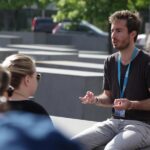


Chancellery, Reichstag, Holocaust Memorial: Where Berlin’s Power Becomes Personal
After you start at Paul-Löbe-Haus, you’ll head to the German Chancellery and then the Reichstag. These are big, symbolic buildings, and a good guide’s job is to keep them from becoming cold and distant. Here, the storytelling is designed to connect the architecture to the human story of leadership, conflict, and consequence.
From there, you’ll reach the Holocaust Memorial. This stop isn’t presented as a quick photo break. Expect it to land as a moment where the tone shifts, because the guide uses the surrounding context to make sure you understand what the site is holding—without turning it into a lecture you can’t process.
One practical advantage of this segment: it sets you up for the rest of the tour’s theme. When you move later toward Cold War checkpoints and Wall history, the tour’s “why this matters” thread is already running in your head. If you tend to forget names and dates, that structure matters.
Potsdamer Platz to Checkpoint Charlie: Cold War Berlin Gets Real on the Street
Potsdamer Platz is a key transition point. It helps you shift from government-era formality into the kind of Berlin that feels more lived-in and immediate. From there, the tour moves toward Checkpoint Charlie, one of the most recognizable gateways of the Cold War story.
This is where the guide’s style becomes especially useful. You’re not just hearing what happened; you’re learning how the division showed up in everyday movement and mindset. The guide turns the street corners and landmark names into a timeline you can actually follow.
Checkpoint Charlie also works as a mood-setting stop. After this, you’ll be able to connect what you see on the next memorial grounds to the broader structure of fear, surveillance, and control. If you’re worried the tour will feel like a list of sights, this section is the antidote because it ties history to how people experienced it.
Martin-Gropius-Bau to Topography of Terror: Nazi and Gestapo History Without the Fog
Next up is the Martin-Gropius-Bau, followed by the Topography of Terror memorial on the grounds of the former Gestapo headquarters. This combination is important: it gives you both the Berlin of institutions and the Berlin of repression.
The Topography of Terror stop is handled in a way that keeps the information grounded. You’ll get a clear connection between the Nazi era, the machinery of persecution, and the physical place where that system operated. The guide’s storytelling also includes the larger arc—how Berlin’s story doesn’t end at World War II and how it continues through the Cold War.
A small but meaningful point: the tour includes longer stretches of Wall history later, so this stop doesn’t feel like a hard cut. It becomes part of a continuous theme. If you’ve ever visited a memorial and left thinking, I understand the facts but not the whole story, this format is built to prevent that.
Gendarmenmarkt and Bebelplatz: Architecture With a Chilling Reminder
Berlin’s center can look almost too composed, which is why the contrast here works. You’ll reach Gendarmenmarkt, where the setting makes it easy to notice how Berlin’s public spaces were designed to impress. Then the tour moves to Bebelplatz, where books were burned.
That pairing is clever. It forces you to hold two ideas at once: how societies present themselves—and how control can take cultural form. The guide’s job is to keep Bebelplatz from becoming a single grim fact. You’ll hear how the act of burning books relates to power and control over ideas.
If you like your history with both human emotion and concrete meaning, this is one of the stops that delivers. You’ll see a square that feels visually “beautiful,” then immediately get the reason that ugliness matters there too.




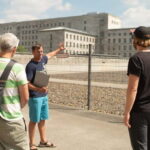
Unter den Linden to Museum Island: Prussian-Era Ambition Meets the Street Level
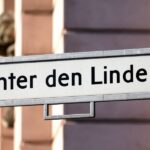
Between the central landmarks, the tour includes strolling along Unter den Linden, the iconic boulevard. It’s a practical move as well as a scenic one. A long straight corridor makes orientation easier, so by the time you reach the next clustered sights, you’ll feel like you’re moving through a real city map instead of bouncing between unrelated points.
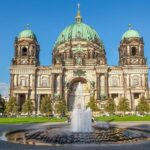
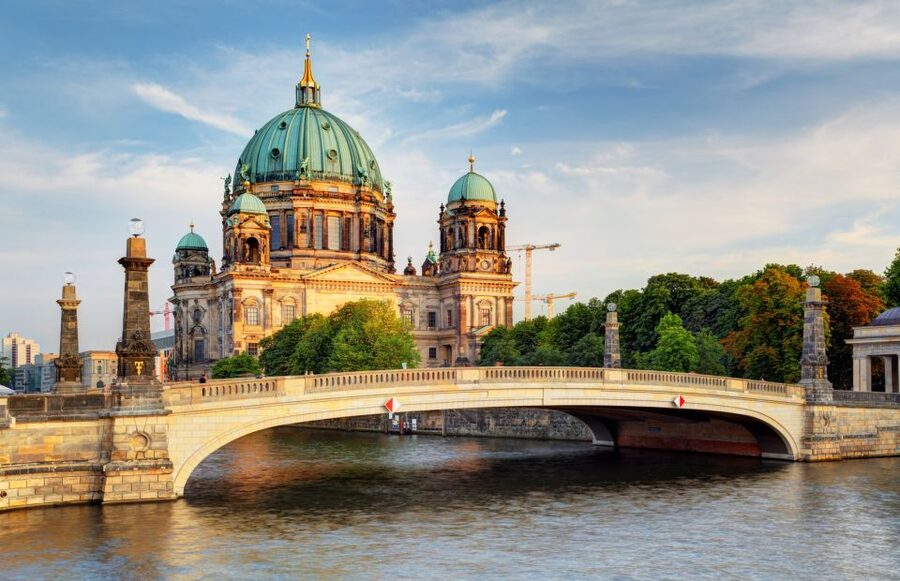
After that, you’ll head toward Lustgarten and the Berlin Cathedral area, plus the New City Palace region as part of the highlights. Then it continues into Museum Island, including the Alte Nationalgalerie area. This part of the tour gives your day balance: after checkpoint and memorial intensity, you get to see the “how Berlin wanted to look” side.
The guide also helps you connect why these institutions sit where they do, so you’re not only ticking off names. You’ll be thinking about continuity—how a city rebuilds its identity after division and trauma.
Finishing at Friedrichsbrücke: A Natural Place to Re-Enter Berlin Life
The walk ends at Friedrichsbrücke. That finish location matters because it’s a sensible spot for continuing your day. You won’t end deep inside a single bubble of monuments. Instead, you leave with a sense of direction and a place where it’s easier to branch out into your next meal, museum, or neighborhood wander.
By the end, your goal should be simple: you should feel oriented and able to choose what to do next. This tour is designed to do that by mixing big-name sights (Brandenburg Gate, Checkpoint Charlie, Gendarmenmarkt, Museum Island) with less “headline” stops that explain how Berlin’s modern identity was shaped.
Price and Value: Why $94 Makes Sense for a 3-Hour Private-Style Route
The price is $94 per person for a 3-hour walking tour covering around 6 km. That number might feel high at first if you’re comparing it to a basic group bus tour. But the value comes from what you get for that time: a local guide with story structure, plus a route that runs beyond a shorter Top 10 style loop and includes Nazi and Cold War history stops.
You’re also not locked into a one-size-fits-all script. The tour is described as adapting to your interests, and it’s set up as private or small groups, which usually means more attention and more chances to ask questions. That’s not a minor detail in Berlin, where history lives in layers and you’ll often want clarification in the moment.
There’s also a “reduce friction” benefit: the tour mentions skip-the-ticket-line where applicable. For a walking route that includes memorials and major attractions, saving time can make the difference between seeing everything and feeling rushed.
Who This Tour Suits Best (And When to Skip It)
This works especially well for first-time visitors, couples, small groups, and anyone who wants a lot of Berlin context without spending an entire day hopping between museums. If you’re the type who reads signs and wants the story behind them, you’ll get a lot out of the guide’s explanations and the quick, practical tips for later.
It’s also a solid fit for curious locals who want a sharper understanding of how Nazi-era and Cold War narratives connect to what’s visible today.
I’d consider skipping it if you hate walking for 3 hours, or if you’re looking for a light, casual “pretty sights only” tour. This one gives you serious content, and the pace is steady enough that your feet will have opinions by the end.
Guides, Humor, and the Pace That Lets You Ask Questions
A big part of the experience is the guide’s delivery. The tour is designed for dry Berlin humor and passionate storytelling, which helps if you find heavy topics easier to process when they’re explained clearly and humanely.
From the information provided, guides like Carlos, Carlo, Max, and Antonella are highlighted for being friendly, adaptable, and strong on English (and sometimes other languages). Carlos and Carlo are praised as natives who bring real-life perspective, and Max is described as warm and friendly. That kind of local voice matters because Berlin history can feel abstract until you hear it explained as something people lived through.
Another practical detail: this tour typically runs in all-weather conditions, so bring a rain-friendly mindset. One guide was even described as finding time for a hot drink during bad weather to keep energy up, which is the right kind of problem-solving.
Should You Book This 3-Hour Top 20 Berlin Tour?
If your goal is to understand Berlin’s main story beats—division, the Wall, reunification, and the Nazi and Cold War history that still shapes the city—this tour is a strong choice. The Top 20 coverage in 3 hours, plus the humor and insider tips, is built for people who want clarity, not just photos.
Book it if you’re comfortable walking about 6 km and you want a guided storyline through major landmarks like Brandenburg Gate, Checkpoint Charlie, Gendarmenmarkt, and Museum Island. Skip it if you want a slow stroll or a purely scenic day. For the right traveler, this is one of the most efficient ways to turn a first Berlin visit into real understanding.
FAQ
How long is the Berlin sightseeing walking tour?
The tour lasts about 3 hours.
Where does the tour start?
Meeting point is in front of the main entrance of the Paul-Löbe Haus, opposite the Federal Chancellery, Konrad-Adenauer-Straße 1, 10557 Berlin.
About how much walking is involved?
The tour includes approximately 6 km of walking.
What languages are the tours offered in?
The live guide is available in English, Spanish, and German.
Is this tour private or in a group?
It’s offered as a private or small-group experience.
Is the tour wheelchair accessible and does it run in bad weather?
Yes, it’s listed as wheelchair accessible, and tours run in all-weather conditions.