Verona has layers, and this walk shows them. A local licensed guide from inside the city traces Verona from Ancient Rome to the Medieval era, mixing big landmarks with quick turns into quieter streets.
I love two things most: the way the route connects the Verona Arena with river views over the Adige, so you understand why the city grew where it did. I also like the focus on overlooked corners around Piazza delle Erbe and Piazza dei Signori, including Roman gateways and town-square details.
One drawback to plan for: you’re walking the whole time. It runs rain or shine, and since entries are not included, some must-sees (like inside areas) are more about what you can see from outside.
In This Review
- Key highlights worth planning around
- Start at Piazza Bra: how the tour begins in the right place
- Verona Arena to Porta Borsari: Rome’s footprint at street level
- Old walls, Corso, and Porta Jovia: following the city’s survival line
- Castelvecchio and Ponte Scaligero: the river bridge moment
- Piazza delle Erbe: market history in the middle of the action
- Piazza dei Signori and the palazzi set: medieval power, not just pretty stone
- Basilica di Santa Anastasia: Gothic-era Verona in a quick, meaningful stop
- Romeo’s House and Juliet’s Balcony area: famous stops, handled with context
- Scaliger tombs and a few surprising side doors: Arche Scaligere, synagogue, convent
- Practical details that make the experience smoother
- Price and what you’re really buying for $41
- Who this Verona walk suits best
- Should you book this Verona history-and-corners tour?
- FAQ
- How long is the Verona history and hidden corners walking tour?
- Where do I meet the guide?
- How big is the group?
- Are headsets included?
- Which languages are available?
- Is the tour wheelchair accessible?
- What should I bring?
- Does the tour run in bad weather?
- Are entry tickets included?
- Can I cancel for a full refund, and is pay later available?
Key highlights worth planning around
- Small group (up to 10) with a local guide who builds a story, not just a checklist
- Arena + Adige views that make Verona’s power and geography click fast
- Roman-to-medieval stops like Porta Borsari, Chiesa di San Giovanni in Foro, and Porta Jovia along the old-wall line
- Piazza Erbe and Piazza dei Signori with market history, palazzi facades, and tower context
- Romeo-Juliet area without losing the plot, plus detours to places like the synagogue and a convent courtyard
- Headsets included, so you can actually hear in noisy squares
Start at Piazza Bra: how the tour begins in the right place
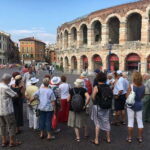
Your walk starts at Palazzo Barbieri – Comune di Verona, with the guide standing below the Italian flag in Piazza Bra. This is smart. You’re placed at the natural hub of town, right where Verona’s landmark-heavy sightseeing clusters.
From the first minutes, the pacing is designed for listening. You’ll get quick orientation around Piazza Bra, then move straight toward the main showpiece. You’re not wandering. You’re stepping forward in a line that keeps the story going, with short photo stops and brief side detours rather than long stretches with nothing to do.
The tour lasts 2 hours, and it’s a walking route with a lot of “look closer” moments. If you’ve only got one morning or afternoon and you want to understand what you’re actually seeing, this kind of format is a good fit.
You can also read our reviews of more walking tours in Verona

Verona Arena to Porta Borsari: Rome’s footprint at street level
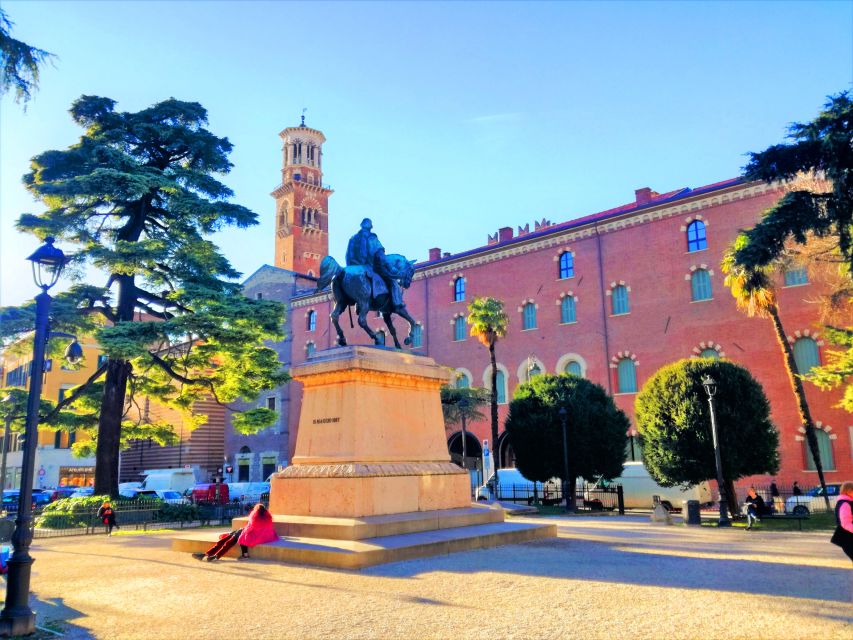
The first big stop is the Verona Arena. Expect a photo pause and an explanation that goes beyond the obvious. The guide frames it with the gladiator-battle world that made this kind of amphitheater famous, and you’ll get a sense of why this building still anchors Verona’s identity.
Then the tour shifts from the spotlight to the in-between. You’ll pass through short “hidden” pauses that are mostly about details—stonework, street alignment, and how people used to move through the city. The vibe becomes: don’t just look at monuments, look at the city fabric around them.
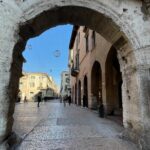
Next comes Porta Borsari, where you’ll get both a photo stop and a sense of Verona as a Roman city you can still read today. This is the kind of stop that makes later self-walking easier. After you’ve seen a Roman gate in context, you start noticing how old Verona was built to channel movement.
There’s also a scenic stretch along Riva San Lorenzo. You’ll get photo time and views of the Adige River on the way. Even if you’ve seen river photos online, the river here acts like an open textbook for the city’s layout—where lines of power and travel would have run, and why the bridges mattered.
Old walls, Corso, and Porta Jovia: following the city’s survival line
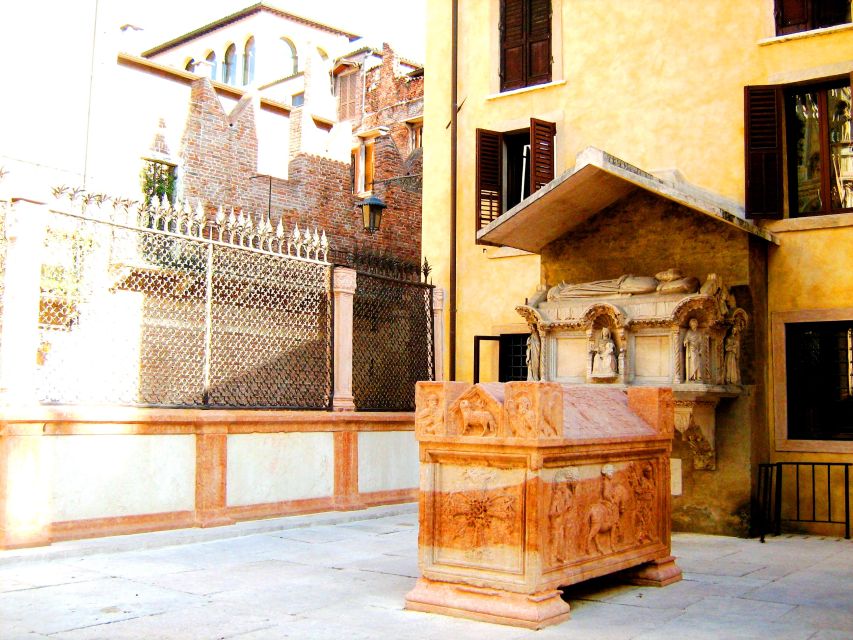
A standout part of the walk is the movement from major monuments into the “how the city endured” zone. The route follows foundations of the early medieval city walls to reach Corso, one of the oldest streets in Verona. That’s a big deal. Streets are history with the volume turned up.
Along this area, you’ll spot Porta Jovia, a Roman-era monument mentioned in the tour highlights. The guide’s job here is to explain what you’re seeing—how Roman elements lived on under medieval Verona, instead of being erased.
This is where the tour earns its time. You don’t need to be a history buff to benefit. When you understand the city’s defensive line and why Corso became a spine, you navigate more confidently later. You’ll also understand why people talk about Verona as layered instead of just pretty.
Castelvecchio and Ponte Scaligero: the river bridge moment
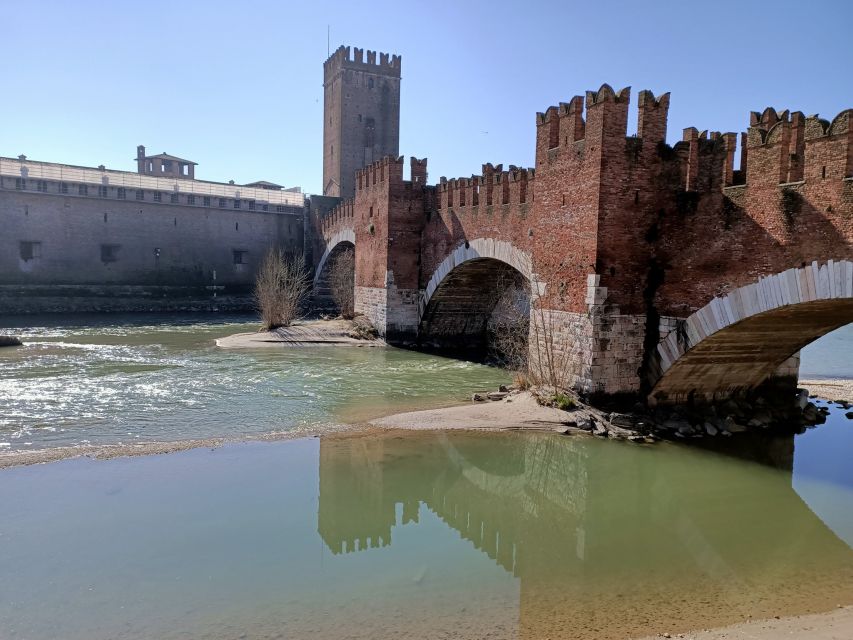
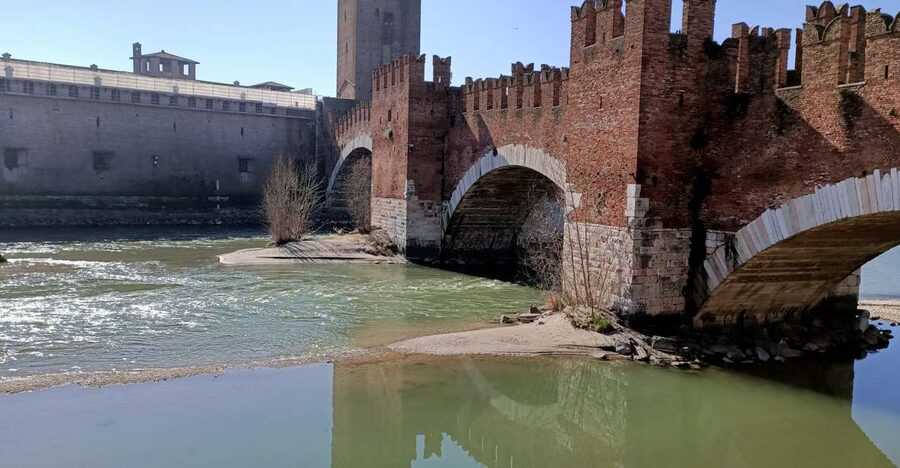
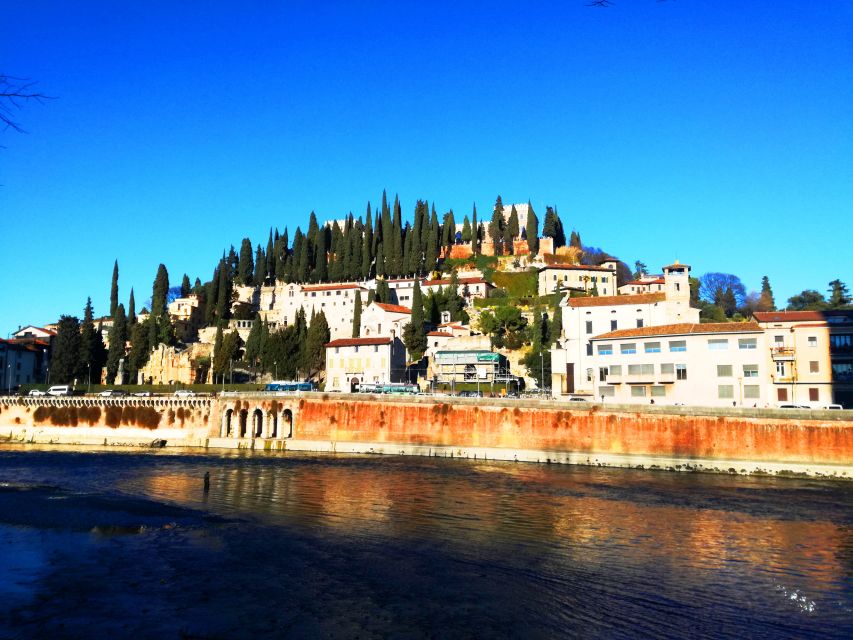
As the walk continues, you get views toward Castelvecchio and the Ponte Scaligero over the Adige. This is one of those “pause and look up” moments. Bridges here aren’t just crossings. They’re statements—about control, trade, and the ability to move armies and people.
You’ll take photos and absorb the relationship between river and city. This matters because later stops (squares, palazzi, mausoleums) make more sense when you’ve already pictured Verona’s geography. You start thinking in lines: river, walls, streets, then the public spaces that formed power.
If you’re the type who likes to understand before you wander, this section sets you up well.
Piazza delle Erbe: market history in the middle of the action
Next up is Piazza delle Erbe. The tour gives you photo time plus a fuller visit, with scenic views on the way that keep the walk from feeling like a straight grind to the next landmark.
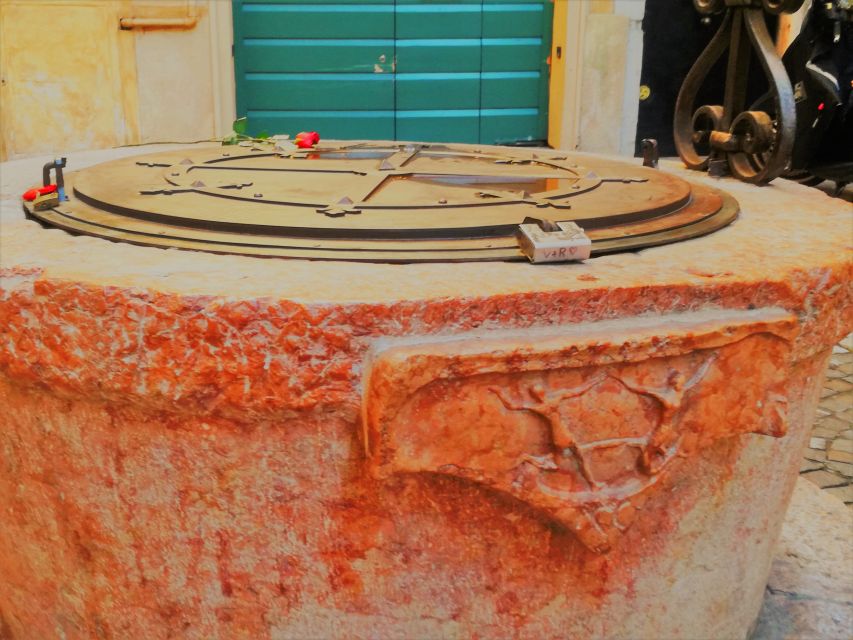
One detail worth paying attention to is the oldest fountain in the city, pointed out during the stop. It’s a small thing, but it anchors the idea that Verona’s squares weren’t built for tourists. They were built for people—trade, daily errands, gatherings, and the rhythm of city life.
The guide also connects this square to local market history. You’ll hear how Piazza delle Erbe functioned over time and why its facades and layout feel the way they do today. Even if you don’t plan to shop, you’ll understand what kind of city you’re standing in.
Short “secret” photo stops pop up around here too—quick pauses where the guide points out what you’d miss if you were just walking with your camera out. This is the core value of the tour: you get the city’s context in small doses, not dumped in one lecture.
You can also read our reviews of more guided tours in Verona
Piazza dei Signori and the palazzi set: medieval power, not just pretty stone
The walk then moves to Piazza dei Signori, another major public square. Here you’ll see and learn about prominent buildings tied to Verona’s political and social history, including Palazzo della Ragione, Palazzo Della Scala, and Palazzo del Capitano.
You’ll also learn about the medieval era and notice the city’s vertical ambition through the highest tower in the area (the stop is designed around that tower context). This part matters because Verona’s medieval rulers didn’t just build churches. They shaped public space, stamped authority into stone, and used tall structures to signal reach.
The tour includes a mix of photo stops and a bit of time to look around. That’s important: in a square this visually busy, you need a moment to slow down and see how the pieces align.
Basilica di Santa Anastasia: Gothic-era Verona in a quick, meaningful stop
Next is Basilica di Santa Anastasia. You’ll have a photo stop and time to take in the exterior without rushing. The guide frames what makes it significant and how it fits into Verona’s shifting eras.
Because entries aren’t included, you’re best off treating this as a “read the building from the outside” moment. If you want to go inside later, you’ll have the advantage of already knowing what you’re looking at.
Romeo’s House and Juliet’s Balcony area: famous stops, handled with context
Yes, you’ll reach the Casa di Romeo and you’ll see the area tied to Juliet’s House. The difference on this tour is that these stops aren’t treated as the whole story.
The guide ties the setting to the broader cultural inspiration behind the famous Shakespeare connection. You get the human side of Verona’s mythology, but it’s placed inside the bigger city narrative you’ve been building since Piazza Bra.
Photo stops here are timed so you don’t feel trapped in a line of people for hours. And since the tour is only 2 hours, you’ll still have time to do your own deeper self-walking afterward.
If your priority is just the most famous photos, you might still want to pair this with a separate planned time for Juliet’s area. If your priority is understanding Verona as a city that produces legends, then this approach works well.
Scaliger tombs and a few surprising side doors: Arche Scaligere, synagogue, convent
After the Romeo-Juliet segment, the tour includes the Arche Scaligere mausoleums. These are dramatic, and the guide’s framing helps you connect them to Verona’s medieval rulers and the city’s long-lasting power story.
Then comes a more surprising turn: the walk includes Sinagoga di Verona (photo stop). You also see the Convent of Saint Mary ‘della Scala’ of the Servants of Mary (photo stop). These are not the first places most first-time visitors think to seek out, and that’s exactly why they work on a guided route.
You don’t get a long lecture at each one. You get enough context to notice what you’re seeing and why it belongs in Verona’s larger identity. It’s a good reminder that Verona isn’t only Roman ruins and love-story postcards.
Practical details that make the experience smoother
This is a walking tour with short, frequent pauses. That’s great for attention. It can be less great if you prefer long sit-down breaks. Wear comfortable shoes and bring water.
The guide uses headsets, which is a big quality-of-life upgrade in outdoor squares. In reviews, people specifically praise the over-ear style and the fact that you can hear clearly even where there’s street noise. If you struggle with hearing in crowds, this is one of those “you’ll be glad you paid attention to the details” features.
The tour runs rain or shine, so bring a light layer or rain protection. The route is designed for moving efficiently, so weather doesn’t turn it into a full stop.
Also, group size is capped at 10 participants, which keeps the pace and Q&A more workable than on big flag-led walks.
Price and what you’re really buying for $41
At $41 per person for 2 hours, you’re paying for three things: a licensed local guide, a small group, and audio support with headsets. Entries and transport are not included, so think of this as a high-quality orientation and interpretation walk—less about ticketed access, more about seeing and understanding.
This price often feels fair when you factor in how many major zones you cover in a short time: Arena and Piazza Bra, Roman-era gates, river viewpoints, major squares, plus cultural side stops like the synagogue and a convent courtyard. If you’re staying only a day or two, it can save you from wandering with no context.
Where it might not feel like a slam dunk: if you already know Verona deeply and hate walking between photo stops. In that case, you might prefer a self-guided plan. But for most first-timers, guided context is exactly what turns scattered sightseeing into a coherent city story.
Who this Verona walk suits best
This is a great fit if you want:
- City context fast (Roman to medieval to Renaissance-era storytelling)
- A route that mixes major landmarks with quieter street moments
- A guide who can answer questions on the spot and explain what you’re looking at, not just where to stand
It’s also a smart choice if you’ll be doing opera nights, day trips, or a big schedule around Verona. A good guide helps you aim your time better afterward.
Should you book this Verona history-and-corners tour?
If it’s your first time in Verona, I’d book it. The tour does the hardest part for you: it gives Verona a narrative spine. You’ll walk away noticing details in Piazza delle Erbe, understanding why the river and bridges matter, and getting context for why the city’s love-story sites are built into a much older place.
Skip it only if you dislike walking for two hours, want only inside-ticket highlights, or already have a very detailed Verona plan with timed entries you can manage alone.
If you want the practical shortcut to seeing Verona with better eyes, this is the kind of tour that pays off after you leave Piazza Bra.
FAQ
How long is the Verona history and hidden corners walking tour?
It lasts 2 hours.
Where do I meet the guide?
Meet at Palazzo Barbieri – Comune di Verona, standing below the Italian flag in Piazza Bra.
How big is the group?
The tour is a small group with up to 10 participants.
Are headsets included?
Yes. Headsets are included.
Which languages are available?
The live guide is available in English, German, Italian, and Spanish.
Is the tour wheelchair accessible?
Yes, the tour is wheelchair accessible.
What should I bring?
Wear comfortable shoes and bring water.
Does the tour run in bad weather?
Yes, it runs rain or shine.
Are entry tickets included?
No. Entries are not included.
Can I cancel for a full refund, and is pay later available?
You can cancel up to 24 hours in advance for a full refund, and you can reserve now and pay later.