REVIEW · VENICE
Venice Walking Tour and Gondola Ride Combo
Book on GetYourGuide →Operated by Venetoinside - Insidecom · Bookable on GetYourGuide
Walk first. Glide next. Venice clicks, with an 1.5-hour guided stroll from St Mark’s toward Rialto plus a 30-minute gondola ride through quieter canals off the Grand Canal. I especially like how the guide stitches the scenery to stories of the Venetian Republic and the in-between streets people often skip, and I also like the practical way you pass key façades like La Fenice and the Basilica della Salute. One possible drawback: gondola timing can run shorter than the promise when canals are crowded, and a hearing device can mean some words are harder to catch.
This is a tour that helps you get your bearings fast. The meeting point is easy to find if you’re already near the Correr Museum area, and you come away with a clear route for exploring the city on foot afterward. Guides such as Gina, Stephanie, and Stephanie (yes, different people) have been singled out for making the walk fun as well as informative.
Do note Venice is Venice: narrow lanes, lots of steps, and winter rules for language plus limited commentary during the boat portion. If weather turns rough, the gondola part can be suspended.
In This Review
- Key things to know before you go
- A smart 3-hour Venice combo for first-timers and repeaters
- Meeting point: Calle larga de l’ Ascension near Correr Museum
- The 1.5-hour walk: St Mark’s façades, Campo streets, and the Rialto approach
- St Mark’s Basilica and Doge’s Palace area: why the façades matter
- Campo Santa Maria Formosa: one of Venice’s more beautiful stops
- Marco Polo connection and the Malibran Theatre
- The Mercerie lanes: where trade from distant markets got sold
- A note on pacing
- La Fenice and Basilica della Salute: two façades, two moods
- Gondola ride in the small canals: what you get in 30 minutes
- What you’ll notice from the water
- St Mark’s Basin to the Grand Canal viewpoint
- Gondola timing reality check
- Weather and ride suspension
- Guide quality is the difference-maker
- Price and value: what $80 buys you in Venice
- Who this tour is best for
- Should you book this Venice walking tour and gondola combo?
- FAQ
- How long is the full tour?
- What is included in the price?
- Where do we meet?
- What sights are covered during the walk?
- What happens during the gondola ride?
- Are there guided explanations during the gondola ride?
- Is the gondola ride ever suspended?
- What languages are available?
- Is the tour wheelchair accessible?
- How many people fit in one gondola?
- What’s the cancellation policy?
Key things to know before you go
- St Mark’s to Rialto, with real city lanes: you’ll weave between famous anchors instead of marching only on the main grid.
- A short but genuine gondola: a 30-minute ride in small canals off the Grand Canal area.
- La Fenice and La Serenissima stories: you’ll hear why these symbols mattered to Venice and how people lived around them.
- Marco Polo links and Mercerie shopping streets: the route includes the former Marco Polo home and the trading lanes of the Mercerie.
- Group logistics are real: a gondola holds up to 5; bigger groups get split.
- Expect a tour that depends on guide clarity: audio devices can help, but clarity can vary.
A smart 3-hour Venice combo for first-timers and repeaters
At $80 per person, this package is priced for convenience: you’re buying one guided walking loop plus a gondola ride without having to plan the “gondola part” separately. The duration also matters. Three hours is long enough to learn how Venice works without wearing you out before dinner.
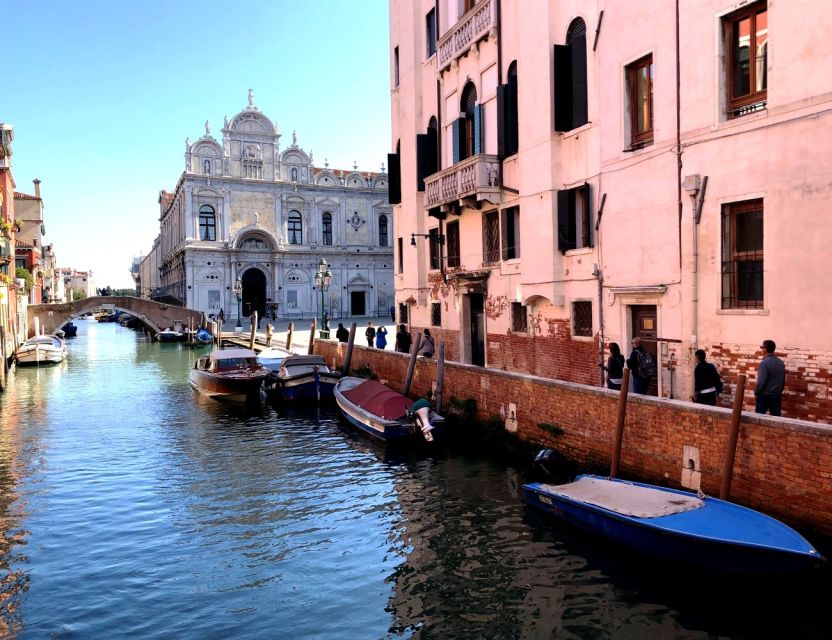
The best part is the structure. You get a walking segment that builds context—who held power, why certain buildings look the way they do, and where daily life fit around the grand views. Then the gondola ride acts like a moving viewpoint: you see the city’s edges, bridges, and canal turns from a height and angle you can’t get on foot.
The tour also makes sense if you’re repeating Venice. Even if you’ve seen St Mark’s Square already, walking from there toward Rialto through smaller streets can reveal a Venice you only notice when you slow down and stop checking things off.
You can also read our reviews of more walking tours in Venice
Meeting point: Calle larga de l’ Ascension near Correr Museum
You meet at Calle larga de l’ Ascension, near the post office and behind the Correr Museum. A TURIVE staff member checks your voucher.
This location is useful because it drops you right in the St Mark’s orbit. If you’re walking from your hotel, you can usually set yourself up to start on foot with minimal backtracking. It also means you’re close to the usual canal crossings and the landmarks your guide will reference.
Tip: if you’re using a map app, zoom in on the exact calle. Venice street names are easy to confuse when you’re tired, and small detours can eat time.
The 1.5-hour walk: St Mark’s façades, Campo streets, and the Rialto approach
The walking portion is where the tour earns its value. You start at St Mark’s Square and head through the historic center, staying focused on the area between St Mark’s and the Rialto Bridge and market.
St Mark’s Basilica and Doge’s Palace area: why the façades matter
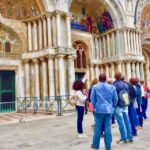
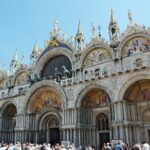
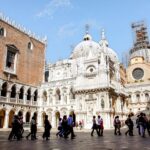
Your guide shows you the Byzantine façade of St Mark’s Basilica and then moves toward the imposing presence of the Doge’s Palace. Even if you’ve seen photos, it helps to understand what you’re looking at: the way Venice borrowed styles and broadcast power, not just taste.
This isn’t a lecture about every stone. It’s more like a guided key that helps you read the city’s visual language.
Campo Santa Maria Formosa: one of Venice’s more beautiful stops
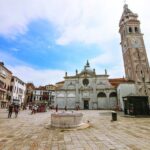
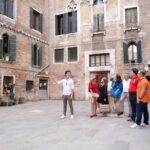
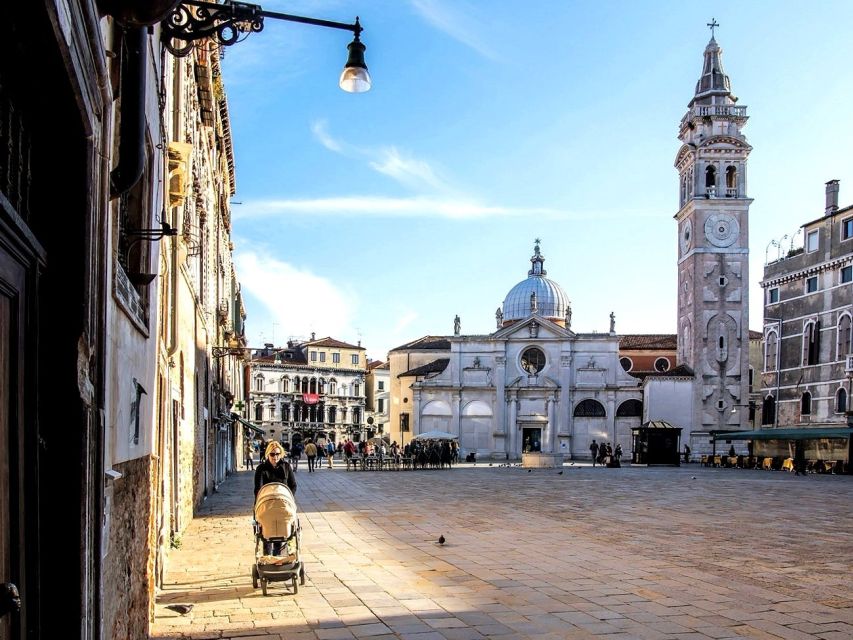
Next you head toward Campo Santa Maria Formosa, where you’ll learn the story of one of Venice’s most beautiful churches in this area. Campo is the word for the open square-like space, and it’s one of the ways Venice creates breathing room inside dense streets.
This part matters because it breaks you out of the “big monument loop.” You’re not only looking at postcard icons; you’re also seeing how Venice spaces daily life around smaller gatherings.
Marco Polo connection and the Malibran Theatre
You pass the former home of Marco Polo, and you’ll also go by the Malibran Theatre, known for having an extravagant stage in the city. These stops give you a sense of Venice beyond politics: exploration, performance, and the cultural ambition that sat alongside commerce.
The Mercerie lanes: where trade from distant markets got sold
Then you move toward the Mercerie, the narrow streets where goods brought from distant markets were sold. It’s a shop-and-trade corridor, but on a guided walk it becomes something more than “where tourists browse.”
You start to notice what made these lanes important: tight geography, visible wealth, and how traders needed access through compact routes.
A note on pacing
The walk is designed to be easy to follow, but it still feels like Venice—uneven surfaces and narrow paths. You’ll want comfortable shoes, especially if you’re visiting in warmer months when stone walkways heat up quickly.
La Fenice and Basilica della Salute: two façades, two moods
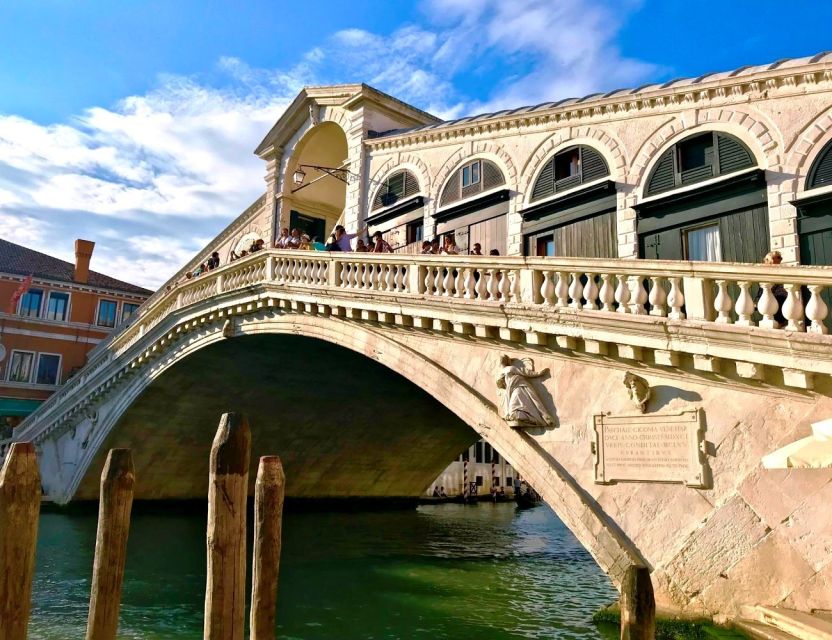
The tour doesn’t just name buildings. It points you at façades and helps you connect them to the city’s identity.
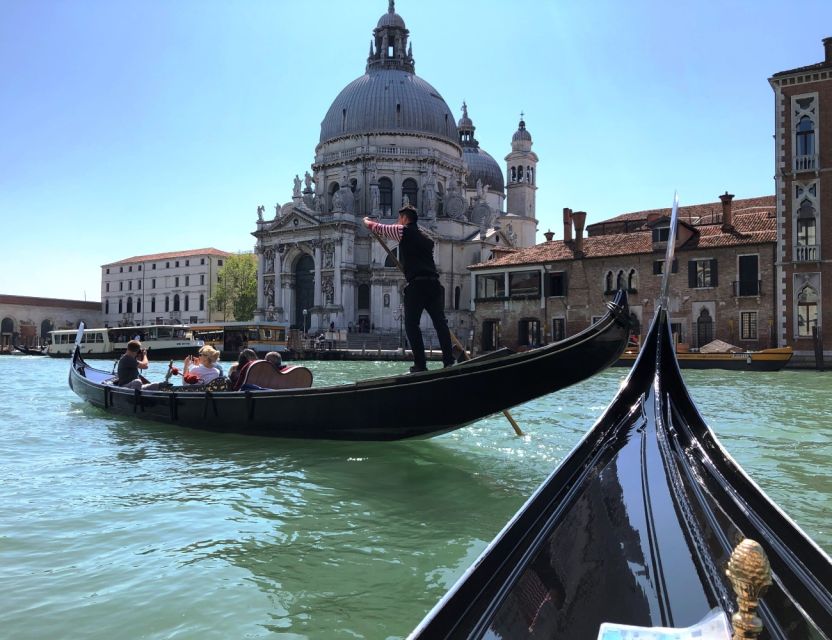
You’ll admire the Basilica della Salute, which becomes a kind of visual anchor as you return toward St Mark’s Basin and the Grand Canal area. It’s the sort of place where even a short look feels like a shift: the city’s tone changes from intimate lanes to grand waterfront drama.
You’ll also see the unusual façade of La Fenice Opera House. The name alone is famous, but the value is in noticing how Venice builds attention into details—how even architecture that looks slightly strange still fits the city’s habit of theatrical presence.
If you like art-and-architecture more than museum lectures, this part will click. The guide gives you enough to make the buildings feel less random.
Gondola ride in the small canals: what you get in 30 minutes
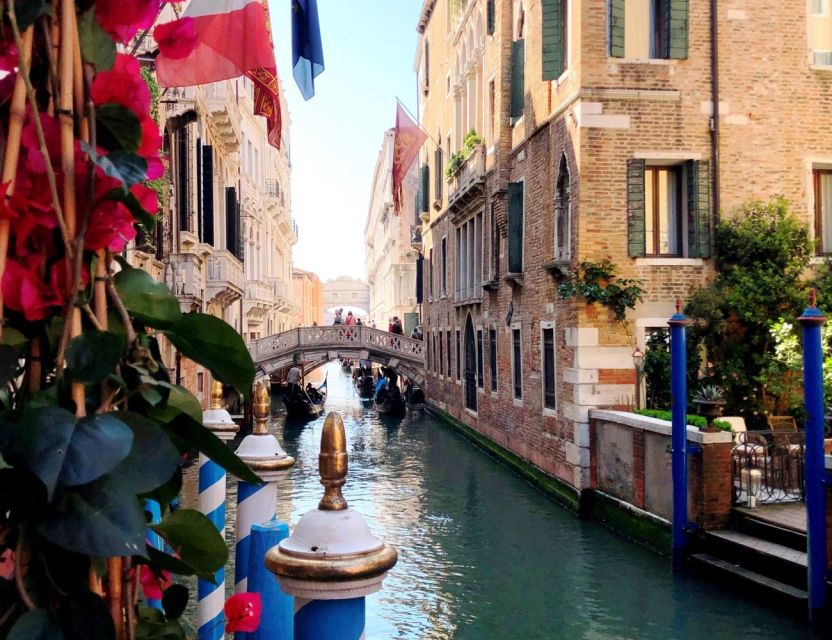
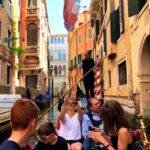
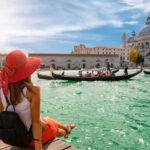
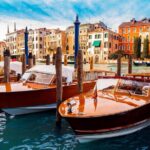
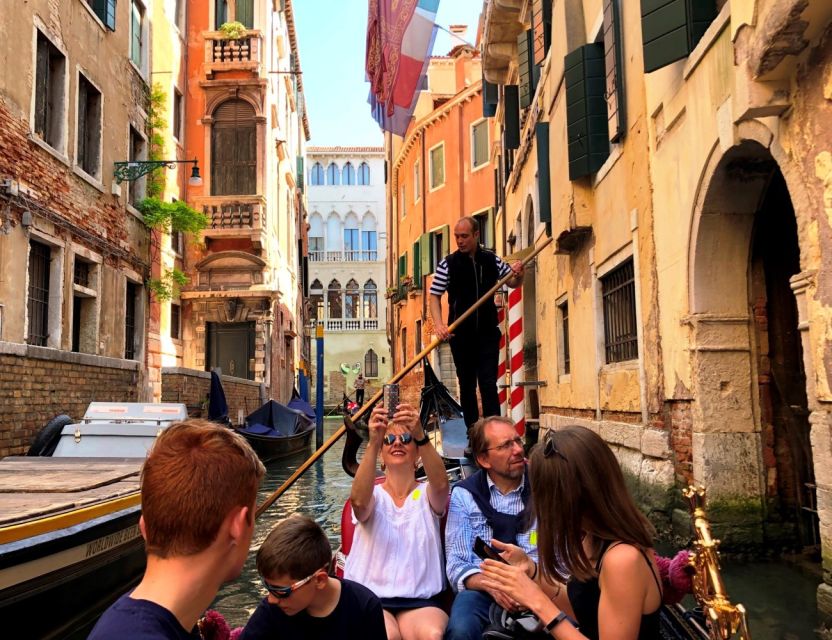
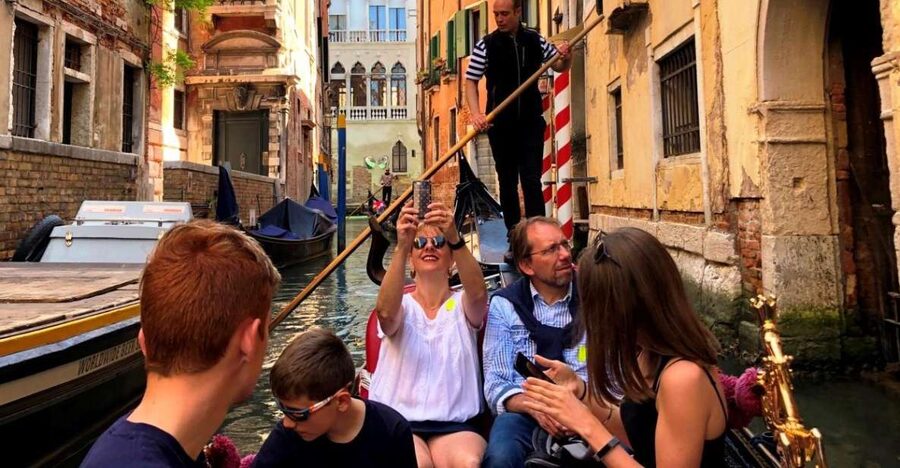
After the walk, you board a gondola for about 30 minutes along Venice’s canals, moving through smaller routes off the Grand Canal area. The ride is described as calm and gentle, and that’s exactly what makes it different from the fast-moving tourist crush you see around the busiest canal segments.
What you’ll notice from the water
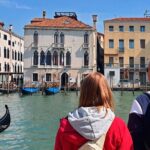
From the gondola, you’ll coast past lesser-known corners and majestic palaces from a new perspective. This is the point: on foot, Venice walls feel close; by boat, you see how buildings “face” the water and how canals slice the city into neighborhoods.
St Mark’s Basin to the Grand Canal viewpoint
You’ll also admire the Basilica della Salute as you drift gently back toward St Mark’s Basin, near the start of the Grand Canal. That means you get both sides of the postcard story: quiet canal intimacy and the broader Grand Canal setting.
Gondola timing reality check
Here’s the honest consideration. The ride is advertised at 30 minutes, but gondola traffic can reduce actual time on the water. One downside that shows up in real-life operations is that you might arrive back closer to where you started, and the bottleneck can add a few extra minutes before you even disembark.
If the gondola portion is the whole reason you booked, I’d treat the 30 minutes as a target, not a guarantee.
Weather and ride suspension
Bad weather can suspend the gondola. Venice boats are practical; they don’t run because the calendar says so. If you’re traveling in shoulder seasons with misty afternoons, plan a flexible mindset.
Guide quality is the difference-maker
A walking-and-gondola combo lives or dies on communication. With this tour, the guide role is huge because you’re learning as you move.
Some guides have been praised for being funny and informative (people like Gina), and others like Stephanie have been recognized for standing out as the best guides during a long trip. That tells me the format can be excellent when the guide has energy and clarity.
Two practical points to keep in mind:
- You might use a hearing device, and clarity can vary depending on the setup and the guide’s voice.
- In winter months (Nov 1 to Mar 31), the tour is bilingual, and the gondola ride itself has no explanations. So your learning mostly comes from the walking part.
Price and value: what $80 buys you in Venice
Let’s talk value without hand-waving.
Doing a gondola ride on your own is often the pricey part of a Venice plan. Bundling a guide-led walk with the boat ride can be a real savings move, especially if you want a coherent route between St Mark’s and Rialto rather than wandering randomly and paying for a gondola as a last-minute splurge.
This package also buys you time efficiency. Three hours is the sweet spot where you can absorb key sights, get stories, and still have a big block of the day for independent wandering.
At the same time, you’re not buying a long gondola experience. It’s short by design. If you want a long, slow canal serenade, this probably won’t match your expectations.
Who this tour is best for
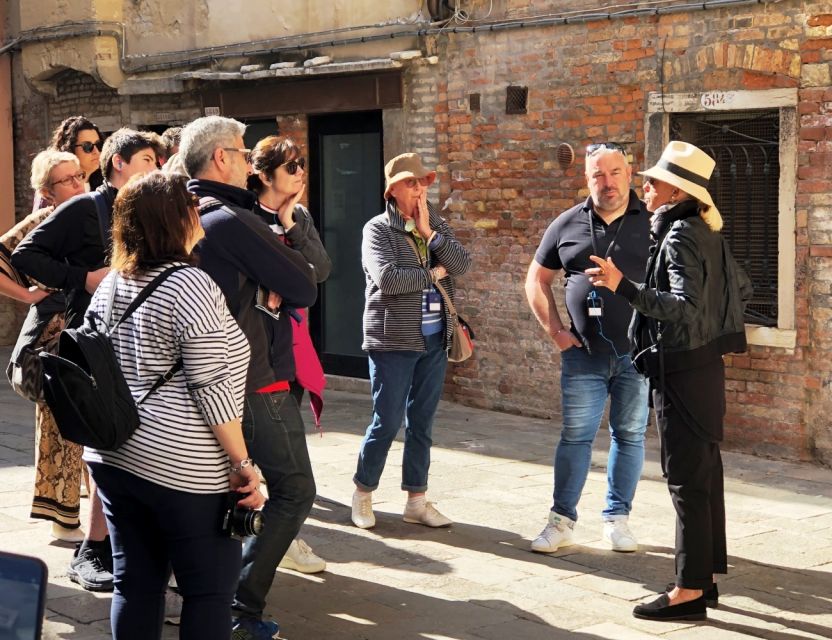
This is a strong fit if you:
- Want an easy first pass through the St Mark’s to Rialto corridor without getting lost in the shuffle
- Like learning how Venice works—trade lanes, political storytelling, and why certain buildings are there
- Want a gondola ride that feels integrated with the walk, not tacked on randomly
- Prefer a manageable time commitment (about 3 hours total)
It’s less ideal if you:
- Need full wheelchair access, since the whole itinerary may not be accessible for wheelchair users or people with walking difficulties
- Get motion-sick easily on boats (no duration beyond the gondola is provided, but the ride is part of the package)
- Are extremely sensitive to timing and want an exact, frictionless 30-minute water experience
Should you book this Venice walking tour and gondola combo?
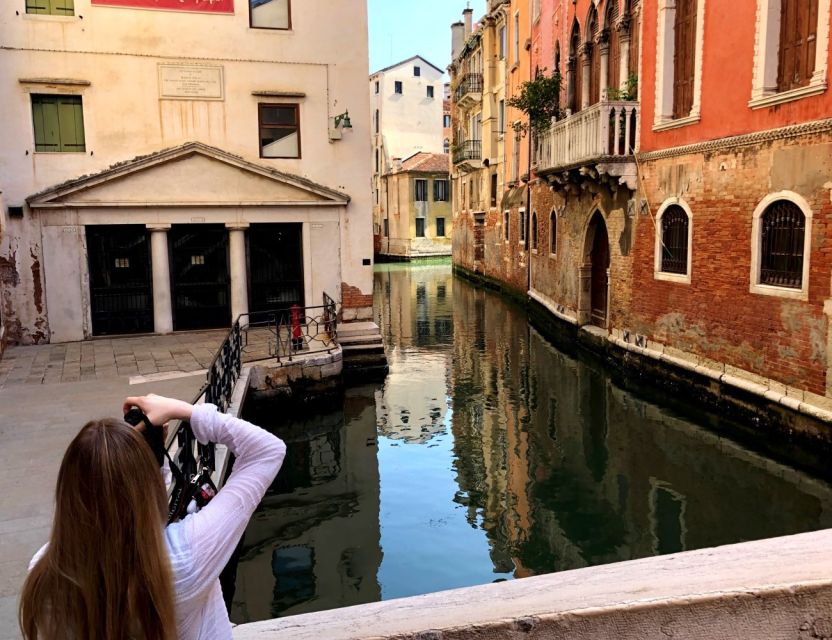
I’d book it if you want a guided orientation that covers the essentials—St Mark’s Square, the route toward Rialto, Mercerie lanes, Marco Polo’s connection, and those signature façades like La Fenice and the Basilica della Salute—then adds a short gondola ride to cap the day.
I’d think twice if you’re booking primarily for a long gondola moment. Treat this as a “classic Venice hit,” not a prolonged canal cruise. And if you’re going in winter, plan to get the explanations during the walk, not from the boat.
If you go into it with that mindset, this $80 combo can be one of the most efficient ways to feel Venice in both directions—on foot for context, and on the water for atmosphere.
FAQ
How long is the full tour?
The total duration is about 3 hours, combining a 1.5-hour walking tour and a 30-minute gondola ride.
What is included in the price?
The tour includes a live guide and the gondola ride.
Where do we meet?
You meet at Calle larga de l’ Ascension, near the post office, behind the Correr museum. A TURIVE staff member will check your voucher.
What sights are covered during the walk?
You’ll see highlights around St Mark’s Square and along the route toward Rialto, including the Byzantine façade of St Mark’s Basilica, the Doge’s Palace area, Campo Santa Maria Formosa, the former home of Marco Polo, the Malibran Theatre, and the Mercerie streets.
What happens during the gondola ride?
You’ll take a gondola ride for about 30 minutes through Venice’s canals off the Grand Canal area, including a return drift toward St Mark’s Basin.
Are there guided explanations during the gondola ride?
During the winter period (Nov 1 to Mar 31), the tour is bilingual, and no explanations are provided during the gondola ride.
Is the gondola ride ever suspended?
Yes. The gondola ride might be suspended in case of bad weather.
What languages are available?
The live tour guide is available in English, Spanish, French, and German.
Is the tour wheelchair accessible?
The whole itinerary may not be accessible for wheelchair users and those with walking difficulties.
How many people fit in one gondola?
A gondola can host up to 5 people. If your reservation includes more than 5 people, your group will be divided into smaller groups.
What’s the cancellation policy?
You can cancel up to 24 hours in advance for a full refund.