REVIEW · BERLIN
Third Reich Berlin: Hitler and WWII Walking Tour
Book on Viator →Operated by Insider Tour Berlin · Bookable on Viator
Berlin reads like a wartime map. This Third Reich Berlin walking tour walks you from the regime’s power centers to the last days of 1945, with stops that connect ideology to real, physical places. I especially like the way it ties Hitler’s bunker area and the Reich government route to what happened to Berliners. I also like the memorial stops that force you to face what the Nazis did to Jews and political opponents, not just the big names.
One thing to plan for: this is an outdoors walk with real distance and cold-weather exposure. Even with a guided pace, you’ll want comfortable shoes and layers, because you’ll cover several key sites in about 3 hours.
In This Review
- Key things you’ll notice on this Third Reich Berlin tour
- Starting at Friedrichstraße: how the tour sets the whole Third Reich story
- Trains to Life, Trains to Death: deportation memorials you can’t speed through
- The Reichstag in two acts: 1933 power grab and 1945 fall
- Tiergarten Soviet Memorial and the Brandenburg Gate: remembering the victors and the regime’s stage
- Holocaust Memorial slabs and Topography of Terror: how the tour forces you to face systems
- Fuhrerbunker and the Reich Chancellery area: walking Hitler’s final-days geography
- Wilhelmstraße, Göring’s Air Ministry area, and the propaganda workflow of the Third Reich
- Akademie der Künste and Albert Speer: when architecture becomes political power
- Wrapping up near Checkpoint Charlie: what you’ll carry with you after 3 hours
- Price and logistics: is $24.07 a good deal for this Berlin WWII route?
- Should you book this Third Reich Berlin walking tour?
- FAQ
- How long is the Third Reich Berlin walking tour?
- What’s the price per person?
- What language is the tour offered in?
- Where does the tour start and where does it end?
- Is hotel pickup included?
- What’s included in the tour price?
- Is admission to the Reichstag building included?
- Are most stops free to enter?
- How big is the group?
Key things you’ll notice on this Third Reich Berlin tour
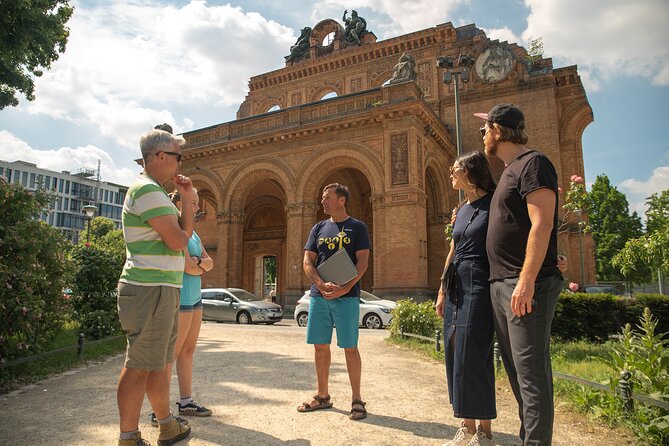
- A tight 3-hour route through the Nazi power corridor and the Battle of Berlin landmarks
- Hitler’s last-day geography, including the bunker area and the Reich Chancellery site
- Propaganda meets policy, with stops tied to Goebbels and the machinery of control
- Holocaust memorials in the middle of the walk, including deportation and murder remembrance
- Reichstag symbolism, from the 1933 fire story to the Soviet flag moment in 1945
- A strong guide-led narrative, with many guides praised for clarity and staying sensitive to the subject
Starting at Friedrichstraße: how the tour sets the whole Third Reich story
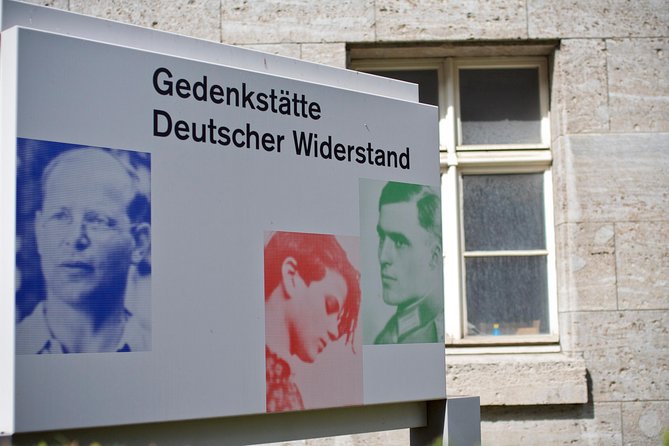
You begin near Reichstagufer (not far from central sights) and kick off at Berlin Friedrichstraße Station. It’s a smart starting point because it helps you orient fast: you get a quick framework for where the Third Reich’s decision-making happened and why Berlin became the final battlefield.
From the start, the tour is built around cause and effect. You’re not just shown “important buildings.” Your guide connects air raids, government planning, and propaganda into one through-line, so the later stops don’t feel random. Expect mention of the Luftwaffe headquarters area on Wilhelmstraße, the Ministry of Propaganda, and the way Nazi officials used Berlin’s institutions to push conquests and repression.
Then the walk starts moving toward the core political stage. You’ll hear how the 1933 Reichstag fire helped Nazis consolidate power, and you’ll get the context for why the Reichstag mattered again in 1945. That framing matters, because by the time you reach the big memorials, you’ll know what they’re answering.
Practical note: this is a group tour that runs in English, and it caps at 25 people. That size usually keeps things conversational, so if you have a question about a date, a term, or a person, you’re more likely to get an answer than on a huge bus-style tour.
You can also read our reviews of more walking tours in Berlin



Trains to Life, Trains to Death: deportation memorials you can’t speed through
A key emotional stop is Trains to Life, Trains to Death, focused on the deportation of Jews from Berlin to Nazi concentration camps during World War II. This memorial is free to visit, and your guide uses it to explain what deportation meant in real life: forced removals, terror, and a bureaucracy that treated people as cargo.
This is the moment where the tour stops being “WWII facts” and turns into “what the regime did to human beings.” The message isn’t subtle, and it doesn’t try to be. It’s there to make you slow down and think about the route from home to train to camp, not just the outcome.
You’ll also hear this tied to the broader system: persecution didn’t come out of nowhere, and it didn’t end with just a few bad actors. Your guide links this stop to the policies and daily enforcement that made the Holocaust possible.
One consideration: if you’re sensitive to Holocaust subject matter, give yourself permission to feel it. This tour includes several remembrance sites, and they’re not designed for fast sightseeing.
The Reichstag in two acts: 1933 power grab and 1945 fall
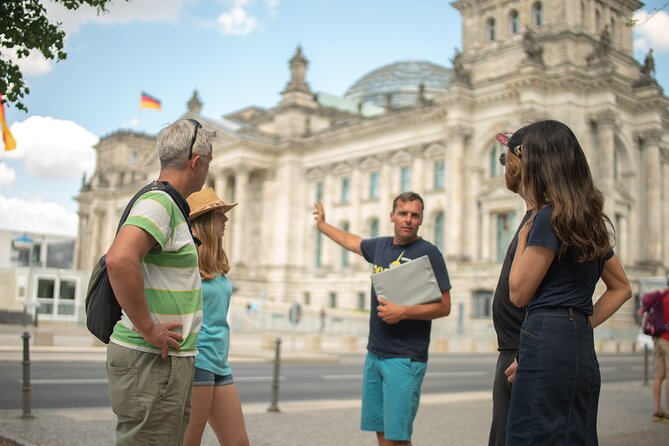
No German stop on a WWII tour carries more symbolism than the Reichstag building. Here, the guide connects two turning points at the same address.
First is 1933, when a fire ravaged the Reichstag and the Nazis used the chaos as a pretext to dismantle democracy and tighten control. Second is 1945, when Soviet forces raised a flag over the building after intense fighting. Seeing this in the same guided narrative helps you understand how symbols can be used twice: once to seize power, and later to mark defeat.
Reichstag admission isn’t included in the tour price, so you may need to plan for any entry fee if you want inside access. Even without going in, the exterior and the guide’s story are usually enough to make the place click.
What I like about including the Reichstag is that it gives you a timeline anchor. After you’ve heard about propaganda headquarters, military planning, and resistance movements, the Reichstag becomes the place where those threads converge into one clear message: dictatorship didn’t just happen by accident, and its collapse had a specific battlefield shape.
Tiergarten Soviet Memorial and the Brandenburg Gate: remembering the victors and the regime’s stage
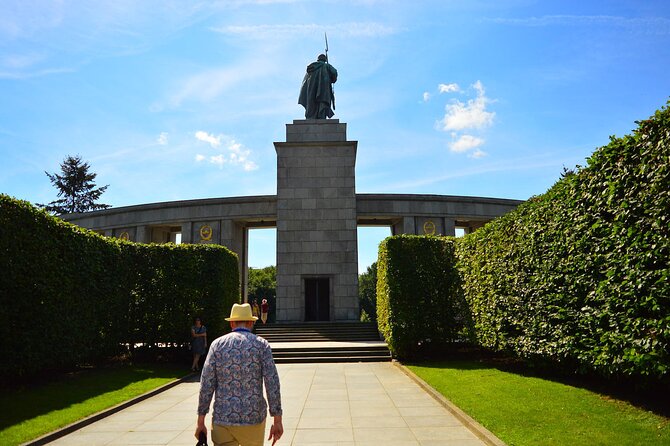
From the Reichstag area, the walk heads to Soviet Memorial Tiergarten, a major stop tied to the Battle of Berlin. This memorial honors Soviet soldiers who fought and died in the final offensive. The centerpiece is a large statue of a Soviet soldier holding a flag over two fallen Nazi soldiers, with a solemn cemetery setting the mood.
Your guide uses the memorial to talk about the cost of war and the role of the Red Army in ending Nazi rule. This is important for balance. Berlin’s Nazi past is heavy, but the Allied victory story also matters if you want the full “how Berlin ended” picture.
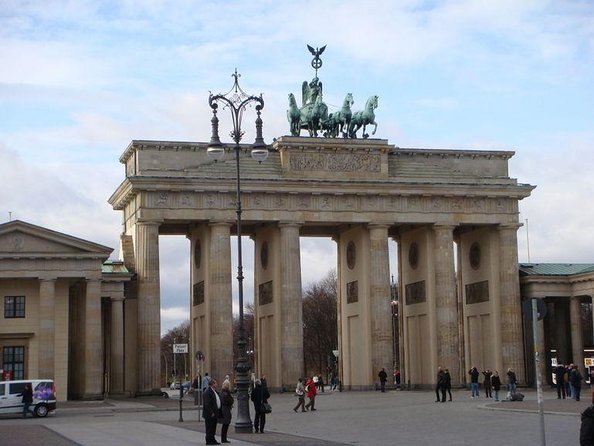
Then you’ll move to the Brandenburg Gate, an iconic Berlin landmark that carries a complicated Nazi-era association. During the Third Reich, it was used as a backdrop for public rallies and displayed with swastikas. Today it’s known for German reunification symbolism, but the tour doesn’t let you forget the earlier use.
I appreciate this pairing because it forces you to hold two meanings at once: one monument can be propaganda hardware, and later it becomes national memory. Your guide’s job is to keep those layers from being turned into simple slogans.
Holocaust Memorial slabs and Topography of Terror: how the tour forces you to face systems
Two major remembrance stops come close together on this route.
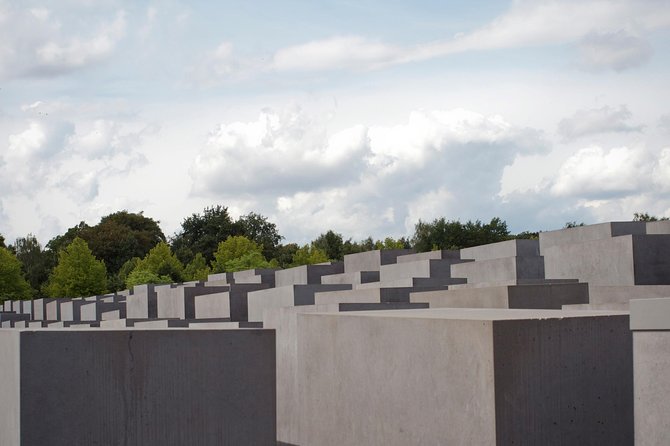
First is the Memorial to the Murdered Jews of Europe, the field of 2,711 concrete slabs with varying heights. Walking the pathways creates a disorienting feeling that matches the memorial’s purpose: you’re meant to experience unease, not just read information. Your guide encourages reflection on what happened and why remembering matters.
Next is Topography of Terror, a museum and memorial at the site of former SS and Gestapo headquarters. This stop is different from a “stand and look” memorial. It’s built around exhibits: photographs, documents, and accounts that explain how the SS and Gestapo enforced repression and persecution, including the Holocaust. In other words, it shows the machinery, not only the outcome.
This is where the tour earns its “learning” reputation. It doesn’t treat the Nazis like abstract evil. It connects institutions, enforcement, and everyday terror into a single chain of actions that ordinary people lived under.
One practical upside: both memorial sites are free, so you can spend your money on other Berlin essentials instead of burning your budget on ticket fees. The tour already includes a guide, and these stops do a lot of the heavy lifting for interpretation.





Fuhrerbunker and the Reich Chancellery area: walking Hitler’s final-days geography
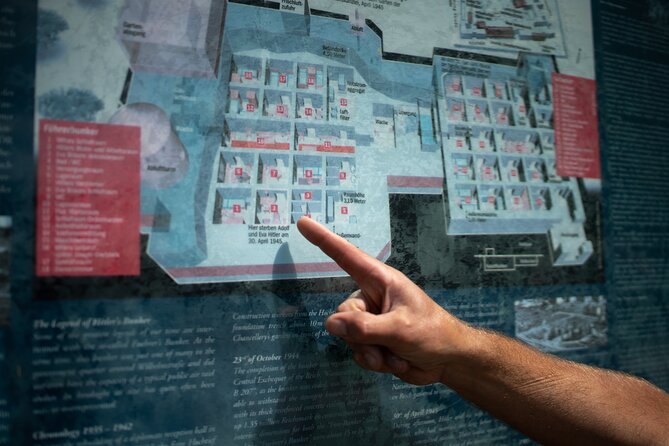
The tour includes the Fuhrerbunker area, where Hitler spent his last days in April 1945. You’ll stand above the bunker location and hear how the last chapter of the Nazi government ended there, with attention to the surrounding context of the Reich Chancellery site.
This segment also connects to Albert Speer’s architecture through the mention of the Reich Chancellery built by Speer. Even if you’ve only read a little about the Third Reich, this is where Berlin’s power buildings become part of the story. The physical layout and the concentration of government spaces help you understand how a regime can act like a machine: orders flow, propaganda spreads, and repression becomes policy.
Your guide also threads in the resistance movement opposing Nazi rule, including Henning von Tresckow, Hans Oster, and Klaus or Claus von Stauffenberg (the story is tied to the key resistance figures named on this tour). You’ll hear how opposition rose under a dictatorship that had already built strong control systems.
A note on pacing: this part can feel surreal because the spaces are real but the events are extreme. If you want a calmer experience, this is where I’d take an extra breath and just absorb the guide’s timeline before moving on.
Wilhelmstraße, Göring’s Air Ministry area, and the propaganda workflow of the Third Reich
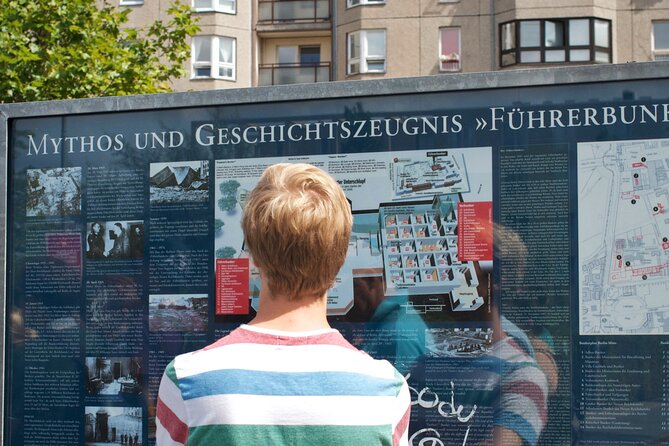
One of the most important stretches on the walk is Wilhelmstraße, described as a central hub for Nazi administration. Here you’re talking about multiple ministries and decision offices in one concentrated area, not scattered “fascist spots” around town.
Your guide explains how the street housed key offices tied to foreign affairs, the Reich Chancellery, and the Ministry of Propaganda, and how leadership figures used these workplaces for strategy and persecution. The point isn’t name-dropping. It’s showing how war planning and oppression ran through the same channels.
You’ll also get time at Niederkirchnerstraße, tied to Hermann Göring’s former Air Ministry (the Reichsluftfahrtministerium), associated with the Luftwaffe. This stop helps you see the regime’s military ambition in physical form: a grand design that reflects authority and ambition, tied to the air force’s role in major campaigns.
And because Goebbels is part of the tour’s core storyline, you’ll also hear about the Ministry of Propaganda and how Joseph Goebbels composed infamous speeches there. The goal is to connect propaganda to the decisions that followed it.
If you care about the big picture, this is the segment where Berlin stops being just a sightseeing city and starts being a case study in how government, media messaging, and violence can reinforce each other.
Akademie der Künste and Albert Speer: when architecture becomes political power
Another distinctive inclusion is the Akademie der Künste area, linked to the Nazi regime through Albert Speer’s influence. Your guide connects Speer, Hitler’s chief architect and Minister of Armaments, to the regime’s preference for monumental neoclassical designs that signaled power and authority.
The tour doesn’t claim every art institution is guilty in the same way, but it does acknowledge the deeper question: what does it mean when influential cultural forces align with political violence? After the war, the Akademie is described as undergoing a reckoning with its Nazi-era ties, similar to other institutions in Berlin that had to confront complicity and influence.
This stop is valuable because it expands the tour beyond politics and battlefields. Nazi control wasn’t only about uniforms and prisons. It also shaped the visual language of power, and Berlin’s architecture is part of what you see every day.
You can also get a good sense of why Berlin’s postwar memory culture is complicated. Buildings remain, institutions continue, and the past keeps showing up unless someone teaches you how to read it.
Wrapping up near Checkpoint Charlie: what you’ll carry with you after 3 hours
The tour ends at Topography of Terror on Niederkirchnerstraße 8, very close to Checkpoint Charlie. That end point is practical: you finish near a dense patch of Berlin’s central area, so it’s easier to keep exploring without committing to a long transit.
At about 3 hours, the tour aims for high focus rather than endless stops. Still, it can feel like more than 3 hours because you’re walking between multiple heavy sites where you’ll naturally pause. Based on real pacing guidance you’ll hear, plan for a brisk walking rhythm and roughly 5,000 steps between points.
For me, the lasting value is the mental map you leave with. You don’t just remember the names. You connect Goebbels’ propaganda workflow, Göring’s military administration presence, the resistance figures mentioned, and the final Battle of Berlin route into a single narrative. Then the memorial stops give you the “why it matters” piece.
Price and logistics: is $24.07 a good deal for this Berlin WWII route?
At $24.07 per person for about 3 hours, this is strong value for Berlin. You’re paying for more than walking guidance. You’re buying interpretation that would be harder to assemble on your own—especially with this many sites connected to the same wartime system.
The tour includes a local expert guide and the walking tour itself. Most stops are free to enter. The one notable exception is the Reichstag Building, where admission is not included, so if you want inside access, budget for that separately.
Group size matters too. With a maximum of 25 travelers, it’s easier to hear the guide and ask questions. And since the tour is offered in English with a mobile ticket, it’s usually easy to fit into a half-day plan.
My practical take: if you’re the type who likes context with your sightseeing, this price is a bargain. If you only want light, quick photo stops, you might find the subject matter and pauses a bit intense for the time.
Should you book this Third Reich Berlin walking tour?
Book it if you want a guided route through Berlin’s Nazi-era power centers and the final days of WWII, with memorial stops that keep the story grounded in harm done to real people. It’s a good match for history-minded visitors who appreciate clear timelines and who don’t mind that the walk includes Holocaust remembrance sites.
Skip it (or consider pairing it carefully with other plans) if you’re not comfortable with heavy WWII and Holocaust topics, or if long outdoor walking in cold weather sounds miserable. Also, if you want the Reichstag interior visit, plan for that extra admission since it’s not included.
If you do go, I’d choose day with better walking weather, wear proper shoes, and leave space in your schedule after the tour. This one stays with you.
FAQ
How long is the Third Reich Berlin walking tour?
It runs for about 3 hours.
What’s the price per person?
The price is $24.07 per person.
What language is the tour offered in?
The tour is offered in English.
Where does the tour start and where does it end?
It starts at Reichstagufer 17, 10117 Berlin and ends at Topography of Terror, Niederkirchnerstraße 8, 10963 Berlin, very close to Checkpoint Charlie.
Is hotel pickup included?
No, hotel pickup and drop-off are not included.
What’s included in the tour price?
You get a local expert guide and the 3-hour walking tour.
Is admission to the Reichstag building included?
No. Reichstag admission is not included.
Are most stops free to enter?
Yes. The tour lists admission ticket Free for most stops, with Reichstag being the one noted as not included.
How big is the group?
The tour has a maximum of 25 travelers.