REVIEW · BERLIN
Berlin: Third Reich and Cold War 2 Hour Walking Tour
Book on GetYourGuide →Operated by Insider Tour Berlin · Bookable on GetYourGuide
Berlin history hits hard on foot. In a tight Third Reich and Cold War route, you’ll walk through the places that shaped Nazi power, the city’s division, and reunification. It’s not just sightseeing—it’s a guided story you can measure with your own steps.
I love the way the storytelling stays clear and paced, with guides praised for making the time fly (people mention Hannah, Jimmy, Klaus, and Scott for exactly that). I also love the physical scale of the experience, especially the 200-meter stretch of the Berlin Wall, where the decades of separation stop being abstract. One consideration: the topics are heavy, and with only about 2 kilometers in two hours, you won’t linger long at each site.
In This Review
- Key highlights you’ll feel right away
- A 2-hour walk that connects Nazi Germany to reunified Berlin
- Starting at Brandenburg Gate: where division and reunification share one view
- The Reichstag stop: the Reichstag Fire and Hitler’s rise to power
- Tiergarten Soviet War Memorial: tanks and the cost of the Battle of Berlin
- The Holocaust Memorial: honoring victims as you walk through the story
- Hitler’s bunker site and the machinery of terror
- Topography of Terror and the SS/Gestapo sites: learning without losing the plot
- Detlev-Rohwedder-Haus: a quick “between-regimes” stop you’ll understand on the walk
- The Berlin Wall moment: 200 meters of division you can measure
- Checkpoint Charlie: the Cold War standoff in one final stop
- Price and value: why $23 for two hours can actually work
- Who should book this tour (and who might want something else)
- Should you book this Berlin Third Reich and Cold War walking tour?
- FAQ
- How long is the Berlin: Third Reich and Cold War walking tour?
- Where does the tour start and how do I find it?
- What languages are available?
- Does it run in bad weather?
- What should I bring?
- Is it wheelchair accessible, and can I cancel?
Key highlights you’ll feel right away
- Third Reich to Cold War timeline, told in the streets, not in a lecture hall
- Brandenburg Gate start gives you a strong visual anchor from the first minute
- Reichstag Fire context helps explain how Hitler gained power
- Soviet War Memorial in Tiergarten includes preserved Red Army tanks and the Battle of Berlin losses
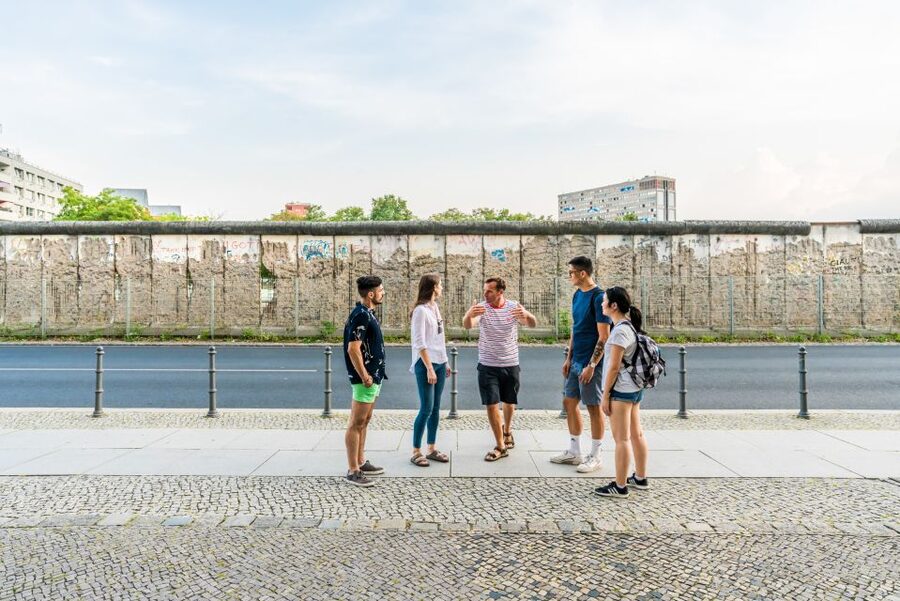
- A real Berlin Wall segment (200 meters) makes division tangible
- Checkpoint Charlie closes the loop with the tanks and escape drama
A 2-hour walk that connects Nazi Germany to reunified Berlin

If Berlin has a superpower, it’s turning big, complicated history into something you can actually see. This 2-hour walking tour does that by moving you through major Third Reich sites and then into the Cold War geography that followed.
You start at Brandenburg Gate, then work your way toward the landmarks people associate with Nazi rule, the aftermath of WWII, and the long years of division. Along the way, you get a guide who keeps things moving—lots of feedback calls out perfect pacing and easy-to-follow explanations—so you’re not stuck staring at stone signs without context.
The route is about 2 kilometers total. That’s a good thing. You get multiple stops in a short window, which is ideal for your first days in Berlin or for travel days when you don’t want a half-day commitment.
You can also read our reviews of more walking tours in Berlin



Starting at Brandenburg Gate: where division and reunification share one view
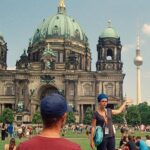
You begin at the Tourist Information at Brandenburg Gate (Pariser Platz 1). Look for a guide holding a pink umbrella right at the gate. It’s an easy meeting point too: the Brandenburger Tor station (S-Bahn/U-Bahn) and nearby buses get you close without fuss.
Why this start matters: the Brandenburg Gate is the kind of monument that can mean different things depending on the era. The tour frames it as a symbol that stood in the center of Nazi showmanship, then later became part of the tension-filled Cold War world—and finally a symbol of Germany’s unity in 1989.
From the sidewalk, you’ll also get a lesson in how Berlin’s street-level “wow factor” can hide political machinery. That’s the theme of the whole walk: you look familiar, then you learn what was happening beneath the surface.
The Reichstag stop: the Reichstag Fire and Hitler’s rise to power
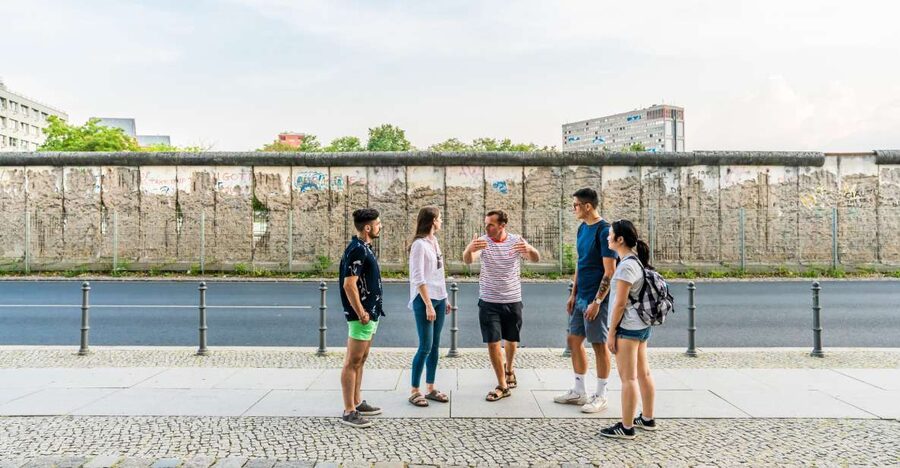
Next comes the Reichstag, and this is where the tour turns from geography to cause-and-effect. You’ll hear how the tour connects the 1933 Reichstag Fire to a turning point in Hitler’s rise—the kind of historical pivot that affected the next years in brutal ways.
A key value here is that the Reichstag isn’t treated like a museum object. Your guide helps you understand why this building became so important, including how it survived destruction and later division, and how it evolved into the seat associated with German democracy.
Practical note: the Reichstag area can be busy, so wearing comfortable shoes pays off. You’ll be standing, walking, and listening in the open air.
Tiergarten Soviet War Memorial: tanks and the cost of the Battle of Berlin
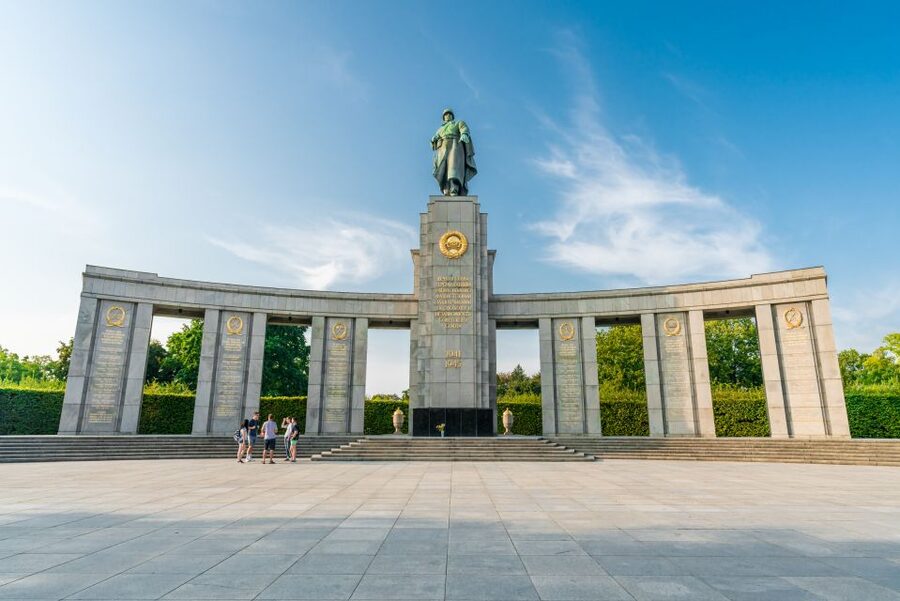
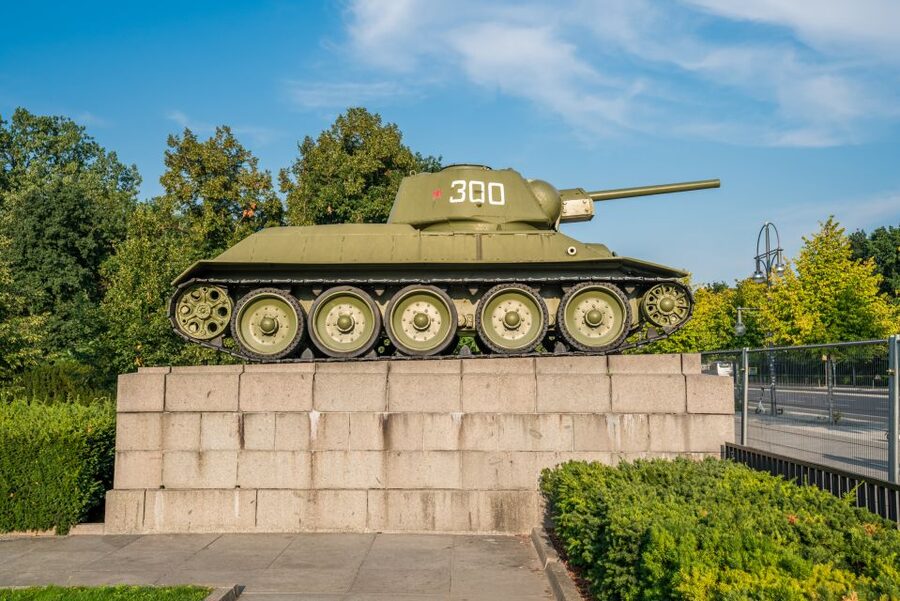
In Tiergarten, you reach the Soviet War Memorial, where you can see preserved Red Army tanks. This stop is emotionally different from the Nazi-focused sites, and that contrast is part of why the tour works.
You’ll also learn the scale of loss tied to the Battle of Berlin—the tour mentions 80,000 Soviet soldiers who died. That number isn’t just a statistic. It gives meaning to why memorial spaces like this were built and maintained, and why Berlin remembers WWII from more than one perspective.
This is a strong stop for anyone who knows WWII history in broad strokes but wants to understand how Berlin’s own landscape carries different narratives at the same time.
The Holocaust Memorial: honoring victims as you walk through the story
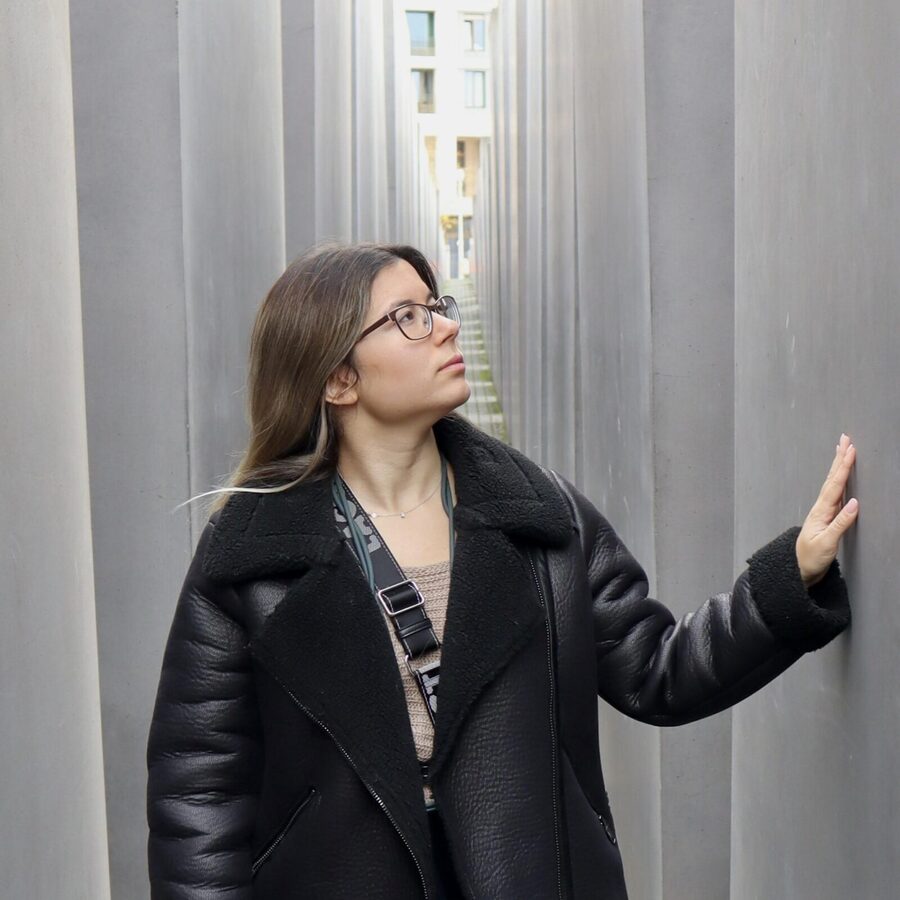
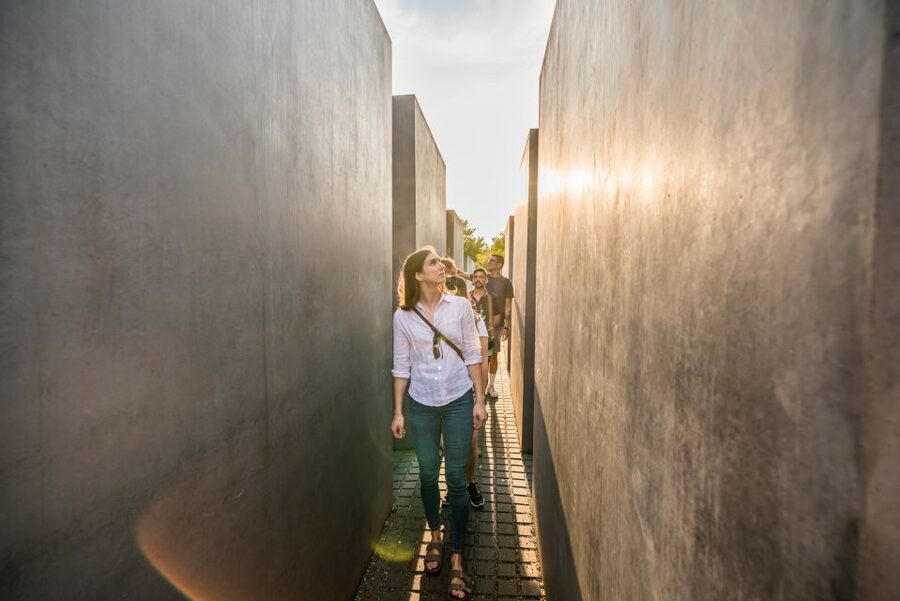
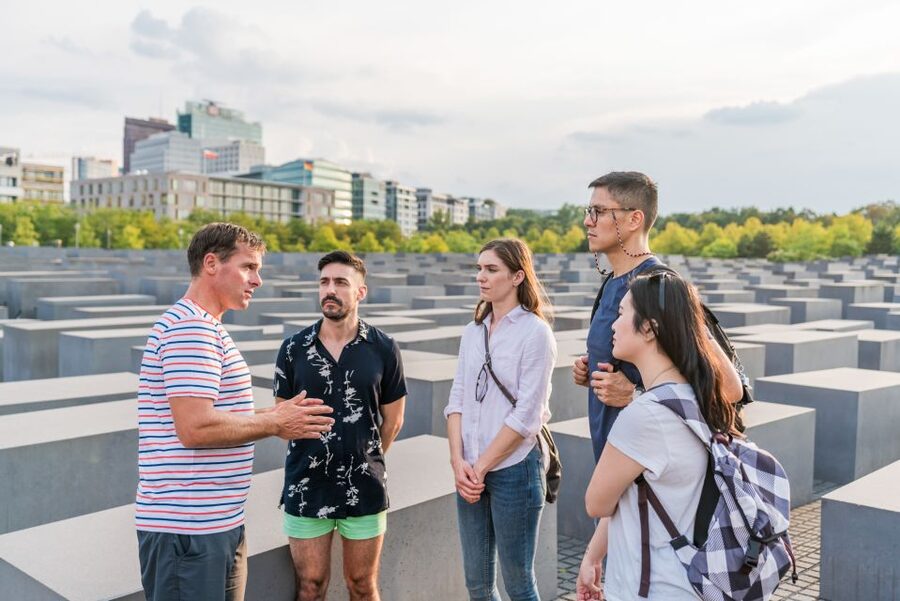
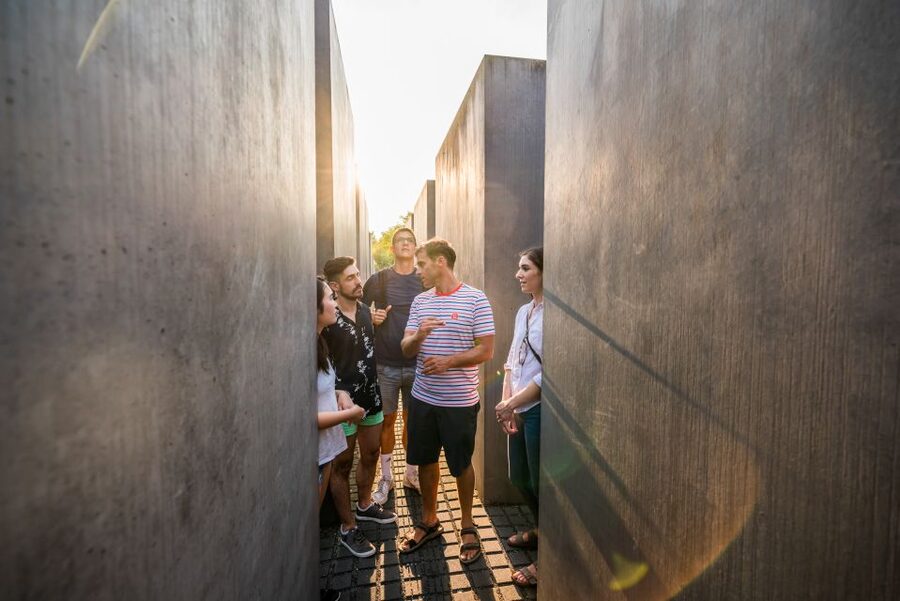
The tour then brings you to the Memorial to the Murdered Jews of Europe, a striking, somber place that asks for attention. You’re not just told facts—you’re encouraged to pause, look, and take in what the memorial is doing.
This stop matters because it anchors the tour in the human reality of the Holocaust. You’ll learn it honors six million Jewish victims, and the guide’s job here is to keep the focus respectful while still tying it back to the broader progression from dictatorship to war and genocide.
One simple tip: bring your camera if you want it, but also put it down when your guide asks you to. This is the one place on the route where “capturing” can easily turn into skipping.
A few more Berlin tours and experiences worth a look

Hitler’s bunker site and the machinery of terror
The tour moves into the grim final phase of the Third Reich at the site of Hitler’s Bunker, where he spent his last days. Even without stepping inside, standing at the location is a reminder that the collapse of a regime has a physical geography—streets, offices, and underground spaces where decisions were made.
Nearby, you’ll also hear about Hermann Göring’s former Ministry of Aviation, later tied to the birthplace of East Germany in 1949. That’s a useful detail for your understanding of postwar Berlin: buildings weren’t erased; they were reused, renamed, and repurposed by whatever power came next.
Then the tour connects forward to the former headquarters of the SS and Gestapo, where the Nazi regime’s terror was organized. In the same stretch, you’ll reach Topography of Terror, which is presented as the place where the systems behind the oppression can be understood through the history tied to the location.
If you’re the type who wants a straight line through history, this portion delivers. If you’re the type who likes it slow and personal, you might feel the emotional weight quickly—so having that steady guide pace helps keep you oriented.
Topography of Terror and the SS/Gestapo sites: learning without losing the plot
At Topography of Terror, you get a concentrated look at how the Nazi regime operated—less about dramatic speeches, more about how power was administered. The tour’s way of explaining it is practical: it connects offices and institutions to what you’re seeing in the street.
This is where the guide quality really shows. In the feedback, many guides are praised for explaining complex history with clear delivery and answering questions while walking between sites. That helps here, because it’s easy to get lost in names and organizations if your guide doesn’t keep the timeline tidy.
The good news: you’re not asked to know everything already. The tour sets up the story as you go, so you can follow even if Berlin history isn’t your specialty.
Detlev-Rohwedder-Haus: a quick “between-regimes” stop you’ll understand on the walk
You also pass by Detlev-Rohwedder-Haus as part of the route. The tour uses this in-between stop to keep you moving through the changing political layers around these sites.
Even if you don’t know what you’re looking at when you first arrive, your guide helps connect it to the surrounding context—why buildings and neighborhoods matter after regime changes, not just during them. This is one of those small “link points” where a good guide earns their tip.
If you’re the type who likes to take notes, this is a good place to do it. The tour’s overall timeline is easiest to retain when you capture a few keywords from the “transitional” moments.
The Berlin Wall moment: 200 meters of division you can measure
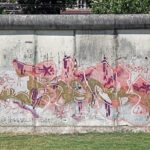
Then comes the most visceral part of the walk: a 200-meter stretch of the Berlin Wall. Walking along it turns “Cold War division” from a sentence into something you can sense—your brain starts estimating distances and barriers, and suddenly the story feels close to real life.
The tour also includes the human side: you’ll hear about people who risked everything to escape, and what the wall’s fall meant for Berliners and for Europe.
Practical tip: stand where you can actually see the wall segment, not where it’s convenient. Photos are fine, but the bigger value is letting the guide explain the escape attempts and the logic of surveillance and control. The wall is the “evidence” in the tour, so give it your full attention.
Checkpoint Charlie: the Cold War standoff in one final stop
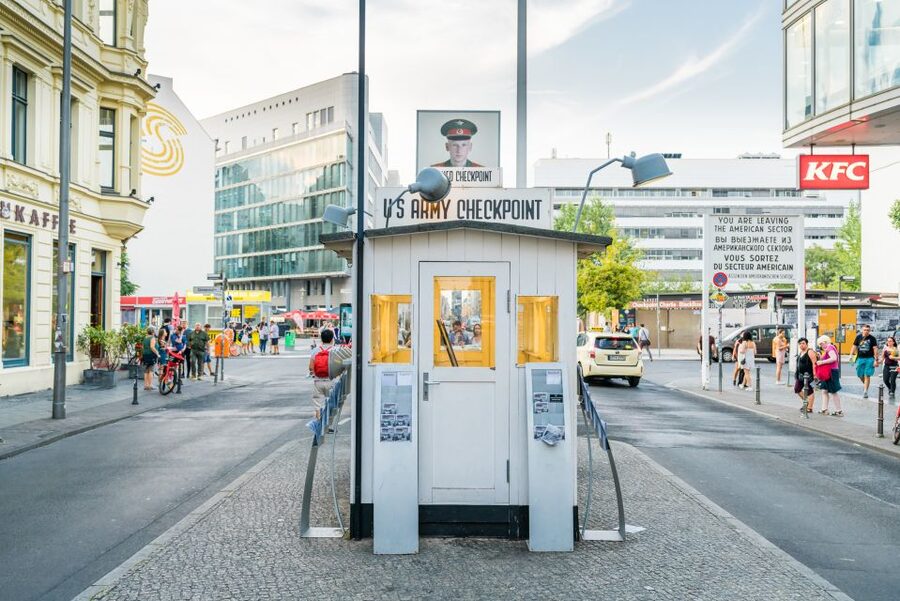
Your tour concludes at Checkpoint Charlie, where American and Soviet tanks once faced off. This is the end point that gives the timeline a dramatic closure without needing a stage.
The tour focuses on the tense standoff atmosphere and then brings it back to real human stories—escape attempts and the final hours leading up to the wall’s fall and the reunification of Germany.
Checkpoint Charlie can feel touristy in Berlin, but with a guide you get the point. You’re not only looking at the site—you’re learning why it mattered as a symbol of control, negotiation, and desperation.
When your tour ends, it ends back where you started, which is handy if you’re planning dinner or an evening museum visit.
Price and value: why $23 for two hours can actually work
At $23 per person for two hours, the main value isn’t just the sites. It’s the time-saver and the clarity.
Berlin has tons of major landmarks, but if you go “solo,” you’ll usually pick up bits: a plaque here, a vague timeline there. This tour’s value is that a guide ties the key moments together—Third Reich power, WWII aftermath, and Cold War division—so you leave with a coherent mental map.
Also, it covers a lot of big-ticket Berlin themes in one go:
- the Reichstag and 1933 political turning points
- the Soviet War Memorial with tanks and the scale of loss
- the Holocaust Memorial with a solemn focus on victims
- the bunker area and institutions of terror
- the Berlin Wall segment and Checkpoint Charlie
In other words, the price buys a guided storyline that compresses several separate research trips into one efficient walk.
Who should book this tour (and who might want something else)
This is a great fit if you:
- want a first-pass understanding of Berlin’s 20th-century shifts
- like walking tours where you learn while moving
- want an organized route that covers both Nazi-era sites and Cold War landmarks
- appreciate guides who keep things lively and explain clearly (feedback frequently praises guides for engagement, humor, and the ability to answer questions)
It may feel less ideal if you:
- prefer long, quiet time at memorials and monuments
- need a very slow pace with deep reading at every stop
- get overwhelmed by heavy topics without breaks (the tour is compact, so you’ll be absorbing a lot quickly)
Should you book this Berlin Third Reich and Cold War walking tour?
If you want an efficient, street-level way to understand how Berlin went from Nazi rule to Soviet conflict to a divided city and then to reunification, I’d book it. The route is tight, the stops are the right mix, and the repeated feedback about guide pacing and clear storytelling suggests you’ll stay engaged for the full two hours.
Book it if you value context as much as landmarks—especially if Berlin is new for you. If you’re already an expert and only want deep museum-grade detail, you might pair this with a longer onsite program. But for most visitors, this tour gives you a fast, memorable framework you can build on the rest of your trip.
FAQ
How long is the Berlin: Third Reich and Cold War walking tour?
The tour lasts about 2 hours, with about 2 kilometers of walking.
Where does the tour start and how do I find it?
Meet at the Tourist Information at Brandenburg Gate, Pariser Platz 1. The guide is looking for you at the Brandenburg Gate area with a pink umbrella.
What languages are available?
The tour is offered in English and German. Private group tours may not always offer the same languages as shared group tours, so check the language option you want.
Does it run in bad weather?
Yes. The tour runs in all weather conditions and on public holidays.
What should I bring?
Wear comfortable shoes, and consider bringing an umbrella, a camera, and water.
Is it wheelchair accessible, and can I cancel?
The tour is wheelchair accessible. You can cancel up to 24 hours in advance for a full refund, and there’s also a reserve now & pay later option.