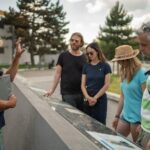
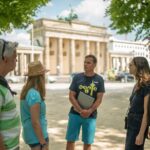
Berlin has a habit of hiding the good stuff. This guided walk takes you into courtyards and passageways around Berlin-Mitte, where you’ll spot Jewish-life history, art studios, and places locals actually linger. You start near Hackescher Markt and spend two hours tracing how the area around the New Synagogue evolved into the city’s creative, international heart.
I especially like the way the guide stitches together history and architecture—not as trivia, but as clues to how people lived, worked, created, and relaxed behind ordinary street facades. In the best runs, guides such as Nick, Nicolas, Lydia, Alex, Susanne, and Minit turn a short walk into a story that can run for centuries, with lots of concrete details you can see as you go.
One consideration: this is rain-or-shine, and it is a focused walking tour. Also, the tour is offered in English and German, but if English matters to you, confirm language when booking, since at least one booking noted the tour being German-only.
In This Review
- Key Courtyard Moments You Should Not Miss
- Why Berlin Courtyards Feel Like a City Secret
- Meeting at Hackescher Markt and Getting Started Right
- Spandauer Vorstadt and the Jewish-Led Story Around the New Synagogue
- Haus Schwarzenberg and the Art-Through-Time Courtyard
- Hackesche Höfe, Rosenhöfe, Sophienkirche, and Auguststraße
- Heckmann Höfe: The Color, the Trees, and the Local Hangout
- Price, Language, and What to Bring for 2 Hours
- Should You Book This Berlin Hidden Backyards Tour?
- FAQ
- How long is the Berlin Hidden Backyards guided walking tour?
- Where do I meet the guide?
- What stops will I visit during the tour?
- What is the tour price?
- Is the tour offered in English?
- Does the tour run in bad weather?
- Is food or drinks included?
- Where does the tour end?
- Is the tour wheelchair accessible?
Key Courtyard Moments You Should Not Miss
- Spandauer Vorstadt near the New Synagogue: how the neighborhood’s Jewish-life roots connect to what you see today
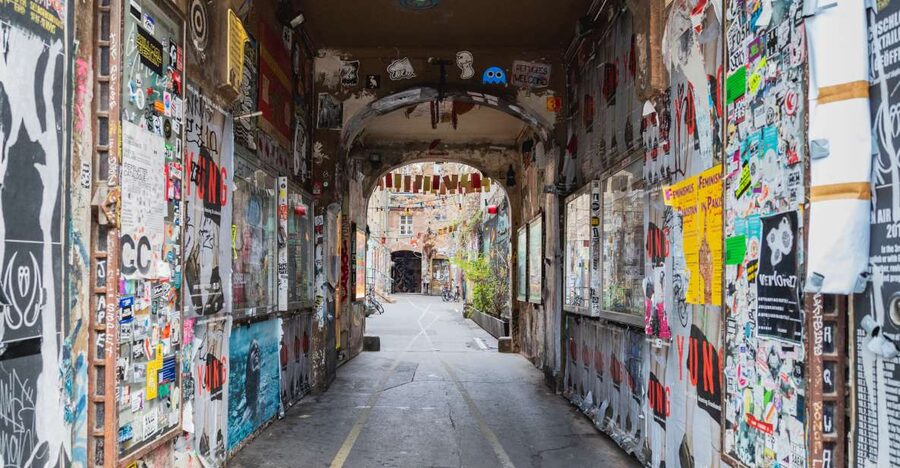
- Haus Schwarzenberg courtyard: art studios and street art inside a historic courtyard shell
- Hackesche Höfe and Rosenhöfe: classic Berlin courtyard culture, seen on foot rather than from the sidewalk
- Sophienkirche and Auguststraße context: landmark stops that give the route meaning, not just movement
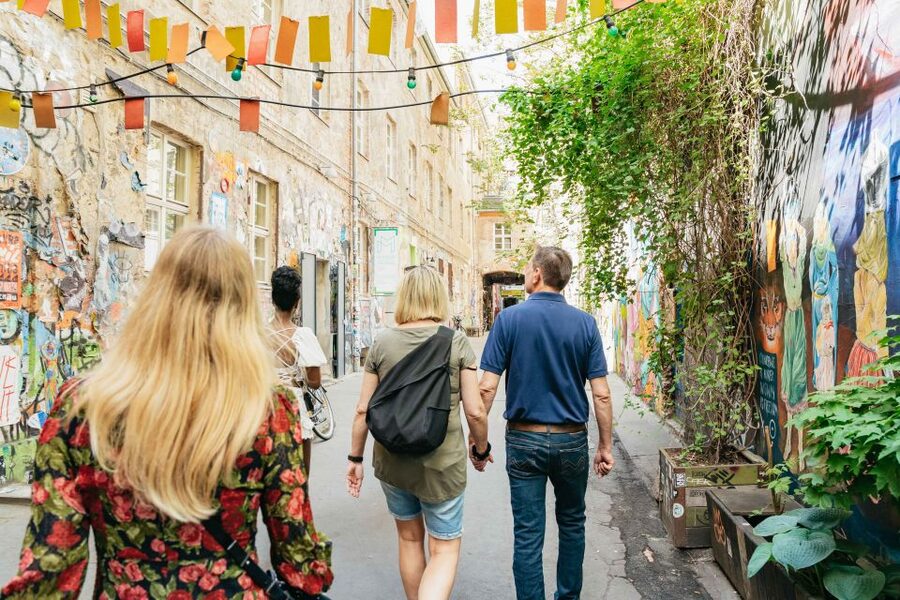
- Heckmann Höfe: a 19th-century courtyard that feels like a break from the city noise, with bright-painted walls and greenery
Why Berlin Courtyards Feel Like a City Secret
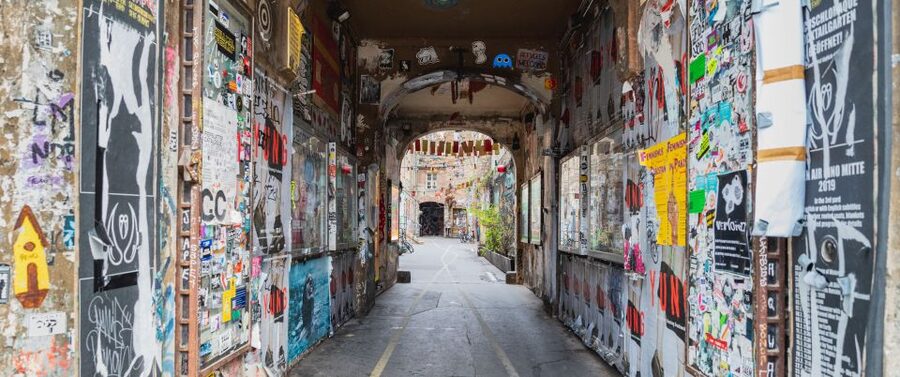
Berlin courtyards do something big for your understanding of the city. From the street, it can look like a normal block of buildings. But step through an entryway and suddenly you’re inside the part of Berlin that’s usually invisible to quick sightseeing.
That is exactly what makes this tour work. It’s built around the idea that Berlin life happens in the in-between spaces: the yards where studios operate, the passageways where people meet, the courtyards where locals hang out without needing a ticket or a museum entry. You’re not just collecting photos. You’re learning how the urban design shaped daily routines, especially in a neighborhood that grew into a center of Jewish tradition around the New Synagogue.
And because the walk is guided, you’ll know what you’re looking at—why a building changed roles over time, what a courtyard layout suggests, and how the area transformed into a trendy, international district. It’s Berlin at human scale.
You can also read our reviews of more walking tours in Berlin


Meeting at Hackescher Markt and Getting Started Right
You meet your guide in front of BUTLERS Berlin Hackescher Markt 4. It’s a handy starting point because Hackescher Markt is already a familiar hub for most visitors, with easy transit connections nearby.
From there, the tour is scheduled for about 2 hours. That timing matters. Two hours is long enough to get past the surface and into several courtyards, but short enough that you won’t feel like you’re spending your whole day in one neighborhood lecture.
The tour runs rain or shine, so plan for weather you can walk in. Good shoes are not optional here. Even when courtyards look compact, you’ll be crossing streets and moving through passageways.
One more practical note: the tour is described as wheelchair accessible, which is a plus if you need a route that can work with mobility limitations. Still, since it’s a walking tour, you’ll want to bring whatever assistance or pacing you normally rely on.
Spandauer Vorstadt and the Jewish-Led Story Around the New Synagogue
The route centers on Spandauer Vorstadt, a part of Berlin-Mitte that grew from historical roots into a key area for Jewish life around the New Synagogue. The guide frames the neighborhood’s development as a transformation you can trace block by block.
Here’s what I think you’ll appreciate most: you’re not hearing the story as a distant lecture. You’re walking it through the neighborhood’s physical clues—how buildings cluster, how courtyards form community spaces, and how the area’s role shifted over time. Even if you already know Berlin’s headlines, this kind of local history gives context that doesn’t show up on a typical fast pass itinerary.
The tour also aims to show you the city beyond the postcard core. You’ll move off the most obvious shopping streets and into lesser-seen spaces that reveal how people use the city day to day. The goal is to help you understand why this area feels international and creative now, without pretending that it became that way overnight.
In several of the strongest reviews, guides reportedly covered a wide stretch of history—one mentioned a journey through around 600 years of the city—so expect your guide to connect past to present as you go.
Haus Schwarzenberg and the Art-Through-Time Courtyard
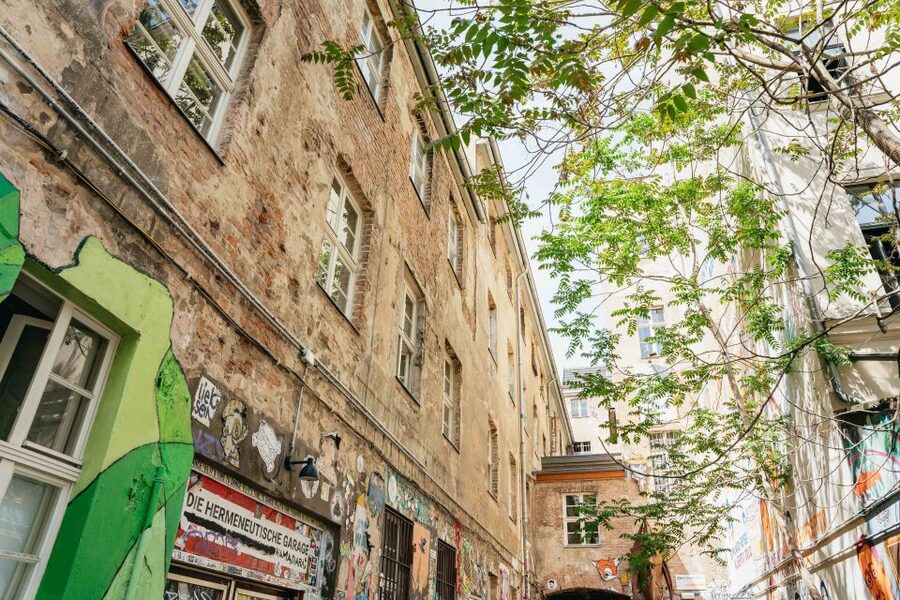
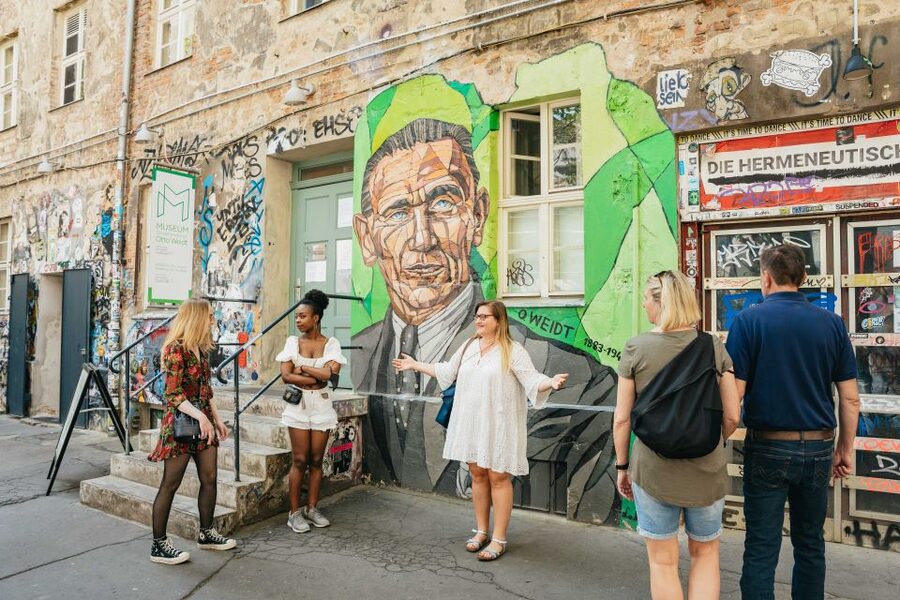
Haus Schwarzenberg is one of the tour’s anchor stops, and it’s the type of place that makes you wonder why you haven’t noticed it before. The courtyard is described as a relic of a bygone era, but it’s clearly in use today—home to art studios and creative spaces.
What to focus on while you’re there:
- The courtyard walls with street art layered onto older surfaces
- The historic buildings around the yard, with a sense that they’ve served different functions over the years
- The way the courtyard design supports working life, not just aesthetics
I like this stop because it demonstrates Berlin’s talent for reuse. The city keeps older shells, then repurposes them for contemporary creative work. On a guided walk, you’ll understand that’s not random. It’s part of how neighborhoods evolve.
If you’re the type who enjoys architecture but gets tired of facts that never connect to real life, this is a good antidote. It’s a working courtyard. You see where creative people operate, not just where tourism happens.
Hackesche Höfe, Rosenhöfe, Sophienkirche, and Auguststraße
This is where the tour becomes pure Berlin. The route moves through courtyard complexes like Hackesche Höfe and Rosenhöfe, plus landmark stops including Sophienkirche and Auguststraße. Even without a museum-like setting, these are powerful moments because courtyards are Berlin’s in-between rooms.
You’ll be shown how these spaces function—how passageways and yards connect different parts of the block and create areas that feel like small neighborhoods inside the city. The tour’s theme stays consistent: how people live, work, create, and have fun in spaces that aren’t immediately obvious from the street.
Sophienkirche and Auguststraße matter here mainly because they add structure to the story. They give you recognizable points you can anchor the history onto, so the route doesn’t just become a series of pretty yards. You’ll also get a clearer sense of the neighborhood’s evolution—why certain courtyards and streets ended up positioned the way they did.
One practical tip: give yourself permission to slow down in the courtyards. They’re designed for people to linger, and the point of the walk is not to rush from one postcard to the next.
You can also read our reviews of more guided tours in Berlin




Heckmann Höfe: The Color, the Trees, and the Local Hangout
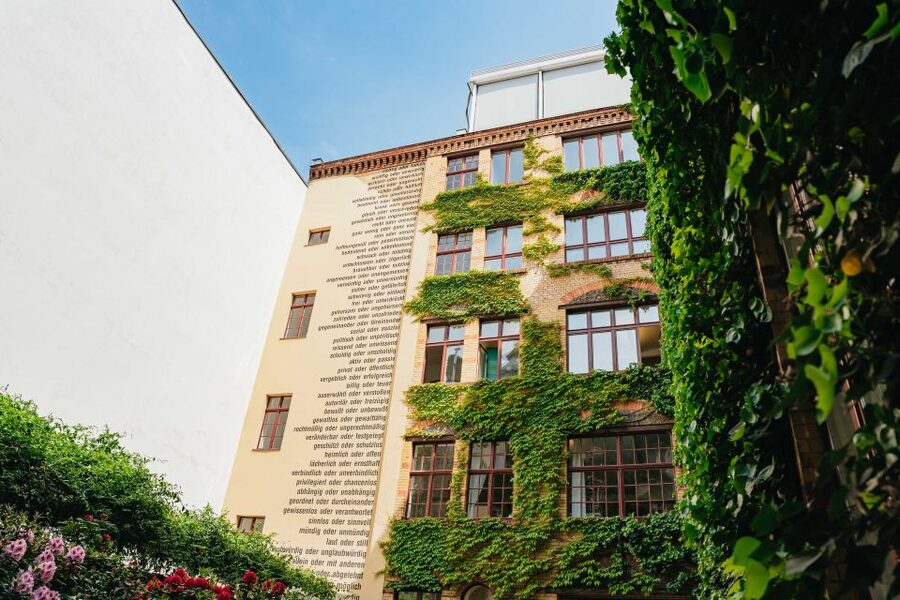
By the time you reach Heckmann Höfe, you’ve earned a pause. This courtyard is described as a popular local hangout, painted in bright colors and surrounded by greenery. The vibe shifts from street-level movement to a more sheltered, calm-feeling yard.
It’s also framed as a 19th-century courtyard, which helps you see the continuity: while Berlin neighborhoods constantly change, courtyards often remain social infrastructure. They still work as places to meet, relax, and spend time outside your apartment.
Why this stop is worth showing up for:
- You get that classic Berlin contrast: busy streets outside, quieter yard life inside
- The design makes it feel like a hidden oasis without feeling staged
- You can actually use the space mentally as a resident would—where you’d sit, where you’d talk, how the courtyard offers shade and privacy
If you like street photography, this is a strong moment too. Bright courtyard surfaces and leafy edges create natural framing, and the whole place reads as lived-in, not just historic.
Price, Language, and What to Bring for 2 Hours

At $23 per person for a 2-hour guided walk, this is strong value if you want more than “wander and guess.” Courtyards like these can be hard to interpret on your own. A guide saves you time and gives you context you wouldn’t discover just by looking around.
It’s also a good deal for first-time Berlin visits after you’ve already hit the major sights. Once you’ve seen the big landmarks, Berlin’s personality really shows up in these in-between spaces.
A few practical pointers:
- You’re walking, and the tour runs rain or shine, so dress for weather and bring a small layer
- Food or drinks are not included, so plan a coffee stop before or after
- The tour is live in English or German, but if you want English, confirm it when you book
For maximum satisfaction, show up a few minutes early at Hackescher Markt. In several reviews, the guides stood out for friendly delivery and strong storytelling, with one guide described as chatting informally in a way that felt personal. That only happens when everyone can start on time and settle into the walking rhythm.
Should You Book This Berlin Hidden Backyards Tour?
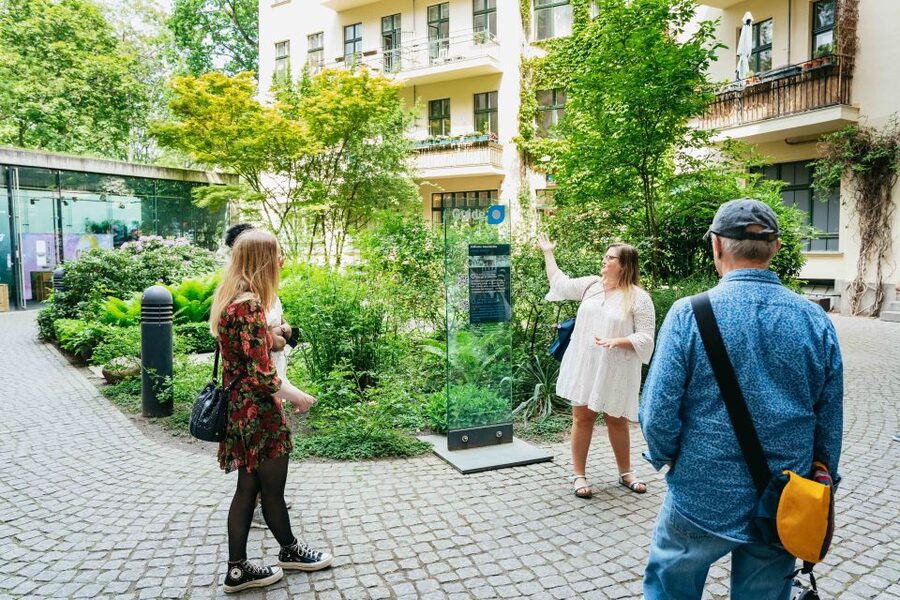
If you enjoy neighborhoods that feel lived-in, and you want the story behind courtyards, studios, and Jewish-history context around Berlin-Mitte, I’d book this. It’s short, focused, and practical—and it turns places you’d otherwise pass into a clear timeline you can actually see.
Skip it only if you dislike guided history walks, need lots of breaks, or you’re worried about weather and walking without indoor options. If language is a big deal, double-check English availability when you reserve. Otherwise, this is one of the more rewarding ways to experience Berlin without fighting crowds.
FAQ
How long is the Berlin Hidden Backyards guided walking tour?
It lasts about 2 hours.
Where do I meet the guide?
Meet your guide in front of BUTLERS Berlin Hackescher Markt 4.
What stops will I visit during the tour?
You’ll visit Haus Schwarzenberg, Hackesche Höfe, Rosenhöfe, Sophienkirche, Auguststraße, and Heckmann Höfe, plus additional hidden courtyards and spaces along the way.
What is the tour price?
The price is $23 per person.
Is the tour offered in English?
Yes, the live tour guide is available in English and German.
Does the tour run in bad weather?
Yes. The tour takes place rain or shine.
Is food or drinks included?
No. Food or drinks are not included.
Where does the tour end?
There are two drop-off locations on Oranienburger Straße.
Is the tour wheelchair accessible?
Yes, the tour is described as wheelchair accessible.