REVIEW · BERLIN
Berlin Private Half-Day Walking Tour: Discover the German Capital’s History
Book on Viator →Operated by Original Berlin Walks · Bookable on Viator
Berlin can feel like a stack of time periods. This private half-day walking tour turns those layers into a clear story from early Berlin through the Nazi era, Cold War, and the reunified city. You get undivided attention from your guide, plus a map that helps you keep moving after the tour.
What I like most is the pace-by-design: quick stops, strong explanations, and plenty of time to ask questions without fighting the noise of big groups. I also like that it starts easy with hotel pickup (or a fallback meeting point), so you’re not wasting your morning figuring out where to stand.
One drawback to weigh: it’s packed. You hit a lot of famous sites in about four hours, with short on-foot time at each place, so you won’t get a museum-style deep dive at every stop.
In This Review
- Key highlights that make this tour worth it
- A private 4-hour loop through Berlin’s power centers
- Hotel pickup and the map that keeps you from getting lost
- Museum Island and Berliner Dom: starting where Berlin “grows up”
- Stadtschloss, Rotes Rathaus, and the government-city connection
- The museum stretch: Altes, Neues, Pergamon, and the message of empire
- Neue Wache, Victory Column, and the city’s memory made physical
- Deutsches Historisches Museum and Bebelplatz: culture meets confrontation
- Staatsoper and the Reichstag: when performance becomes politics
- Holocaust Memorial and the Wall memorials: serious places, paced with care
- Topography of Terror and Checkpoint Charlie: Cold War drama in real locations
- Brandenburg Gate, 1953 uprising square, and the city’s turning points
- From Staatsoper back to Berlin Dom to Führerbunker: contradictions in one itinerary
- The ending stretch: French Cathedral, Konzerthaus, and finishing with perspective
- Price and value: what $180.87 buys you in real time
- What to expect on the ground: pace, comfort, and smart prep
- Who this tour suits best
- Should you book this Berlin history walking tour?
- FAQ
- How long is the Berlin private half-day walking tour?
- What does the tour cost?
- Is pickup from my hotel included?
- Is the tour private or group?
- What language is the tour offered in?
- Do I need tickets or pay admission at the stops?
- What’s included in the price?
- What is not included?
- How should I plan for getting around in Berlin?
- What is the cancellation policy?
Key highlights that make this tour worth it
- Private guide attention means your questions steer the conversation, not the crowd.
- Hotel pickup (or meeting at Starbucks near Hackescher Markt) keeps the first hour painless.
- A focused route through Berlin’s big power eras: empires, dictatorship, division, reunification.
- Iconic landmarks in one flow: from Museum Island and the Brandenburg Gate to the Holocaust Memorial.
- Strong “context stops” like Checkpoint Charlie, Topography of Terror, and the Berlin Wall memorials.
- Short explanations at many sites lets you cover ground fast without feeling trapped in a single museum room.
A private 4-hour loop through Berlin’s power centers
This is the kind of tour that works best when you want structure. Berlin is huge and spread out, but this walk strings together key political, cultural, and historical landmarks into one readable route. In a few hours, you get a map of what happened where, and why it matters.
It’s also genuinely practical. The tour is English-speaking, about four hours, and built for moderate walking fitness. You’ll be outside a lot, so plan for weather and good shoes, not museum slippers.
Because it’s private, you don’t have to compromise. If you want extra time at something like the Holocaust Memorial, you can usually ask for it. If you prefer faster photos and onward movement, your guide can adjust.
You can also read our reviews of more walking tours in Berlin


Hotel pickup and the map that keeps you from getting lost
Berlin is easiest when you minimize decision-making. This tour helps you do that right away. You either get picked up from your hotel lobby if you’re centrally located, or you meet at Starbucks in front of Hackescher Markt.
Either way, you start with momentum instead of logistics. You also receive a map of Berlin with top museum recommendations and public transport info. That’s a small thing that pays off later, because you’ll have an easier time planning your next day around the sites you just learned about.
One more smart touch: it uses a mobile ticket. That means less paper fuss while you’re moving from one landmark to the next.
Museum Island and Berliner Dom: starting where Berlin “grows up”

The tour opens at Museum Island, where the guide sets the stage for why this area became a cultural focal point. Even if you only glance at the buildings from the outside or through quick stop time, you’ll learn how art, science, and national identity became tied together in Berlin’s public spaces.
Then it moves to the Berliner Dom, another major landmark that signals wealth, ambition, and state power. You get a short, guided explanation designed to connect the building to the broader story—who wanted it, what it represented, and how Berlin’s leadership shaped the city’s image.
This opening sequence matters. It helps you “read” Berlin’s architecture instead of treating each site like a separate postcard. Once that framework clicks, the later stops land harder.
Stadtschloss, Rotes Rathaus, and the government-city connection
Next you’ll pass Berlin’s civic and governmental markers: Stadtschloss Berlin and Rotes Rathaus. These aren’t just pretty façades. The guide uses them to show how rulers and institutions tried to legitimize themselves by placing power in plain sight.
A small but helpful reality: many of the stops are brief, often around ten minutes, with some shorter orientation stops at major museums. That sounds fast, but it’s a good format for a first look, because you learn what each place is before you decide what’s worth returning to later.
If you’re the type who wants the “why” before the “what,” this section gives you that. It’s the difference between seeing a building and understanding what kind of society built it and defended it.
The museum stretch: Altes, Neues, Pergamon, and the message of empire
The tour then moves through major museum names—Altes Museum, Neues Museum, and Pergamonmuseum—plus a quick orientation at nearby cultural sites. The guide explains what the museums represent in Berlin’s identity and how collections became statements about the nation.
You’re not here for a full ticketed museum day. The stop times are short, and that’s intentional. You’ll get enough background to recognize what you’re looking at when you revisit on your own.
If you care about art and politics, this segment is a sweet spot. Berlin’s museum culture didn’t grow in a vacuum; it sits alongside the city’s changing power structures. This tour helps you keep those threads together instead of treating culture as separate from history.
You can also read our reviews of more private tours in Berlin


Neue Wache, Victory Column, and the city’s memory made physical
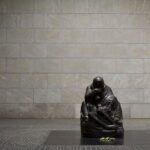
After the museum zone, the route turns toward memorial and monument territory—Neue Wache and the Victory Column. These sites help explain how Berlin communicates loss, pride, or ideology using stone and scale.
This is one of the most useful parts of the tour because monuments can be confusing if you don’t have context. A guide’s job here is to connect symbolism to the events that shaped it.
Expect reflective moments, even though the stop time is short. These are places where your brain starts to work. You’ll feel the shift from “history as buildings” to “history as public messaging.”
Deutsches Historisches Museum and Bebelplatz: culture meets confrontation
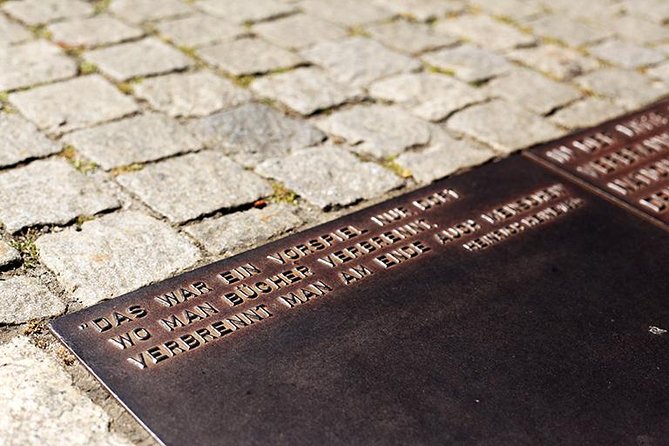
The walk includes the Deutsches Historisches Museum, followed by Bebelplatz. The guide uses these stops to talk about Berlin’s storytelling—how museums and public squares build official narratives, and how those narratives can change across regimes.
Bebelplatz is especially powerful because public space is never neutral. It can become a stage for ideology, protest, and control over what people are allowed to think. Even with a quick stop, you’ll get the background to connect that kind of symbolism to what Berlin endured.
If you’ve never tried to interpret history through the layout of a city before, you’ll start seeing it here. The tour nudges you to notice what’s placed where, and what that placement tries to communicate.
Staatsoper and the Reichstag: when performance becomes politics
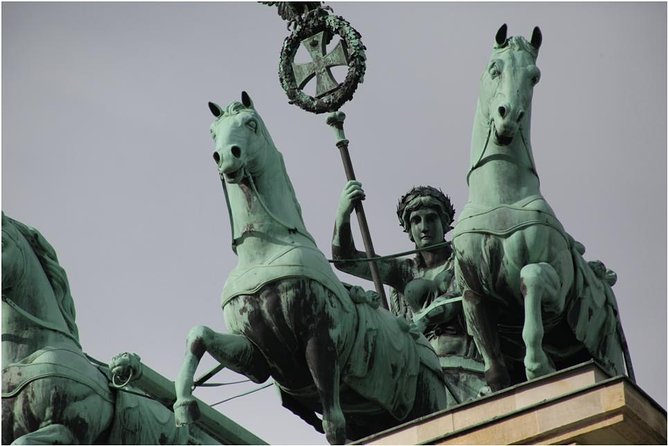
You’ll also pass Staatsoper Unter Den Linden and reach the Reichstag Building. These are big names, but the guide’s angle matters: it’s about how institutions of prestige and representation work in real political life.
This portion helps you understand why the Reichstag matters beyond architecture. It’s a site tied to governance, public debate, and the political turbulence Berlin went through. Even if you’ve seen the building in photos, the guided context gives it a sharper edge.
Your stop time here is about ten minutes at the Reichstag, which is enough for a clear orientation. If you want more, you’ll know what to target for a future return—because you’ll leave with the right questions.
Holocaust Memorial and the Wall memorials: serious places, paced with care
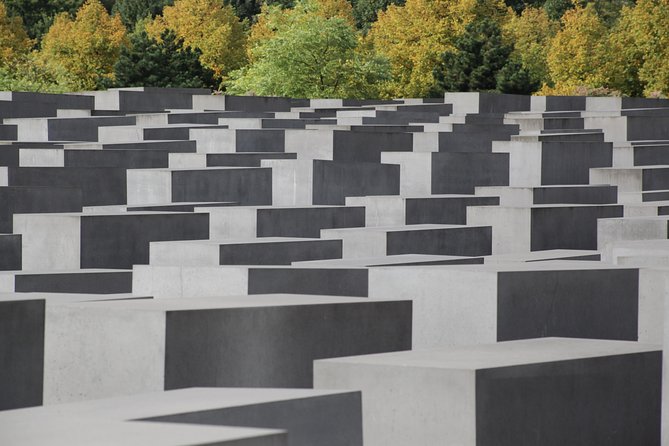
Then comes one of the most important parts of the route: the Holocaust Memorial, followed later by the Memorial of the Berlin Wall. The guide explains what each site represents and why Berlin includes these reminders in such visible, public form.
This isn’t the time to rush. You’ll get around ten minutes at the Holocaust Memorial, and it’s one of the stops where your own pace matters. If you need a slower minute to absorb the scale and meaning, ask. A private guide is built for that kind of adjustment.
The Berlin Wall memorial stop shifts the focus from genocide to division and resistance. The guide helps connect the idea of physical barriers to the human reality of separation. It’s heavy, but it’s also grounding—because it turns abstract history into a sense of place.
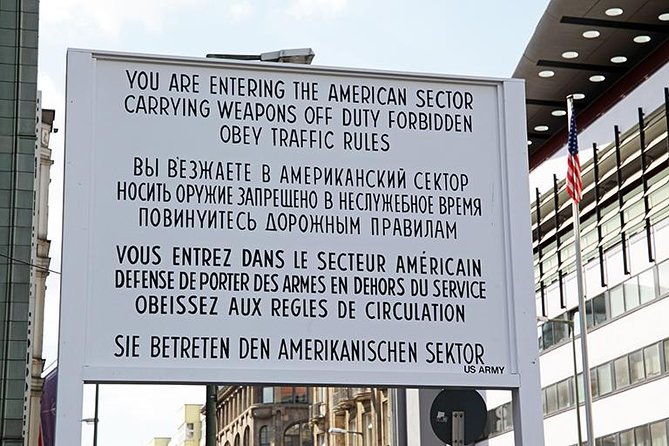
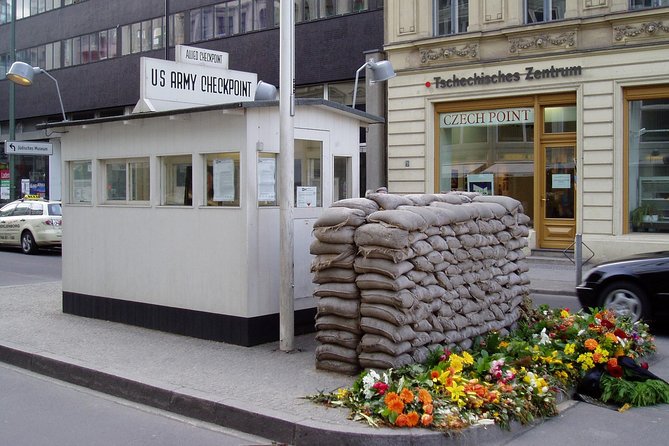
Topography of Terror and Checkpoint Charlie: Cold War drama in real locations
Next you’ll head into Cold War territory with Topography of Terror and Checkpoint Charlie. These stops are valuable because they make history feel practical: bureaucracy, surveillance, propaganda, and the daily life of being watched and controlled.
Topography of Terror is about systems and evidence, while Checkpoint Charlie is about the friction point between East and West. With about ten minutes at each, you won’t absorb everything like a book. But you will get a framework that makes later reading and museum visits far easier.
This is also where your guide’s style matters. In past groups, guides such as Dylan and Luisa have been praised for clear explanations and the ability to answer constant questions without making you feel like a burden. That skill really helps when the topic is complicated and emotional.
Brandenburg Gate, 1953 uprising square, and the city’s turning points
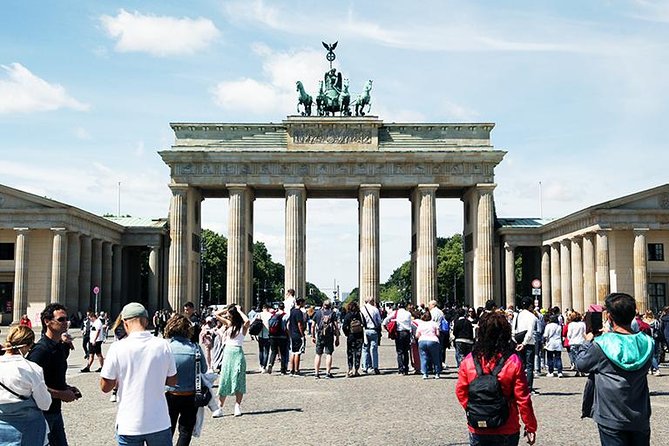
You’ll see Brandenburg Gate and then the Platz des Volksaufstandes von 1953. Together, these stops help explain Berlin as a city of turning points—moments when people pushed back, regimes answered, and the city changed direction.
Brandenburg Gate is iconic, but it’s more than a symbol. The guide helps you understand what it has meant across different eras, including when power tried to claim it. The uprising square adds the perspective of resistance and the lived consequences of political control.
This part of the tour is a good example of why a guided walk is more than sightseeing. The landmarks keep their look, but the meanings shift. You learn to see that shift as you walk.
From Staatsoper back to Berlin Dom to Führerbunker: contradictions in one itinerary
The route loops back past the Berliner Dom again, then includes Fuhrerbunker (Hitler’s Bunker). That presence in the walk matters because it connects the “big story” to the specific places where decision-making and terror intersected.
From a distance, it can feel strange to move from cultural institutions to sites associated with dictatorship. But that contrast is the point. Berlin’s history doesn’t sit neatly in separate boxes. It overlaps, reuses space, and leaves traces in how the city is shaped today.
If you’re the kind of person who likes a guided storyline, this is where it really clicks. Guides like Glen and Mark have been highlighted for storytelling and making history feel clear, not foggy.
The ending stretch: French Cathedral, Konzerthaus, and finishing with perspective
Near the end you’ll pass Franzoesischer Dom and Konzerthaus. These stops add another layer: Berlin isn’t only trauma and power struggles. It’s also where the city invests in culture and public life.
Finishing on that note helps you carry the day better. After you’ve walked through dictatorship, division, and memory, it’s useful to see how Berlin continues. The guide brings you back to the idea that the city you see today is shaped by everything that came before.
It also gives you a practical benefit. When you look at Berlin later—on your own, at dinner, on the next bus ride—you’ll recognize the “why” behind the skyline.
Price and value: what $180.87 buys you in real time
At $180.87 per person for about four hours, this isn’t a budget walking tour. You should think of it as paying for a private historian at street level, not for a low-cost group lecture.
The value comes from three places. First, hotel pickup saves time. Second, you get a private guide for the full route, including flexibility for questions. Third, you cover a large cluster of major sites in one session, which is hard to replicate on your own without risking a chaotic route.
If you’re traveling as a couple or small group, you’ll also benefit from any group discounts the operator offers. Even so, it’s still a premium experience. I’d only book it if you want real context and a guided narrative, not just photos.
If you’re happy wandering with a free map and reading a guidebook slowly, you could do it cheaper. But you’d miss the fast, clear connections your guide is built to make.
What to expect on the ground: pace, comfort, and smart prep
The stop times are short, often just a few minutes at several museum-related or landmark points. That can feel brisk, but it’s a workable way to see a wide range of sites without burning your whole day.
Bring water, wear comfortable shoes, and plan for weather. You don’t have food and drink included, so you’ll want to factor in a break before or after the tour.
Also remember: public transport costs are not included. If you choose to travel to the meeting point yourself, Berlin’s single ticket is listed at €2.70, with day pass at €7.00. There’s also a group ticket price listed for five people.
Who this tour suits best
This works best for a first-time visitor who wants a clean historical overview without getting lost. It’s also a strong fit if you like asking questions and want an itinerary tailored to your pace.
It’s especially good if you dislike big groups. One of the most praised aspects of this tour is that private time makes it easier to pause for photos, slow down when something hits, and keep your attention on the guide instead of the noise around you.
If you want hours inside each museum, this likely won’t satisfy that style. It’s designed for walking, explanation, and orientation, so you’ll probably return to selected sites afterward.
Should you book this Berlin history walking tour?
Book it if you want a private, English-speaking guide and a guided storyline through Berlin’s most consequential places. I think it’s a great use of a half day if you’re trying to understand Berlin instead of just collecting landmarks.
Skip it if you’re set on deep museum time inside multiple collections, or if you’re traveling on a very tight budget. The route is broad, and the stop time is brief by design.
If you land in the middle—curious, time-limited, and ready to walk—this tour gives you a strong foundation, plus a map and transport tips to keep exploring after.
FAQ
How long is the Berlin private half-day walking tour?
The tour lasts about 4 hours.
What does the tour cost?
The price is $180.87 per person.
Is pickup from my hotel included?
Yes, hotel pickup is offered for centrally located hotels. If yours is not centrally located, you meet in front of Starbucks at Hackescher Markt.
Is the tour private or group?
It’s private, meaning only your group participates.
What language is the tour offered in?
The tour is offered in English.
Do I need tickets or pay admission at the stops?
The listed stops show admission ticket free.
What’s included in the price?
Included items are hotel pickup, an expert local guide, and a map of Berlin with top museum recommendations and public transport info.
What is not included?
Food and drink are not included, and public transport costs are not included.
How should I plan for getting around in Berlin?
A single public transport ticket is listed at €2.70, a day pass is €7.00, and a group ticket for 5 people is €17.30 (prices may change).
What is the cancellation policy?
You can cancel for free up to 24 hours in advance for a full refund.