REVIEW · KYOTO
Kyoto: Gion Magical Night Walking Tour
Book on Viator →Operated by TravelinGood!! · Bookable on Viator
Kyoto at night feels different. This tour takes you through Gion before the day crowd fully lands, with geisha history and etiquette mixed into the walk. I also love the fact that it’s designed as a small-group night route, not a march behind a dozen strangers.
One possible drawback: it’s not a flat walk. Slopes and stairs can make it rough if your legs are not great.
In This Review
- Key things to love right away
- Gion Magical Night Walking Tour: The vibe and why it works
- Price and value: what $29.60 buys you
- Meeting point and pacing: getting there without stress
- Stop 1: Gionmachi Minamigawa and the geisha spotting etiquette
- Stop 2: Yasui-Konpiragu shrine and the matchmaking myth
- Stop 3: Sannenzaka Ninenzaka and the lantern-street feel near Kiyomizu-dera
- The WWII memorial stop with a big Kannon statue
- The 400-year-old tea house, garden, and bamboo grove
- Stop 4: Yasaka Shrine and the Gion-san blessings
- Guides and storytelling: why the route feels personal
- What the evening will feel like under your feet
- Who should book this Gion night walk
- Should you book the Kyoto Gion Magical Night Walking Tour?
- FAQ
- How long is the Kyoto Gion Magical Night Walking Tour?
- What group size should I expect?
- Where do we meet and where does the tour end?
- Is the tour suitable if I have mobility issues?
- Do I need to print a ticket?
- What if the weather is bad or I need to cancel?
Key things to love right away
Small-group feel in Gion (kept tight so you can hear the guide)
Early-evening timing for calmer streets and better photo chances
Geisha culture context plus practical do’s and don’ts like how to greet a maiko
Shrines and old streets mixed into one walking loop near the Gion sights
Gion Magical Night Walking Tour: The vibe and why it works
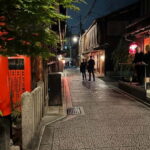
Gion is gorgeous anytime, but it’s a bit of a circus in daylight. The real win here is timing. You get out into the neighborhood in the evening while the streets are quieter and the lanterns start doing their thing. That means you can actually look at details—architecture, stone steps, little shrine corners—without constantly stepping aside.
I also like how the tour gives you context. Instead of just pointing at buildings, the guide explains what geisha are and how etiquette works in everyday situations. It’s the difference between seeing Gion as a postcard and understanding why people behave the way they do.
The walking is the trade-off. You’ll cover ground on uneven streets, and there are slopes. If hills and steps make you slow or uncomfortable, plan carefully.
You can also read our reviews of more walking tours in Kyoto
Price and value: what $29.60 buys you
At $29.60 per person, this is priced like a budget-friendly add-on, not a splurge. You’re paying for three things that add up fast in Kyoto: (1) a tight route you likely wouldn’t stitch together on your own, (2) cultural explanations that save you from guesswork, and (3) timing that puts you in the right place before the biggest crowds.
The group size matters for value. A small cap (the info is listed as max eight in the overview, and up to 10 in the booking details) keeps the guide accessible. That usually means fewer long waiting gaps and more time to ask questions, which makes the hour-and-change feel worth it.
Meeting point and pacing: getting there without stress
You meet near Minamiza Theater, in Higashiyama Ward. The listed start point is the Minamiza Theater area at 2F (Nishirobi)—so aim to arrive a little early and give yourself time to orient.
The tour ends at 625 Gionmachi Kitagawa. That matters because you don’t finish back at the start, so you’ll want to think about your next step: dinner near Gion, an easy walk toward Yasaka area, or continuing your evening stroll.
The duration is about 1 hour 40 minutes. That’s short enough to keep your energy, but long enough to feel like you got a real route and not just a quick photo stop shuffle. Still, be ready for some uphill and some steps.
Stop 1: Gionmachi Minamigawa and the geisha spotting etiquette
The first stretch sets the tone: Gionmachi Minamigawa. This is one of Gion’s most famous streets, and it’s the kind of place where you might spot a maiko or geiko if you’re lucky.
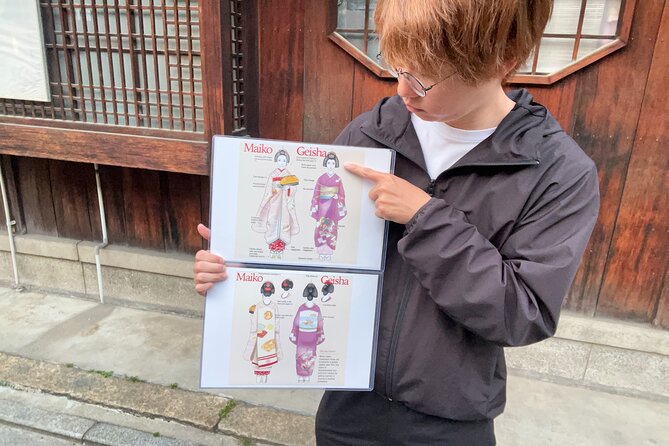
Here’s the practical tip that I think makes this stop worth it: if you see one, smile and say Konnichiwa. That small bit of manners shows respect without turning the street into a performance. The guide’s role is to keep it thoughtful and not awkward.
You also get a chance to learn what you’re looking at—why certain streets and facades matter in the Gion story. Even if you don’t see a performer, the street-level context helps you read the neighborhood instead of just walking through it.
Stop 2: Yasui-Konpiragu shrine and the matchmaking myth
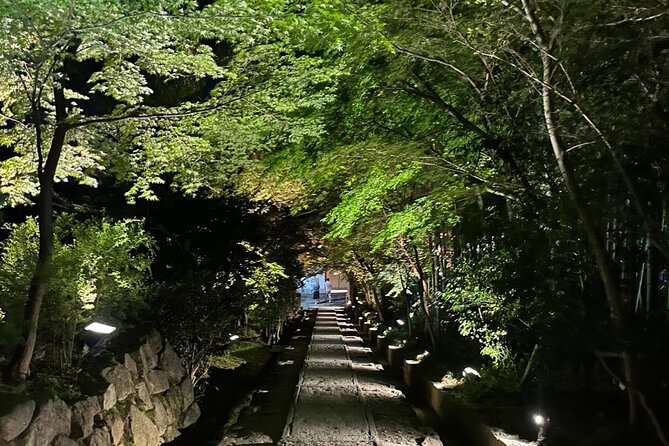
Next comes Yasui-Konpiragu. This is a shrine associated with matchmaking and cutting off bad relationships—part of the reason it’s popular with couples and people hoping to improve their love life.
What I like about this stop is the way it adds a different layer to the Gion picture. You’re not only learning about the geisha world. You’re also seeing how the neighborhood’s religious sites connect to everyday wishes, emotions, and life decisions.
The stop itself is short (about 10 minutes), so it’s not a long temple detour. It’s more like a cultural punctuation mark in the middle of the walk.
You can also read our reviews of more evening experiences in Kyoto
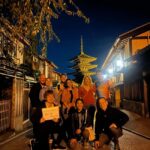
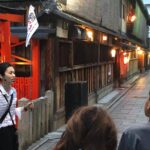
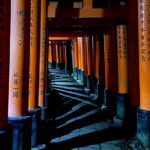

Stop 3: Sannenzaka Ninenzaka and the lantern-street feel near Kiyomizu-dera
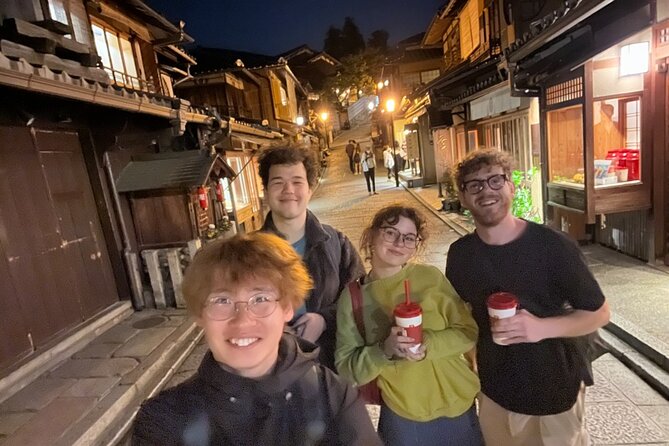
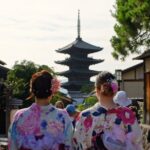
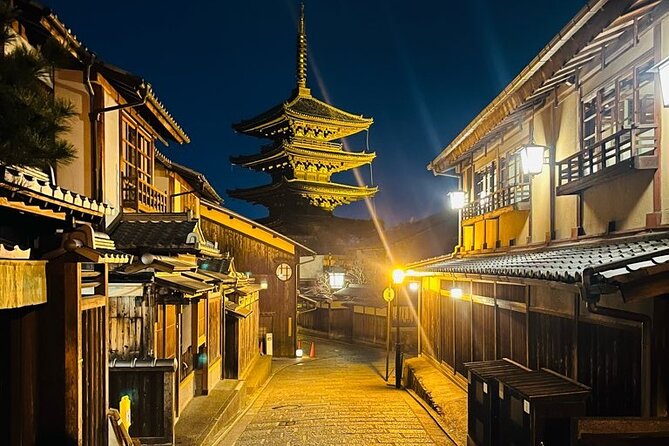
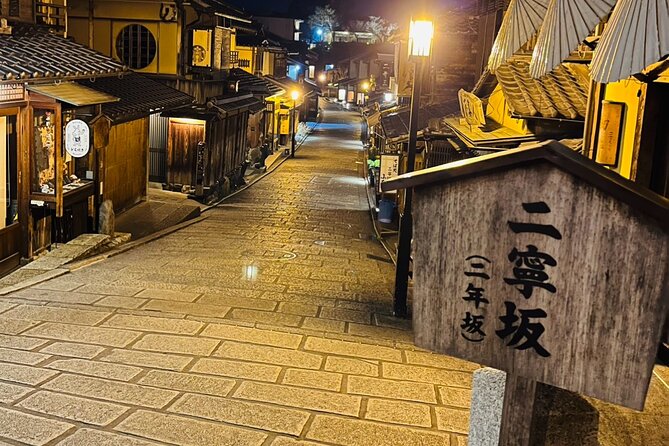
After Yasui-Konpiragu, you move toward Sannenzaka and Ninenzaka—the classic old-street lanes that lead toward the Kiyomizu-dera area. These streets are known for their traditional Kyoto townscape, and at night they take on a softer, calmer look.
One highlight named in the route is Yasaka-no-to (Yasaka Pagoda), which often becomes a visual anchor when you’re taking in the skyline and lantern light.
The stop here is longer (about 20 minutes). That’s smart. Old streets take time to enjoy: you want to pause, look down alleys, and notice how buildings and signage sit close to the walkway. If you’re into night photography, this is the kind of place where the light does most of the work.
The WWII memorial stop with a big Kannon statue
The itinerary includes a quieter spiritual stop built to pray for the repose of the souls of World War II victims. It was built in 1955, and there’s a very large Kannon statue.
I appreciate that the tour doesn’t stay locked in “pretty Kyoto” mode. This kind of memorial makes the evening feel more grounded. It also gives your night walk more emotional range—less like a theme park, more like understanding what Kyoto chooses to remember.
Because this segment is part of a walking route, you won’t get stuck here for ages. It’s still brief, but it changes the mood.
The 400-year-old tea house, garden, and bamboo grove
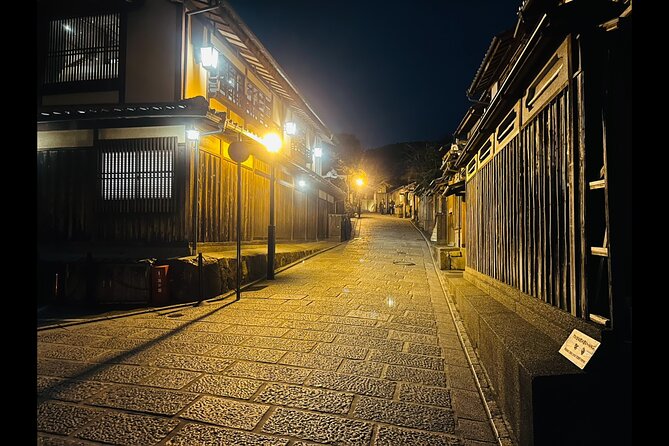
Another major stop on the walk is a place built about 400 years ago by the wife of a shogun to mourn her husband. The experience here includes a garden, a 400-year-old tea ceremony house, and a bamboo grove.
This is the kind of stop that makes the phrase magical night walking actually make sense. Bamboo groves and tea houses have a way of lowering your voice without anyone telling you to. The guide’s stories help you connect what you’re seeing to why it exists.
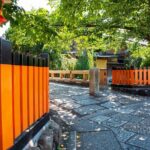
One practical note: gardens and grounds often mean more uneven footing than straight street pavement. Wear shoes you can trust, especially if it’s damp.
Stop 4: Yasaka Shrine and the Gion-san blessings
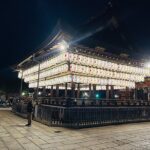
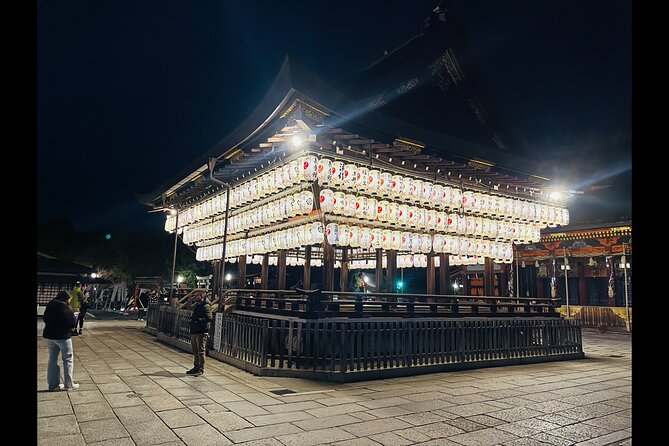
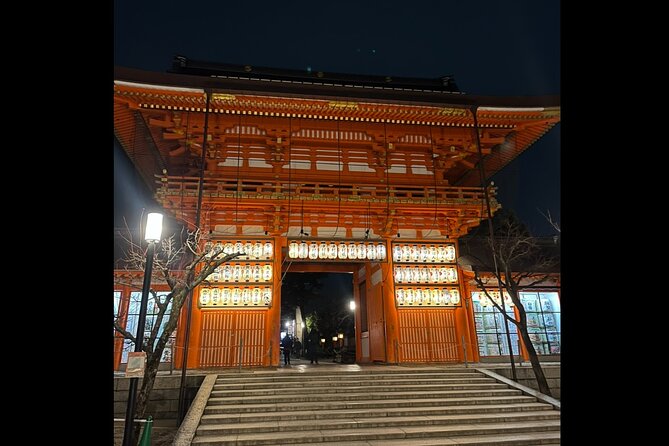
You finish at Yasaka Shrine, known as the head shrine for about 2,300 related shrines across Japan. In Gion, it’s commonly called Gion-san, and it’s associated with blessings like warding off bad luck and promoting beauty.
This stop also fits the flow of the walk. By the time you reach Yasaka Shrine, you’ve already seen the famous streets and the more intimate spiritual spaces. So when you stand here, the shrine feels like the neighborhood’s “home base,” not just another stop on a list.
The time here is about 10 minutes. That’s enough to take it in, reset your senses, and head back out with the evening still feeling open—not rushed.
Guides and storytelling: why the route feels personal
The reviews lean hard on one thing: the guide experience. Names that come up include Karen, Ricky, Hina, Sho, Pam, May, and others. Across those different guides, the pattern is consistent: stories at each stop, a comfortable pace, and helpful answers to questions.
I also like the way geisha etiquette gets treated as real life, not trivia. The tour doesn’t just name roles; it explains how geiko/maiko fit into Kyoto society, and how behavior matters when you encounter someone on the street. That makes your time in Gion feel more respectful and less like you’re intruding.
If you’re hoping for night photography moments, guides also seem to know where the best “pause and shoot” areas are. One person specifically called out photography opportunities, and another noted the lantern-lit atmosphere.
One small consideration: if your group is sensitive to language nuance, pick the tour slot when you’re comfortable that the guide may be improving English over time. That’s not a deal-breaker, but it’s worth knowing.
What the evening will feel like under your feet
This is a walking tour, so think “steady stroll with some hills,” not “easy flat sightseeing.” The route includes slopes and stairs, and that’s mentioned as a reason it’s not recommended for people who struggle with walking.
At night, Kyoto also cools down and can get damp. Even if it’s not raining hard, sidewalks can be slick. Bring shoes with grip, and you’ll be happier than you think you will be.
If weather turns light and you’re caught out, umbrellas can help. Some groups have gone out during gentle rain and stayed comfortable enough to keep enjoying the streets.
Who should book this Gion night walk
This tour is a great match if you:
- want geisha culture context without spending hours researching on your own
- enjoy walking through old streets but prefer it with a smaller group
- want a route that hits major Gion landmarks and quieter corners
- care about manners—like how to behave if you spot a maiko or geiko
It’s less ideal if you:
- don’t feel good on stairs or steep-ish sections
- hate walking more than a short, flat segment
- need a perfectly predictable pace with zero stops (this tour pauses to explain and look)
Should you book the Kyoto Gion Magical Night Walking Tour?
Yes—if you want Gion with context and less crowd pressure. The combination of small-group size, early-evening timing, and stop-by-stop explanations makes this feel like a smart way to see the area without guessing what you’re looking at.
Skip it only if your walking limitations make stairs and slopes a problem. Otherwise, it’s a very reasonable way to spend your evening: you’ll leave with better understanding of geisha culture and a clearer sense of where Kyoto’s spiritual and historic threads weave together.
FAQ
How long is the Kyoto Gion Magical Night Walking Tour?
It’s listed at approximately 1 hour 40 minutes.
What group size should I expect?
The experience is described as a small-group tour. The overview mentions a maximum of eight, and the booking info states a maximum of 10 travelers.
Where do we meet and where does the tour end?
You start at Minamiza Theater (2F West lobby) in Higashiyama Ward. The tour ends at 625 Gionmachi Kitagawa, Higashiyama Ward.
Is the tour suitable if I have mobility issues?
It’s not recommended for those who are not comfortable with walking because the route includes slopes and stairs.
Do I need to print a ticket?
No. The tour offers a mobile ticket, and you’ll receive confirmation at booking time.
What if the weather is bad or I need to cancel?
The tour requires good weather. If it’s canceled due to poor weather, you’ll be offered a different date or a full refund. You can cancel for a full refund up to 24 hours in advance; within 24 hours, the amount paid is not refunded. Service animals are allowed.