REVIEW · KYOTO
Kyoto Fushimi-Inari Night Walking Tour
Book on Viator →Operated by Tomodachi Tours · Bookable on Viator
Fushimi Inari gets even better after dark. This small-group night walk helps you see the red torii gates with fewer people, plus a guide to explain what you’re looking at as evening turns to night. If you’ve only seen the shrine in the daytime crush, this feels like a different place.
I particularly loved how the guides keep things moving at a human pace and still make time for questions and photos, whether it’s Jem’s friendly storytelling or Caleb’s entertaining, easy-to-follow context. I also like that you’re walking with a clear plan through a spot that can feel like a maze, especially once it’s darker and the “where do we go next?” feeling kicks in.
The main drawback is simple: you’ll be on mountain paths in the dark, so bring proper walking shoes and plan for cooler or damp weather. Depending on your start time, you may spend more time in dusk than full night, so set your expectations for lighting and time outdoors.
In This Review
- Key highlights that make this tour worth your time
- Why Fushimi-Inari at night feels calmer (and more meaningful)
- Price and what you’re really paying for at $43.11
- Timing that matches dusk, then turns into night walking
- The start at the fox statue: getting oriented fast
- Stop 1: Fushimi Inari-Taisha—torii gates, fox statues, and Inari themes
- Prayer rituals explained (not just sightseeing)
- Walking in the dark: shoes, layers, and photo patience
- Who should book this Fushimi-Inari night tour (and who should think twice)
- Where it fits in your Kyoto evenings
- Should you book this night tour?
- FAQ
- How long is the Kyoto Fushimi-Inari Night Walking Tour?
- What does the tour cost?
- Is there an admission fee to visit Fushimi Inari-Taisha?
- How many people are in the group?
- Where is the meeting point, and does the tour end there too?
- What will we do during the tour?
- Can I bring a service animal?
- What is the cancellation policy for a full refund?
- Is the tour near public transportation?
Key highlights that make this tour worth your time
- Small group size (max 12): easier pacing, more room for questions, less feeling like you’re in a line.
- After-crowds timing: you see the torii gates without the worst daytime congestion.
- Free shrine admission: you’re paying for the guided experience and timing, not entry fees.
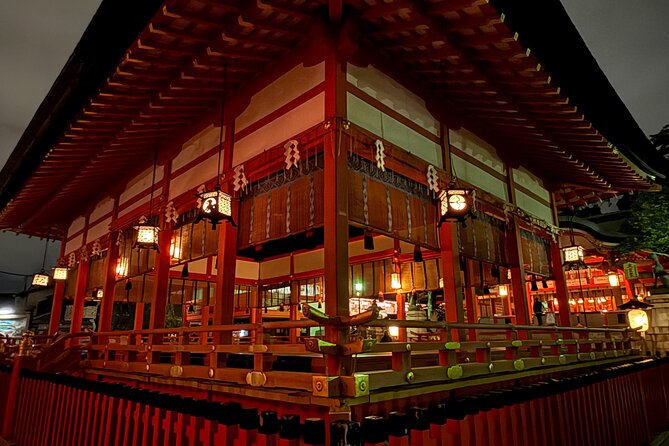
- Fushimi Inari-Taisha essentials: the route includes torii gates, Inari themes, stone fox statues, and smaller shrines.
- Rituals and praying explained: you’ll learn how different spots connect to different gestures and meanings.
- Photo help and navigation: guides keep you together and help with viewpoints when visibility drops.
Why Fushimi-Inari at night feels calmer (and more meaningful)
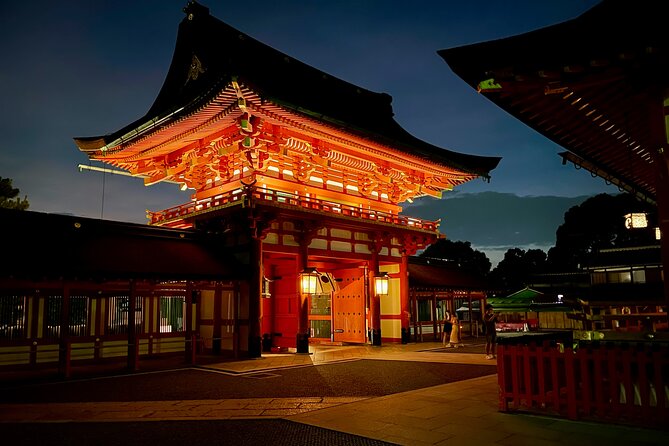
Fushimi Inari is famous for a reason, but the daytime version can feel like a tourist highway. At night, the mood changes fast. The torii gates still pull you forward, yet there’s more space to actually look, listen, and understand.
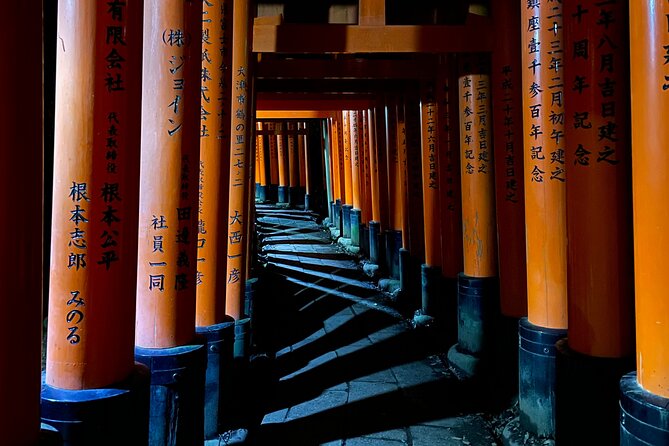
One thing I like about this format is that it treats the shrine like a living Shinto place, not just a photo backdrop. As the light fades, you notice details that are easy to skip in a rush: the quiet of the smaller shrines, the way stone fox statues show up as recurring symbols, and how the path feels purposeful rather than random.
The guide’s job matters here. People can walk through the gates on their own, sure. But the value of a guided night walk is that you get the “what is this and why is it here” layer while you’re still there to see it. Guides such as Tammy, Masaki, and Hiro are repeatedly praised for explaining the significance and traditions in a way that doesn’t turn into a lecture.
You can also read our reviews of more walking tours in Kyoto


Price and what you’re really paying for at $43.11
The price is $43.11 per person, and here’s the useful way to think about it: the shrine itself has free admission, so your money goes toward your guide, your route choice, and the timing that helps you avoid the heaviest crowd levels.
You’re also paying for friction-free logistics in a place where it’s easy to drift, miss a smaller shrine, or wander without realizing it. Multiple guides (Caleb, Masaki, Hiro, Vincent, and others) get kudos for keeping groups together and answering questions clearly, which is exactly what you want when you’re walking uphill on paths after dark.
Is it expensive? Not if you value a guided evening that keeps you from wasting time “figuring it out.” It’s a strong deal if you want the historical and spiritual context while the setting is at its best.
Timing that matches dusk, then turns into night walking
This tour runs about 1 hour 30 minutes to 2 hours. That’s long enough to feel like you went somewhere, but short enough to stay enjoyable instead of exhausting. It also fits well if you’re doing a bigger Kyoto plan and want one focused “must-do” evening.
Your exact vibe can depend on your start time. Some people find that the walk includes more dusk than full night, while others end up moving through the gates in proper darkness. Either way, you’ll have lighting along the path, so you’re not going fully blind—but you still need to treat it like an outdoor hike.
This is also a smart time for photos. At night, the red torii gates look different, and the shrine feels quieter and more reflective. Just don’t plan on long stops for every single photo moment unless your guide builds in time for it—good guides do, and that’s part of why people mention photo-friendly pacing.
The start at the fox statue: getting oriented fast
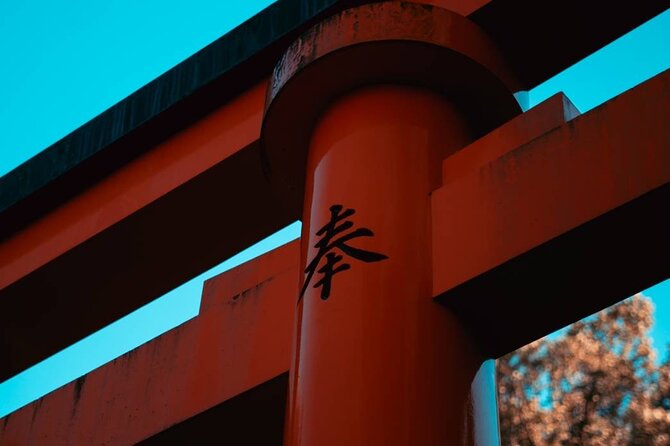
Meet at the fox statue at the entrance to Fushimi Inari Taisha Shrine, near Inari Station area (Fukakusa Inarionmaechō, Kyoto, 612-0881). The tour ends back at the same meeting point, which is handy when you’re walking around a complex shrine area and you want an easy return.
This “start and end in the same spot” approach matters more at night than people think. Fushimi Inari can feel like a network of paths rather than one straight line. With a guide, you don’t have to gamble on whether you’re heading up the right spur or cutting through the wrong alley-like passage.
The guide’s navigation help isn’t about just getting from point A to point B. It’s about keeping you on a route that helps you see the variety of shrines and the way the torii sequence unfolds as you move up Mount Inari.
Stop 1: Fushimi Inari-Taisha—torii gates, fox statues, and Inari themes
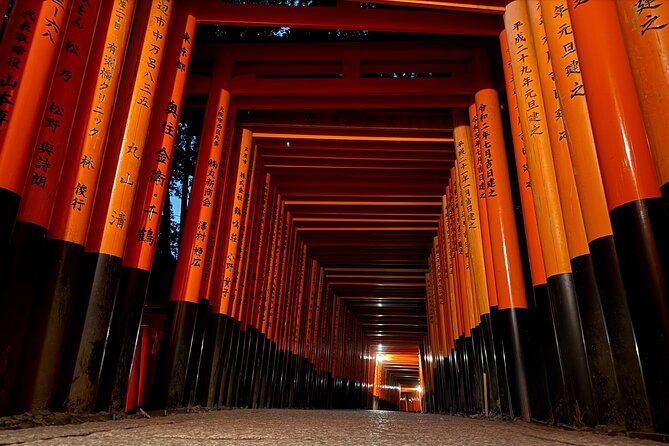
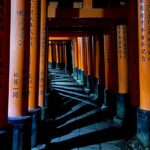
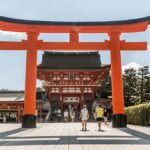
This entire experience centers on one main stop: Fushimi Inari-Taisha Shrine. What makes it special is the sheer visual structure of the torii gates—thousands of red gates that stack into a path you can feel walking through.
As you go, you’ll learn the core theme: the shrine is dedicated to Inari, associated with rice, agriculture, and business. People visit to pray for success, health, and happiness, and that gives context to why you’ll see offerings, prayer gestures, and smaller shrine areas along the way.
You’ll also encounter recurring symbols:
- stone fox statues that connect to the wider Inari story
- smaller shrines tucked into the walk
- viewpoint moments where the hillside path opens up
What I like about doing this at night with a guide is that the shrine stops being “red gates you walk through” and starts becoming a spiritual geography. You begin to see why certain spots call for specific prayer actions, not just random photo stops.
One practical detail: the group stays together, and the guide helps you understand what you’re looking at without leaving you behind. In the evening, that can be the difference between a relaxing experience and a stressful one.
You can also read our reviews of more evening experiences in Kyoto



Prayer rituals explained (not just sightseeing)
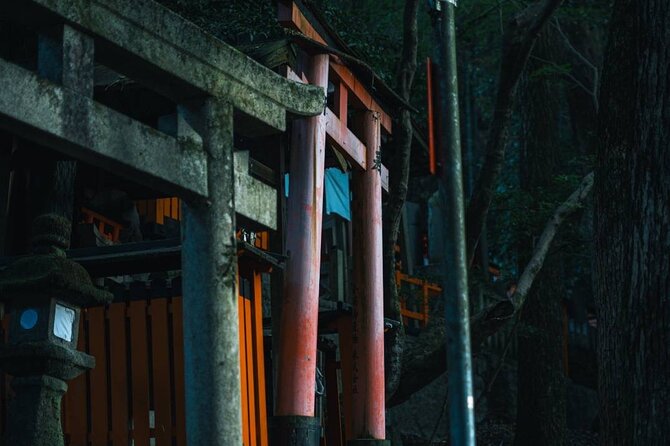
A lot of tours tell you facts. This one adds something better: it helps you understand what people do—and why. In particular, your guide will point out that different sites along the shrine can connect to different rituals and praying styles.
That’s useful for two reasons. First, it helps you feel less like a confused spectator. Second, it turns your walking route into an actual “sequence” with meaning, instead of a checklist of gates.
This is also where the guide’s personality matters. Guides like Yessi are praised for pointing out things you might otherwise walk past, and for showing how to pray at different sites. Other guides, such as Jem, are noted for stories and organization that keep the shrine’s meaning clear without dragging out the experience.
Walking in the dark: shoes, layers, and photo patience
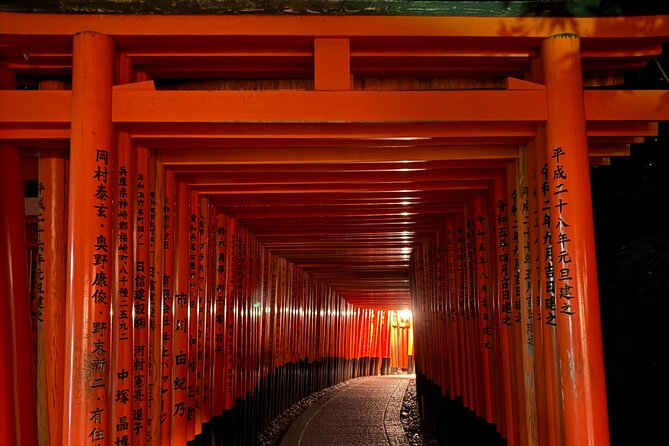
Because this is a night walk on hillside paths, you should plan around comfort. Reviews repeatedly mention a small hike feel and the need for walking shoes. If you’re going in colder months like December, layers help because you’re outdoors and moving.
If it’s raining, you’ll want a jacket you can move in. One review mentions the guide staying warm and supportive even when conditions weren’t perfect, which is what you hope for when you’re out there after dark.
For photos, don’t assume every moment is a free-for-all. Good guides keep the group together while still giving you time to stop, frame shots, and move on without turning the walk into a traffic jam. If you like photography, you’ll appreciate the patience and the way guides lead you to spots where the gates look great without losing the group.
Who should book this Fushimi-Inari night tour (and who should think twice)
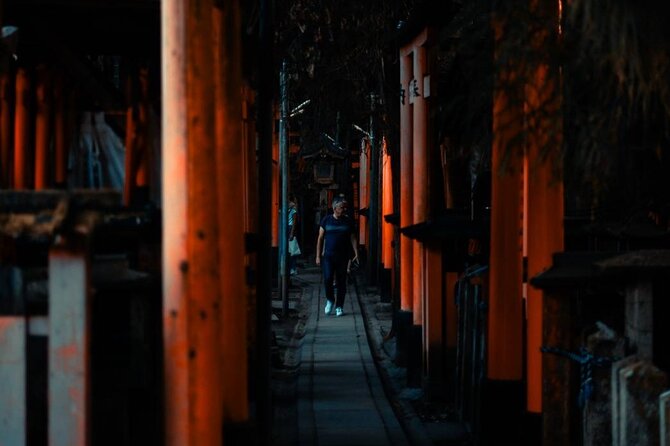
This is a great fit if you want:
- Fewer people than daytime hours
- Context for what you’re seeing at torii gates and smaller shrine stops
- A guided route that helps you avoid getting turned around
- A calmer evening plan that still feels like a big Kyoto highlight
It’s also ideal if you care about Shinto symbolism and prayer rituals, because your guide can explain what different items and places mean as you walk past them.
Think twice if:
- you dislike night walking or uneven, hillside paths
- you’re not into structured walking with a group
- you want to wander completely on your own without stops or guidance
That said, the tour’s pacing is often described as laidback, with groups of up to 12, so you generally won’t feel trapped in a rigid line.
Where it fits in your Kyoto evenings
This experience works well as a primary plan for the evening, especially if you’re visiting Fushimi Inari as a top priority. Because it focuses on one core area and returns you back to your starting point, it’s easy to connect it to food afterward.
Some guides are also mentioned as offering dinner recommendations, which is practical if you don’t want to do a second round of Kyoto research after walking uphill for an hour or two.
If you’re pairing this with other Kyoto sights, keep your expectations realistic. Fushimi Inari is the kind of place that can take energy, not just time. Build in a relaxed buffer afterward.
Should you book this night tour?
Book it if you want the best version of Fushimi Inari: the gates with a quieter feel, plus a guide who explains Inari themes, shrine symbolism, and how prayer rituals fit into the route. At $43.11, the value makes sense because the shrine entry is free, and you’re paying for timing and context.
Skip it (or switch plans) if you’re not comfortable with darker hillside paths or you’re hoping for a fully self-directed wandering session. In that case, daytime might be easier, because you can see everything more clearly and move at your own pace.
If you’re in the “I want the iconic thing, but I also want to enjoy it” camp, this night walk is a strong choice.
FAQ
How long is the Kyoto Fushimi-Inari Night Walking Tour?
It lasts about 1 hour 30 minutes to 2 hours.
What does the tour cost?
The price is $43.11 per person.
Is there an admission fee to visit Fushimi Inari-Taisha?
No. The admission ticket is free.
How many people are in the group?
The tour has a maximum of 12 travelers.
Where is the meeting point, and does the tour end there too?
You meet at the fox statue at the entrance to Fushimi Inari Taisha Shrine. The tour ends back at the same meeting point.
What will we do during the tour?
You’ll explore Fushimi Inari-taisha Shrine after the crowds, walking through the torii gates and learning about the site’s significance. You’ll also have time to see stone fox statues, smaller shrines, and viewpoints as you walk the paths up Mount Inari.
Can I bring a service animal?
Yes, service animals are allowed.
What is the cancellation policy for a full refund?
You can cancel up to 24 hours in advance for a full refund.
Is the tour near public transportation?
Yes, it’s near public transportation.