REVIEW · PALERMO
Palermo: Art and Architecture Walking Tour
Book on GetYourGuide →Operated by MySicilyGuide · Bookable on GetYourGuide
Palermo’s history walks right past you. I like how this small-group route threads Capella Palatina and Palermo’s Cathedral into one smooth circuit, and still feels like you are actually moving through the city instead of standing in lines. The biggest win for me is the skip-the-line approach plus a licensed guide who explains what you’re seeing in plain language. The only real drawback: monument entrance tickets are not included, so you’ll want cash ready for what your guide collects before you enter.
You’ll cover the big visual hits in about 3 hours—medieval streets, bright Baroque corners at Quattro Canti, the drama of Fontana Pretoria, and the grandeur of Teatro Massimo. And if you’ve got kids, older parents, or anyone who needs breaks, you’ll likely appreciate how guides can tailor pacing and even manage things like seating or elevator access when needed (seen with guides like Roberta). Just keep in mind Palermo monuments can be strict about what you bring in—no big backpacks, and even shorts are a no-go.
In This Review
- Key things that make this tour worth it
- Why Palermo works best on foot with a small group
- Meeting points, walking realities, and what to wear
- From Politeama streets to your first big sights
- Fontana Pretoria and Quattro Canti: the city’s visual stagecraft
- Palermo Cathedral: where styles collide on purpose
- Capella Palatina and the Arab-Norman angle you can actually see
- Teatro Massimo: Opera grandeur, street-level perspective
- St. Rosalie legend: the cultural thread behind the stones
- Price and value: what you pay for, and what you still need to budget
- Who this Palermo art-and-architecture walk suits best
- Should you book Palermo: Art and Architecture Walking Tour?
- FAQ
- How long is the Palermo Art and Architecture Walking Tour?
- What does the tour cost?
- Where do we meet for the tour?
- Is this a small group or a private tour?
- Is the skip-the-line feature included?
- Are monument entrance tickets included in the price?
- Which attractions are part of the route?
- Are headsets provided?
- Is the tour wheelchair accessible?
- What should I bring and what can’t I bring?
Key things that make this tour worth it
Small-group pace with a true skip-line feel instead of getting lost in a crowd.
Arab-Norman to Gothic-to-Baroque storytelling focused on what changes in the buildings and why.
Photo stops that actually get you good angles at places like Fontana Pretoria and the Teatro area.
St. Rosalie legend gives you a cultural thread that ties multiple stops together.
Licensed guides with multiple languages including English, Spanish, German, Italian, French, and Russian.
Wheelchair accessible route design with allowances for comfort along the way.
Why Palermo works best on foot with a small group
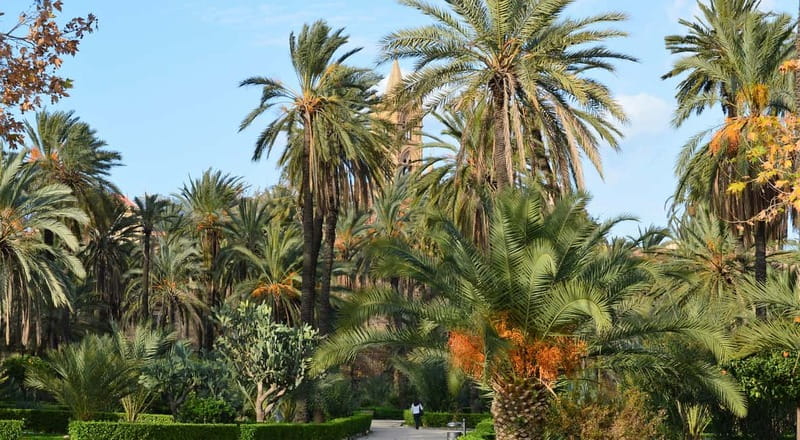
Palermo is layered. You can’t really get that “time travel” effect from a single viewpoint or a fast bus ride. Walking lets you clock details the moment you pass them: the way façades switch styles block to block, the way street corners frame monuments, and how the city’s different eras still show up in everyday streets.
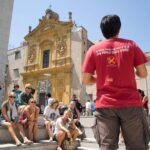
This tour is priced per group (up to 5), which is a big deal. It means you’re not paying “per person guide markup” in the way that large-group tours often do. You also spend more time with the guide than waiting for the group to catch up. If you’re traveling with family, or you just hate the shuffle-and-stop routine, the smaller size is the practical advantage.
You also get help with logistics: there are separate entrances to help you skip long lines, and headsets are included if the group is larger (for clear audio). That matters in Palermo, where churches and heritage sites can be crowded and reverberant.
You can also read our reviews of more walking tours in Palermo

Meeting points, walking realities, and what to wear
You’ll start at one of two nearby meeting options: Teatro Politeama Garibaldi or Villa Bonanno. The exact spot depends on which option you booked, and the tour ends back at the starting point—so you’re not stuck figuring out transit afterward.
Bring comfortable shoes. This isn’t a “stroll and sit every five minutes” tour. You’ll walk between key sights, often with short blocks of time inside or just at the edge of entrances. Palermo sun can hit hard, so sunglasses, sunscreen, and a sun hat are worth it even in mild weather.
Now, the rules you should actually care about: shorts are not allowed, oversize luggage is not allowed, and backpacks are not allowed. Also, large bags and backpacks are not permitted inside monuments. If you’re the type who travels with a daypack full of water and layers, think ahead and pack light. You’ll thank yourself.
From Politeama streets to your first big sights
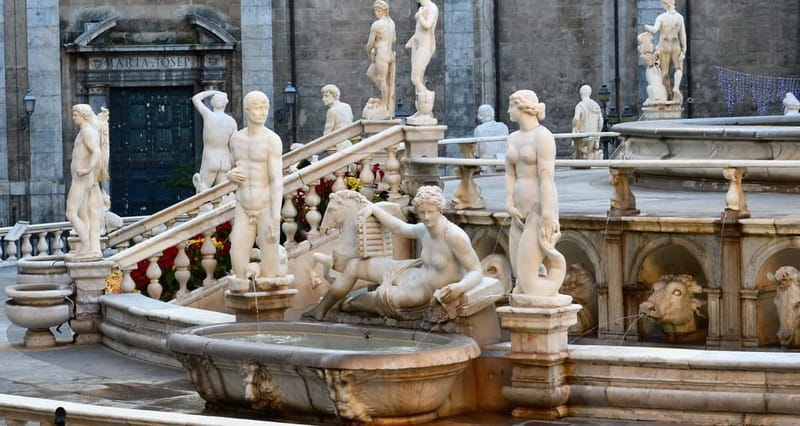
The route typically begins around the Teatro Politeama Garibaldi area. Even before you hit the major monuments, you’re in the right zone to understand how Palermo’s “theater-and-piazza” energy fits alongside older medieval streets.
You’ll then move into central Palermo, with a photo stop and a guided visit around Palermo (this first “hit” is about getting your bearings fast). Expect your guide to set the timeline: Palermo’s story starting under the Phoenicians, then moving through the Roman Republic period, the Byzantine Empire, and into later eras. The point isn’t memorizing dates. It’s learning to read architecture as a record of who ruled, worshipped, and built what.
What I like about this setup is that it primes you for the contrast later. Once you’ve heard how styles arrived, you start noticing why the Cathedral façade looks like it was assembled from different eras—because, in a sense, it was.
Fontana Pretoria and Quattro Canti: the city’s visual stagecraft
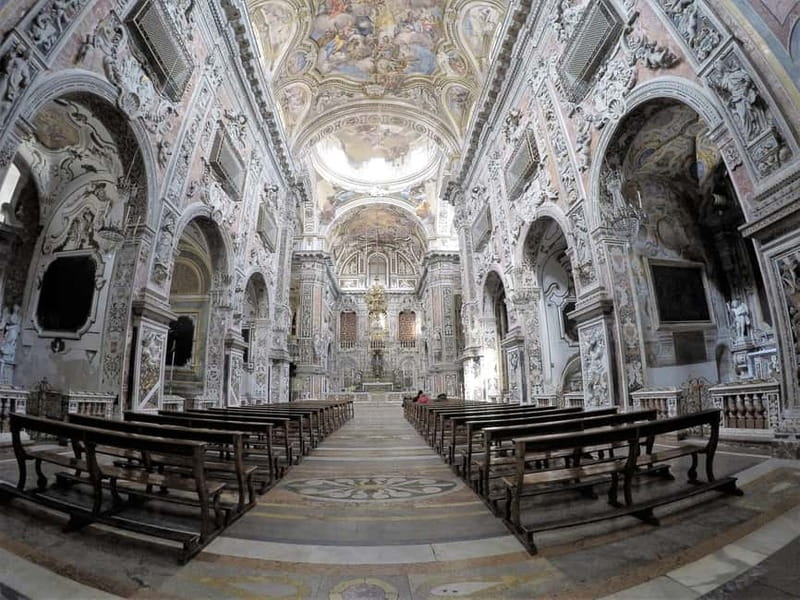
After the early orientation, you’ll hit Fontana Pretoria. This is one of those stops where the guide’s job matters. A fountain seems like a simple photo moment, but the experience becomes more interesting when you understand why it looks the way it does and how it functions in the square around it. You get a short photo stop plus a guided visit (about 15 minutes), which is enough time to appreciate the details without turning it into a museum-length detour.
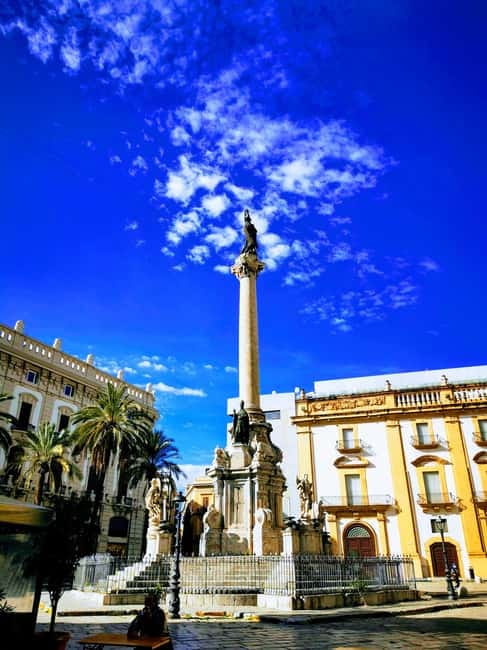
Then comes Quattro Canti, the classic four-corner junction that turns a street intersection into a centerpiece. Your guide will explain what you’re looking at, and why this area is such a strong “Palermo snapshot.” You get a photo stop and a guided segment (around 30 minutes). I like this timing because you’re not exhausted yet, and the corner gives you a perfect break between larger interiors.
Even if you’re mostly here for art and architecture, these two stops do something practical: they teach you how Palermo frames beauty in public space. That’s a big part of why the Cathedral later hits harder—you’re learning the city’s design logic, not just collecting landmarks.
Palermo Cathedral: where styles collide on purpose
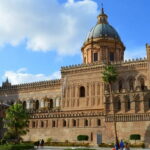
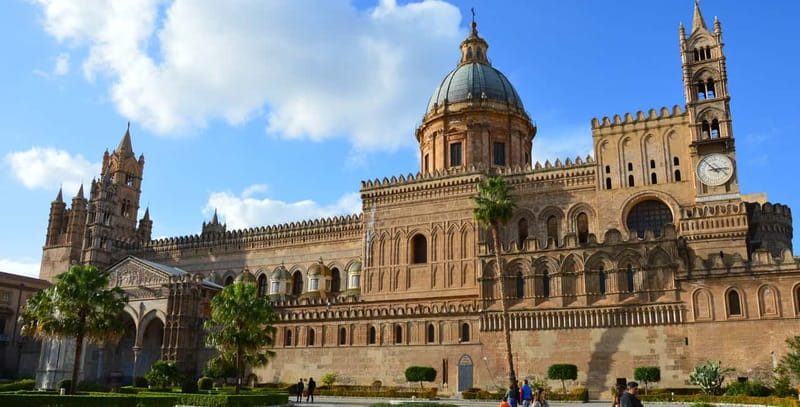
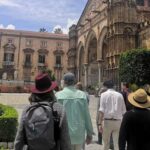
Palermo Cathedral is the kind of building that looks dramatic from the outside, but gets even better once you learn how to look at it. You’ll spend about an hour here, with guided time plus photo opportunities outside.
The façade is famous for its mixed architectural styles—Gothic elements mixed with early Renaissance hints and Baroque flourishes. Your guide’s job is to translate that mess into something you can actually follow. Instead of feeling like you’re staring at “random carvings,” you begin to understand how religious power, changing tastes, and rebuilds over time created the Cathedral’s layered look.
Entrance tickets are not included, so you’ll plan for the monument fee portion. Your guide will collect entrance payments directly prior to departure (so you’re not scrambling later). If you want the smoothest experience, do it right: keep your purse accessible and be ready for the payment moment.
If you’re sensitive to crowds, this is another place where the skip-line setup helps. Palermo Cathedral can be busy, and being able to move past slow queues makes the hour inside feel much more relaxed.
Capella Palatina and the Arab-Norman angle you can actually see
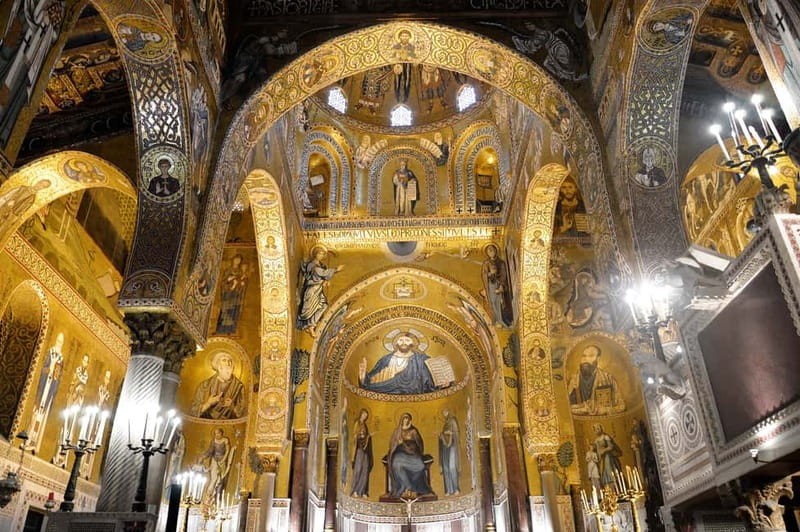
One of the tour’s core highlights is the Capella Palatina in the Palazzo Reale area. This is where Palermo’s Arab-Norman identity becomes physical, not just a word you hear in passing. Expect the guide to connect political history to visible design: how different rulers shaped religious spaces, and how that shows up in the building’s character.
This is the stop where your guide’s storytelling usually clicks. When you understand the Arab-Norman era as a living influence—not a chapter in a textbook—you’ll start noticing patterns, textures, and artistic choices that feel intentional. And because this tour is paced for small groups, you’re not constantly being shoved onward. You can look closely for a moment and then ask your own follow-up question if something sparks curiosity.
This is also where your clothing rules matter. Because you’re entering religious spaces, it’s smart to dress respectfully from the start. Shorts are listed as not allowed, so bring light long pants or plan ahead if you’re traveling in hot weather.
Teatro Massimo: Opera grandeur, street-level perspective
By the time you reach Teatro Massimo, you’ve already learned how Palermo mixes eras. Now the city switches gears into grand, civic-scale beauty.
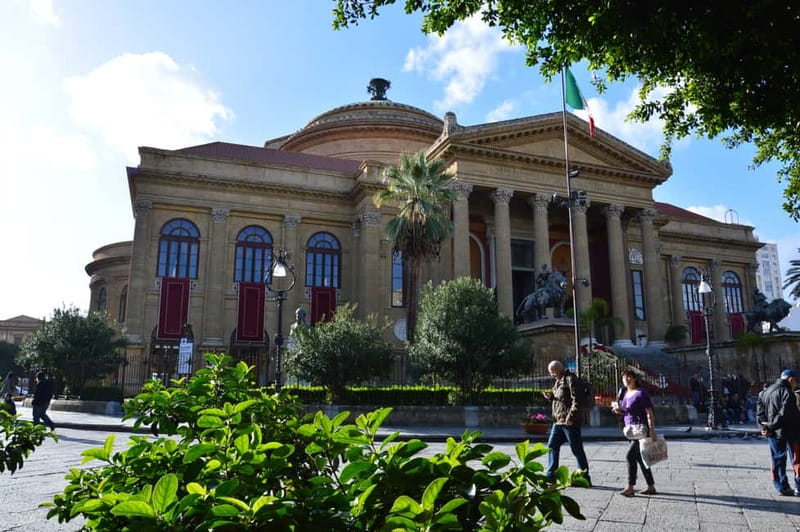
Teatro Massimo is one of Europe’s largest opera houses, and you’ll get close enough for meaningful viewing, with a photo stop and guided time (about 29 minutes). The best part of seeing it on foot is the context. You don’t just stand in front of a landmark like it’s a postcard. You see how it sits in the wider neighborhood and how the Teatro’s scale affects the feel of the street.
You’ll finish back at Teatro Politeama Garibaldi. That ending works well because it leaves you near a familiar starting point, so you’re not suddenly far from where you need to be next for dinner or transit.
St. Rosalie legend: the cultural thread behind the stones
Palermo’s identity isn’t only about monuments. It’s about who the city honors and how it tells stories about protection and faith. This tour includes the legend of St. Rosalie, the patron saint of Palermo.
For me, that legend matters because it gives the architecture a human anchor. Once you know why a patron saint matters in Palermo’s imagination, religious spaces stop feeling like “art objects” and start feeling like part of a continuing civic tradition. Your guide ties this thread through the route so it doesn’t feel random.
Price and value: what you pay for, and what you still need to budget
The price is $317.20 per group (up to 5). That can feel steep if you compare it to per-person tours, but the group pricing is the key value piece. If you travel with up to four other people, your per-person cost drops quickly.
What’s included is the licensed guide and help hearing them clearly if headsets are needed for larger groups. The guide also handles the practical side of visiting multiple major sites on a walkable route, plus the skip-line approach via a separate entrance.
What’s not included is monument entrance tickets. That means you should mentally budget for entry fees and payments handled directly by your guide. You’ll also need to consider the special case for free entrances: on the first Sunday of each month, monument entrance is free of charge, but there’s still a €3 per person reservation fee that must be paid by those entitled to free entrance. The €3 fee also shows up for booking and headsets under the same first-Sunday scenario.
My advice: don’t treat the ticket costs as a surprise. Treat them as part of your Palermo planning. If you show up organized, the tour feels smooth and efficient.
Who this Palermo art-and-architecture walk suits best
This tour is a strong fit if you want:
- A focused first visit to central Palermo without spending half your day trapped in lines.
- A guided explanation of how Palermo went from ancient influences through later empires and into the architectural mix you see today.
- A route that works for different ages, including kids, with guides who can involve families in the experience.
It’s also a good pick if you have mobility needs. The tour is listed as wheelchair accessible. One of the best examples from guide experiences is Roberta managing poor weather and being patient with elderly parents, including access to seating and an elevator when needed. Even so, always plan on some walking and keep your expectations realistic: accessibility here means thoughtful logistics, not door-to-door comfort everywhere.
If you’re traveling solo, you can still enjoy it—but because the pricing is per group, it’s often most cost-effective with friends or family.
Should you book Palermo: Art and Architecture Walking Tour?
Book it if you like your sightseeing with context. You’ll get the major Palermo hits—Capella Palatina, Palermo Cathedral, Fontana Pretoria, Quattro Canti, and Teatro Massimo—but you’ll also learn what connects them, from architectural style changes to the St. Rosalie legend that grounds the city’s faith and civic identity.
Skip booking it only if you hate rules around clothing and bags, or if you want a completely self-guided day where you pick your own pacing hour by hour. And if monument interiors are the only reason you’re traveling, remember entrance fees are extra here, so you’ll still be paying once you arrive.
If you want a smart, time-efficient way to see Palermo’s art and architecture while keeping the group small, this is the kind of tour that makes your first day in the city feel like you already know where to look.
FAQ
How long is the Palermo Art and Architecture Walking Tour?
The duration is listed as 3 hours. Starting times vary, so you’ll want to check availability for the specific slot you want.
What does the tour cost?
It’s priced at $317.20 per group, with a group size of up to 5.
Where do we meet for the tour?
The meeting point can vary depending on the option booked. Two listed options are Teatro Politeama Garibaldi and Villa Bonanno.
Is this a small group or a private tour?
It’s described as a private group.
Is the skip-the-line feature included?
Yes. The tour includes skip-the-line access via a separate entrance.
Are monument entrance tickets included in the price?
No. Entrance tickets to monuments are not included, and entrance fees should be paid directly to your guide prior to departure.
Which attractions are part of the route?
The tour includes guided time at Palermo Cathedral, Fontana Pretoria, Quattro Canti, and Teatro Massimo, plus visits related to the Capella Palatina area and Palermo’s historic center.
Are headsets provided?
Licensed guide service is included, and headsets are included to hear your guide clearly for groups larger than 15 participants.
Is the tour wheelchair accessible?
Yes, the tour is wheelchair accessible.
What should I bring and what can’t I bring?
Bring comfortable shoes, sunglasses, sun hat, and sunscreen. Shorts, oversize luggage, and backpacks are not allowed. Large bags and backpacks aren’t permitted inside the monuments.