Geisha spotting starts with quieter streets. This Kyoto Gion tour turns Shirakawa Canal and nearby backstreets into a simple story you can actually follow, with 1,000-year-old shrine context and Edo-period townhouses that show how the area used to feel.
What I like most is how the route mixes scenery with meaning, so you’re not just taking photos—you’re learning what you’re seeing as you walk.
One thing to consider: you cover a lot of ground for a 2-hour tour, with stone paths and small slopes, so it’s best if you’re comfortable on your feet.
In This Review
- Key highlights that make this walk worth your time
- Gion After Hours: Why this tour works so well
- Meeting at Macdonald Shijo Ohashi: finding your Local Guide Stars
- Shirakawa Canal: willows, tea houses, and a perfect first wow
- Tatsumi-jinja Shrine: a 1,000-year-old stop you won’t rush past
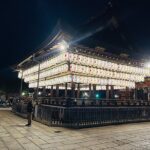
- Yasaka Shrine: where Kyoto’s big stories meet everyday streets
- Old Kyoto lanes and Edo-period townhouses: spotting the city’s earlier shape
- Ninenzaka and the slope-street vibe: photo stops that teach you how to look
- Hōkan-ji Temple and Yasui Kompira-Gu: calm stops with clear rules
- Hanamikoji-dori at the end: the geisha district heart of the story
- Price and pacing: $23 for a tight, meaningful two hours
- Weather and comfort: what to pack so the walk stays enjoyable
- Who this tour is best for (and who should skip it)
- Should you book the Kyoto Gion Hidden Gems & Geisha Culture Tour?
- FAQ
- How long is the Kyoto Gion geisha culture tour?
- Where do I meet the guide?
- Is the tour offered in English?
- Can I take photos during the tour?
- What should I bring?
- Does the tour run in bad weather?
- Is this tour wheelchair accessible?
Key highlights that make this walk worth your time
- Shirakawa Canal at a slower pace, with willows, tea houses, and stone-paved lanes
- Tatsumi-jinja’s 1,000-year-old shrine setting, plus a guided sense of place
- Yasaka Shrine and classic Kyoto temple stop(s) where etiquette matters
- Edo-period townhouses and old street atmospheres, seen in the flow of real neighborhoods
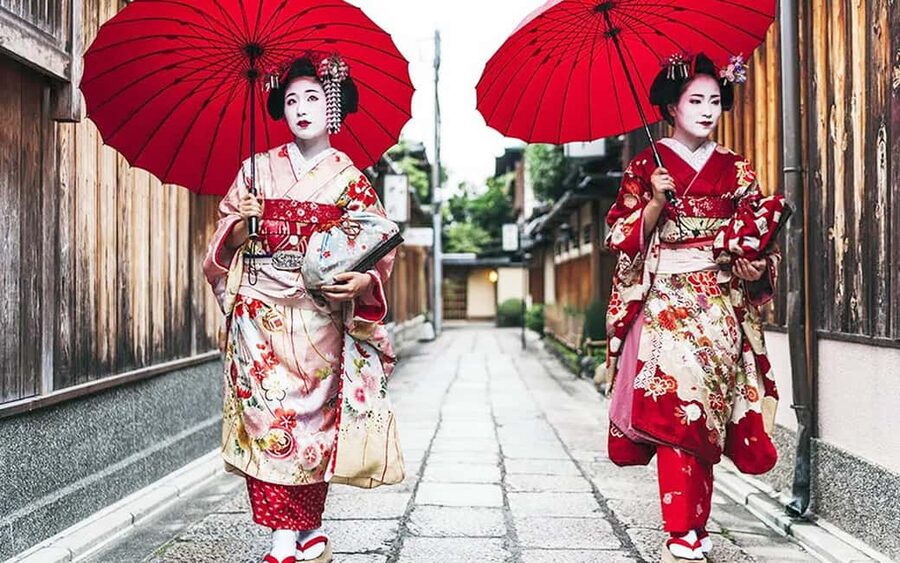
- Hanamikoji-dori at the end, timed for the possibility of a geisha on her way out
- Local tips that go beyond sightseeing, including restaurant recommendations from some guides
Gion After Hours: Why this tour works so well
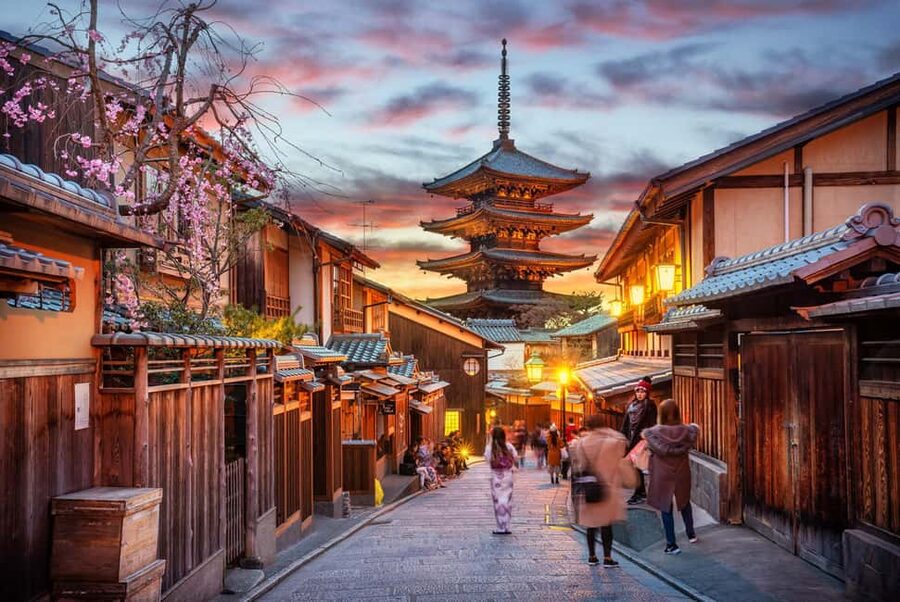
Kyoto’s Gion can feel like a postcard during peak hours. This tour aims for the other side of Gion—the quieter lanes where the district starts to make sense. You’re walking on streets that look like they belong to the city’s past, but your guide ties each stop to how Gion functioned historically and how geisha culture fits into today’s Kyoto.
The 2-hour format is also a strength. You get a dense sampler of the district—canal, shrine, temple, old streets, and the geisha heart—without spending a full day. If this is your first visit, it helps you build a mental map fast, so you can return later on your own with confidence.
And yes, the main draw is the chance to spot a geisha. No tour can guarantee it, because schedules and appearances aren’t controlled. Still, ending on Hanamikoji-dori near the geisha district increases your odds because the tour is geared toward that evening rhythm.
You can also read our reviews of more tours and experiences in Kyoto.
Meeting at Macdonald Shijo Ohashi: finding your Local Guide Stars
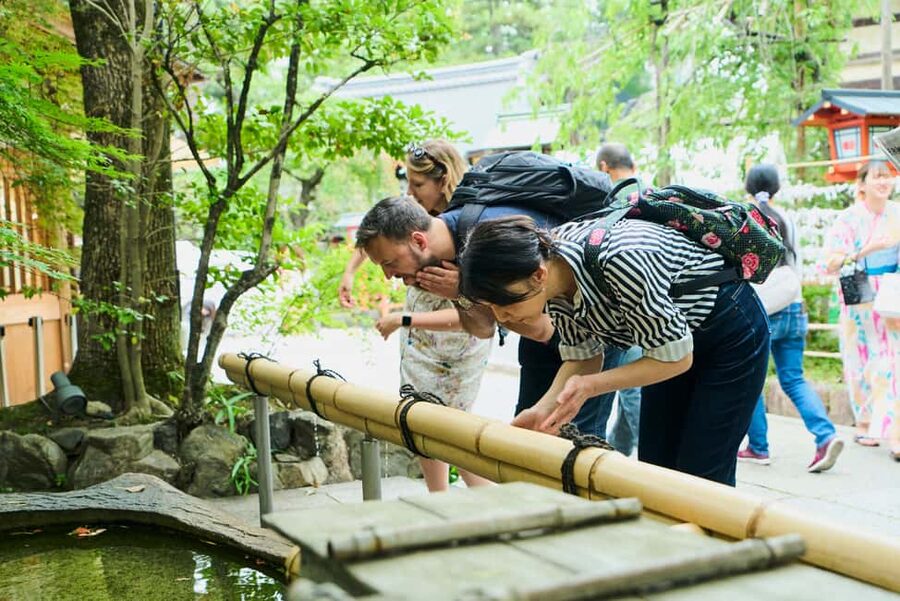
Your starting point is straightforward, even if the streets around Kyoto stations can be confusing at first: meet at マクドナルド 四条大橋店 (Macdonald Shijo Ohashi store). The guide will be holding a sign that says Local Guide Stars, standing to the side because the front of the restaurant can get very busy.
My practical advice: arrive a little early, then watch for that sign rather than trying to guess who’s “with a group.” Once you’re matched with your guide, the rest is smooth walking and photo-stop flow.
Shirakawa Canal: willows, tea houses, and a perfect first wow
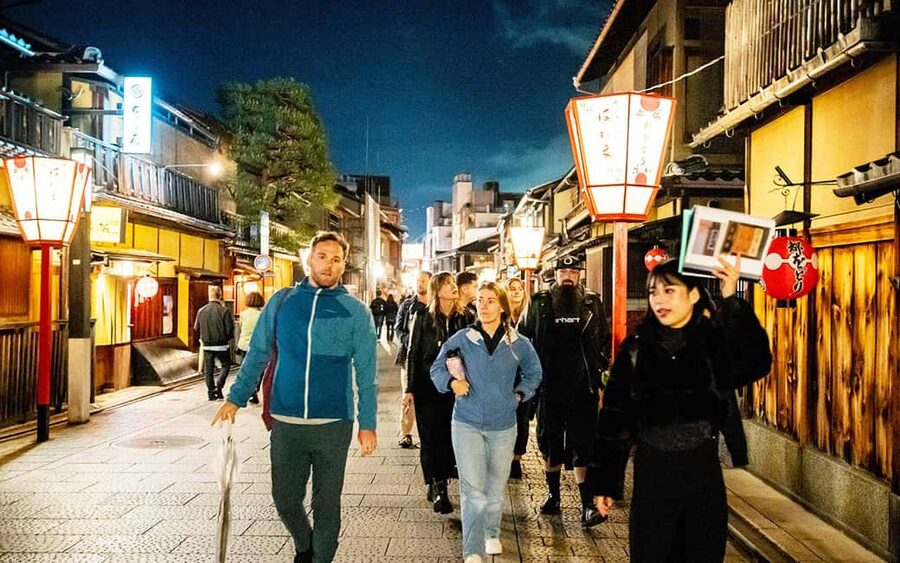
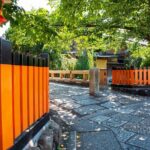
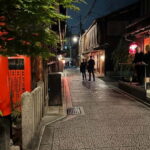
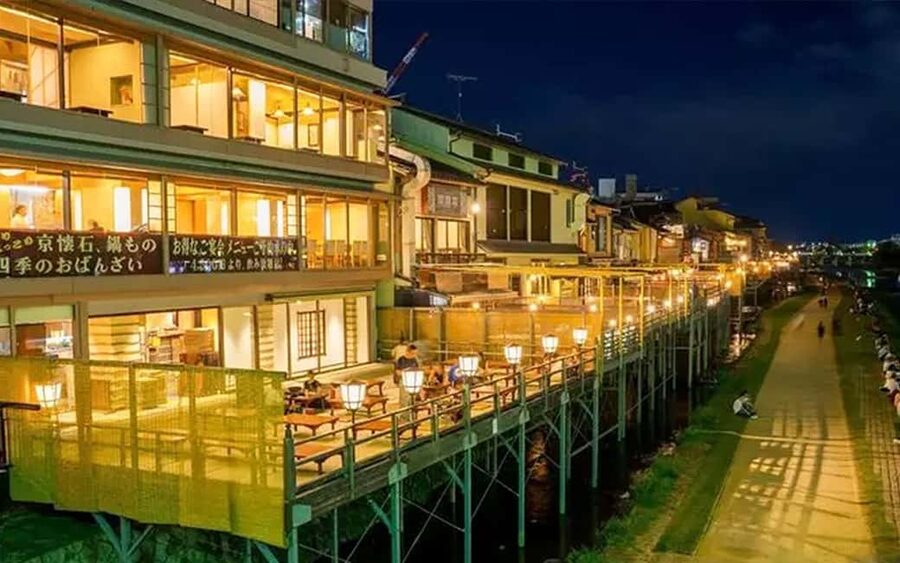
The tour begins at Gion Shirakawa, along the canal lined with willow trees. This is one of those Kyoto scenes that looks cinematic even on an ordinary day: stone-paved paths, traditional tea-house architecture, and calm water that makes the district feel gentler.
I like this start for two reasons. First, it eases you into the neighborhood visually before you start climbing the steps of history at shrines and temples. Second, it gives you an easy early win for photos and orientation—so when you later turn into narrower lanes, you’re not scrambling to figure out which direction is which.
If you’re traveling in summer, the sunscreen tip matters here. Canal walks can still be bright and warm, and you’ll be outside again soon.
Tatsumi-jinja Shrine: a 1,000-year-old stop you won’t rush past
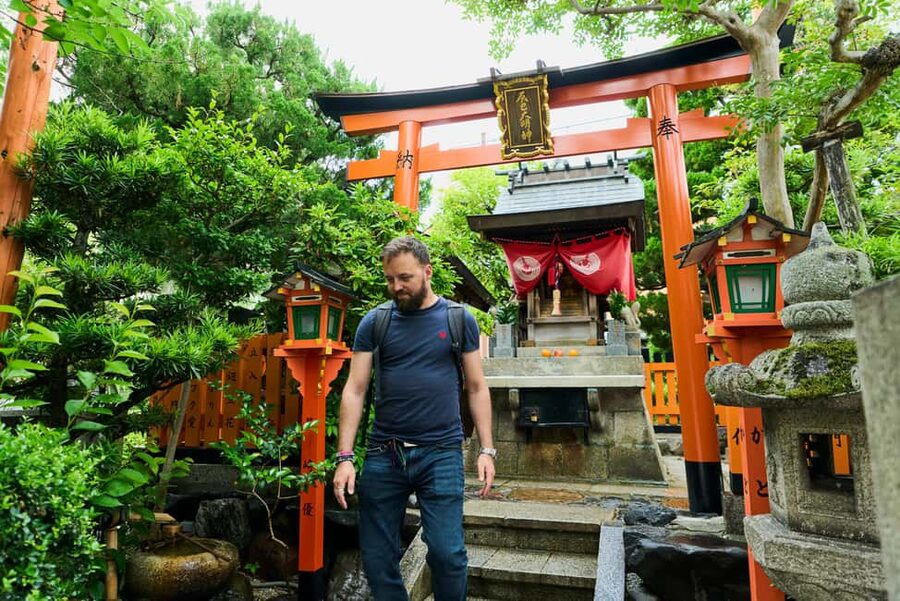
Next comes Tatsumi-jinja Shrine. This is the stop that matches the highlight about a 1,000-year-old shrine. You’ll have a photo stop, then time to visit and get a guided explanation while you walk.
Why this matters: shrines in Kyoto aren’t just religious sites. They’re also anchors for neighborhood identity—who keeps traditions, what kinds of ceremonies shaped local life, and how the city’s old pathways still connect communities. A guided stop helps you see the details instead of just snapping an exterior shot.
Also note the tour’s rules around photography: taking photos is allowed, but flash photography is not permitted inside temples. For shrines, be mindful too—if you’re unsure, follow your guide’s lead.
Yasaka Shrine: where Kyoto’s big stories meet everyday streets
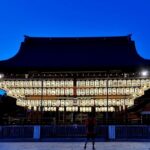
From Tatsumi-jinja, the walk moves to Yasaka Shrine. You’ll get another photo stop, then visit with guided commentary as you take in the surrounding area. This stop is especially useful because it sits right in the orbit of Gion, so it helps connect the geisha district with the broader cultural framework of Kyoto.
In real-world terms, this is where you stop viewing Gion as just a nightlife district and start seeing it as a living neighborhood with ceremonies, community rhythms, and architecture that has survived multiple eras.
If you’re the type who enjoys small details—inscriptions, shrine design cues, and the meaning behind how people behave here—this is a good stop to slow down slightly. Your guide keeps the group moving, but the explanation helps you understand what’s worth looking at.

Old Kyoto lanes and Edo-period townhouses: spotting the city’s earlier shape
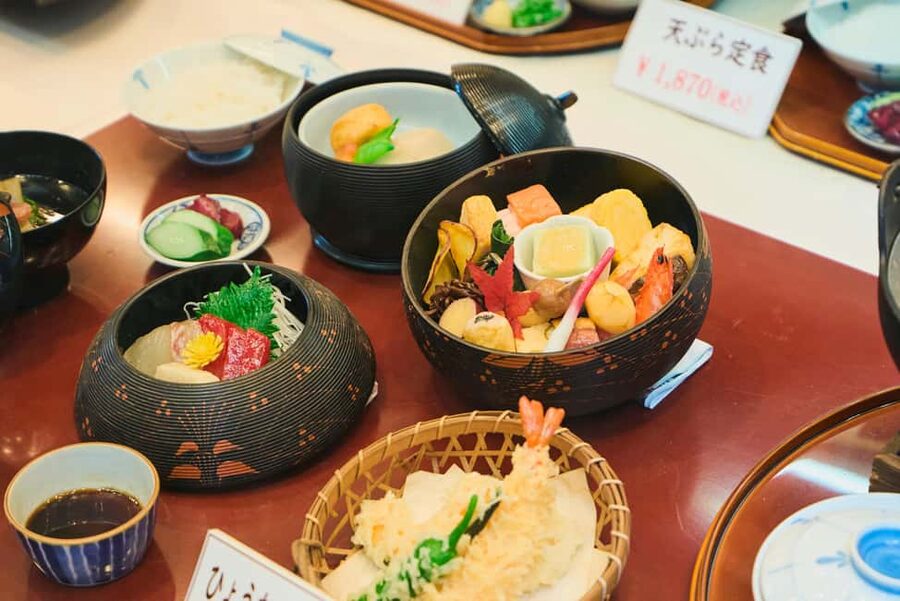
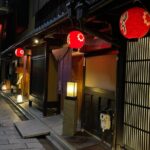
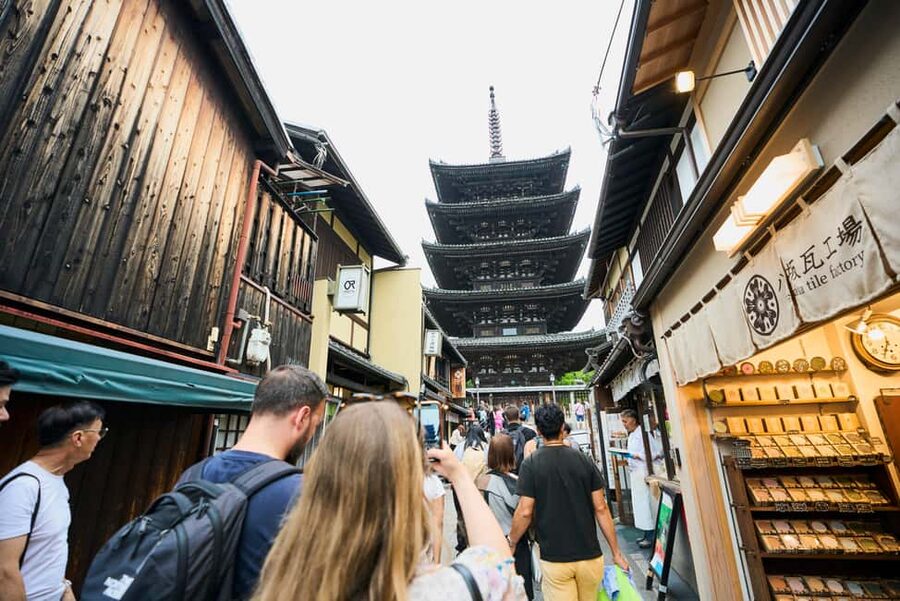
Between shrine and the later street stops, you’ll pass through quieter lanes and see Edo-period townhouses. Even if you’ve seen historic districts in other Japanese cities, Kyoto’s Gion offers a distinct “tightness”—the streets feel designed for walking, not driving.
This section is where the tour’s hidden-focus earns its keep. By steering you through less crowded side streets (instead of only the most obvious parade routes), you get a better sense of how the neighborhood actually works. It’s easier to imagine daily movement—neighbors, deliveries, visits—rather than only the staged look of the main streets.
Some guides also help you understand the practical side of what you’re seeing, including how to read the area’s layout. A few past groups noted that guides explained Japanese terms and meaning clearly, which can make everything click faster.
Ninenzaka and the slope-street vibe: photo stops that teach you how to look
The route includes Ninenzaka, a classic Kyoto streetscape that’s known for its old-time feel and pedestrian-friendly design. Here you’ll have a photo stop and guided walk-through while the city’s older layers show up in the street shape itself.
This is a stop where you’ll probably notice how visitors tend to photograph the same angles. Your guide helps you look beyond that by pointing out what the street form and building styles suggest. The goal isn’t to turn you into an architectural expert—it’s to give you better eyes for the rest of your Kyoto days.
Hōkan-ji Temple and Yasui Kompira-Gu: calm stops with clear rules

After Ninenzaka, the tour continues to Hōkan-ji Temple for another photo stop and guided walk. Then you’ll visit Yasui Kompira-Gu Shrine.
These are the kind of stops where temple etiquette matters more than you might expect, and the tour gives you a gentle framework:
- Bring your attention down a notch.
- Watch how people act and follow suit.
- Remember the photography rule: flash photography is not allowed inside temples.
Hōkan-ji also gives you a visual rhythm change. If the previous streets felt architectural and street-like, temple spaces shift you into a quieter, more enclosed Kyoto mood. Even when you only spend a short time there, a guide’s context helps you get more out of the stop than you would alone.
Hanamikoji-dori at the end: the geisha district heart of the story
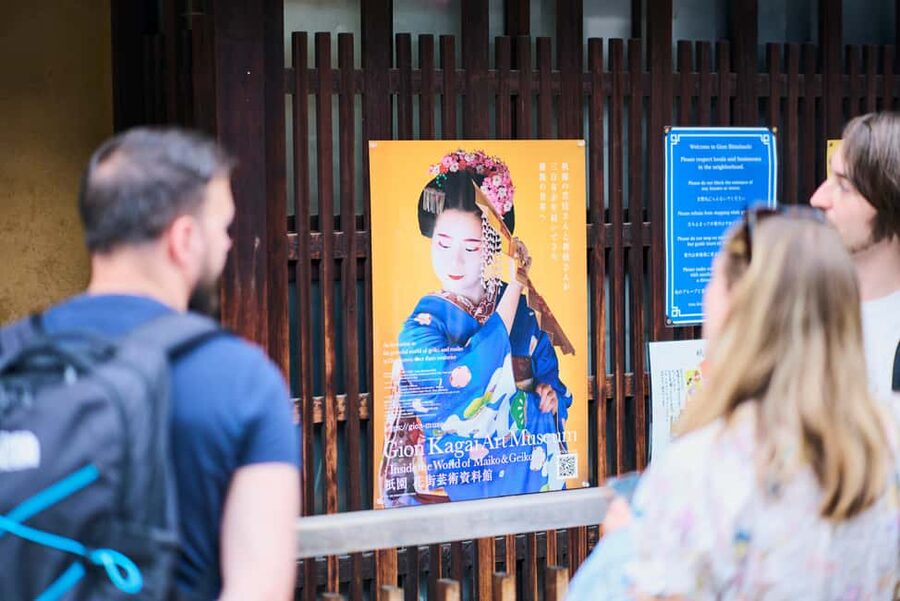
The tour ends on Hanamikoji-dori, the well-known center of the geisha district. This is where your guide’s explanation about geisha culture becomes practical—because the street itself is part of the experience.
You’ll learn about the strict training of geisha, the graceful dances, and the craftsmanship behind beautiful kimonos and hairstyles. That knowledge is useful because if you end the tour with only photos, you may miss what makes Gion culture distinctive. With the training and craftsmanship context, a glimpse of movement becomes more meaningful.
And here’s the big appeal: you may catch a glimpse of a geisha on her way to an evening engagement. Again, appearances can’t be forced. But timing the walk toward Hanamikoji’s evening energy is smart, and many groups treat this ending as a highlight.
Price and pacing: $23 for a tight, meaningful two hours
At $23 per person for 2 hours, this tour is good value if you want structure. You’re paying for an English-speaking local guide, a route that links canal-and-temple-and-geisha-street into one story, and help avoiding dead ends.
You’re also paying for time. Kyoto is huge, and self-guided exploring can be slower if you’re constantly stopping to check directions and deciding what’s worth your effort. Here, you walk, learn, and re-check your bearings as you go.
Pacing is brisk, which most people seem to like because the tour still hits key stops. One common theme from guides’ style is keeping the group together and adjusting timing so nobody gets left behind too far—so you’re not sprinting, but you are walking.
Weather and comfort: what to pack so the walk stays enjoyable
The tour takes place even in the rain. So bring an umbrella or raincoat if the forecast looks iffy. The walking won’t stop just because the sky decides to participate.
For comfort, plan for:
- Comfortable walking shoes (you’re on stone and uneven surfaces)
- Water (helpful for the duration of a nonstop stroll)
- Sunscreen, since you’ll be outdoors for portions of the route
Also remember the photography rule: photos are okay, but no flash inside temples. If you rely on flash for nighttime shots, you’ll need to switch to natural light or your camera’s night mode settings.
Who this tour is best for (and who should skip it)
This tour is a great fit if you:
- Want a first-day overview of Kyoto’s Gion without researching every stop
- Prefer walking routes with a guide’s context rather than solo wandering
- Care about geisha culture details, not just the most photographed streets
- Like night-timed district energy, especially around Hanamikoji-dori
It may not be the best fit if you have mobility impairments or use a wheelchair. The route is not designed for that, and the walking demands are part of the experience.
Should you book the Kyoto Gion Hidden Gems & Geisha Culture Tour?
Yes, if you want a guided “best of” that still feels local. The combination of Shirakawa Canal, shrine and temple stops, Edo-period streets, and an end point at Hanamikoji-dori makes this more than a sightseeing loop—it’s a story you can walk through.
Book it if:
- You’re on a tight schedule and want the district’s key atmosphere in 2 hours
- You enjoy learning how traditions work, not just taking pictures
- You’d like a chance to spot a geisha in the evening flow
Consider another option if:
- You struggle with sustained walking on uneven streets
- You need long, slow breaks inside temples (this tour keeps momentum)
If you’re ready for a brisk, meaningful walk through Gion, this is a solid choice.
FAQ
How long is the Kyoto Gion geisha culture tour?
The tour lasts 2 hours.
Where do I meet the guide?
Meet at the Macdonald Shijo Ohashi store at 105-1 Hashimoto-cho, Shimogyo-ku, Kyoto-shi, Kyoto. The guide will be holding a sign that says Local Guide Stars.
Is the tour offered in English?
Yes. The tour includes an English-speaking local guide.
Can I take photos during the tour?
Yes, photography is allowed. Flash photography is not permitted inside temples.
What should I bring?
Wear comfortable shoes, and bring water and sunscreen for the walk. If rain is possible, bring an umbrella or raincoat since the tour runs in rain.
Does the tour run in bad weather?
Yes. The tour will take place even in the rain.
Is this tour wheelchair accessible?
No. It is not suitable for mobility impairments or wheelchair users.