REVIEW · KYOTO
Kyoto Gion Historical Walking Tour
Book on Viator →Operated by Localized Walking & Food Tours · Bookable on Viator
Gion in three hours is doable. This Kyoto Gion Historical Walking Tour strings together temple grandeur and everyday Kyoto street scenes, with your guide explaining the Meiji restoration as you walk. Two things I like a lot: you get a real sense of how religion shaped the city’s rhythms, and you visit photo-priority spots like the cobbled slopes and the five-story pagoda. The one catch is simple: you’ll cover a lot of ground, and there can be some stair climbing, so bring comfortable walking shoes.
The value is strong for the price. At $40, you’re paying for an English-speaking guide plus a focused route that ends at Kiyomizu-dera—and many stops have no admission cost, while Kiyomizu-dera’s ticket is the main separate expense. With a max group size of 12, you’re not stuck in a huge crowd shuffle, which makes it easier to hear stories and ask questions.
In This Review
- Key things to know before you go
- Price and logistics: why $40 feels fair
- Meeting at Ben’s Cookies Kyoto Shijo and finishing at Kiyomizu-dera
- Gion shibashi to Tatsumi Bridge: getting your bearings in style
- Chion-in Temple: the Sammon gate and why big gates matter
- Maruyama Park: a quick reset between monuments
- Nene-no-Michi: stone paving, history on foot
- Hōkan-ji Temple (Yasaka Pagoda): the five-story photo you’ll remember
- Ninen-zaka and Sannen-zaka slopes: cobblestones, tea houses, and easy strolling
- Kiyomizu-dera finale: plan for an extra ticket and extra time
- How the Meiji restoration story makes the walk click
- Pace, stairs, and photo time: your comfort checklist
- Who should book this Kyoto Gion Historical Walking Tour
- Should you book it?
- FAQ
- How long is the Kyoto Gion Historical Walking Tour?
- What is included in the price?
- Are temple admissions included?
- Where do I meet and where does the tour end?
- Is this tour in English, and are service animals allowed?
- What’s the maximum group size?
- What happens if weather is poor or I need to cancel?
Key things to know before you go
- Small group feel: maximum of 12 people, so the guide can keep things moving and answer questions
- English-speaking guidance: you’ll learn history, culture, religion, and how it connects to Kyoto today
- A one-way finish: you start in central Kyoto and end at Kiyomizu-dera, which can shape your plans
- Most stops are free: admission isn’t included, but several key sights on the route are listed as free entry
- Comfort matters: it’s a half-day walk with moderate physical demands
Price and logistics: why $40 feels fair
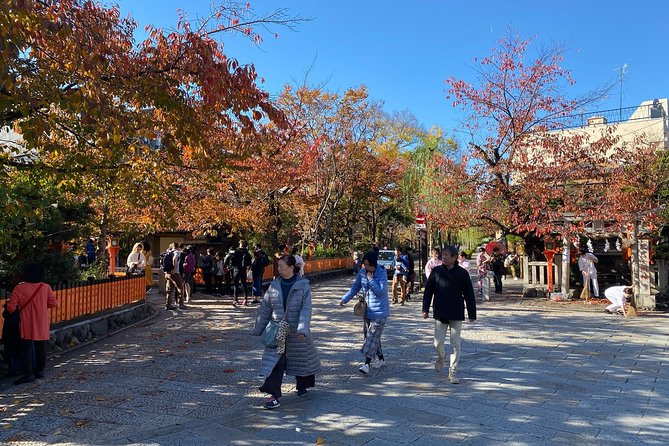
This tour is priced at $40 per person for about 3 hours of walking with a guide. For Kyoto, that’s a reasonable setup because you’re not just ticking off one temple. You’re getting a guided path through multiple landmark areas: Gion shibashi, Chion-in, Maruyama Park, Nene-no-Michi, Hōkan-ji (Yasaka Pagoda), the Ninen-zaka and Sannen-zaka slopes, and the run-in to Kiyomizu-dera.
Here’s where the value shows up for your day:
- You save time. You don’t have to figure out how all these places connect across Higashiyama.
- You get context. The guide ties stories together—especially the Meiji restoration—so you’re not looking at buildings without the why.
- Free entries help. Several stops are listed as free, so you’re less likely to feel nickel-and-dimed during the walk.
The main consideration is that Kiyomizu-dera admission is not included. In plain terms: you’ll want to plan for that ticket if you want to go beyond the entrance area and take full advantage of the UNESCO site.
You can also read our reviews of more walking tours in Kyoto
Meeting at Ben’s Cookies Kyoto Shijo and finishing at Kiyomizu-dera
Your start point is easy to recognize: Ben’s Cookies Kyoto Shijo, 89 Shinchō, Shimogyo Ward. It’s near public transportation, which matters because you’re starting in one part of Kyoto and ending in another.
Your tour ends at Kiyomizu-dera, at 1-chōme-294 Kiyomizu, Higashiyama Ward, specifically in front of the entrance.
Why this matters for you:
- It’s a one-way walk. If you plan your next stop right after, you’ll save yourself time and stress.
- Because you’re ending by Kiyomizu-dera, you can usually keep the momentum going—coffee, snacks, or a longer look around the temple area—if your day allows.
You’ll also receive a mobile ticket, which is helpful if you’re juggling maps, photos, and phone battery.
Gion shibashi to Tatsumi Bridge: getting your bearings in style
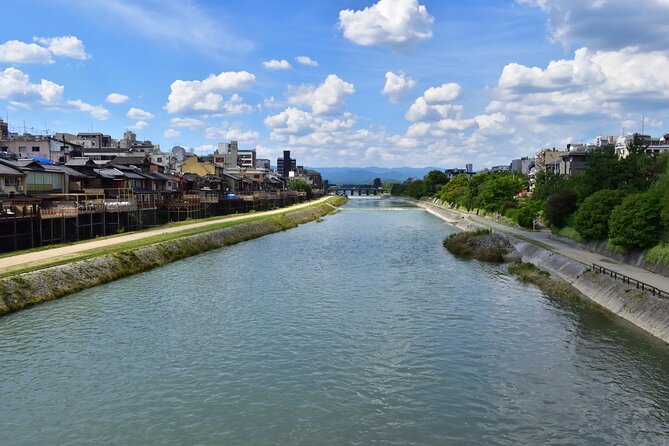
The tour kicks off at Tatsumi Bridge, where you’ll walk through Gion shibashi. Even if you’ve only seen Gion in photos, this is the moment you start to understand the layout: narrow streets, historic atmosphere, and those “you’re inside Kyoto” vibes.
This is also a smart early stop because it sets the theme for the day. You’re moving from the river-and-street visual rhythm into big religious landmarks next. In other words, you’re not jumping straight into temples with no warm-up.
Also on the route is a pause at the Statue of Izumo-no-Okuni. That matters because it broadens the day beyond pure temple viewing. It helps you connect Gion with Japan’s performance traditions—an angle that makes the neighborhood feel less like a museum district and more like a living cultural stage.
Practical tip: start your day with your camera ready, but your eyes even more ready. Kyoto’s best details are often at walking height, not at landmark height.
Chion-in Temple: the Sammon gate and why big gates matter
Next up is Chion-in, including Sammon (the temple gate). The tour allows about 10 minutes at the Sammon and around 20 minutes at the temple itself.
Chion-in’s Sammon is described as one of the largest wooden gates in Japan, and that scale is the point. When you stand at a gate like this, you feel how temples organized space—how visitors moved from everyday life into a sacred setting.
What I’d watch for, without getting too fancy:
- The gate structure and how it frames the approach
- The shift in atmosphere as you move from the street into temple grounds
- The way your guide explains the temple’s role in Kyoto’s religious life
If you enjoy understanding why buildings look the way they do, this stop is one of your best bets on the whole route.
Maruyama Park: a quick reset between monuments
After Chion-in, you’ll reach Maruyama Park for about 10 minutes. This is listed as a picturesque urban oasis, and it serves a real purpose on this kind of tour.
You’re already in a stretch of religious sites, so Maruyama Park gives you a breather:
- A chance to slow down and look around
- A more relaxed pace before the day gets more “path and slope” focused
In a 3-hour tour, these little pauses are gold. They keep the walk from turning into one long line of “next, next, next.”
You can also read our reviews of more historical tours in Kyoto

Nene-no-Michi: stone paving, history on foot
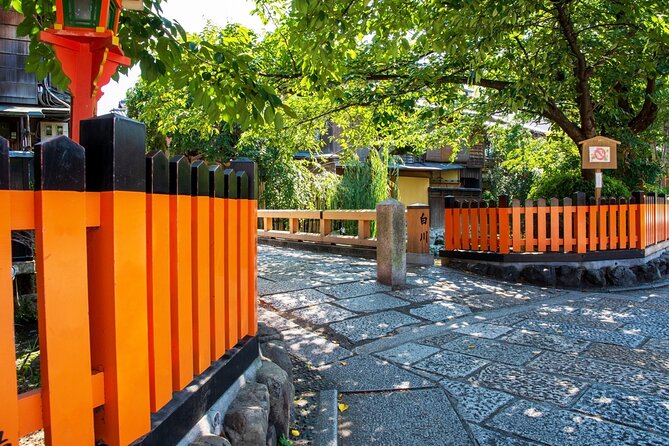
The route includes Nene-no-Michi, also known as the Path of Nene. This is a historic, stone-paved path named after Nene, the wife of Toyotomi Hideyoshi.
This stop is short, but it works well because it’s different from the large temple-and-gate feeling. Instead of scale, you get mood:
- A quieter, more “walk here like locals do” sensation
- A sense of how Kyoto preserves history through everyday pathways
If you like the way small details connect to big names, this is the kind of stop your guide can make interesting with context. You’ll usually get a better payoff here than you’d expect from a 5–10 minute segment.
Hōkan-ji Temple (Yasaka Pagoda): the five-story photo you’ll remember
Then comes Hōkan-ji Temple, also known as Yasaka Pagoda. Expect about 10 minutes.
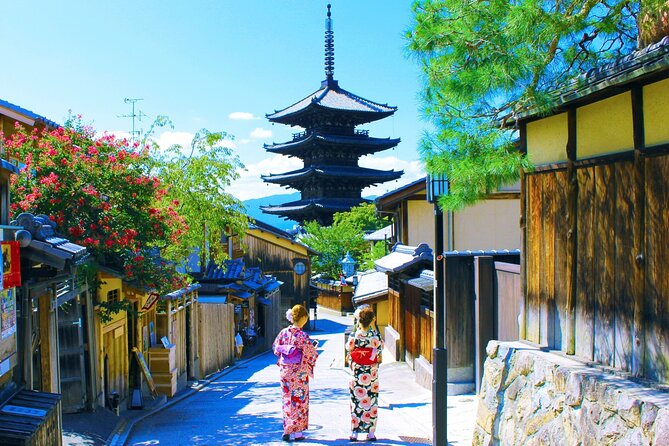
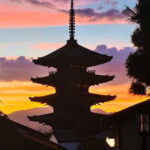
This is one of those Kyoto landmarks that looks instantly familiar once you see it. The five-story pagoda is iconic, and the reason it earns its fame is simple: it’s tall, it’s unmistakable, and it anchors the area visually.
What you’ll get from the stop:
- A major skyline element in the Higashiyama district
- A clear waypoint for your photos
- Another moment where your guide connects religious architecture to how the city developed
Even if you don’t go deep into temple study, this is a great “I get it now” stop.
Ninen-zaka and Sannen-zaka slopes: cobblestones, tea houses, and easy strolling

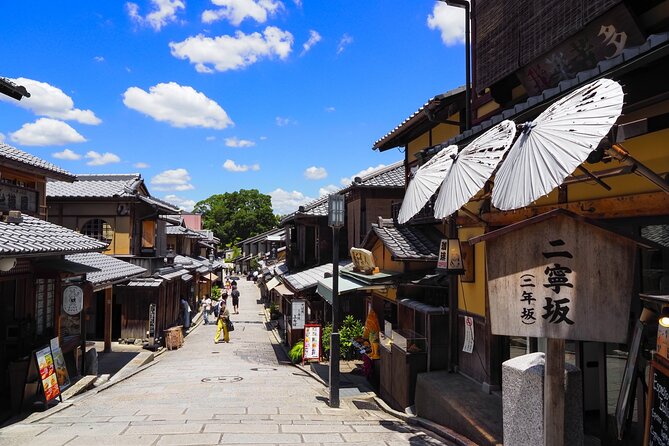
From the pagoda area, the tour moves into the charm zone: Ninen-zaka (Two-Year Slope) and Sannen-zaka (Three-Year Slope). These are cobblestone pedestrian paths with preserved traditional architecture.
You’ll spend only a few minutes on Ninen-zaka and around 10 minutes on Sannen-zaka, but it’s enough time to feel the difference:
- The ground changes: cobblestones slow you down (in a good way)
- The buildings keep the street “period-shaped,” not modernized
- Tea houses and souvenir shops line the lanes, so it’s easy to linger if you want
Practical photo tip: shoot from different angles. The slopes are great for leading lines, and your best photos often come from walking a few steps, then turning your phone/camera back toward where you came from.
Kiyomizu-dera finale: plan for an extra ticket and extra time
The tour ends at Kiyomizu-dera, UNESCO-listed and dating back to the 8th century (as described). The stop is about 10 minutes on the tour plan, but the important detail is this: admission is not included.
So what should you do?
- If you want the full Kiyomizu-dera experience, you’ll likely need to purchase tickets on arrival.
- If you’re ticket-adverse, at least use your guided time to understand what you’re seeing before you decide how much deeper to go.
Why the finale is a good idea on a guided walk:
- You arrive with context, not just curiosity.
- You get your “big temple” moment right as your energy is still decent (assuming you bring water and don’t snack only at the very end).
How the Meiji restoration story makes the walk click
One of the smartest parts of this tour is that the guide doesn’t keep everything stuck in the ancient past. You’ll learn about the Meiji restoration, and the way that historical shift affected Kyoto’s institutions and everyday life.
This is useful because it changes how you look at what’s in front of you. Instead of treating temples, gates, and neighborhoods as frozen scenes, you start seeing them as places shaped by change. That makes the walk feel more connected to modern Kyoto today.
And because the route is built for walking between different kinds of sites, you’ll notice the contrast your guide is pointing out: sacred space next to ordinary street life, old tradition next to the present-day pace.
Pace, stairs, and photo time: your comfort checklist
This is a moderate fitness tour. You’re doing a half day on your feet.
A few things that will make your day smoother:
- Wear shoes you’d use for a long city day. Several reviews point out comfort and walking shoes for exactly this reason.
- Expect some stair climbing. One review mentioned there can be a lot of stairs, so don’t plan on flip-flops or “I’ll manage” sandals.
- Bring a plan for snacks and water. The tour includes limited breaks, so eating before you start is a smart move.
For photos: don’t assume you’ll have unlimited time at each stop. Most stops are 5–20 minutes. That’s normal for a 3-hour route. If you want a perfect shot, position yourself early and be ready to move when the group does.
Who should book this Kyoto Gion Historical Walking Tour
This tour is a good fit if you want:
- A guided overview of Gion and Higashiyama
- Temple and shrine sights plus streets and paths you can actually wander in afterward
- Explanations that connect Kyoto’s past to Kyoto today, including the Meiji restoration
- An English-speaking guide you can ask questions to
It may be less ideal if you dislike structured, information-heavy walking sessions. One review specifically flagged that it can feel heavy for kids after a while, largely because it’s a 3-hour format with lots of explanation.
Should you book it?
Yes, if you want a practical, story-led walk that hits Kyoto’s big-name areas without turning your day into a map-and-museum marathon. The $40 price works because you get a guided route through multiple landmark sites, with mostly free entries along the way and a strong payoff in context—especially from the guide’s explanations and the way the route ties Gion and Higashiyama together.
Book it with one expectation set: this is a walking tour. If you prepare with comfortable shoes, water, and a flexible schedule ending at Kiyomizu-dera, you’ll finish with a much clearer picture of how Kyoto fits together.
FAQ
How long is the Kyoto Gion Historical Walking Tour?
It runs for about 3 hours (approx.), and it’s described as a half-day walking tour.
What is included in the price?
The tour includes the walking tour and an English-speaking guide, delivered via a mobile ticket. The price shown is $40.00 per person.
Are temple admissions included?
Admission fees are not included. Kiyomizu-dera’s admission is specifically not included, while other listed stops on the route are shown as free.
Where do I meet and where does the tour end?
You start at Ben’s Cookies Kyoto Shijo, 89 Shinchō, Shimogyo Ward, Kyoto. You end at Kiyomizu-dera, at the entrance area.
Is this tour in English, and are service animals allowed?
The guide is English speaking, and service animals are allowed.
What’s the maximum group size?
The tour has a maximum of 12 people.
What happens if weather is poor or I need to cancel?
The tour requires good weather. If it’s canceled due to poor weather, you’ll be offered a different date or a full refund. You can cancel for a full refund up to 24 hours in advance.