REVIEW · KYOTO
Kyoto: Gion and Geisha District Walking Tour
Book on Viator →Operated by Traveling Kyoto · Bookable on Viator
Lantern alleys and geisha stories start here. This small-group Gion walking tour zeroes in on Kyoto’s geisha district, with an English guide pointing out what’s worth seeing (and what you might otherwise miss). I like the focus on geisha culture context—samurai-era stories, teahouse world background, and practical tips on where you might spot geisha—plus the walking route through classic stops like Yasaka Shrine, Maruyama Park, Nene-no-Michi, Sannenzaka/Ninenzaka, Yasui-Konpiragu, and Hanamikoji Street. Guides named Sam, Shin, Amy, Tim, Maria, and Naoya show up in the best feedback, and that matters because the stories are the product here.
The one drawback: it’s about 2 hours, so if you want long shop breaks or to linger for photos at every angle, you may feel lightly rushed.
In This Review
- Key things you’ll notice on this Gion walking tour
- Start at Gion Hotel Starbucks and get your bearings fast
- Yasaka Shrine and Maruyama Park: the cultural warm-up before Gion
- Nene-no-Michi: a quiet lane with a samurai-family link
- Sannenzaka and Ninenzaka: the stone slope that feels like old Kyoto
- Yasui-Konpiragu: the Power Stone tradition you’ll remember
- Hanamikoji Street: where the geisha district look becomes real
- Guide quality is the real value (Sam, Shin, Amy, Maria, Naoya)
- Price and what you’re really paying for ($22.55)
- What to expect on the ground: walking pace, photos, and heat
- When this tour is a great fit (and when to skip it)
- FAQ
- FAQ
- How long is the Kyoto Gion and Geisha District Walking Tour?
- What group size should I expect?
- Where do we meet and where does the tour end?
- Is there an English-speaking guide?
- Are there admission tickets I need to buy for the main stops?
- What’s included in the tour price?
- Is this tour okay for most people?
- What is the cancellation policy?
- Should you book this Gion and Geisha District Walking Tour?
Key things you’ll notice on this Gion walking tour

- Max 10 people keeps the pace human and makes Q&A easy
- Geisha spotting tips are part of the walk, not an afterthought
- Yasaka Shrine + Maruyama Park gives you culture context before you reach Gion
- Yasui-Konpiragu Power Stone is a memorable, playful tradition stop
- Hanamikoji Street at the center lets you see the look and rhythm of old Gion up close
Start at Gion Hotel Starbucks and get your bearings fast
You meet at Starbucks Coffee at Kyoto Gion Hotel (in the Gionmachi Minamigawa area). That’s a smart choice for this kind of walk because you’re starting right where the Gion lanes begin, instead of trekking in from far away.
Your tour runs about 2 hours, and it ends back at the starting meeting point. That loop-style ending helps if you’re lining up dinner plans afterward.
You’ll also get a mobile ticket. In Kyoto, that kind of fast check-in is a small thing that saves time.
You can also read our reviews of more walking tours in Kyoto
Yasaka Shrine and Maruyama Park: the cultural warm-up before Gion
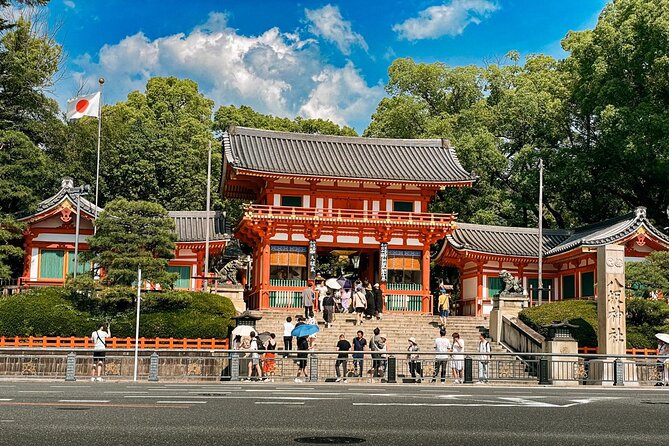
Most people think Gion is all about lanterns and teahouses. This tour starts by setting the mood first, at Yasaka Shrine.
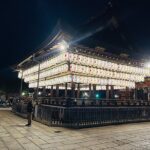
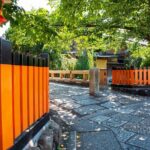
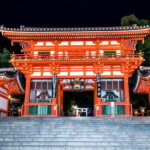
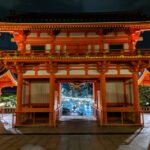
Yasaka Shrine is a centuries-old Shinto sanctuary with a famous vermilion gate and lantern-lit paths. Going here early helps you understand that Gion’s entertainment history sits inside a much bigger Kyoto world—religious traditions, seasonal events, and local customs—not just architecture.
From there, you head to Maruyama Park, Kyoto’s oldest public park. It’s known for seasonal beauty, including weeping cherry trees. Even if you’re not traveling during peak bloom, the point is the same: it’s a calm reset near the energy of Gion.
Why it works for your day: if you jump straight to the “pretty streets,” you can end up treating everything as scenery. Starting at shrines and a park gives your eyes a context filter. You start noticing details like lantern placement, temple-path design, and how people move through the space.
Nene-no-Michi: a quiet lane with a samurai-family link
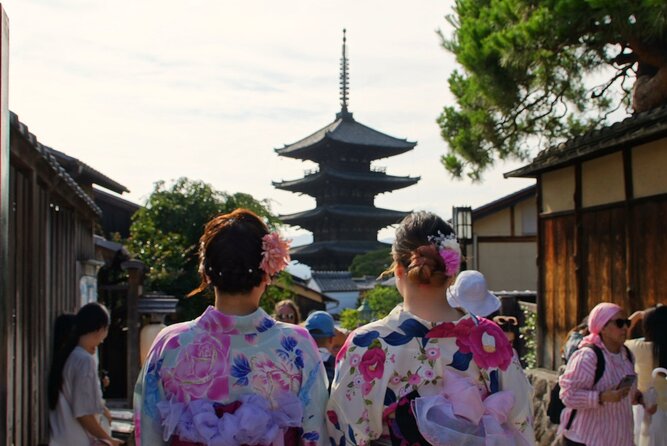
Next you walk down Nene-no-Michi, a lane named after Nene, the wife of samurai warlord Toyotomi Hideyoshi. That’s not just a name-drop. It turns a simple street into a story you can follow—who was connected to power, who lived nearby, and how those relationships became part of Kyoto’s street identity.
You’ll see preserved traditional architecture along the way and pass small shops and teahouse-adjacent spaces. This is where you start building a mental map of what Gion “looks like” when it’s not being photographed for postcards.
Practical tip: keep an eye on the doorway details and street rhythm. The guide’s job here is to point out what the average “walk past” moment usually misses.
Sannenzaka and Ninenzaka: the stone slope that feels like old Kyoto
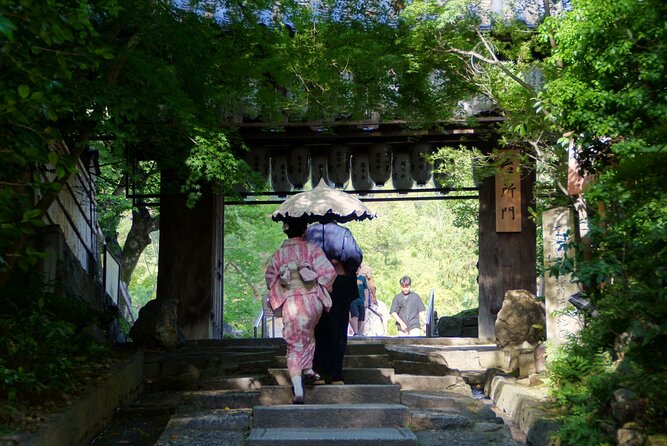
Now you transition into the older-streets feeling: Sannenzaka and Ninenzaka. These are charm-packed slopes with stone-paved walkways and historic wooden buildings.
You also get artisan boutiques along the way. That means this stretch is part sightseeing and part shopping temptation, so the timing matters. The tour gives you enough time to look closely without turning the route into a half-day detour.
What I like about this stop: it’s a rare chance to see old Kyoto architecture as something you walk through, not just something you pause in front of. When you’re on foot, you feel the slope and the narrowness. That helps you understand why people built streets this way in the first place.
A small caution: if you hate crowds, go in with realistic expectations on these slopes. Even when you’re moving with a guide, the lanes are narrow enough that you’ll share space.
Yasui-Konpiragu: the Power Stone tradition you’ll remember
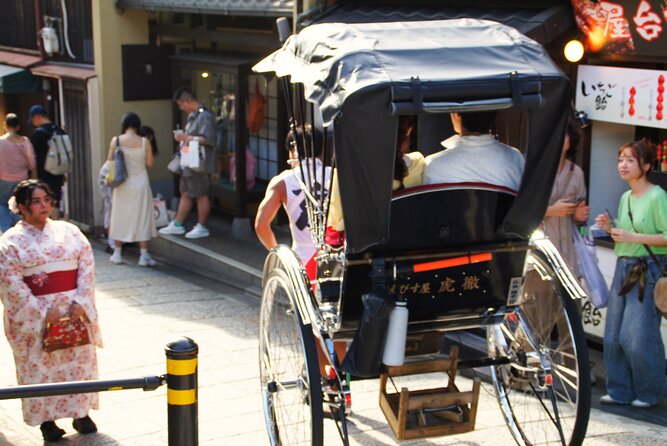
Yasui-Konpiragu is the stop people tend to talk about afterward, because it’s different from the more straightforward “walk and look” sightseeing.
It’s known for its Power Stone archway. People crawl through it to pray for strong relationships—or to cut ties with the past. That “two meanings, one tradition” angle makes it funny and human, not stiff or ceremonial in a museum way.
The best part of this stop isn’t only the ritual itself. It’s how your guide explains what people are doing and why, so it doesn’t feel like random tourist activity.
Why this matters for you: Gion can turn into a themed zone if you’re not careful. A shrine tradition stop grounds the day again. You leave with a story that connects faith, everyday hopes, and the way Kyoto keeps old customs alive.


Hanamikoji Street: where the geisha district look becomes real
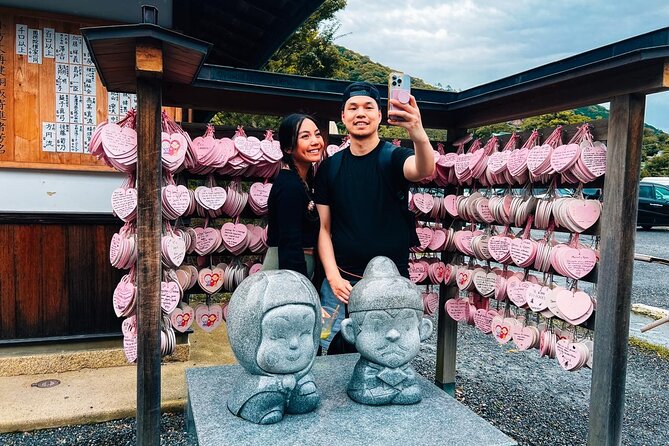
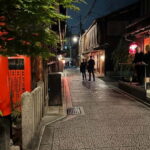
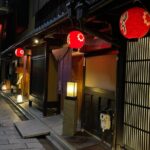
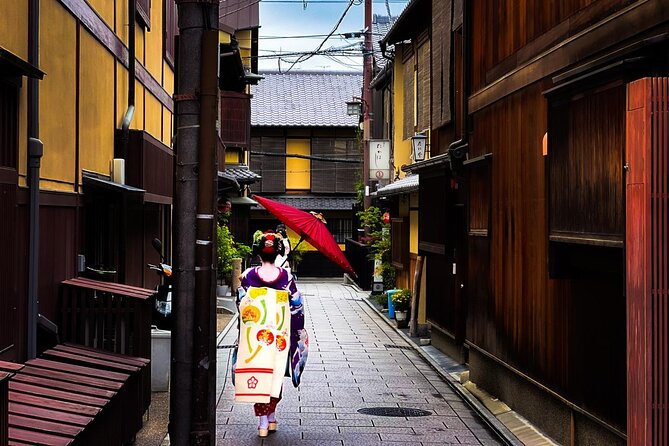
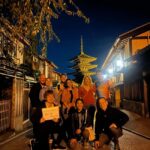
Hanamikoji Street is the heart of Gion. It’s lined with preserved wooden machiya townhouses, teahouses, and softly glowing lanterns. In other words: the vibe you came for is here.
This is also where your tour’s geisha focus starts to feel practical. You’re not just told that geisha exist—you’re given tips on where you might spot geisha and how to understand the space around them.
Important mindset shift: don’t treat this as a hunt. Treat it as a guided way to read the district. The lantern lighting, the townhouse frontage, and the alley openings tell you how the area functions day to day.
If you’re lucky and your schedule includes an evening slot, the lanterns can look even better. One of the stronger pieces of feedback mentions how special Gion feels when it’s done as a night walk, so timing may matter for atmosphere.
Your walk ends shortly after this stretch, returning you to the starting point.
Guide quality is the real value (Sam, Shin, Amy, Maria, Naoya)
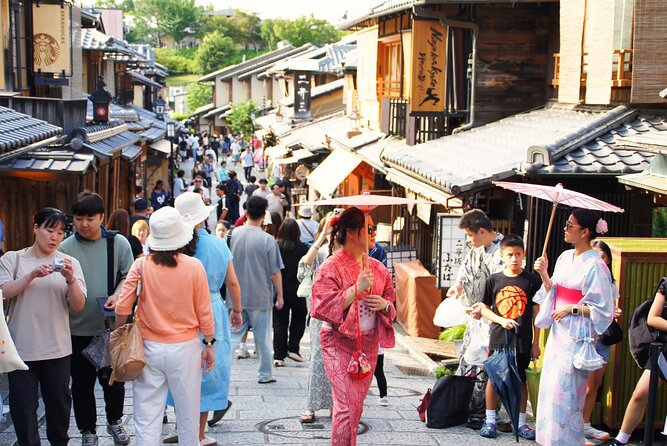
On paper, this is a classic walking itinerary. In practice, the guide is what turns it into a “Kyoto story day” instead of a “sightseeing walk.”
The most praised feedback centers on guides like Sam (accommodating, with perfect English), Shin (clear intro to Gion and what there is to see), Amy (making the whole route feel lively and personal), Tim (friendly and knowledgeable), Maria (helpful organization and good heat management), and Naoya (geisha storytelling that feels like secrets shared over tea).
You can also pick up what kind of guide you’re likely to get from the details: people talk about how the guide kept the group in the shade on hot days, handled photography stops without rushing, and made maiko training topics understandable.
How that helps you: If you’re traveling with limited time, you want your guide to be the translator between what you see and what it means. A good guide makes narrow stone lanes feel like a timeline, not a hallway.
Price and what you’re really paying for ($22.55)
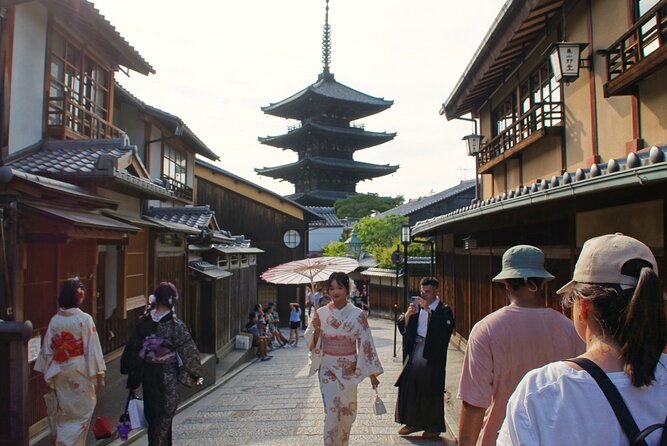
At $22.55 per person, this is priced like a budget-friendly, high-impact walking tour. What makes it good value isn’t just the guide—it’s the density.
You hit multiple iconic places in one cohesive route, and the stops are admission-free for the main listed locations (Yasaka Shrine, Maruyama Park, Nene-no-Michi, Sannenzaka/Ninenzaka, Yasui-Konpiragu, and Hanamikoji Street). That means you’re not burning money on museums or ticketed attractions during the walking portion.
You also get English speaking guidance and entry/admission related to Gion and Hanamikoji Street. So you’re paying mainly for interpretation: cultural background, route context, and geisha-world tips.
My take: if your Kyoto plans include just a single focused Gion activity, this is the kind of purchase that can save you time later. You’ll leave with a mental map and better questions for the rest of your day.
What to expect on the ground: walking pace, photos, and heat
This is a straightforward walking tour—no transfers, no climbing a mountain. But Kyoto streets can be uneven, and some lanes are narrow.
Since the duration is around 2 hours, you’ll want to treat this like a focused outing rather than a slow wander. Plan to do your longer shopping or extra wandering after the tour, while you still have the guide’s map in your head.
Photo reality check: narrow streets and lantern-lit areas are prime photo territory, so you’ll likely pause at moments where your guide points out details. Guides in the feedback are said to be patient about photography, which is great because you don’t want your whole experience shaped by other people moving past.
Heat note: Kyoto can be intense in warm months. One of the strongest pieces of feedback highlights Maria keeping people in the shade. Still, bring water and dress for the weather—your comfort affects how much you enjoy the stories.
When this tour is a great fit (and when to skip it)
This is a solid choice if you want:
- a short, guided way to learn about Gion and the geisha district
- practical tips on where you might spot geisha without guessing blindly
- a route that mixes shrines, streets, and the look of old Kyoto
It’s also a good match for first-time Kyoto visitors who don’t want to spend their day figuring out how areas connect.
Consider skipping or choosing a different format if:
- you don’t like guided storytelling and prefer pure independent wandering
- you need long stops for shopping, because the tour is built to cover several focused sights in a tight window
FAQ
FAQ
How long is the Kyoto Gion and Geisha District Walking Tour?
It lasts about 2 hours.
What group size should I expect?
The tour has a maximum of 10 travelers.
Where do we meet and where does the tour end?
You meet at Starbucks Coffee – Kyoto Gion Hotel (1F) and the tour ends back at the same meeting point.
Is there an English-speaking guide?
Yes, the tour includes an English speaking guide.
Are there admission tickets I need to buy for the main stops?
The listed stops have free admission tickets, and the tour includes entry/admission related to Gion and Hanamikoji Street.
What’s included in the tour price?
The tour includes the English speaking guide and entry/admission to Gion and Hanamikoji Street. Tips are not included.
Is this tour okay for most people?
Most travelers can participate.
What is the cancellation policy?
You can cancel for a full refund up to 24 hours in advance.
Should you book this Gion and Geisha District Walking Tour?
I’d book it if you want Gion to feel understandable fast. This tour is built to give you context—shrines first, then the street stories, then Hanamikoji—so you’re not just walking through pretty lanes without a clue why they matter.
The best reason to book is the guide impact. The consistently high ratings point to English clarity, helpful pacing, and strong storytelling about samurai history and geisha culture. At $22.55, you’re paying mostly for interpretation, and that’s the part independent wandering often takes a lot longer to figure out.
If you’re the type who enjoys reading a place like a story, this one is a great fit. If you prefer to roam without structure, you may prefer a self-guided walk and spend your money elsewhere.