REVIEW · KYOTO
Gion Walking Tour by Night
Book on Viator →Operated by WaRaiDo Guide Networks · Bookable on Viator
One sentence hook: Kyoto at night feels like a secret film set.
This Gion Walking Tour by Night is built for people who want the real Geisha-district experience without getting turned around in Gion’s tight lanes. I like that you follow a guide through unmarked alleyways instead of wandering blindly, and I also like the clear focus on Geiko (Geisha) and Maiko—how their roles differ, plus what you’ll notice in kimono, hairstyles, and daily life. The one thing to keep in mind is that it’s a group walk, so pace and crowding can vary depending on how many people show up.
2 hours may sound short, but it’s the right length for Gion at 5:30 pm when lanterns and evening light start changing the feel of the streets. I also like the practical payoff: you hit the Shirakawa River area tied to Memoirs of a Geisha and you learn what you’re actually looking at while you’re there. The main drawback is that you need to be on time—reception starts at 5:00 pm and the tour starts at 5:30 pm with no waiting for late arrivals.
In This Review
- What makes this tour work so well
- Walking Into Gion After Dark: What the 2-Hour Plan Really Delivers
- Meeting Point and Night Timing: How to Set Yourself Up for Success
- The Gion Walk Itself: Narrow Lanes, Shirakawa River Views, and What You’ll Learn
- Memoirs of a Geisha Filming Areas: Why That Part Is More Than a Photo Stop
- Geiko and Maiko 101: Using the Terms Correctly (and Spotting the Details)
- Guides You Might Get: Mia, Cheko, Mai, and Mae (and Why That Matters)
- Group Size Reality Check: Best for Small-to-Medium Groups, Not Crowds
- Pace and Learning Style: What 2 Hours Feels Like in Practice
- Value for $19.82: Why This Is a Bargain If You Want Culture, Not Maps
- Who This Tour Is Best For (and Who Might Want a Different Option)
- Booking Advice: Should You Book This Gion Night Tour?
- FAQ
- Where does the Gion Walking Tour by Night start?
- What time does the tour begin?
- How long is the walking tour?
- Is transportation included in the price?
- What’s included with the tour?
- Is this a group tour, and how many people can be on it?
- Will we visit areas connected to Memoirs of a Geisha?
- Will I be able to see Geiko or Maiko?
- What happens if the weather is bad?
- What is the cancellation refund window?
What makes this tour work so well
- No-getting-lost routing: a guide leads you through Gion’s narrow, easy-to-miss streets at night.
- Maiko vs Geiko explanations: you get help understanding the terms and what you’re seeing on the street.
- Shirakawa River stroll: classic cobblestone and river views connected to Memoirs of a Geisha.
- English support: guides help translate and explain details so language barriers don’t derail the evening.
- Small-group options: most bookings cap at 15, with up to 20 travelers overall; you can choose a guaranteed under-12 option.
Walking Into Gion After Dark: What the 2-Hour Plan Really Delivers
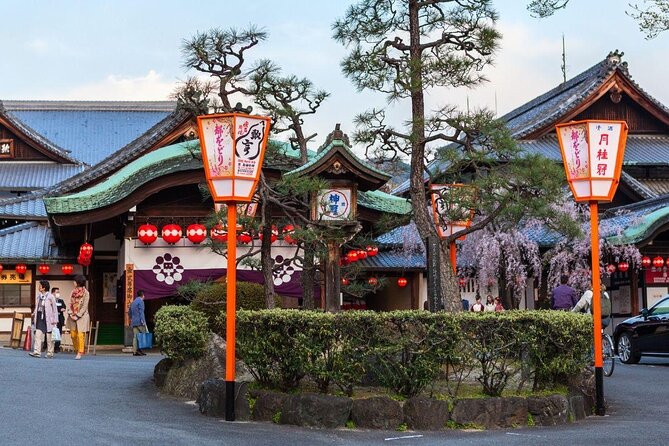
This is a simple, smart format: meet, walk, learn, and return. The tour runs about 2 hours in Kyoto’s Higashiyama Ward, centered on Gion—the historic Geisha district you see in photos, but also the place where the atmosphere is very different after sunset.
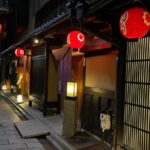
Why that timing matters: daytime Gion can feel like sightseeing. Nighttime Gion feels quieter, slower, and more atmospheric, even though it’s still popular. The streets are narrow enough that it’s easy to drift off route. This tour’s core value is the guided flow—so you’re not spending your limited time trying to “find the right lane.”
You’ll get a professional, English-speaking guide, and they’re there to explain what you’re looking at rather than just pointing. You’re also not just learning facts in the abstract; you’ll walk through areas that connect to Memoirs of a Geisha and learn the cultural context around that setting.
You can also read our reviews of more walking tours in Kyoto
Meeting Point and Night Timing: How to Set Yourself Up for Success
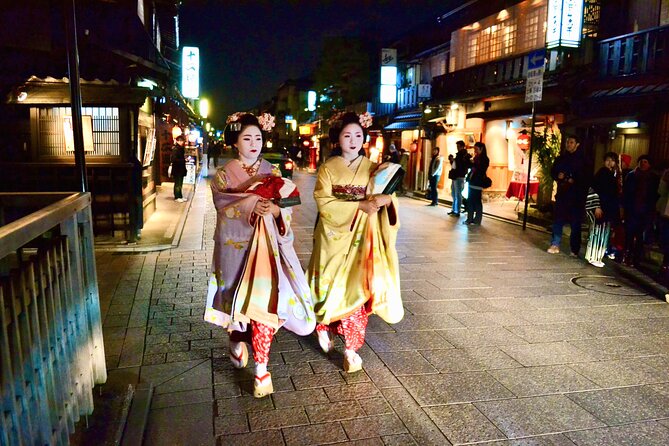
This tour has a very specific start: reception starts at 5:00 pm, and the walk begins at 5:30 pm. The meeting address is 178 Tokiwachō, Higashiyama Ward, Kyoto 605-0079, Japan, and the tour ends back at the meeting point.
Two practical tips so you don’t lose time:
- Arrive before 5:30 pm. The tour provider says they can’t wait or respond to late arrivals.
- Use public transportation and plan buffer time. The tour is near transit, but Kyoto foot traffic and tram/bus timing can still eat minutes.
If you like a low-stress evening plan, this works because you don’t have to coordinate a longer itinerary or hunt for the right neighborhood on your own.
The Gion Walk Itself: Narrow Lanes, Shirakawa River Views, and What You’ll Learn
The walking portion is the heart of the experience, and it’s where you feel the biggest difference between DIY Gion and a guided night route.
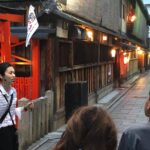
You’ll follow classic cobblestone streets near the Shirakawa River, and the guide ties the scenery to Memoirs of a Geisha. That connection is more than “this looks like the movie set.” You’ll learn the historical background and the social rules around Geiko and Maiko life—things you simply won’t guess from a quick look at the street.
What you should pay attention to as you walk:
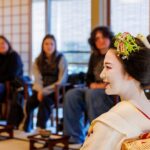
- How kimono and hairstyles vary, and what those details can signal.
- The everyday rhythm around tea houses and the broader world Geiko and Maiko move through.
- The cultural etiquette that helps explain why certain interactions are handled with care.
Also, the tour describes that guests may spot Geiko or Maiko during the walk, but it’s not guaranteed. This is one of those Kyoto experiences where timing and chance matter—but the route is designed to maximize your odds while you’re learning what you’re seeing.
Memoirs of a Geisha Filming Areas: Why That Part Is More Than a Photo Stop
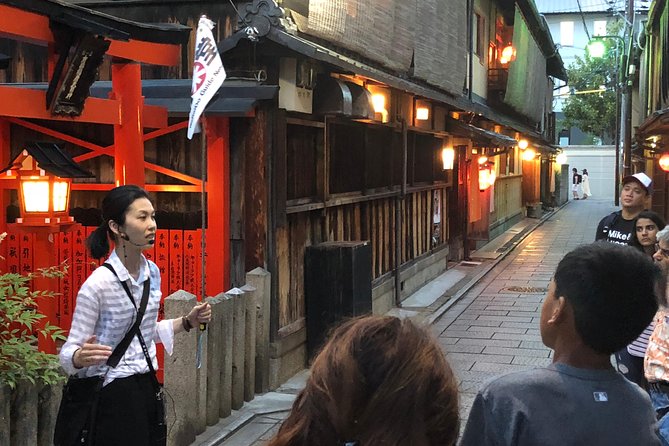
Gion is already famous, but the tour includes extra context by guiding you to areas associated with Memoirs of a Geisha. Instead of treating it like a checklist of “movie locations,” the guide helps you understand why those settings became symbolic.
That cultural framing is the value. If you’ve watched the story, you’ll start noticing how the physical space connects to lived traditions—kimono culture, the tea house world, and the everyday structure around performances and training.
In other words: yes, it helps you get the movie-inspired photos. But it also gives you a better sense of what the imagery is pointing to.
Geiko and Maiko 101: Using the Terms Correctly (and Spotting the Details)
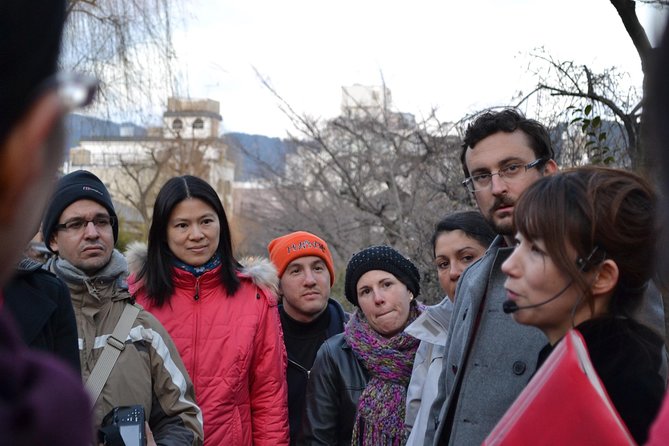
A big part of what you get is language help and real-world context. The tour is designed so you don’t need to know the terms ahead of time.
You’ll learn:
- The difference between Maiko and Geiko
- How Japanese geisha-related terms fit together in everyday use
- Cultural notes tied to kimono, hairstyles, and makeup
Here’s the practical benefit for your evening: once you understand the terms, you stop “guessing” what you’re seeing. Even if you can’t identify everything at a glance, the guide’s explanations help you look longer and notice more.
If you care about respectful viewing, this part is especially useful. The tour emphasizes understanding the culture and daily life rather than treating Geiko and Maiko as street props.
You can also read our reviews of more evening experiences in Kyoto

Guides You Might Get: Mia, Cheko, Mai, and Mae (and Why That Matters)
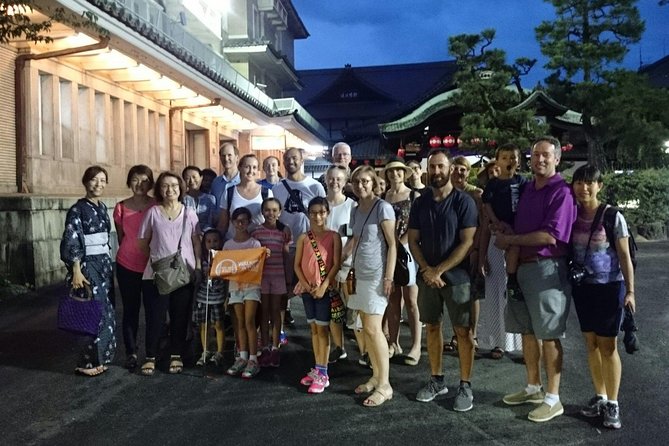
The quality of this experience is tightly linked to the guide, and the reviews include several guide names that come up repeatedly—Mia, Cheko, Mai, and Mae.
Even with different personalities, the pattern in the feedback is consistent:
- guides keep the walk lively with stories and humor
- explanations feel grounded in local context
- the group benefits from a guide who knows what to point out along the way
You can’t bank on a specific person, but you can bank on the format: a guide doing the talking while you enjoy the route.
Group Size Reality Check: Best for Small-to-Medium Groups, Not Crowds
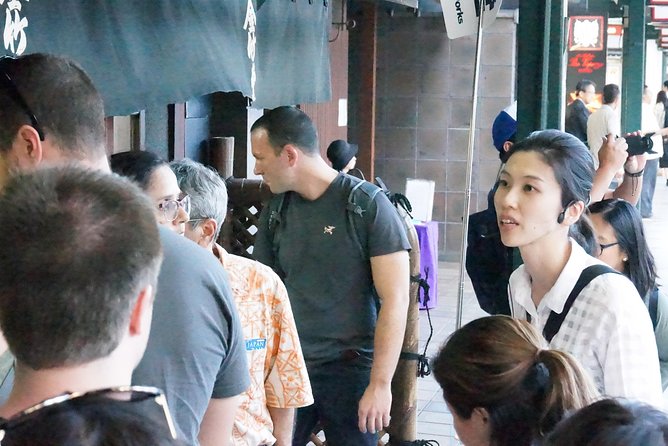
The tour lists a maximum of 15 passengers per booking, and it also notes a maximum of 20 travelers overall. There’s also a small-group option with less than 12 guests guaranteed (with a different price).
Why you should care: Gion is narrow. If your group is on the larger side, you’ll spend a bit more time standing in clusters and less time feeling like you’re moving freely through the lanes.
The sweet spot for comfort is the under-12 option. If you prefer questions, slower pace, and more room to hear the guide, that smaller-group choice is the one that protects your experience.
Pace and Learning Style: What 2 Hours Feels Like in Practice
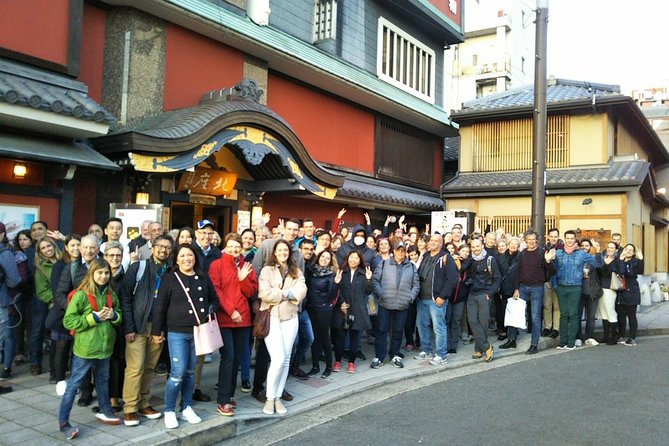
Because this is a night walk, the schedule moves with the streets. You’ll cover a manageable amount of ground, but it isn’t a slow “sit and watch” style tour.
From the feedback, the most satisfying departures tend to match the same recipe:
- regular stops for explanation
- good walking pace
- time enough to take in alleyways and river scenery
If you’re someone who loves to pause for long photo sessions or you want ultra-flexible pacing, you might find yourself wishing for more time. Still, 2 hours is a strong match for first-night Kyoto planning—you get the big ideas and the right streets without exhausting your evening.
Value for $19.82: Why This Is a Bargain If You Want Culture, Not Maps
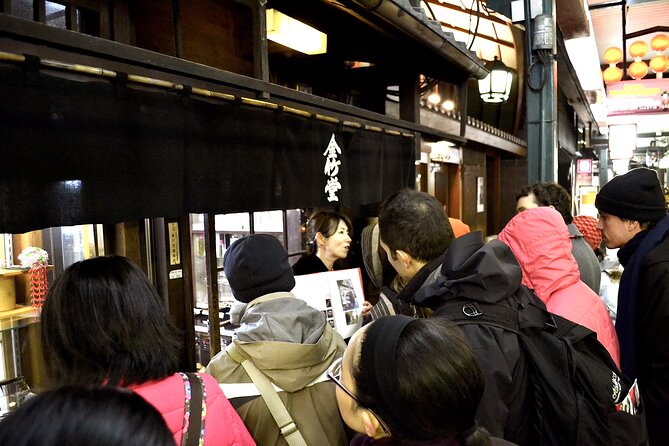
At $19.82 per person for about 2 hours with a professional English-speaking guide, the price-to-time ratio is strong. You’re not paying just for route knowledge—you’re paying for translation help, explanations of the Geiko/Maiko world, and a guided nighttime path through a tricky neighborhood.
Also, transportation to/from attractions is not included. That’s normal for walking tours, but it does mean you should plan your own way to the meeting point. The tour does end back at the start, so you’re not trying to connect to a second location at night.
If you want maximum value, treat this as your orientation to Gion. Once you’ve learned what to notice, you can enjoy your later self-guided wander with better instincts.
Who This Tour Is Best For (and Who Might Want a Different Option)
This is a great fit if:
- you’re in Kyoto for a short time and want a quick, guided cultural introduction
- you feel uncomfortable navigating Gion’s narrow streets at night
- you want help with the Geiko/ Maiko vocabulary and what the details mean
- you’d like a first taste of Geisha district etiquette and day-to-day structure
You might want to consider a different approach if:
- you hate groups and want total control of pace
- you’re aiming for a very slow, long photo walk
- you’re flexible about doing things on your own and already know what to look for
Booking Advice: Should You Book This Gion Night Tour?
Book it if you want a low-cost, high-return introduction to Gion after dark. The biggest wins are not getting lost, learning the Maiko/Geiko differences, and walking the Shirakawa River + movie-context areas with an English-speaking guide who can translate details as you go.
If you’re picky about crowding, book the small-group option under 12 when you can. And set an alarm—arrive before 5:30 pm so the start doesn’t pass you by.
In short: if you want Gion at night with less stress and more meaning, this is a very smart first evening plan.
FAQ
Where does the Gion Walking Tour by Night start?
It starts at 178 Tokiwachō, Higashiyama Ward, Kyoto, 605-0079, Japan, and it ends back at the same meeting point.
What time does the tour begin?
Reception starts at 5:00 pm, and the tour starts at 5:30 pm.
How long is the walking tour?
The tour lasts about 2 hours.
Is transportation included in the price?
No. Transportation to and from attractions is not included, and there is no hotel pickup/drop-off.
What’s included with the tour?
You get a professional, English-speaking guide.
Is this a group tour, and how many people can be on it?
It’s a group walking tour. The maximum per booking is 15 passengers, and the activity can have a maximum of 20 travelers. A small-group option (less than 12 guests guaranteed) is available.
Will we visit areas connected to Memoirs of a Geisha?
Yes. The walk includes going to areas where Memoirs of a Geisha was filmed, along with explanations connected to the scenery.
Will I be able to see Geiko or Maiko?
The tour says sightings are possible but not guaranteed. The route and timing are designed for the best chance while you learn what you’re seeing.
What happens if the weather is bad?
The experience requires good weather. If it’s canceled due to poor weather, you’ll be offered a different date or a full refund.
What is the cancellation refund window?
You can cancel up to 24 hours in advance for a full refund. Within 24 hours of the start time, there is no refund.