REVIEW · HUE
Hue Imperial City Walking Tour (Kids Half-Price)
Book on Viator →Operated by Bee Bee Travel - Your Guide to Understanding Hue Imperial City · Bookable on Viator
Hue’s citadel comes with stories you can walk to. This 3-hour Hue Imperial City walking tour takes you through UNESCO-listed highlights with a guide who turns the stones into something you can actually picture. I like the small group size (max 12) and the way the route hits the big names fast, like the Noon Gate Square and the Purple Forbidden City. One heads-up: you’ll want to budget for entrance fees on top of the tour price, and there is some walking (even if the tour is wheelchair accessible).
I also appreciate the pick-your-moment start times: 09:00 or 14:00, so you can match the tour to your day and avoid the worst light. In the feedback, guide names like Hoa, Hoang, My, Ha, Van, and Rose come up often, with people praising clear English and plenty of room for questions. The possible drawback is that parts of the complex can be under renovation, so some sights may look a little different than you expect.
You meet at Lạc Thiện Restaurant (6 Đinh Tiên Hoàng, Phú Hòa) and the tour ends back there. It’s a family-friendly walk, with kids welcome (children must be with an adult), plus bottled water included.
In This Review
- Key highlights you’ll feel right away
- A small-group look at Hue’s UNESCO Imperial City
- The 09:00 or 14:00 route: what a 3-hour walk really means
- Meeting at Lạc Thiện Restaurant and getting your bearings fast
- Flag Tower to Noon Gate Square: the “gate language” of Hue
- Thai Hoa Palace under renovation: Vietnam’s 20th-century story in a palace courtyard
- Mieu Temple and the 13 Nguyen rulers: stories you can remember
- Nine Dynastic Urns and the Hue Citadel’s symbolism of sovereignty
- Hue Royal Palace and the Purple Forbidden City maze
- Duyet Thi Duong Theater: the oldest surviving traditional theater in Vietnam
- Price and tickets: where the real value is
- Practical fit: who should book this (and who may want to adjust)
- Should you book this Hue Imperial City walking tour?
- FAQ
- FAQ
- What time does the tour start?
- How long is the walking tour?
- What is included in the tour price?
- What entrance fees are not included?
- Are there tickets included for the stops?
- How big is the group?
- Is it suitable for kids?
- Is it wheelchair accessible?
- What if the weather is bad?
Key highlights you’ll feel right away
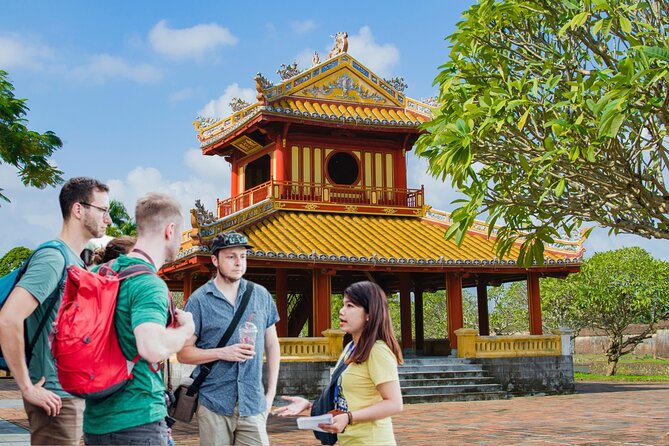
- Max 12 travelers so you’re not stuck listening over everyone else
- Two start times (09:00 or 14:00) for better pacing with your plans
- Main Imperial City landmarks like the Flag Tower, Noon Gate Square, and Purple Forbidden City
- Thai Hoa Palace context, including Vietnam War and the Tet Offensive of 1968 (plus restoration notes)
- Mieu Temple stories tied to the 13 Nguyen Dynasty rulers
- Kids half-price, which can make a family day here much more doable
A small-group look at Hue’s UNESCO Imperial City
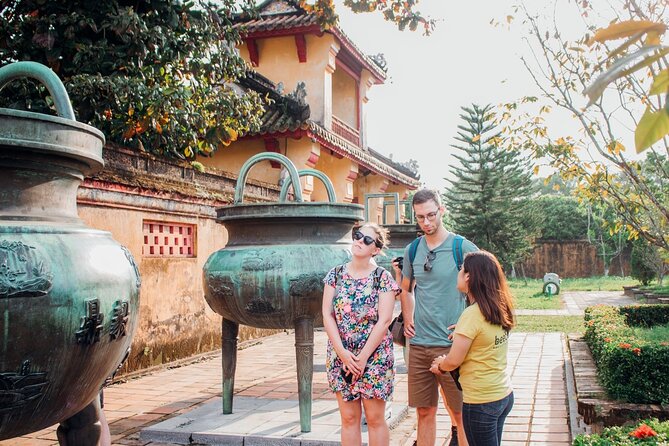
Hue’s Imperial City can feel like a maze if you show up alone. The walls are massive, the gates repeat, and it’s easy to miss what each building signaled in court life. This tour helps you get your bearings quickly and gives you the right names as you walk, so the complex starts to make sense instead of just looking impressive.
The best part is how the tour is built around a short list of priorities. You’ll hit major features of the Nguyen Dynasty-era core, then expand into the later layers people associate with the site’s modern history. And because the group is capped at 12, your guide can actually slow down when you want to ask questions.
I also like that it’s not just statues and photos. The tour is structured to explain what you’re looking at and why it mattered, from court authority to performance halls. That’s why the walking route works well even for first-timers, because you’re guided through the story, not just marched between checkpoints.
You can also read our reviews of more walking tours in Hue

The 09:00 or 14:00 route: what a 3-hour walk really means
The tour runs for about 3 hours, starting at 09:00 or 14:00 from Lạc Thiện Restaurant. That timing matters more than it sounds. If you’re traveling with kids or you’re managing an afternoon plan, having a fixed start time helps you avoid the “we’ll go whenever we’re done” trap that stretches into heat and fatigue.
You’ll walk through ancient gate areas of the Hue Citadel and focus on key landmarks inside the Imperial City complex. The tour is wheelchair accessible, and it’s designed to be kid-friendly, which usually means the pace and explanations are easier to follow than on some faster “hit everything” tours.
You should still plan for real walking. Even with a shorter route, the Imperial City is spread out, and you’ll be on your feet. The good news is bottled water is included, and guides in the feedback are praised for helping guests stay comfortable during hotter moments.
Meeting at Lạc Thiện Restaurant and getting your bearings fast
Your day begins at Lạc Thiện Restaurant on Đinh Tiên Hoàng in Phú Hòa, Hue. This is a simple setup, and it’s helpful if you’re already in town and don’t want to coordinate hotel pickup. You’ll regroup there, then start your walk through gate areas of the Hue Citadel.
In the first stretch, the guide points out how the site is laid out. Think of this as orientation: where the major entrances sit, what each gate likely controlled, and what to look for so later buildings don’t feel random. The Flag Tower and the early gate sights also help you understand the “entry logic” of the citadel, which makes the rest of the tour click.
It also helps that the Flag Tower portion is listed as free admission at the stop. Even if the broader complex has entrance fees, this early segment gives you momentum right away.
Flag Tower to Noon Gate Square: the “gate language” of Hue
Your first big landmark is the Flag Tower. From there you continue toward Noon Gate Square and the Holy Cannons area, with your guide explaining how these elements fit into the Nguyen court’s layout and power structure.
This part is worth paying attention to even if you’re not a “history person.” Gates and cannons can sound like just military leftovers, but here they’re part of how the city signaled authority. When you understand what the spaces were for, the architecture stops being decoration and turns into a map of intent.
In the feedback, a number of guests mention female guides leading the experience and doing a strong job keeping the group oriented. That matters because the Imperial City rewards the traveler who knows what to look for, and not everyone arrives with that context.
Thai Hoa Palace under renovation: Vietnam’s 20th-century story in a palace courtyard
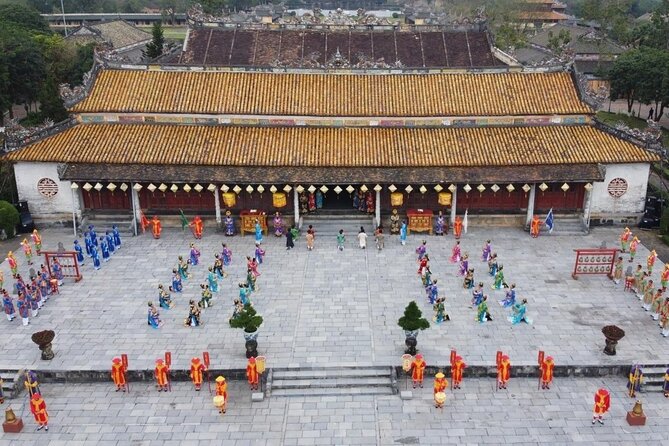
Next comes Thai Hoa Palace, and this stop has two layers: the building itself and the modern history your guide ties to it. The palace is listed as currently under renovation, so you might see parts covered or not fully presented. That’s not a bad thing, it just means your guide’s explanations become even more important for understanding the original design.
What makes Thai Hoa Palace a standout is the way it connects the site to major events: the Vietnam War and the Tet Offensive of 1968. Your guide also explains a restoration project being undertaken by the Vietnamese government. In other words, you’re not only learning what the court built, you’re learning what the country has tried to repair and preserve since.
One practical note: Thai Hoa Palace has an extra ticket cost listed separately. Plan for it in your budget so you don’t end up trying to scramble for payments during the walk.
Mieu Temple and the 13 Nguyen rulers: stories you can remember
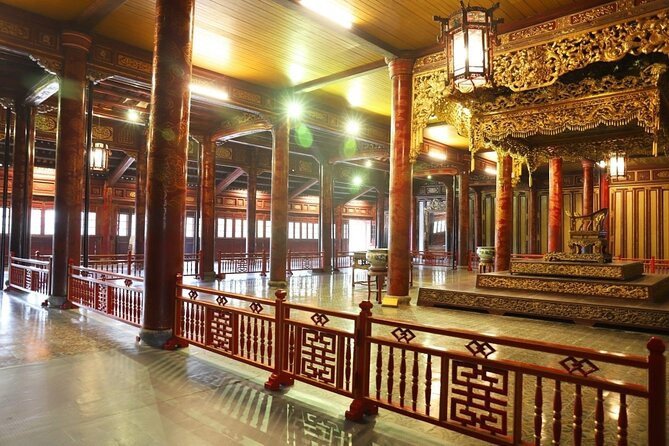
The next highlight is Mieu Temple. This stop is framed as a key moment on the tour, and it’s where you get stories tied to the 13 rulers of the Nguyen Dynasty. Instead of treating the dynasty as one long timeline, the guide helps you understand rulers as individuals whose reigns shaped the palace world around them.
This is the kind of stop that makes the whole tour feel less like museum wandering. A temple is already a place of meaning, but the real value here is that you leave with names and connections, not just “cool old building” memories.
The stop is listed as about 30 minutes, which is a good length for families. You get time to absorb what’s in front of you without it turning into an endurance test. If you’re traveling with kids, this is often where they start listening more closely, because the story format is easier to follow than pure architectural description.
Nine Dynastic Urns and the Hue Citadel’s symbolism of sovereignty
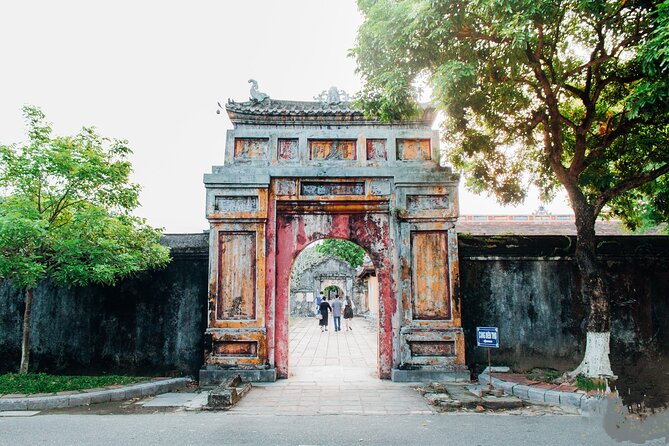
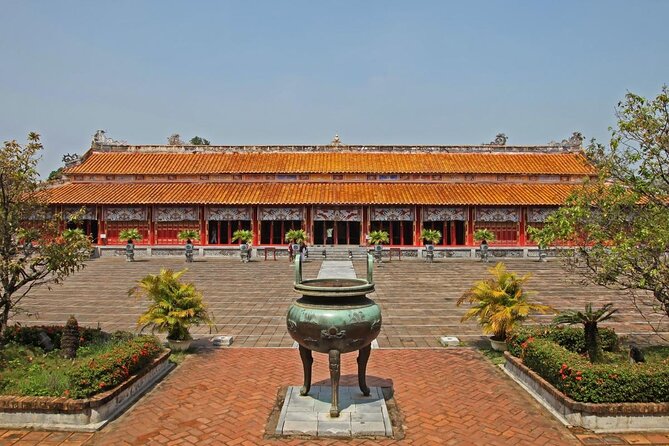
After Mieu Temple, you’ll admire one of the site’s most meaningful art features: the Nine Dynastic Urns. These were created by Emperor Minh Mang in 1836 and are described as a symbol of the dynasty’s sovereignty.
This stop is small in time but big in payoff. Urns don’t look impressive from a distance, and that’s exactly why you want a guide here. Your guide explains what the urns represent, why they were made, and how they connect to imperial identity. With that context, you’ll actually know what you’re looking at.
If you’re the type who likes to take a photo and move on, slow down for a minute here. The Nine Dynastic Urns are the sort of detail you’ll be glad you noticed later, once the rest of the citadel feels like a blur of gates and courtyards.
Hue Royal Palace and the Purple Forbidden City maze
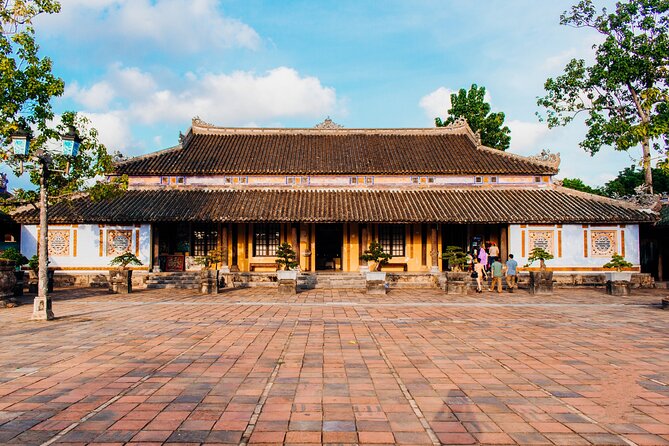
Now you move into the heart of palace life: the Hue Purple Forbidden City, also referred to as part of the Hue Royal Palace area. This is described as a maze of palaces that used to be the exclusive living quarters of kings and royal families.
This is where the tour’s “hidden spots” approach becomes practical. In a large complex like this, you can easily miss smaller passageways or overlook how space is organized. Your guide points out spots you might not think to look for, then ties each place back to how the court operated.
This is also a good place for questions. If you’ve wondered why rooms are placed a certain way or why some areas feel more private than others, your guide can connect the layout to court behavior. In the feedback, people frequently mention guides who make the stories feel personal, like they’re sharing city memories rather than reciting facts.
The Purple Forbidden City portion is listed as about one hour, giving you time to walk slowly and still stay on schedule. For families, this is often the sweet spot: long enough to feel substantial, not long enough to break everyone’s attention.
Duyet Thi Duong Theater: the oldest surviving traditional theater in Vietnam
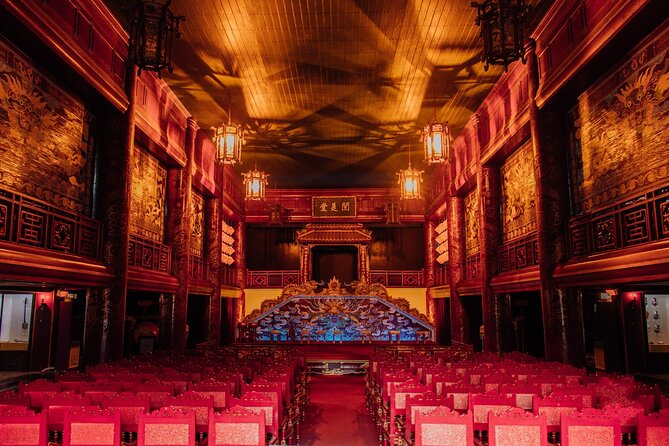
The final major stop is the Duyet Thi Duong Theater (also called the Hue Royal Theater). It’s described as the oldest surviving traditional theater in Vietnam and located inside the Hue Imperial Citadel.
This theater was built in 1826 under Emperor Minh Mang and served as a venue for royal performances. In other words, it’s not just a stage. It’s a clue to what the court valued—ceremony, entertainment, and public display, all wrapped together in a space designed for tradition.
This part is shorter (about 15 minutes), which works well because by the end of the tour you’re already walking through plenty of heavy sites. A shorter theater stop lets you end on something memorable without dragging the schedule.
If you want an “aha” moment in your tour, this is a good candidate. The building’s age and specific purpose make it feel like a living link between past court life and the way Hue is still preserving cultural identity today.
Price and tickets: where the real value is
The tour price is $29.00 per person, with a note that kids are half-price. For a 3-hour, guided, small-group walk focused on high-priority UNESCO highlights, that’s often competitive—especially compared with pricier full-day tours that include extra transport.
But the key value decision is understanding what you pay versus what you’ll still owe. The tour includes a certified guide and bottled water. Entrance fees are not included: ₫200,000 per person (general entrance fees). On top of that, Thai Hoa Palace has a separate admission listed as ₫250,000 per person.
So how do you judge the value? You’re paying for:
- A guided interpretation that helps you understand gate systems, court layout, and meaning of specific art features
- A route that compresses several important stops into a manageable walk
- A group size that keeps the experience personal (max 12)
- A family-friendly structure, including kid half-price
If you like walking tours where you learn names and story connections instead of just ticking boxes, the guide component is where the money tends to make sense. If you prefer a do-it-yourself stroll and you already know the site well, the added value drops. Most people, though, discover Hue’s complex site layout is exactly where a good guide saves time and confusion.
Practical fit: who should book this (and who may want to adjust)
This tour is a smart match if you:
- Want a focused introduction to Hue’s Imperial City in about three hours
- Prefer small groups and time for questions
- Are traveling with kids and want a tour that’s described as kid-friendly
- Need wheelchair accessibility on a walking-based route
It may be less ideal if you:
- Want a totally independent “wander at your own speed” visit without paying for interpretation
- Are sensitive to walking within larger complexes, since even a short route involves moving between several locations
- Have no interest in modern history connections, since Thai Hoa Palace includes the Vietnam War and Tet Offensive of 1968 context
A small tip from how these tours tend to go: wear comfortable shoes and bring sun protection. Hue can be warm, and walking between citadel areas means you’ll feel it. Since bottled water is provided, you’ll likely be okay, but hydration planning helps.
Should you book this Hue Imperial City walking tour?
I’d book it if you want a guided, high-value way to understand Hue’s Imperial City without turning your day into a long slog. The combination of small-group pacing, big landmark coverage, and story-driven stops like Mieu Temple, Nine Dynastic Urns, and Duyet Thi Duong Theater makes it easier to remember the site afterward.
I’d also treat it as a good “first Hue citadel day” choice. The orientation element at the gate areas helps you connect what comes next, especially once you start moving through palace spaces.
Just go in with two expectations: you’ll pay some entrance fees separately, and you’ll be walking. If you’re good with that, the structure and the guide-led storytelling are exactly what make Hue click.
FAQ
FAQ
What time does the tour start?
You can join either the 09:00 or the 14:00 tour. Both meet at Lạc Thiện Restaurant and end back at the same meeting point.
How long is the walking tour?
The tour runs about 3 hours.
What is included in the tour price?
The tour includes a certified tour guide and bottled water.
What entrance fees are not included?
Entrance fees are listed as ₫200,000 per person. Thai Hoa Palace also has an additional admission fee listed separately at ₫250,000 per person.
Are there tickets included for the stops?
Some stops list admission as free (like the Flag Tower stop). Other parts of the citadel have entrance fees that are not included, and Thai Hoa Palace is specifically listed as not included.
How big is the group?
This experience has a maximum of 12 travelers.
Is it suitable for kids?
Yes, it’s described as kid-friendly. Children must be accompanied by an adult, and there’s a minimum age of 1 year.
Is it wheelchair accessible?
Yes, the tour is wheelchair accessible.
What if the weather is bad?
The experience requires good weather. If it’s canceled due to poor weather, you’ll be offered a different date or a full refund.