REVIEW · BREMEN
Bremen: Walking Tour of Historic Schnoor District
Book on GetYourGuide →Operated by Bremen Tour Guide · Bookable on GetYourGuide
Schnoor feels like Bremen saved in miniature. In one short stroll, I like how the quarter’s narrow streets connect you to real buildings from the 1300s onward, plus the way your guide explains who lived there and why the architecture matters. The other big win is the visual rhythm: half-timbered facades, redbrick Gothic details, and little architectural surprises that pop up every few steps. One catch to keep in mind: you’ll see everything from the outside only, so you won’t get interior rooms or deep-access views.
Two things I love right away are the Schnoor street layout and the building styles you can actually spot with your own eyes. Your guide helps you read the mix of Gothic redbrick and later classicism and historicism, plus hints of Baroque and Renaissance ideas showing up in the streetscape.
The one possible drawback is timing and expectations. At just 1 hour, the tour is focused and fast-paced enough to cover key stops, but it won’t replace a longer self-guided wander if you want to linger at every doorway and shop.
In This Review
- Key highlights worth your time
- Start at Die Glocke and get oriented fast
- Schnoor’s origin story: from a Franciscan edge to today’s church
- Strolling the oldest profane buildings from Haus Schnoor 15 to Packhaus Schnoor 2
- Half-timbered charm near the Weser and the Schnoor street rhythm
- How Baroque, Renaissance, Classicism, and Historicism show up on the same block
- Goldsmiths, handicrafts, and why the shops fit the story
- What your German guide brings, and how humor helps you remember details
- Price and value: is $14 for an hour enough?
- Who should book this, and who should skip it
- Should you book the Bremen Schnoor Historic District tour?
- FAQ
- Where does the tour meet?
- How long is the Bremen Schnoor walking tour?
- How much does it cost?
- Is the tour private, or is it shared?
- What language is the guide?
- What is included in the price?
- Are buildings shown from inside or outside?
- Do I need to bring anything?
- Is the tour wheelchair accessible?
- Can I cancel, and can I pay later?
Key highlights worth your time
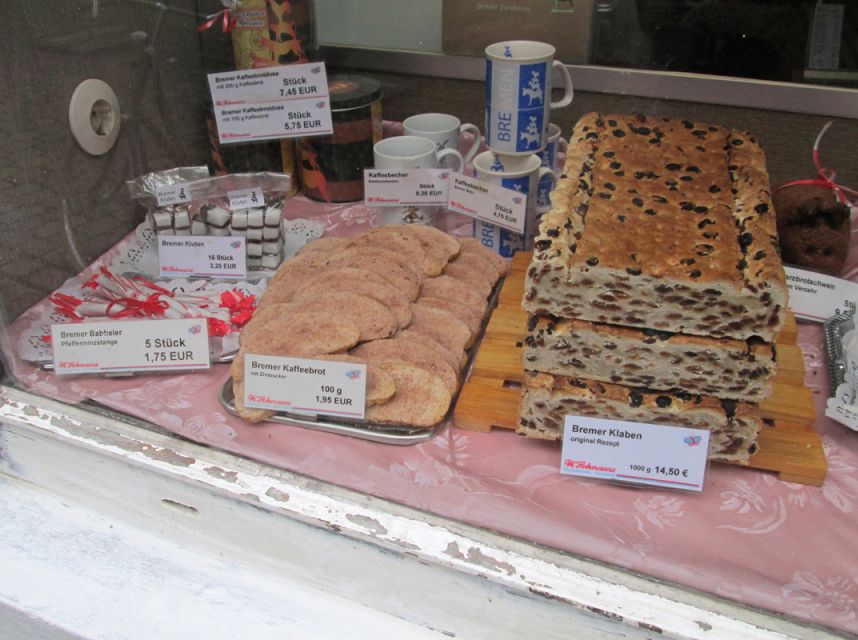
- Winding Schnoor alleyways that feel like houses strung together
- St. John’s Church: 14th-century redbrick Gothic architecture you can point out on the walk
- Old profane buildings like Haus Schnoor 15 (Brasilhaus) and Packhaus Schnoor 2
- Half-timbered houses near the Weser River plus smaller “teahouse” style stops
- Facades recreated to historical specifications, so you see how buildings were preserved or re-sited
- A guide who keeps it lively in German, including playful Bremen stories from guides like Sönke
Start at Die Glocke and get oriented fast
Your tour meets in front of Die Glocke concert hall, Domsheide 6, Bremen. This is a smart choice because it puts you near the center, and you can start walking immediately without wasting time hunting for the right street.
Bring comfortable shoes, because the Schnoor quarter is walkable but not made for slow rolling along. Expect a steady one-hour pace, with stops where your guide slows down to point out details you’d miss on your own.
You can also read our reviews of more walking tours in Bremen

Schnoor’s origin story: from a Franciscan edge to today’s church
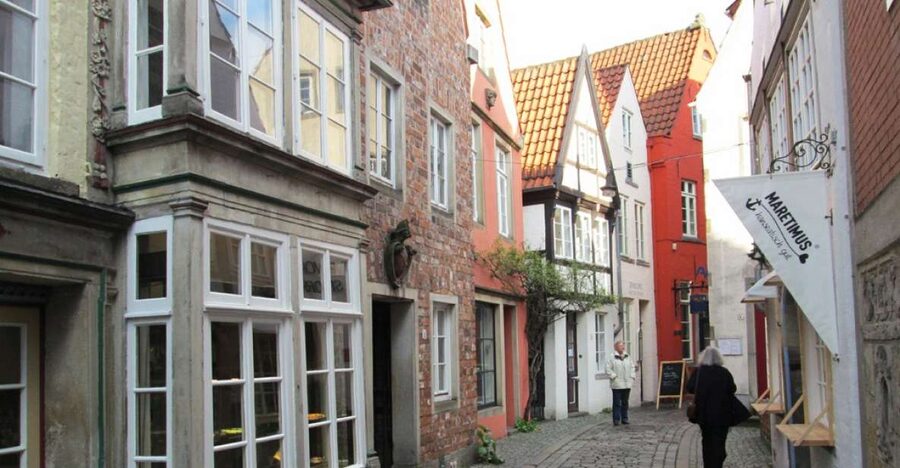
One of the most interesting parts of Schnoor is how the neighborhood story begins at the edge of where the district is today. The first written reference goes back to the 13th century, when a Franciscan monastery was built around that area. Over time, only the monastery church remains, which is a powerful reminder that the current street-level charm sits on older ground.
As you keep walking, you’ll come across the Catholic St. John’s Church built in the 14th century. What to look for: it’s described in redbrick Gothic style, and that visual contrast helps you understand how Bremen’s religious architecture evolved during the Middle Ages.
This section is valuable because it gives you a timeline you can actually hold in your head. Instead of just admiring pretty buildings, you learn what changed and why the church presence still anchors the quarter.
Strolling the oldest profane buildings from Haus Schnoor 15 to Packhaus Schnoor 2
Schnoor isn’t only church-and-cathedral vibes. Your walk also highlights some of the oldest remaining profane buildings, meaning they weren’t built for worship.
Two names you’ll hear on the tour are Haus Schnoor 15, also known as Brasilhaus, and Packhaus Schnoor 2. Both date back to the 15th century, which is impressive when you realize you’re looking at structures that have survived centuries while the neighborhood around them shifted.
Because buildings are viewed from the outside, focus on what your guide points out: proportions, the “read” of older stone or timber elements, and how the facades reflect a working life rather than a purely ceremonial one. If you enjoy architecture as evidence of everyday history, this is the sweet spot.
Half-timbered charm near the Weser and the Schnoor street rhythm
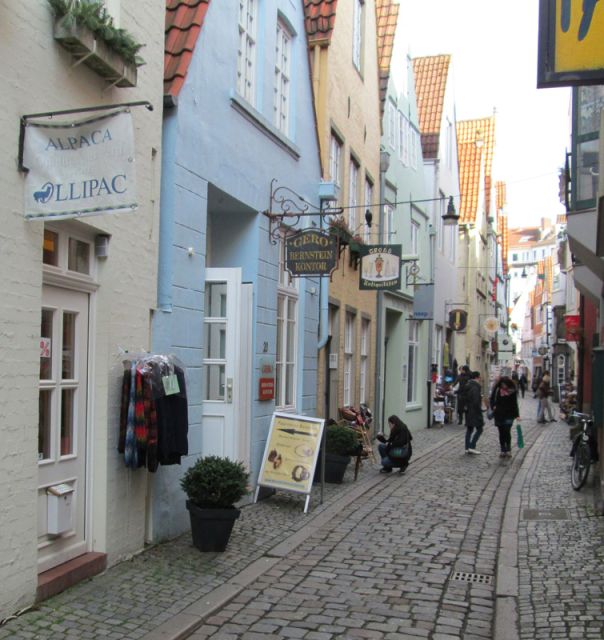
Schnoor’s most famous look comes in the form of narrow streets and half-timbered houses that feel tightly stitched together. On this tour, you’ll pass examples near the Weser River area, where the street layout makes the buildings feel even closer than they probably are in real scale.
You’ll also get a stop featuring a half-timbered house associated with a tea room. Even though you won’t go inside, it helps you connect the architecture to how people use space today, which is what keeps old buildings from feeling like museum props.
Another fun detail is the way some buildings in the quarter aren’t simply left as-is. You may see buildings that are recreated according to historical specifications, plus locations where buildings now exist mostly as facades. It can feel a little “stage-set” at first, but your guide explains why it happened, and that context turns it into something worth appreciating instead of side-eyeing.
How Baroque, Renaissance, Classicism, and Historicism show up on the same block
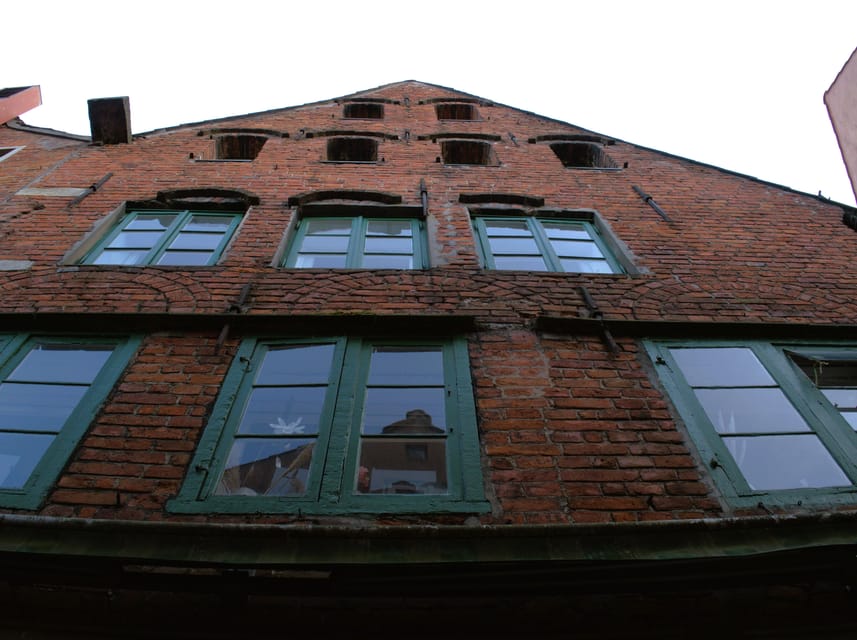
If you like seeing style labels become real, this walk does that job quickly. Your guide points out the architecture and how it connects to Schnoor’s inhabitants across time.
You’ll hear about classicism and historicism, along with Baroque and Renaissance influences. The practical payoff for you: you learn what to look for when you see a building and realize you’re not just seeing “old.” You’re seeing choices from different periods—materials, shapes, ornament types, and the overall sense of how people wanted their homes or businesses to look.
This section also keeps the tour from becoming just a picture-taking loop. Instead of only “wow, it’s old,” you get “here’s what changed, and here’s how it still shows.”
Goldsmiths, handicrafts, and why the shops fit the story
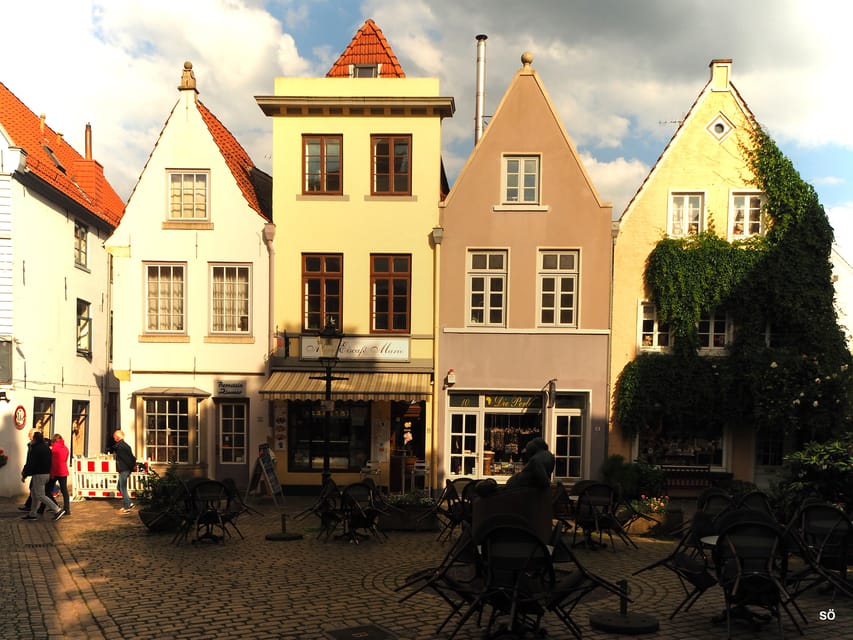
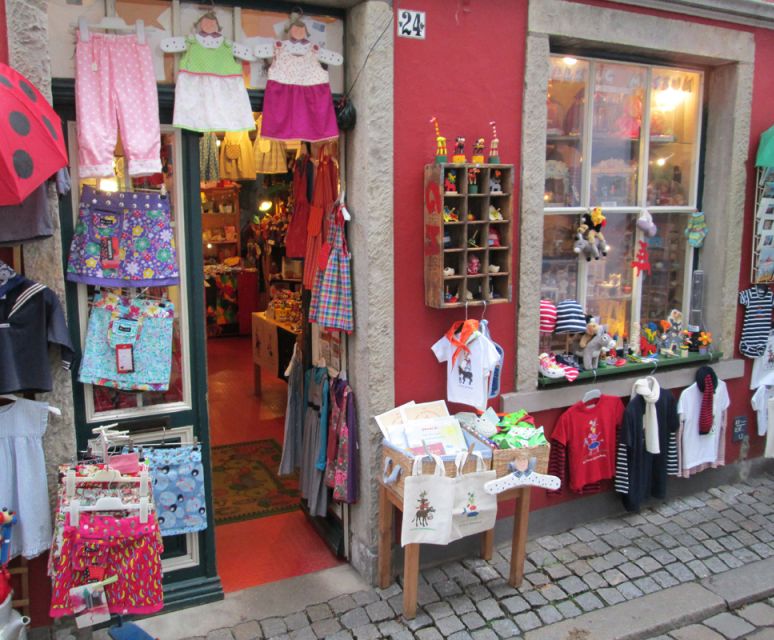
Schnoor isn’t only about buildings. The walk includes a chance to pass goldsmiths and shops selling local handicrafts. That matters because Schnoor has always been tied to the kinds of trades that benefited from foot traffic and small-scale streets.
Even if you don’t plan to buy anything, this is useful: it reminds you the neighborhood is living, not just preserved. If you want a souvenir that feels connected to place, this is where you’d look after the tour ends, since you’ll already have the street context.
What your German guide brings, and how humor helps you remember details
The tour runs with a live guide in German. That’s a real factor: if you speak some German, you’ll pick up more of the “why,” not just the “what.” If your German is basic, you can still follow along because the stops are visual and the guide points out details directly in front of you.
I also like the human energy. In particular, one guide named Sönke is described as funny and story-driven, with lots of amusing and interesting details around Schnoor. That kind of storytelling helps you remember facts like the dates of St. John’s Church and the 15th-century profane buildings, because they’re wrapped in a narrative instead of random trivia.
If you want to get the most out of the 1-hour format, come with one or two questions you’d actually ask a local. Something like what makes Schnoor’s architecture distinct compared to other German city centers. Then listen for the answers as you walk.
Price and value: is $14 for an hour enough?
At $14 per person, this tour is built for value and time management. You get a guided walking experience focused on key highlights: churches, iconic old buildings, and the architectural styles that define Schnoor. For many visitors, that’s the hardest part of short trips—knowing where to spend your limited hours.
Here’s the honest tradeoff: there’s no food or drinks included, and you’re looking from the outside. So if you’re hoping for a long, in-depth architectural lecture or interior access, this won’t satisfy that craving.
But for most people—especially those arriving with limited time—this price is a strong deal. You pay for orientation and interpretation, not for comfort additions like meals.
Who should book this, and who should skip it
This tour fits you best if you want:
- A 1-hour walk that covers the standout Schnoor sights without planning a self-guided route
- Architecture spotting, with explanations that tie buildings to centuries of use
- A short cultural hit in northern Germany that’s easy to combine with other Bremen sights
It’s not suitable for wheelchair users. And if you dislike walking through older lanes or prefer long stops, you might feel slightly rushed by the short duration.
Language also matters: the tour is in German, so it’s best for people comfortable enough to follow along or who enjoy visual learning.
Should you book the Bremen Schnoor Historic District tour?
I’d book it if you want your first look at Schnoor to come with meaning, not just photos. The mix of St. John’s Church, the 15th-century profane buildings like Haus Schnoor 15 (Brasilhaus) and Packhaus Schnoor 2, plus the half-timbered street details near the Weser makes it a tight, satisfying loop.
Skip it only if you’re set on interior access, want a long unhurried walk, or need wheelchair-friendly routes. Otherwise, for a short visit to Bremen, this is one of the easier ways to get oriented and then enjoy the quarter on your own with better eyes.
FAQ
Where does the tour meet?
The meeting point is in front of Die Glocke concert hall at Domsheide 6, Bremen.
How long is the Bremen Schnoor walking tour?
The tour lasts 1 hour.
How much does it cost?
The price is listed as $14 per person.
Is the tour private, or is it shared?
A private group option is available if you select it; otherwise it runs as a shared tour.
What language is the guide?
The live tour guide speaks German.
What is included in the price?
You get a guided walking tour. Private tour availability depends on the option you select.
Are buildings shown from inside or outside?
Buildings are only seen from the outside.
Do I need to bring anything?
Wear comfortable shoes for walking through the district.
Is the tour wheelchair accessible?
No. It is not suitable for wheelchair users.
Can I cancel, and can I pay later?
Free cancellation is available up to 24 hours in advance for a full refund, and there is a reserve now & pay later option.