REVIEW · BERLIN
Private Walking Tour: World War 2 and Cold War Sites in Berlin
Book on Viator →Operated by Insider Tour Berlin · Bookable on Viator
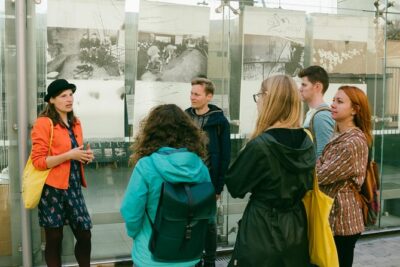
Berlin has a memory problem in the best way. This private walking tour links WWII and the Cold War in one story-driven route, with hotel pickup and a guide who adjusts the focus.
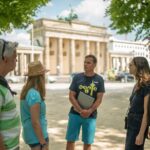
I love the customization: you can aim at Nazi Germany, Cold War division, or mix both. I also love how the walk hits iconic anchors like the Brandenburg Gate and the Checkpoint Charlie area, so you get context right where you’re standing.
The main drawback is simple: it’s a lot of walking through emotionally heavy places, and there are no included meal stops. If you’re short on stamina, plan ahead with water and a pace check—one long, rain-heavy day can feel longer than it should.
In This Review
- Key things that make this Berlin tour worth it
- Why this WWII-and-Cold-War walk makes sense
- Price and logistics: where the value comes from
- Starting at the Reichstag building: resistance and the collapse of the regime
- Brandenburg Gate to the Holocaust Memorial: unity, then deliberate destruction
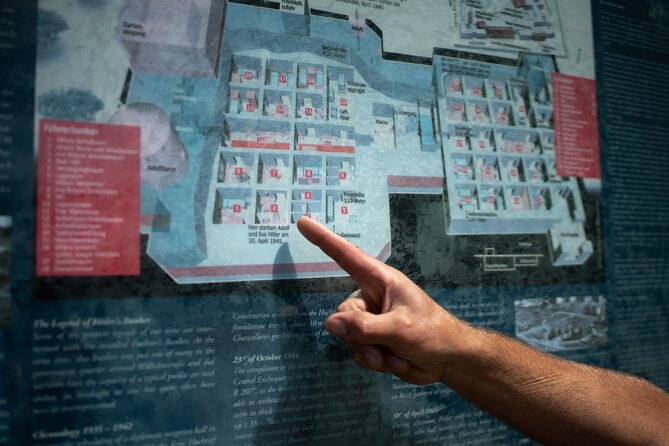
- Hitler’s bunker area and the Reich Air Ministry: Nazi power in surviving shells
- Topography of Terror and the NKVD/Stasi prison: where the system operated
- Checkpoint Charlie and Tränenpalast: the Cold War made personal
- Tempelhofer Feld to Bernauer Strasse Wall Memorial: airlift freedom, then escape tunnels
- East Side Gallery: the Wall as art, not just barrier
- How to get the most from your private guide
- Who this tour is best for
- Should you book this Berlin WWII and Cold War private walking tour?
- FAQ
- FAQ
- How long is the private walking tour?
- What does the tour cost?
- Is this tour private?
- What language is the tour offered in?
- Can I choose World War II, Cold War, or both?
- Is hotel pickup and drop-off included?
- Are food and drinks included?
- Are the main stops ticket-free?
- Will I get a mobile ticket?
- What is the cancellation option?
Key things that make this Berlin tour worth it
- A private guide who tailors the story: guides like Jeff and Hannah got praised for shaping the route around what people wanted to understand.
- WWII and Cold War in one connected walk: you move from Nazi-era power sites to border-era heartbreak without feeling like you’re hopping islands.
- Major Berlin Wall sites, not just photos: Bernauer Strasse, escape tunnels, and the East Side Gallery bring the division to life in different ways.
- Museum-type stops built into the route: Topography of Terror and the Tränenpalast are explained, not just passed by.
- Many stops are ticket-free: the listed admissions are free, which helps the value when you’re budgeting.
Why this WWII-and-Cold-War walk makes sense
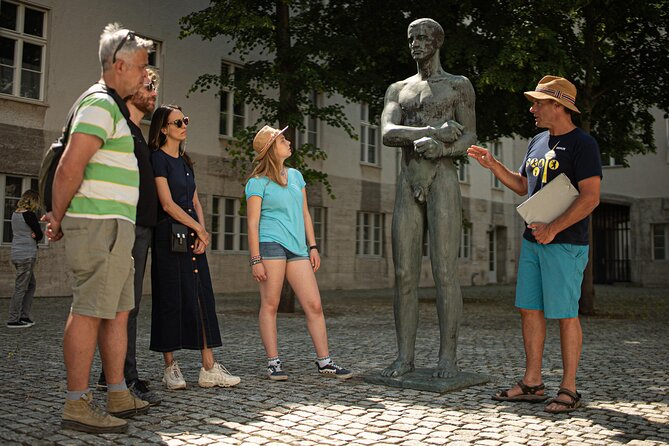
Berlin can feel like a pile of famous landmarks unless someone stitches them together. This tour does that stitching for you, with a guide explaining how one era feeds the next—how ideology, war, occupation, and border control shaped the city’s streets.
You also get control. Before you start, you can choose a direction (WWII, Cold War, or both), and then adjust as you go. In reviews, guides repeatedly stood out for pacing the day to match their group’s interests—something you’ll feel right away, especially when the topic is intense.
You can also read our reviews of more walking tours in Berlin


Price and logistics: where the value comes from
At $192.97 per person for about 3 to 4 hours, this isn’t a cheap group deal. The value is in the private format: hotel pickup and drop-off, an expert guide, and the ability to tailor the itinerary without you settling for a rigid script.
You’re also paying for time. Berlin’s WWII and Cold War sites are spread out, and “just walking around” usually means missed context. With a guide, you get explanations in the moment: why a building matters, what happened in that exact spot, and what survived when everything else didn’t.
A couple practical notes: the tour is in English, it uses a mobile ticket, and it’s offered with hotel pickup. Food and drinks aren’t included, so you’ll want to plan for water breaks.
Starting at the Reichstag building: resistance and the collapse of the regime
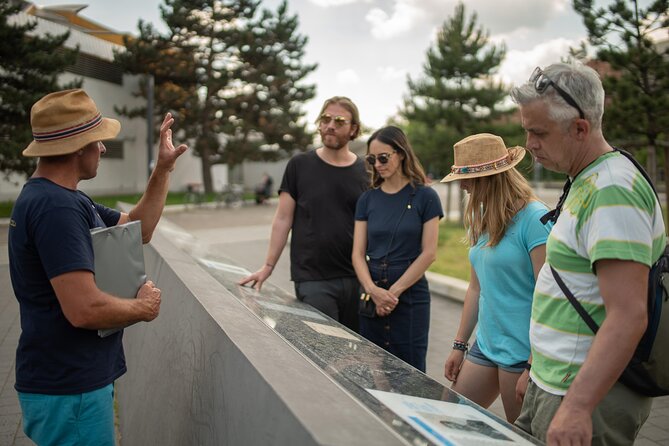
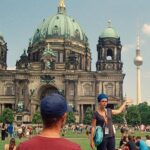
The tour begins at the Reichstag area, where politics stops being abstract. You’ll hear how WWII-era Berlin wasn’t only about Hitler’s rise and rule, but also about people who opposed it—especially names like Claus von Stauffenberg. That resistance angle matters because it shows the cracks inside the Nazi system, not just the machinery.
You’ll also connect the dots between large-scale planning and wartime reality. The guide discusses ideas tied to Albert Speer and the Nazi vision for Berlin, plus the way the Soviets used monumental symbolism afterward. Then it zooms back in to the human scale: the struggle from Stalingrad toward the fall of the Third Reich’s capital during the Battle of Berlin.
If you like your history grounded—who decided what, who resisted, what changed on the ground—this first stop sets the tone fast.
Brandenburg Gate to the Holocaust Memorial: unity, then deliberate destruction
Walking to the Brandenburg Gate, you get one of Berlin’s most recognizable images, but the guide reframes it. In Cold War storytelling, the Gate can become a symbol of division—until it flips to a symbol of peace and unity later.
Right nearby is the Memorial to the Murdered Jews of Europe, and this is where the tour turns quiet. The memorial’s grid of 2,711 concrete slabs is designed to create a disorienting experience, with varying heights that make you feel the point. What I like here is that you’re not handed a quick photo spot; you’re pointed toward meaning.
You’ll also learn about the underground information center beneath the memorial, with historical context and personal accounts. It’s the kind of stop where your guide’s tone matters. In past experiences with this style of tour, guides like Ariel and Maria were praised for making the story clear without rushing past the hard parts.
Hitler’s bunker area and the Reich Air Ministry: Nazi power in surviving shells
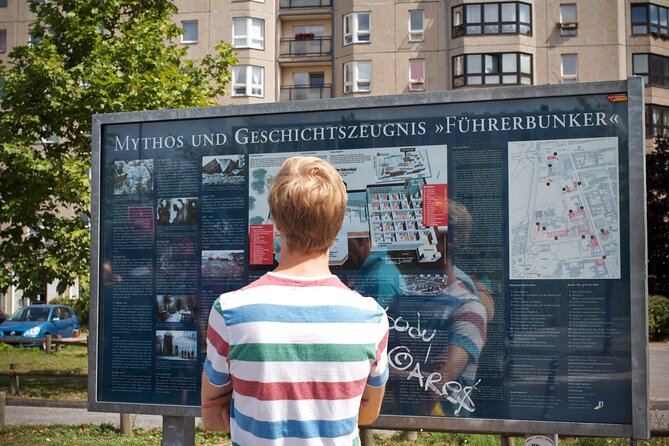
From the Holocaust Memorial zone, the route moves toward places tied directly to Nazi command and infrastructure—starting with the Fuhrerbunker area. Even when little remains physically, the guide helps you place it in the bigger picture: Berlin as the epicenter of the Nazi regime’s final stage.
Next comes the Aviation Ministry of Berlin, known as the Reich Air Ministry building. You’ll hear how it was completed in 1936, tied closely to Hermann Göring and the Luftwaffe, and built to display Nazi power. A detail that sticks: Göring’s office on the top floor is described as offering sweeping views—useful for understanding how regimes turn architecture into propaganda.
This stop also gives you a key Berlin lesson: buildings don’t just disappear. The structure survived damage and was repurposed by East Germany as the Ministry of Transport. So you see both an era’s ambition and a later era’s reuse.
If you’re the type who likes “read the building” history, this section is satisfying.
You can also read our reviews of more private tours in Berlin

Topography of Terror and the NKVD/Stasi prison: where the system operated
Then the tour leans into perpetrator history. At Topography of Terror, the guide explains the location where the SS, Gestapo, and SD had their headquarters during the Nazi period. The site is now an exhibition about perpetrators—so you’re not only learning about victims, you’re also learning how terror was administered.
Later, the route moves into the Prenzlauer Berg area to an old NKVD prison (a precursor to the KGB), later used by the East German Stasi. The guide talks about methods used to extract information and how the site is used today. You’ll get a sense of continuity, not in details but in function: intimidation and control running through different regimes.
A lot of tour days fail when they treat every stop like the same kind of story. Here, the method changes based on the location: one place is about command, another about terror infrastructure, another about policing and interrogation.
Checkpoint Charlie and Tränenpalast: the Cold War made personal
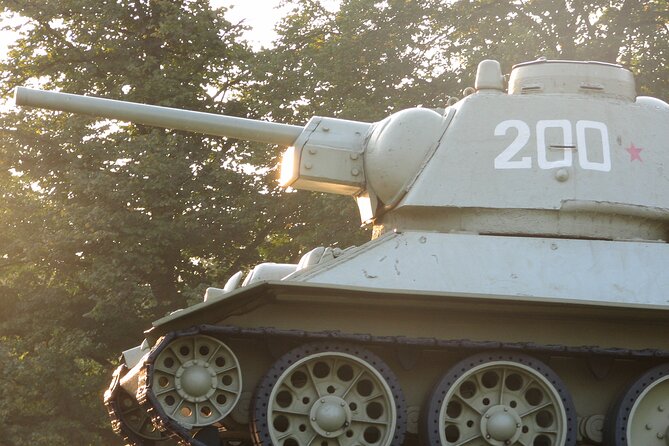
No Berlin Cold War walk is complete without Checkpoint Charlie. This stop is more than a landmark. Your guide frames it as the most famous border crossing between East and West Berlin, then walks you through a turning point: in 1961, it became the setting for a dramatic American–Soviet tank standoff. The message is clear—this wasn’t just politics on paper; the world nearly cracked at street level.
You’ll also hear stories of espionage and escape attempts, plus the human cost of division. That matters because Berlin’s Cold War wasn’t only about who stood where on a map—it was about who could reach family, who couldn’t, and who lived with that daily uncertainty.
After that comes Tränenpalast (Palace of Tears) at Friedrichstrasse station. Between 1961 and 1989, it served as a departure hall for East Germans crossing into West Berlin. The name reflects painful goodbyes, often with people forced to part without knowing if they’d ever see each other again.
Today, it’s a museum focused on the Wall and personal stories. In reviews, the best guide feedback often mentioned how well the narrative ties together street scenes and personal consequences. This is one of the stops where that skill is obvious.
Tempelhofer Feld to Bernauer Strasse Wall Memorial: airlift freedom, then escape tunnels
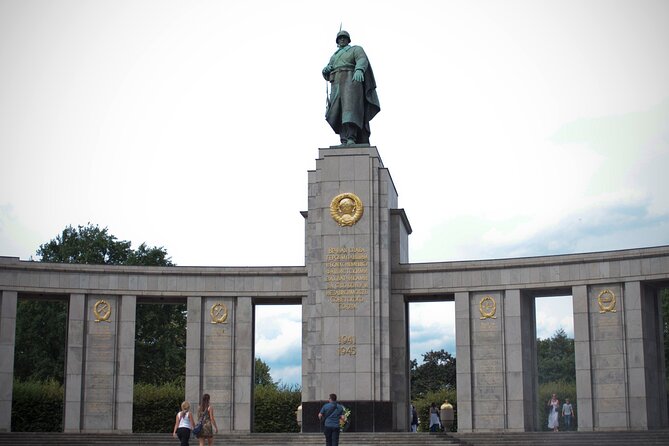
The route shifts outward to Tempelhofer Feld, the former airport. The guide explains it as a Nazi-era site that later became crucial during the Berlin Airlift (1948/49), when the Allies used it to keep supplies moving. Today, it’s a huge open area used by people as a playground—so you get a strong contrast: wartime logistics to open-air normal life.
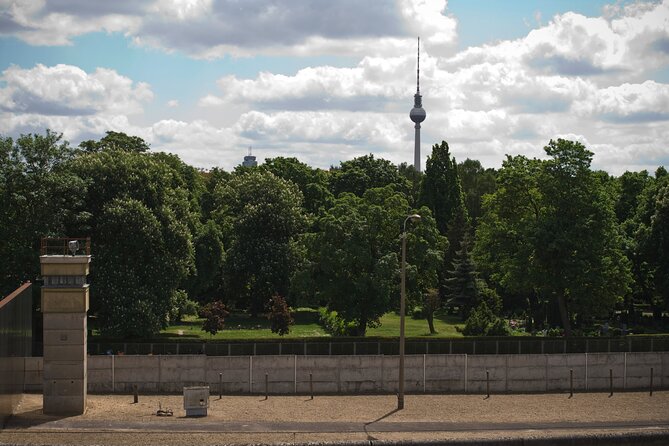
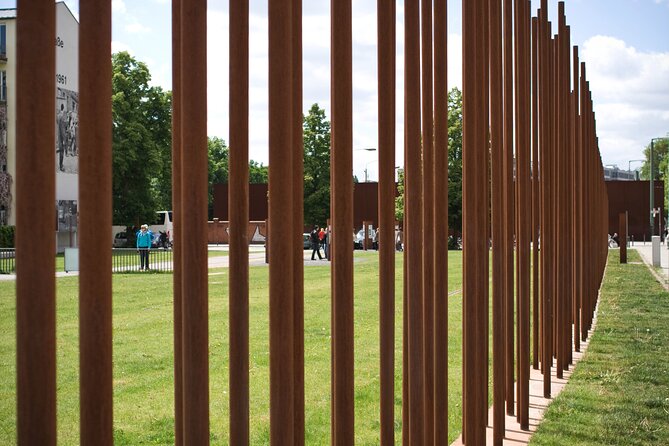
Then you end up at Bernauer Strasse, a key Berlin Wall Memorial area. The guide makes you understand how the Wall split the street in 1961, trapping East Berlin residents while neighbors in the West watched. That setup explains why escape attempts became so desperate and so creative.
You’ll hear specific examples: Tunnel 29 (built in 1962) helping 29 people escape, and Tunnel 57 (constructed in 1970) helping 57 people. The memorial preserves sections of the Wall, a watchtower, and a documentation center. It’s not just a “look at the remains” moment; it’s a “what did it mean to live there” moment.
If you like learning with your eyes on the street plan, this is one of the most rewarding sections of the whole day.
East Side Gallery: the Wall as art, not just barrier
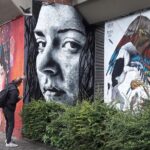
The tour finishes with the East Side Gallery, described as the longest permanent open-air graffiti wall in the world, and also the longest remaining piece of the Berlin Wall. Here, the guide points out murals promoting justice and freedom.
This stop works as an emotional reset. Earlier sections force you to face violence and control; this one shows what people did afterward—turning leftover structure into public expression.
In reviews, guides were praised for tying the ending to the earlier sites, so the art doesn’t feel like an unrelated sightseeing detour. If you want Berlin’s story to feel like one arc, this ending helps.
How to get the most from your private guide
The biggest quality you’ll notice is how much time your guide can spend responding to you. Reviews mention guides like Hannah delivering in-depth historical recaps and guides like Jeff tailoring to exactly what questions people brought.
To make that happen for your group, do two simple things:
- Tell your guide your “must-answers” in the first few minutes. For example: how the Wall changed daily life, or how Nazi power worked at street level.
- Ask for pacing advice. One guide experience that came up more than once: the best guides know when to linger and when to move, so you don’t feel rushed or stuck.
If you’re travel-booked on your first full day, this kind of tour can also act like a map in your head. One reviewer mentioned it gave them a layout of what happened and what to see next, which is exactly what you want if you plan to explore Berlin afterward on your own.
Who this tour is best for
I’d point you to this tour if you want:
- A clear, chronological understanding of WWII to the Cold War in Berlin
- Strong guidance at places that are easy to misunderstand on your own
- A private format where you can slow down for questions or skip what you don’t care about
It’s less ideal if you’re looking for light sightseeing. These stops are heavy: persecution, terror systems, Holocaust memory, border separations. You can still enjoy it—just go in with the right expectations and energy.
Should you book this Berlin WWII and Cold War private walking tour?
Book it if you want to understand Berlin, not just collect landmarks. The private guide, hotel pickup, and the way the route connects WWII-era power sites to Cold War division points create real value for the money.
Skip it or consider a shorter focus (WWII-only or Cold War-only) if you hate long walks or you know you’ll struggle with emotional topics. And if you can, plan to bring water and comfortable shoes—because this is a walking day through serious places.
If your goal is to leave Berlin with a working mental picture of how the city got from Nazi rule to a divided Cold War, this tour is a strong bet.
FAQ
FAQ
How long is the private walking tour?
It runs about 3 to 4 hours.
What does the tour cost?
The price listed is $192.97 per person.
Is this tour private?
Yes. It’s a private tour/activity, meaning only your group participates.
What language is the tour offered in?
The tour is offered in English.
Can I choose World War II, Cold War, or both?
Yes. You can decide to focus on World War II, the Cold War, or request a combination.
Is hotel pickup and drop-off included?
Yes. Hotel pickup and drop-off are included.
Are food and drinks included?
No. Food and drinks are not included.
Are the main stops ticket-free?
The listed admissions for the stops are shown as free.
Will I get a mobile ticket?
Yes. A mobile ticket is provided.
What is the cancellation option?
Free cancellation is available if you cancel up to 24 hours in advance for a full refund.