REVIEW · BELFAST
Belfast: Political Conflict 3-Hour Walking Tour
Book on GetYourGuide →Operated by Yellow Umbrella Tours · Bookable on GetYourGuide
Belfast’s story comes at you in two voices. This 3-hour walking tour is built around two perspectives on The Troubles: a Republican ex-political prisoner first on the Falls Road, then a Loyalist ex-political prisoner (or an ex-member of the security forces) on the Shankill side. I like how you’re not just reading about history—you’re shown how people live with it, including murals and the Peace Walls that explain local identity in paint and brick.
The big consideration is that this is heavy material. Expect first-hand accounts connected to real violence, so it’s not the kind of tour to bring a tired teenager on a “light day” (and it may not be suitable for kids under 15).
In This Review
- Key things I’d circle before you go
- Divis Tower to the Peace Line: why this walk starts there
- Falls Road with a Republican ex-political prisoner: reading the street as lived experience
- Passing through the electronically controlled gates to Shankill Road
- Peace Walls and murals: the street as a record of politics
- Timing, walking pace, and where you’ll feel it
- Who this tour suits—and who might struggle with it
- Price and value: what $35 buys you in real terms
- Should you book Belfast Political Conflict walking tour?
- FAQ
- How long is the Belfast Political Conflict 3-Hour Walking Tour?
- Where do I meet the guide?
- How much walking is involved?
- What areas does the tour cover?
- Is the tour wheelchair accessible?
- Is this tour suitable for children?
- What language is the live guide?
Key things I’d circle before you go
- Two guides, two sides: the tour is split so you hear Republican and Loyalist viewpoints in sequence
- Falls Road to Shankill Road: you actually walk along the political divide people still reference
- Peace Line gates: you pass the electronically controlled gates that mark the separation
- Murals as history files: street art used to record events, beliefs, and ongoing attitudes
- Sign the Peace Wall: leave your thoughts alongside names like Bill Clinton and the Dalai Lama
Divis Tower to the Peace Line: why this walk starts there
You begin at Divis Tower on Divis Street, and that location sets the tone. Belfast’s conflict wasn’t fought in textbooks. It was fought in streets, housing estates, and everyday routes—places where your route to school, work, or a shop could be political, tense, or downright dangerous.
A good way to think about this tour is that it’s a walking translation of the city. The guide helps you connect visible details—walls, gates, murals, memorials—to the people who carry those memories. You’re walking about 4 kilometers (2.5 miles) in roughly 3 hours, ending on the Lower Shankill Road about a 15-minute walk from where you started.
Also, this isn’t a “stand and stare at a view” style outing. It’s more like following a set of arguments—except the arguments come with personal history. You’ll need the mental bandwidth for that.
You can also read our reviews of more walking tours in Belfast

Falls Road with a Republican ex-political prisoner: reading the street as lived experience
The first half begins on the Falls Road, and you start with a Republican ex-political prisoner. That one choice matters. It means the tour isn’t only describing causes or events—it’s focused on what it felt like to grow up inside the conflict and how political identity shaped daily life.
On the Falls Road, you’ll notice visible signs of community desire for an Irish Republic. This isn’t about checking off “symbol spotting.” It’s about understanding why those symbols are there in the first place: they’re shortcuts to complex stories, grief, pride, and sometimes anger that never fully left the room.
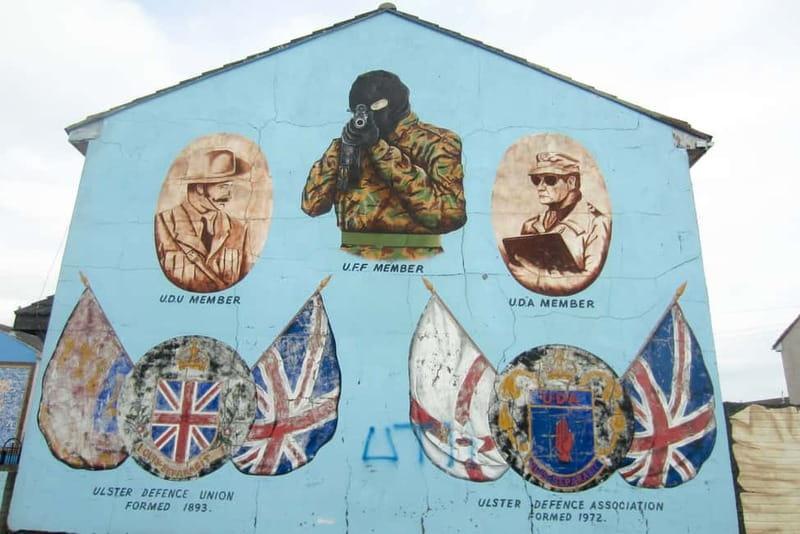
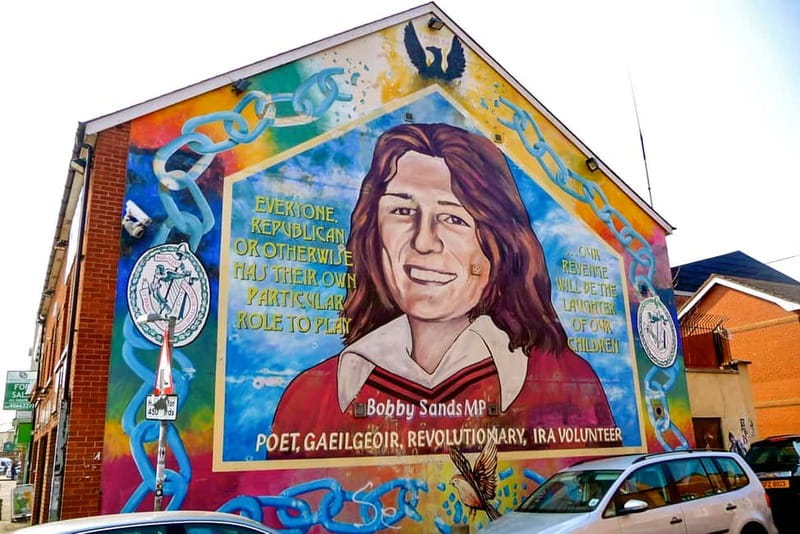
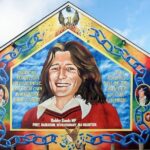
Then come the places where murals and memorials work like public memory. Belfast is often called an outdoor art gallery, and on this route you see why. Murals aren’t just decoration. They’re messages to neighbors, warnings to opponents, and statements of worldview. When you hear explanations directly from someone who lived through those years, you start to see street art as a local news system—one that never stopped running.
I also like how this guide doesn’t treat the Troubles as a closed chapter. Even when the violence is described as past, the effects can still feel current in how people talk, organize, and interpret what they see.
Passing through the electronically controlled gates to Shankill Road
After the Falls Road section, the tour brings you to the Peace Line—including the electronically controlled gates that separate the areas. Seeing that boundary in person changes things fast. On a map, it looks like a line. On the ground, it feels like a decision made daily.
Then you cross into the predominantly Protestant area of Shankill Road and meet the second guide. Depending on the running of your tour, that person is either a Loyalist ex-political prisoner or an ex-member of the security forces from the area. Either way, the point is the same: you’re hearing how Loyalist communities interpret the conflict, the state’s role, and what “safety” and “belonging” meant from their side.
This segment is where a lot of visitors feel their assumptions get tested. The Loyalist perspective you’ll hear isn’t just counterpoint—it’s a different explanation for why actions happened, why they were justified (in the guide’s eyes), and what consequences still linger.
And just as importantly, you’ll spend time on how locals talk about continuing in the United Kingdom. It’s one of the clearest indicators that this wasn’t only about historical arguments. It’s about identity that still shapes politics, family life, and neighborhood confidence.
Peace Walls and murals: the street as a record of politics
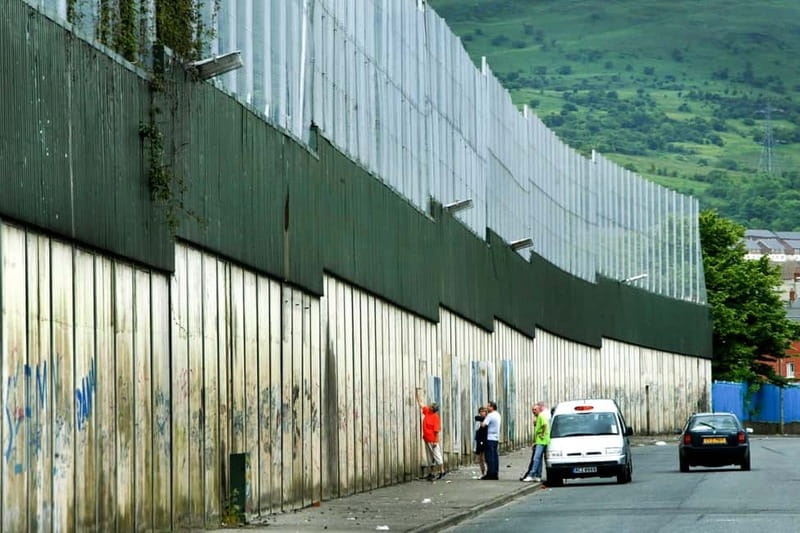
Next up: the Peace Walls. This is where the tour moves from history-as-story into history-as-text on plaster and concrete.
The Peace Walls are famous enough that many people arrive having heard the name. But the emotional weight hits harder when you’re guided through what the walls are doing for the community—storing messages, memorializing individuals and events, and showing how people want to be remembered.
You also get an option that I think is one of the most practical “this is real” moments on the itinerary: you can sign the Peace Wall and leave your thoughts alongside messages left by Bill Clinton and the Dalai Lama. Whether you agree with everything you hear or not, that moment forces you to consider what peace means when it’s surrounded by political memory.
As for the murals, you’re not just looking at images. You’re learning how to decode them:
- What symbols represent locally
- What stories are being told and to whom
- Why certain images appear repeatedly across decades of pain and protest
This is where the tour earns its reputation for being thought-provoking. Murals can make you want to form quick opinions. The guide helps you slow down and read the context behind the paint.
Timing, walking pace, and where you’ll feel it
This tour is 3 hours and covers about 4 kilometers (2.5 miles). That’s not a marathon, but you are on city pavement the whole time, and you’re stopping often enough that you’ll be engaged rather than just strolling.
A quick practical note based on real-world feedback: there may not be programmed food stops, and bathroom stops aren’t guaranteed as a formal schedule. So I’d treat this like a “plan ahead” walk. If you need a restroom, tell your guide when you start, and ask when the next comfort stop will be.
Weather can also be a factor in Belfast. You’re walking outdoors from start to finish, so bring layers and something that handles rain. Nothing fancy—just don’t show up in shoes you only wear on weekends.
One more timing detail that matters for planning your day: the tour ends on the Lower Shankill Road, about a 15-minute walk away from the meeting area. Build in time afterward to re-orient and grab a drink or meal without rushing.

Who this tour suits—and who might struggle with it
This is a strong fit if you want Belfast to make sense on a human level. You should especially enjoy it if you like:
- politics with local context
- street art as communication
- history told by people who lived it
- comparing perspectives without trying to force them into one neat story
I’d also say this works best when you can handle disagreement. The tour intentionally brings you close to both Loyalist and Republican interpretations. You’re likely to feel a bit unsettled at times, especially when personal histories come up.
It may not be suitable for children under 15 because discussion of extreme violence may occur. That doesn’t mean the tour is sensational. It means the subject matter is real, direct, and sometimes hard to digest.
If your travel style is “light and breezy,” you might find this tour emotionally demanding. If your style is “help me understand the place I’m standing in,” it’s an excellent choice.
Price and value: what $35 buys you in real terms
At $35 per person for a 3-hour guided walk, the math is fairly simple: you’re paying for guided access to people’s lived experiences, plus an organized route through highly sensitive areas. You’re not paying for a bus ride or museum time that you could reproduce alone.
The value is in the structure:
- You hear a Republican ex-political prisoner viewpoint first
- You then hear a Loyalist ex-political prisoner or security-forces viewpoint
- You connect those narratives to specific streets and visible memorials
That dual-guide setup is the differentiator. Many tours give you “both sides” as a theme. Here, you get two different voices, sequentially, while you’re physically walking the divide. That’s how the city clicks into place.
From recent tour runs, I’ve seen guide names like Paul and Jake, Robert and Jake, Pod and Mark, Gerard and Jake, and Fred and Mark linked to this format. I can’t promise which pairs you’ll get, but the pattern is consistent: you’ll be guided by someone speaking from the community side of the argument.
One more value point: this is not just about the Troubles as an era ending in the past. You’ll hear how people understand the conflict’s effects in the present—how mistrust, identity, and hope can still coexist in the same neighborhood.
Should you book Belfast Political Conflict walking tour?
Book it if you want Belfast to feel real, not sanitized. This is one of the best ways to understand why murals matter, why the Peace Line exists, and why people’s interpretations of the past still shape the street today. The tour’s two-part design is the key reason it’s worth your time.
Skip it (or at least think twice) if you want a casual outing with light conversation and minimal emotional weight. You’ll be walking outdoors for three hours and you may hear accounts tied to extreme violence. Also, go in with comfortable shoes and a calm mindset. This tour is about listening first, forming opinions second.
FAQ
How long is the Belfast Political Conflict 3-Hour Walking Tour?
The tour lasts about 3 hours.
Where do I meet the guide?
Meet in front of Divis Tower, Divis Street Belfast.
How much walking is involved?
It covers about 4 kilometers (2.5 miles).
What areas does the tour cover?
You visit Falls Road, then Shankill Road, and see Peace Walls.
Is the tour wheelchair accessible?
Yes, it’s listed as wheelchair accessible.
Is this tour suitable for children?
The tour may not be suitable for children under 15, since discussion of extreme violence may occur.
What language is the live guide?
The live tour guide speaks English.