REVIEW · KYOTO
Kyoto: Meet the Geisha Maiko with Gion Walking Tour
Book on Viator →Operated by Japan Wonder Travel · Bookable on Viator
Gion goes quiet when you know where to look. This 3-hour walk through Kyoto’s Gion district combines the street-level feel of old Higashiyama with rare access to a private ochaya and a maiko-and-retired-geiko performance plus Q&A. It’s not about spotting someone from a distance; it’s about understanding what you’re seeing and speaking respectfully in their world.
One caution: the performance happens on the venue’s second floor with stairs, and you’ll need to follow strict “dry socks only” rules—especially if it rains.
In This Review
- Key highlights worth your attention
- Gion starts at Shirakawa: what this walk actually teaches
- The quick shrine and Tatsumi Bridge moments you shouldn’t skip
- Hanamikoji Street and Gion Corner: culture you can see in motion
- A Zen temple precinct walk: quiet respect without entering buildings
- The Miyagawasuji performance: private ochaya access and the real conversation
- Price and value: why $109.43 can be fair (or not)
- Practical tips that make the difference
- Who should book this Gion geisha maiko tour?
- Should you book it?
- FAQ
- How long is the Kyoto Gion geisha maiko walking tour?
- Where does the tour start and end?
- Is this a walking tour?
- Do I need socks for the performance?
- What happens if it rains?
- Can I take photos and videos during the tour?
- Is the performance on a level with stairs?
- How many people are in a group?
- Is there an age limit?
- Can I cancel and get a full refund?
Key highlights worth your attention
- Private ochaya access instead of just watching from the sidewalk
- Maiko plus retired geiko in one session, with time to ask questions
- Your guide handles the context and translation, so you can follow along
- A focused Gion route through Shirakawa, Tatsumi Bridge, and Hanamikoji
- Culture stops built in, from Gion Corner to a Zen temple precinct walk
- Small group size (max 30) keeps the experience more personal
Gion starts at Shirakawa: what this walk actually teaches
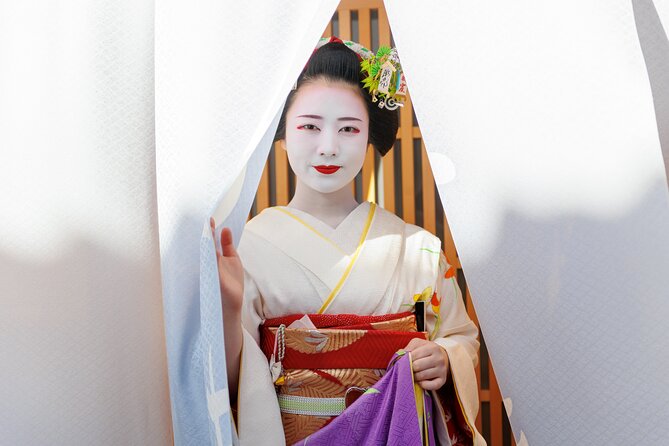
You’ll begin in the Gion/Higashiyama area, right where Kyoto’s old merchant houses give way to narrow lanes and quiet courtyards. The first real stop is Gion Shirakawa, a beautiful pocket of Gion where your guide sets the stage: who geiko and maiko are, how daily life connects to training and performance, and why so many parts of this culture work on timing, discretion, and respect.
This is where the tour becomes more than a sightseeing stroll. Instead of asking, Who is that? you start asking, Why are they dressed like that? and What does the setting mean? You’ll also pick up the basic etiquette mindset early, which matters later when you step into a space that’s typically off-limits.
You can also read our reviews of more walking tours in Kyoto
The quick shrine and Tatsumi Bridge moments you shouldn’t skip
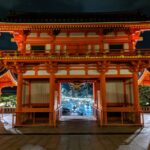
Next comes a brief visit to Tatsumi Daimyojin Shrine. It’s small on time (about five minutes), but it works as a practical reset. Shinto shrines like this are tied to everyday ideas like protection and good fortune—especially for travelers. It’s a fast stop, but it anchors the walk in the wider Kyoto of shrines, not just the theater of Gion.
Then you’ll linger around Tatsumi Bridge, a small traditional bridge with a movie-set feel. This is the kind of place where you realize Gion is not one long street—it’s lots of micro-scenes. The narrow streets, wooden machiya houses, and tucked-away corners are part of how geisha districts function socially. If you’re hoping for “big views,” you won’t get them here. You’ll get atmosphere, proportions, and the feeling of stepping into a lived-in neighborhood.
Hanamikoji Street and Gion Corner: culture you can see in motion
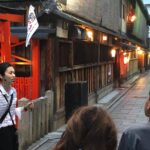
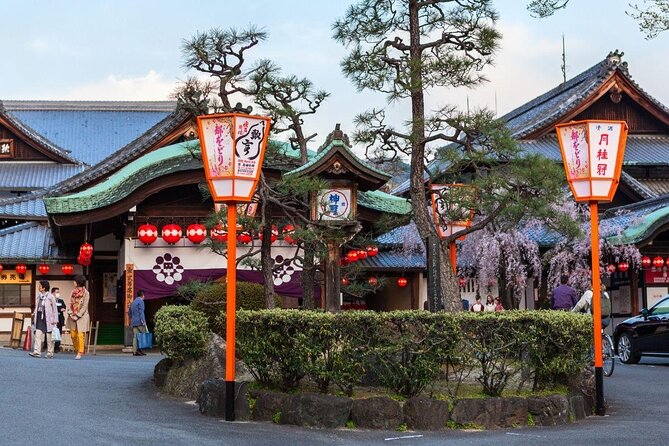
After that, you walk to Hanamikoji Street, Gion’s main artery. Even if you’ve seen photos, this street hits differently in person—because it’s not just pretty buildings. It’s still used, still shaped by the rhythm of Kyoto life.
Your guide keeps the story grounded while you move along, so you’re not just counting storefronts. You’ll be thinking about what’s meant to be public, what’s meant to be private, and why the district is laid out the way it is.
Then there’s a stop at Gion Corner, a cultural venue where traditional arts are presented for visitors in a structured way. This part is handy if you want an easy on-ramp before the maiko performance later. You’re getting traditional forms explained in plain terms, and it helps you recognize what you’re about to watch during the main event.
A Zen temple precinct walk: quiet respect without entering buildings
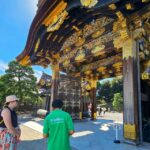
You’ll also pass by one of Kyoto’s oldest Zen Buddhist temples, located next to the Gion area. The key detail here is that you don’t enter the temple buildings. Instead, you walk through the precinct like locals—slower, more observational, and focused on the spaces themselves.
Even in a short window, this stop changes your mood. It gives you a “why calm matters” break before the performance setting, and it helps you understand that Gion culture doesn’t sit in isolation. Kyoto’s arts and etiquette connect to broader ideas of restraint, formality, and careful behavior.
The Miyagawasuji performance: private ochaya access and the real conversation
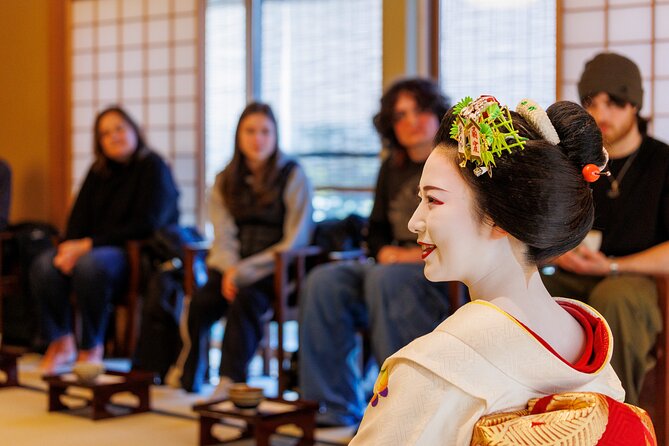
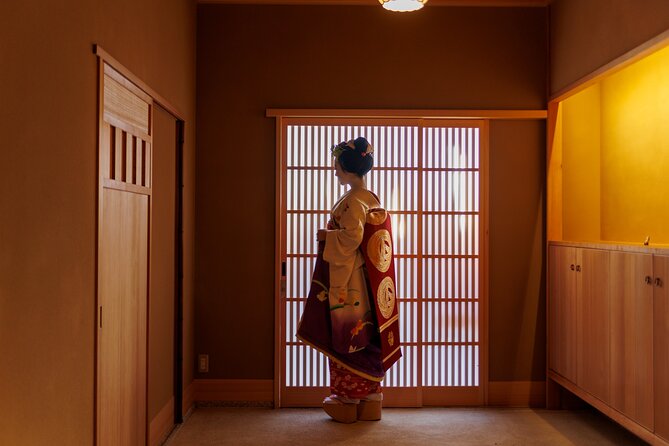
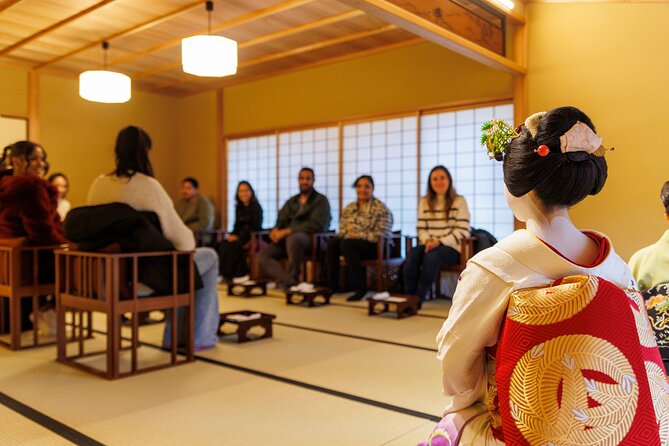
Now for the heart of the tour: the traditional tea house experience at Miyagawasuji, held in an exclusive private house. This is where the price starts to make sense, because this is not a public show in a big theater.
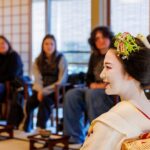
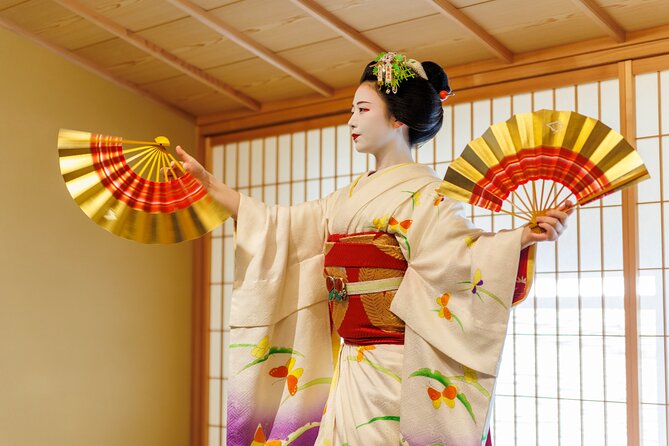
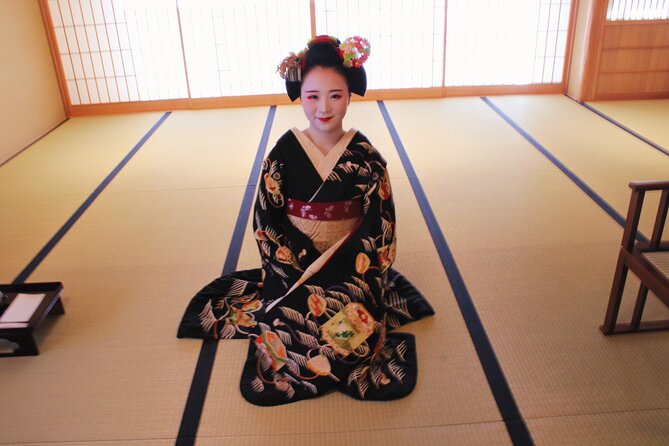
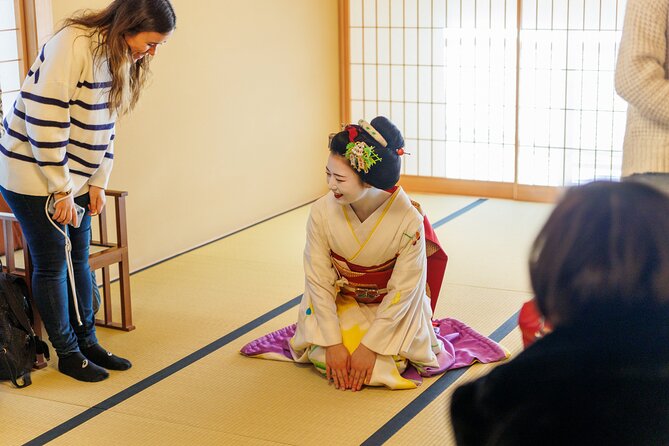
Inside, you’ll see a live performance featuring a maiko and a retired geiko. The guide serves as a translator, so you’re not left staring at gestures without meaning. And the structure matters: there’s time to chat afterward, ask questions, and hear personal stories in a way that feels direct rather than scripted.
Two etiquette notes are crucial:
- Socks are required at the performance venue.
- If it’s rainy, you must keep socks and clothing dry inside the venue (no wet cloth, and no wet socks). The tour encourages you to use an umbrella during the walk.
Another practical detail: the performance is on the second floor, accessible by stairs only. If stairs are an issue for you, take that seriously before booking.
Photography rules are also part of the culture here:
- You can take photos/video only during the performance and during the photo session.
- If you plan to upload photos on social media, you’ll need direct permission from the maiko beforehand.
If you want a tour where you don’t chase someone down a street corner, this is the reason it works: you’re invited into a controlled, respectful setting where conversation is possible.



Price and value: why $109.43 can be fair (or not)
At $109.43 per person for about 3 hours, you’re paying for three things that most Gion “geisha spotting” experiences don’t include:
1) Inside access to a venue that’s typically closed to casual visitors
2) A live maiko + retired geiko performance rather than just street appearances
3) Meaningful Q&A with translation, so you understand what you’re seeing
That said, this tour is still a walking format. If you expect nonstop “action” every minute, the pace can feel slower than you want. The experience may also run a bit longer depending on the day, so build in flexibility.
Finally, quality can hinge on two things you can’t fully control: the loudness of translation in the room and how quickly your group settles into questions and attention. In a quiet, traditional venue, sound can be different from what you’re used to outside in the street.
Practical tips that make the difference
Here’s how to show up prepared and get the most out of it:
- Wear comfortable walking shoes. This is a walking tour and you’ll be moving most of the time.
- Bring extra dry socks if you’re worried about rain, since rainy-day rules at the venue are strict.
- Plan to be on time at Miyagawasuji. The tour start/end is the same area, and you’ll want a stress-free meetup.
- Don’t rely on “I’ll just film everything.” Photo/video time is limited to the performance and a photo session, plus social media needs permission.
- If you’re chatty, great. This tour is designed for questions. If you’re shy, focus your questions on training, performance, and daily etiquette—your guide can help steer the conversation through translation.
Guides you may encounter include names like Haruki, Takuma, Mika, Ayako, Yoko, Naomi, Chiko, and Ellie/Eriko—people who are repeatedly praised for keeping the tour clear and respectful.
Who should book this Gion geisha maiko tour?
This tour fits you best if:
- You want a structured introduction to geisha culture, not just street photography
- You care about etiquette and context
- You’d rather have a conversation in a private setting than hunt for glimpses in busy lanes
- You’re fine with a walking format and stairs for the main performance
It’s less ideal if:
- You mainly want broad Kyoto sights beyond Gion/Higashiyama
- You need a very short walk with minimal transitions
- Stairs are a dealbreaker for you
Also note: there’s a guideline of no children under 10, and the tour is best for people with moderate physical fitness.
Should you book it?
Yes—if your goal is the real culture side of Gion. The tour’s biggest strength is simple: you don’t just look at the district; you learn the rules of the world and then meet the people inside the private ochaya-style setting where performance and conversation happen.
Skip it only if you’re expecting a fast-paced walk with constant street encounters, or if rain + socks/venue rules would make you uncomfortable. If you show up prepared, you’ll come away with a much clearer idea of what geiko and maiko work looks like beyond costumes and stereotypes.
FAQ
How long is the Kyoto Gion geisha maiko walking tour?
It’s about 3 hours (approx.).
Where does the tour start and end?
Both start and end are at Miyagawasuji, Higashiyama Ward, Kyoto.
Is this a walking tour?
Yes. You’ll be walking through the Gion area for most of the experience.
Do I need socks for the performance?
Yes. You must wear socks at the venue where the performance happens.
What happens if it rains?
The tour runs rain or shine. You should use an umbrella during the walk, and wet cloth and socks aren’t allowed at the venue on rainy days.
Can I take photos and videos during the tour?
Photography and video recording are allowed only during the performance and the photo session. Social media uploads require direct permission from the maiko beforehand.
Is the performance on a level with stairs?
Yes. The performance is held on the private house’s second floor, and access is via stairs.
How many people are in a group?
The tour has a maximum of 30 travelers.
Is there an age limit?
Yes. There are no children under 10 years old.
Can I cancel and get a full refund?
You can cancel up to 24 hours in advance for a full refund. If you cancel less than 24 hours before the start time, the amount paid is not refunded.