REVIEW · BERLIN
East Berlin and the Berlin Wall 2-Hour Walking Tour
Book on Viator →Operated by Original Berlin Walks · Bookable on Viator
Berlin’s wall still leaves fingerprints on the present. This 2-hour East Berlin walking tour connects Cold War decisions to street-level sites, from the Wall memorial to the Stasi story. You start by Hackescher Markt and end near Alexanderplatz/ Nordbahnhof area, with plenty of time for questions and photos.
What I like most is the way the tour turns big history into scenes you can picture. I especially love the Death Strip overview and the chance to see a preserved section of the Berlin Wall in its original state.
One thing to consider: it’s outdoors and weather changes fast in Berlin. If you hate walking for long periods, plan for comfortable shoes and a layer you can adjust.
In This Review
- Key highlights to look for
- Entering East Berlin: Cold War drama, built into the streets
- Hackescher Markt to Friedrichstraße: border memories in plain sight
- Berlin Wall memorial: the preserved section and why touching matters
- Chapel of Reconciliation and the story of former division
- The GDR watch tower and Ackerstraße: relics that explain the system
- Bornholmer Straße and the Wall’s fall on Nov 9, 1989
- Stasi headquarters: the dark side of everyday life
- Alexanderplatz finish: the view and the next move
- Price and value: what you’re really paying for
- Practical tips so you get the most out of it
- Who should book this East Berlin Wall walk
- Should you book? My quick decision guide
- FAQ
- Where does the tour start?
- How long is the walking tour?
- What language is the tour offered in?
- Is there a group size limit?
- Do I need museum tickets for the Wall memorial?
- Is public transportation required?
- What is included in the price?
- What is not included?
- When does the tour run?
- What happens if the weather is bad?
Key highlights to look for
- Touch the Wall remains at the memorial, a rare hands-on moment
- Stasi headquarters and surveillance, explained in a way you can track
- Cold War context early on, so later stops make sense
- Bornholmer Straße and the Nov 9, 1989 story, including the political misstep
- Death Strip birds-eye views, where the escape attempts became deadly
- Finish at Alexanderplatz, with the TV tower nearby for an easy next step
Entering East Berlin: Cold War drama, built into the streets
A good Berlin Wall tour does two jobs at once: it shows you where history happened, and it helps you understand how it felt to live inside it. This one starts in East Berlin, near Hackescher Markt, with a guide who sets the scene right away. The opening matters because the Cold War isn’t just dates and documents. Your guide frames the big question of how the U.S. and USSR hardened into opposing systems, then zooms into why Berlin got split into two competing realities.
I like that the first part is about the logic of control. You’ll hear how military tensions and fear turned into physical barriers, and then into daily routines for East Berlin citizens. It makes later sights feel less like monuments and more like the results of choices made by people in power.
And yes, this is a walking tour, but it doesn’t feel like a random sidewalk shuffle. It feels like a guided storyline. Guides are repeatedly praised for answering questions and explaining with real-world clarity, including storytelling styles from people like Anastasia, Dylan, Tom, Georgia, Jimmy, Nathan, and Jasper. You’ll feel it in the rhythm: stand, look, listen, then connect the next stop.
You can also read our reviews of more walking tours in Berlin



Hackescher Markt to Friedrichstraße: border memories in plain sight
The route begins near Hackescher Markt, then works its way through Friedrichstraße, a major central artery of shops and culture today. That matters because Friedrichstraße is a reminder that the Cold War wasn’t happening on an empty set. Berlin continued to function. People still traveled, shopped, and lived—just with different rules and different risks.
Friedrichstraße is also where the tour steers you toward the Palace of Tears, the local name for the former border crossing station at Berlin Friedrichstraße railway station. The nickname is a big clue to the emotional tone here. This is where families said goodbye and where visitors went back to West Germany. If you’ve only seen the Wall from postcards, this stop adds human texture fast. It’s not just about fortifications; it’s about movement—who could cross, who couldn’t, and what that cost.
A practical note: this section has plenty of pedestrian activity, so keep an eye on your guide and the group. The tour uses transit-friendly central streets, and the timing can feel brisk if you stop to read every sign. If you like reading slowly, consider taking one or two key photos and then letting the guide point you to the most important details.
Berlin Wall memorial: the preserved section and why touching matters
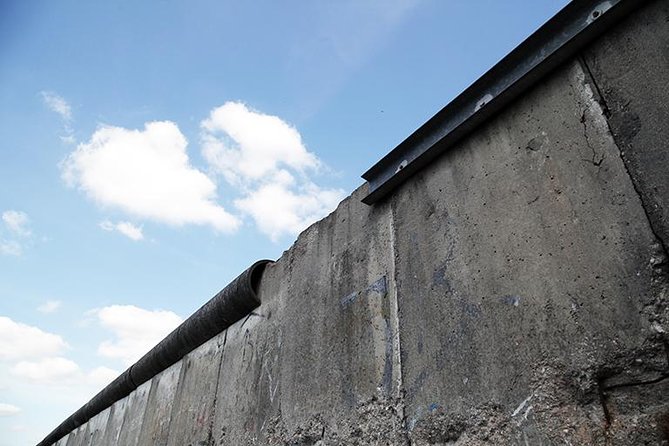
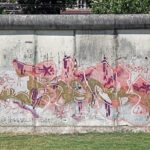
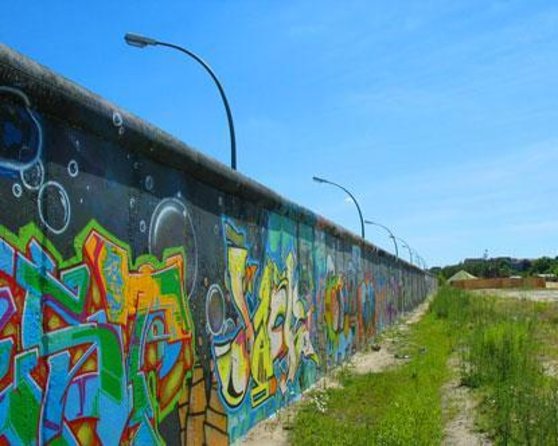
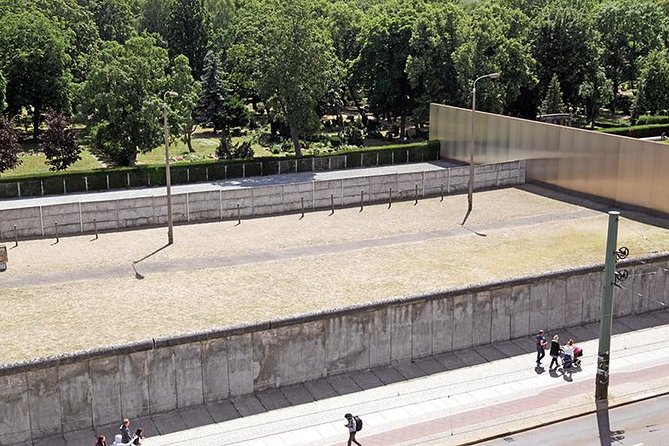
The emotional center of the experience is the Berlin Wall memorial, where a section of the Wall is preserved in its original state. This is where you get one of the tour’s standout features: a chance to touch the remains of the Berlin Wall. That moment is small in time, but big in impact. You’re not just looking at history—you’re contacting the material proof that the barrier was real and physical, not just a story.
This stop is also where the tour reinforces the idea of intention. The Wall wasn’t simply a fence; it was part of a system built to prevent escape. Your guide explains what this memorial section represents and connects it to the broader strategy of control across East Berlin.
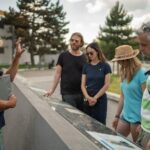
Then comes a perspective shift. The tour includes a birds-eye view of the Death Strip, the area where escape attempts were met with lethal orders. You’ll hear how shoot-to-kill rules were carried out against people trying to get away. Even if you already know what the Death Strip was, seeing how the space works—and understanding that it was designed to leave people no safe options—can make the whole Cold War feel suddenly closer.
Chapel of Reconciliation and the story of former division
After the Wall memorial area, the tour includes a brief stop at the Chapel of Reconciliation (Kapelle der Versöhnung). This kind of stop is a clever break from pure military history. It’s a place of worship, and it fits the tour’s larger theme: how people respond when daily life is constrained by fear and separation.
You’ll get context about the site from your guide, which helps you avoid turning it into a quick photo stop. The point is to show how reconciliation and memory coexist with the physical remnants of division. In a city where so much is rebuilt and repurposed, this stop helps you read Berlin as more than just ruins and paperwork.
If you’re sensitive to heavy topics, this is a useful moment. It doesn’t erase the dark story. It gives you a place to breathe while still staying anchored to what the area means.
The GDR watch tower and Ackerstraße: relics that explain the system
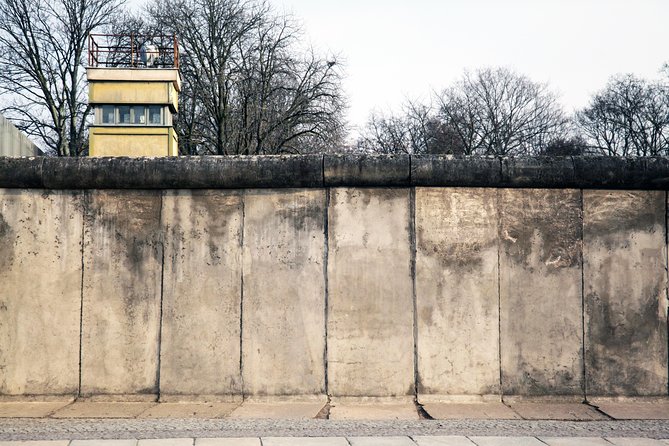
Next, you’ll see the GDR watch tower, described as the oldest relic of the Berlin Wall. Even in short time, a watch tower changes what you think you’re seeing. The Wall stops being only a barrier and starts looking like infrastructure—something that needed observation, authority, and enforcement.
This stop is one of those “tiny structure, huge meaning” moments. The tour keeps connecting details back to the big picture: surveillance, control, and how the state tried to shape behavior through fear.
Ackerstraße follows, and your guide uses it to explain the history of the site. Stops like this are valuable because they show the Wall wasn’t only where the famous photos were taken. The system extended through the city, and enforcement mattered at multiple points, not just one iconic segment.
A few more Berlin tours and experiences worth a look

Bornholmer Straße and the Wall’s fall on Nov 9, 1989
Then the tour changes gears. You travel north of Berlin to Bornholmer Straße, where the Wall came down on November 9, 1989. This isn’t taught like a fairy tale victory. It’s taught like an event triggered by human error and fast-moving politics.
Your guide explains the unlikely story of how one East German politician’s mistake helped bring down the Wall. That angle matters for two reasons. First, it removes the idea that history always follows a clear script. Second, it shows how fragile rigid systems can be when communication breaks and pressure builds.
I find that this stop is where many people start to feel hope alongside horror. The idea that the Wall could fall—because events shifted in real time—adds a sense of agency, even in a situation that once looked locked in place forever.
Stasi headquarters: the dark side of everyday life
One of the tour’s most important segments is the visit to the headquarters of East Germany’s secret police, the Stasi. This is where the narrative expands from physical barriers to mental ones.
The guide explains how the East German state increasingly spied on its own people and created a system of government control over citizens. You don’t just learn that the Stasi existed—you learn what that control could look like in daily life, and why fear was such an effective tool. Guides who focus on the human scale tend to shine here, and the reviews strongly reflect that: people praise guides for bringing individual stories into the big storyline, and for making the topic feel grounded rather than abstract.
If you want to understand East Berlin as a lived experience, not just a Cold War battlefield, this is the stop that does the heavy lifting.
Alexanderplatz finish: the view and the next move
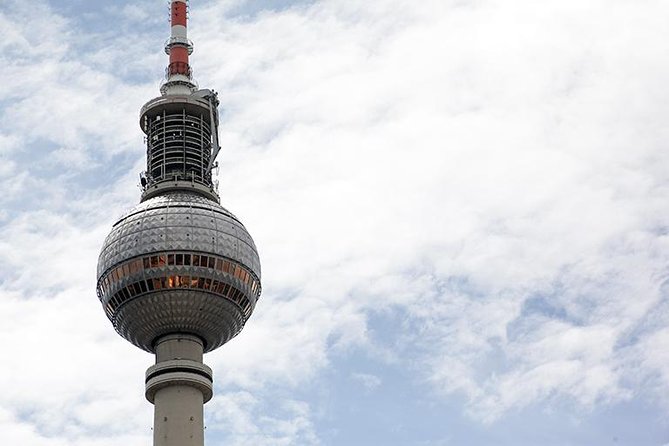
The walking tour ends at Alexanderplatz, in the heart of the former East German capital, near the iconic TV tower. This is a smart finish for practical reasons. It’s a major hub, and it sets you up to keep exploring immediately after the tour.
One detail to remember: the Berlin TV tower ticket is not included. So if you want to go up, you’ll need to purchase it separately. That said, simply being in the square and seeing how the skyline reads after learning the Wall’s story can be satisfying. It’s a reminder that Berlin didn’t stay frozen in the past.
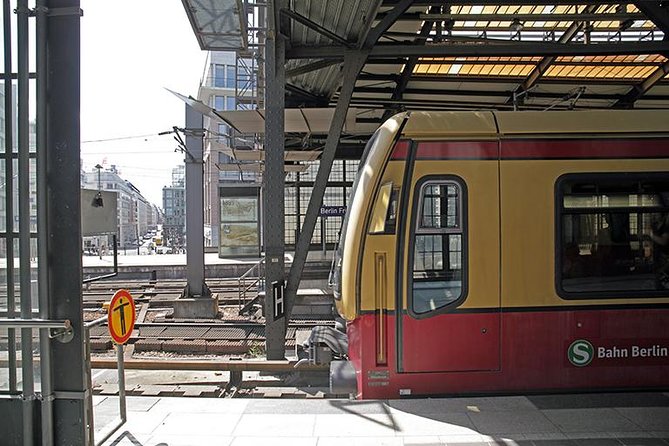
Also, the tour ends close to the S-Bahn station Nordbahnhof. That’s handy for getting back to your hotel or connecting to your next plan without wrestling with long transfers.
Price and value: what you’re really paying for
At $21.78 per person for about two hours, this is priced like a budget-friendly way into a high-impact topic. The value comes from a few specific things you’d struggle to replicate on your own in the same time:
- A professional guide who strings together Cold War context so each site makes sense
- Access to major Wall-related locations plus the Stasi headquarters
- The rare hands-on touch of Wall remains at the memorial
- A tight route that hits the emotional and political arcs, not just the map coordinates
Two hours is short for a city as big as Berlin, but that’s the point. This tour helps you get oriented fast. If you already plan to visit additional museums or memorials later, this walk works as the narrative backbone.
The strongest praise in the reviews centers on guides who are engaging, conversational, and willing to answer questions. Some people even say they wished they booked longer, which is a good sign: you’re likely to feel the story has depth, even within the time limit.
Practical tips so you get the most out of it
Here’s how to make this tour hit harder (and run smoother):
- Wear comfortable shoes. You’ll be walking through central areas and stopping often to look and listen.
- Bring a layer for weather. The tour runs in all conditions, so dress for rain, wind, and sudden temperature swings.
- Use your phone sparingly for the key moments. The touch-and-look segments are best experienced without constant screen time.
- Ask questions early. Reviews repeatedly highlight guides who handle questions well, like Dylan and Tom style comments turning into mini lessons.
- Stay with the group near transit. One review notes a guide communication issue during a train step. You can’t prevent every operational hiccup, but you can reduce risk by checking instructions and staying close.
If you’re visiting Berlin with limited time, this tour is one of the better ways to spend two hours because it gives you context you’ll carry into everything else.
Who should book this East Berlin Wall walk
This tour fits best if you want a guided story and you like learning history through places, not just textbooks. It’s also ideal if you’re seeing Berlin for the first time and want the Wall and East German surveillance story as a clear spine.
You’ll likely enjoy it most if:
- you care about Cold War politics and how they shaped daily life
- you want emotional clarity, not just facts
- you prefer a guided route that keeps moving while still stopping for meaning
If you hate walking tours or you only want casual sightseeing with no heavy context, this might feel intense. But for most people drawn to Berlin’s most important modern story, it’s hard to beat.
Should you book? My quick decision guide
Book it if you want a high-impact, low-time way to understand East Berlin: the Wall, the Death Strip, the political break point on Nov 9, 1989, and the Stasi as a system of control. The strong reviews point to guides who explain clearly, tell engaging stories, and make the tour feel both informative and human.
Skip it only if you’re hoping for a light, carefree stroll or if weather is a serious deal-breaker for you. Otherwise, this is a solid value way to turn Berlin’s most famous division into something you can actually understand.
FAQ
Where does the tour start?
The tour starts at Neue Promenade 3, 10178 Berlin, Germany, near Hackescher Markt.
How long is the walking tour?
It lasts about 2 hours.
What language is the tour offered in?
The tour is offered in English.
Is there a group size limit?
Yes. The tour has a maximum of 20 travelers.
Do I need museum tickets for the Wall memorial?
The memorial portion is listed as free admission on the itinerary, but the tour includes sites where some things may not be free. The Berlin TV Tower admission is not included.
Is public transportation required?
A Berlin Transport AB Zone pass is not included and is listed as approximately 10.60 Euros.
What is included in the price?
The price includes a professional guide and the 2-hour walking tour.
What is not included?
The Berlin Transport AB Zone pass is not included, and admission to the Berlin TV Tower is also not included.
When does the tour run?
The start time listed is 10:00 am.
What happens if the weather is bad?
The tour operates in all weather conditions. You should dress appropriately. Service animals are allowed.