REVIEW · QUEBEC CITY
Quebec City Walking Tour
Book on Viator →Operated by Tours Voir Quebec · Bookable on Viator
Old Québec makes sense fast. This 2-hour walking tour strings together the city’s key landmarks with entertaining, real-world context, from the founding era to today, all in a small group. You’ll move from the Upper Town down toward Lower Town, with stops around the UNESCO World Heritage heart of Québec City.
I like this tour for two big reasons: the small-group size (max 15) keeps things friendly and lets you hear the guide clearly, even when you’re outside. And I like that the storytelling isn’t just names and dates; it connects the fortifications, churches, and city squares to how people lived—then shows how that history still shapes daily Québec City.
One drawback to plan for: it’s a real walk. If you go in winter, cold can turn the last stretch into a survival test, so dress for the weather and keep your group close if it’s windy or icy.
In This Review
- Key highlights to know before you go
- Old Québec in Two Hours: How This Walk Works for Your Time
- Where You Meet: Quebec Tourist Info at 12 Rue Sainte-Anne
- Upper Town Start: Samuel de Champlain and the First Big Views
- Ursulines Stop: Monastery Grounds and a Chapel Moment (If Open)
- Holy Trinity Courtyard: The First Anglican Cathedral Outside the British Isles
- City Square Landmarks at Hôtel de Ville and the Seminary Courtyard
- Place Royale and Petit-Champlain: French America’s Core and a Perfect Finish
- What the Tour Covers Beyond the Stops (Fortifications, Citadelle, Churches)
- Price and Value: Is $30.29 Actually Worth It?
- Who Should Book This Tour (And Who Might Skip It)
- Winter Reality: Dress Warm, Expect the Cold to Matter
- Stay With the Group: The One Risk Worth Noting
- Should You Book This Quebec City Walking Tour?
- FAQ
- How long is the Quebec City walking tour?
- What’s the group size like?
- Where does the tour start and end?
- What language is the tour offered in?
- Does it run in bad weather?
- Is there a cancellation option if plans change?
Key highlights to know before you go
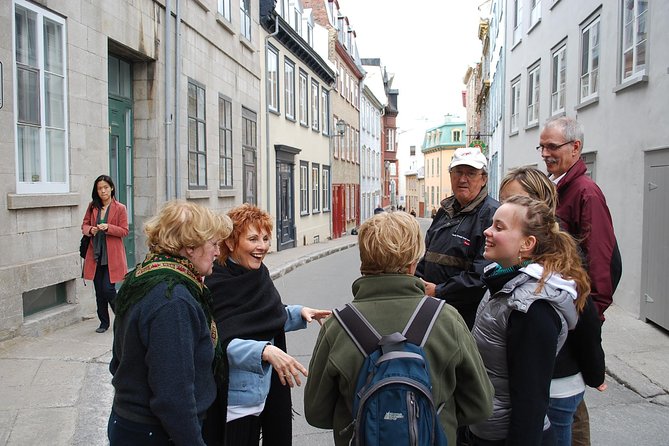
- Max 15 people, more time with the guide: You’re not shouting over a crowd, and questions fit naturally.
- Upper Town to Lower Town downhill flow: Less backtracking, and it’s a natural way to orient yourself fast.
- UNESCO site focus: The guide explains why Québec City’s walls and layout matter.
- Indoor warmth options when it’s cold: Some stops can include indoor spaces when weather is harsh.
- A mix of big sights and small streets: You’ll hit major landmarks and still end in a charming neighborhood feel.
- Pro, licensed guides: Guides train and pass exams, and they keep updating what they share on the ground.
Old Québec in Two Hours: How This Walk Works for Your Time
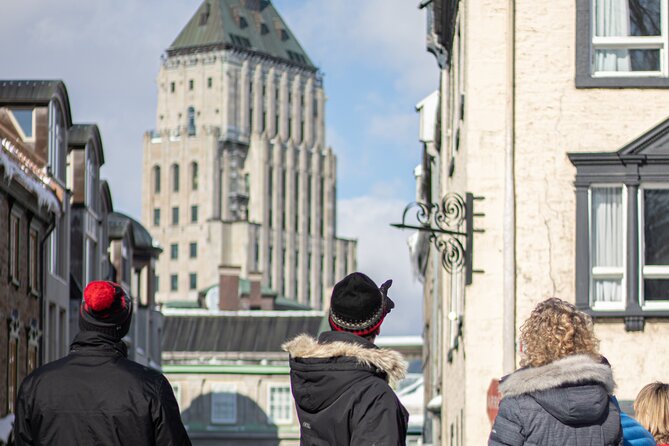
This is a smart “start here” tour if you’ve got limited time in Québec City. The format is simple: you begin in the Upper Town area and finish down near the funicular, so your walking route naturally matches the city’s slope.
The best part is that the tour doesn’t treat the city like a museum. It explains how the fortifications, religious sites, and public squares fit into day-to-day life—from the earliest settlement through British and French-era changes, up to modern Québec.
At about 2 hours, it’s long enough to get real orientation, but short enough that you won’t feel stuck. You also get a licensed guide and local taxes included in the price, which keeps the budget easy to manage.
You can also read our reviews of more walking tours in Quebec City

Where You Meet: Quebec Tourist Info at 12 Rue Sainte-Anne
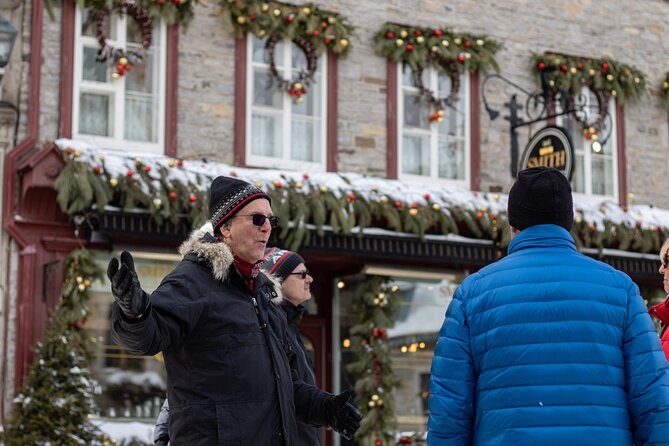
You’ll start at Tours Voir Québec’s sales desk inside the Quebec Tourist Information Centre at 12, rue Ste-Anne. The location is across the park from the Château Frontenac area, so it’s hard to miss the general neighborhood even if you’re arriving on foot.
This start point is convenient because it puts you right in the action near the most iconic views of the city. If you’re using transit, it’s also close to public transportation, which matters in Québec City where getting from place to place can eat time.
Practical tip: arrive a few minutes early. In a short, 2-hour format, being late can cut into the most interesting early stops.
Upper Town Start: Samuel de Champlain and the First Big Views
The tour gets moving near the Monument Samuel De Champlain, a quick orientation moment to anchor the story of Québec City’s origin. From there, you head toward the view-led section of the walk.
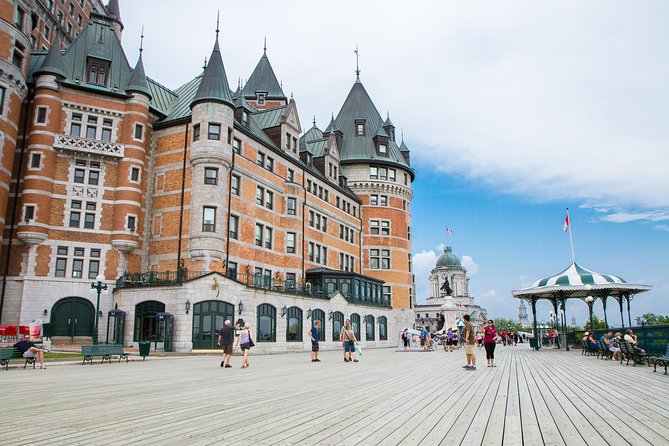
Next comes Terrasse Dufferin, the broadwalk with Château Frontenac looming above you. The guide points out what you can see from this vantage point and uses it to explain why the city is built the way it is—where sightlines, elevation, and the river-side geography shaped life and defense.
Even if you’ve seen photos of Château Frontenac a hundred times, this stop is still useful. You get a sense of the city’s “layers” and how the Upper Town connects to what’s below.
Ursulines Stop: Monastery Grounds and a Chapel Moment (If Open)
Passing Pole Culturel du Monastere des Ursulines is a great break from pure street viewing. The Ursuline Sisters have been in Québec City since 1639, and the guide’s commentary helps you understand why that timeline matters in a place where religious institutions were major community engines.
If the chapel is open, you may get a look inside. That’s worth it because it turns the tour from exterior sightseeing into something closer to living history—quiet, small-scale, and very “this is how people actually gathered.”
The only caution here is simple: hours can change. If it’s closed, you’ll still learn the context from outside, but you may miss the interior moment.
Holy Trinity Courtyard: The First Anglican Cathedral Outside the British Isles
A walking tour of Old Québec should include religious landmarks, and Cathedral of the Holy Trinity fits that role. What makes it especially interesting is the angle: this is the courtyard connected to the first Anglican cathedral built outside the British Isles.
That detail helps you understand Québec City’s complicated cultural evolution. The architecture and the setting aren’t just pretty; they reflect shifts in power, immigration, and how communities re-formed over time.
If you’re the type who likes “why that matters,” this stop delivers. It’s brief, but it’s a useful lens for the rest of your walk.
You can also read our reviews of more city tours in Quebec City




City Square Landmarks at Hôtel de Ville and the Seminary Courtyard
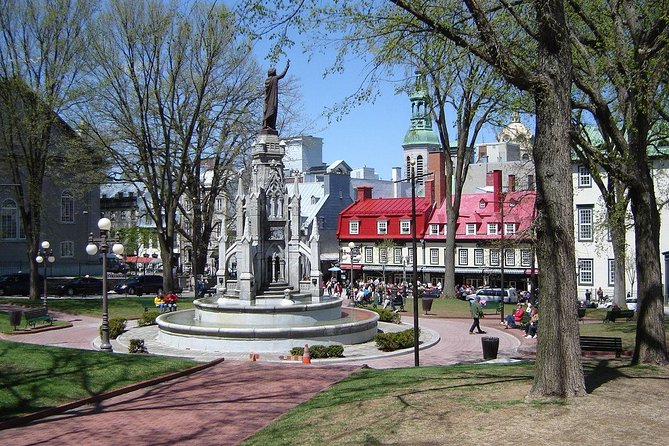
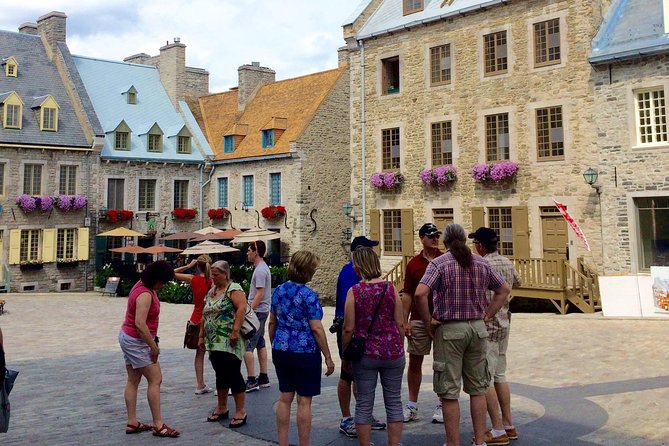
The tour moves through Hotel De Ville De Quebec, where you’ll be shown major landmarks around an important city square. This part is good for regrouping in your mind: public space in Québec City isn’t random. Squares and civic buildings tell you where authority and community life meet.
Then you enter the Seminaire du Quebec courtyard, which gives you that “walk back in time” feel tied to the 18th century. Even if you don’t know the dates before you arrive, the guide’s explanation helps you connect the setting to how a long-running institution shaped education, culture, and influence.
This is also a helpful section for photos, but don’t rush. Courtyards can look similar from the sidewalk, so let the guide point out what you should notice.
Place Royale and Petit-Champlain: French America’s Core and a Perfect Finish
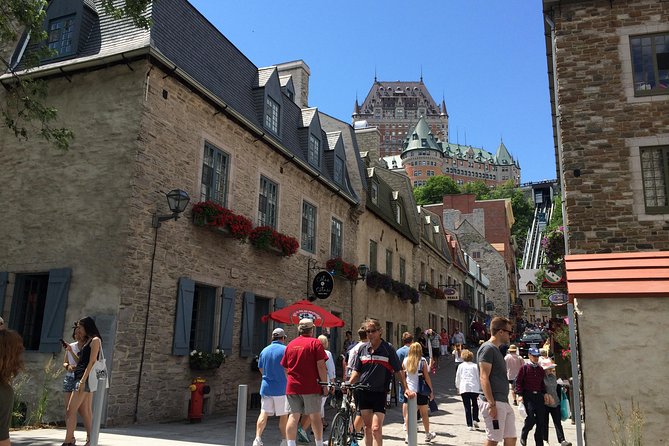
If you’re trying to understand why Old Québec earned its UNESCO status, Place Royale is one of your must-feels. This area is often referred to as the birthplace of French America, and the tour treats it like what it is: a historical center where the city’s founding story became the city’s identity.
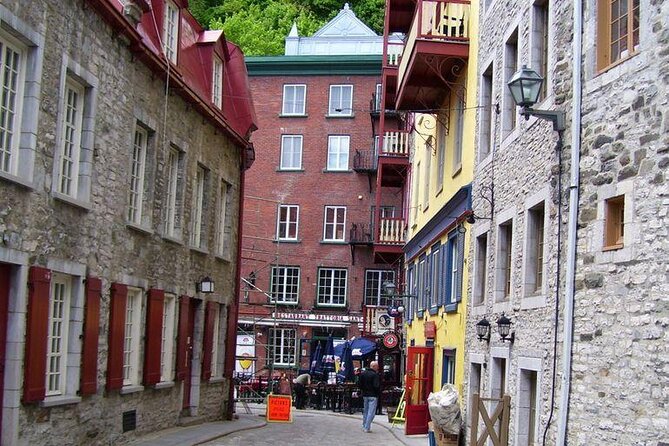
From there, the walk transitions into Quartier Petit Champlain, a neighborhood stretch that many travel magazines rate highly among North America’s nicest streets. The key here isn’t just the street name. It’s the atmosphere: tight lanes, classic stone buildings, and a sense of “you’re still in the old part” even when you’re modern and moving quickly.
The tour ends near the Funiculaire du Vieux-Québec on Rue du Petit Champlain. That’s a practical advantage. If you want to keep exploring Lower Town, you can do it. If you need to get back up efficiently, the funicular is right there.
What the Tour Covers Beyond the Stops (Fortifications, Citadelle, Churches)
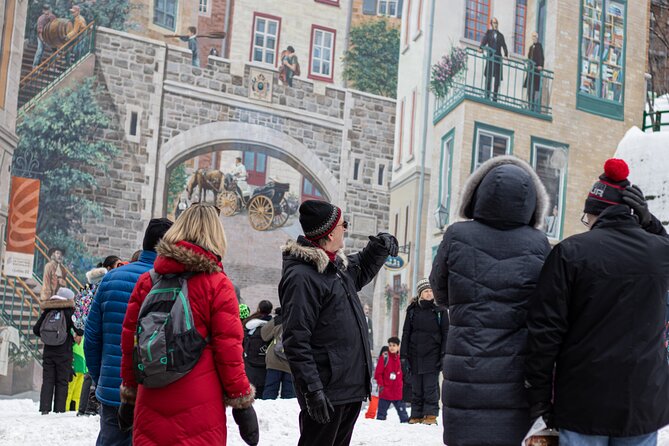
Even when you’re not entering every landmark, the guide connects the dots across key highlights mentioned for this experience. You’ll hear about the Fortifications of Québec and why they were so important as a defense system.
A standout fact you’ll likely get framed clearly: Québec City is the only walled city north of Mexico. The guide also explains how Québec’s walls represent North America’s only remaining fortified city—a huge statement, but one that helps you look at stonework with meaning instead of just aesthetics.
You’ll also get context around major Upper Town institutions and iconic sights like the Citadelle of Québec and the church sites that mark where Québec began. If you care about how history shows up in everyday buildings, this is where the tour earns its keep.
Price and Value: Is $30.29 Actually Worth It?
At $30.29 per person for about 2 hours, this sits in the “small but meaningful cost” category. You’re paying for three things: a professional licensed guide, a route that’s designed for quick orientation, and a tight schedule that covers a lot of ground without turning into a sprint.
The real value is that you’re not stuck figuring everything out alone. Québec City’s history is layered—French, British, military, religious, civic—and the guide helps you connect those layers while you walk. That kind of guidance is hard to replicate on your own in the same time window.
Also, the group limit of 15 changes the experience. If you’ve done big-city walking tours before, you know how much “hearing the guide” matters. Here, the format supports better attention.
Who Should Book This Tour (And Who Might Skip It)
This tour is a great fit if you:
- are visiting Québec City for the first time and want fast orientation
- like history that connects to buildings you can see
- want a walk that’s structured but not exhausting
It’s also a good match for people who enjoy light humor and questions. Many guides on this route are known for mixing stories with practical tips, and names like Mark, Robert, Louise, Stefan, Christian, Francis, and Philippe show up in past experiences, which hints at a style that tends to be both engaging and clear.
You might consider skipping (or choosing a different format) if you:
- strongly prefer a vehicle tour in cold weather
- hate walking on uneven stone surfaces
- don’t want to be outdoors for the full stretch
Winter Reality: Dress Warm, Expect the Cold to Matter
This tour runs in all weather conditions, so the season changes your comfort level more than the schedule changes. On very cold winter days, you’ll still be outside enough that your clothing choices matter.
Bring warm layers and proper footwear. Reviews tied to winter walks repeatedly point out that dressing for cold improves everything—especially insulated boots. If you’re worried about lasting the full 2 hours, look for hand and toe warmers, which are sold at the check-in desk and last several hours.
One more practical point: guides often adjust by adding indoor opportunities when conditions are brutal. That’s helpful, but you still need to be ready for an outdoor walk at least part of the time.
Stay With the Group: The One Risk Worth Noting
The biggest downside that shows up in real-world experiences is losing your place in the group. If you drift for a photo, stop to read every sign, or get distracted by a storefront, you can end up separated and miss stops.
So do this: stay within speaking distance when the guide is talking, and if you need a quick detour, let the guide know. In a small tour, the timing is tight, and the guide can’t magically rewind the walk.
Should You Book This Quebec City Walking Tour?
Yes—if you want a high-value overview of Old Québec that connects major landmarks, city walls, and historic neighborhoods into one clear story. The price is reasonable for a guided, small-group format, and the Upper Town-to-Lower Town route gives you an efficient way to orient yourself.
Book it early in your trip if possible, because the places you learn about will guide where you eat and what you choose to revisit. If you’re going in winter, plan to dress like you mean it and consider warmers for comfort.
If you hate cold walks or need a fully seated experience, you may prefer a different option. But for most people who want the “why” behind Québec City’s famous look, this is a solid choice.
FAQ
How long is the Quebec City walking tour?
The tour lasts about 2 hours.
What’s the group size like?
It’s a small group with a maximum of 15 travelers.
Where does the tour start and end?
It starts at 12 Rue Sainte-Anne at Tours Voir Québec inside the Quebec Tourist Information Centre. It ends near Funiculaire du Vieux-Québec on Rue du Petit Champlain.
What language is the tour offered in?
The tour is offered in English.
Does it run in bad weather?
Yes. The tour operates in all weather conditions, so you should dress appropriately.
Is there a cancellation option if plans change?
Free cancellation is available up to 24 hours in advance for a full refund. If you cancel less than 24 hours before the start time, the amount paid is not refunded.