REVIEW · AVEIRO
Aveiro: Stories, Canals, and Tiles Guided Walking Tour
Book on GetYourGuide →Operated by Tony Walker · Bookable on GetYourGuide
Aveiro tells stories in tiles and water. On this 2-hour walk with Tony Walker, I love how he ties azulejos to the city’s lagoon life, and I love the moment you start recognizing boats like the moliceiros instead of just seeing them as scenery. One thing to plan for: it’s a steady outdoor stroll, so wear shoes that can handle a bit of walking and uneven ground.
You start in the heart of the old center at Praça da República, then move through churches, convents, canal edges, and the Beira Mar neighborhood where Art Nouveau and Art Deco buildings line up with ironwork from the turn of the 19th and 20th centuries. It’s an easy-to-follow route with plenty of time for questions, but it’s not a great fit for kids under 10 or anyone with mobility limits since there’s no real “sit-down” stretch.
Key points to know before you go
- Tony Walker’s storytelling makes Aveiro feel like a real place, not a list of sights
- Azulejos everywhere: you learn how to read tiles across eras, from early modern to today
- Canal craft and lagoon work: you’ll recognize traditional boats tied to the Ria de Aveiro
- Churches as architecture lessons: the Carmelite Convent Church is small, but seriously impressive
- Art Nouveau and Art Deco spotting in Beira Mar, plus ironwork from the industrial turn
- Saltpans and sweets: Aveiro’s economy links directly to what you eat, including ovos moles
In This Review
- Where Aveiro’s Stories Start at Praça da República
- Rua de Coimbra and Calçada à Portuguesa Under Your Feet
- Inside the Carmelite Convent Church: A Baroque Jewel in Small Form
- Azulejos Stops: Santa Zita and Sapataria Leão as a Walking Tile Lesson
- Princess Santa Joana, the Dominican Convent, and How Patron Saints Shape a City
- Canal da Fonte Nova and the Lagoon’s Work: Why Moliceiros Matter
- Beira Mar Tile Trails and the Art Nouveau and Art Deco Detectives Game
- Saltpans and the Power Cycle: 11th to 19th Centuries in One Walk
- Eel Stew and Ovos Moles: How the Lagoon Shows Up on Your Plate
- Ending at São Gonçalinho and the January Festival Sweet Toss
- Price and Pace: Getting Value from a 2-Hour Aveiro Tour
- Who This Tour Suits Best (and Who Might Prefer Something Else)
- Should you book this Aveiro Stories, Canals, and Tiles Tour?
- FAQ
- Where do I meet the guide?
- How long is the tour?
- Which languages are available?
- Is the tour indoors or outdoors?
- What’s included in the ticket price?
- Are food and drinks included?
- What should I bring?
- Is there a place to park nearby?
- Who should not book this tour?
Where Aveiro’s Stories Start at Praça da República
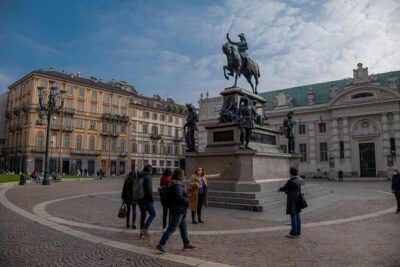
Your tour begins at Praça da República, near the statue in the center of the square. You’ll spot your guide wearing a yellow/blue card, and you’ll feel the tour hit its stride right away: you’re not just walking, you’re learning the “why” behind the streets.
This is a smart starting point because the square gives you a clean sense of direction and history in one glance. You start with the Town Hall and the Misericórdia church, which sets the tone for the rest of the walk: Aveiro’s buildings aren’t isolated. They connect to faith, commerce, and the lagoon’s pull on daily life.
I especially like that this opening doesn’t drown you in dates. It’s more practical than that—Tony Walker points out what to notice as you go, so you start training your eyes early.
Rua de Coimbra and Calçada à Portuguesa Under Your Feet
From the square you head along Rua de Coimbra. This is where the tour quietly pays off if you’re the kind of traveler who enjoys details—because Aveiro’s visual language starts showing up underfoot.
You’ll talk about the black-and-white calçada à portuguesa, the classic Portuguese pavement style. Even if you’ve seen calçada before, it tends to become more than decoration once a guide explains what you’re looking at. Here, it’s a reminder that streets in Portugal often carry identity the same way buildings do.
If you like taking photos, this is a good time to slow down. The sidewalk patterns can frame doorways, church entrances, and tile panels in ways you’ll miss at walking speed.
You can also read our reviews of more walking tours in Aveiro

Inside the Carmelite Convent Church: A Baroque Jewel in Small Form
Next comes the Marques de Pombal square, where you enter the Carmelite Convent Church. The big idea here is scale: it’s described as small, but impressive—exactly the kind of church you can walk past on your own without realizing it has a baroque punch.
You’ll also be learning a simple rhythm of the tour: move through the street, stop at a landmark, then zoom out to connect it to Aveiro’s wider story. This church stop fits that pattern perfectly. It’s not just pretty. It’s a clue to how religious power and city identity shaped what got built.
Good to know: the tour includes entrance to the Carmelite Convent Church and the Church of Mercy. Everything else is either free entry or you’re viewing from the street.
Azulejos Stops: Santa Zita and Sapataria Leão as a Walking Tile Lesson
After the convent church, the route sharpens into one of Aveiro’s biggest charms: tiles. You’ll pass the tile panels of Casa de Santa Zita and Sapataria Leão, which is a real education in how azulejos operate as public art.
Here’s what I think makes these tile stops valuable for you: you don’t just see decorated walls. You learn to “read” tiles like a timeline—how themes, styles, and craftsmanship change over time.
Aveiro is known for tile work spanning early modern periods to today, and this part of the walk helps you spot that transition. You start noticing what looks older, what looks more modern, and what tells you something about the people who commissioned the art.
If you’re traveling with someone who doesn’t usually care about tiles, this segment is still likely to convert them. Tiles are visual, and these are in places you’ll walk past anyway—so the tour doesn’t ask you to go out of your way.
Princess Santa Joana, the Dominican Convent, and How Patron Saints Shape a City
Then you move toward the Dominican Convent of Jesus. This stop centers on Aveiro’s patron saint: Princess Santa Joana.
Even if you’ve never heard her story, you’ll understand why a patron saint matters in a city like this. Her connection to the convent helps explain why religious sites aren’t only places for worship. They’re also anchors for identity, local memory, and what a city chooses to celebrate.
You’ll pass the cathedral afterward as you head toward the canal area. This “pass by” style can sound minor on paper, but it helps the tour flow. You’re not dragged into a long museum-like detour. Instead, you get quick, useful context, and the route stays moving.
Canal da Fonte Nova and the Lagoon’s Work: Why Moliceiros Matter
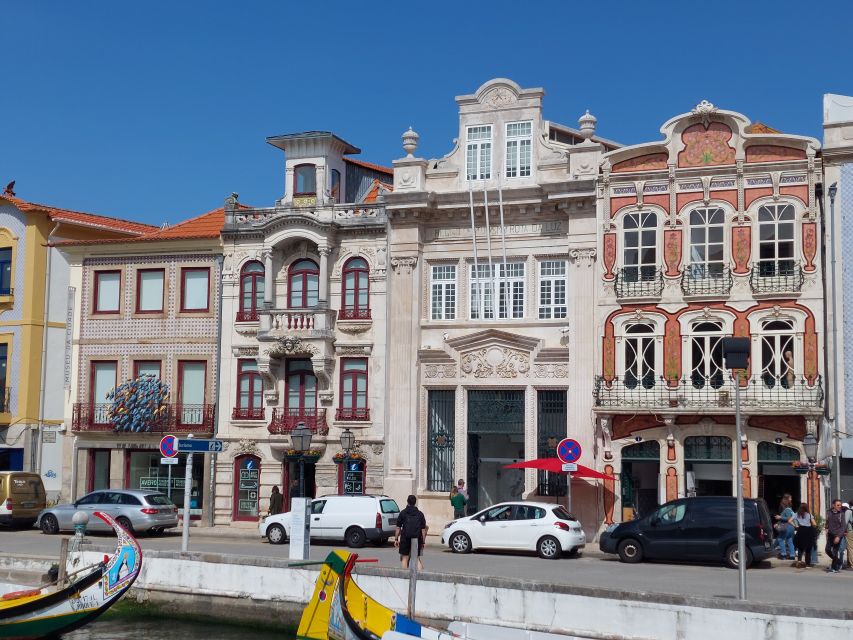
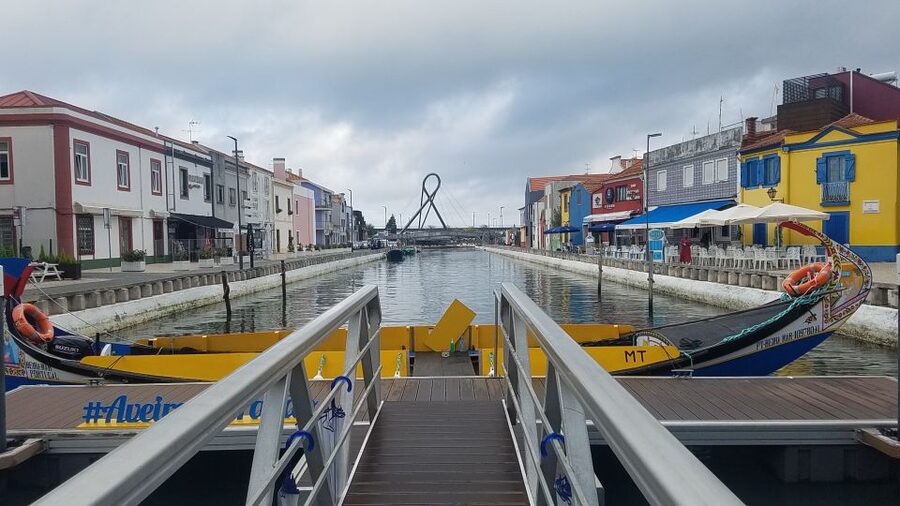
The tour turns toward the water at the Canal da Fonte Nova. This is where Aveiro stops feeling like an architecture walk and starts feeling like a lagoon story.
Near the canals, you’ll see the building tied to one of the ceramics factories that once existed there. Even from a standing position, it sets up a big idea: Aveiro’s tile heritage and ceramic industry didn’t appear out of nowhere. It grew out of the city’s relationship with the lagoon and trade routes that made materials and work possible.
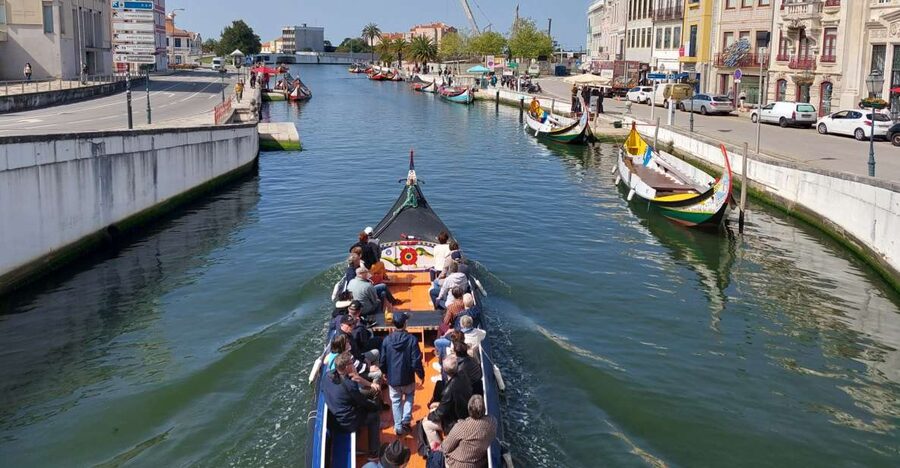
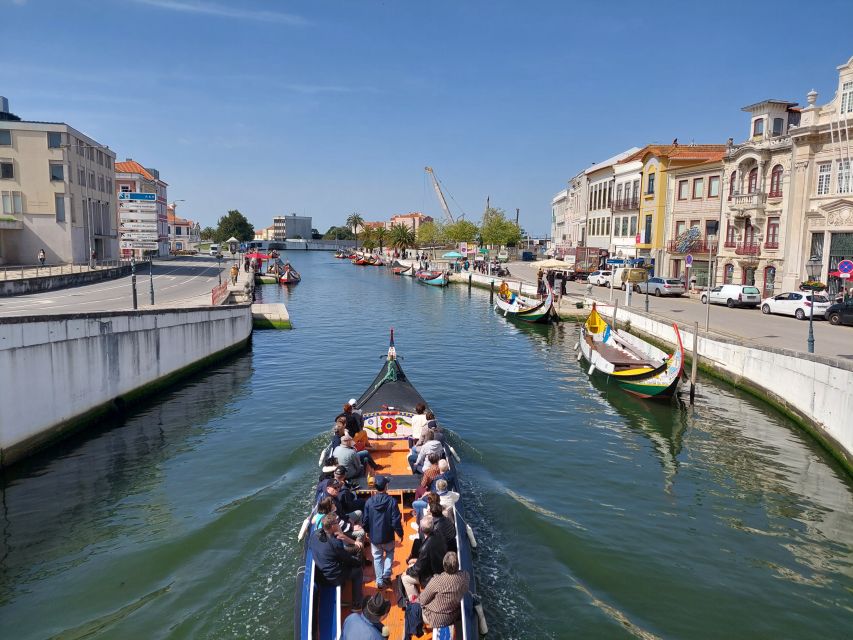
Then comes the practical, fun part: along the canals, Tony Walker explains the genesis and utility of the waterways, and you learn to recognize traditional boats of the Ria de Aveiro. You’ll hear about boats like the moliceiros and mercanteis, and suddenly they stop being random shapes on the water.
I like that this section also nods to the senses. You get the sense of the lagoon’s salt air and the kind of working environment that shaped the city for centuries. That’s the difference between seeing canals and understanding why people built and used them.
Beira Mar Tile Trails and the Art Nouveau and Art Deco Detectives Game
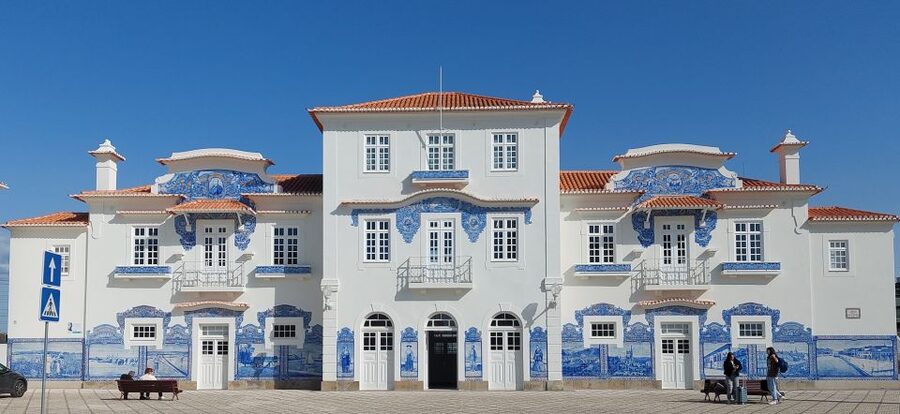
As you continue into the Beira Mar neighborhood, the tiles keep coming, but so do the style shifts that make Aveiro look like it wore more than one era at once.
This is the part where you’ll recognize marks of Art Nouveau and Art Deco. You’ll also spot iron architecture from the turn of the 19th to the 20th century. That matters because it explains how the city evolved as connections to the wider world changed, and as materials and tastes shifted with time.
You’ll see the two façades of the Museum of Art Nouveau from the outside. Even without going inside, this can be a big moment because it teaches you what to look for in the architecture—curves, detailing, and the way these façades behave visually along the street.
If you like walking tours that train your eye, this is one of the strongest segments. It’s not just “look at that building.” It’s “look at this feature, and now you understand why the feature is there.”
Saltpans and the Power Cycle: 11th to 19th Centuries in One Walk
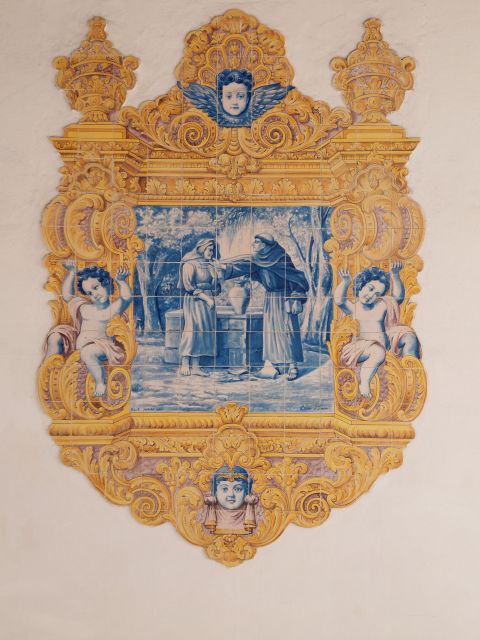
On the way toward the saltpans, the tour slows just enough to make the story land. You’ll talk about Aveiro’s power from the 11th to the 15th century, its crossing of the desert in the 17th and 18th centuries, and its revival in the 19th century.
Even if some of these terms feel abstract at first, they connect back to what you’ve already seen: canals, lagoon workboats, ceramics, and salt production. In other words, you’re not hearing random history. You’re building a mental map of how Aveiro’s economy rose, faced pressure, and then surged again.
For you, that makes the saltpan area more than scenery. It becomes a visual reminder that places with strong industries often cycle through boom and repair.
Practical note: this is also a good stretch to check your weather gear. The tour runs rain or shine, and lagoon areas can feel windy. Sunscreen helps too, even when the day looks overcast.
Eel Stew and Ovos Moles: How the Lagoon Shows Up on Your Plate
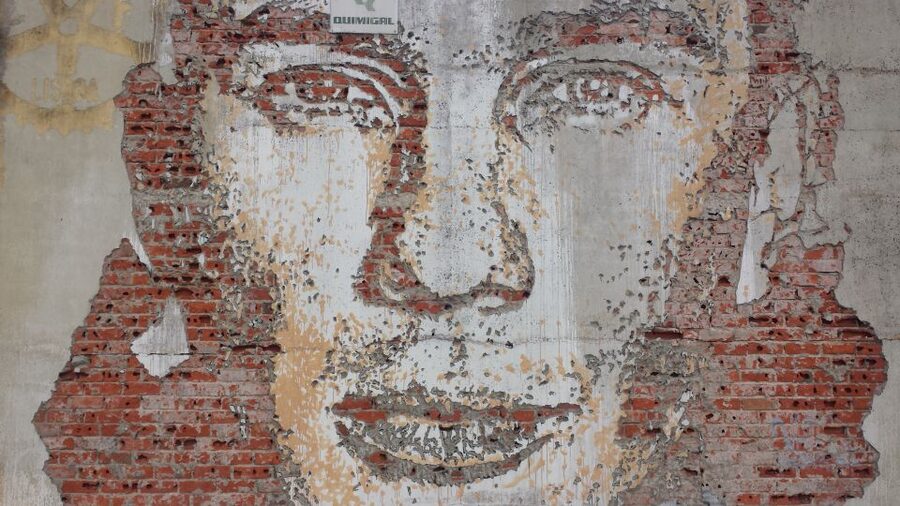
As you head back, the tour ties the lagoon economy to food, which is exactly where you want it. You’ll get references to local gastronomy, including eel stew and traditional sweets.
The star is ovos moles—Aveiro’s famous egg-based sweet. Even if you don’t stop for a snack during the walk (food and drinks aren’t included), you’ll know what to look for when you’re back on your own later.
This is one of the best kinds of restaurant prep: you learn what the city actually values, so when you taste it, you understand why it’s there. It turns eating into context instead of just calories.
Ending at São Gonçalinho and the January Festival Sweet Toss
The tour finishes at the Church of São Gonçalinho. The closing story connects to the traditional January festival—one where a hard, heavy sweet is literally thrown over the heads of the faithful.
That ending does two things. First, it makes the tour feel local and alive instead of purely architectural. Second, it brings the sweets theme full circle, linking Aveiro’s food traditions to its public rituals.
It’s also a satisfying way to end a route focused on materials—tiles, stone, ironwork, and water—because you finish with something physical and shared.
Price and Pace: Getting Value from a 2-Hour Aveiro Tour
At $23 per person for about two hours, this tour’s value comes from what you gain in that short time: context. Aveiro can look lovely, but the details need interpretation. Tony Walker’s main job is to help you see what you’re looking at—azulejos with meaning, canals with purpose, and boats with identity.
You also get meaningful inclusions: entrance to the Church of Mercy and the Carmelite Convent Church. Add in the fact that most of the rest is walk-through or free entry, and you’re mostly paying for guided time plus expert explanations.
The pace generally feels easy and doable—long enough to cover a lot of ground, not so long that it turns into an endurance test. Still, this tour is not suitable for people with low fitness, and it’s not set up for wheelchair users or people with mobility impairments.
One more practical point: it’s rain or shine. If drizzle is common where you’ll be staying, pack a small rain layer. You’ll stay outside for plenty of it.
Who This Tour Suits Best (and Who Might Prefer Something Else)
This is a great fit if you:
- Want to understand Aveiro beyond photos, especially through tiles, canals, and lagoon work
- Enjoy architecture and design spotting—Art Nouveau, Art Deco, and ironwork
- Like guides who answer questions and move at a pace that lets you stop and look
It’s probably not your choice if you:
- Need accessibility accommodations for mobility or wheelchair use
- Want a family-friendly tour for kids under 10
- Don’t enjoy outdoor walking routes, since there’s no escape from the weather
Should you book this Aveiro Stories, Canals, and Tiles Tour?
If you’re visiting Aveiro for the first time and you want the city to make sense fast, I’d book it. The tour is short, includes key church entrances, and focuses on the three things that make Aveiro feel different: azulejos, the Ria de Aveiro lagoon culture, and the architectural styles you’ll start noticing the moment the guide points them out.
One last tip: bring comfortable shoes and keep your camera handy, but also keep your eyes up. Aveiro’s best clues are rarely in only one direction—they’re on the walls, on the water, and in the small street details you’d otherwise step past.
FAQ
Where do I meet the guide?
Meet near the statue in the center of Praça da República. The guide will be wearing a yellow/blue card.
How long is the tour?
It lasts 2 hours.
Which languages are available?
The live guide is available in Spanish, Portuguese, French, and English.
Is the tour indoors or outdoors?
It’s a guided walking tour with a lot of outdoor time. It takes place rain or shine.
What’s included in the ticket price?
Entrance to the Church of Mercy and the Carmelite Convent Church is included. Other sites are walk-through or free entry.
Are food and drinks included?
No. Food and drinks are not included.
What should I bring?
Bring a passport or ID card, comfortable shoes, sunscreen, and weather-appropriate clothing.
Is there a place to park nearby?
There is a paid underground car park at Praca Marques de Pombal, about 200 meters from the meeting point.
Who should not book this tour?
It’s not suitable for children under 10, people with mobility impairments, wheelchair users, or people with low level of fitness.