REVIEW · BELFAST
Best of Belfast Walking Tour
Book on Viator →Operated by DC Tours · Bookable on Viator
Belfast has layers, and this walk shows them fast. This tour links key sights in the city centre with local stories you can actually follow, plus headsets that make outdoor listening easy. I especially like that the route is built for orientation—big landmarks, smaller details, and the “why it matters” behind them—without turning it into a lecture.
Two things I really like: the pacing stays relaxed even though you cover a lot of ground, and the guide adds practical context and recommendations for where to go next. I’ve seen multiple guides highlighted by name—Mark, Paul, Jim, Colin, Chris, Steve, and others—often praised for friendly, clear storytelling (and yes, a few even bring humor).
One thing to keep in mind: it’s still a solid 3-hour walk in the city. One review specifically flagged that it isn’t ideal for mobility issues, and it runs in all weather conditions, so you’ll want to dress for rain and wind.
In This Review
- Key highlights to plan for
- Value check: what $36 gets you (and why it adds up)
- Belfast City Hall: the meeting point that sets the story
- St Mary’s Roman Catholic Church, Bank Square, and the grotto story
- Cathedral Quarter: St Anne’s and the United Irishmen threads
- Hill Street cobbles, street art, and punk in Belfast
- Customs House and Speaker’s Corner: rhetoric with consequences
- River Lagan to Big Fish: shipyard history and public art
- Albert Memorial Clock Tower: the leaning mystery and Belfast’s name
- The Belfast Entries: an outdoor art gallery in the oldest part
- Spirit of Belfast: quirky public art with centuries-old context
- Titanic Memorial Garden finale: a strong ending loop back to City Hall
- The guide experience: what makes this tour feel easy
- Who should book this walk (and who might want a different option)
- Should you book Best of Belfast Walking Tour?
- FAQ
- How long is the Belfast walking tour?
- Where does the tour start and what time does it begin?
- What’s the price per person?
- Are headsets provided?
- How big is the group?
- What happens if the weather is bad or you need to cancel?
Key highlights to plan for
- Licensed guide + clear outdoor audio with headsets so you’re not constantly straining to hear in busy streets
- City orientation in about 3 hours with a smart line from City Hall through major quarters and back again
- History stops that don’t feel like textbooks—from Belfast Castle’s former area to The Troubles-era stories
- Street art and public sculpture time including the Belfast Entries outdoor gallery and several Lagan/centre-city pieces
- Built-in break moments (a coffee/restroom pause mid-tour comes up in feedback)
- Small group size with a maximum of 25 people, which helps keep the tour easy to follow
Value check: what $36 gets you (and why it adds up)
At roughly $36.05 per person for about three hours, this isn’t just a “see the sights” stroll. You’re buying a bundle: a local, licensed guide; a route that hits many of Belfast’s best-known central landmarks; and headsets to keep the experience comfortable outdoors. You also don’t have to budget extra for admissions along the way because the stops listed are free.
The best value part for me is the shape of the itinerary. You’re not wandering randomly. You’re getting a connective thread—City Hall, churches, Cathedral Quarter, the river walk, the Entries, then the Titanic Memorial Garden—so you leave with a mental map. That matters on a first visit, because Belfast can feel unfamiliar until you understand how the areas connect.
You can also read our reviews of more walking tours in Belfast


Belfast City Hall: the meeting point that sets the story
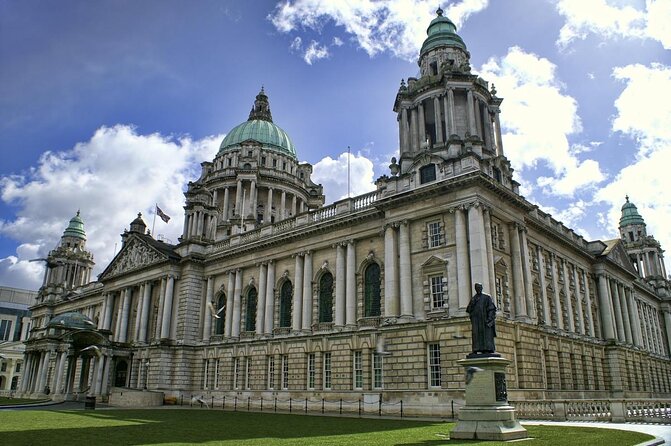
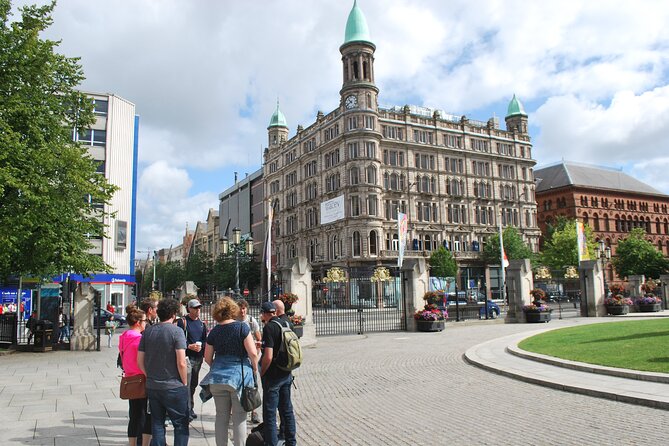
The tour starts at the front gates of Belfast City Hall (Donegall Square N, BT1 5GS) at 10:00 am, and it kicks off with a quick introduction right where the city likes to mark big moments.
This is a good “start here” location because City Hall anchors what comes next. Your guide uses it to frame Belfast’s identity and the way the city has evolved—then you move outward into neighborhoods and buildings where that evolution becomes visible. Even if you’re only in Belfast for a short time, starting at a central landmark helps you orient quickly rather than just follow directions.
St Mary’s Roman Catholic Church, Bank Square, and the grotto story
Next you head to Bank Square for St Mary’s Roman Catholic Church, where you’ll hear about the church and its unique grotto. This stop adds an important layer: Belfast isn’t only famous for broad political history; it also holds local, faith-centered landmarks that shape community identity.
The tour also mentions the original Belfast Castle once stood nearby. That detail is useful because it gives you a “before and after” lens—what’s here now, and what used to be in the same space. It’s one of those small historical pivots that makes the city feel less like a set of monuments and more like a place where time overlaps.
Cathedral Quarter: St Anne’s and the United Irishmen threads
As you walk into the Cathedral Quarter, the focus shifts to Belfast Cathedral (Cathedral Church of St. Anne) and the stories linked to the United Irishmen. This is where the tour’s “deeper history” promise shows up—your guide connects the area’s significance to people who shaped Belfast and helped drive political and social change.
Cathedral Quarter is also a practical zone for visitors. After the tour, you’ll likely want to keep walking, eat, or pop into a bar nearby, and this stop helps you understand why the neighborhood has that reputation. You’ll come away with better context for the place, not just the architecture.
Hill Street cobbles, street art, and punk in Belfast
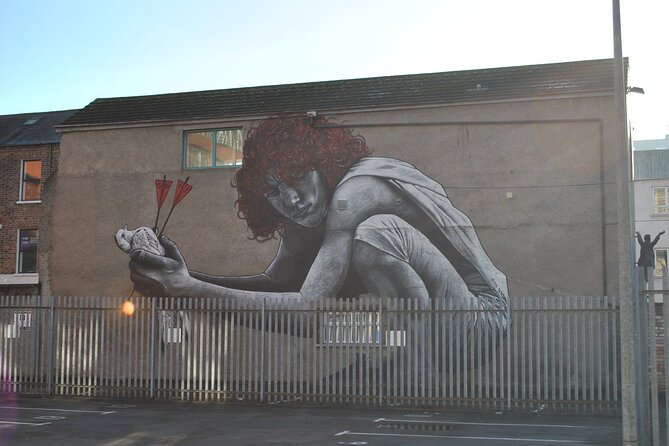
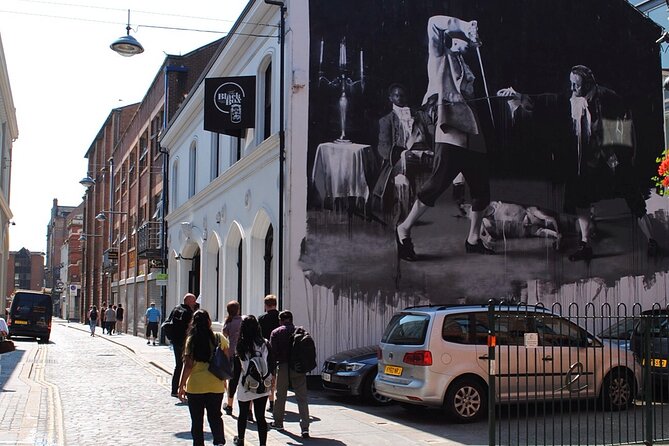
Then comes a fun shift: the walk along Hill Street, one of the last cobbled streets in Belfast, where your guide points out street art and ties it to the city’s cultural pulse. This is also where the tour connects punk in Belfast to the Troubles—how a music scene and a political moment can feed each other.
Why I like this stop format: it gives you a reason to look up. Instead of just passing murals and walls, you’re encouraged to notice details and learn the story behind them. And the guide adds recommendations—bars, restaurants, nightspots—so the tour becomes a launch pad for your evening plans.


Customs House and Speaker’s Corner: rhetoric with consequences
At Customs House, the tour turns to public speaking and the history of where words mattered. You’ll hear about Speaker’s Corner and stories of the best and worst orators who stood there, plus the history of an old pub still standing nearby.
This stop is a great reminder that Belfast history isn’t only about events; it’s also about how people persuaded others. Even if politics isn’t your main interest, this angle can make the city’s past feel more human, because it centers on real voices rather than vague “big movements.”
River Lagan to Big Fish: shipyard history and public art
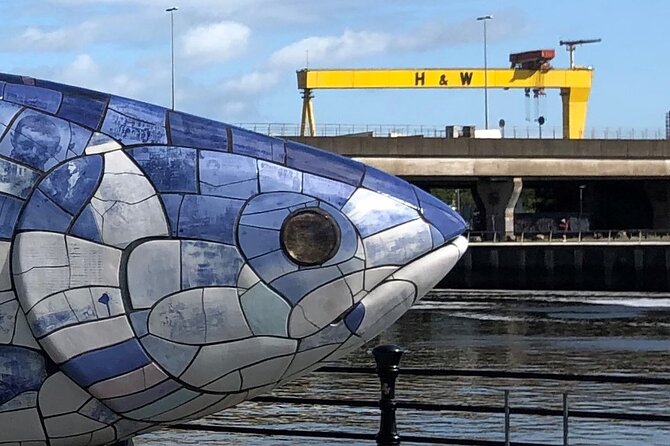
One of the most satisfying segments is the river walk from the city centre toward Big Fish, with views across to the yellow cranes at Harland & Wolff shipyard. The tour ties this to Titanic-era history, including the fact the ship was built here over 100 years ago.
Then you get the public-art side: the legend behind the sculpture the Salmon of Knowledge and a visit to the Beacon of Hope, which the tour frames as a symbol of resilience and regeneration in recent years. This combination works well because Belfast isn’t only about hard chapters. It’s also about reinvention and pride in craftsmanship—shipyard skills, monuments, and modern identity all living side by side.
Albert Memorial Clock Tower: the leaning mystery and Belfast’s name
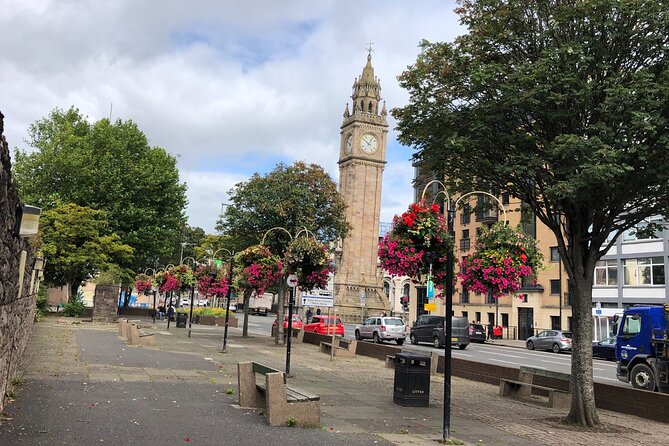
At Albert Memorial Clock Tower, you’ll get Belfast’s version of a “leaning tower” moment. The tour explains why the clock is angled, and also covers how Belfast got its name.
One of the practical perks here: your guide brings local flavor too, including mention of a famous footballer’s favorite pub. That kind of detail matters because it helps you turn history into a real-world plan—where to grab a drink after you’ve finished the main route.
The Belfast Entries: an outdoor art gallery in the oldest part
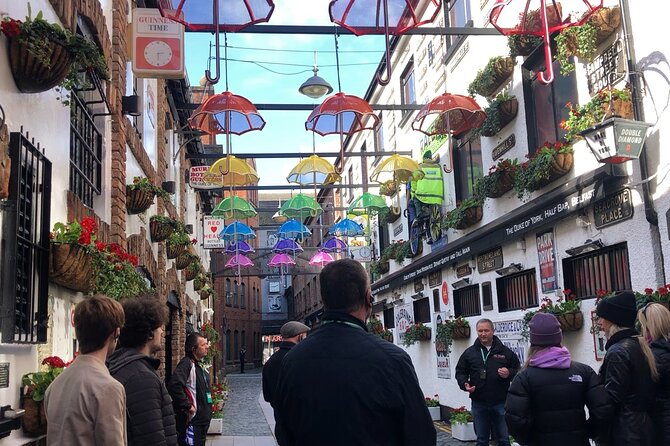
The Belfast Entries are at the heart of the oldest parts of the city, and today they’re turned into an outdoor art gallery. This stop is all about slow looking—dozens of pieces of art, each with its own story—and hearing about the importance of the area and the people who lived there over centuries.
If you like street-level history, this is a standout. It makes the past feel close because you’re walking through a human-scaled space rather than only looking at large buildings from a distance. The Entries also add variety: after more formal landmarks, you get something more intimate and creative.
Spirit of Belfast: quirky public art with centuries-old context
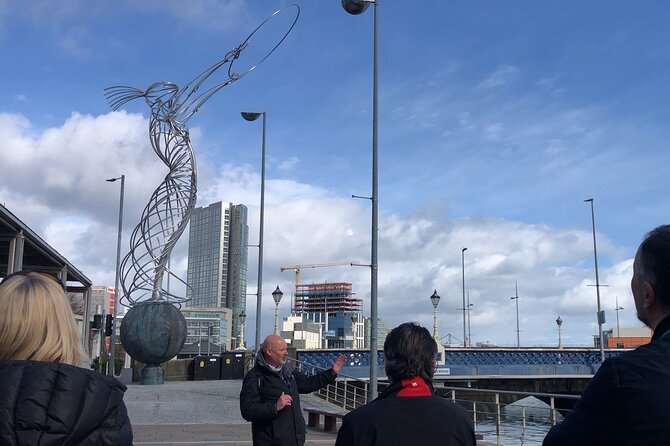
In the pedestrian precinct at the heart of the city, you’ll find the Spirit of Belfast and learn the meaning behind the public art, including its alternative name and stories connected to surrounding historic buildings.
This stop helps balance the tour. You’ve already hit serious political and industrial themes, so the tone shifts to something playful and strange—in the best way. It’s also the kind of detail you might otherwise miss, because public art can blend into a city walk unless someone points it out and gives you the backstory.
Titanic Memorial Garden finale: a strong ending loop back to City Hall
The tour ends at the Titanic Memorial Garden, with the story of the ship and some of the people who sailed on her. It also finishes with tales of notable citizens whose statues are in the grounds, tying those memorials back to the kind of contributions that shaped society.
Ending here works because it brings the shipyard narrative full circle. Earlier you’re looking across to Harland & Wolff cranes. Now you’re in a reflective place that connects industry to memory and identity. And because the itinerary loops back at City Hall, you’re not left stranded across town—you can branch out from a central spot for dinner.
The guide experience: what makes this tour feel easy
The biggest “how it feels in real life” strengths show up in feedback again and again. First, the headsets are a real quality-of-life feature outdoors. Second, the storytelling tone is described as relaxed and friendly, with guides praised for clear, easy-to-follow narration.
There’s also a repeat theme: a moderate walking pace and an accessible rhythm. Multiple guides are noted for working with the group well, including attention to those who need breaks. One review even calls out that a coffee/restroom opportunity is provided halfway through, which is a big deal on a 3-hour walk.
Still, be aware of one caution. One outlier review described the section on The Troubles as harsh and not well framed, plus an example of incorrect info. That doesn’t mean your tour will be like that—but it’s a good reminder to ask questions if something feels too broad or emotionally heavy for you. A good guide should welcome questions and help you understand cause and effect, not just recite horrors.
Who should book this walk (and who might want a different option)
This is a great pick if:
- It’s your first time in Belfast and you want a high-quality orientation
- You want history that connects streets, buildings, and public art
- You like walking tours but appreciate help hearing the guide (headsets really matter)
It may not be the best fit if:
- You have mobility limits. The walking is substantial for a city-centre loop, and one review specifically warned it might not suit mobility issues
- You’re expecting total political balance in every minute. Most guidance is praised, but the one critical review is a signal that the Troubles content may feel intense depending on your preferences and the guide’s style
Should you book Best of Belfast Walking Tour?
Yes, if you want a practical, guided way to understand Belfast’s centre—fast. The combination of headsets, a licensed guide, and a route that ties City Hall to the Titanic Memorial Garden makes it a strong use of time, especially at first-visit stage. You’ll also come away with concrete ideas for where to eat and drink thanks to guide recommendations.
If you’re sensitive to heavy political content and you need careful framing, do yourself a favor: show up on time, and don’t be shy about asking your guide how they connect events and motivations. The tour’s track record suggests most guides are attentive and willing to explain.
In short: this is a high-value “get your bearings fast” walk—history, street art, and river views included—without the usual walking-tour chaos.
FAQ
How long is the Belfast walking tour?
It’s listed as about 3 hours.
Where does the tour start and what time does it begin?
It starts at Belfast City Hall, front gates, Donegall Square N, Belfast BT1 5GS at 10:00 am. The tour ends back at the meeting point.
What’s the price per person?
The price is $36.05 per person.
Are headsets provided?
Yes. Headsets are included to help you hear the guide outdoors.
How big is the group?
The tour has a maximum of 25 travelers.
What happens if the weather is bad or you need to cancel?
The tour operates in all weather conditions, but it requires good weather. If it’s canceled due to poor weather, you’ll be offered a different date or a full refund. For cancellations, you can cancel up to 24 hours in advance for a full refund.