REVIEW · KYOTO
Kyoto Early Bird Walking Tour
Book on Viator →Operated by KAMNAVI Tours · Bookable on Viator
Waking up early in Kyoto is the whole trick. This Kyoto Early Bird Walking Tour strings together three headline sights—Fushimi Inari-taisha, Kinkaku-ji, and Arashiyama’s bamboo grove—before the big day-tripper wave. I love how the schedule is built around quieter mornings, and you get an actually useful flow across opposite ends of the city. One thing to watch: you’re on your feet for a fair chunk of time, and Kinkaku-ji has an extra admission fee.
What makes it work so well is the early start from Kyoto Station right in the morning, then finishing around noon so you can still enjoy an unhurried afternoon. I also like that the guides tend to handle the practical stuff—routing, timing, and photo-friendly stops—so you’re not wrestling with Kyoto’s transit puzzle. The main consideration is cost add-ons: you’ll budget for Kinkaku-ji admission (¥500) plus transit (¥1,220 per person), and you should plan for walking in real street conditions.
In This Review
- Key things I’d plan around
- Kyoto at 8 a.m.: quieter, cooler, and way more photogenic
- Meet at Kyoto Station and get your bearings fast
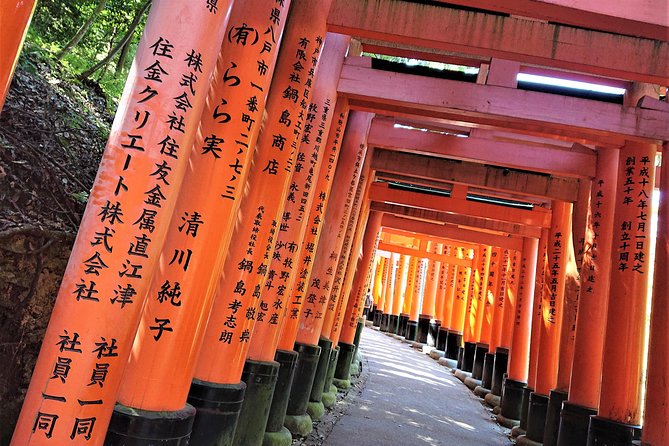
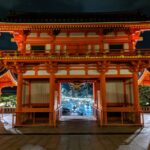
- Stop 1: Fushimi Inari-taisha’s torii tunnel before the crowd wave
- Stop 2: Kinkaku-ji (Golden Pavilion) as it opens
- Stop 3: Arashiyama bamboo forest before midday heat
- Price and logistics: what the tour price really covers
- Walking day reality: shoes, water, and restroom checks
- Your afternoon payoff: finishing before midday
- Who should book this early bird plan
- Guide quality is the real selling point
- Should you book the Kyoto Early Bird Walking Tour?
- FAQ
- Where is the meeting point for the Kyoto Early Bird Walking Tour?
- How long is the tour?
- What attractions are included in the tour?
- What costs are not included in the price?
- Is Kinkaku-ji admission included?
- Is this tour suitable for people with mobility or eyesight limitations?
- What happens if the weather is bad?
Key things I’d plan around
- Three top sights, in morning order: Fushimi Inari first, then Kinkaku-ji right as it opens, then Arashiyama before it gets hot and packed
- Finish by noon: you keep your afternoon free for Nishiki Market, Gion, a museum, or just wandering
- Guide-run navigation across Kyoto: guides help you move between areas without wasting time figuring trains and buses
- Morning light at Kinkaku-ji: the Golden Pavilion looks different when it’s calm and not yet swarmed
- Comfort beats style: comfortable shoes matter because the walking adds up
- Extra costs to budget: Kinkaku-ji admission and public transit are not included in the tour price
Kyoto at 8 a.m.: quieter, cooler, and way more photogenic
Kyoto has a famous problem: the places you came to see can get crowded fast. This tour tackles that head-on by starting early and sequencing the stops so you’re at the right attraction at the right moment. You’re not just visiting three sites—you’re visiting them at the hour that most people miss.
Even if you love crowds in theory, early mornings are different in practice. The shrines and temple grounds feel more contemplative, and you can actually take photos without playing tour-guide traffic cop. And yes, it’s a “get up early” plan—but your afternoon pays you back.
You can also read our reviews of more walking tours in Kyoto
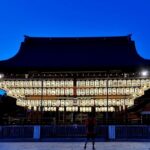
Meet at Kyoto Station and get your bearings fast
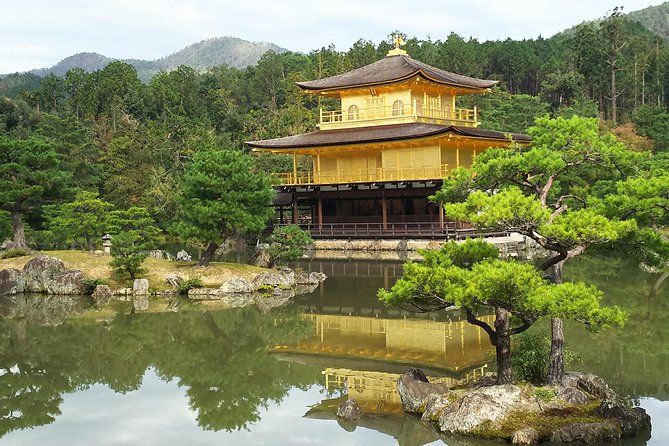
You meet at Kyoto Station, at the station building address listed as 901 Higashishiokōjichō (Shimogyo Ward). Ending is back at the meeting point, so you’re not stuck negotiating a late return.
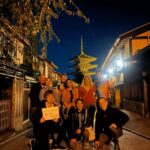
Why this matters: Kyoto’s highlights are spread out. The tour’s whole value is that you’re guided between areas without doing a stressful first-weekend of transit math. In reviews, guides like Akiko, Megumi, Kaz, Tomoko, Hiro, and Sumiko are repeatedly praised for keeping things moving on schedule and helping people get from station to station with minimal fuss.
Practical note: if you’re planning to use transit, bring what you need to be quick about it (an IC card is handy). One review specifically highlighted having Suica on a smartphone for trains, buses, and vending machines. You’ll thank yourself when you’re buying water on the fly.
Stop 1: Fushimi Inari-taisha’s torii tunnel before the crowd wave
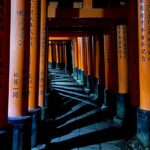
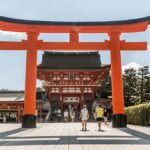
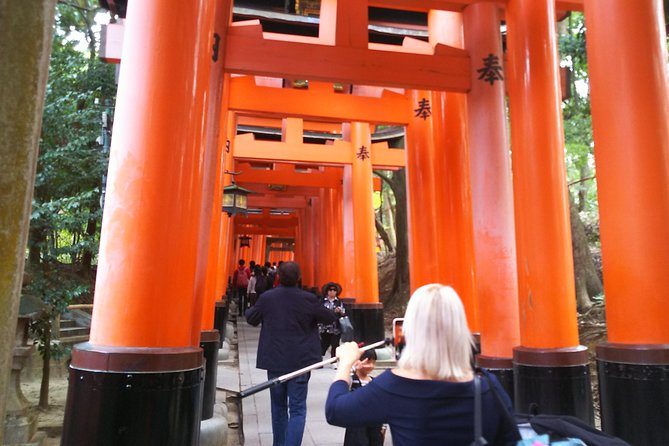
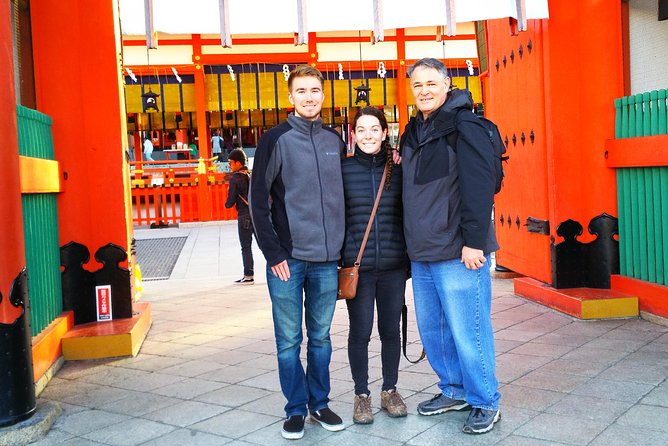
First up is Fushimi Inari-taisha Shrine, famous for its tunnel of thousands of vermilion torii gates. You’ll walk through while it’s still early—before the lines and the mass photo sessions.
Here’s what “early” changes at this stop:
- The gates feel like a path, not a bottleneck.
- You can pause without blocking everyone behind you.
- The shrine’s atmosphere is easier to enjoy at a slower pace.
The tour includes this stop without an admission fee. That’s a small detail, but it affects your morning budget and keeps your spending predictable. Expect a dense, iconic scene, and plan to move with your group through the main areas at a comfortable walking pace.
Stop 2: Kinkaku-ji (Golden Pavilion) as it opens
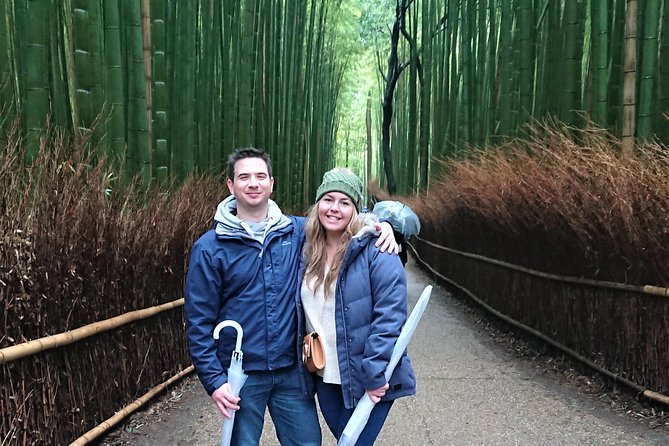
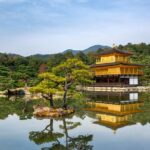
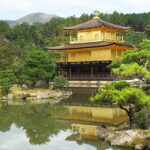
Next is Kinkaku-ji Temple, the Zen icon often called the Golden Pavilion. This stop is timed for when the temple opens, when the crowds are still light and you can actually see the building details instead of shooting through a sea of heads.
Also, Kinkaku-ji is one of those places where morning light can change the whole vibe. You’re there early enough for a quieter look at the gilded structure and the pond area around it. The tour experience here is less about rushing and more about letting the place land.
Budget heads-up: Kinkaku-ji admission is not included. The listed fee is ¥500 per person. This is normal in Kyoto—some attractions are priced separately—but it’s worth putting into your mental math so you’re not surprised mid-tour.
If you love photo stops, pay attention to what your guide points out. Multiple guides were praised for knowing good photo angles, and one review even described a guide acting as a personal photographer. You don’t have to become an Insta wizard—just be ready to follow a quick “look here” instruction.
Stop 3: Arashiyama bamboo forest before midday heat
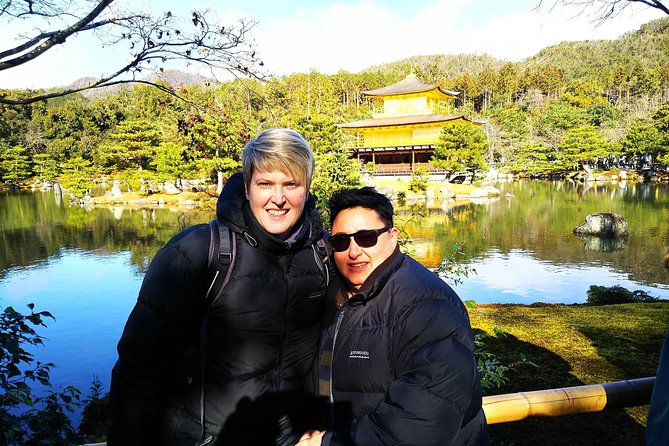
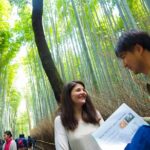
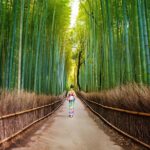
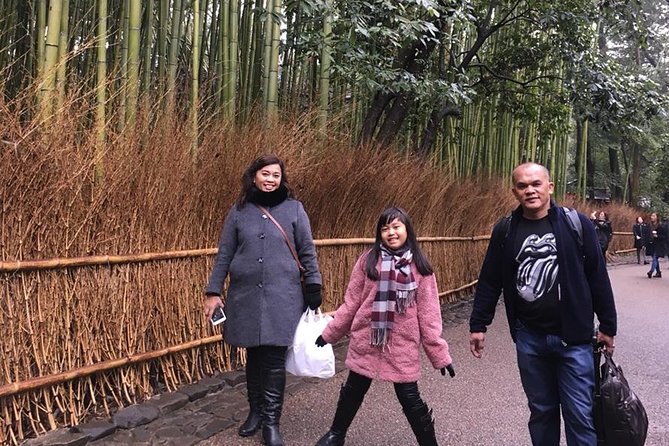
Your final major stop is Arashiyama, with time in the bamboo forest. This is where the early timing really shows. When you enter the grove in fresh morning air, the bamboo feels cooler, and the path is calmer.
There’s also a practical reason Arashiyama early is smart: by midday, everything tends to get warmer and busier, and you’ll feel it physically. The tour explicitly plans this stop so you can enjoy the bamboo’s morning mood before the temperature rises and the crowds pile in.
This stop is listed as free (no admission ticket required). You’ll get about an hour to stroll and take it in—listening to the breeze and trying to slow down for a minute. Bamboo forests are famous, but the experience is often ruined by people sprinting for the same photo spot. Going early gives you breathing room.

Price and logistics: what the tour price really covers
The tour price is $105.45 per person, and it’s built around the guide fee and the structured morning routing. What’s not included is important:
- Public transportation fare: ¥1,220 per person
- Kinkaku-ji admission: ¥500 per person
- Food and drink (you’ll need to plan this on your own)
So is it good value? For many visitors, yes—because you’re paying for more than “someone to walk with you.” You’re paying for:
- beating crowds at peak attractions,
- having someone manage the timing,
- and moving between Kyoto’s widely separated neighborhoods efficiently.
If you were self-guiding, you’d still need to figure out trains/buses and admission timing, and you’d lose the advantage of arriving before the biggest groups. When guides like Kaz and Kazuo are praised for helping people avoid transit confusion, that’s exactly the kind of value you’re buying here.
If you’re traveling solo with limited time, the early schedule is also a big win. The tour is about 5 hours 15 minutes and finishes by noon, which can be the difference between seeing Kyoto highlights and only seeing what’s closest to your hotel.
Walking day reality: shoes, water, and restroom checks
This is a walking tour, and “comfortable shoes” is not a throwaway line. You should expect quite a bit of walking across shrine paths and temple grounds, plus time spent moving between areas.
What I’d do before you go:
- Wear shoes you’ve already used.
- Bring water. (One of the repeated themes in guide performance is checking in for water needs.)
- Plan for quick breaks when offered rather than trying to “power through.”
Several guides were praised for being attentive—helping with restrooms and checking on people along the way. One review even mentioned a guide helping find a pharmacy, which hints at the level of practical support you can get when plans go sideways.
Weather note: the tour is described as requiring good weather. If conditions are poor, you’ll be offered a different date or a full refund. Kyoto rain happens, so be ready for that possibility even if you’re hopeful for clear skies.
Your afternoon payoff: finishing before midday
The tour ends around noon, which is a gift in Kyoto. Most “half-day” plans still eat up your late morning and early afternoon. Here, you keep the rest of the day for what you actually want next—like wandering Gion streets, checking out Nishiki Market, or hopping into a museum or garden without rushing to meet another tour.
This also changes your pacing mindset. Morning tourism can feel like checklists. Ending early lets you switch to curiosity mode.
Who should book this early bird plan
This works best if:
- you want less crowd stress at the biggest Kyoto attractions,
- you’re short on time and want a tight route,
- you like the idea of starting with the iconic sights before everything else gets complicated.
It may not be ideal if:
- you have heart conditions (not recommended),
- you’re unwilling to do moderate walking,
- you’re the type who hates getting going early.
Good news: the tour data says it’s accessible for people with limited eye sight and limited mobility, but it still requires moderate physical fitness and comfortable shoes. If you’re concerned, I’d look at your own walking limits first and then ask the provider how they handle the route for your needs.
Also, it’s a private tour/activity, meaning it’s designed so only your group participates. That tends to make the experience feel more flexible—especially if you have kids, multiple adults, or specific interests you want to plug into the tour conversation.
Guide quality is the real selling point
The structure matters—early starts, right-order stops, finishing by noon—but the guides are what turn it from an efficient sightseeing loop into a genuinely enjoyable morning.
Across many mentions, guides such as Akiko, Megumi, Kaz, Tomoko, Hiro, Kazuo, Sumiko, Emiko, Miho, Toshi, Makoto-san, and Makiko are credited for:
- being friendly and personable,
- explaining the significance of the shrines and temple in a way that makes you pay attention,
- keeping the group on schedule without rushing people,
- helping with navigation between stations and bus stops,
- and identifying good photo spots.
That last point is underrated. If you’ve visited Kyoto solo, you know the hardest part isn’t finding landmarks. It’s finding the angle where the place looks like it does in postcards. With a guide, you often get those shortcuts.
Should you book the Kyoto Early Bird Walking Tour?
I think you should book it if you want Kyoto highlights with less waiting, less crowd frustration, and more control over the rest of your day. This tour is especially strong as a first day in Kyoto because it gives you a feel for the city’s major attractions, then hands you back your afternoon.
Skip it (or at least go in with eyes open) if you dislike early departures or you’d rather spend your morning slowly at one site instead of covering three. Also, add the extra fees in your budget: ¥1,220 transit and ¥500 for Kinkaku-ji.
If you do book: pack for walking, bring water, and arrive ready to move. The payoff is that you’ll see Fushimi Inari, Kinkaku-ji, and Arashiyama bamboo forest with breathing room—exactly what Kyoto is best at when you treat mornings like prime time.
FAQ
Where is the meeting point for the Kyoto Early Bird Walking Tour?
You meet at Kyoto Station, at the station building listed as 901 Higashishiokōjichō, Shimogyo Ward, Kyoto.
How long is the tour?
The tour lasts about 5 hours 15 minutes.
What attractions are included in the tour?
You visit Fushimi Inari-taisha Shrine, Kinkaku-ji Temple (Golden Pavilion), and the Arashiyama bamboo forest.
What costs are not included in the price?
Public transportation fare is ¥1,220 per person, and Kinkaku-ji admission is ¥500 per person. Food and drink are also not included.
Is Kinkaku-ji admission included?
No. Kinkaku-ji admission is not included in the tour price, and the listed fee is ¥500 per person.
Is this tour suitable for people with mobility or eyesight limitations?
The tour is described as accessible for those with limited eye sight and limited mobility, but it still requires moderate physical fitness. It is not recommended for people with heart conditions.
What happens if the weather is bad?
The experience requires good weather. If it’s canceled due to poor weather, you’ll be offered a different date or a full refund.