REVIEW · BERLIN
Berlin Walking Tour
Book on Viator →Operated by Original Berlin Tours · Bookable on Viator
Berlin’s 20-minute stops add up fast.
This walk gives you a clear timeline of the city, from Germany’s parliament at the Reichstag to the Berlin Wall Memorial, with a real guide steering the story. I especially like how much you see on foot for the price, and how the route keeps jumping across eras so Berlin starts to make sense fast. One thing to keep in mind: a small number of people reported guide no-shows or meeting-point mix-ups, so I’d show up a few minutes early and keep an eye on last-minute messages.
Expect about 3 hours of walking, in English, with a group size capped at 50. It’s built for moderate physical fitness, runs from the Generator Berlin Alexanderplatz area, and ends back where you started. You’ll also get a mobile ticket, and the main listed stops are marked as free to enter.
In This Review
- Key things I found most useful
- Why this Berlin route is great for first-time orientation
- Meeting at Generator Berlin Alexanderplatz (and why it matters)
- Reichstag Building: parliament, power, and why it’s still central
- Berliner Dom: a big church and a practical lesson in symbolism
- Brandenburg Gate: the monument you see everywhere—made understandable
- Checkpoint Charlie: Cold War history you can walk right up to
- Memorial of the Berlin Wall: the emotional impact (and how to meet it with respect)
- Holocaust Memorial: the stop that changes how you read the city
- The Luftwaffe-era exhibition stop: Soviet-era leftovers and the power of small details
- Stories, urban legends, and Berlin’s tough mix of triumphs and tragedies
- Price and value: $2.90 is a bargain, but read the fine print in your expectations
- Who should book this walking tour (and who might want something else)
- Should you book this Berlin walking tour?
- FAQ
- How long is the Berlin Walking Tour?
- What does the tour cost?
- Is the tour offered in English?
- Where do I meet for the tour?
- Does the tour end at the same place?
- Are tickets needed for the stops?
- Is public transportation included?
- What’s the group size limit?
- Can I cancel for a full refund?
Key things I found most useful
- A low-cost orientation: $2.90 for a guided route that hits big Berlin anchors
- Free-entry stops listed throughout: each main stop is marked with admission ticket free
- A route that connects East and West: from Cold War crossings to Wall remembrance
- Guide quality can make or break it: some guides (like Ana, Miguel, Ester, and Nora) are praised for pacing and storytelling
- Plan for longer or faster moments: timing can stretch, and a couple stops may feel brief depending on the group and guide
Why this Berlin route is great for first-time orientation
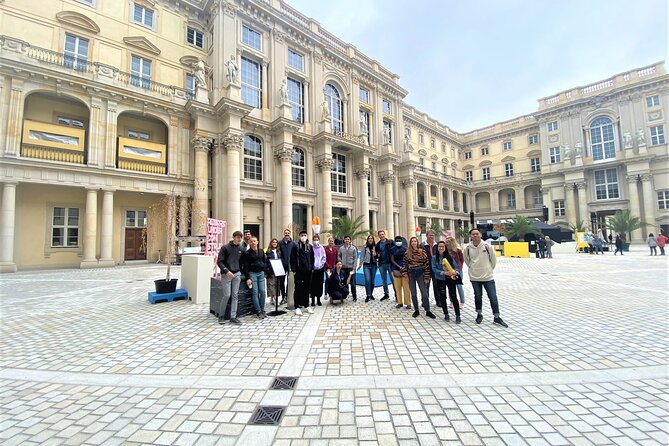
Berlin can feel like a museum built on top of a museum. This tour helps you turn that chaos into a simple walkable timeline. You move through key political and memorial spaces, then you get the why behind them—so later, when you’re reading signs or looking at buildings, you’ll know what you’re seeing.
I like that the pacing is built around multiple short stops. Each place gets about 20 minutes, which keeps things moving even if you’re not a slow, linger-at-every-corner type. And because the route includes both landmarks and heavy remembrance, you don’t just get pretty photos—you get context you can actually use.
You can also read our reviews of more walking tours in Berlin



Meeting at Generator Berlin Alexanderplatz (and why it matters)
The tour starts at Generator Berlin Alexanderplatz, at Otto-Braun-Straße 65. That’s a smart pick: it’s a central spot with easy transit access, and it’s easier to find than a random side street. The tour also ends back at the same meeting point, so you’re not stuck guessing how to get home after you’ve been walking for hours.
One practical tip: since there have been reports of meeting-point confusion in some cases, don’t treat arrival time as a casual suggestion. Arrive early, confirm the group by the guide’s instructions, and keep your phone charged. In Berlin, weather changes fast too—so bring a layer and shoes you trust.
Reichstag Building: parliament, power, and why it’s still central
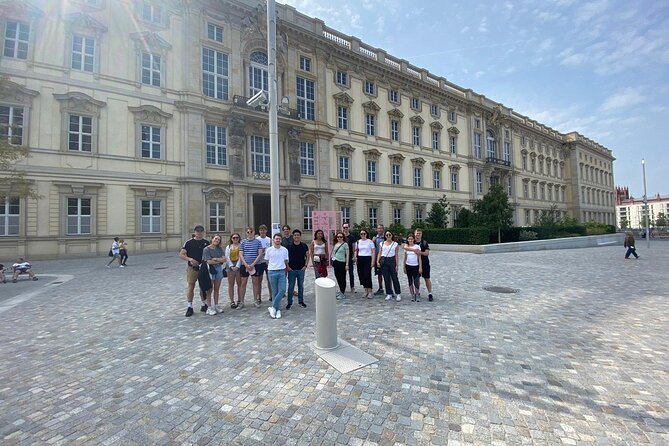
Your first stop is the Reichstag Building, the historic seat of Germany’s parliament (the Bundestag). Even if you’ve seen pictures, this is the kind of place where a guide can help you understand why it keeps showing up in Berlin’s story.
What I like here is the way it sets the tone. The Reichstag isn’t only about a single era—it’s about how Germany’s governance and national identity have changed over time. The tour is set up to be quick at this stop (about 20 minutes), so it works best if you’re ready to listen, take a few notes, and then keep walking rather than trying to absorb everything like you’re touring a building for hours.
Berliner Dom: a big church and a practical lesson in symbolism
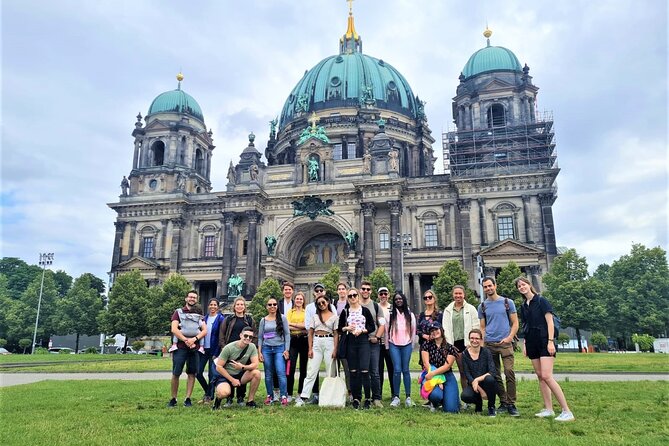
Next is the Berliner Dom (Berlin Cathedral). The tour focuses on the building’s history and uses it as another landmark to decode Berlin’s identity. Cathedral architecture is rarely just about faith; in many European cities, it also reflects power, prestige, and cultural messaging.
This stop is also timed at about 20 minutes, so you’ll mostly get the highlights: what the building represents, how it fits into the city’s shifting eras, and why it’s a natural stop after the Reichstag. If you love architecture, you’ll appreciate that the guide ties the cathedral back to the bigger political and social picture instead of treating it as a standalone photo stop.
Brandenburg Gate: the monument you see everywhere—made understandable
Then you reach the Brandenburg Gate. The big draw is obvious, but the tour’s value is in how it explains the monument: it’s a neoclassical landmark built on the orders of Prussian king Frederick William II after restoration of order during the Batavian Revolution.
That’s the kind of detail that makes the gate click in your head. You’ve probably seen it on postcards or in documentaries, but knowing the political context gives it more weight. You’ll also understand why it later becomes a symbol tied to Berlin’s divisions and reunifications—because symbols don’t start out as symbols; people keep assigning meaning to them over time.





Checkpoint Charlie: Cold War history you can walk right up to
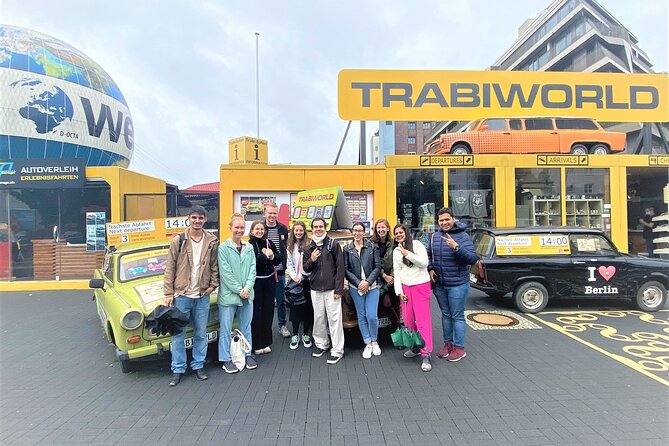
From the Brandenburg Gate area, the tour heads toward Checkpoint Charlie, the best-known Berlin Wall crossing point between East and West Berlin during the Cold War, named by the Western Allies.
This stop is where Berlin turns from monuments into daily-life history. The Wall wasn’t a vague idea; it was a lived border. At Checkpoint Charlie, it’s easier to grasp that reality because you’re standing in the place where people tried to cross—and where politics became physical.
A note on timing: some groups have felt this portion moves quickly. If you want extra time here to read closely or take photos, build in your own buffer time before or after the tour.
Memorial of the Berlin Wall: the emotional impact (and how to meet it with respect)
The tour then visits the Memorial of the Berlin Wall. This is where the story shifts from Cold War geography to remembrance and loss. You’ll see the wall that separated the city and you’ll learn about the freedom the Wall denied to millions during Soviet rule.
This part works best if you slow down a touch and let the guide’s framing land. A Wall memorial can turn into a quick stop if you treat it like a sight for your camera roll. But with the tour’s structure, you’re getting the story before you move on—so you can look with a little more understanding than you would without context.
Holocaust Memorial: the stop that changes how you read the city
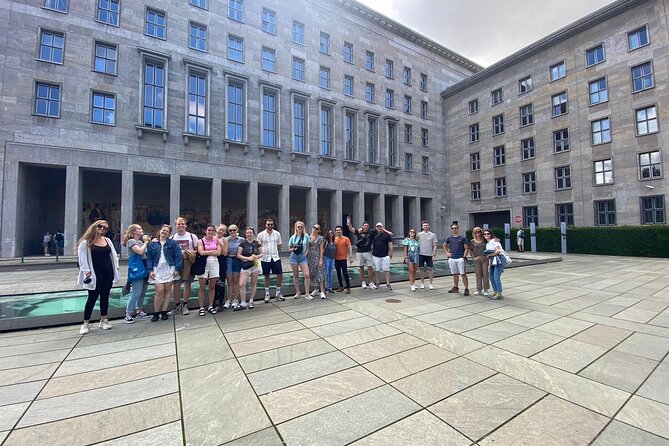
Next is the Holocaust Memorial (Memorial to the Murdered Jews of Europe). The tour also weaves in a broader arc: Berlin’s beginnings as a small fishing village, the rise of the Prussian Empire, and then the darkest hours of the Nazi Third Reich.
I appreciate this approach, because it prevents the memorial from feeling like an isolated moment. Berlin is full of reminders of past ideologies and power structures, and this stop anchors the meaning of how those structures can turn catastrophic.
This is also a good moment to ask questions if your guide invites them. Even if you’re not planning to stay longer at each marker, you can leave with a clearer sense of what you saw and why it’s preserved.
The Luftwaffe-era exhibition stop: Soviet-era leftovers and the power of small details
The last listed stop is Ausstellung Objektschutzregiment der Luftwaffe Friesland. The tour points out guard towers, memorials with times you can notice, and streetlights built by Stalin’s Soviet empire that still stand today.
This is the kind of stop many people would walk past without noticing. That’s why it’s valuable. The tour helps you catch the layers in the city—how different power systems leave physical traces, and how those traces still shape the streetscape.
If you like history at street level, this stop will feel like a reward for paying attention all day. It’s also a reminder that Berlin isn’t just grand buildings and famous squares; it’s also built out of remnants.
Stories, urban legends, and Berlin’s tough mix of triumphs and tragedies
Between the big landmarks, the guide is expected to share stories about wars, urban legends, and the city’s triumphs and tragedies. This is where the tour can feel lively rather than like a lecture.
I’ve found these story breaks matter. Berlin history is heavy, and a purely factual delivery can make it hard to stay engaged. Some guides in particular—people like Ana, Miguel, Ester, and Nora—are praised for clear English and an engaging way of speaking, with humor that doesn’t erase the seriousness.
Price and value: $2.90 is a bargain, but read the fine print in your expectations
At $2.90 per person, this tour is priced at the kind of level where you’re really paying for orientation and access to a human guide—not for a luxury experience. The listed stops are marked with admission ticket free, and the tour includes the walking tour guide.
That combination is why it can feel like a steal: you get a guided route across top sights for a cost that’s hard to beat. But the trade-off is that this is a walking tour with a human factor. Some groups have reported guide timing issues (including no-shows) and some have reported that the experience felt more rigid than fun depending on who was leading.
So here’s my practical advice: treat this as a smart way to get your bearings and build context. Don’t treat it as a guaranteed, perfectly paced, always-on-time production. If you’re flexible and you show up prepared, you’ll likely love the value.
Who should book this walking tour (and who might want something else)
This tour is a strong fit for:
- First-timers who want a guided orientation loop through the center of Berlin
- People who like their history explained in short, connected stops
- Anyone who wants to see both major landmarks and serious memorial spaces in one morning/afternoon block
You might choose a different option if:
- You want long, quiet time at a single site (this route tends to keep moving)
- You dislike heavy subject matter without extended discussion time
- You’re the type who needs ultra-reliable meet-up execution with zero hiccups (a small number of reports point to occasional problems)
Should you book this Berlin walking tour?
If you want a budget-friendly way to understand Berlin’s big story beats—parliament to cathedral, a famous gate to the Cold War border, the Wall memorial, and the Holocaust Memorial—this tour is worth considering. The price-to-sights ratio is excellent, and when you land with a strong guide, the pacing and storytelling can make the city feel suddenly legible.
My call: book it if you’re ready for a steady walk, dress for the weather, and go in with the mindset of first-day orientation. Skip it—or add extra independent time elsewhere—if you’re hoping for a slow, in-depth museum-style experience or you can’t handle the occasional messiness that can come with group tours.
FAQ
How long is the Berlin Walking Tour?
It’s listed as about 3 hours (approx.).
What does the tour cost?
The price is $2.90 per person.
Is the tour offered in English?
Yes, it’s offered in English.
Where do I meet for the tour?
The meeting point is Generator Berlin Alexanderplatz, Otto-Braun-Straße 65, 10178 Berlin.
Does the tour end at the same place?
Yes, the activity ends back at the meeting point.
Are tickets needed for the stops?
The stops are listed with admission ticket free.
Is public transportation included?
No. Public transportation is listed as not included if applicable.
What’s the group size limit?
The tour has a maximum of 50 travelers.
Can I cancel for a full refund?
Yes. You can cancel up to 24 hours in advance for a full refund. If you cancel less than 24 hours before the start time, the amount paid is not refunded.