REVIEW · NUREMBERG
Nuremberg Old Town and Nazi Rally Grounds Walking Tour
Book on GetYourGuide →Operated by Nuremberg City of Empires Tours · Bookable on GetYourGuide
Nuremberg has two faces, and this tour shows both. I love how it stitches together the medieval Old Town and the Nazi Rally Grounds in one smooth arc, so you start seeing the city as a whole story rather than two separate stops. I also like the guide style: facts with a sense of pace and dry humor, plus a careful approach to the Third Reich that doesn’t feel performative.
One heads-up: this is real walking in rain or shine, and it is not suitable if you have trouble walking or need mobility support.
In This Review
- Key highlights at a glance
- A 4-hour plan that links medieval Nuremberg to the Third Reich
- Meeting at Hauptbahnhof: the simplest way to start strong
- Handwerkerhof and Mauthalle: where Nuremberg shows its maker side
- Hauptmarkt and Old City Hall: the marketplace as your lunchtime anchor
- Churches you pass and what your guide points out
- Imperial Castle courtyards: views that make the past feel close
- Albrecht Dürer’s House: art and identity in one stop
- Lunch in the marketplace: eat, reset, and keep the pace sane
- Bus and tram logistics that actually make sense for real people
- The Nazi Rally Grounds: parade geometry, propaganda, and honest context
- Congress Hall and the question of unfinished power
- How this tour prepares you for deeper stops afterward
- Price and value: what you get for about $43
- Who should book this tour, and who should choose something else
- Should you book the Nuremberg Old Town and Nazi Rally Grounds tour?
- FAQ
- How long is the tour?
- Where do I meet the guide?
- Is the tour guided in English?
- What does the tour cost?
- Is lunch included?
- Are transportation costs included?
- Is the Documentation Center included?
- Does the tour run in bad weather?
- Is the tour suitable for people with mobility impairments?
- Can I cancel and get a full refund?
Key highlights at a glance
- Old Town orientation fast: town hall, churches you pass, and the Imperial Castle courtyards with big views over the city
- Handwerkerhof craft yards: you see working artisans and traditional methods, not just storefront photos
- Hauptmarkt timing: a guided walk plus a practical chunk of free time for lunch and December market vibes
- Nazi sites with context: parade grounds and major remnants tied to propaganda, plus how Nuremberg deals with the past today
- Included transit between worlds: bus out to the rally grounds, then tram back to Hauptbahnhof
- Sensitive presentation: history is handled directly, with photos used when needed to make the sites make sense
A 4-hour plan that links medieval Nuremberg to the Third Reich
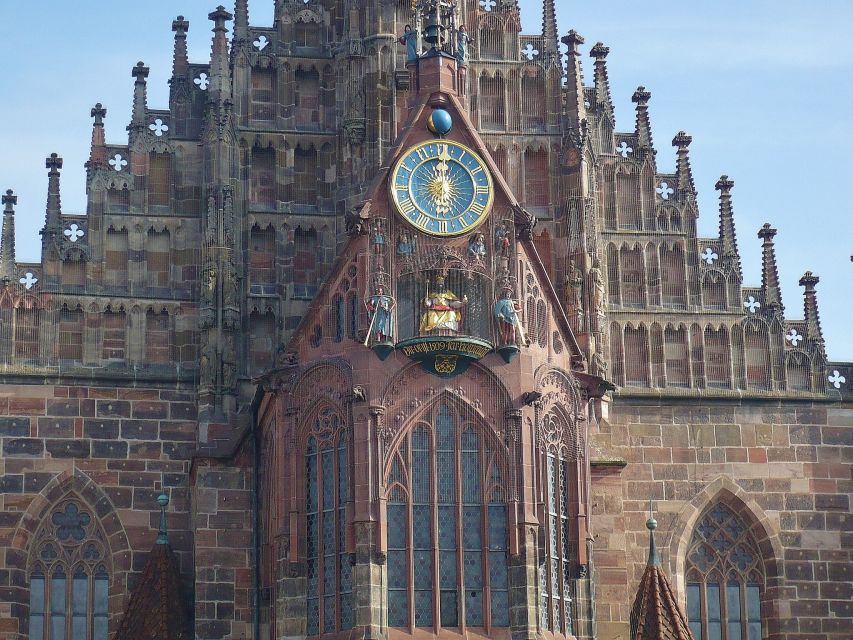
This is the kind of tour that saves you effort on your first day. Instead of jumping between half-understood landmarks, you get a guided story that starts in Nuremberg’s walled Old Town and then shifts to the former Nazi Rally Grounds. The best part is the balance: you’re not just sightseeing buildings, you’re learning how the city moved from centuries of imperial power and artisan life to the machinery of Hitler’s propaganda.
The walking pace works for a lot of people because the tour breaks itself up. After the Old Town highlights, you get a lunch break in the marketplace area, and then you move to the rally grounds by bus. By the time you’re standing in places meant for mass spectacle, you already understand the streets, gates, and civic pride that came before.
And the big practical win: public transportation costs are included, so you do not have to figure out how to get between parts of the city while also trying to read signs and street maps.
You can also read our reviews of more walking tours in Nuremberg

Meeting at Hauptbahnhof: the simplest way to start strong
You meet outside the large center arched entrance of Nuremberg Central Station (Hauptbahnhof). The guide holds a red and white sign for Nuremberg Tours in English, so you should be able to spot them quickly.
This matters more than you’d think. Starting at Hauptbahnhof means you’re close to major transit links and you can arrive with confidence, especially if you’re juggling trains, trams, or arriving from another German city. I’d still plan to show up a few minutes early, because the tour is about momentum and it’s easier when everyone checks in together.
Bring comfortable shoes. Even if the group moves at a reasonable pace, you’re on foot for a chunk of the day, and the tour runs rain or shine.
Handwerkerhof and Mauthalle: where Nuremberg shows its maker side
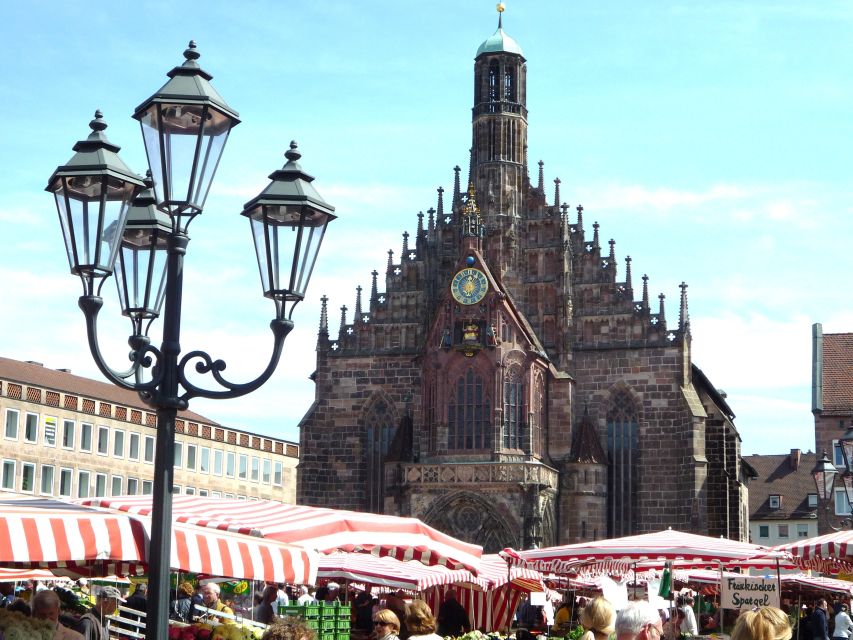
The tour begins with a short stop at Handwerkerhof Nuremberg, also known as the Craftsmen’s Court. This is one of the best “wait, people still do this?” moments. You’ll see how local artisans work with traditional materials and methods, which gives you a more grounded feel for the city than postcards ever can.
Next comes Mauthalle. Even if you only spend a limited time here, your guide uses it to connect the Old Town’s medieval structure to the way commerce and city life once worked. It’s the kind of stop that helps you read the city as a system, not just a collection of landmarks.
If you like understanding cities through everyday functions—trade, crafts, civic buildings—these early minutes will click fast.
Hauptmarkt and Old City Hall: the marketplace as your lunchtime anchor
One of the biggest “you’ll thank yourself later” parts is how the tour uses Hauptmarkt Nürnberg, Nuremberg’s main square. You get a guided walk first, so you understand what you’re looking at. Then there’s also a later stretch of free time in the same area.
The marketplace is famous for its markets in December, which means you’re walking through the mood of seasonal Nuremberg even if you’re not shopping for gifts. This is also where you can make practical choices about lunch and snacks without feeling rushed.
The tour also visits the Old City Hall. The point isn’t only architectural appreciation. It’s about civic power—how a free imperial city managed authority, reputation, and public life. You’ll get a sense of why Nuremberg mattered long before it became infamous in the 20th century.
Churches you pass and what your guide points out
You pass major churches like St. Lorenz Church and St. Sebaldus Church. Even without lengthy indoor time, your guide uses these moments to explain Gothic art and notable works by master artists. The effect is that you’re not just looking at church fronts; you’re learning what to notice.
If you’re the type who tends to walk past churches on tours, this is one of the sections that can change your routine. Your guide essentially teaches you how to read the symbols, the style, and the artistic intentions.
Imperial Castle courtyards: views that make the past feel close
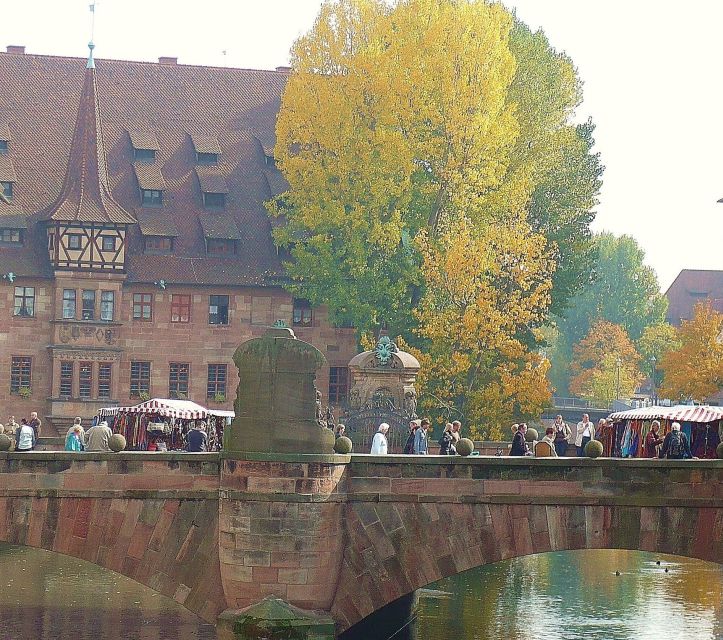
Next comes the Imperial Castle of Nuremberg, with time in the courtyards. This stop works for both history nerds and casual sightseers, because the courtyards give you physical perspective. You’ll learn that Holy Roman Emperors ruled Germany from here for over 500 years, and you’ll see how the setting supported that role.
The practical payoff is the way the courtyards pull the day together. After learning about medieval governance in the city center, you’re now at a height that explains why power wanted elevation—control, defense, and presence.
Also, this section tends to be where photos start making sense. Before you go to the rally grounds, you’ll understand scale and layout better, which makes the later sites less confusing.
Albrecht Dürer’s House: art and identity in one stop
The tour includes Albrecht Dürer’s House. Even if you only spend part of the visit there, it adds an important layer: Nuremberg wasn’t only architecture and politics. It was an artistic center too.
For me, this stop is a reminder that cities carry multiple identities at once. That matters when the tour turns to the Third Reich remnants. You’re not learning Nazi history in a vacuum—you’re learning how a city with deep cultural roots became a stage for a brutal ideology.
Lunch in the marketplace: eat, reset, and keep the pace sane
There’s a break for lunch in the marketplace area between the Old Town portion and the bus ride out to the rally grounds. Lunch itself isn’t included, but you’re set up in the most useful place to choose quickly.
This break is more than a meal. It’s also a mental reset. The day shifts from medieval streets to spaces linked to mass manipulation and propaganda. Having a pause before that transition helps.
In market-season months, people often grab something fast like sausage-based snacks, and some also time a quick warm drink while the Christmas market atmosphere is in full swing.
Bus and tram logistics that actually make sense for real people
After Old Town, you board a bus to reach the former Nazi Rally Grounds. Later, you take a tram back to Hauptbahnhof, where the tour began.
What I like about this setup is how it reduces decision fatigue. You’re not forced to figure out the route in the middle of a heavy topic. Public transportation costs to and from the rally grounds are included in the tour price, so your day stays simple.
This also helps with pacing. The walking portion is long enough to feel like a true city experience, but not so long that you’re exhausted before you reach the main sites.
The Nazi Rally Grounds: parade geometry, propaganda, and honest context
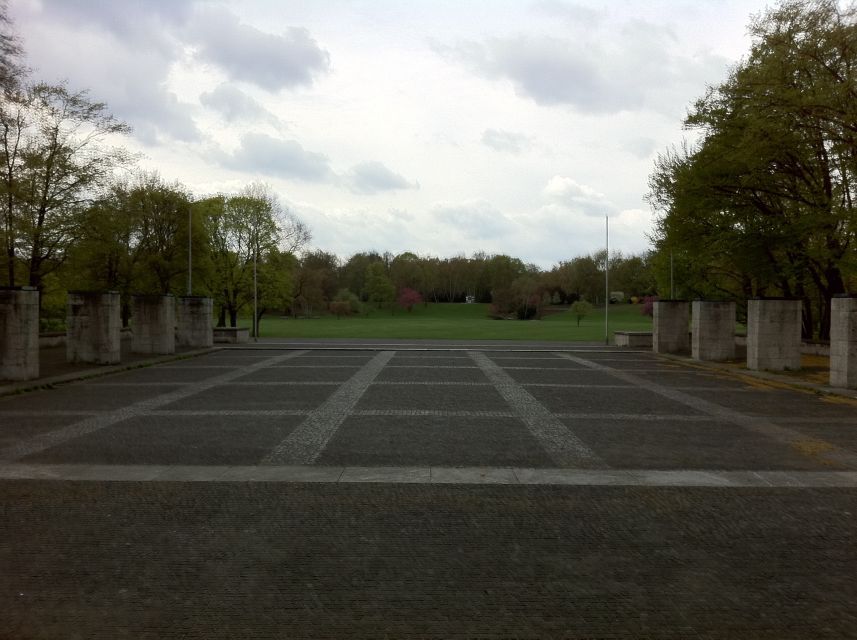
This is the emotional core of the tour, and it’s handled with care. You’ll see the parade grounds, places where Adolf Hitler inspected SS men and performed pseudo-religious rituals for a cheering crowd as part of the Nazi propaganda machine. Even if you’ve read about this era, seeing the scale in person has a different impact.
You’ll also be shown major remnants tied to the rally complex, including the Congress Hall (Hitler’s half-finished Roman Colosseum concept) and areas referred to in highlights like the Zeppelin Field and Luitpold Arena. In the tour route, you’ll pass through locations such as Luitpoldhain and Volksfestplatz along the way, with guided explanation connecting them to the events they hosted.
Most important: your guide explains not just what happened, but how the city deals with its past today. That thread keeps the tour from feeling like a museum of tragedy frozen in time. You’re shown how Nuremberg faces history in public space now.
Congress Hall and the question of unfinished power
The Kongresshalle stop stands out because it’s not a finished monument. It’s a relic of megalomania—an idea built for spectacle, interrupted and left behind. The tour frames the structure as more than concrete. It becomes a way to talk about how propaganda tries to turn politics into religion, and how physical spaces can be designed to control mass emotion.
Guides may use photos on an iPad to explain what you’re seeing and what used to exist here. That matters, because many parts of the rally grounds are now ruins and open ground. Visual context helps you understand layout without turning your brain into a jigsaw puzzle.
How this tour prepares you for deeper stops afterward
The tour ends back at Hauptbahnhof. Admission to the Documentation Center is not included, but the tour sets you up to decide if you want more after. If you’re the type who wants artifacts, timelines, and deeper archival detail, you’ll know what questions to bring.
If you prefer to keep your day light after the rally sites, you still leave with a strong mental map of where to return for your own follow-up, especially around the Old Town.
Price and value: what you get for about $43
At $43 per person for a roughly 4-hour guided experience, the main value is structure. You’re paying for a fluent English guide, a planned flow through both halves of the city, and included public transit between them.
Lunch isn’t included, and you’ll need to budget for your own food. But your meal choice happens in the right place—Hauptmarkt—so you’re not hunting in unfamiliar streets while trying to stay on schedule.
In practical terms, compare this to doing the Old Town by yourself and then trying to piece together the rally grounds route on your own with an audio guide. You’d likely spend more time figuring things out than you expect. Paying for guidance here is like paying for clarity and context, not just walking.
Who should book this tour, and who should choose something else
This tour is a great fit if you want:
- A first-day orientation to Nuremberg that goes beyond a checklist of sights
- A guide who handles the Third Reich topic with sensitivity and directness
- Included transit so you can focus on the experience rather than logistics
It might not be your best choice if:
- You need a fully accessible route or you have significant walking limitations
- You want an unstructured afternoon with lots of museum time, because this is built around guided walking and key outdoor stops
Also, if you’re going in winter market season, the timing through Hauptmarkt can add extra atmosphere for lunch and quick snacks.
Should you book the Nuremberg Old Town and Nazi Rally Grounds tour?
I think you should book it if you’re visiting Nuremberg with at least some curiosity about how the city became both a medieval imperial center and a stage for Nazi propaganda. The format is efficient, the guide approach is repeatedly described as engaging with good humor and careful handling of WWII, and the included transport keeps the day from turning into a logistics puzzle.
Skip it if mobility is an issue or if you know you’d rather do the rally grounds at your own pace in a strictly museum setting. For everyone else who wants an informative, emotionally honest, and well-timed intro, this is a strong way to see Nuremberg in one go.
FAQ
How long is the tour?
The tour lasts about 4 hours, including the lunch break.
Where do I meet the guide?
Meet outside the large center arched entrance of Nuremberg Central Station (Hauptbahnhof). The guide holds a red and white Nuremberg Tours in English sign.
Is the tour guided in English?
Yes. The tour is led by an English-speaking guide.
What does the tour cost?
The price is $43 per person.
Is lunch included?
No. Lunch is not included, but there is a break for lunch in the marketplace.
Are transportation costs included?
Yes. Public transportation costs to the former rally grounds and back are included in the tour price.
Is the Documentation Center included?
No. Admission to the Documentation Center after the tour is not included.
Does the tour run in bad weather?
Yes. The tour takes place rain or shine.
Is the tour suitable for people with mobility impairments?
No. The tour is not suitable for people with mobility impairments or for those who have trouble walking.
Can I cancel and get a full refund?
You can cancel up to 24 hours in advance for a full refund.