REVIEW · BERLIN
Berlin: Third Reich & Cold War Guided Walking Tour
Book on GetYourGuide →Operated by Insider Tour Berlin · Bookable on GetYourGuide
Berlin’s history hits close up. This guided walk threads the Third Reich into the Cold War through stops like Brandenburg Gate and a preserved Berlin Wall stretch.
What I like most is how the guide turns stone, plaques, and buildings into clear cause-and-effect stories. I especially enjoyed the way the walking route makes the past feel physical and how the Holocaust and Soviet memorial stops don’t let you skate past the human cost.
One drawback: the subject matter is heavy. If you want a lighter day of sightseeing, plan a breather before or after.
Key highlights at a glance
- Brandenburg Gate at the center of regime change from Nazi pageantry to 1989 reunification
- Reichstag Fire context that explains how events fed Hitler’s rise
- Tiergarten Soviet War Memorial with preserved Red Army tanks and the scale of loss
- Memorial to the Murdered Jews of Europe for a quiet, unavoidable moment of remembrance
- Topography of Terror area tied to the SS and Gestapo headquarters
- A real 200-meter Berlin Wall section plus the tension story of Checkpoint Charlie
In This Review
- Two Hours of Third Reich and Cold War in Central Berlin
- Brandenburg Gate Start: Nazi Parades to 1989 Unity
- Reichstag and the Reichstag Fire: A Turning Point Explained
- Tiergarten Soviet War Memorial: Tanks, Loss, and Memory
- Memorial to the Murdered Jews of Europe: What to Notice
- Hitler’s Bunker Area and Topography of Terror’s SS and Gestapo Sites
- Berlin Wall Segment: Walking Past the Barrier That Divided Lives
- Checkpoint Charlie Finish: The Cold War Face-Off and Escape Stories
- Value for Money at $23 and What You’re Really Buying
- Practical Stuff You’ll Want Before You Go
- Should You Book This Tour
- FAQ
- How long is the Berlin Third Reich and Cold War guided walking tour?
- What does the tour cost?
- Where do I meet the guide?
- How much walking should I expect?
- What languages are available for the live guide?
- Does the tour run in bad weather?
- Is the tour wheelchair accessible?
- Can I cancel for free, and can I pay later?
Two Hours of Third Reich and Cold War in Central Berlin
This is the kind of tour you take early in your Berlin trip, because it gives you a map for what you’ll see later. In two hours, you cover major landmarks tied to the Nazis, the Allied victory, the Cold War showdown, and the fall of the Berlin Wall.
I like that it’s not just “look at this building.” You’re walking through the logic of the city: how power was staged, how fear was administered, how borders were enforced, and how ordinary people lived with the consequences. If Berlin feels complicated to you at first, this route helps it click into place.
You’ll also cover a manageable distance. Expect about 2 kilometers of walking, with frequent stops for photos and explanation. It’s built for people who want depth but don’t want a full-day slog.
Brandenburg Gate Start: Nazi Parades to 1989 Unity
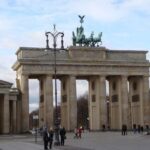
You begin at the Tourist Information at Brandenburg Gate, Pariser Platz 1. Look for your guide with the pink umbrella, right by the gate. Even if you’ve seen Brandenburg Gate in photos, standing there in person has a different effect because it’s been repurposed again and again.
Here’s what makes this first stop work: the gate isn’t presented as a neutral backdrop. It’s framed as a stage prop. Your guide explains how it sat at the heart of Nazi parades and how, later, it became wrapped in Cold War tension. Then you connect that to 1989, when the meaning of the gate flips toward reunification.
Practical tip: bring your camera, but also take a breath. The tour moves fast through the story, so early on I try to get one calm shot of the whole area before the historical zoom-in begins.
You can also read our reviews of more walking tours in Berlin



Reichstag and the Reichstag Fire: A Turning Point Explained

From the gate, you move past the Reichstag. This is one of those Berlin landmarks that looks solid and timeless, but the tour asks you to think about what happened here in 1933.
You’ll hear the mystery and political importance of the Reichstag Fire and how it became a turning point in Hitler’s rise to power. That part matters because it connects something abstract—propaganda, law, and fear—to something you can point at: the building that still stands.
You’ll also get the “survived the worst” angle. Your guide explains how the Reichstag endured war and destruction, and how it eventually became the seat of German democracy. That arc is a big reason this stop is powerful: Berlin didn’t just rebuild after the war. It rebuilt meaning.
If you like historical stories that show cause and consequence, this is one of the best moments for that. The guide keeps it understandable, and you get the feeling that the tour is teaching you how to read the city, not just memorizing dates.
Tiergarten Soviet War Memorial: Tanks, Loss, and Memory
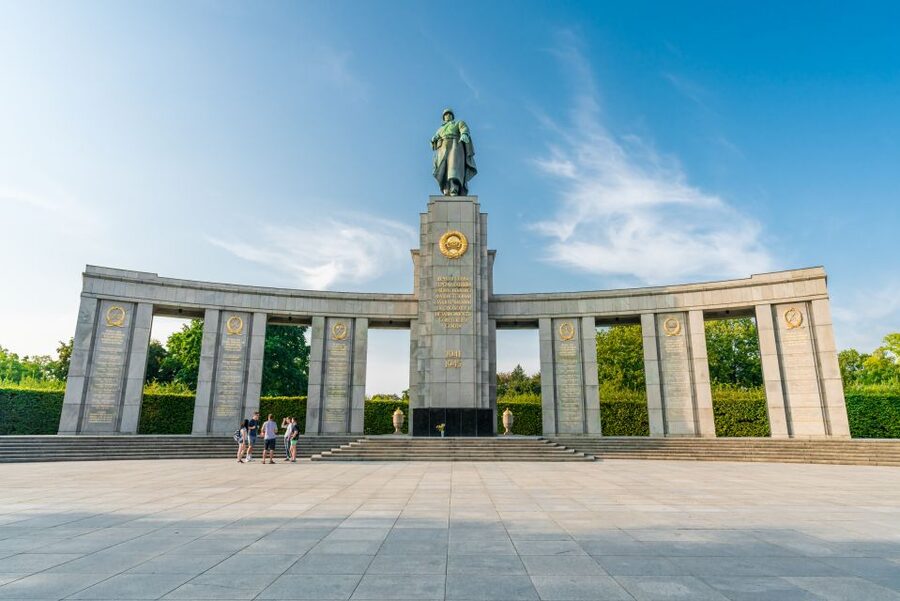
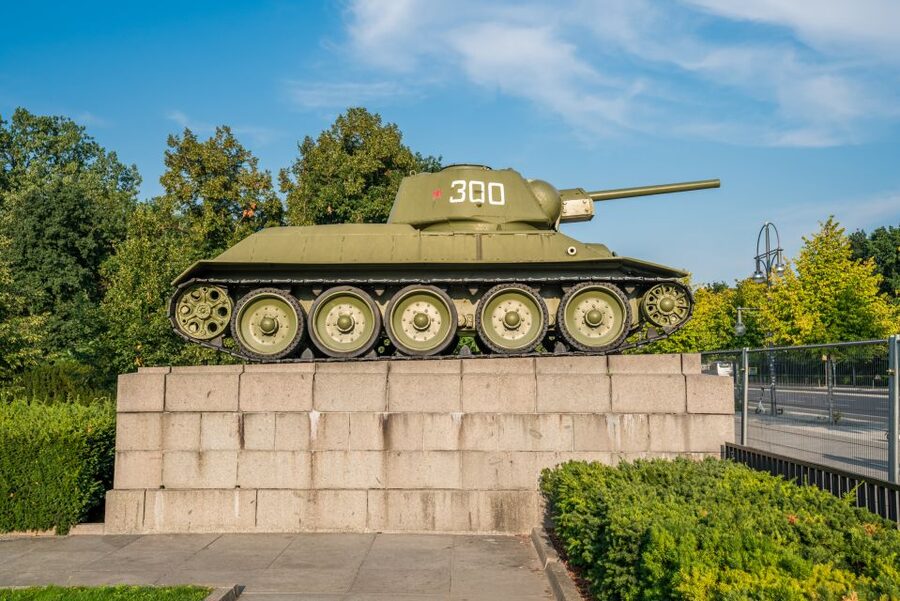
Next is the Soviet War Memorial in Tiergarten. This stop is anchored by preserved Red Army tanks, which turns history into something you can’t dismiss as distant. It’s hard to treat that as “just another monument” once you see the vehicles and learn what they represent.
Your guide brings in the scale of loss: 80,000 Soviet soldiers who fell during the Battle of Berlin. That number isn’t just a statistic in passing. It’s used to help you understand why Soviet memorial sites in Germany carry weight that goes beyond the battlefield.
This is also a good place to pay attention to how the tour balances perspectives. The story isn’t told as one straight line of victory and villainy. Instead, it shows that Berlin’s twentieth-century trauma had multiple national sides and that memory stays complicated.
If you tend to get restless on tours, this stop often resets you because the physical tanks slow the group down naturally.
Memorial to the Murdered Jews of Europe: What to Notice
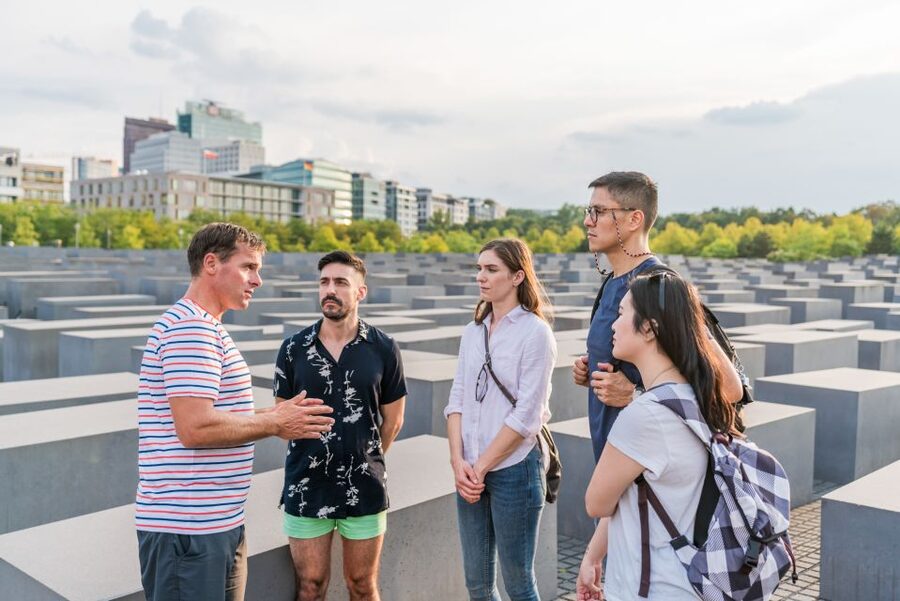
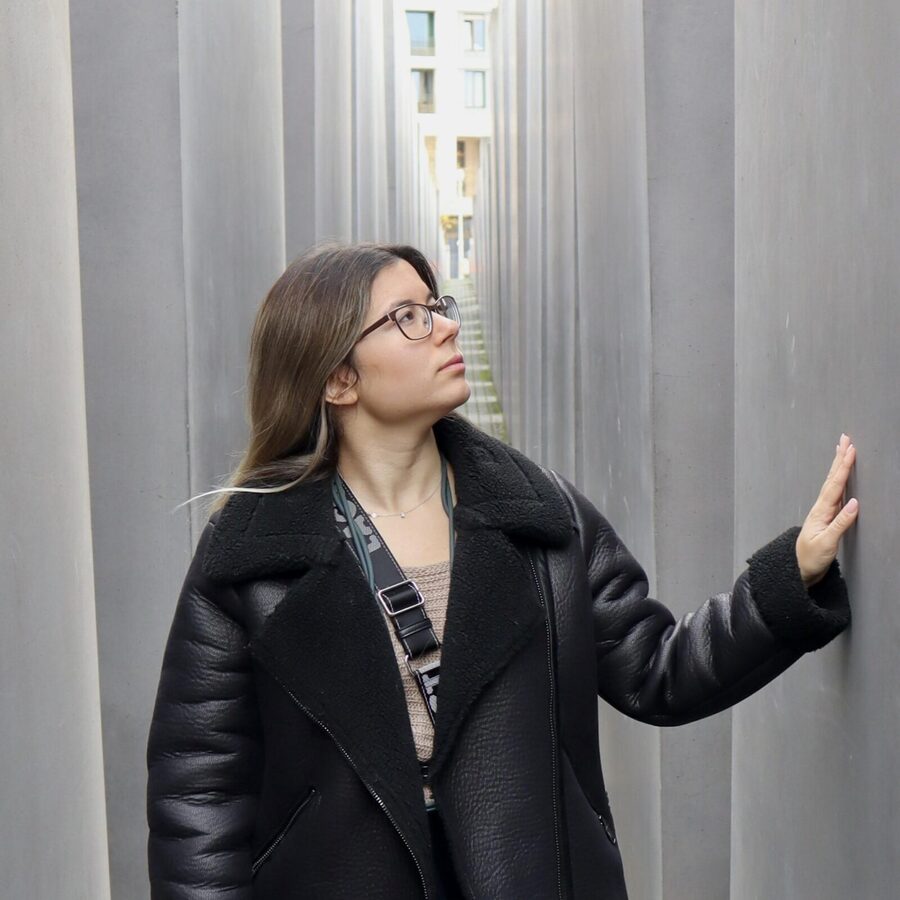
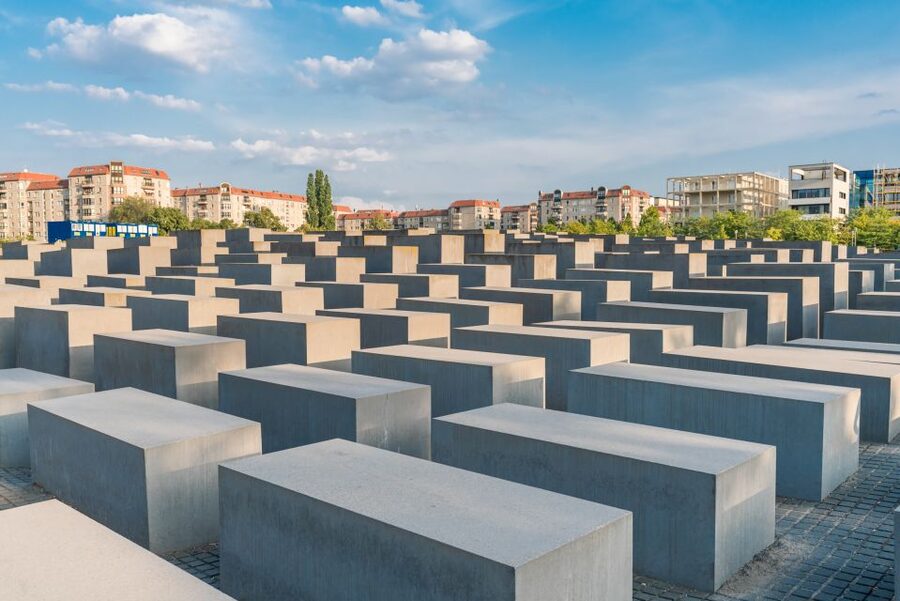
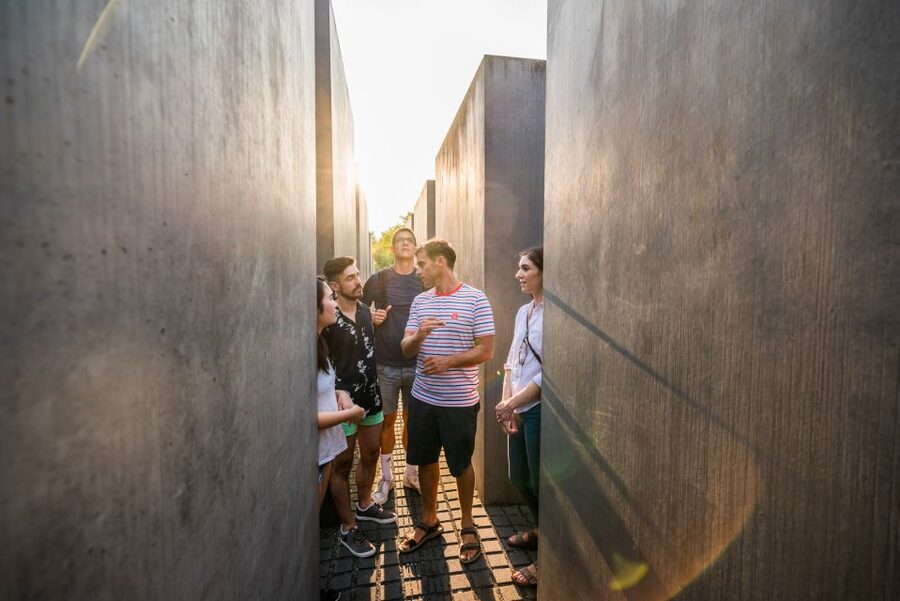
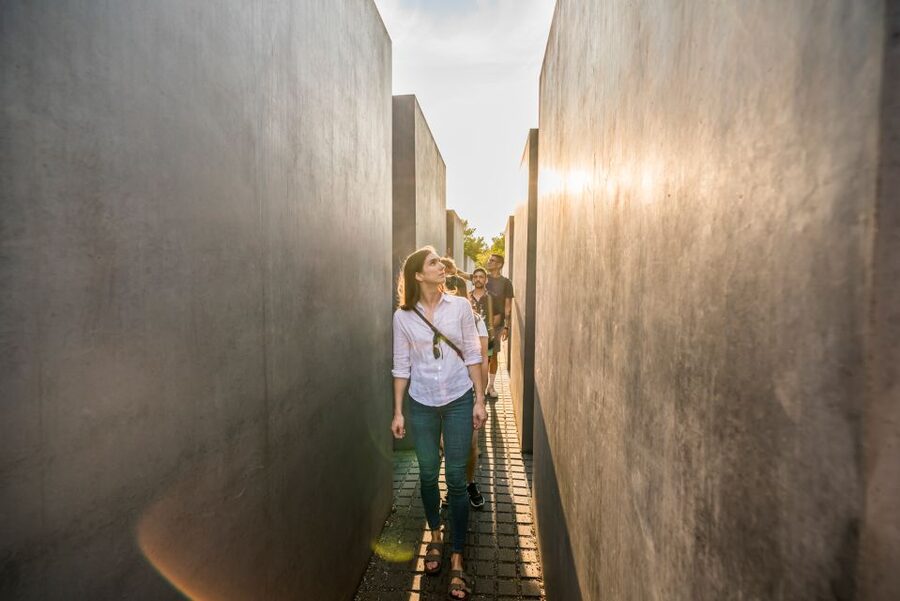
Then you pause at the Memorial to the Murdered Jews of Europe. Even if you’ve seen pictures, you’ll get more out of it if you treat it as a quiet checkpoint rather than a photo challenge.
Your guide ties the installation directly to the six million Jewish victims of the Holocaust. The way this is presented is important: it isn’t turned into background trivia. It’s treated as the core moral center of the Third Reich story, even as the tour continues onward.
This stop also tends to change the mood in a good way. People slow down. Questions get more thoughtful. If you feel the urge to move on quickly, that’s normal. Just don’t rush through the meaning.
Bring a camera if you want, but also know that this is one of those places where your best memories might be the ones that don’t end up in your camera roll.
Hitler’s Bunker Area and Topography of Terror’s SS and Gestapo Sites
The tour next moves into the Nazi leadership’s final days, including the site of Hitler’s bunker. Standing near where that ended helps you feel the collapse more clearly than you might from a textbook.
From there, you’ll also pass the nearby Detlev-Rohwedder-Haus, and then continue toward the former headquarters of the SS and Gestapo at the Topography of Terror area. This is where the story stops being about speeches and starts being about machinery: how terror was organized and how power was enforced.
The guide’s job here is tough: explain the system without turning it into a lecture. In the feedback I’ve seen tied to this tour, guides often get singled out for turning complicated material into clear, human-scale explanations. Names that come up again include Rohan, Paul, Ben, Maggie, Lucas, Mickey, Ariel, and Maria, and the common thread is how they handle questions without bulldozing the room.
I’d suggest you listen for how the tour explains both locations and functions. The city’s buildings are doing work in your understanding. They show where fear was manufactured, where decisions were made, and how control became routine.
You can also read our reviews of more guided tours in Berlin


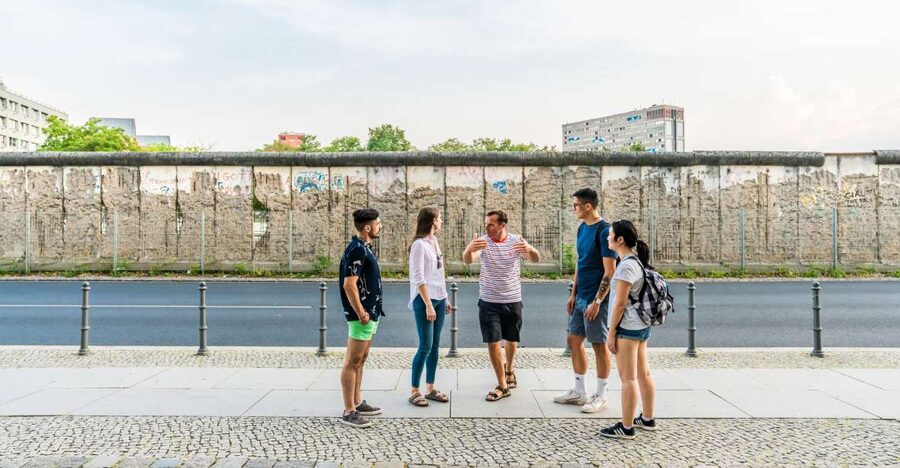
Berlin Wall Segment: Walking Past the Barrier That Divided Lives
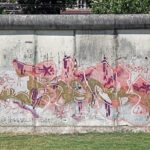
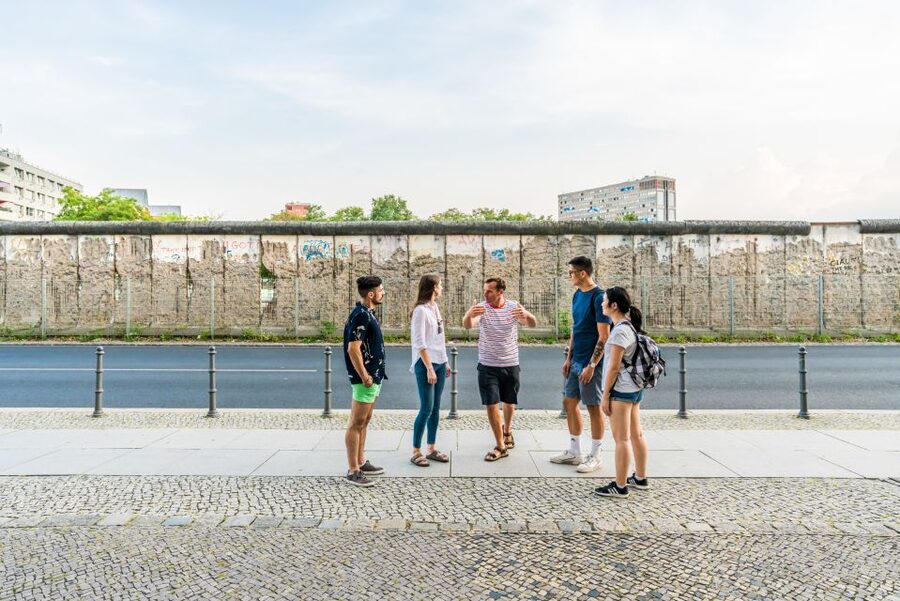
Now comes the part that many people remember most clearly: a 200-meter section of the Berlin Wall. This is the moment where the tour becomes tactile.
You’re not learning about a wall in theory. You’re walking alongside the physical evidence of decades-long division between East and West. Your guide explains what it meant on a human level, including stories of those who risked everything to escape and what that desperation cost.
Even if you already know the broad facts of the Wall’s fall, this stop helps you see why the fall mattered so much. It wasn’t only political. It was personal. It affected families, daily routines, jobs, and the ability to move freely.
When the group pauses for photos, I recommend taking a wider view too. Look at the space around the wall section—Berlin has built new life around old scars. That contrast helps you understand how societies rebuild after forced separation.
Checkpoint Charlie Finish: The Cold War Face-Off and Escape Stories
Finally, you arrive at Checkpoint Charlie, and the tour ends there. This area is famous for a reason: American and Soviet tanks once faced off in a tense Cold War standoff, and your guide brings that showdown to life with escape attempts and the final hours leading up to the wall coming down.
Checkpoint Charlie can feel like a “tourist landmark” on the surface. The tour keeps it grounded by focusing on what happened here in practice—negotiations, surveillance, and the constant pressure of living under division. You get a better sense of why people tried to cross, why it was so dangerous, and how fast things shifted in late 1989.
This finish is also useful for your next steps in Berlin. With the tour ending at one of the most central points, you can continue your day nearby with less scrambling.
And if your brain feels overloaded by the end, that’s normal. You just walked through some of the most brutal chapters of European modern history in a tight loop. The good news is you’ll feel more oriented for the rest of your trip.
Value for Money at $23 and What You’re Really Buying
At $23 per person for a two-hour guided walking tour, you’re paying for three things: a route that concentrates major sites in a small radius, a live guide to connect the dots, and time saved by not figuring out the story yourself.
Yes, you could read about these topics online. But you’d still be stuck with the “so what does this building mean” question. The value here is interpretation. Your guide ties landmarks together: Brandenburg Gate’s symbolism, Reichstag’s political flashpoint, Tiergarten’s memorial context, the Holocaust Memorial’s moral center, and the Berlin Wall’s physical division.
The group is also a practical factor. If you choose the group format, the pacing is designed for shared walking time—about 2 kilometers total. If you choose private, you can often set a different pace and ask more targeted questions (just note that language availability can vary by group type).
In short: for the price, you’re not just buying entry to sites. You’re buying a guided “read” of Berlin’s twentieth century.
Practical Stuff You’ll Want Before You Go
This tour runs in all weather conditions and on public holidays, so plan like you’re going outside for two hours with real walking time. Comfortable shoes are non-negotiable. If rain or snow is in the forecast, bring an umbrella, because you’ll still be out there.
Bring water and a camera. You’ll have photo stops at key points, including Brandenburg Gate, the Reichstag area, Tiergarten, and Checkpoint Charlie. Winter can be a special kind of challenge, so a warm layer helps you stay alert rather than just numb.
Getting there is straightforward. The closest S-Bahn and U-Bahn station is Brandenburger Tor (S1, S2, S25, S26 and U5). Buses 100 and 245 also serve the area, so you shouldn’t need complicated directions.
One more thing: language options are German and English, but group versus private formats don’t always offer the same language options. If language matters a lot to you, check before you go.
Should You Book This Tour
Book it if you want a high-impact Berlin orientation that makes the Third Reich and Cold War make sense in real space. This route works especially well for first-time visitors who want to see major landmarks without spending the day jumping between unrelated stops.
Skip it or consider a different style if you strongly dislike heavy historical topics. This is a tour where memorials and sites tied to terror and mass murder are treated as central, not “optional stops.”
My take: if you only do one guided history walk in Berlin, this is the one that gives you the most leverage for understanding everything else you’ll see afterward.
FAQ
How long is the Berlin Third Reich and Cold War guided walking tour?
The tour lasts 2 hours.
What does the tour cost?
It costs $23 per person.
Where do I meet the guide?
Meet in front of the tourist information point at Brandenburg Gate, Pariser Platz 1. Look for a guide with the pink umbrella.
How much walking should I expect?
You’ll walk approximately 2 kilometers during the tour.
What languages are available for the live guide?
The live guide is available in German and English.
Does the tour run in bad weather?
Yes. Tours run in all weather conditions and on public holidays.
Is the tour wheelchair accessible?
Yes, the tour is wheelchair accessible.
Can I cancel for free, and can I pay later?
Free cancellation is available up to 24 hours in advance for a full refund. There is also a reserve now & pay later option, where you can book your spot and pay nothing today.