REVIEW · BOLOGNA
Bologna: City Center Walking Tour
Book on GetYourGuide →Operated by BOLOGNA TOUR & BEST ITALY TOUR · Bookable on GetYourGuide
Bologna feels instantly clearer on this walk. You start at Neptune Fountain, follow a smart loop through the center, and get the stories behind the key sights that make Bologna feel like a living textbook. I also love how the tour keeps you clearly connected to the guide with an audio setup like headphones, so you can look around without losing the plot.
Two things I like a lot: first, the way the guide brings Basilica of San Petronio into focus (it’s more than a pretty church; it explains how Bologna thinks). Second, the stop at the Quadrilatero Market turns the streets into a practical plan for where to wander and what to chase on your own time.
One drawback to consider: this is real walking, and it’s not for everyone. If you have limited mobility, skip it. Also, for churches you’ll need to dress correctly (no short skirts, and you should bring a long-sleeved layer).
In This Review
- Key highlights you’ll feel right away
- The best reason to do this Bologna walk: you learn the city’s logic
- Neptune Fountain start: a fun launch point with instant payoff
- Palazzo d’Accursio and Piazza Maggiore: the civic center in plain view
- San Petronio: why this church deserves more than a quick glance
- Piazza della Mercanzia and Quadrilatero Market: trade streets, not tourist wallpaper
- Two Towers and the Asinelli Tower: height with a job to do
- Piazza Santo Stefano and the finishing loop back to Neptune
- What guides get right here (and why it affects your experience)
- Price and value: why $26 can work well for a first Bologna day
- Who this Bologna walk is best for
- Quick practical tips before you go
- Should you book this Bologna City Center Walking Tour?
- FAQ
- How long is the Bologna city center walking tour?
- How much does the tour cost?
- Where is the meeting point?
- What sights will we see during the walk?
- Is the guide live, and what languages are offered?
- Is this tour a small group?
- Is the tour suitable for people with limited mobility?
- What should I bring and wear?
- Can I cancel and get a full refund?
Key highlights you’ll feel right away
- Two-hours-to-3-hours tempo that works well for a first day in town
- San Petronio explained with story-first, street-level context
- Quadrilatero Market stop that helps you navigate the classic center
- Neptune Fountain and a quick wish moment that fits the photo rhythm
- Bologna towers (including the Asinelli Tower) with meaning, not just height
- Small-group feel + audio support that keeps the guide easy to hear
The best reason to do this Bologna walk: you learn the city’s logic
If Bologna is on your list, you’re going to see the big-name sights. The trick is learning how they connect. That’s what this tour does well. You leave with a mental map of the centro storico and a sense of what mattered to Bologna over time: civic power, faith, trade, and the city’s signature tower culture.
The route is built for orientation. You’re not bouncing randomly. You start near Neptune, work through central squares and major buildings, then finish back near the fountain. That loop makes it easier to plan the rest of your day: after the tour, you know where to return for a longer look and where to grab a calmer moment away from the densest crowds.
And because it’s guided by a certified professional, you’re not stuck translating vague signboards. You get context that makes the stones and arches feel like they have personalities.
You can also read our reviews of more walking tours in Bologna
Neptune Fountain start: a fun launch point with instant payoff
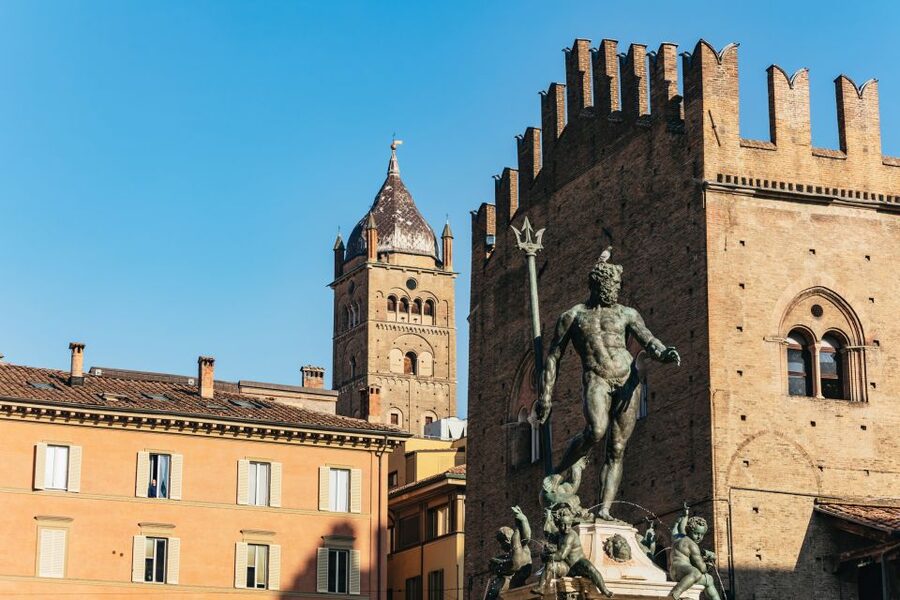
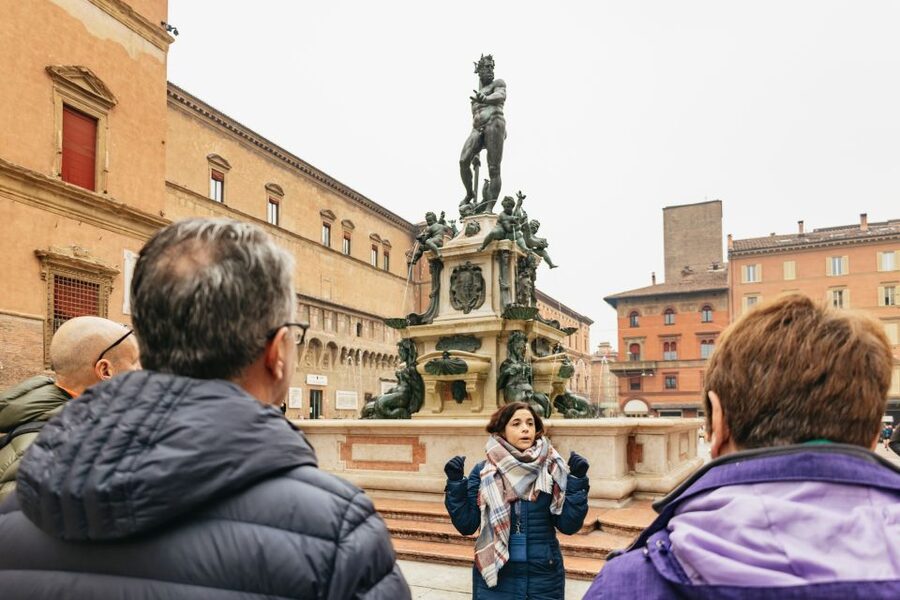
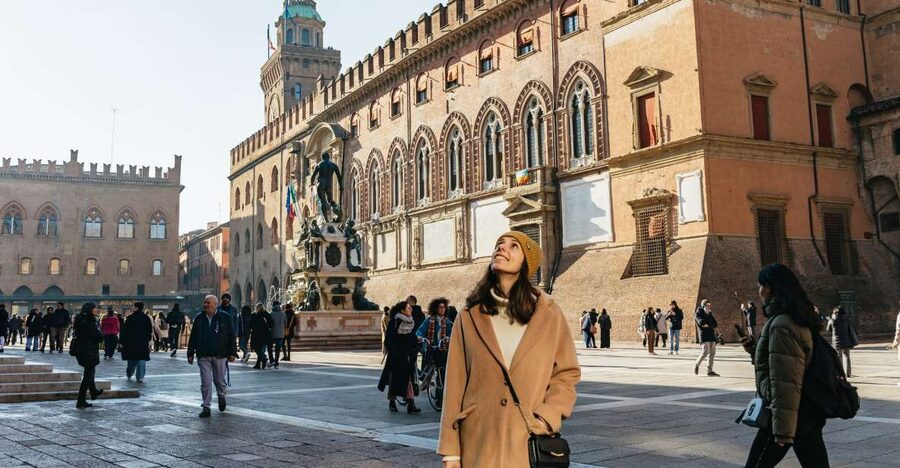
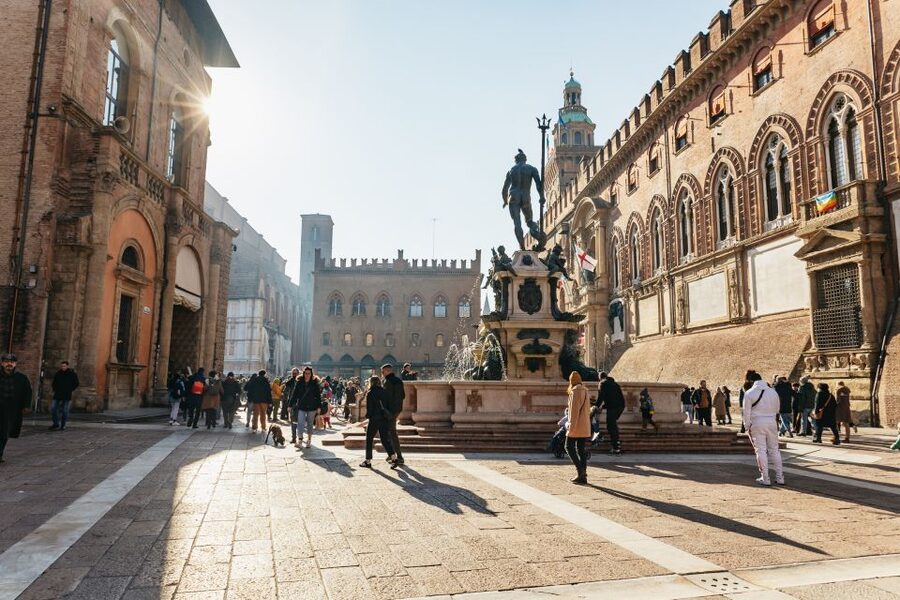
Most tours try to be clever with a meeting point. This one uses a landmark that’s easy to find and hard to ignore. Starting at Neptune Fountain (Fontana del Nettuno) puts you right in the thick of the city center right away, so the walk feels like it belongs to the place, not to the logistics.
One of the best moments here is simple: you make a wish at the fountain. It’s a small thing, but it also works as a reset—get your bearings, snap your first photos, then listen closely as the guide links what you’re seeing to the city’s bigger story.
Practical tip: if you plan to photograph, do it early. The fountain area can get busy, so you’ll enjoy the quiet window before the group thickens around the same angles.
Palazzo d’Accursio and Piazza Maggiore: the civic center in plain view
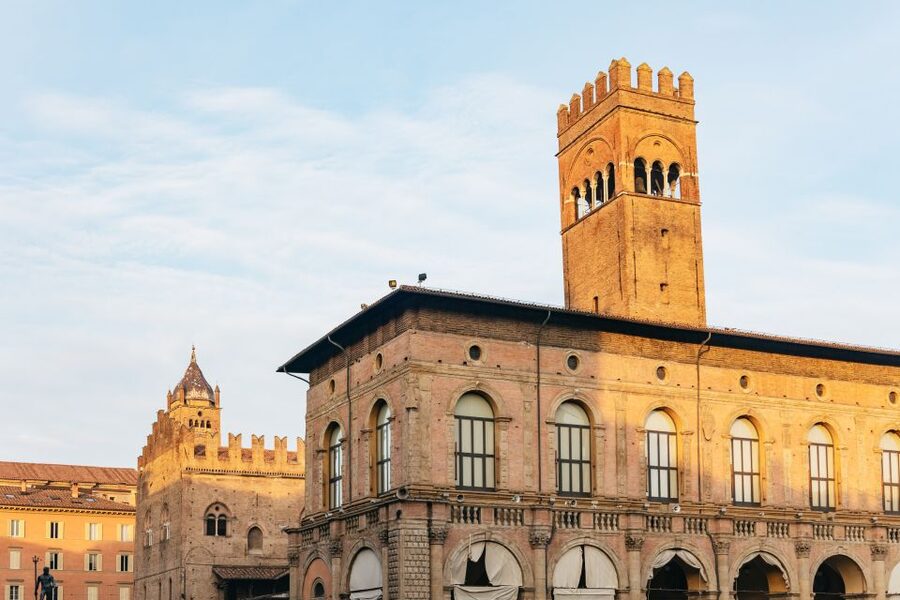
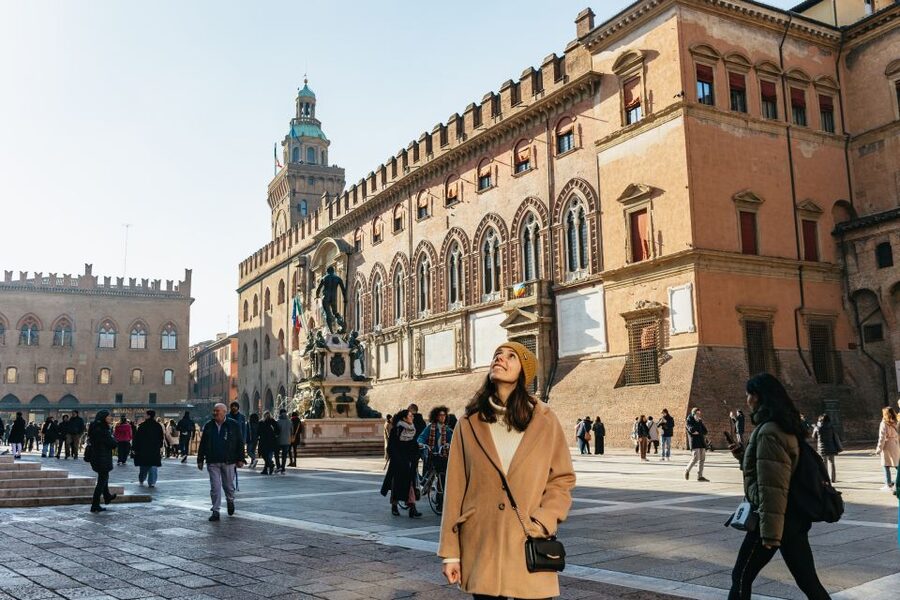
After the fountain, the walk moves toward the heart of Bologna’s civic life. Palazzo d’Accursio and Piazza Maggiore set the tone fast. You’re walking through the kind of space where politics and public life used to feel close enough to hear.
What I like about this part of the tour is that it doesn’t treat the buildings like museum props. The guide uses the architecture and the setting to explain what the structures meant to the city. That matters because Bologna’s landmarks aren’t just pretty—they reflect how the city organized itself.
A small consideration: these central squares can be crowded, and the group moves as a unit. If you want a wide, uninterrupted shot, the best move is to pause for pictures when the guide tells you a good moment is coming. The tour pacing is designed so you’re not constantly squeezing around strangers.
San Petronio: why this church deserves more than a quick glance
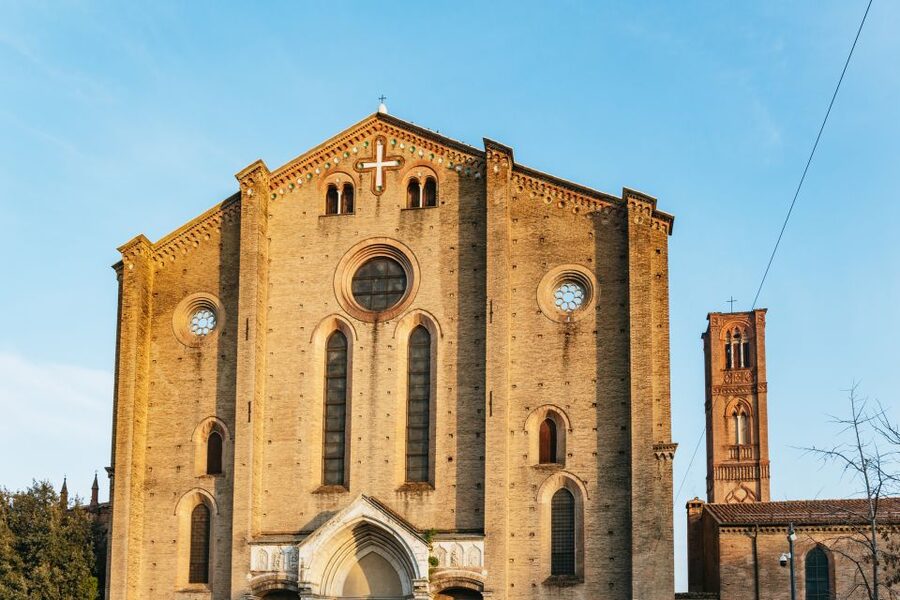
Then comes the star stop: Basilica of San Petronio. Even if you’ve seen big cathedrals elsewhere, this one hits differently because the guide frames it as a window into Bologna’s priorities. It’s not just the façade or the scale. You learn why this place matters to the city and how it fits into the larger story you’ve been building with each previous stop.
Also, the tour isn’t stingy with the time spent here compared to some city walks that rush past the main church. You get the guide’s story, and then you get to step into the space with a better sense of what to notice.
Dress code heads-up: this is a place of worship, so you need appropriate clothing. The tour instructions specify requirements like no short skirts or miniskirts, and you should expect restrictions such as no vests, tops, shorts. Bring a long-sleeved layer (the tour suggests it), and you’ll avoid the awkward moment of having to rethink your outfit at the doorway.
Piazza della Mercanzia and Quadrilatero Market: trade streets, not tourist wallpaper
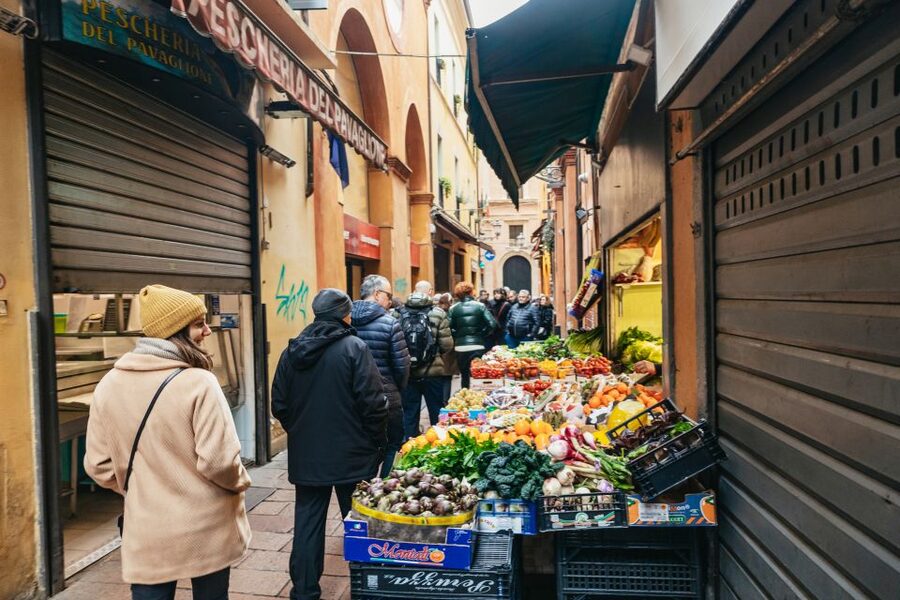
If you want Bologna’s “real life” feel, this is where it shows up. The stop near Piazza della Mercanzia connects the dots between commerce and daily life. From there, you head into the Quadrilatero Market, one of the city’s most recognizable market areas.
I like this segment because it’s practical. The guide helps you understand how the market area works, what it represents, and how to use it after the tour. You’re not just wandering without a purpose. You learn enough context that you can come back later and shop or browse with confidence instead of confusion.
A balanced note: markets can be loud and crowded. If you like slow, quiet sightseeing, go easy on the pacing. Take the market section as your “walk-through and learn” moment, then pick one or two pockets to return to when it’s calmer.
Two Towers and the Asinelli Tower: height with a job to do

Bologna’s towers are famous for a reason, but what makes them worth seeing on a guided walk is what the guide explains about them. You’ll get stops tied to the Asinelli Tower and the wider “two towers” idea, including the significance of tower height and what it meant in the city.
This part is great if you’ve ever wondered why people built so high in a medieval-ish setting. The guide gives you the why behind the silhouette. You start noticing tower placement, spacing, and the sense that Bologna’s skyline was once more strategic and competitive than scenic.
Logistics reality: you’re viewing towers from the street on a walking tour. You’re not guaranteed a climb, and you shouldn’t plan your day around going to the top. Treat this as an interpretation stop—learn what you’re looking at, then if you want more, you can plan a separate tower experience later.
Piazza Santo Stefano and the finishing loop back to Neptune
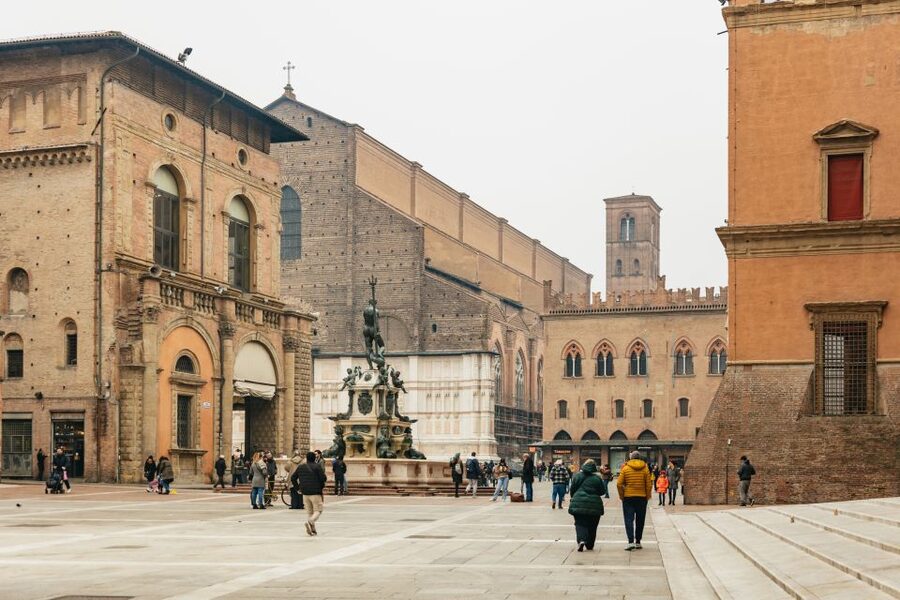
Near the end, the itinerary includes Piazza Santo Stefano, keeping you in the zone of major religious architecture and classic square life. This stop is less about one single structure and more about the area’s historic feel—why that part of town became a “must-see” neighborhood.
Finally, you return to Neptune Fountain to wrap the loop. That finish point is smart. You end where you started, so you can pivot easily into whatever you want next: dinner planning, wandering back through the market, or heading out for a museum or a longer church stop.
The whole structure—start at Neptune, move through squares and monuments, then loop back—makes the tour useful even if you don’t plan anything complicated afterward. You just know where you are.
What guides get right here (and why it affects your experience)
The tour stands or falls on the guide. And the feedback around this experience is consistent: guides are praised for story-driven explanations and for keeping the group engaged without turning it into a lecture.
You’ll see names come up often, like Victoria, Maria, Ricardo/Riccardo, Leonardo, and Nicola, each described as a strong storyteller with a clear way of explaining Bologna’s history and architecture. That’s a big deal because Bologna can feel dense on your own. A good guide helps you connect the dots, not memorize facts.
One practical upgrade mentioned in the feedback: audio clarity. The tour setup uses an audio/headphone system that helps you keep listening even when you step slightly off to take a photo. That turns out to be a big deal in a city center where people are constantly stopping and starting.
If you tend to zone out on walking tours, this one is built to keep you with the narrative.
Price and value: why $26 can work well for a first Bologna day
At $26 per person for about 2 to 3 hours, the value comes from what’s included: a certified guide (plus tour welcome staff). In a city like Bologna, a good guide can save you time and confusion. You’re effectively buying orientation and context for less than the cost of most single-entry attractions.
Here’s how I think about the cost: you’re paying for a structured route that includes major sights—Neptune Fountain, San Petronio, Bologna’s towers, and the Quadrilatero Market—instead of trying to piece together the same highlights from scratch. If you’re only in Bologna a short time, that “save time, avoid wrong turns” effect matters more than you’d expect.
And since the tour is priced accessibly, it’s a reasonable choice even if you’re traveling with other plans that day. You don’t feel like you’re sinking a huge chunk of your budget just to get your bearings.
Who this Bologna walk is best for
This tour is a strong fit if you:
- Want a fast introduction to Bologna’s big landmarks without spending hours researching
- Prefer hearing the story behind buildings while you walk
- Like small-group pacing where you can pause, listen, and then keep moving
You should think twice if you:
- Need accommodations for limited mobility (the tour explicitly isn’t recommended for people with mobility impairments)
- Don’t want to follow a clothing rule for churches (you’ll want a long-sleeved layer, and you’ll need to avoid short skirts/miniskirts and follow restrictions for worship sites)
It’s also a great “first day in town” move. Getting the layout early helps the rest of your trip feel smoother.
Quick practical tips before you go
- Wear comfortable shoes. Even if the walking pace is managed, it’s still a walking tour.
- Bring a long-sleeved shirt if you can. It helps for the dress expectations at places of worship.
- Plan to use the tour as your compass. After you finish, return on your own to whatever you loved most—usually people spend extra time around San Petronio and the market zone.
If you’re the type who likes to understand a city before you chase food or shopping, this tour hits that sweet spot.
Should you book this Bologna City Center Walking Tour?
Book it if you want an efficient, story-led orientation to Bologna’s core landmarks—especially if San Petronio, the towers, and the Quadrilatero Market are on your “must see” list. The $26 price is easy to justify when you factor in a certified guide, a tight route, and a format that helps you enjoy the center instead of just surviving it.
Skip it if mobility is a concern or if you know you won’t be able to meet the church clothing rules. Also, if you already know Bologna very well and don’t want guided context, you might prefer a self-guided day.
If you’re unsure, this is the kind of tour that makes Bologna feel less intimidating fast. You’ll walk away with a plan—and with sights that start to make sense on your own streets.
FAQ
How long is the Bologna city center walking tour?
It runs for 2 to 3 hours.
How much does the tour cost?
The price is $26 per person.
Where is the meeting point?
The meeting point may vary depending on the starting option you book.
What sights will we see during the walk?
You’ll see major highlights like the Asinelli Tower, Neptune fountain, the Basilica of San Petronio, and the Quadrilatero Market, plus stops at key squares such as Piazza Maggiore and Piazza Santo Stefano.
Is the guide live, and what languages are offered?
Yes, the tour is led by a live tour guide. Languages listed include Italian, English, Spanish, and French.
Is this tour a small group?
Yes, a small group option is available.
Is the tour suitable for people with limited mobility?
No. The tour is not recommended for people with limited mobility, and it is described as not suitable for people with mobility impairments.
What should I bring and wear?
Wear comfortable shoes and bring a long-sleeved shirt. For places of worship, appropriate clothing is required (no vests, no tops, no shorts, and no miniskirts). Short skirts and skirts are not allowed.
Can I cancel and get a full refund?
Yes. Free cancellation is available up to 24 hours in advance for a full refund.