REVIEW · PARIS
Paris City Center Free Walking Tour (Tip-Based)
Book on Viator →Operated by StellarTours · Bookable on Viator
Paris clicks when you get the stories behind landmarks. This tip-based city-center walk threads major sights with clear, chronological history in English. It’s the kind of outing that makes you look up more than you check your phone, with guides like Ezra, Sanna, and Alberto often bringing the jokes and the details.
Two things I like right away: the route hits the heart of Paris without long museum lines, and the guide pacing stays workable even when you’re stopping often for context. Another strong plus is how the tour uses the Seine area as a living timeline, from medieval power to Napoleon to World War II marks.
One drawback to note: it’s outdoors and it’s a lot of standing and walking over 2+ hours, so you’ll want comfy shoes and a backup plan for rain or cold. And since the tour is outside-focused, you should not expect to go into Notre-Dame or the Louvre.
In This Review
- Key Things That Make This Walk Worth Your Time
- Why This Tip-Based City Center Tour Works So Well
- Price, Tips, and the Real Value of Paying (Kinda)
- Timing, Pace, and What Your Feet Should Expect
- Start at Saint-Michel, End by the Tuileries
- Stop-by-Stop: What You’ll See and Why It Matters
- Île de la Cité: The Heart of the City That Started It All
- Notre-Dame (Outside): From 1163 to the 2019 Fire and Beyond
- Fontaine Saint-Michel: A Rebuilt Paris Marker You Walk Past
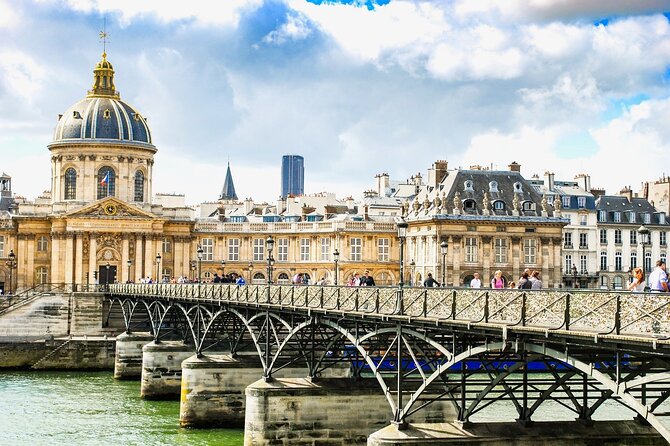
- Pont Saint-Michel: WW2 Bullet Holes and the Myth vs. Reality Story
- Place Dauphine: Henri IV’s Early Project and a Good Lunch Stop
- Equestrian Statue of Henri IV: Views Over the Seine
- Pont Neuf: Henry IV, the Oldest Bridge, and Street-Level Stories
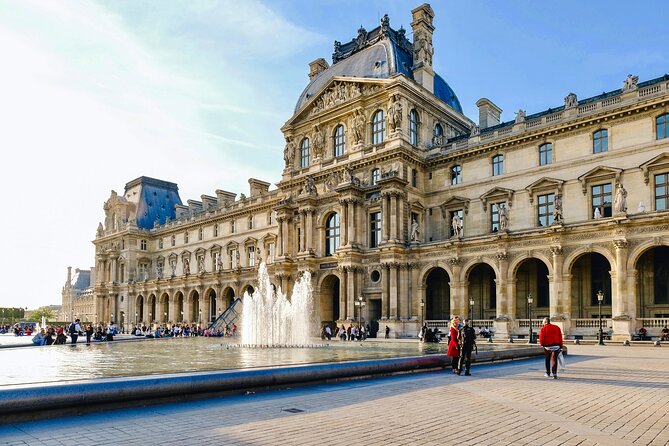
- Louvre Museum (Outside): Mona Lisa Fame and Francis I’s Planning
- Arc de Triomphe du Carrousel: Napoleon’s Message in Stone
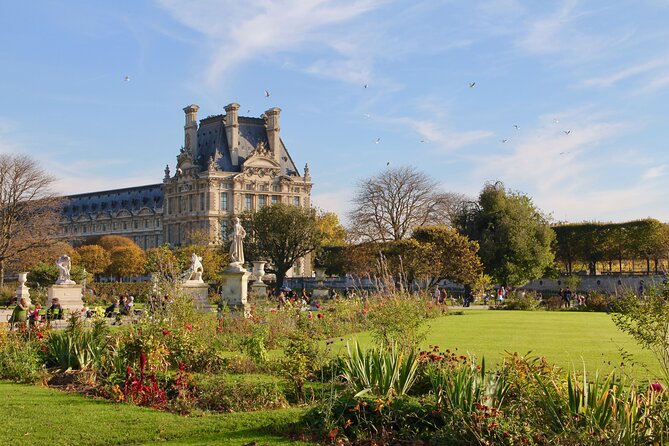
- Jardin des Tuileries: From Tile Factory to Royal Gardens
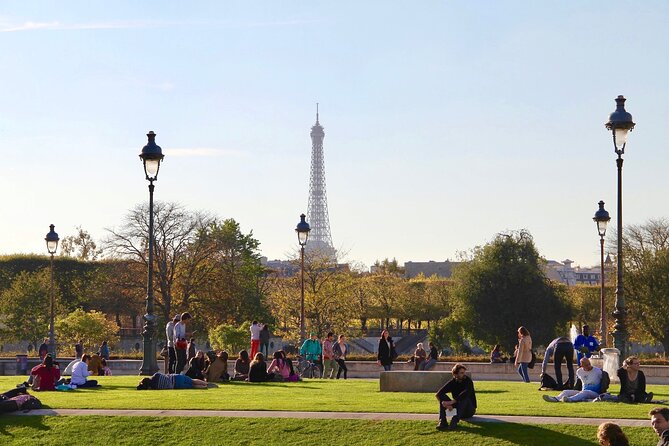
- Eiffel Tower: Best Views Without Any Long Detours
- What You’ll Learn (Beyond Just Dates)
- Who This Tour Suits Best
- A Few Practical Tips That Make It Smoother
- Should You Book This Paris City Center Free Walking Tour?
- FAQ
- FAQ
- Is this tour really free?
- How long is the walking tour?
- Where do I meet the guide?
- Where does the tour end?
- Do we go inside Notre-Dame?
- Do we go inside the Louvre Museum?
- What language is the tour offered in?
- How big is the group?
- What payment methods work for tipping?
- Do I need good weather?
- What’s the cancellation policy?
Key Things That Make This Walk Worth Your Time
- Outside-only access: you see Notre-Dame and the Louvre from the outside
- Seine bridge history: WW2 bullet holes on Pont Saint-Michel get real context
- French Revolution and Napoleon themes: tied into major stops, not treated as a separate lesson
- Card-only tipping model: tips accepted via credit/debit and electronic payments
- Flat, steady route for most people: groups up to 50 with a manageable pace
- English guides with amplification: a microphone is used in busy areas, which really helps
Why This Tip-Based City Center Tour Works So Well
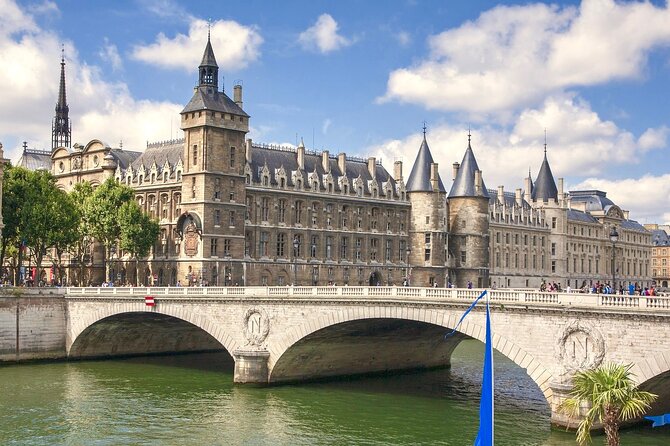
Paris can feel like a pile of famous buildings until someone connects the dots. This tour does that job fast, moving from Île de la Cité outward through the bridges, royal squares, and major monuments.
You’re not just doing sightseeing. You’re getting a cause-and-effect story: where power sat, who controlled the streets, and how big events left fingerprints on what you see today. It’s a practical way to get your bearings fast and then enjoy the rest of your trip on your own.
You can also read our reviews of more walking tours in Paris



Price, Tips, and the Real Value of Paying (Kinda)
On paper, the price shows up as $3.62 per group (up to 9). In practice, it’s a tip-based model. The big point for you: tips are accepted only via credit/debit cards and electronic payments, and VAT is added to contributions.
So what’s the value? You’re paying for guide storytelling across a route packed with iconic stops, without museum admission costs. Since the big attractions are mostly outside on this walk, you’re not spending your time in lines or inside venues. For many first-timers, that’s exactly the sweet spot.
Also: because guides are working in a group system (max 50 travelers), the guide format tends to stay organized. Most people can follow without getting lost in the chaos of central Paris.
Timing, Pace, and What Your Feet Should Expect
Duration is about 2 hours 15 minutes, though some runs may run closer to 2.5 hours depending on questions and how the group flows.
The route is a compact “greatest hits” slice of central Paris, so you’re walking city blocks, not trekking across town. Terrain is generally manageable, but you should still plan for standing at viewpoints and listening in busy areas. If you’re sensitive to long stops, bring patience and consider doing a quick light breakfast or snack before you start.
One practical tip: I’d use the restroom before you go. On at least one run, it’s been tough to find a good break spot until much later near the Louvre area.
Start at Saint-Michel, End by the Tuileries
The tour begins at Fontaine Saint-Michel, Place Saint-Michel (75005 Paris). You’ll end at the Tuileries Garden (75001 Paris).
That ending matters. You’re effectively dropped into a central zone with a lot of onward options, including easy access to the Seine-side walks and museum area. It also means your return plan home should be different than if you ended where you started.
If you’re trying to line this up with lunch, you’re in luck: the itinerary includes Place Dauphine, which is a naturally convenient stop for grabbing food in a calmer pocket than the busiest streets.
Stop-by-Stop: What You’ll See and Why It Matters





Île de la Cité: The Heart of the City That Started It All
You kick off on Île de la Cité, the island that the Parisii tribe used as a base for temples over 2,000 years ago, before the region folded into the Roman Empire.
This stop sets the tone. You get a sense that Paris didn’t begin as a grand boulevard city. It grew around control points: water access, defensible ground, and places where political and religious authority could gather.
Even if you’ve seen this island from photos, the guided context helps you notice why the geography still drives the vibe.
Notre-Dame (Outside): From 1163 to the 2019 Fire and Beyond
Next is Cathedrale Notre-Dame de Paris, and here’s the key expectation: you do not enter the cathedral on this tour.
You’ll hear how construction began in 1163, what shaped its role over centuries, and how later events like the French Revolution and Napoleon’s coronation connect to the building’s symbolism. The tour also brings the story forward to the 2019 fires.
Seeing it from the outside is still powerful because the guide uses the façade and site layout as a timeline. You’ll leave understanding why Notre-Dame isn’t just a landmark; it’s a political and cultural reference point.
Fontaine Saint-Michel: A Rebuilt Paris Marker You Walk Past
At Fontaine Saint-Michel, you’ll learn about the fountain’s place in the grand reconstruction of Paris. This stop is shorter, but it’s a reminder that Paris changes by layers.
Why it’s worth it: fountains and public monuments aren’t random decoration. They often signal what the city leadership wanted to project—style, order, and control over shared space.
Pont Saint-Michel: WW2 Bullet Holes and the Myth vs. Reality Story
On Pont Saint-Michel, the tour points out bullet holes from WW2. Then you’ll get the broader explanation for why Paris was not destroyed during the war.
This is one of those stops where you might think, Sure, I’ll see a bridge and move on. Instead, it turns into a moment of historical weight. The guide helps you read the bridge as evidence, not just architecture.
Place Dauphine: Henri IV’s Early Project and a Good Lunch Stop
You walk through Place Dauphine, one of the early projects built by Henri IV. The square is known for restaurants, and that’s more than just a bonus. It’s one of the few spots on this route where the area feels calmer, better suited for a quiet break.
If you’re hungry, this is a smart moment to plan lunch. You’ll be close to food options without feeling like you’re stuck in tourist-grid lock.
Equestrian Statue of Henri IV: Views Over the Seine
Next is the Statue équestre d’Henri IV. You’ll get views over the Seine while the guide talks about Henri IV’s short but meaningful reign.
The best part here is the blend of portrait-style history with real geography. You’re seeing where power is framed in a city that loves sightlines. Even if you don’t know the king’s story yet, you’ll walk away with a clearer sense of why his name shows up so often.
Pont Neuf: Henry IV, the Oldest Bridge, and Street-Level Stories
At Pont Neuf, you’re on the oldest bridge in Paris. The guide connects it to Henry IV, including the fact that he finished the bridge in 1607.
You’ll also hear local-flavored stories, including tooth pullers of Paris. It’s not the heavy stuff you get at Notre-Dame, but it’s the kind of detail that makes a city feel lived-in.
Louvre Museum (Outside): Mona Lisa Fame and Francis I’s Planning
Then comes Louvre Museum, but again, you do not enter. Instead, you focus on the stories behind what people come to see.
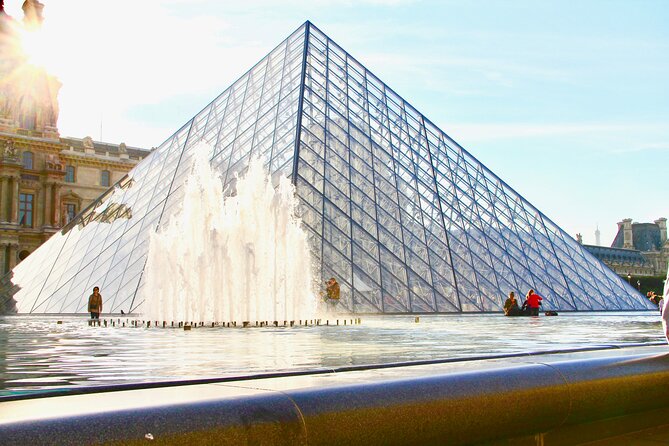
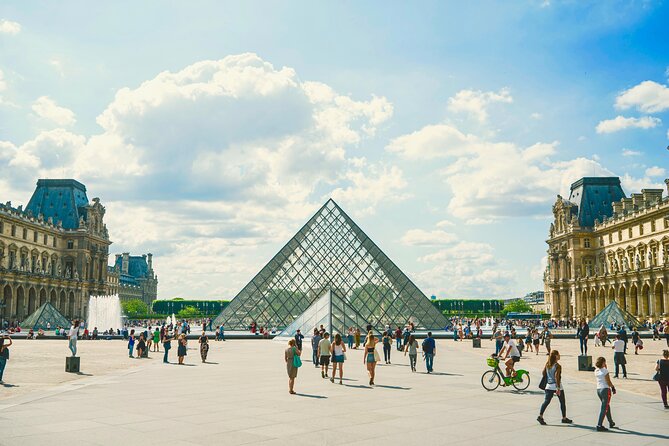
You’ll hear why the Mona Lisa became such a magnet and what connects Leonardo da Vinci to the wider Louvre narrative. You’ll also learn about Francis I, including how he helped establish the Louvre’s foundations as a fortress and palace. The glass pyramid is in the mix for outside viewing.
This stop is great if you’re curious but short on time. It doesn’t replace a museum visit, but it gives you a story framework so your future Louvre day feels less like walking through rooms of strangers.
Arc de Triomphe du Carrousel: Napoleon’s Message in Stone
At the Arc de Triomphe du Carrousel, you’ll hear how it relates to Napoleon and his rise as a master of Europe.
This is another outside-only stop, but it works because arcs and monuments are built to do one thing: communicate power. The guide helps you read the “why” behind the design.
Jardin des Tuileries: From Tile Factory to Royal Gardens
In the Jardin des Tuileries, the tour moves from utilitarian beginnings (a tile factory) to royal gardens. You’ll also learn about the garden design influence tied to the same designer who worked on Versailles-style gardens.
This is a good mental breather. You’re still learning, but the pace feels easier because the space invites slow walking and taking in statues and fountains.
Eiffel Tower: Best Views Without Any Long Detours
Finally, you reach Eiffel Tower viewpoints from the Tuileries garden area. The guide explains how Gustave Eiffel managed the construction in 1889.
Even if you’ve seen the tower in photos your whole life, the best part here is the timing: you’re finishing a history arc, then the city’s most recognizable modern symbol shows up. The guide makes the engineering feel less mythical and more practical.
What You’ll Learn (Beyond Just Dates)
This tour is heavy on turning points. You’ll connect themes like:
- how rulers used architecture and public space to signal authority
- how revolution and empire changed what people valued
- how war left physical marks that still show up in everyday walking routes
I like that the guide keeps the story focused on what you can see and touch. It’s not a lecture detached from the street. You’re always walking near the evidence.
And the energy tends to land. Based on past guide styles, this is a format where humor and questions get folded into the route without ruining the flow.
Who This Tour Suits Best
This is a strong match if you:
- have only a short time in Paris and want a fast orientation
- prefer guided storytelling over reading plaques
- want a walking route that ends in a central area with lots to do afterward
- enjoy history that connects to visible, real-world details
It’s also a solid family option. One of the best signs in the feedback is that teens and even mixed-age groups found the pacing workable and the stories easy to follow.
If you want museum entry days, plan other bookings separately. This one is for the outside landmarks and the street-level context.
A Few Practical Tips That Make It Smoother
- Wear shoes you’re comfortable standing in for a while.
- Bring layers. Central Paris can shift fast in the morning.
- Use the restroom before you start. The route is mostly outdoors.
- If you care about a specific ending point, double-check you’re booked for the route that finishes at the Tuileries Garden.
Should You Book This Paris City Center Free Walking Tour?
I’d book it if you want a guided “first-map” experience. It gives you a lot of landmarks for your time, with outside views that still feel meaningful because the guide ties each spot to major chapters of French history.
Pass if you’re hoping for inside access to Notre-Dame or the Louvre. You’ll still see a lot, but you’re not getting museum entry or cathedral entry here. Also, if you’re not comfortable with 2+ hours of walking and standing, consider a shorter or more stop-and-sit style tour.
FAQ
FAQ
Is this tour really free?
It’s tip-based. The listing shows a base amount per group, but you’re expected to tip the guide. Tips are accepted only via credit/debit cards and electronic payments, and VAT is added to contributions.
How long is the walking tour?
It runs about 2 hours 15 minutes (approx.).
Where do I meet the guide?
Meet at Fontaine Saint-Michel, Pl. Saint-Michel, 75005 Paris.
Where does the tour end?
The tour ends at Tuileries Garden, 75001 Paris.
Do we go inside Notre-Dame?
No. The tour explains Notre-Dame’s history, but you do not enter the cathedral.
Do we go inside the Louvre Museum?
No. You get stories and outside viewing, but you do not enter the museum on this tour.
What language is the tour offered in?
The tour is offered in English.
How big is the group?
The tour has a maximum of 50 travelers.
What payment methods work for tipping?
Tips are accepted only via credit/debit cards and electronic payments.
Do I need good weather?
Yes. The tour requires good weather. If it’s canceled due to poor weather, you’ll be offered another date or a full refund.
What’s the cancellation policy?
You can cancel for a full refund up to 24 hours in advance. If you cancel less than 24 hours before the start time, the amount paid isn’t refunded.