REVIEW · BERLIN
Berlin History Walking Tour with a French-Speaking Guide
Book on Viator →Operated by Vive Berlin Tours · Bookable on Viator
Berlin history can hit fast. This walk lines it up in a smart route, so you see the big turning points without wandering all day. What makes it work is the mix of places: the emotional Holocaust Memorial, the heavy-site atmosphere around the Führerbunker, and the classic postcards like the Brandenburg Gate—tied together with a French-speaking guide who explains how Berlin’s past shaped what you see today.
Two things I especially like: the guides are consistently praised for clear, well-organized storytelling (people name guides such as Anouk and Arthur for crisp explanations and good energy), and the route is very first-timer friendly because it gives you a mental map of Berlin in just about 3 hours. One thing to consider: there’s a complaint about not having an audiophone system, so if you rely on headsets for clarity, this may not feel as comfortable as tours that provide audio equipment.
In This Review
- Key things to know before you go
- Why This 3-Hour Berlin History Walk Works
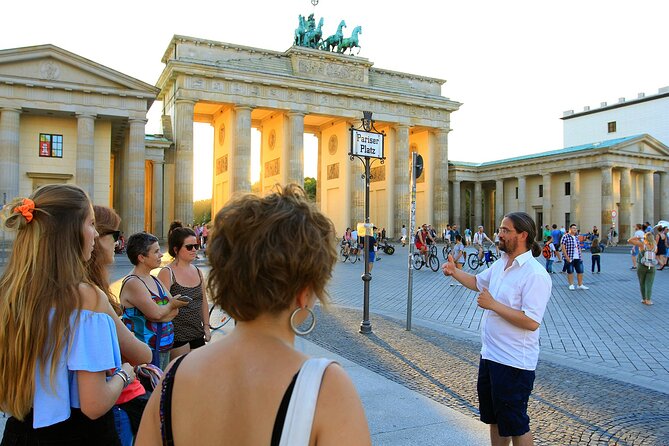
- Starting at Potsdamer Platz: Easy to Find, Good Energy
- Checkpoint Charlie: The Symbol That Explains the Cold War
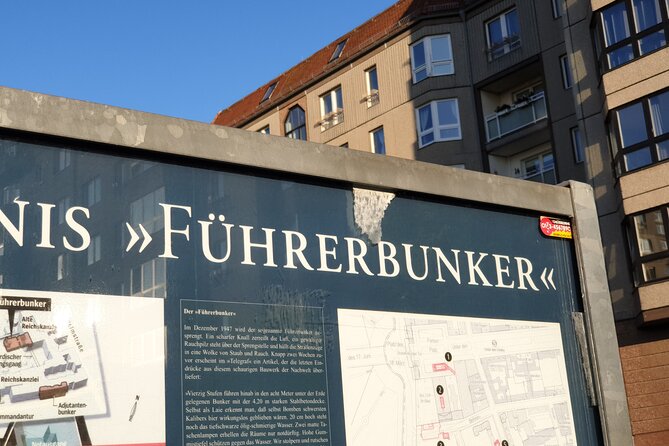
- The Führerbunker Site: Heavy Ground, Guided Context
- Holocaust Memorial: Not a Quick Look, Plan to Pay Attention
- Unter den Linden: Reading the City’s “War Wounds”
- Bebelplatz: Books Burning Meets University and Cathedral Squares
- Museum Island Ending: Berliner Dom and the Humboldt Forum Area
- Brandenburger Tor: From Symbol of Power to Reunification Icon
- Price and Value: What $27.81 Buys You
- Logistics That Actually Matter (and a Quick Watch-Out)
- Who Should Book This Tour (and Who Might Prefer Something Else)
- Should You Book This Tour?
- FAQ
- Is the tour conducted in French?
- How long is the Berlin history walking tour?
- Where does the tour start and end?
- What time does the tour depart?
- Is admission included for major sites?
- Do I need tickets, or is it mobile?
- What’s included in the price?
- What is not included?
- Is the tour suitable if it rains?
- What’s the cancellation policy?
Key things to know before you go
- French-speaking guide with strong communication and Q&A time
- Included entry to Hitler’s Bunker site and the Holocaust Memorial
- 3-hour morning timing that should leave you ready for lunch
- Small group cap (max 25) for a manageable walking pace
- All-weather operating means you’ll want layers and decent shoes
Why This 3-Hour Berlin History Walk Works
Berlin’s history is not quiet. It’s layered, sometimes contradictory, and often only makes sense when you connect places together. This tour does that job quickly. You’re not just seeing landmarks; you’re building a timeline while you walk.
You also get a practical rhythm. The start at Potsdamer Platz puts you in the middle of modern Berlin, and then the route swings into Cold War symbolism and Nazi-era sites. By the time you reach Unter den Linden and the grand squares around Museum Island, the city starts to feel less like a set of photos and more like a place with scars that are still visible.
Two strong value points help a lot here: entry is included for the Holocaust Memorial and the Führerbunker area, and the walk includes major “get your bearings” stops like Checkpoint Charlie and the Brandenburg Gate. At $27.81 for an about 3-hour half-day format, that’s a lot of guided structure for your time.
You can also read our reviews of more walking tours in Berlin



Starting at Potsdamer Platz: Easy to Find, Good Energy
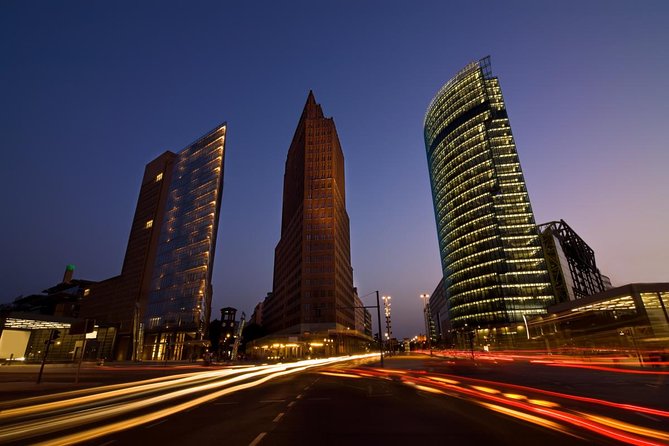
Your day kicks off at Potsdamer Platz 10, at the corner with Gabriele-Tergit-Promenade. This matters because Potsdamer Platz is one of Berlin’s most connected transport areas, and it’s also a kind of crossroads between old and new Berlin.
The tour begins with orientation. If you’re new to the city, this first stop helps you understand the scale and layout you’ll be walking through later. You’re also starting in a place that visually contrasts different eras—modern streets and buildings rubbing shoulders with the historical weight of the 20th century.
One small practical tip: since this is a morning departure (10:00 am) and it’s mostly walking, plan to arrive a few minutes early so you’re not stuck trying to match the group while everyone gets moving.
Checkpoint Charlie: The Symbol That Explains the Cold War
Next comes Checkpoint Charlie. This isn’t just a photo stop. It’s a symbol of how Berlin worked as a pressure point between East and West for decades.
What I like about a guided stop here is that you don’t just get the headline story. You get the meaning. The guide can point out why this location became loaded with symbolism—why it represented confrontation, borders, surveillance, and the constant tension of everyday life.
Timing is short here (about 10 minutes), so you’ll want to listen closely and ask questions early if something sparks your curiosity. If you’re the type who likes to understand how borders affected regular people, this stop is a good use of your time, even with the brief window.
The Führerbunker Site: Heavy Ground, Guided Context
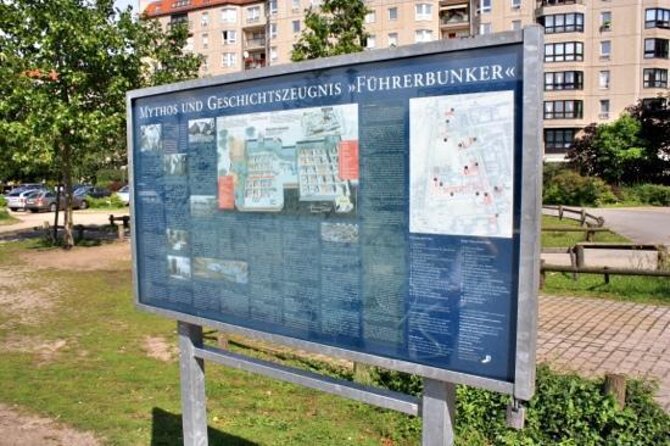
Then you reach the Führerbunker area. This is where the tour earns its “serious history” reputation. The site is connected to where Hitler spent his last days, and the guide’s job is not to sensationalize—it’s to explain the place and what it represents.
A big difference between reading about Nazi Germany and standing near a site like this is scale and atmosphere. The guide can help you understand why the location matters and why it is treated the way it is today. It’s the kind of stop where a calm pace works better than rushing for photos.
The tour includes entry here. That helps because you’re not forced to piece together tickets or separate activities just to cover one of the most talked-about sites. The tradeoff is that the stop is still relatively brief (around 10 minutes), so if you want long contemplation time, pair this tour with a second visit later on your own.
Holocaust Memorial: Not a Quick Look, Plan to Pay Attention
The Memorial to the Murdered Jews of Europe is one of the most emotionally intense parts of any Berlin itinerary. This tour doesn’t try to reduce it into trivia. It sets it up as a place of remembrance and emphasizes what the site stands for.
The guide’s storytelling is part of the value: you’re not just walking through abstract forms; you’re hearing explanations meant to connect the space to the reality of the crime committed by the German state during Nazism. Admission is included, which is key. It keeps the flow moving and lets you focus on the experience instead of logistics.
The tour gives about 15 minutes here. That’s enough to feel the space and get the point, but not enough to linger for an hour-long, personal experience. If you know you’ll want extra time at a memorial, build flexibility into your afternoon and consider coming back.
You can also read our reviews of more guided tours in Berlin



Unter den Linden: Reading the City’s “War Wounds”
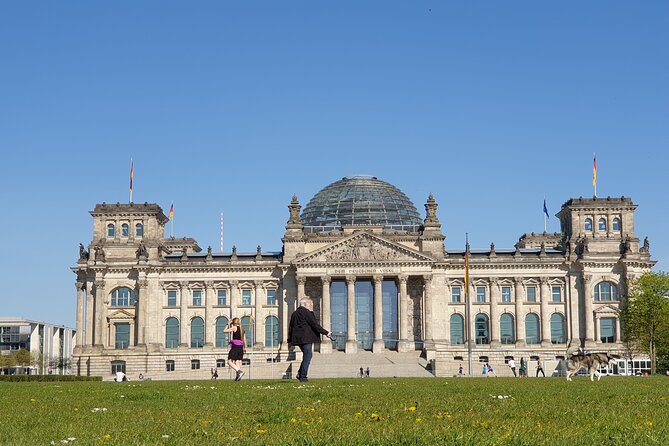
After the darker stops, the tour moves to Unter den Linden, the grand boulevard. This is where Berlin shifts from tragedy and division into the look-and-feel of power, rebuilding, and public space.
The guide helps you read the street like a timeline. You’re walking along an avenue that once served as an access road linked to imperial presence, and the commentary connects construction periods and the physical “wounds” left by war. You start noticing details you’d normally miss: shifts in style, how different eras sit next to each other, and how the city visually repairs itself over time.
This stop is about 20 minutes and includes admission. That length is helpful because it gives you time to look up from your phone and notice the layers around you.
Bebelplatz: Books Burning Meets University and Cathedral Squares
Next is Bebelplatz. The name alone is easy to forget later, but the story is memorable. This square is linked to the burning of books during the Nazi dictatorship, and it’s also the kind of place where you can see education and religion operating side by side in the same urban environment.
That mix is part of the point of Berlin. The guide can connect authoritarian censorship with the longer arc of universities and civic life—then bring you to the nearby presence of Humboldt University and the Catholic cathedral setting that makes the square feel alive beyond its darkest reference.
The stop is around 10 minutes. Fast enough to keep the tour moving, but long enough for you to understand why it’s more than a named square. It’s a “how the past tries to control the future” kind of stop.
Museum Island Ending: Berliner Dom and the Humboldt Forum Area
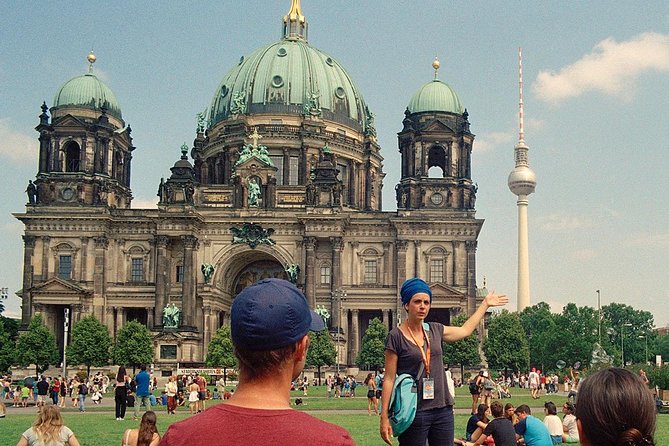
The tour concludes near Museum Island (in the broader area close to Alexanderplatz), with the walk finishing near the Berliner Dom and the reconstructed Humboldt Forum area. This is a smart landing point because Museum Island gives you options.
If you want to do more after the tour, you’re right where you can. You’re also in an area where you can reset and grab lunch without having to cross the entire city. The final Museum Island segment is listed as about 15 minutes, and admission is noted as free for that portion.
One practical note: ending near a major cultural hub means you’ll probably find plenty of people around. Plan for some normal walking crowd flow as you transition to your next stop.
Brandenburger Tor: From Symbol of Power to Reunification Icon
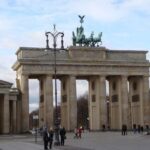
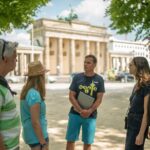
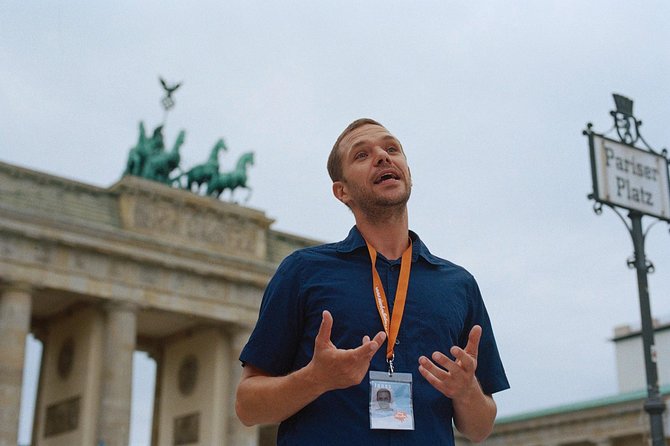
Finally, you reach Brandenburger Tor. It’s the most photographed gateway in Berlin, but the tour aims to make it more than a backdrop.
The guide explains its story as it shifted roles over time: from a symbol of power tied to a king’s strength to a Cold War icon, and then to one of the visual symbols of German reunification. That arc matters. It turns the landmark into an explanation of Berlin’s political transformations, not just an object you stand in front of.
This stop is about 10 minutes, with entry included. It’s short, but it’s also a perfect capstone. After Hitler’s Bunker and the Holocaust Memorial, hearing how the same city space later became a reunification symbol gives the day a stronger shape.
Price and Value: What $27.81 Buys You
At $27.81 per person, the best way to judge value is what you avoid spending time and money on yourself. This tour includes admission for two of the biggest-ticket emotional and historical stops: the Holocaust Memorial and the Führerbunker site.
Even when the tour doesn’t require payment for every stop, it still packages the route so you’re not piecing together multiple activities. The walk structure also saves you from the common first-timer problem: spending half your day traveling between scattered landmarks instead of building understanding.
Add in that the tour runs in French, lasts about 3 hours, and caps at 25 people, and the price starts to make more sense. It’s not a “skip the guide” kind of deal. It’s a guided foundation.
Logistics That Actually Matter (and a Quick Watch-Out)
This is a walking tour, so comfortable shoes are not optional. The description says moderate physical fitness is required, and the tour operates in all weather, so bring rain gear if Berlin decides to do Berlin things.
You’ll get a mobile ticket, which is convenient if you don’t want to fuss with printed confirmations. The start and end points are clearly defined, and it runs near public transportation—which helps if you want to adjust your day after the tour.
One watch-out: there’s a complaint about not being equipped with an audiophone (headset system). Because the group size is capped, you might still be fine. But if you know you prefer audio headsets to hear clearly over street noise, it’s worth taking that into account when you book.
Another minor caution from the feedback: one comment flagged that a few details could be off. If you’re the type who loves absolute precision with dates and facts, treat this as a strong starting framework and verify specifics with a guidebook afterward.
Who Should Book This Tour (and Who Might Prefer Something Else)
This tour is ideal if:
- You’re in Berlin for the first time and want a fast orientation
- You want a French-speaking guide to connect the dots across Nazi-era and Cold War sites
- You’d rather walk a curated route than plan tickets and sequences yourself
It may be less ideal if:
- You already know Berlin history deeply and want longer, slower visits at major sites
- You have strong needs for headset audio (no audiophone is mentioned as a gap)
- You need lots of quiet time at the memorials beyond what a guided stop provides
Should You Book This Tour?
If your goal is to get your bearings and understand the “why” behind Berlin’s major landmarks, I’d book it. The combination of included entry for the Holocaust Memorial and the Führerbunker site, plus the guided connection to Unter den Linden, Bebelplatz, Museum Island, and Brandenburger Tor, makes this a good value way to start your trip.
If you’re sensitive to emotionally heavy places and want longer reflection time, use this as your structured introduction, then plan a follow-up on your own schedule. That’s often the best of both worlds: guided context first, and your own pace after.
FAQ
Is the tour conducted in French?
Yes. The tour operates in French.
How long is the Berlin history walking tour?
It runs for about 3 hours.
Where does the tour start and end?
It starts at Potsdamer Platz 10, 10785 Berlin and ends next to Museum Island (Museumsinsel 10178 Berlin).
What time does the tour depart?
The start time is 10:00 am.
Is admission included for major sites?
Yes. Admission is included for Hitler’s Bunker (Fuhrerbunker) and the Holocaust Memorial. Admission is listed as free for Checkpoint Charlie and for the ending portion on Museum Island.
Do I need tickets, or is it mobile?
You get a mobile ticket.
What’s included in the price?
It includes local taxes, the local guide, and a professional French-speaking guide.
What is not included?
Transportation to and from attractions, food and drinks, and an optional tip for the guide are not included.
Is the tour suitable if it rains?
Yes. It operates in all weather conditions, so you should dress appropriately.
What’s the cancellation policy?
Free cancellation is available up to 24 hours in advance for a full refund. Canceling less than 24 hours before the start time means no refund.