REVIEW · BERLIN
Berlin: Hitler’s Berlin The Rise & Fall Guided Walking Tour
Book on GetYourGuide →Operated by On the Front Tours · Bookable on GetYourGuide
Hitler’s Berlin is dark, but it’s also explainable.
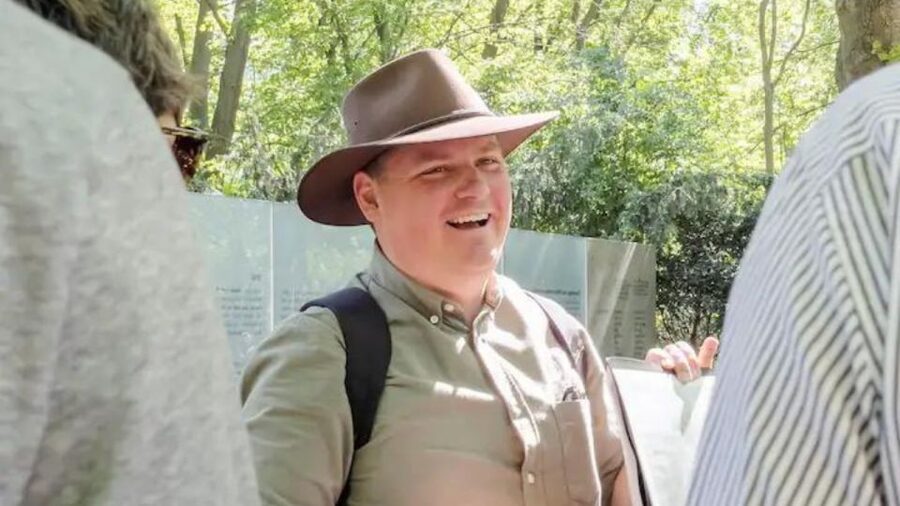
This walking tour lays out the full arc of Nazi power in 150 minutes, with guides like Scott and Hannah using then-and-now visuals to make the story click. You get a walk that’s serious without turning into a textbook.
I also like the pacing and the built-in Q&A, because you’re standing at the actual places where dictatorship replaced democracy. One drawback to plan for: it’s an outdoor, a lot-of-walking experience, so bring solid shoes and dress for weather.
In This Review
- Key highlights to notice on the walk
- Berlin’s Nazi-era sites make a walking story work
- Getting started near Brandenburg Gate: a quick orientation
- Sinti and Roma memorials: learning to look without rushing
- Reichstag stop: from democracy to dictatorship, in one building
- Tiergarten’s Soviet memorial: seeing the end of the war
- The Holocaust Memorial: a guided pause that turns into understanding
- Hitler’s bunker area: a difficult stop handled with clarity
- Johann Georg Elser memorial: resistance in the margins
- German Finance Ministry stop: the regime wasn’t just ideology
- Topography of Terror: where terror became a system
- Then & Now photos and historic maps: how the story stays clear
- Price and value for $47: what you’re really paying for
- Logistics you can actually plan around
- Who this tour is for (and who should think twice)
- Should you book Hitler’s Berlin: Rise and Fall walking tour?
Key highlights to notice on the walk
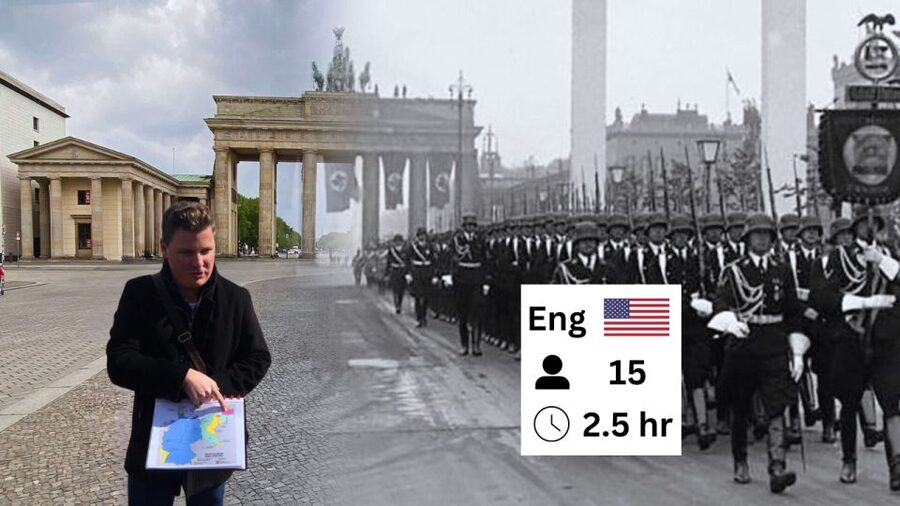
- Reichstag as a symbol of democracy, dictatorship, and the postwar idea of unity
- Topography of Terror linked to the former Gestapo & SS headquarters, explained clearly on the ground
- Memorials for the Sinti and Roma and the Murdered Jews of Europe for structured remembrance, not just sightseeing
- Hitler’s bunker site as a marker of how the war in Europe ended in Berlin’s streets
- Then & Now photographs and historic maps that help you read what you’re seeing today
- Small group format that makes questions feel normal instead of awkward
Berlin’s Nazi-era sites make a walking story work
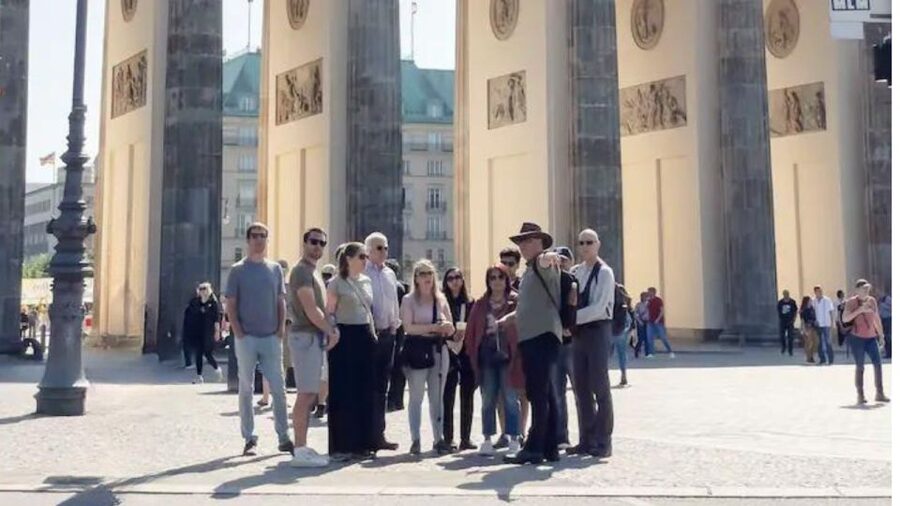
Berlin has layers. You can stand at a landmark and feel like it should be simple, but the 20th century refuses to be simple. This tour helps you sort the chaos into a clear chain: how the Nazis took power, how fear and propaganda kept it, and how everything collapsed in 1945.
The value here is in the structure. You’re not bouncing randomly between famous spots. You’re walking through a storyline that connects politics, repression, and war across the same city you can still visit today. And because the route uses memorials alongside government and enforcement sites, you don’t lose sight of the human cost.
If you want Berlin to make sense fast—without oversimplifying—this is the kind of guided walk that fits.
You can also read our reviews of more walking tours in Berlin



Getting started near Brandenburg Gate: a quick orientation
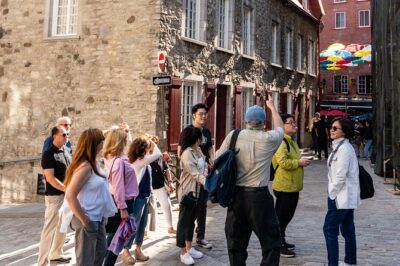
Your meetup is at the Tourist Office at Brandenburg Gate, look for the Blue Umbrella. You’ll also hear the start point referenced near Pferdedroschke, and either way it’s in the same immediate area—so you’ll get oriented quickly.
The early stop at Brandenburg Gate isn’t just for photos. It works as a baseline symbol: democracy and unity before the regime twists those meanings into something else. Even the short walk segments matter here, because the guide uses street-level context to set up what comes next.
Practical note: this part of the day moves. Ten minutes can feel short when the group is clustered, so be ready to walk as soon as the meeting brief ends.
Sinti and Roma memorials: learning to look without rushing
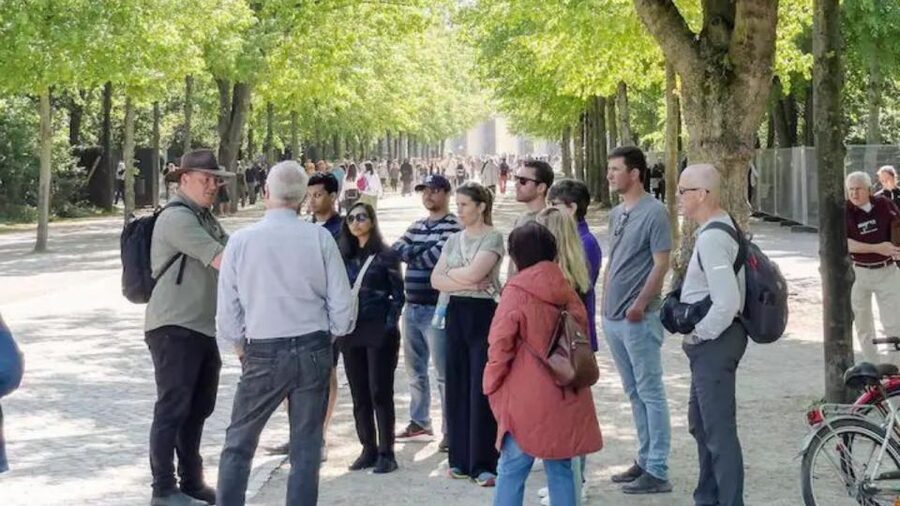
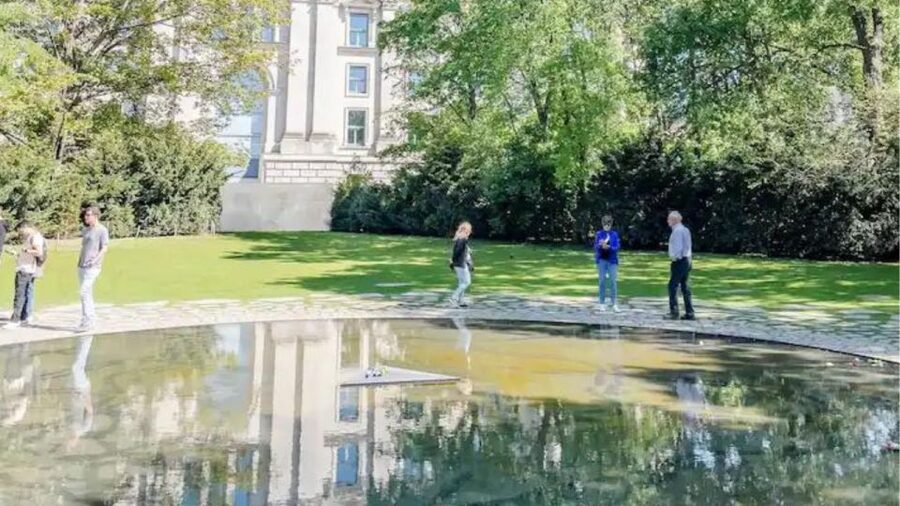
Just a bit down the line, you’ll stop at the Memorial to the Sinti and Roma Victims of National Socialism. This is one of the places where the tour’s tone shifts toward reflection, but it’s not vague.
You’ll get a guided explanation while you stand in the space and take it in. That matters, because memorials can look like a puzzle if you don’t know what the symbols are trying to hold. The guide’s job here is to help you see how this genocide fits into the broader Nazi plan—alongside other victims you’ll meet later on the route.
This stop is short on paper (around ten minutes), but it doesn’t feel like a hurried checkbox. The key is that you’re not allowed to treat remembrance like background scenery.
Reichstag stop: from democracy to dictatorship, in one building
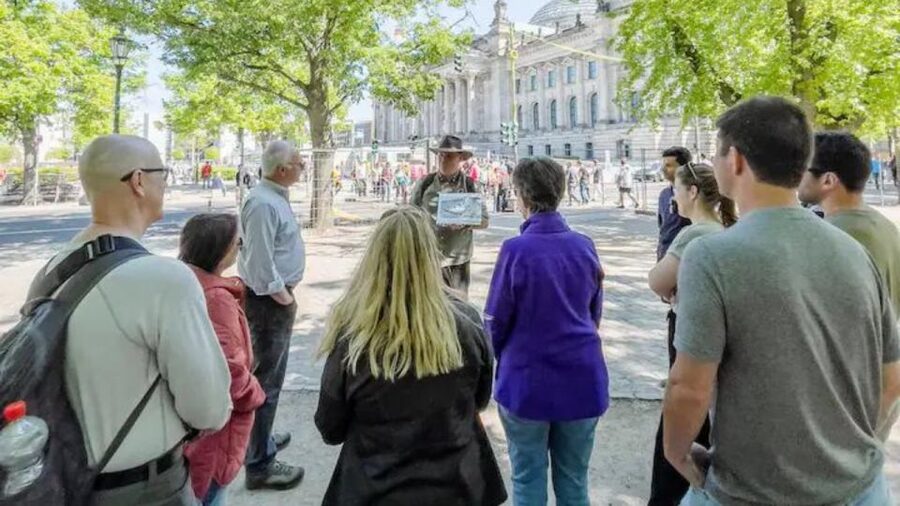
The Reichstag is the headline stop for a reason. You get a visit and guided time here, plus room to look around and understand why the building is such a powerful symbol.
What you’re doing at the Reichstag is learning to read shifts in control. It’s the same structure, but different regimes turned its meaning into something sharp and opposite. The tour connects that transformation to the broader rise of Nazi Germany rather than treating the Reichstag as a stand-alone sight.
Plan for about twenty minutes on this stop. That’s enough time to hear the explanation, ask a question, and then actually absorb what you’re seeing outside. If you’re hoping to turn this into an all-day Reichstag museum visit, this tour is not built for that—everything here is outdoors and focused on walking interpretation.
Tiergarten’s Soviet memorial: seeing the end of the war
In the Tiergarten area, you’ll reach a Soviet War Memorial stop for photos and guided context. This is a reminder that Berlin wasn’t just a political stage—it was also a city of brutal fighting in the final days.
The value of including this here is the balance. Nazi power doesn’t get explained as an isolated evil that somehow existed on a separate timeline. It’s tied to the war’s consequences, and Berlin’s end-game is part of that story.
You’ll have about twenty minutes here, split between photo time, walking, and the guide’s explanation. It’s a good spot to notice how different memorials in Berlin tell different aspects of the same overall tragedy: conquest, resistance, occupation, and defeat.
You can also read our reviews of more guided tours in Berlin



The Holocaust Memorial: a guided pause that turns into understanding
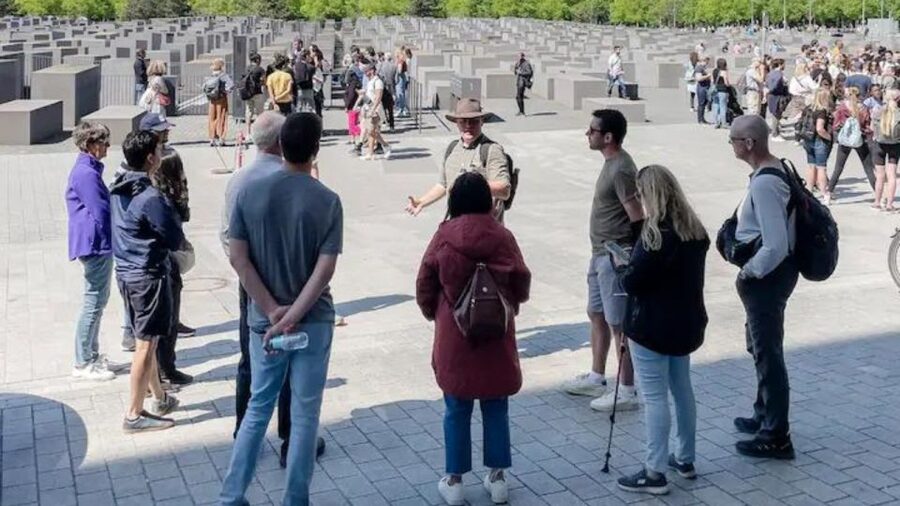
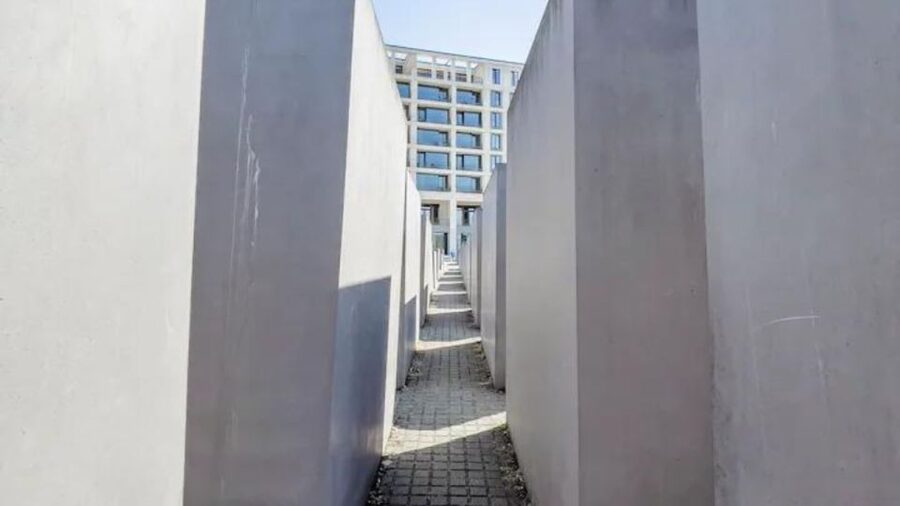
Next comes the Holocaust Memorial. You’ll have photo time, guided time, and guided walking around the area, with scenic views on the way.
This is where the tour earns its reputation for being more than a checklist of famous names. The guide doesn’t just say the words you’ve heard before. You learn how to connect the site to the systematic targeting of Jewish people under the Nazi regime—then you start seeing how propaganda and repression turned policy into daily reality.
Expect this stop to take roughly twenty minutes. It’s enough time to feel the weight of the place without feeling stuck in one location for too long. And because the tour keeps moving, you don’t get trapped in one emotional moment—you get a guided path through the full arc.
Hitler’s bunker area: a difficult stop handled with clarity
Then you reach the Hitler’s Bunker site for photo time and guided context. Even if you know the general outline of World War II’s end, it hits differently standing on the ground where the story is supposed to end.
This stop is about how the war in Europe came to its final days in Berlin. The guide frames it in relation to the collapse in 1945, tying ideology, control, and battlefield reality into one sequence. It’s not built like sensational horror. It’s built like explanation—focused on what happened and why the regime fell apart.
You’ll spend around fifteen minutes here. That’s a careful amount of time. Long enough to understand the context, not so long that the tour drags you through the most uncomfortable part without breathing room.
Johann Georg Elser memorial: resistance in the margins
You’ll also stop at the Johann Georg Elser Memorial. This is one of those stops that broadens your understanding of the period beyond the Nazis and their institutions.
The tour uses it to keep the story from becoming a single straight line. You get guided time (about ten minutes) that connects this memorial to the bigger theme: opposition existed even when the regime was tightening control.
If your goal is to understand Nazi Berlin as a complete ecosystem—power on one side, resistance and victimization on the other—this is the kind of stop that adds the missing pieces.
German Finance Ministry stop: the regime wasn’t just ideology
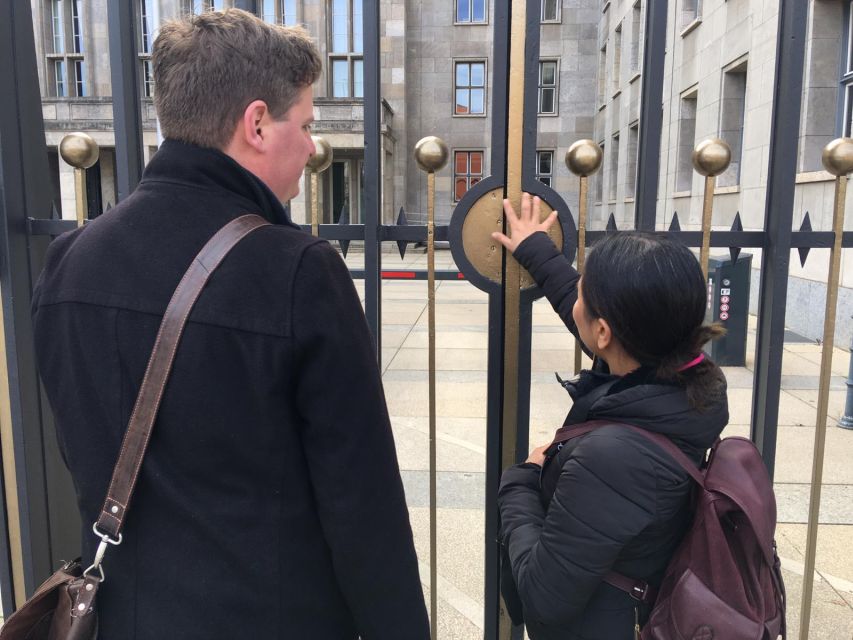
You’ll make a brief photo and guided stop at the German Finance Ministry area. It’s short (around five minutes), but it’s also a reminder that the Nazis ran society through systems: budgets, administration, institutions, and enforcement.
This is one of the reasons I like walking tours like this. A city tour can easily turn into symbols only—buildings as icons. Here, the guide ties icons back to how the regime functioned day to day.
Don’t expect a long lecture here. Think of it as a quick check: ideology had to pay for itself, manage resources, and maintain control through official machinery.
Topography of Terror: where terror became a system
The route culminates at Topography of Terror, and you’ll also spend time at it as a key stop along the way. This is the former Gestapo & SS Headquarters nerve centre of terror and repression, explained in a guided, structured way.
This is where your earlier stops start making sense as a connected chain. The Reichstag and government power show you how control was taken. The memorials show you what that control did. Topography of Terror shows you how repression worked in practice—where fear was organized.
You’ll have about fifteen minutes here, with photo time, guided time, and walking around the area. It’s outdoors, which keeps the tour moving and keeps your attention on the street-level relationship between events and location.
Then & Now photos and historic maps: how the story stays clear
One of the most practical inclusions is the use of then-and-now photographs and historic maps. This is how you avoid the biggest Berlin problem: looking at today’s city and guessing what used to be there.
The visuals help you connect what the guide is saying to what you’re seeing right now. You’re less likely to miss the point, especially if you’re not a WWII specialist. And even if you are familiar, the mapping style gives you a better mental geography of how Nazi power and war moved through the capital.
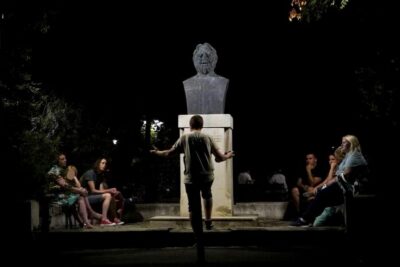
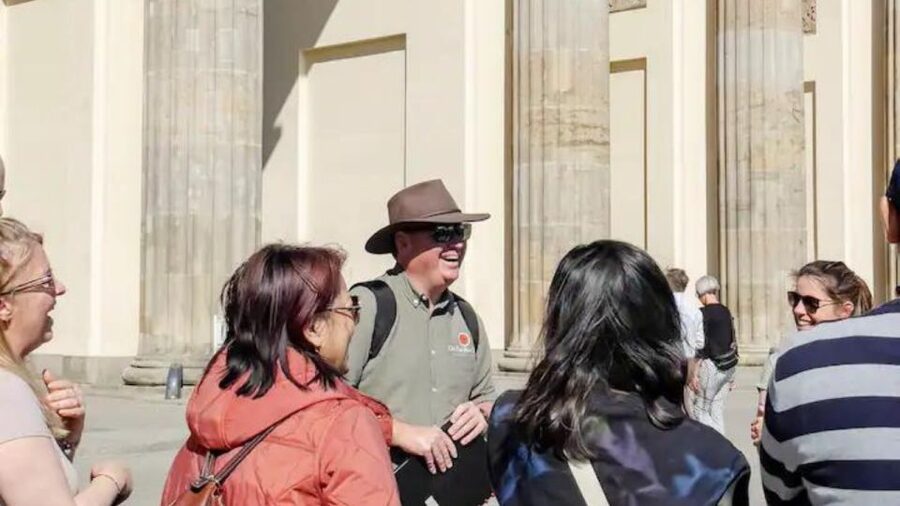
Guides also lean into Q&A, which is a big deal for a topic this heavy. If your question is about a specific policy, a specific timeline moment, or what a symbol means at a memorial, you’re more likely to get a direct answer instead of a generic summary.
Price and value for $47: what you’re really paying for
At about $47 per person, the price makes sense if you’re paying for interpretation, not just walking. You’re getting an expert local guide with academic background in WWII history, small group time, guided visits to major sites and memorials, and supporting tools like then-and-now photos and historic maps.
You also get time to reflect and ask questions. That’s not a “free bonus” on a tour like this—it’s part of the value. If you’ve ever left a museum or memorial feeling like you still need context, you’ll appreciate that this walk is built to provide it on the spot.
What you’re not getting: food, drinks, indoor museum access, or transport from your hotel. Since it’s outdoors, you’re responsible for your comfort—bring water and dress for wind and rain.
Logistics you can actually plan around
The tour runs about 150 minutes. That’s long enough to cover the full arc from rise to collapse, but short enough that you can still enjoy the rest of Berlin the same day.
Because it’s outdoors and includes a considerable amount of walking, comfortable shoes are non-negotiable. A water bottle is strongly advised. Weather can change quickly, and you might find your guide helps handle rain in the moment—but the tour also expects you to bring what you need, including personal umbrellas or walking sticks if you use them.
Good news: the tour is wheelchair accessible. That matters for a topic like this, since you shouldn’t have to choose between mobility and learning.
Who this tour is for (and who should think twice)
This walk is ideal if you:
- Want a structured WWII Nazi-era narrative tied directly to Berlin locations
- Like asking questions and getting answers instead of sitting through a lecture
- Prefer outdoors guided context over indoor museum time
It may be less ideal if:
- You’re looking for an easy stroll with minimal walking
- You want only fast photo stops with no explanation
- You’re expecting indoor museum exhibits as part of the ticket
Also, if you’re sensitive to dark themes, plan your day around that. This tour is designed for understanding, remembrance, and clarity. That means the emotions are real, and the guide doesn’t avoid the subject.
Should you book Hitler’s Berlin: Rise and Fall walking tour?
Yes—if your goal is to understand how Nazi Germany took hold and how Berlin remembers that era, this tour is a strong choice. The route balances political power sites with memorials and places tied to terror and the war’s end, and the then-and-now tools keep it from feeling like scattered sightseeing.
I’d book it early in your Berlin trip if you want the city to make sense afterward. And I’d show up ready to walk and ready to ask questions, because the experience is built for interaction.
If you want a WWII Berlin experience that’s structured, outdoors, and focused on what you see as you walk, this one is worth your time.