REVIEW · BERLIN
Berlin: Third Reich, Hitler, and WWII Walking Tour
Book on GetYourGuide →Operated by Insider Tour Berlin · Bookable on GetYourGuide
Berlin has a way of remembering. This 3-hour walking tour lines up major Nazi-era locations with the end of the regime—so the story isn’t stuck in a book. You’ll walk between places tied to Hitler’s power, the Führer Bunker area, and the route of the Soviet assault.
I especially like the way the tour connects command and propaganda sites—like Goebbels’ propaganda ministry and Himmler’s SS/Gestapo headquarters—with the physical geography of Berlin’s collapse. I also appreciate the human touch: guides such as Hannah, Xavier, Will, Jörg, and Mikhail are repeatedly praised for clear explanations and for handling sensitive topics with care.
The one caution: the subject matter is heavy, and you’ll be on your feet for most of the walk, so wear comfortable shoes and plan for limited breaks.
In This Review
- Key things that make this Berlin history walk work
- Getting oriented at Friedrichstraße (and spotting your guide fast)
- The overall route: from Nazi command to the regime’s end (in 3 hours)
- Hitler’s era on foot: Nazi ministries and the machinery of terror
- The “Germania” axis and the planned future that never arrived
- The Führer Bunker area and Hitler’s last act: history with difficult detail
- Topography of Terror: using an exhibit to make sense of what you see outside
- Reichstag to Brandenburg Gate: the Soviet assault and changing symbolism
- The Soviet War Memorial: tanks and howitzers with a lesson attached
- Guides and pacing: what makes the tour feel strong (even with hard topics)
- Practical value: why $20 feels like a fair deal for this route
- Who should book this tour—and who might think twice
- Should you book the Berlin Third Reich, Hitler, and WWII Walking Tour?
- FAQ
- Where is the meeting point for the tour?
- How long is the Berlin Third Reich, Hitler, and WWII walking tour?
- What time does the tour start?
- What languages are available?
- Does the tour run in bad weather?
- Is pickup offered?
- Is this a walking tour?
- What should I bring?
- How much does it cost?
- Can I cancel for a refund?
Key things that make this Berlin history walk work
- Hitler’s power centers in real locations: From planned Nazi architecture to key ministries tied to terror.
- Führer Bunker and Hitler’s final days: You’ll stop where the regime’s end is associated.
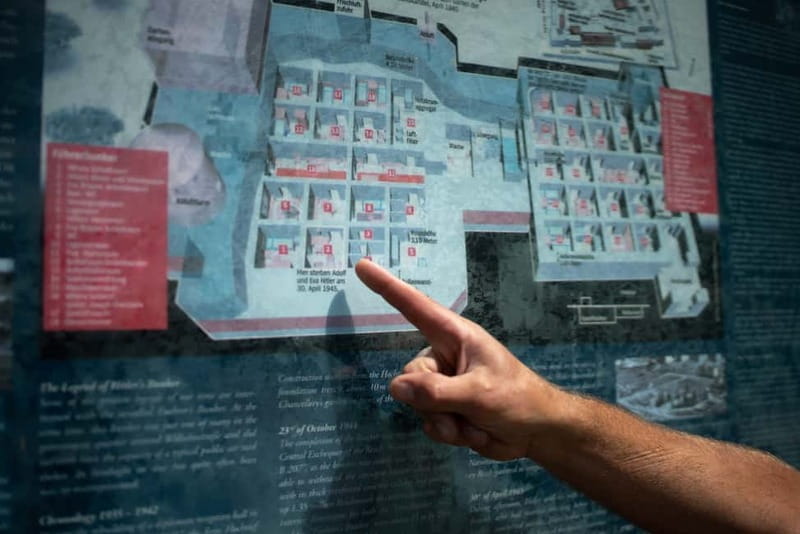
- Topography of Terror: A stop that reframes what you see outside with an exhibit built for context.
- Reichstag, Brandenburg Gate, and the Soviet assault line: Monuments explained in both Nazi and Cold War meanings.
- Soviet War Memorial stop: You’ll see it flanked by T-34 tanks and Red Army howitzers.
- Small-group feel with skilled guides: Many people call out guides by name and highlight strong communication.
Getting oriented at Friedrichstraße (and spotting your guide fast)
You start outside Friedrichstraße train station, on the square between the Tränenpalast (Palace of Tears) and the station itself. When the group meets, guides wear a blue lanyard and a yellow name tag and hold yellow umbrellas, which makes them easy to identify even if you’re arriving at the last second.
This location matters more than you’d think. You’re kicking off in central Berlin, close to several of the city’s most important WWII and Cold War reference points. That makes the walk efficient: you’re not burning time crossing large distances just to get to the next major site.
The tour runs rain or shine, so dress like a Berliner. If the weather turns, your best move is layers you can adjust quickly while staying comfortable for a few hours of walking.
You can also read our reviews of more walking tours in Berlin



The overall route: from Nazi command to the regime’s end (in 3 hours)
Think of the tour as a guided timeline you can physically follow. It starts with the Nazi rise and the infrastructure of control—ministries and security headquarters—and it moves toward the endgame: Hitler’s last days, the battle line of the Soviet assault, and the shift in meaning that monuments took after WWII.
Even though it’s only 3 hours, the coverage is wide. You’ll hit places associated with:
- the nerve centers of Nazi Germany,
- the planned “Germania” axis concept by Albert Speer,
- the Führer Bunker area and Hitler’s suicide location,
- the Reichstag as the final battlefield,
- Brandenburg Gate as a symbol across eras,
- and the Soviet War Memorial with military hardware.
Because the route covers so many heavy topics, pacing is key. A good guide keeps it factual and respectful while still making sure you understand how each place fits into the bigger story.
Hitler’s era on foot: Nazi ministries and the machinery of terror
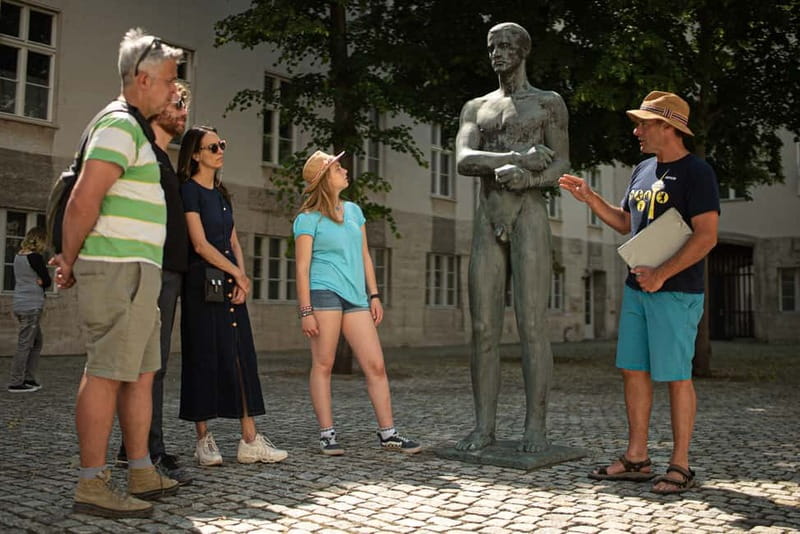
One reason this tour earns its high marks is that it doesn’t treat the Nazi regime like an abstract idea. It anchors the story to buildings and areas tied to specific roles in state power.
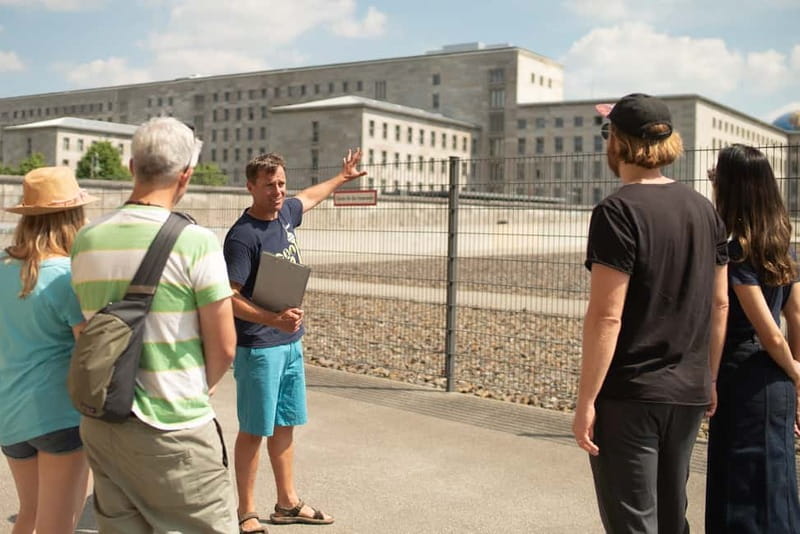
You’ll pass and learn about spots connected to Goering’s Air Defence Ministry, where Luftwaffe planning for the Blitz took shape. You’ll also see former locations tied to propaganda and repression, including Goebbels’ Propaganda Ministry and Himmler’s SS and Gestapo HQs.
For me, this is where the walk becomes more than a history lecture. Nazi Germany relied on propaganda, surveillance, and coercion, not just speeches and uniforms. When you stand near the places where those systems were organized, the themes start to feel concrete:
- how messaging helped build consent,
- how policing and terror removed opposition,
- how military planning translated into real-world destruction.
It also helps that the guide format is Q-and-A friendly. Many people mention guides staying approachable and answering questions. On a topic this sensitive, that approach matters. You get clarity without feeling rushed.
The “Germania” axis and the planned future that never arrived
Another standout part of the tour is the thread about Hitler’s planned “Germania” axis, designed by Albert Speer. This isn’t just architectural trivia. It shows the regime’s mindset: the idea that Germany would be remade physically as well as politically.
When you connect Speer’s long-range vision to what actually happened next, you get a stark contrast. The walk makes it easier to see propaganda goals in spatial terms—what the regime wanted people to see, move toward, and believe.
This section also sets up the bunker stops with better context. Instead of jumping from “Nazi rise” to “WWII end,” you understand the scale of what the regime imagined—and how collapse played out on the same ground.
The Führer Bunker area and Hitler’s last act: history with difficult detail
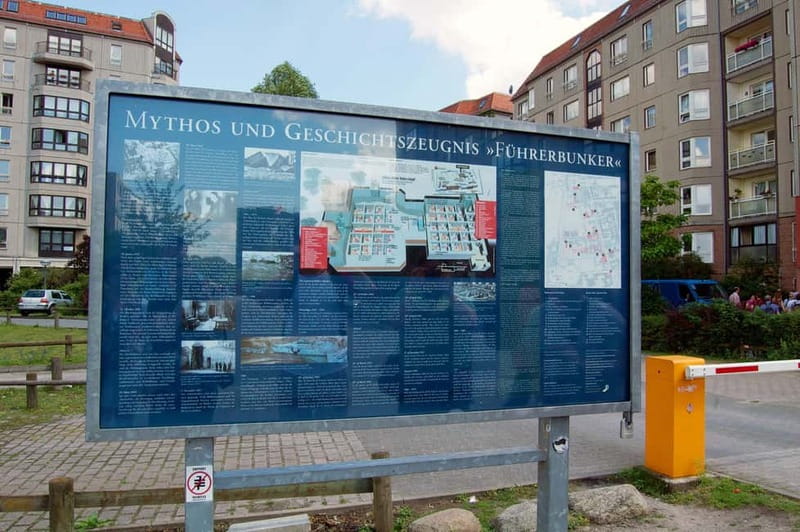
The tour is explicit about covering the Führer Bunker area and the location connected with Hitler’s suicide. It’s not the kind of stop where you’ll have to guess the meaning from plaques or scattered photos. Your guide’s job here is to walk you step by step through what happened in Hitler’s final days and what became of his remains.
This is also where you’ll feel the emotional weight of the tour. The goal isn’t spectacle. It’s explanation and restraint. Guides are repeatedly praised for dealing with sensitive topics in a respectful way, and that shows in how the story is framed and how questions are handled.
A practical note: because this portion is central to the tour’s theme, don’t plan to multitask on your phone. I’d suggest taking mental notes as you go: who controlled what, how the command chain moved (or broke), and why the “end of the regime” mattered beyond just one person.





Topography of Terror: using an exhibit to make sense of what you see outside
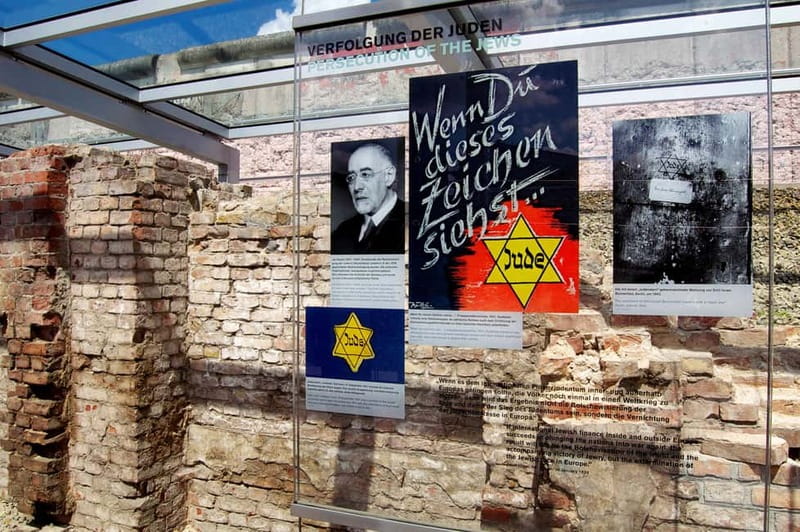
The walk includes the Topography of Terror exhibit. This stop is valuable because it shifts you from “locations” to “evidence.”
Outside, you get the geography of power. Inside an exhibit, you get structure: how the Nazi state functioned, how persecution was organized, and why certain institutions mattered. That makes the next battlefield and monument stops easier to understand.
If you tend to skim exhibits, try a different approach here: focus on cause and mechanism. Look for how systems operated and how propaganda worked. Even if you only spend a limited amount of time inside, the exhibit helps you connect names and roles from earlier stops to what happened in the real world.
This is one of those stops where a guide’s explanations can save you time. Without that context, you might read a panel but miss how it connects to the buildings you just walked past.
Reichstag to Brandenburg Gate: the Soviet assault and changing symbolism
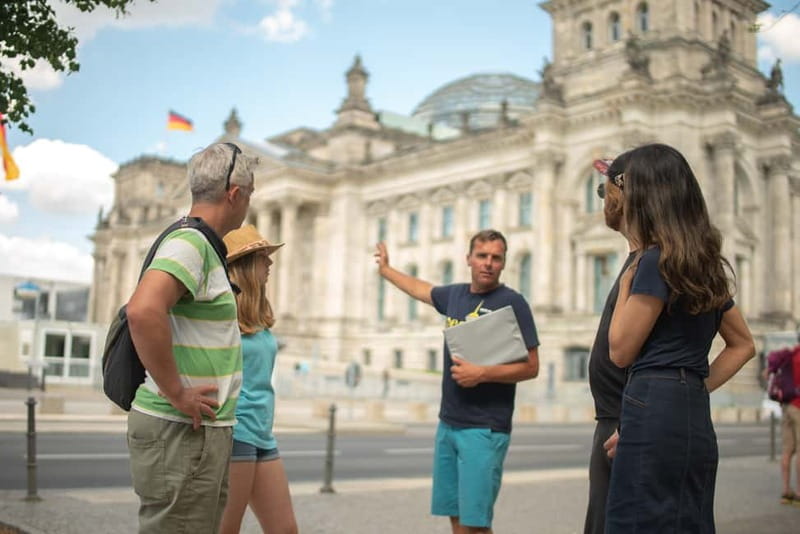
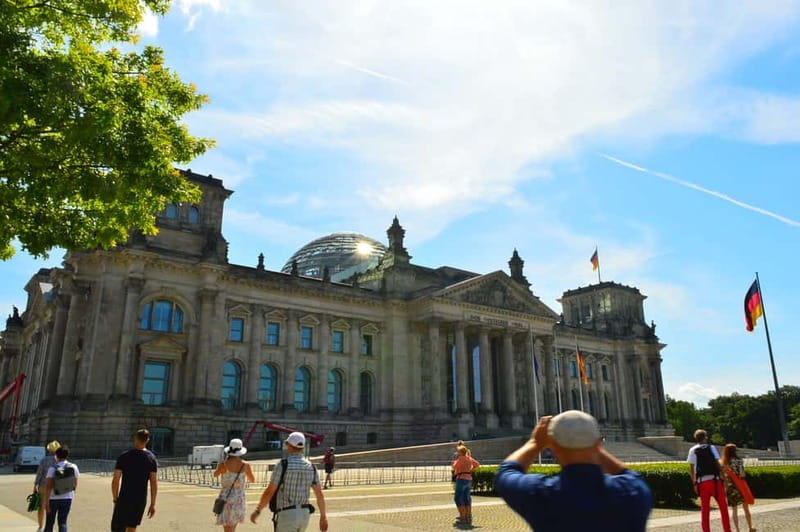
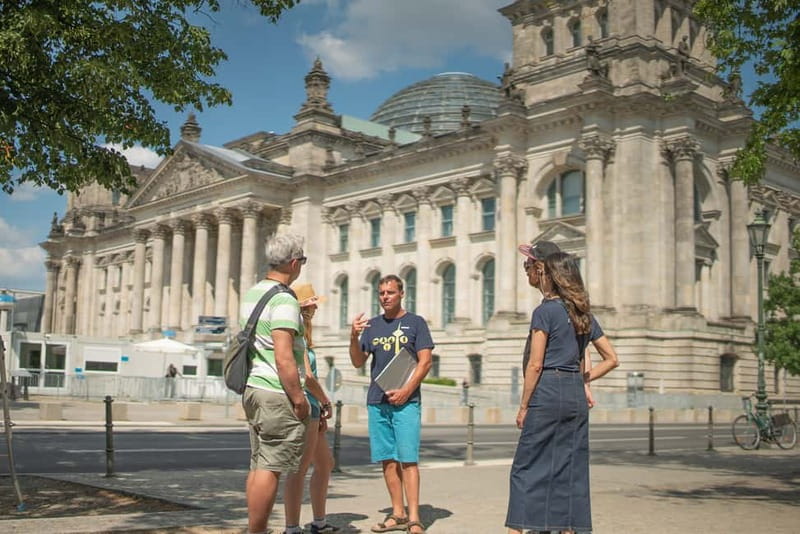
The tour moves into the final stage of the Nazi collapse. You’ll follow the path of the Soviet assault as you stand before the Reichstag, described as the final battlefield of Nazi Germany.
Then you head toward the Brandenburg Gate—a site that carries different meanings depending on the era. During the Nazi period, it was a symbol within their power narrative. In the Cold War, it became a divide marker. That double meaning is exactly what you want from a Berlin history walk: you’re not just learning what happened in WWII, you’re learning how Berlin kept redefining itself afterward.
A good guide helps you avoid a common trap: treating monuments like they’re fixed in meaning. On this walk, you see how the same stone can speak different stories once political power changes hands.
Also, since this is a walking route, you’ll get more out of it if you keep an eye on the urban layout. Even short distances between stops can change the way you understand the city’s “lines” and movement during wartime.
The Soviet War Memorial: tanks and howitzers with a lesson attached
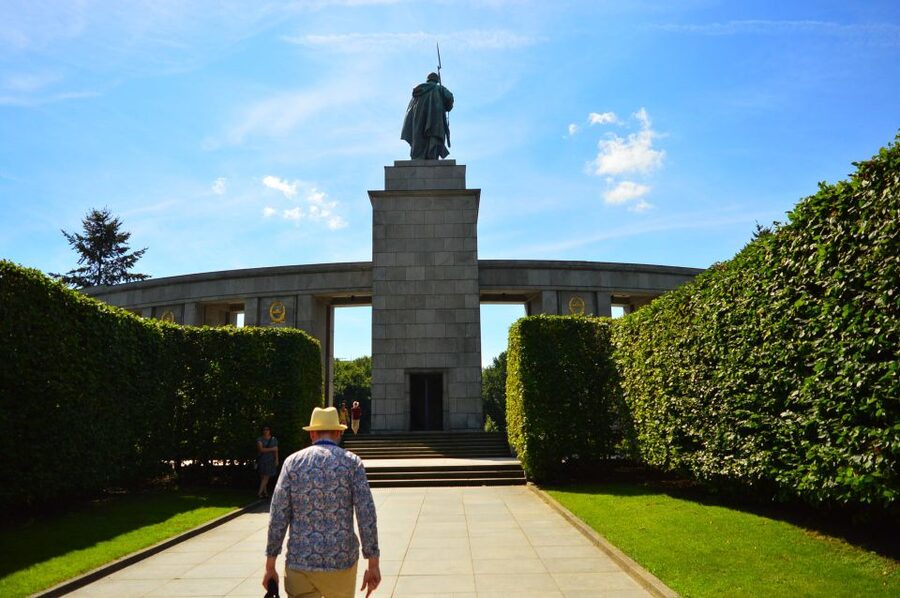
The tour culminates at the Soviet War Memorial, flanked by T-34 tanks and Red Army howitzers. It’s hard to overstate how powerful that visual contrast is. You’ve spent the walk learning about Nazi control and collapse, and then you’re placed in a memorial setting that makes the Soviet role impossible to ignore.
This part works because it forces you to widen the frame. WWII in Berlin isn’t only the Nazi story. It’s also the story of the forces that pushed back, captured positions, and reshaped the city in the aftermath.
When the tour reaches this memorial, I like thinking of it as the “final translation.” The earlier stops tell you about power and terror. This one shifts the tone toward defeat, remembrance, and the new political reality that followed.
Guides and pacing: what makes the tour feel strong (even with hard topics)
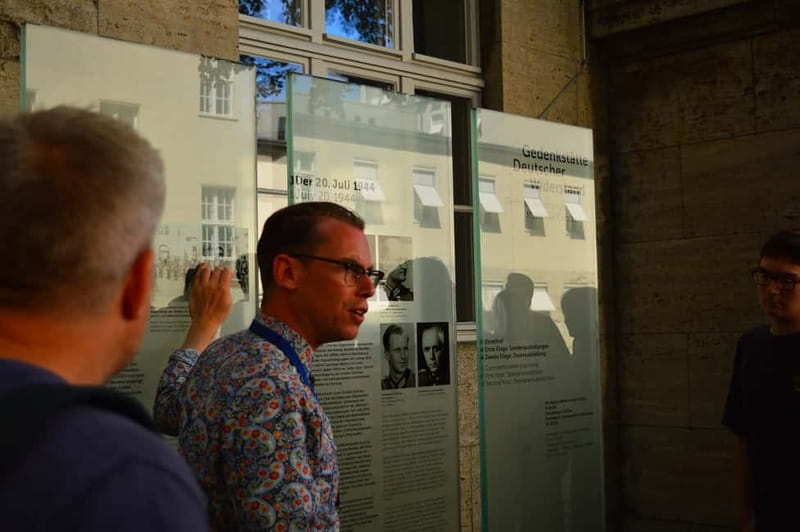
The experience is led by live guides in English, German, and Spanish, and that multilingual support matters if you’re traveling with friends or family. More important, though, is how the guides handle difficult material.
From the guide names mentioned in praise—Hannah, Xavier, Jörg, Will, Mikhail, Jim, Artie, and others—you can see a pattern:
- they explain clearly,
- they answer questions,
- and they treat sensitive history with respect.
That doesn’t mean every stop will be your preferred tone. But a respectful guide keeps the focus on understanding. You’re not there to score moral points or to gawk at tragedy. You’re there to learn how power worked, how it fell, and why Berlin’s physical layout still carries that history.
Pacing also comes up in positive feedback. The tour is short enough that it needs momentum, but guides are expected to not rush past key points. On a topic where details matter, rushing is how you end up with a blur instead of a storyline.
Practical value: why $20 feels like a fair deal for this route
At $20 per person for a 3-hour walking tour, the value comes from coverage. You’re getting a guided thread through multiple major WWII-era reference points—Hitler-related sites, Nazi administrative power locations, Topography of Terror, Reichstag, Brandenburg Gate, and the Soviet War Memorial—without you having to stitch everything together yourself.
You’re also paying for interpretation. Standing in front of these places on your own can work, but it often turns into a pile of facts you can’t connect easily. With a guide, you get structure: what the place was, why it mattered, and how it relates to what comes next.
This tour also works well as a “backbone” activity. If you’re planning other Berlin stops, this one gives you a clearer lens for the rest of your trip. You’ll see later sites with more context, especially if you also spend time around central government and WWII-related areas.
One more practical tip: plan on limited downtime for breaks. A specific note in the tour’s practical feedback is to bring your own drinks, since there are no water or toilet breaks listed. So pack light, move comfortably, and don’t count on a mid-route reset.
Who should book this tour—and who might think twice
This is a good fit if you:
- want WWII history in real locations rather than a museum-only format,
- like a guided narrative that connects political decisions to physical spaces,
- and enjoy asking questions while standing in front of the setting.
It’s also a strong choice for students and anyone preparing for school-level history discussions, because the stops are tied to concrete themes: propaganda, security, military planning, and collapse.
You might think twice if you’re uncomfortable with intense, sensitive content, even when handled respectfully. You should also consider skipping or pairing with a lighter day if you know you need frequent breaks; the format is a walking route, and it’s designed to keep you moving across multiple stops.
Should you book the Berlin Third Reich, Hitler, and WWII Walking Tour?
If your goal is to understand Nazi Germany’s rise and fall through Berlin’s streets—while also ending at the Soviet War Memorial with the tanks and howitzers—you’ll likely feel satisfied with this tour. The 3-hour timing is efficient, and the structure (ministries → planned Nazi vision → Führer Bunker area → Topography of Terror → Reichstag/Brandenburg Gate → Soviet memorial) is built to keep the story connected.
My main decision point is personal: if you’re ready for heavy history delivered with care, this tour is worth it. If you want something upbeat or purely visual, you might prefer a different kind of Berlin walk.
FAQ
Where is the meeting point for the tour?
The tour meets outside Friedrichstraße train station, on the square between the Tränenpalast (Palace of Tears) and the station. Guides will be wearing a blue lanyard and a yellow name tag holding yellow umbrellas.
How long is the Berlin Third Reich, Hitler, and WWII walking tour?
The tour lasts 3 hours.
What time does the tour start?
Starting times vary. Check availability to see the specific times offered.
What languages are available?
The live guide is available in English, German, and Spanish.
Does the tour run in bad weather?
Yes. The tour operates rain or shine.
Is pickup offered?
Pickup is optional only for private options. If you have pickup, you wait in the hotel lobby 5 minutes before your scheduled pickup time, and the guide will have a yellow name tag for recognition.
Is this a walking tour?
Yes. It’s a walking tour, and it ends back at the meeting point.
What should I bring?
Bring comfortable shoes and comfortable, weather-appropriate clothing.
How much does it cost?
The price is $20 per person.
Can I cancel for a refund?
Yes. Free cancellation is available up to 24 hours in advance for a full refund.