REVIEW · ATHENS
Athens Highlights: Myths & Philosophers Walking Tour
Book on Viator →Operated by Be a Greek · Bookable on Viator
Socrates on your feet sounds simple, then it isn’t. This Athens myths and philosophers walking tour uses real city corners to explain how ancient Greek thinkers still shape how we argue, reason, and live. It’s private, so you can ask questions instead of just absorbing facts while walking.
I especially love the way the tour links ideas to places. You’ll talk about Socrates, Plato, and Thales of Miletus while standing near landmarks like the Hellenic Parliament and ending on Areopagus Hill with a view of the Acropolis. Guides like Bianca and John get consistent praise for keeping the pace smart and turning philosophy into conversation.
One possible drawback: four hours is a solid chunk of walking time. If you want something lighter, you might prefer the same concept in a shorter format, since some people suggest 2–3 hours for certain groups.
In This Review
- Key things I’d mark on your map
- Why Athens is the right classroom for philosophers
- The 4-hour route: Academy to Areopagus without wasting time
- Stop 1: Academy of Athens and the Trilogy of Athens story
- Stop 2: Hellenic Parliament and the Presidential Guard moment
- Stop 3: National Garden talks on democracy, physics, and ethics
- Stop 4: Ermou Street and Hermes mischief
- Stop 5: The Pantanassa area and why churches matter in the story
- Stop 6: Ancient Agora and where Stoic philosophy took shape
- Stop 7: Tower of the Winds and Aiolos, keeper of the winds
- Stop 8: Anafiotika at the foot of the Acropolis and the Cynics
- Stop 9: Areopagus Hill finale with Acropolis views and Olympian myths
- Price and value: what $102.80 buys you
- What included breaks feel like in the middle of the day
- How to prep so the walking day feels easy
- Who should book this, and who might want a shorter version
- Should you book Athens Highlights: Myths & Philosophers?
- FAQ
- How long is the Athens Highlights: Myths & Philosophers walking tour?
- Is the tour private, and is it offered in English?
- What does the tour cost?
- Where does the tour start and where does it end?
- What’s included in the price?
- Are entrance fees included for the stops?
- Does the tour run in any weather?
- What’s the cancellation policy?
Key things I’d mark on your map
- Private, question-led pacing that lets you steer the conversation
- Academy of Athens to Areopagus Hill with big-name ideas attached to each stop
- Presidential Guard changing outside the Hellenic Parliament (a classic Athens moment)
- Stoics at the Ancient Agora and weather-myth talk at the Tower of the Winds
- Coffee/tea + water included, with a welcome break built in
- Some sights need tickets, but several stops are free to enter
Why Athens is the right classroom for philosophers
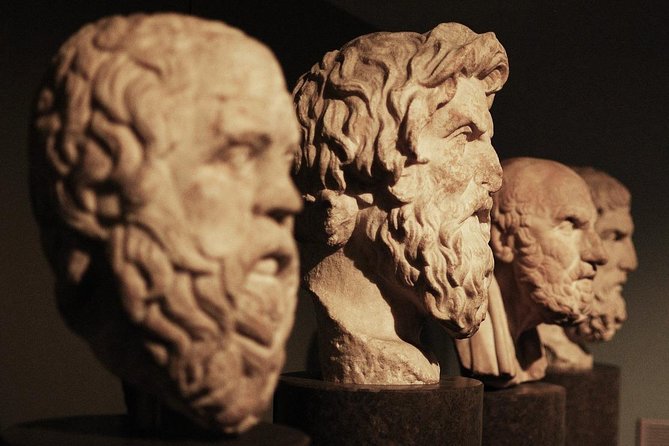
Athens can feel like a museum at first. But this kind of walk pushes you past sightseeing and into meaning. You start connecting mythology and philosophy as two languages people used to make sense of the world.
The route also gives your brain a handle. Instead of bouncing between isolated monuments, you move through a chain: schools of thought, public life, science ideas, and then the myths that sat behind the ancient worldview. That’s why a passionate guide matters here. When Bianca-led tours are described as turning into real discussion, that lines up with what you’d want from this format.
And yes, you still get famous buildings. You just get them with context.
You can also read our reviews of more walking tours in Athens



The 4-hour route: Academy to Areopagus without wasting time
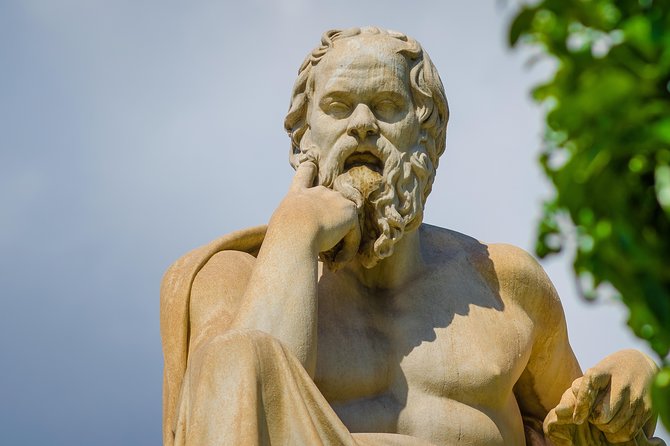
The tour runs about 4 hours and is scheduled with an efficient flow between central historic areas. It’s a walking itinerary, and the stops are spaced so you can pause, ask questions, and reset your bearings.
You also start and finish in smart places:
- Start: Panepistimio area
- End: Areopagus Hill (Theorias 21)
The ending matters. Areopagus Hill is one of those spots where your brain goes quiet for a second because the Acropolis looks close enough to touch. The guide wraps up myths about the Olympian gods up there, which is a good finale because the view does half the storytelling for you.
Stop 1: Academy of Athens and the Trilogy of Athens story
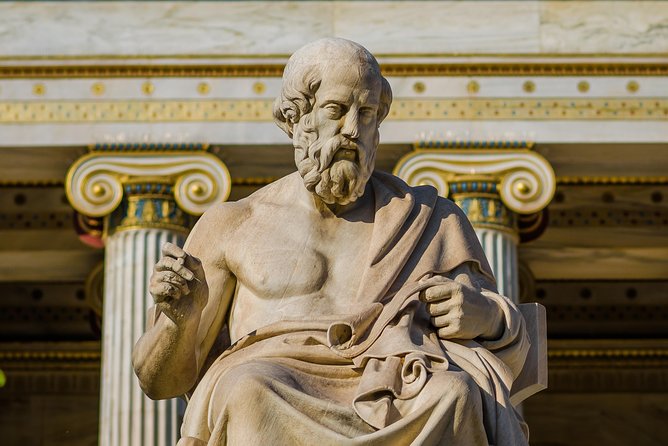
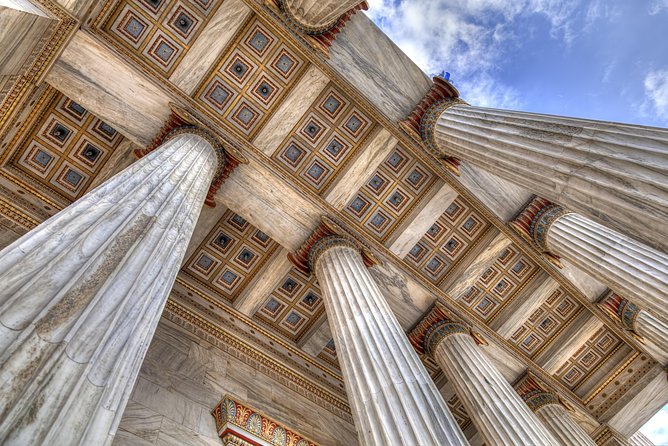
The first stop is the Academy of Athens, where you can see the Trilogy of Athens and hear how Greek philosophical movements evolved over time. This is a strong opener because it sets the frame: you’re not just naming philosophers, you’re learning how ideas changed.
Two practical notes:
- The stop is about 15 minutes.
- An admission ticket is not included, so plan for the possibility of a paid entry here if you want to go inside and see more.
Even if you decide not to buy tickets immediately, the external setting helps you orient. It’s an ideal place to begin because it signals that philosophy in Athens wasn’t abstract. It had buildings, institutions, and public meaning.
Stop 2: Hellenic Parliament and the Presidential Guard moment

Next up is the Hellenic Parliament, right outside where you can watch the Changing of the Presidential Guard tradition. People come to Athens for many things, but this is one of the easiest ways to experience a living ceremony in the center of town.
Expect about 15 minutes here and remember: this part is listed as admission free. That’s good value because you’re getting a distinct Athens experience without adding ticket costs.
This stop also works thematically. The tour is about thinkers, but it keeps reminding you that Greek philosophy lived alongside power, civic life, and public ritual.
Stop 3: National Garden talks on democracy, physics, and ethics
At the National Garden, you get a calmer change of pace. The guide leads a walk through the space and links philosophical ideas to applied science themes: democracy, physics, astronomy, ethics, and more.
This is listed as 15 minutes and admission free. It’s one of your best bets for a breather on a warm day, too. Even if you’re not a science person, hearing the logic behind how ancient Greeks connected ideas is the point.
One benefit of this stop: it slows you down just enough that you can absorb the earlier concepts before you move into the city streets again.





Stop 4: Ermou Street and Hermes mischief
Then you shift into the street life of Athens at Ermou Street, where the tour focuses on the mischievous god Hermes.
This is again about 15 minutes and admission free. The trick is that you’re not just hearing a myth summary. You’re learning how myths functioned in ancient culture: as explanations, as entertainment, and as a way to talk about human behavior.
This stop is useful if your goal is to understand the Athens you see on postcards, but with a mind for story. Hermes becomes a lens, not just a name.
Stop 5: The Pantanassa area and why churches matter in the story
After Hermes, the itinerary includes a stop in the Pantanassa area, tied to the church located in the square. The theme here is simple: Athens layers meanings over centuries. A philosopher’s Athens and a modern Athens share the same ground, just under different narratives.
It’s listed as about 15 minutes, and it’s described as part of the tour flow rather than a major ticket stop. That means it’s likely there to give you context while you keep walking.
If you like places with visible continuity—old beliefs, old structures—this is the kind of stop that makes the walk feel stitched together.
Stop 6: Ancient Agora and where Stoic philosophy took shape
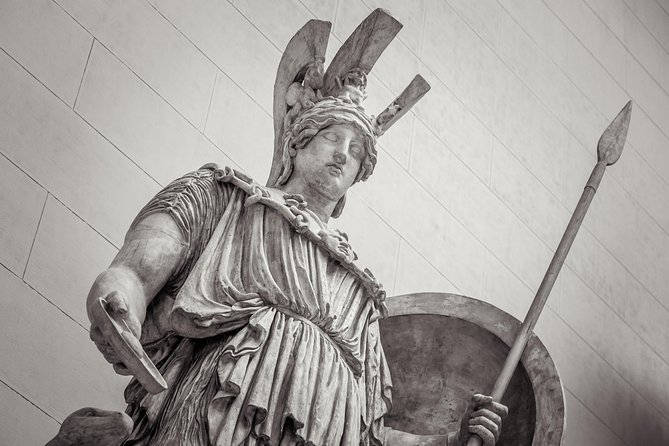
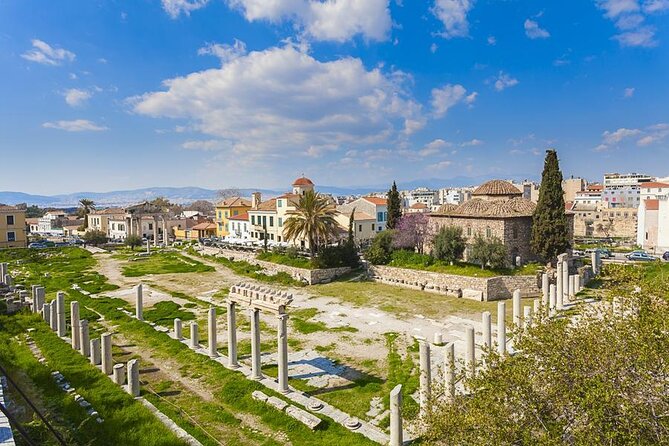
Now we step into one of the most meaningful areas on the whole route: the Ancient Agora of Athens. The tour connects this space to Stoic philosophy, noting that Stoicism was born in the Poikile Stoa.
This stop is about 15 minutes, and an admission ticket is not included. That means you should budget time and money if you want to go beyond the immediate area outside.
Why this stop is a highlight: Stoicism isn’t just a theory you read in a textbook. It’s a way of thinking that still shows up in modern advice on stress and self-control. Standing in the Agora, the connection feels less like trivia and more like history that kept traveling.
If you’ve ever wanted the big philosophical ideas to feel physical, this is where it happens.
Stop 7: Tower of the Winds and Aiolos, keeper of the winds
From the Agora you move to the Tower of the Winds, where the focus shifts to mythology around weather: Aiolos, the keeper of the winds.
Expect about 15 minutes and note again: an admission ticket is not included. The Tower is one of those stops where you might want to see details up close, so tickets can matter if they’re available/required for entry during your visit.
The best part of this stop is how it links science and myth. Ancient people watched the sky constantly because it affected daily life. Turning that into stories about gods wasn’t just imagination. It was a way to make sense of patterns.
If your brain likes cause-and-effect, this stop will click.
Stop 8: Anafiotika at the foot of the Acropolis and the Cynics
Next you reach Anafiotika in the Plaka area, right near the foot of the Acropolis. Here the focus is on the Cynic philosophers.
This is listed as about 20 minutes and admission free. Anafiotika also gives you a change in vibe: smaller streets, more atmosphere, and that sense of Athens feeling human-scale for a bit.
The Cynics topic is a good match for the setting. Cynic philosophy often sounds shocking at first, like it’s designed to break rules. Anafiotika’s slightly offbeat feel helps those ideas land as something real, not just intellectual history.
Stop 9: Areopagus Hill finale with Acropolis views and Olympian myths
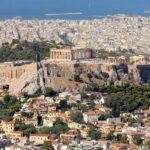
The tour ends at Areopagus Hill, where you get breathtaking views of the Acropolis and a closing set of myths about the Olympian gods.
This stop is about 15 minutes and admission free. Ending here is smart because it turns the final storytelling into something you can see, not just hear.
This is also where you’ll feel the tour’s biggest strength: it doesn’t stop at famous names. It ties myth to the same cultural world that produced philosophical debate.
Price and value: what $102.80 buys you
The price is listed at $102.80 per person for about 4 hours. You also get coffee and/or tea plus bottled water, which is not a huge dollar amount, but it’s a real comfort during a walking day.
Is the tour worth it? For me, it comes down to one question: do you want Athens to be a conversation? A private tour helps a lot here, because you can ask follow-ups and adjust pace. The reviews you provided repeatedly praise the way guides like Bianca and John handled discussion and kept the energy appropriate for different levels of interest.
Then there’s the ticket math. Several sites on the route say admission tickets not included (notably the Academy of Athens, the Ancient Agora, and the Tower of the Winds). Other stops are admission free (Hellenic Parliament viewing, National Garden, Ermou Street, Anafiotika, and Areopagus Hill). So your final day-cost depends on what you choose to enter.
One extra timing note: it’s often booked around 53 days in advance, which usually means it’s popular for a reason. If you’re traveling in a peak season week, planning ahead helps.
What included breaks feel like in the middle of the day
The tour includes coffee and/or tea and bottled water. That matters because Athens days can run hot, and philosophy talk is easier when your hands aren’t freezing and your brain isn’t running on fumes.
The time spent at each stop is short, but you’re not rushed. You get mini-chapters in a story. And because the format is private, the guide can slow down or speed up depending on how your questions land.
If you’re coming from another city and you need to feel oriented fast, this kind of pause-and-talk rhythm helps you form connections between places.
How to prep so the walking day feels easy
This is a walking tour, about four hours. That sounds simple until you picture the sidewalks, the hills near historic areas, and the summer heat.
Do this:
- Wear comfortable shoes with grip. You’ll be on uneven stone.
- Bring water even though bottled water is included.
- Plan for shade breaks. The itinerary includes garden time, and the guide can likely adjust stops to what feels workable.
Also, the tour is listed as near public transportation, and service animals are allowed. Most people can participate, but if you have mobility limits, you should still consider how much walking you can handle on a single morning/afternoon.
Who should book this, and who might want a shorter version
Book it if:
- You love Greek mythology but also want the philosophical thinking behind the stories.
- You want names like Socrates, Plato, Thales of Miletus, plus Stoics and Cynics, tied to places you can point at.
- You like a guide who treats your questions like part of the tour, not interruptions.
Consider a shorter format if:
- Four hours of walking is tough for your group.
- You prefer only the biggest hits and less theory.
One thing I like about this tour: the guide can tailor pace to your interest level. People with advanced curiosity and people who know almost nothing about philosophy both seemed to leave happy in your review notes.
Should you book Athens Highlights: Myths & Philosophers?
If you want Athens to feel like a living ideas city—not just a checklist—this is a strong choice. The mixture of myth talk, philosophy themes, and recognizable landmarks makes it more than a standard architecture walk.
I’d say yes if you’re curious enough to ask questions and you enjoy learning through stories. I’d say think twice if you’re short on energy or want a purely visual tour with no intellectual side quest.
FAQ
How long is the Athens Highlights: Myths & Philosophers walking tour?
It’s listed as approximately 4 hours.
Is the tour private, and is it offered in English?
Yes. It’s a private tour for your group only, and it’s offered in English.
What does the tour cost?
The price is $102.80 per person.
Where does the tour start and where does it end?
It starts at Panepistimio (Athens 106 79, Greece) and ends at Areopagus Hill (Theorias 21, Athina 105 55).
What’s included in the price?
Coffee and/or tea, plus bottled water are included.
Are entrance fees included for the stops?
Entrance fees are not included in the tour price. Some stops specify admission ticket not included (like the Academy of Athens, Ancient Agora of Athens, and the Tower of the Winds), while other stops are marked admission free.
Does the tour run in any weather?
The tour requires good weather. If it’s canceled due to poor weather, you’ll be offered a different date or a full refund.
What’s the cancellation policy?
You can cancel for a full refund up to 24 hours in advance. If you cancel less than 24 hours before the start time, the amount paid is not refunded.