REVIEW · MARRAKECH
Medina of Marrakech Walking Tour
Book on Viator →Operated by Medina of Marrakesh · Bookable on Viator
Marrakech’s medina is a maze with a plan. This half-day Medina of Marrakech Walking Tour helps you see the UNESCO-listed old town without spending hours sideways in the alleys. You’ll get a professional guide to connect the sights to stories you can actually use when you’re wandering on your own later.
I love the fast, focused route through Marrakech’s top stops: the Koutoubia Mosque, the Saadian Tombs, Bahia Palace, and the souks. I also like how the tour gives you context for why the city looks the way it does, including the red/ocher color that inspired the nickname and why the name Marrakech matters beyond Morocco. One possible drawback: entrance fees aren’t included, and with a 4-hour format you may feel time pressure if you like to linger inside monuments.
In This Review
- Key things you should know before you go
- The value of a guided walk through Marrakech’s UNESCO medina
- Price and what the $65 covers (and what it doesn’t)
- How the pacing works in the 4-hour format
- Pickup, mobile ticket, and finding your meeting spot
- Medina of Marrakech: the “why” behind the red city
- Koutoubia Mosque: seeing Marrakech’s biggest religious landmark from the street
- Saadian Tombs: compact, high-impact heritage
- Bahia Palace: where the short visit can feel both satisfying and rushed
- Souks: how to shop smarter without getting swallowed by the maze
- What’s included that actually helps: bottled water and private transport
- Who this tour suits best (and who might want a different plan)
- Practical tips for making your 4-hour medina day work
- Should you book this Medina of Marrakech Walking Tour?
- FAQ
- How long is the Medina of Marrakech Walking Tour?
- How much does the tour cost?
- What’s included in the price?
- Are monument entrance fees included?
- Is pickup offered, and where do I start?
- Do I need paper tickets?
- Is this a private tour?
- Can children join this tour?
- What is the cancellation policy?
Key things you should know before you go
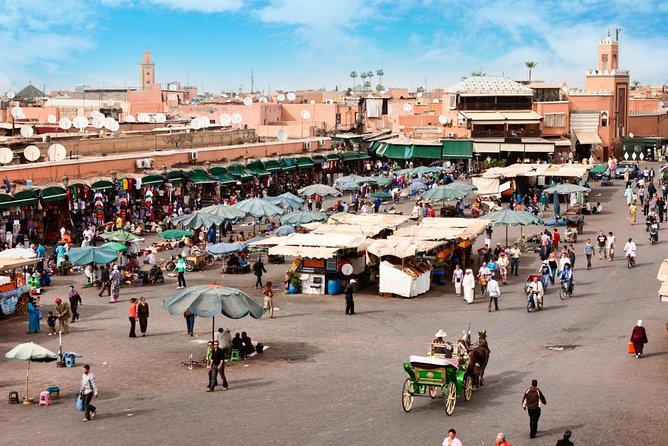
- UNESCO medina route: you’ll follow a guided line through the old streets instead of guessing your way around
- Top sights in one half day: Koutoubia Mosque, Saadian Tombs, Bahia Palace, plus souks
- Useful history you can repeat: expect context like the red city nickname and the city’s founding story
- Private tour for your group: you won’t be blended into a crowd
- Bottled water and pickup offered: small comforts that matter in the heat and on foot
The value of a guided walk through Marrakech’s UNESCO medina
Marrakech’s medina is the reason the city earned a UNESCO World Heritage status in the first place. On your own, you can absolutely wander it, but you’ll also burn time and energy just figuring out which way is north, what street you’re on, and whether you’re heading toward the sights or away from them.
A guided route helps you spend your time seeing. It also helps you understand what you’re looking at: Marrakech is often called the red city or ocher city because many buildings and houses are colored in warm reds and sandy browns. Your guide can turn that color into something more than a photo filter by tying it to the city’s identity and how people built the medina.
The tour is built for a half day, so it works best if you want a strong first look at the medina’s major highlights. If you’re the type who wants to stop for long conversations in quiet corners for hours, this format can feel tight. But if you want to get your bearings fast, it’s a smart trade.
You can also read our reviews of more walking tours in Marrakech

Price and what the $65 covers (and what it doesn’t)
At $65 per person for about 4 hours, you’re paying mainly for three things: a professional guide, pickup/transport help, and bottled water. That’s the part that usually makes a difference in the medina. You’re not just paying to move from sight to sight—you’re paying for someone to explain what you’re seeing and keep the route efficient.
Entrance fees are not included. That means monuments such as Bahia Palace and the Saadian Tombs may require an additional ticket price on your side, depending on what you choose to enter. You’re also on your own for food and drinks, so plan to eat before or after the tour.
Here’s the simple way to judge value: if you want a guided checklist of the medina’s best-known sights, $65 can feel fair because the guide saves you time and confusion. If you mainly care about one interior visit—something you want to see slowly—then the “half-day sprint” model can make you feel like you paid for minutes instead of time.
How the pacing works in the 4-hour format
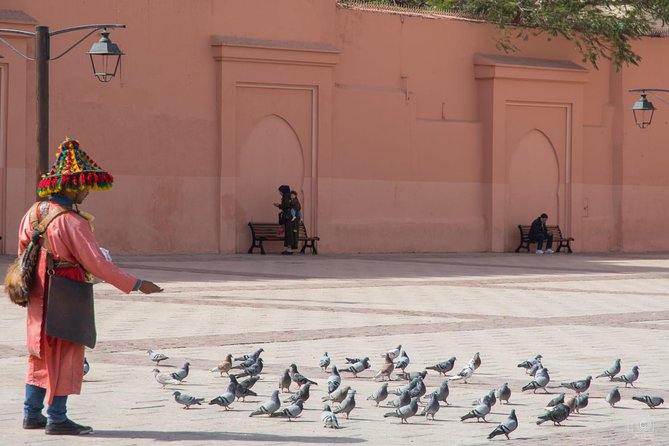
This is a walking tour, so the core experience is time-efficient. You’re moving through an old city where streets can be narrow, turns can look identical, and getting lost is easy even with decent instincts.
The tour’s structure supports that reality. It includes bottled water, and it also includes private transportation. That doesn’t mean you’ll be driven the whole time—it usually means the logistics are handled so you spend less time waiting around or backtracking when you’re trying to connect different parts of the medina.
Because it’s about 4 hours, you should expect a “see it, understand it, and keep going” pace. You’ll get stop-by-stop orientation rather than long, deep sessions in every building. If you prefer long museum-style time inside each monument, you may want to schedule a second visit later on a different day.
Pickup, mobile ticket, and finding your meeting spot
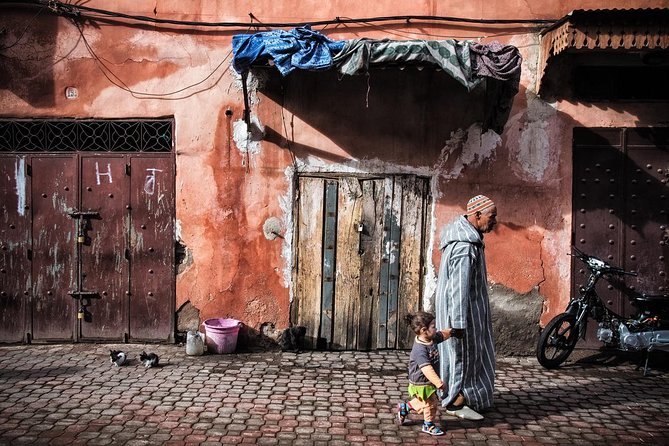
Pickup is offered, and the meeting area is near public transportation. That matters because the medina streets can be tricky for taxis to reach directly. You’ll save yourself from the common problem of arriving in the city and then spending 30 minutes figuring out how to actually get to the meeting point.
You’ll also use a mobile ticket. That’s convenient if you don’t want to hunt for paper confirmations or worry about printing. On a short tour, those tiny friction points add up—so being able to show a phone ticket on arrival helps.
If you’re planning your day, build in buffer time. In Marrakech, even “nearby” can involve a bit of walking through busy streets to reach a start landmark where your guide can properly orient your group.
Medina of Marrakech: the “why” behind the red city
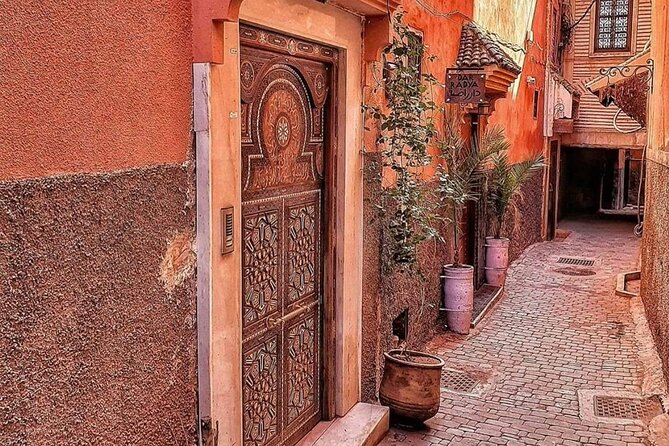
The tour starts in the medina itself, and that matters because the old town isn’t just a backdrop. It’s where Marrakech’s identity was shaped. The medina holds the city’s core story: founded in 1071 by Youssef ben Tachfine at the head of the Almoravids, it grew into a center that later became widely known under the Marrakech name.
Your guide’s job is to translate those basics into something you can see. For example, Marrakech is often referred to as the red city or ocher city, which connects to the warm tone of the architecture you’ll see around you. You’ll also hear how the name Morocco came from a deformation of the Portuguese pronunciation of Marrakech, Marrocos. That’s the kind of detail that doesn’t just sound interesting—it helps you remember how the city traveled through history and languages.
This is where the guided part earns its keep. Without context, a medina can feel like a continuous blur of doorways and alleys. With context, the same blur becomes a map you can mentally label: religious landmark here, royal heritage there, markets and daily life all around.
Koutoubia Mosque: seeing Marrakech’s biggest religious landmark from the street
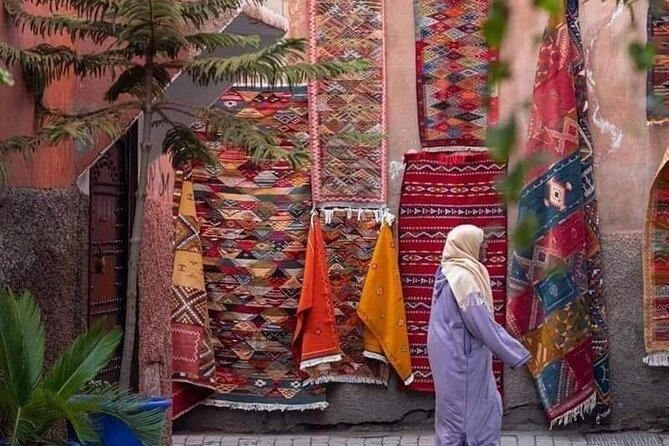
The Koutoubia Mosque is one of Marrakech’s best-known sights, and it’s a strong early anchor for orientation. Even if you’re not going inside, seeing it as a clear visual reference helps you understand how the city’s main monuments sit in relation to the surrounding streets.
What I like about including a mosque area in a walking route is that it gives you an instant sense of scale. You’re walking narrow lanes, then you suddenly have a major landmark that feels like it belongs to the city’s center. That change in scale often helps your brain stop treating the medina like one long maze.
Also, religious architecture in Marrakech has its own character, from proportions to decorative lines. A guide can point out what to watch for so you’re not just staring at a wall. Expect you’ll leave with a better eye for how Marrakech’s architecture signals importance.
Saadian Tombs: compact, high-impact heritage
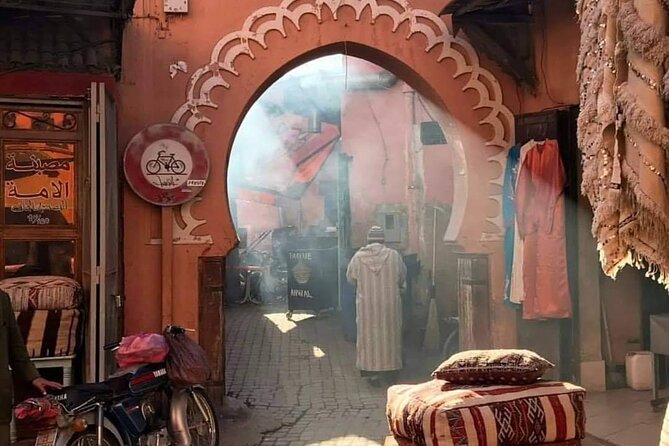
The Saadian Tombs are one of the big-ticket heritage stops on this route, and they’re a good fit for a half-day tour because they deliver a lot in a limited time. You get the feeling of a royal past without needing a full day to explore every room.
Because entrance fees aren’t included, this is where you should be mentally prepared for extra cost if you want to go inside. If you’re watching your budget, you might decide you’ll prioritize what you enter. If you’re comfortable adding entrance tickets, then it’s a place where the guided explanation can make the visit more meaningful.
This is also a stop where timing matters. If your tour schedule gives you less time than you want, it can feel like you only got a preview. In that case, the solution is simple: plan one extra hour later in your day (or another day) so you can see what you missed without rushing.
Bahia Palace: where the short visit can feel both satisfying and rushed
Bahia Palace is one of those places that people remember, mainly because palaces tend to overwhelm your senses in the best way—courtyards, rooms, and decorative details all at once. In a 4-hour walking tour, you’re unlikely to get a slow, wander-every-corner visit.
That can be a drawback if you’re the type who wants to take photos without moving on, read every description, and sit with the place for a while. On the other hand, if you want the experience of being there and understanding the palace’s significance, this format can be satisfying: you see enough to appreciate it, then you can return later when you have more time.
Entrance fees aren’t included, so your final cost depends partly on whether you choose to enter. If you do, be ready for the fact that your “time in palace mode” is limited by the tour’s half-day plan. It’s worth it if you want a first pass at Bahia Palace’s highlights and a guide’s pointers that make the visit more than a quick look.
Souks: how to shop smarter without getting swallowed by the maze
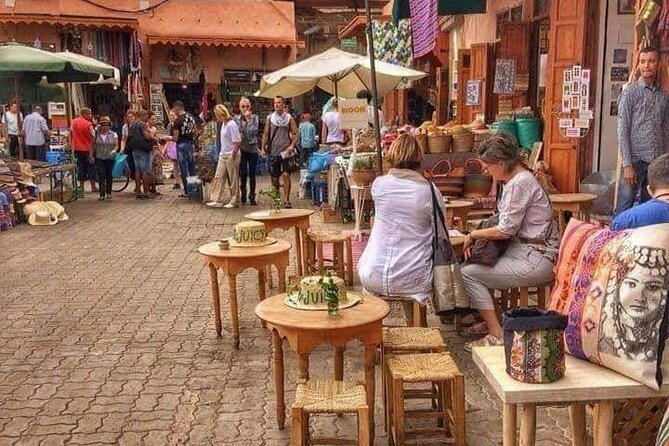
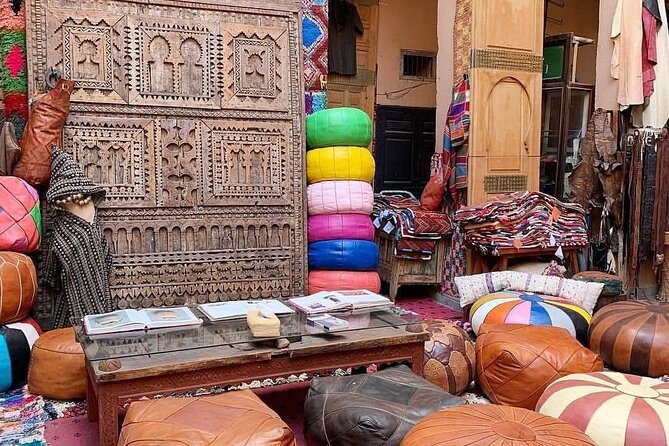
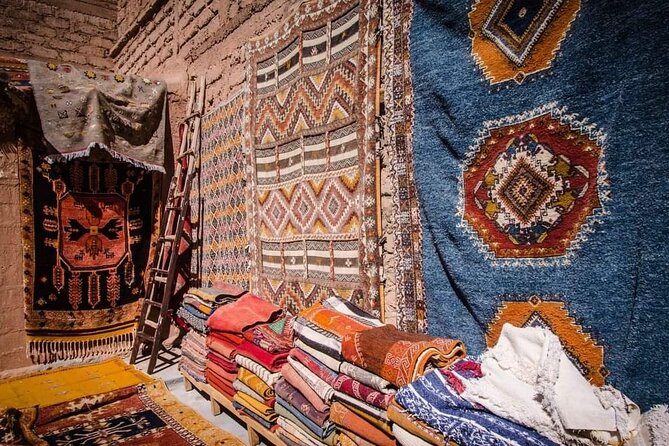
The souks are the medina’s living heart. Even if you don’t plan to buy anything, walking through the markets gives you a sense of everyday Marrakech: what people sell, how spaces connect, and how the medina works as a system, not just a tourist circuit.
A guide helps because the souks can be disorienting. You’ll pass through lanes where every turn looks like another aisle, and the “best path” depends on what you want—textiles, spices, crafts, or just the feel of the place.
What I’d call the practical win here is confidence. With a guide, you’re less likely to feel trapped or panicked if a street suddenly funnels you somewhere crowded. You also get context for what you’re seeing, which helps you decide what’s worth your time.
If you do want to buy, this tour model can still work. You’ll get your orientation first, then you can return on your own later with better direction and fewer impulse detours. That’s how you turn a market walk into a plan, not a scramble.
What’s included that actually helps: bottled water and private transport
You get bottled water, which may sound basic until you’re walking in Marrakech heat. A half-day tour moves quickly, so having water available removes a small but constant worry.
Private transportation is included too. In practical terms, it usually means your group isn’t left stranded between distant medina areas. You avoid those awkward “we’ll meet you somewhere you have to find” moments that waste time when your schedule is tight.
And because it’s private—only your group participates—you’re less likely to get stuck in a slow-moving cluster of strangers. That matters for a walking tour in a maze city where speed and coordination help you stay oriented.
Who this tour suits best (and who might want a different plan)
This tour fits best if you want a guided first look at Marrakech’s medina highlights in one half day. If your priority is seeing Koutoubia Mosque, Saadian Tombs, Bahia Palace, and the souks without turning your vacation day into a map-reading exercise, this is a strong fit.
It’s also a good option if you like learning details you can remember. The city’s origin story (founded in 1071 by Youssef ben Tachfine) and the red city nickname are the kind of facts that become more vivid when they’re explained while you stand in the right streets.
You might want a different plan if your idea of a perfect day is long, slow monument time. With a 4-hour window, you won’t have unlimited freedom to linger inside every interior you pass. In that case, you’d likely do better with either more time in the medina or a tour that focuses on one or two sites.
Practical tips for making your 4-hour medina day work
Wear comfortable shoes with grip. The medina has uneven surfaces, and you’ll appreciate traction when you’re walking from stop to stop.
Bring a small water-friendly plan. Bottled water is included, but you’ll still want to manage your personal pace. If you’re the type who stops for photos every few minutes, you may feel the schedule tighten.
Plan your meals around the tour. Food and drinks aren’t included, and you’ll want energy for the walking. If you finish the tour and then instantly try to hunt for lunch, you’ll either be rushed or stuck waiting.
Finally, keep expectations honest: this is a best-of tour in a limited time slot. You’re leaving with a guided overview and a list of places to revisit. If you want to revisit later, you’ll be glad you got oriented first.
Should you book this Medina of Marrakech Walking Tour?
Book it if you want an efficient, guided way to see Marrakech’s UNESCO medina with less stress. At $65 per person, you’re really buying direction, context, and a route that connects major sights—Koutoubia Mosque, Saadian Tombs, Bahia Palace, and the souks—without you having to constantly re-orient in the streets.
Skip or upgrade your expectations if you know you want long interior time inside palaces or tombs. The half-day pace can feel short, especially since entrance fees aren’t included and you’ll likely spend some extra time and money on ticketed stops.
If you’re visiting Marrakech for the first time and you want your bearings, this tour is a solid way to start. You’ll get the big landmarks, the key stories, and a roadmap for what to explore again once you’re comfortable in the medina.
FAQ
How long is the Medina of Marrakech Walking Tour?
The tour lasts about 4 hours.
How much does the tour cost?
It costs $65.00 per person.
What’s included in the price?
You get a professional guide, private transportation, and bottled water.
Are monument entrance fees included?
No. The tour excludes entrance fees to monuments.
Is pickup offered, and where do I start?
Pickup is offered, and the meeting area is near public transportation. You’ll also start from a convenient landmark that helps with navigation.
Do I need paper tickets?
No. You’ll have a mobile ticket.
Is this a private tour?
Yes. It’s private, meaning only your group will participate.
Can children join this tour?
Children must be accompanied by an adult.
What is the cancellation policy?
You can cancel for a full refund up to 24 hours before the experience starts. If you cancel less than 24 hours before, the amount paid isn’t refunded.