REVIEW · KYOTO
Kyoto: Gion Sunset Walking Tour with Local Guide
Book on GetYourGuide →Operated by TripGuru Japan · Bookable on GetYourGuide
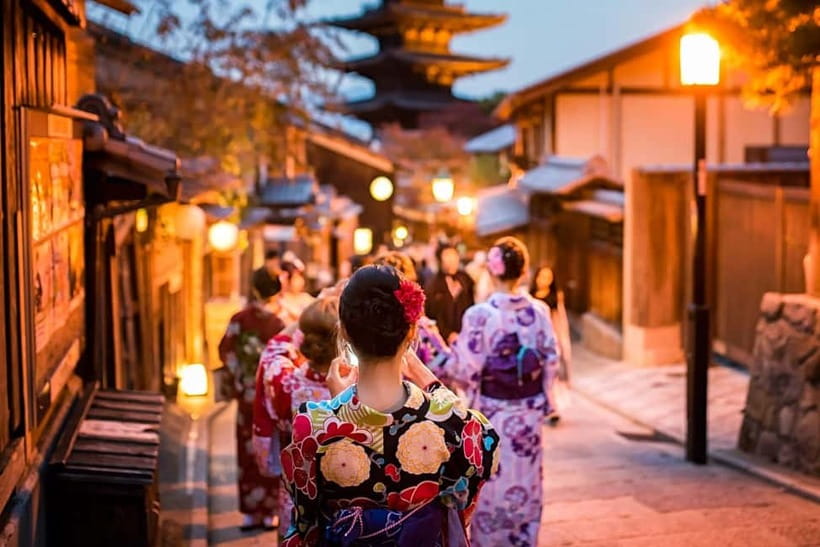
Kyoto’s Gion turns into a living film at dusk. This 3-hour Kyoto Gion Sunset Walking Tour is a smart way to see the historic geisha district after dark, with time for Hanamikoji Street, Yasaka Shrine, and the lantern lanes around Pontocho. I especially like how the walk feels intimate, with a small group of up to 9, so you’re not just shuffling with strangers.
Two other highlights I like: you get a guide who can connect what you’re seeing to culture and customs, and you also get a practical snack stop so the night doesn’t feel like just walking. The one drawback to keep in mind is that it’s still a walking tour, so comfy shoes matter, and it is not suitable for everyone with mobility, heart, or breathing issues.
Key “You’ll Feel This” Highlights
- Small group size (max 9) keeps the tour relaxed and question-friendly
- Lantern-lit Gion backstreets at night make the whole district look different
- Hanamikoji Street + Yasaka Shrine give you both preserved charm and living tradition
- Snack included helps you pace the evening without guessing food timing
- Geiko and maiko sightings are possible but not promised, so don’t build your night around a guarantee
- Photography etiquette reminders help you respect people’s real lives
In This Review
- Gion at sunset: why this 3-hour walk feels worth it
- Starting at Kyoto Kawaramachi Garden and the quick Minami-za moment
- Hanamikoji Street: preserved old Kyoto with a guide in your ear
- Maruyama Park and Yasaka Shrine: where tradition turns into a night moment
- Lantern lanes to Pontocho: the Kyoto night you actually want
- Snack stop and guide pace: small details that make the night easier
- Should you worry about safety or comfort? (A straight answer)
- Who this Kyoto Gion Sunset Walking Tour is best for
- Should you book this tour or skip it?
- FAQ
- How long is the Kyoto Gion Sunset Walking Tour?
- What’s the group size like?
- Where do we meet, and what should I look for?
- Does the tour include a snack?
- Is hotel pickup or drop-off included?
- What languages are the guides available in?
- Is seeing a geiko or maiko guaranteed?
- What should I bring to the tour?
Gion at sunset: why this 3-hour walk feels worth it
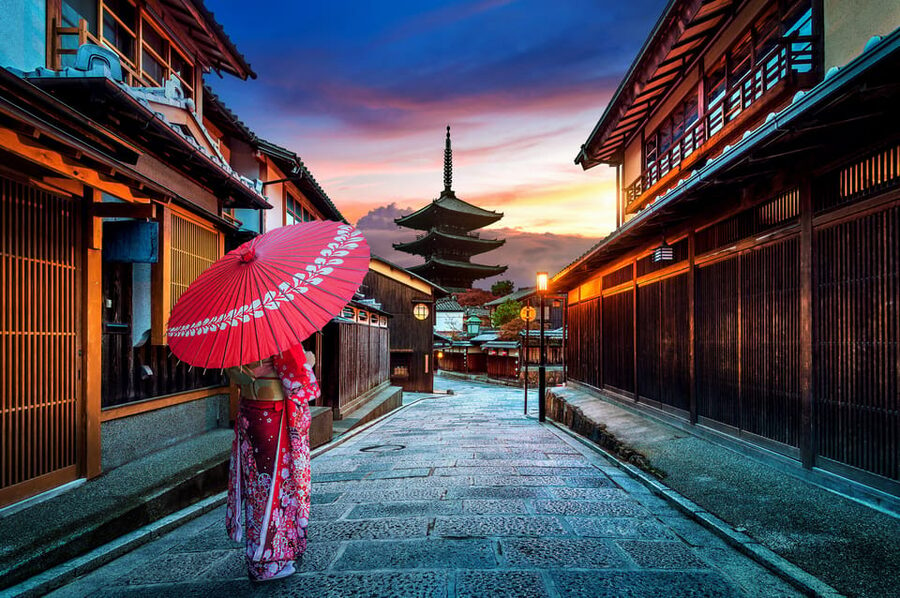
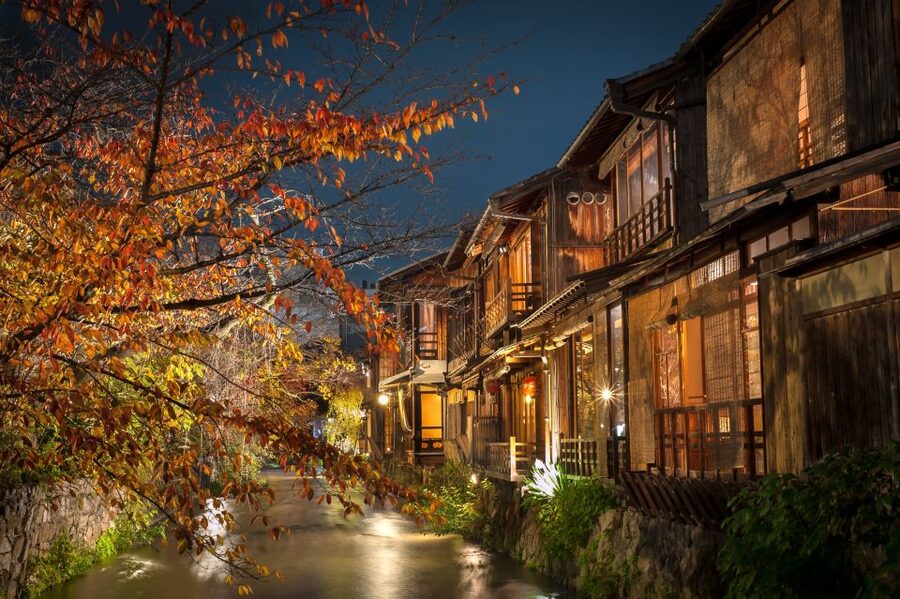
The pricing is $22 per person for three hours, which works out to a solid value when you factor in two things: a live English-speaking guide and a guided route through Kyoto’s most photo-friendly historic district when it looks best. In Gion, timing is everything. By late afternoon into evening, lanterns and storefront lights start to turn ordinary alleyways into something cinematic.
What you’re really paying for here isn’t just a list of stops. It’s the order of the route and the guide’s ability to explain what you’re looking at, from architecture to customs. You’ll also appreciate that it’s a short window. If your Kyoto schedule is tight, this is the kind of tour that fits without forcing an all-night commitment.
One more thing: the tour leans into atmosphere. You’ll be walking through backstreets where you can slow down and actually look, including scenic viewpoints along the way. Just remember: this is a night walk, so you’ll want comfortable shoes and a camera ready for low light.
Starting at Kyoto Kawaramachi Garden and the quick Minami-za moment
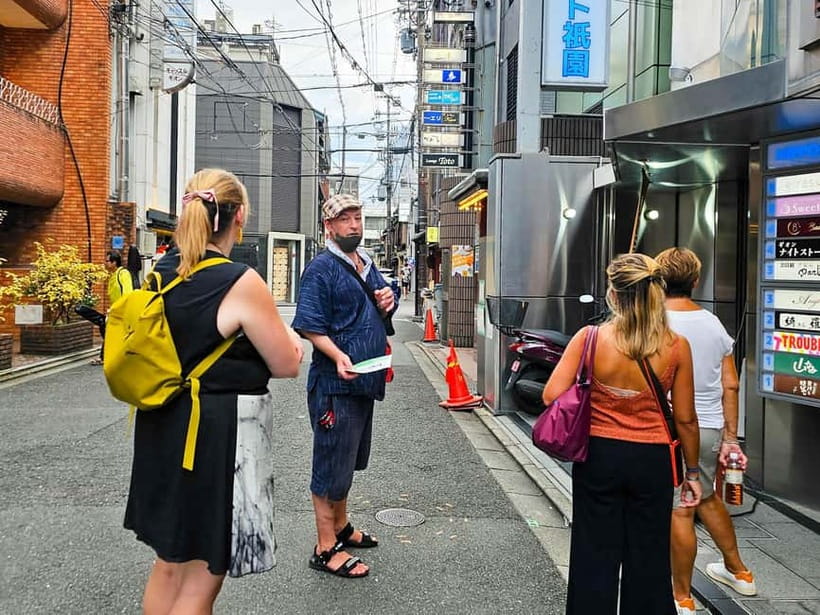
You meet at the Kyoto Kawaramachi Garden corner, in front of the big black world map. Your guide will be wearing a TripGuru shirt or holding a TripGuru sign. I like this kind of meeting point because it’s clear and easy to spot, and it places you right in the Kyoto rhythm of shops and streets—before the walking even starts.
From there, you pass by Kyōto Minami-za for about 10 minutes. Even if you don’t know the theater instantly, it’s a useful first pulse check: you start your evening with the feeling that Kyoto isn’t a museum. It’s a working city with culture happening in real time.
This early part also matters for pacing. You’re not thrown into a long uphill slog right away. Instead, you ease into the rhythm and get oriented before stepping deeper into the Gion side streets.
Practical note: your guide won’t wait more than 10 minutes past the meeting time. Build in a little buffer so you’re not stressed from the first stop.
You can also read our reviews of more walking tours in Kyoto
Hanamikoji Street: preserved old Kyoto with a guide in your ear
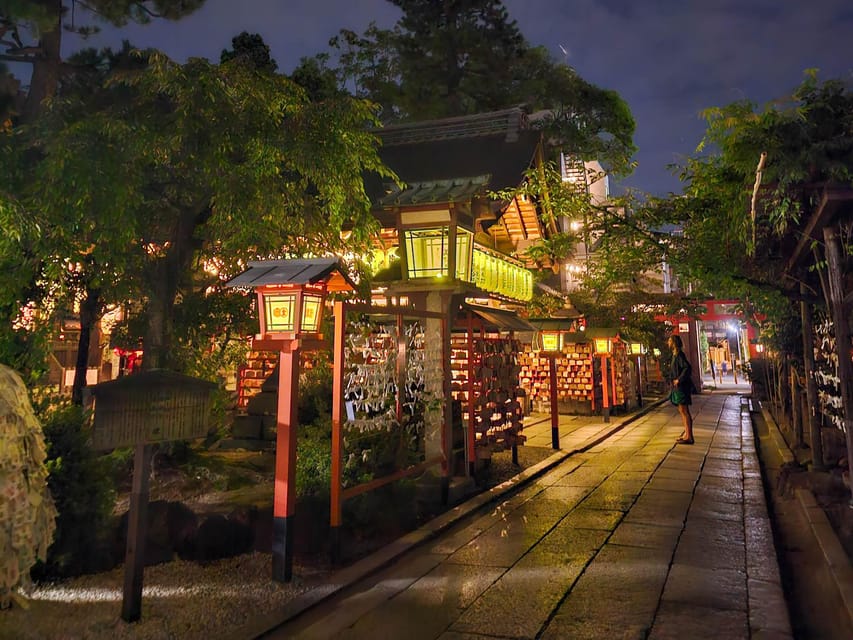
Hanamikoji Street is a centerpiece on this walk, with roughly 30 minutes of guided time. This is one of the best-preserved historic streets in the area, and at night it’s all about texture—wood, lantern light, and the sense that the street is doing its own quiet work.
A big reason a guided walk helps here: you’ll get context for what you’re seeing rather than just snapping pictures and hoping you got the story right. The guide helps you understand traditions tied to the geiko and maiko world, and you may hear the names and customs people associate with the district.
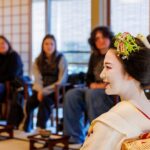
And yes, there’s a chance of seeing geiko or maiko. It’s not guaranteed, and you shouldn’t plan your evening like it’s a ticketed show. But because you’re moving through the right places at the right time, the odds are better than wandering randomly.
When it comes to photos, keep it respectful. If you spot geiko or maiko, use a longer lens if possible, give them space, and avoid blocking their path. If they come close, stepping out of their way with a small bow and a thank-you keeps things considerate.
Maruyama Park and Yasaka Shrine: where tradition turns into a night moment
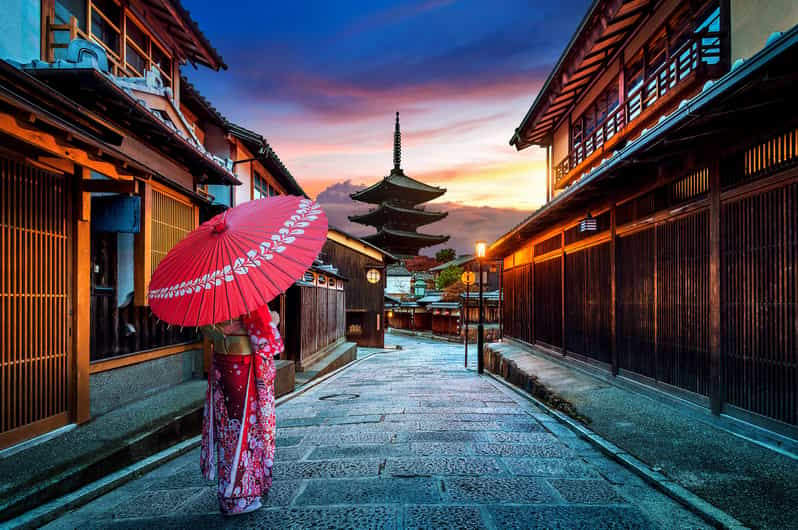
After Hanamikoji, you head toward Maruyama Park (about 15 minutes) and then Yasaka Shrine (around 20 minutes). These stops help shift the tour from “street-level atmosphere” into “Kyoto’s spiritual center of gravity.”
Maruyama Park gives you breathing room and scenic views while still keeping you in the tour’s night flow. It’s a short stop, so don’t expect a long wander, but it’s timed well for evening light and slower looking. If you like photos, this is where you can often capture the edges of the district instead of only the main street drama.
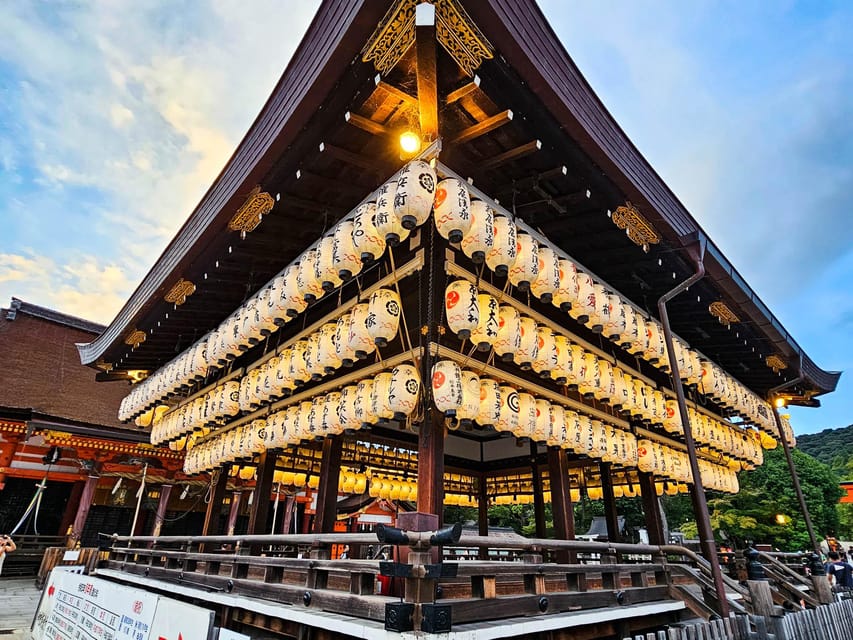
Then comes Yasaka Shrine, also known as Gion Shrine. This matters because Gion isn’t only about aesthetics and nightlife—it’s tied to shrine culture and local tradition. With a guide, you’ll get help connecting the dots: what the shrine is, why it matters in the Gion area, and what kinds of customs you might notice as you move through the neighborhood.
A tip I’d follow: treat these shrine minutes as a chance to slow down your brain. Night tours can feel like a race to the next photo. Here, the short pauses are where you start understanding why the streets have the character they do.
Lantern lanes to Pontocho: the Kyoto night you actually want
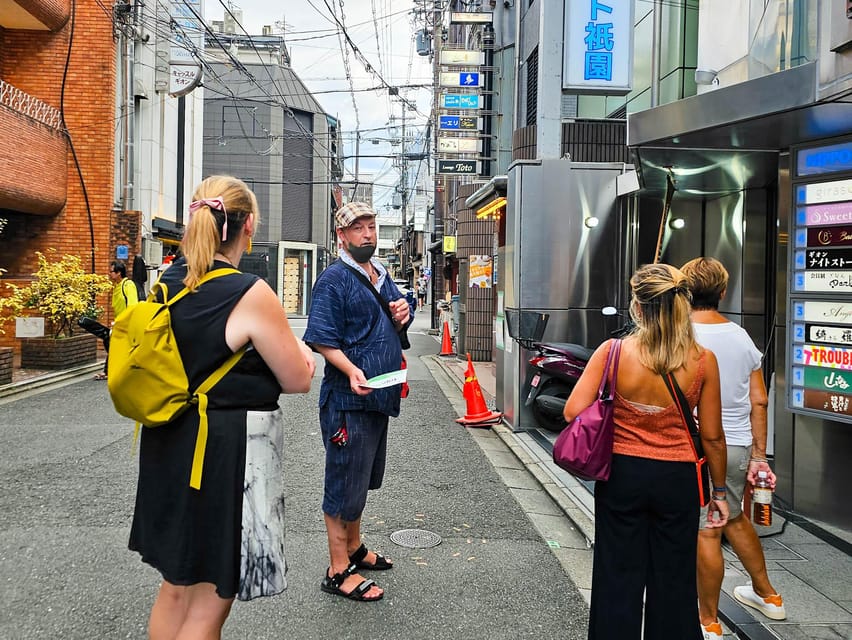
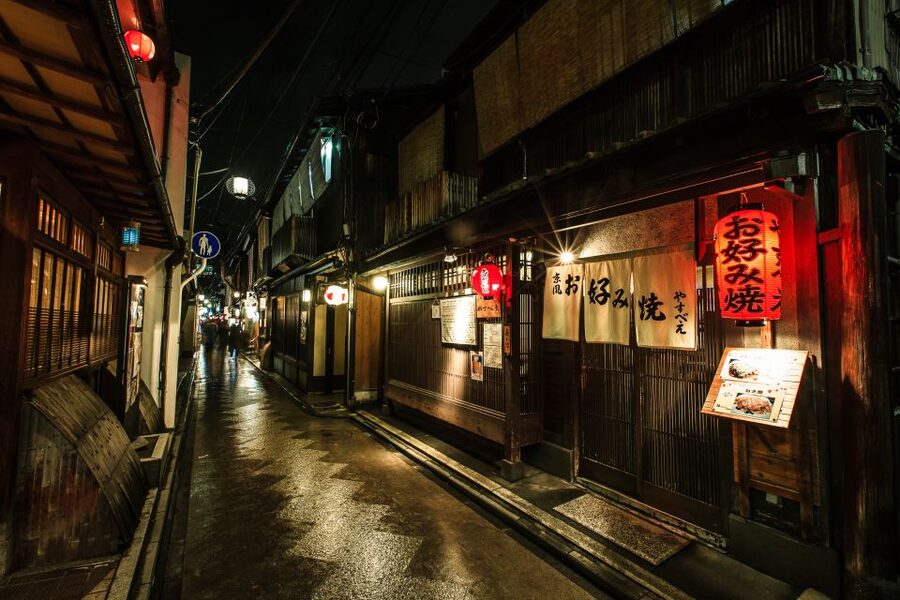
The tour includes additional scenic walking segments, and later you move through Pontocho (about 20 minutes) before ending at Sanjo Bridge. This is where the night takes over visually. Pontocho’s atmosphere is all about glow—lantern light, narrow lanes, and the feeling of being near the pulse of the city without being in a crowded square.
I like how the route doesn’t just park you at one landmark. You get a sequence of streets and sight angles that make the district feel like a coherent place instead of disconnected photo stops. The guide’s stories help, too. They explain the difference between what looks like a pretty street and what’s functioning as a cultural environment.
If you’re hoping for geiko or maiko sightings, this part of the walk can be especially interesting. People often mention spotting them during the evening stroll, but again, keep it flexible. Whether you see one or not, the night setting itself is the payoff.
End point at Sanjo Bridge is also practical. It’s a recognizable landmark and gives you an easy way to continue your evening on your own—dinner, drinks, or simply another slow stroll to decompress after a structured route.
Snack stop and guide pace: small details that make the night easier
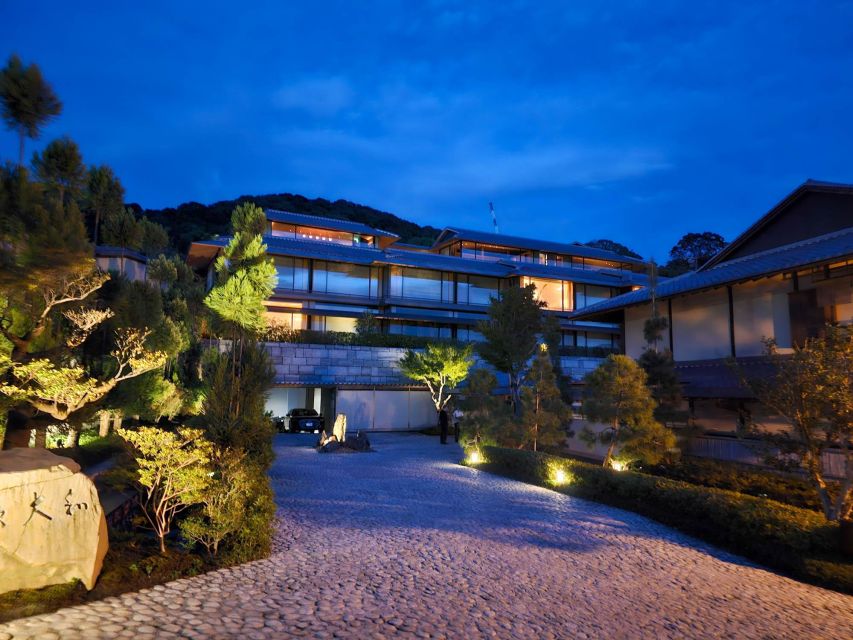
A snack is included, with about 20 minutes set aside for it. This is one of those “quiet wins” that makes tours like this feel more livable. Three hours in Kyoto at night can mean cold air, long walking, and sudden hunger if you ate early.
Some guides appear to take guests to a café stop, and others may even help you grab a quick snack and drink. You might see matcha desserts mentioned in guide experiences, though the exact choice can vary. Either way, you’re not left wondering where to eat at the exact moment your energy dips.
The guide pacing is another point worth highlighting. In small-group formats, guides can slow down for questions and adjust the walking rhythm. Past groups have described guides taking time for everyone and changing pace for older travelers. That’s a real quality signal because night streets are uneven and distractions are constant.
If you’re taking this tour in cooler months, bring layers. You’ll be outside the whole time, and the tour includes scenic stops where you’ll likely pause for photos.
You can also read our reviews of more guided tours in Kyoto
Should you worry about safety or comfort? (A straight answer)
This tour is not suitable for pregnant women, people with mobility impairments, people with heart problems, or people with respiratory issues. That’s a clear heads-up. Even if you’re generally active, a three-hour walking route at night can still be demanding.
Beyond the listed restrictions, I’d also consider these common-sense factors:
- You’ll be walking continuously through narrow streets, so comfortable shoes are non-negotiable.
- The group size is small, but it’s still a group pace, not a private tour.
- You should plan on being ready at the meeting point, since the guide will move on after about 10 minutes.
If you’re traveling with limited endurance, you may want to ask yourself whether you’d rather do a shorter, more flexible outing. This one is designed as a focused evening walk.
Who this Kyoto Gion Sunset Walking Tour is best for
This is a strong choice if you want a structured night experience without committing to a whole evening of planning. It’s especially good for:
- First-timers who want an orientation to Gion’s layout and traditions fast
- People who like walking tours but hate being stuck in huge crowds
- Travelers who enjoy history and culture explanations while still getting night atmosphere
- Anyone hoping for a geiko or maiko sighting, as long as you stay respectful and realistic about it being uncertain
It’s less ideal if you dislike walking, need frequent breaks, or can’t comfortably navigate uneven outdoor spaces at night.
Also, note the language support: live guides are available in English, Spanish, and French. If you’re pairing this with other Kyoto plans, this language flexibility helps you keep your schedule simple.
Should you book this tour or skip it?
I’d book this tour if you’re landing in Kyoto with a limited window and you want Gion’s night vibe with context. The small group size, the lantern-lit street timing, and the included snack make it feel practical, not just sightseeing.
Skip it if your priorities are purely high-priority attractions with minimal walking, or if the health and mobility restrictions apply to you. In that case, you’d likely be happier with a different format that reduces walking time and gives more control.
If you do book, my best advice is simple: arrive early enough to be calm, wear shoes you can walk in for hours, and keep your camera ready for the quiet moments too—not only the big postcard shots.
FAQ
How long is the Kyoto Gion Sunset Walking Tour?
The tour runs for 3 hours.
What’s the group size like?
It’s a small group, with no more than 9 people.
Where do we meet, and what should I look for?
You meet at the Kyoto Kawaramachi Garden corner, in front of the big black world map. The guide will be wearing a TripGuru shirt or holding a TripGuru sign.
Does the tour include a snack?
Yes. A local snack is included during a stop of about 20 minutes.
Is hotel pickup or drop-off included?
No, hotel pickup and drop-off are not included.
What languages are the guides available in?
The live tour guide is available in English, Spanish, and French.
Is seeing a geiko or maiko guaranteed?
No. A glimpse is possible, but it’s not guaranteed.
What should I bring to the tour?
Bring comfortable shoes, a camera, and cash. Punctuality matters too, since the guide won’t wait more than 10 minutes.