REVIEW · SAVANNAH
Savannah Stroll: Guided Sightseeing & History Walking Tour of Savannah
Book on Viator →Operated by Savannah Walks · Bookable on Viator
Savannah rewards slow walking—and this one makes that pay off fast. You start at Reynolds Square, then move through the Historic District’s famous squares and landmarks while a local guide explains how the city functioned as a colonial government and strategic port.
What I like most is the way the guide ties together architecture, politics, and big events without turning the tour into a textbook. I also love the pace: a true stroll pace that still fits a long list of stops, with lots of shade when the weather gets warm.
One thing to consider: this tour is strongest on founding-era and Revolution/Civil War strategy stories, so if you’re hoping for a heavy, detailed focus on slavery and Civil Rights, you may feel the coverage is thinner than you want.
In This Review
- Key highlights worth your attention
- Reynolds Square: the Hostess City kickoff that makes the rest click
- The Savannah route: squares, shade, and a 90-minute history walk that stays moving
- Cathedral of St. John the Baptist: why this stop matters before you see the rest
- Colonial Park Cemetery, Johnson Square, Warren Square, Oglethorpe Square: Savannah’s public memory in plain sight
- Chippewa Square and the Garden City vibe: where the walking turns into a feel-good break
- Green-Meldrim House: historic homes as social clues, not just pretty facades
- Juliette Gordon Low Birthplace Museum and the theme of American civic life
- Owens-Thomas House & Slave Quarters: a difficult topic handled with the right expectations
- Olde Pink House: architecture with personality and a story that moves fast
- Andrew Low House and Independent Presbyterian Church: power, faith, and community patterns
- Savannah Historic District, Savannah Walks, and the value of a guided overview
- The practical payoff: shopping and dining tips you can use immediately
- Guide styles and group dynamics: how to get a better experience on the day
- Who should book this tour—and who should pick something else?
- Should you book Savannah Stroll?
Key highlights worth your attention
- Reynolds Square orientation: you get the map of the story right at the start, not after you’re already halfway through town
- Park-like squares all day: from Johnson Square to Oglethorpe Square to Chippewa Square, you see Savannah’s signature urban design
- Historic homes with different angles: Green-Meldrim, Owens-Thomas, the Olde Pink House, and Andrew Low House each add a new layer
- Small-group feel: capped at 30 travelers, with room to ask questions
- Guides who speak like locals: names like Brad, William Spinks, and Zach show up again and again in strong reviews
- A practical way to “get your bearings fast”: you finish knowing where to go next for food and shopping
Reynolds Square: the Hostess City kickoff that makes the rest click
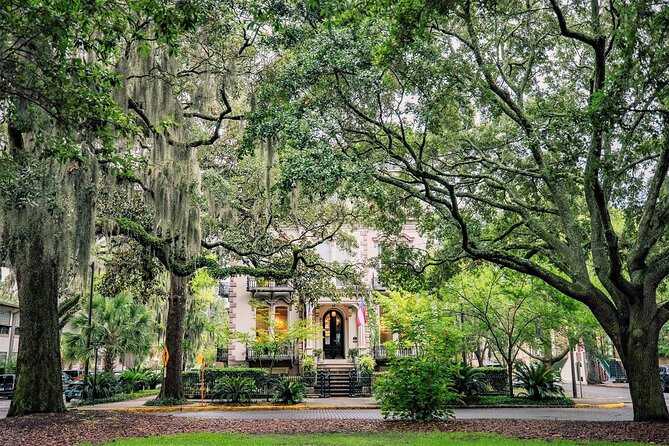
You’ll meet at 24 Habersham St in Savannah, and the tour starts in Reynolds Square, the public heart of downtown. This isn’t just a convenient corner. It’s the kind of place where the rest of Savannah’s layout suddenly makes sense.
Reynolds Square is where the colonial government lived in the 1700s. Your guide explains how the area became a hub for decision-making, and it’s also tied to early Georgia political milestones, including a first reading connected to the Declaration of Independence in Georgia.
If you’re the type who likes a plan, you’ll appreciate this start. If you’re more of a wanderer, you’ll still benefit, because you’ll know what you’re looking at as you move from square to square.
You can also read our reviews of more walking tours in Savannah



The Savannah route: squares, shade, and a 90-minute history walk that stays moving
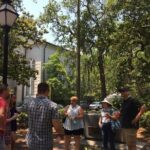
This is a walking tour of about 90 minutes with a maximum group size of 30. That cap matters. Smaller groups usually mean more back-and-forth, and you don’t feel like you’re just watching the guide talk from far away.
The route focuses on Savannah’s Historic District and the surrounding downtown area, where you’ll see tree canopies, floral landscaping, and those iconic park-like squares. It’s a city built around walking distance, and this tour uses that design well.
One review notes that the walk includes a brief A/C break halfway through. If you’re visiting in humid months, that’s a big deal. You get a chance to reset without losing momentum.
Cathedral of St. John the Baptist: why this stop matters before you see the rest
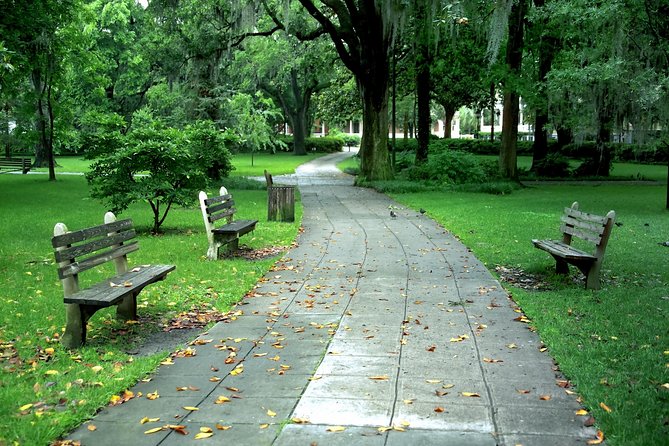
The tour begins by orienting you with the Cathedral of St. John the Baptist area, tied to the larger Reynolds Square setting. The point isn’t just the building. It’s the sense of how a city’s spiritual and civic life sits side by side in Savannah’s older neighborhoods.
Your guide connects what you see to the political and social world that shaped the colony. That context makes later stops easier to understand, especially the historic squares and the homes where you’ll start spotting clues about status, wealth, and power.
A small caution: if you’re standing a bit back at the start, you might miss early details. If you care about names and timelines, position yourself where you can hear the first few minutes clearly.
Colonial Park Cemetery, Johnson Square, Warren Square, Oglethorpe Square: Savannah’s public memory in plain sight
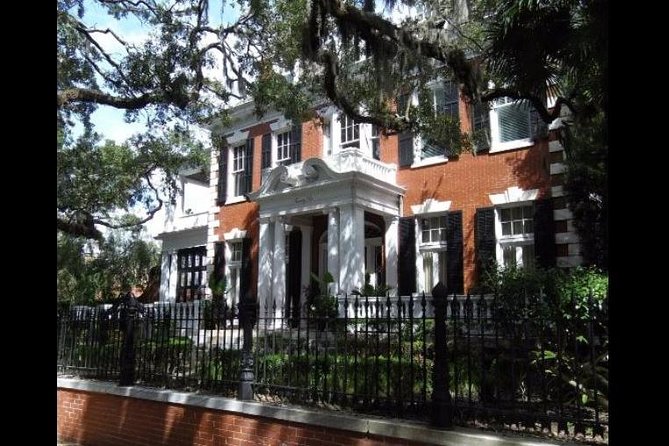
After the kickoff, the tour moves through a run of major squares and historic spots. Each one has a different feel, and your guide uses that to keep the stories from blending together.
- Colonial Park Cemetery: This is one of those Savannah places where history feels intimate. You get a sense of how the city remembered its people, not just its leaders.
- Johnson Square: Known for its central role in the town’s life, it works as a stage set for early civic stories.
- Warren Square: Another square that helps you understand Savannah’s repeating pattern—public space, architecture framing the streets, and community life moving around it.
- Oglethorpe Square: This stop reinforces how the city’s design supports strolling and gathering, even as the stories shift into war-time strategy and political change.
These squares matter because they’re not random stops. They’re part of Savannah’s urban “system,” and once you notice how the city is built, you’ll start seeing it everywhere.
If you’re prone to speed-walking when you’re excited, try slowing down here. The guide’s best moments happen when you’re watching details instead of just moving to the next block.
Chippewa Square and the Garden City vibe: where the walking turns into a feel-good break
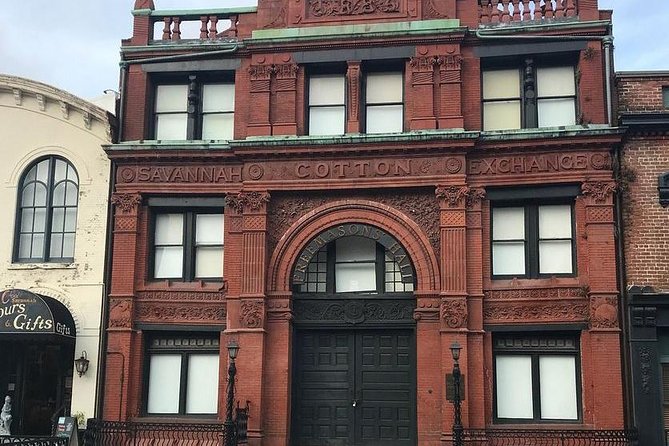
Chippewa Square is one of Savannah’s most recognizable spaces, and it’s also a strong emotional punctuation mark in the tour. By this point, you’ve heard several layers of the city’s story, and the square gives you space to absorb it.
The tour weaves major events into the scenery. Your guide ties Savannah’s role as a strategic port city to what it meant for the Revolution and the Civil War years. Even if you know the headlines, the city-specific framing makes the history feel more grounded.
Also, Chippewa Square is a natural place to look around. Watch how the streets open, how the buildings frame the space, and how the square works as a breathing point in a dense historic district.
One practical note from the tour’s operating details: the tour ends back at the meeting area in Reynolds Square, but in some departures the finish may be slightly different with a short walk afterward based on how the guide builds redundancy into the route. Either way, you’ll get clear walking instructions.
You can also read our reviews of more guided tours in Savannah


Green-Meldrim House: historic homes as social clues, not just pretty facades
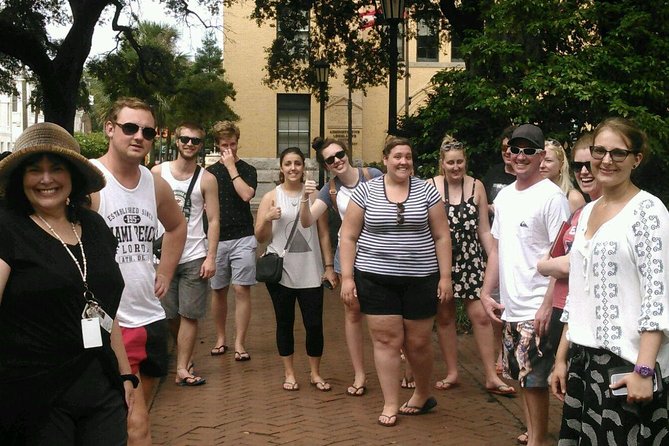
Next, you’ll hit Green-Meldrim House, a stop that shifts the tour from public spaces into private-world clues. Houses like this help you understand Savannah’s hierarchy: who lived where, and why the details of a home can reflect larger economic and political forces.
Your guide uses architecture as evidence. That’s what makes this tour feel more useful than the typical sightseeing stroll. You don’t just look at pretty buildings—you get a way to interpret them.
If you like travel that teaches you how to notice things, you’ll probably enjoy the shift here. If you’re mainly chasing photo angles, the guide’s commentary can still improve your pictures because you’ll know what to focus on.
Juliette Gordon Low Birthplace Museum and the theme of American civic life
A stop at the Juliette Gordon Low Birthplace Museum brings the tour into American civic history through a personal lens. The tone changes from war and government into community identity.
Your guide connects Savannah to the larger story of how Americans built civic organizations and leadership. Even if you don’t treat this stop like a deep museum visit, it’s a meaningful way to keep the tour from being only conflict-focused.
If you’re traveling with teens or kids, this is often the moment where the tour becomes easier to share. It’s not just history; it’s a person and a legacy.
Owens-Thomas House & Slave Quarters: a difficult topic handled with the right expectations
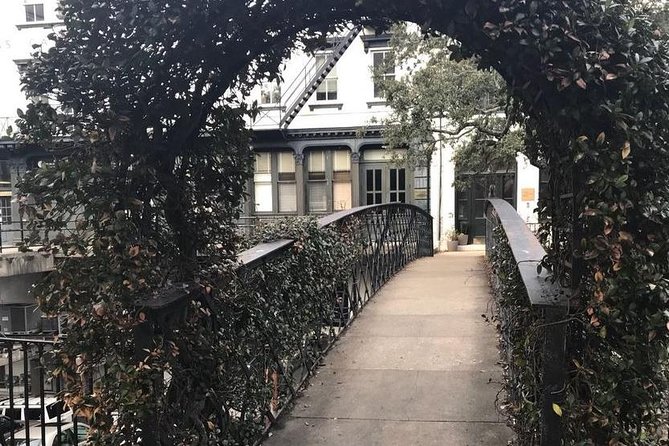
Owens-Thomas House & Slave Quarters is one of the tour’s most serious stops. It’s directly connected to the brutal realities of the past, not just the nicer side of Savannah history.
Here’s the balance point to keep in mind: some people will leave feeling satisfied with the way the tour addresses slavery-related history, while others felt the Civil War era coverage was lighter than they wanted, including slavery and Civil Rights. The tour’s advertised focus leans toward the founding of Georgia and Savannah’s role as a strategic port in the Revolution and Civil War.
So, treat this stop as part of a bigger overview, not a full replacement for a slavery-focused or Civil Rights-focused history tour. If that’s your priority, plan your schedule accordingly.
Olde Pink House: architecture with personality and a story that moves fast
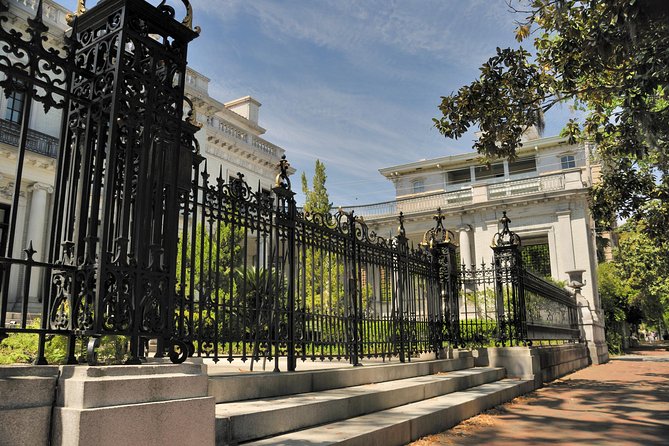
Then you’ll get to the Olde Pink House, the kind of building that draws attention even before the guide starts speaking. Your guide uses it to keep the tour lively, linking the structure to the city’s changing fortunes and the way people lived and did business.
This stop works especially well if you like history that feels human and slightly theatrical. The guide’s humor shows up often in reviews, and the Olde Pink House gives him (or her) a natural stage.
If you want the most out of this section, slow down for a minute and look for the small cues the guide points out. That’s where the building becomes a story.
Andrew Low House and Independent Presbyterian Church: power, faith, and community patterns
The tour continues with Andrew Low House and then Independent Presbyterian Church. These stops add different kinds of context: one for social and economic standing, and one for the community’s religious and civic life.
Together, they help you see Savannah as more than a pretty set of squares. It’s a network of institutions that shaped how people worked, worshiped, and organized.
This is also where experienced guides really shine. Strong reviewers often mention guides who answer off-script questions and keep the narrative coherent even when the group asks for specifics. Names like Brad, William Spinks, and Zach have earned praise for exactly that kind of interaction.
Savannah Historic District, Savannah Walks, and the value of a guided overview
At several points you’ll be back in the middle of what makes Savannah famous: the Savannah Historic District. The district is one of the largest National Historic Landmark Districts in the US, and this tour uses that scale in a smart way.
Instead of trying to cram every single landmark into your afternoon, the guide picks a route where each stop reinforces the next. You get the “why” behind the squares, the “who” behind the homes, and the “how” behind the city’s war-era importance.
You’ll also see Savannah Walks as a named stop within the tour flow. The practical value here is that you’re not just learning stories. You’re getting pointed guidance about what to notice next in the city on your own time.
The practical payoff: shopping and dining tips you can use immediately
One included part of the experience is learning about the best shopping and dining spots. This is where a good local guide can make the tour feel like it paid for itself, even if the history part is what got you interested in the first place.
When the guide talks about where to go next, you can build a low-stress itinerary. You’ll know which areas are worth wandering after the tour and which streets are more likely to match what you’re craving—casual, sit-down, sweet treats, or local specialties.
This isn’t about being handed a list. It’s about getting a city mindset, so your free time feels guided instead of random.
Guide styles and group dynamics: how to get a better experience on the day
The reviews point to an overall theme: the best tours here are built on a guide who is organized, engaging, and comfortable answering questions. Guides like Brad, William Spinks, and Zach are repeatedly praised for being funny and informative without sounding robotic.
Still, there are a couple of real-world considerations. When groups get bigger, hearing can become harder. If you’re sensitive to audio, try to stand toward the center-front area, especially early in the walk.
Also, the tour length is short enough that timing matters. It’s designed for about 90 minutes, so don’t expect long detours or extended museum-style stops at every location.
Who should book this tour—and who should pick something else?
This is a great fit if you want:
- a fast way to understand Savannah’s layout and why the squares matter
- a guide who connects architecture and government to the big events like the Revolution and Civil War years
- a manageable walk that works well for a first visit
It’s less perfect if you want:
- a very detailed, balanced treatment of slavery and Civil Rights history across multiple eras
- a tour that feels like a long, nonstop walk without frequent story stops
If your main goal is Civil War and slavery in a deeper way, you might want to pair this with a different specialty tour. The provider even references a Civil War Savannah option for guests seeking that heavier focus.
Should you book Savannah Stroll?
I’d book this tour if it’s your first time in Savannah and you want a guided start that helps you explore confidently later. The combination of Reynolds Square orientation, iconic squares, and strong guide storytelling makes the tour a high-value use of a short afternoon.
But if your expectations are laser-focused on slavery and Civil Rights details, don’t assume this overview will cover everything you’re hoping to learn. In that case, book it only if you’re comfortable with it as a broad historical orientation, then add a deeper, targeted tour to fill the gaps.
If you do book, bring comfortable walking shoes, plan to take shade seriously in warm weather, and be ready to ask questions. A good guide will gladly meet you where your curiosity is.