REVIEW · SEVILLE
Seville Guided Small-Group Walking Tour
Book on Viator →Operated by Amsterdam Guías & Tours · Bookable on Viator
Seville can feel overwhelming at first. This 2-hour small-group walk gives you a clear map of the city’s big landmarks and the stories that connect them.
I love how the tour is built around Seville’s top exterior sights without rushing you through museum-style time. I also like that the guide’s storytelling is personal and local, with names like Julio, Patricia, Anna, Valentin, Rosa, Juan, and Carolina popping up in recent groups.
One thing to consider: this is mainly an exterior walking tour. You’ll see major sites like the cathedral and Royal Alcázar from the outside, and entrance tickets are not included.
In This Review
- Key points before you go
- Seville in Two Hours: Why This Route Works
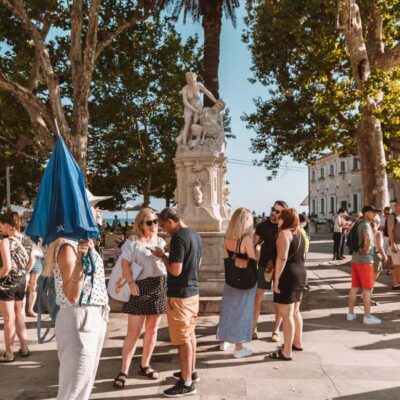
- Meeting Point: Spot the Blue Umbrella and Start Easy
- Plaza de San Francisco: Seville’s Old Square Starter
- Ayuntamiento (City Hall): Plateresque Architecture Up Close
- Torre Giralda: The Icon You’ll Keep Seeing
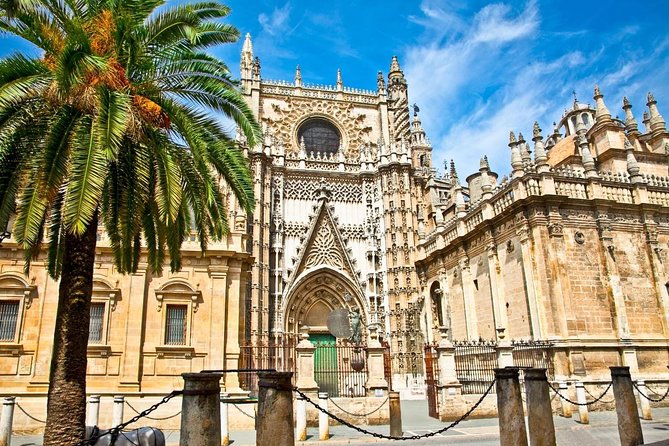
- Catedral de Sevilla Exterior: The World-Scale Gothic Moment
- Real Alcázar Exterior: Mudéjar, Gothic, Renaissance, Baroque
- Archivo General de Indias: Where Spain and the Americas Meet
- Puerta de Jerez: Old City Edge, Big Meaning
- Real Fábrica de Tabacos: Industry Meets Opera Lore
- Plaza de España: The Movie-Set Icon in Neo-Andalusian Style
- Breakfast Option at 9:30 AM: Extra Detours That Add Big Visual Payoff
- Small-Group Experience: Why Up to 15 People Feels Right
- Price and Value: Is $21.78 a Good Deal?
- Is This Tour for You?
- Should You Book This Seville Small-Group Walking Tour?
- FAQ
- How long is the Seville Guided Small-Group Walking Tour?
- What language is the tour offered in?
- Is this tour inside monuments or mostly exterior viewing?
- What sights will we see on the walk?
- Is breakfast included?
- What’s the group size?
- Where does the tour start?
- Are tickets mobile-friendly?
- What if the weather is bad?
Key points before you go
- Small group, max 15 people: easier to hear the guide and ask questions
- Prime exterior route: Giralda, cathedral, Alcázar, Archivo General de Indias, Plaza de España
- Seville’s two “wow” zones: Plaza de España and the wooden Metropol Parasol (Setas)
- Real context for big buildings: from Plateresque Ayuntamiento to the cigar-era Real Fábrica de Tabacos
- Breakfast add-on at 9:30 AM: optional extra route elements tied to the earlier hours
- Mobile ticket: no printed puzzle required
Seville in Two Hours: Why This Route Works
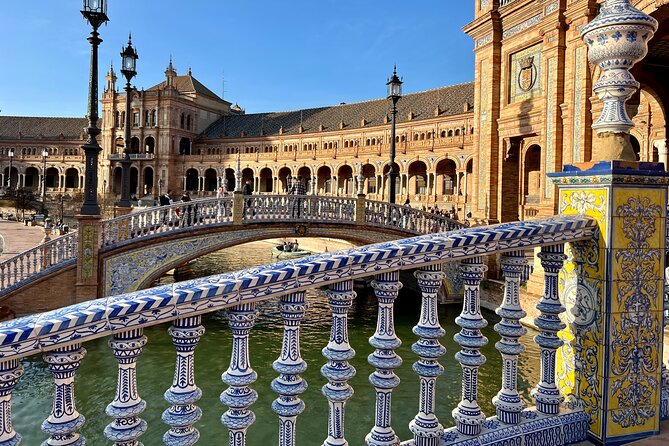
If you only have a short window in Seville, this tour is the fast track. In about two hours you’ll cover the core “signature” monuments and learn how they fit together, rather than just snapping photos and moving on.
The best part is that it’s paced like an orientation, not a sprint. You get enough time at each stop to understand what you’re looking at, and then you can choose what deserves a return visit later.
You can also read our reviews of more walking tours in Seville


Meeting Point: Spot the Blue Umbrella and Start Easy
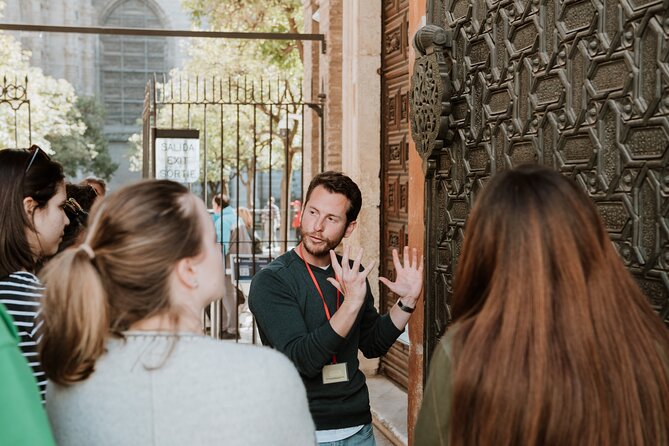
The tour starts and ends at Plaza de España (Av. Isabel la Católica, 41004 Sevilla). At the first stop, you’ll also be told to meet near Banco de España under a blue umbrella with the Seville Guias&Tour logo.
My practical advice: arrive early and give yourself a few minutes to locate the correct umbrella. One person missing the exact spot can turn the whole morning into stress.
You’ll also be walking in the historic center, so it helps to wear comfortable shoes. Even with a short duration, Seville’s streets add up quickly.
Plaza de San Francisco: Seville’s Old Square Starter
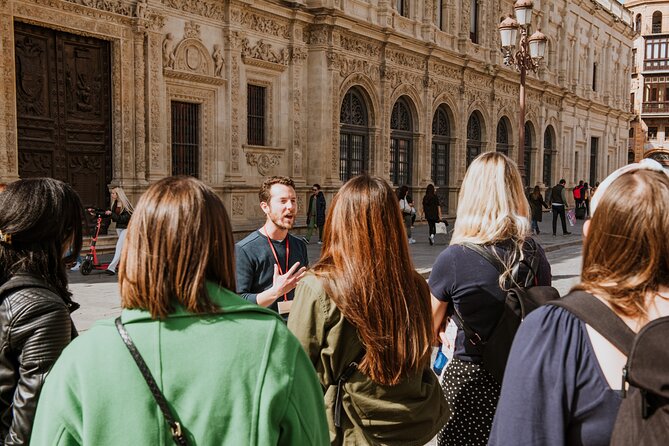
You begin at Plaza de San Francisco, one of Seville’s oldest squares and a former main meeting point for the city. This is a smart kickoff because it sets the tone: you’re not starting in some blank modern plaza. You’re starting in the layers.
Expect a quick introduction to how Seville developed, then a handoff into the government-and-monuments segment of the walk. This is the moment when you start realizing that the city is organized around power, religion, and trade.
This stop is free in terms of admission, and it’s built for orientation—so don’t worry if you feel like you’re still getting your bearings.
Ayuntamiento (City Hall): Plateresque Architecture Up Close
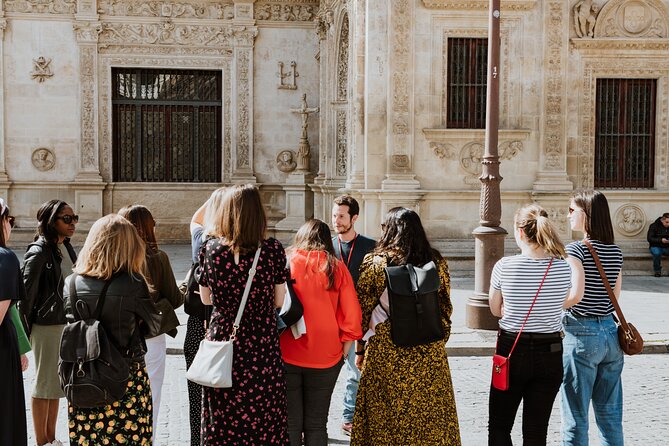
Next comes Ayuntamiento, a standout example of Plateresque architecture in Andalusia. Plateresque is one of those styles that looks like stonework gone decorative—almost like it’s been “crafted” in layers.
You won’t be inside here, but the exterior is still worth your attention. On a short tour, the goal is to train your eye. Once you learn what you’re seeing, the façade stops being random ornament and starts looking like a deliberate statement.
Admission isn’t included for this stop. Luckily, you’re not paying monument entry just to get the architectural context.
Torre Giralda: The Icon You’ll Keep Seeing
Then you hit Torre Giralda, Seville’s iconic tower. The key idea is that it began as a minaret and became a bell tower—a history shift you’ll feel immediately if you pay attention to the form and the details.
This stop matters because it connects religion, conquest, and city identity in one visible landmark. It also gives you the classic Seville sightline, since you’ll notice the tower again and again once you know what you’re looking for.
You’ll spend time there for photos and explanation, but admission isn’t included. Think of this as the “understand first, enter later” approach.
You can also read our reviews of more guided tours in Seville

Catedral de Sevilla Exterior: The World-Scale Gothic Moment
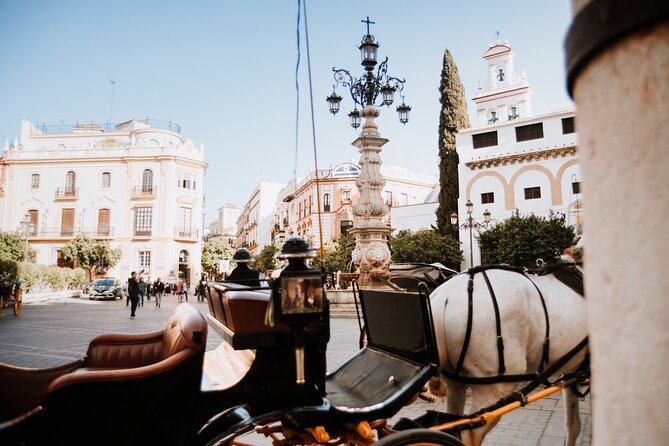
From Giralda, the tour moves to Catedral de Sevilla. The cathedral is described as the largest Gothic cathedral in the world, and that scale isn’t just bragging—it changes how the city feels around it.
You’ll also hear about why the cathedral marked Seville for good, and how la Giralda dominates the setting. Another practical point: even if you don’t go in today, knowing what the tower represents helps you read the cathedral grounds.
This stop is exterior-only on this tour. No admission ticket is included, so if you want to go inside, plan to buy a separate entrance ticket after you get oriented.
Real Alcázar Exterior: Mudéjar, Gothic, Renaissance, Baroque
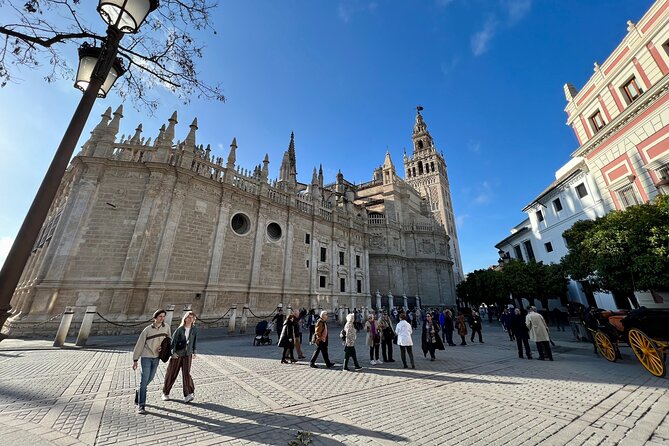
Next is the Real Alcázar de Sevilla, a palace complex noted for mixing Mudéjar, Gothic, Renaissance, and Baroque styles. That style mix can sound like a trivia list, but on-site it becomes a visual story: different periods leaving their fingerprints on the same place.
Even from outside, you’ll learn what makes the complex worth repeat visits. Palace exteriors can look “just pretty” if you don’t know the logic behind them. With the guide’s timeline framing, you’ll start seeing the building as a history document.
Again, this tour doesn’t include entry. Still, you’ll walk away with enough context to decide if it should be one of your priority interior stops.
Archivo General de Indias: Where Spain and the Americas Meet
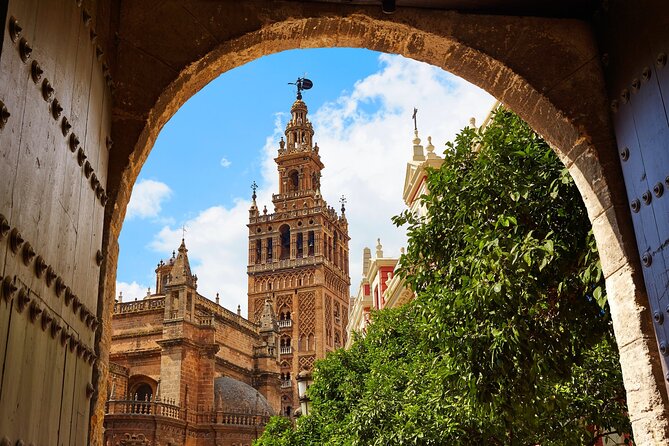
For history lovers, Archivo General de Indias is a standout stop. It houses documents tied to Spain’s and America’s intertwined past, and the point here is access to primary-source thinking.
You’re viewing it from outside on this walking route, so don’t expect a reading-room experience. But the explanation turns the building into more than “a nice façade.” You start to understand Seville’s role as a hub of record-keeping and administration tied to the wider world.
This is one of those moments where the guide’s storytelling can change your entire travel approach. Instead of treating places as static, you start treating them as systems.
Puerta de Jerez: Old City Edge, Big Meaning
Then you reach Puerta de Jerez, one of Seville’s older entrances to the city. If you’re used to walking cities with everything feeling “in the middle,” this stop is a good reminder that Seville had boundaries and gates.
A gate isn’t just an opening. It’s a statement about control, movement, and how a city organized itself. Even at exterior viewing distance, it helps you understand the old-city geography.
This stop is listed as free. You get value without adding any ticket planning.
Real Fábrica de Tabacos: Industry Meets Opera Lore
The tour then heads to Real Fábrica de Tabacos, a major clue to Seville’s economic engine. It’s described as the largest industrial building of Spain, and it dates to the XVIII century.
Here’s what makes this stop more than “weird factory history.” The same complex was used for cigar production, but also served as a theater set for one of Seville’s great opera settings. That means the building is tied to work life and performance culture, side by side.
Admission isn’t included, and you’re viewing it externally. Still, the story helps you see the building as a cultural machine, not just an old warehouse.
Plaza de España: The Movie-Set Icon in Neo-Andalusian Style
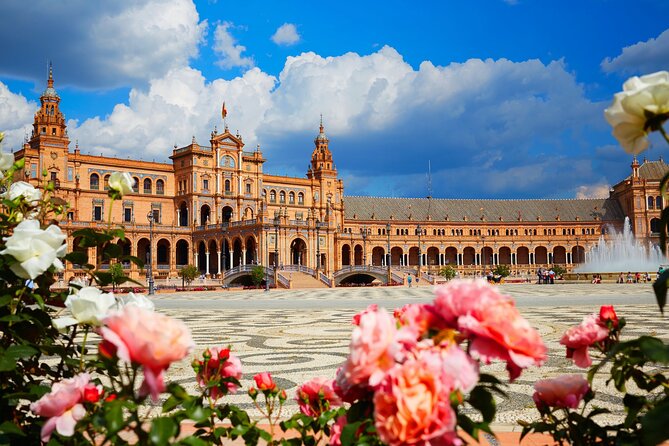
Finally, you land at Plaza de España, described as built for the 1929 Ibero-American Exhibition. The big selling points here are the neo-Andalusian architecture, plus brick, iron, and tilework that make the plaza feel like a whole world of detail.
This stop is also famous as a movie set, which makes sense the moment you arrive. It’s symmetrical and theatrical, with enough visual drama that filmmakers can stage scenes quickly.
You’ll get a brief moment to take it in on foot, but the tour doesn’t try to make you stand there for an hour. Instead, it gives you a “first look” that you can extend later if you want more slow walking and photo time. This stop is also free.
Breakfast Option at 9:30 AM: Extra Detours That Add Big Visual Payoff
There’s an optional traditional Andalusian breakfast available at 9:30 AM, and if you choose the breakfast-included option, the walk includes extra passing sections.
One extra pass involves Seville’s most important mosque, with notes pointing to baroque architecture and something “hidden behind its walls.” Since this tour is mainly about exterior viewing, you’re not guaranteed a full inside visit, but the guide’s context can still make the exterior look more meaningful.
The other bonus pass relates to the Metropol Parasol, the largest wooden structure in the whole world. The idea here is that the structure is huge above street level, and below its surface are ruins uncovered during excavation for a different project. If you’ve ever wondered how modern structures can cover older layers, this is your “wait, what?” moment.
This is also where the tour’s highlight focus on Setas de Sevilla makes more sense. If you care about the wooden parsol form and the surprise layers underneath, the breakfast option is the one that gives you extra time to connect the dots.
Small-Group Experience: Why Up to 15 People Feels Right
The tour limits group size to 15 travelers, and that changes the whole vibe. In a city full of popular landmarks, the worst problem is usually noise and distance. Here, you’re close enough to see the guide’s point and hear explanations without asking people to get out of your personal space.
Recent groups have been as small as four and up to around a dozen, so you’re likely to feel like a group rather than a crowd. That’s also why guide interaction—like quick questions—tends to flow naturally.
You may also notice different guide personalities based on the local talent highlighted in recent experiences. Names like Julio and Patricia show up often, but different guides still aim for the same goal: connect you to Seville’s timeline.
Price and Value: Is $21.78 a Good Deal?
At $21.78 per person for around two hours, this tour is priced like an orientation investment. That’s not the same as paying for paid-entry museum time, and the exclusions make that clear.
What you get that you can’t easily DIY:
- a tight route through major landmarks
- a local guide to connect architecture, trade, and power
- a small-group format that makes questions possible
What you don’t get:
- monument entrance tickets
- interior visits at places like the cathedral and Royal Alcázar
So the value depends on your style. If you’re the type who wants a smart first pass and then buys targeted entrances later, this price makes sense. If you’re hoping the tour includes full cathedral and palace entry, you’ll feel the gap—and you’ll need to plan separate tickets.
Also, the tour is commonly booked about 24 days in advance on average, which suggests it’s a good slot for planning your first day in town. Not required, but it’s a sign the tour stays popular.
Is This Tour for You?
This walk is best for you if:
- it’s your first time in Seville and you want structure fast
- you like architecture but also want the “why” behind it
- you want a guide you can hear and talk to
- you’re okay with exterior viewing and using this as your roadmap
It might not be the best fit if:
- you want to spend most of your time inside major monuments
- you dislike walking in hot sun or variable weather (this experience needs good weather)
If you’re planning a week in Seville, this tour can function like your control center. After you see the highlights with context, you’ll know where to return for longer stays.
Should You Book This Seville Small-Group Walking Tour?
Yes, I think you should—especially if you’re arriving in Seville with limited time and a long list of sights. This tour does a strong job of giving you a foundation: Giralda’s evolution, the cathedral’s scale, the palace style mix, and the city’s economic signals from the cigar-era factory.
Pick the standard option if you want a clean, efficient exterior orientation. Choose the breakfast-included option if the Setas de Sevilla look matters to you, and if you want the extra passing sections tied to Seville’s major mosque area and the wooden-structure layers.
Just remember the big tradeoff: you’re walking around world-class landmarks more than you’re going inside them. If you accept that, this is an excellent way to understand Seville fast and spend the rest of your trip with better instincts.
FAQ
How long is the Seville Guided Small-Group Walking Tour?
The tour runs about 2 hours.
What language is the tour offered in?
This experience is offered in English.
Is this tour inside monuments or mostly exterior viewing?
It’s mainly exterior visits. Entrance tickets to monuments are not included.
What sights will we see on the walk?
You’ll stop at major landmarks including Seville Cathedral (exterior), Royal Alcázar (exterior), Torre Giralda, Archivo General de Indias, Puerta de Jerez, and Plaza de España. You’ll also see Metropol Parasol (Setas de Sevilla) as part of the highlights, with additional sections tied to the breakfast option.
Is breakfast included?
Breakfast is optional. It’s available at 9:30 AM as an add-on.
What’s the group size?
The tour is a small-group with a maximum of 15 travelers.
Where does the tour start?
The meeting point is listed as Plaza de España (Av. Isabel la Católica, 41004 Sevilla). The first stop instructions also point you to meet near Banco de España under a blue umbrella with the Seville Guias&Tour logo.
Are tickets mobile-friendly?
Yes. The tour uses a mobile ticket.
What if the weather is bad?
This experience requires good weather. If it’s canceled due to poor weather, you’ll be offered a different date or a full refund.