REVIEW · LA ROCHELLE
Discover La Rochelle: Discovery Walking Tour of La Rochelle
Book on Viator →Operated by Monsieur John Mcguiggan · Bookable on Viator
Two hours, and La Rochelle makes sense. This Discovery Walking Tour led by Monsieur John Mcguiggan turns a first visit into a clear, doable route, and I love the way it pairs big landmarks with practical restaurant and sightseeing tips.
You’ll also like how the pacing stays relaxed while still hitting the city’s key ideas: maritime power, civic life, and the layers of conflict that shaped the old town.
One thing to consider: the big tower stops are outside views only, so you won’t get inside without booking separate tower access. Also, the meeting point at Place de la Chaîne can take a second to spot if you arrive late or off by a block.
In This Review
- Key highlights worth your time
- Why this 2-hour loop is the smart way to start
- Price and what $48.39 buys you in real value
- Chain Tower, Lantern Tower, and Saint Nicholas: tower views without ticket hassle
- Vieux Port and Plage de la Concurrence: port life plus wartime context
- Porte de la Grosse-Horloge and the story of walls, gates, and trade
- Hotel de Ville and Place de Verdun: the civic heart, then the sacred origins
- Marché Central to the old walls and bohemian streets
- Eglise St-Sauveur and the iconoclastic-war impact
- Phare du quai Valin: a clean maritime finale
- Who this tour suits best (and who should adjust expectations)
- How to get the most out of the walk
- Should you book this Discovery Walking Tour of La Rochelle?
- FAQ
- How long is the La Rochelle discovery walking tour?
- Is the tour guided in English?
- Are tower entrances included in the price?
- Where does the tour start and end?
- Do I get a mobile ticket?
- Can I cancel for a full refund?
Key highlights worth your time
- A tight first-day loop: you cover the port, gates, walls, and town center in about 2 hours.
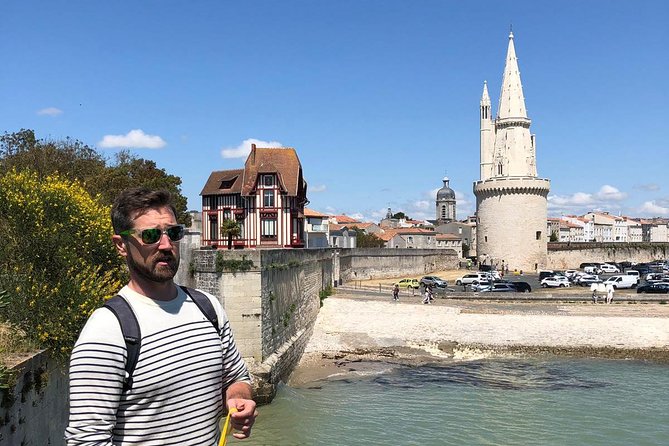
- Outside-only tower viewing: you see Chain Tower, Lantern Tower, and the Saint Nicholas area without entry tickets.
- WW2 context near the coast: the Plage de la Concurrence stop adds modern history to the seafront.
- Gates, clocks, and trade: Gross Horloge area stories connect architecture to commerce.
- Civic and religious landmarks in quick hits: town hall origins and Eglise St-Sauveur’s iconoclastic-war impact.
- A guide who answers questions: John’s humor and back-and-forth Q&A can guide your next day’s plan.
Why this 2-hour loop is the smart way to start
If La Rochelle is new to you, you can burn a whole day wandering without much sense of what you’re seeing. This tour is built for getting your bearings fast. In about 2 hours, you move through the port zone, old gates and walls, and the town center so the city starts to “click” in your head.
I like that it’s not trying to turn the walk into a long lecture. John’s style is friendly and animated, and the route stays coherent enough that even if you’re jet-lagged, you still feel like you made progress. The group is limited to a maximum of 35 people, which usually keeps questions and interaction from feeling lost.
The timing also works well if you’re tight on the calendar. People on short visits often appreciate this kind of orientation, because it helps you choose what to revisit later—especially if you’re trying to do more than just the obvious waterfront photos.
Price and what $48.39 buys you in real value
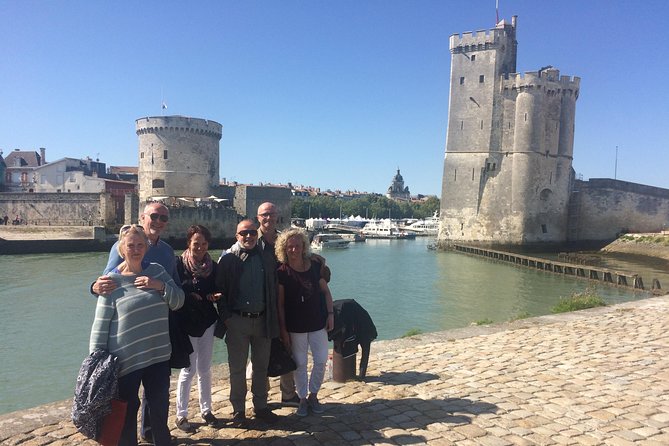
At $48.39 per person, this isn’t a “budget only” tour, but it also doesn’t feel overpriced for the amount of ground covered and the number of major stop points you see. You also get a mobile ticket and the format is designed for efficiency: you’re paying for a guided route plus interpretation, not for museum time.
Two practical value points matter here:
- You get structure. The walk links landmarks to reasons they mattered (trade, governance, maritime navigation, and periods of conflict). That’s what makes later self-guided strolling easier.
- You get local recommendations. Several tour moments turn into “where to eat, what to catch, what to try next.” That can save you time and bad meals.
Heads-up on what’s not included: access or entry to the towers. The walking tour can still be great if you just want views and context, but if you’re hoping to climb and go inside, plan those separately.
Chain Tower, Lantern Tower, and Saint Nicholas: tower views without ticket hassle
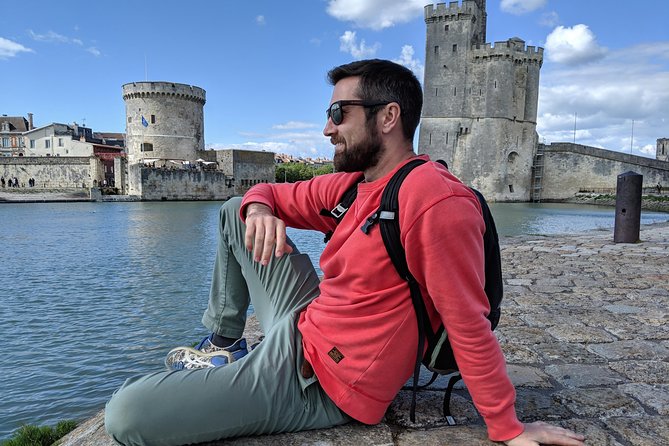
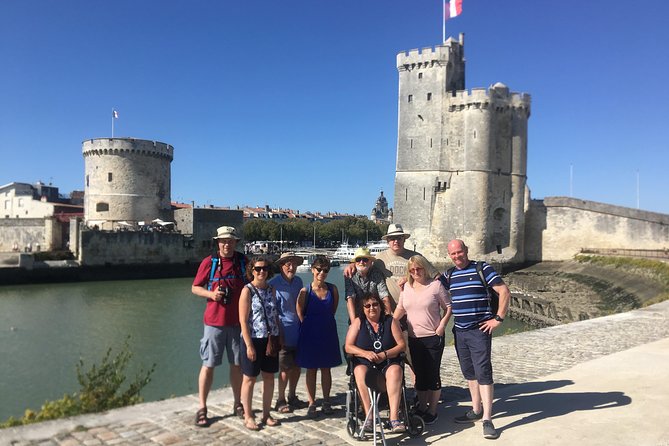
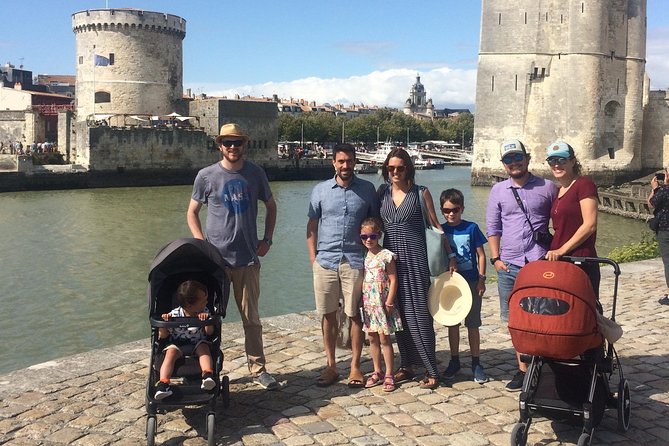
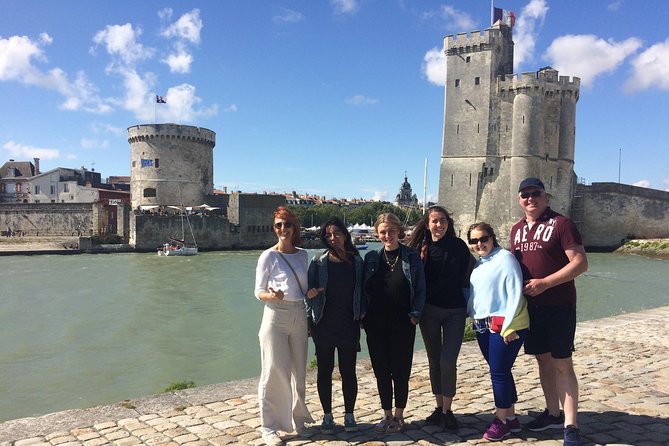
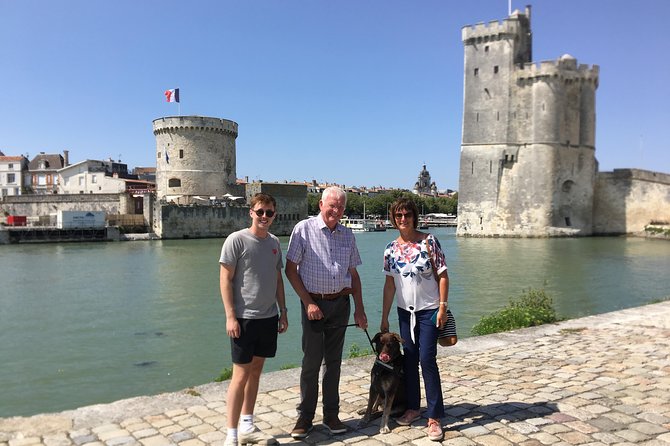
The tour begins right in the old-town tower belt. You start outside the Chain Tower, pass by the Lantern Tower, and then finish this opening section beside the Saint Nicholas Tower. None of those tower entrances are included, so don’t expect climb-and-panorama time.
Still, this part is useful. Seeing towers from the outside helps you understand the city’s defensive and maritime layout. Towers weren’t random decoration; they were part of how La Rochelle watched the sea and protected trade. Even if you never enter the interiors, you’ll likely come away with a better map in your mind—where the coast is, where the harbor defense line was, and how the old town relates to the port.
Practical tip: wear shoes that can handle uneven pavement. This route is straightforward, but the old streets and sidewalks can be a little rough underfoot.
Vieux Port and Plage de la Concurrence: port life plus wartime context
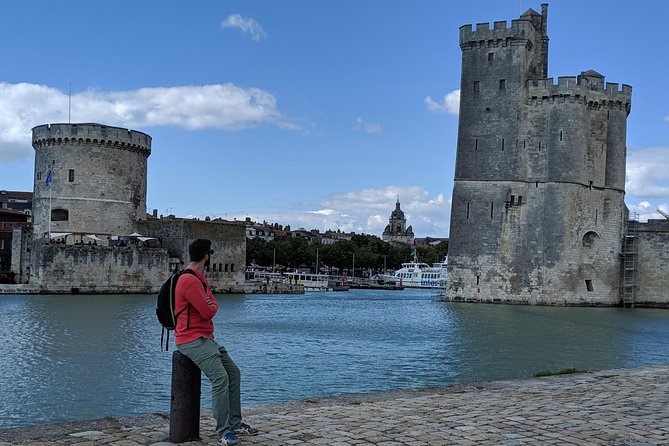
Next you shift into the heart of La Rochelle’s maritime identity. You’ll begin and end near the Vieux Port and pass it multiple times as the route loops around. That repetition is intentional: each pass lets John connect what you’re seeing with a different piece of the city’s story—ships, trade, and how the harbor became the city’s engine.
Then you head to the Plage de la Concurrence area. This is a strong stop if you like your travel history grounded in places, not just dates. John talks about the western side of La Rochelle, including the new port and La Rochelle’s role during World War II. It’s a reminder that a postcard seaside can also carry heavy modern history.
One benefit here: you get a change of scenery. After the dense old-town gates and streets, the coastal area gives your legs a breather and helps you re-orient visually.
Porte de la Grosse-Horloge and the story of walls, gates, and trade
As you move back toward the old city core, the tour highlights the connections between architecture and commerce. You stop outside the Porte de la Grosse-Horloge (Gross Horloge area) and talk about the city walls and trade during that era.
This is where the walk becomes more than a list of famous buildings. You start to see the city as a system: gates controlling movement, walls protecting assets, and trade routes feeding the economy. La Rochelle wasn’t only a pretty harbor. It was a working port city with real stakes.
On the way, you also pass through Porte des Deux Moulins en route from the Lantern Tower toward the Fort des Dames. There’s a sense of “movement through the layers,” like you’re traveling along the boundaries of different eras.
And since the route is designed for walking, these connections feel natural. You don’t just read about walls later—you can point to where you saw them and remember what you learned.
Hotel de Ville and Place de Verdun: the civic heart, then the sacred origins
At Hotel de Ville, you get a quick stop focused on why La Rochelle’s oldest working town hall matters. This is the civic side of the city’s story—how local governance influenced development and how a busy port city organized itself.
Then the tour shifts to Place de Verdun near the cathedral area. Here John focuses on the origins of La Rochelle. The stop is short, but it gives you a baseline for understanding why the town’s cultural center formed where it did.
This combination—civic power then religious roots—helps you avoid the “only port or only old streets” trap. You get the sense of a city built around both decision-making and belief, which fits La Rochelle’s identity as a place that balanced commerce with strong cultural traditions.
Marché Central to the old walls and bohemian streets
The Marché Central de La Rochelle stop is one of the more useful moments for your future days. John talks about how commerce grew in the city and points out regional food and drink specialities. If you’re the type who likes to plan meals based on what’s local, this stop can nudge you toward the right flavors without guesswork.
After that, the route passes through a park on the way back from the western part toward the town center. You then walk along the only surviving part of La Rochelle’s walls. That short stretch is a big deal because it’s tangible proof of the city’s fortifications. You can see how the street layout and the old boundaries still influence movement today.
You also pass a famous landmark (the tour treats it like a recognizable waymarker), and you’ll then move through a bohemian neighborhood with unique boutiques and bars. This is a nice contrast to the heavier history stops. It’s also practical: by the time you reach these areas, you’ll have context for what you’re seeing and where you might want to wander later on your own.
Eglise St-Sauveur and the iconoclastic-war impact
The tour reaches Eglise St-Sauveur, with a stop outside a well-known relic tied to the iconoclastic wars. This is not a long church visit, but it’s a meaningful one. John explains how those conflicts affected religious life and the city’s built environment.
Even if you’re not a deep-architecture person, this stop gives you a “why” behind the look of certain religious sites: they were shaped by conflict, not just by artistic taste.
Near the end of the route, you also check for what’s happening at a guingette. The point isn’t to guarantee anything. It’s more like a timing cue: keep an eye out, because these open-air social places can be part of the La Rochelle experience if the day lines up.
Phare du quai Valin: a clean maritime finale
The last stop is the Phare du quai Valin lighthouse. John uses this to explain the importance of lighthouses for maritime navigation in La Rochelle—especially how two lighthouses worked together to guide ships safely.
This finale matters because it ties the whole tour together. You started with towers. You spent time at port and coast. You learned about trade and boundaries. Then you end at a navigation point that shows the sea logic behind the city’s shape.
It’s a calming way to wrap up: history, yes, but grounded in the practical reality of living with water.
Who this tour suits best (and who should adjust expectations)
This is a great fit if you:
- want a first visit orientation that’s fast but not shallow
- enjoy walking routes with clear storytelling and chances to ask questions
- have limited time (including day-trippers who need a quick, coherent plan)
- want food and drink suggestions that help you eat like you’re in La Rochelle, not just near it
It may not be the right choice if you:
- only care about museum-style entry or tower climbing (because tower access isn’t included)
- want a long, slow wander with lots of free time at each landmark
If you fall into the second category, I’d still consider booking if you can treat it as your “map and meaning” day. Then you can return later on your own for any interiors you want.
How to get the most out of the walk
A few small habits make this kind of tour pay off:
- Ask questions early. John is responsive, and the best recommendations usually come when you tell him what you’re curious about.
- Bring weather-ready layers. People mention enjoying the tour even in iffy conditions, but you’ll be happier with a rain jacket and shoes you trust.
- Use the stops as anchors. After you learn why something mattered, it’s easier to build a self-guided loop for the rest of your trip.
- Plan your tower tickets separately if you want entry. The outside views are still rewarding, but inside access requires extra planning.
One more note: the tour is in English, and the pacing is designed to keep people moving without feeling rushed. It’s a good balance for a wide range of travelers.
Should you book this Discovery Walking Tour of La Rochelle?
I’d book it if you’re looking for a smart, time-efficient way to understand La Rochelle without getting lost in details. For $48.39, you get a guided loop that links the port, walls, gates, civic power, and religion into one storyline, plus useful local pointers for food and what to catch during your stay.
Skip or adjust expectations if your top goal is climbing into towers or spending lots of time inside major sites. In that case, consider this as your “orientation layer,” then add separate tickets and slower visits for what you care about most.
FAQ
How long is the La Rochelle discovery walking tour?
It runs for about 2 hours.
Is the tour guided in English?
Yes, the tour is offered in English.
Are tower entrances included in the price?
No. You’ll view the towers from outside, and access or entry to the towers is not included.
Where does the tour start and end?
It starts at Place de la Chaîne (Pl. de la Chaîne, 17000 La Rochelle, France) and ends at La Rochelle Town Hall (3 Pl. de l’Hôtel de ville, 17000 La Rochelle, France).
Do I get a mobile ticket?
Yes, the tour includes a mobile ticket.
Can I cancel for a full refund?
Yes. You can cancel up to 24 hours in advance for a full refund.