REVIEW · TOKYO
Tokyo: Shibuya Highlights Walking Tour & Secret View Spot
Book on Viator →Operated by Local Guide Stars · Bookable on Viator
Shibuya is loud, then suddenly makes sense. This 90-minute walking tour is built to help you get your bearings fast while you hit the most photo-friendly stops in the district with an English-speaking local guide. I love that you’re not winging it alone, and you get practical commentary as you move through the streets around Shibuya Crossing.
Two things I really like: first, the small-group format keeps things from feeling like a cattle run. Second, the mix of landmarks and everyday lanes gives you more than just skyline photos—you also see the spots where people actually hang out, snack, and shop. You’ll spend a lot of time outside, so one consideration is simple: if the weather turns ugly, the tour can be adjusted or canceled since it’s designed for good walking conditions.
In This Review
- The value of walking Shibuya with a guide (not a map app)
- Price and logistics for a 90-minute Shibuya loop
- Where you start: SHIBU HACHI BOX in Shibuya
- Stop 1: Shibuya Crossing and the photo-timing advantage
- Stop 2: Observation-deck views from Shibuya Scramble Square (and the Fukuras mention)
- Stop 3: Nonbei Yokocho for izakaya nostalgia
- Stop 4: Miyashita Park illuminations and a younger Shibuya vibe
- Stop 5: Shibuya Center-gai for street-level orientation
- Stop 6: Shibuya Mark City basement browsing
- The guides make the difference: Hannah and Mao as examples
- What you’ll likely do with the photos
- Small group size: why 10 people changes everything
- Possible drawback: deck expectations and the need to stay flexible
- Who should book this Shibuya highlights tour
- Should you book Tokyo: Shibuya Highlights Walking Tour & Secret View Spot?
- FAQ
- How long is the Shibuya highlights walking tour?
- How much does the tour cost?
- How big is the group?
- Do I get a ticket on my phone?
- Where do I meet the guide?
- Where does the tour end?
- What stops are included during the walk?
- Are entrance fees and photo services included?
- Is private transportation provided?
- What if the weather is bad?
- Can I cancel for a full refund?
The value of walking Shibuya with a guide (not a map app)
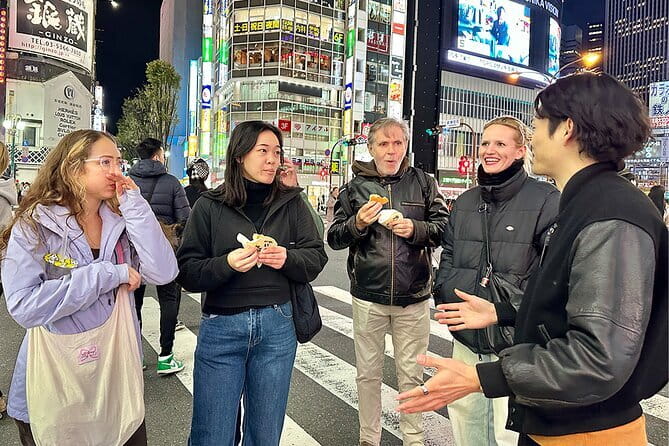
Shibuya can feel like a maze even when you know exactly where you’re trying to go. Above ground it’s bright and busy, and below ground it’s even more confusing. This tour works because it’s structured: you follow a guide through the key crossings, shopping corridors, and a couple of specific neighborhoods inside Shibuya.
You’ll also get the kind of context that’s hard to find quickly on your own. Instead of just passing by buildings, you learn what they are and why they matter in this part of Tokyo. That matters if you only have a short window in Shibuya and you want to walk away with a clearer mental map.
And yes, there’s a big bonus: you’re paying for guidance and the “route logic.” At $25.20 per person, that’s not about getting a bargain. It’s about saving time, reducing stress, and making your photos come out better because you’ll be timed and positioned by someone who knows where to stand.
Price and logistics for a 90-minute Shibuya loop
This is priced at $25.20 per person and runs about 1 hour 30 minutes. You’ll use a mobile ticket, so you’re not dealing with paper. The group is set up to feel small (a limit of 10 people), while the overall maximum is stated as 20 travelers—either way, you’re not stuck in a crowd.
A practical note: there’s no private transportation included. This is a walk-and-transit style experience, so plan to reach the start area using public transport. The good news is the meeting point is near public transportation, and the walk returns you to the start point at the end.
The tour also includes photos during the tour, plus the stated entrance/experience fees. That means you can focus on walking and learning, instead of counting down ticket lines.
You can also read our reviews of more walking tours in Tokyo



Where you start: SHIBU HACHI BOX in Shibuya
Your day begins at SHIBU HACHI BOX, 2-chōme-1-1 Dōgenzaka, Shibuya. If you’re arriving by train, do a quick check of your station exit so you don’t waste the first 10 minutes hunting.
Starting here matters because it anchors you in the Shibuya area most visitors actually want to explore. This isn’t a “let’s walk across town” tour. It’s a “let’s compress the best Shibuya into a short session” walk.
Stop 1: Shibuya Crossing and the photo-timing advantage
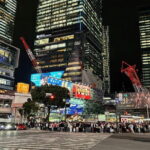
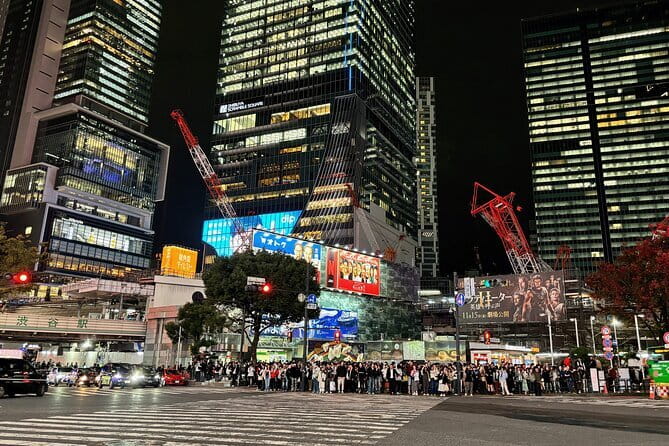
You’ll start with Shibuya Crossing, the world-famous scramble where multiple streams of pedestrians move like a choreographed system. The point of this stop isn’t just a quick look. It’s about understanding how the flow works so you can stand in the right spot and avoid turning your crossing moment into a detour.
Ten minutes can sound short, but for a major landmark like this, it’s exactly right. You don’t want to burn half your tour waiting for the crowd to thin. You want to get the iconic scene, take your pictures, and keep moving while the guide keeps the group oriented.
If you’re coming to Tokyo and only want one “this is why people love Tokyo” photo, Shibuya Crossing is it. The real value here is that your guide helps you get the angles without wasting time wandering for the perfect corner.
Stop 2: Observation-deck views from Shibuya Scramble Square (and the Fukuras mention)
Next up is Shibuya scramble square for an observation deck view. This is where Shibuya changes from street-level chaos into readable geometry. When you look down from above, the crossing patterns, main shopping axes, and densest blocks suddenly make sense.
One interesting detail to keep in mind: the tour description mentions an observation-deck stop at Shibuya Fukuras as well. The day’s flow lists Shibuya Scramble Square as the deck stop. Either way, the takeaway for you is the same: plan for at least one “look down” moment where you can reframe the whole district.
If the panoramic view is a top priority for you, here’s my practical advice: treat deck time as part of the experience, not a guaranteed souvenir photo at a specific viewpoint. If you have a strong expectation, ask your guide for clarity on exactly where the best views are from while you’re there.
Stop 3: Nonbei Yokocho for izakaya nostalgia
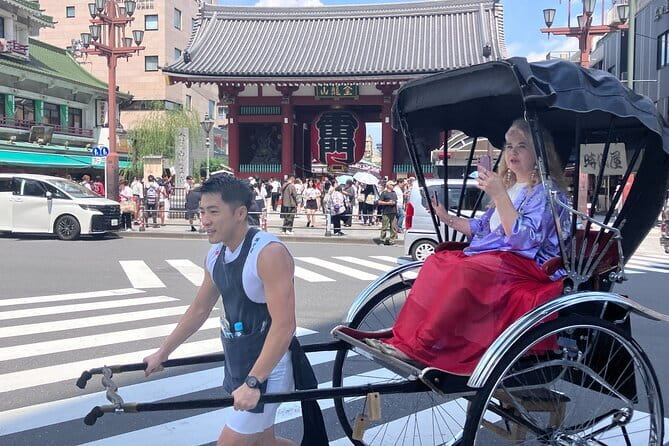
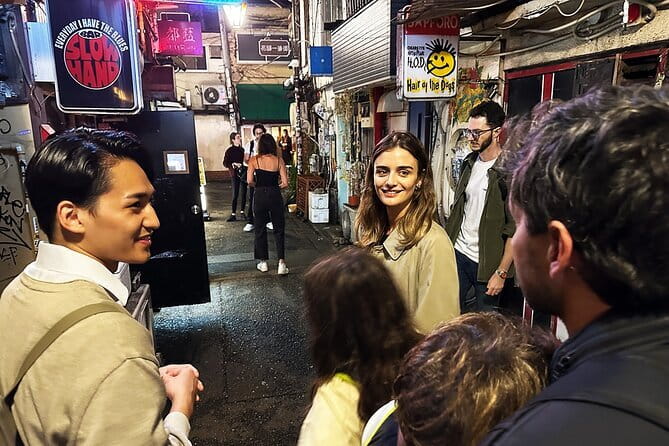
Then you shift gears into Shibuya Nonbei Yokocho, a small area that leans into old-school Tokyo vibes. Think traditional izakaya energy: narrow lanes, warm lighting, and the feeling that food and drinks are the main event.
This stop is about contrast. After big-name Shibuya icons and the height-of-the-city view, you get a smaller scale that feels more human. It’s the kind of place where you can imagine how locals relax after work, without needing reservations or a deep plan.
Even if you don’t stop for a drink, the value is in the atmosphere and the photo opportunities. Also, it helps break up the shopping-heavy parts of Shibuya so your walk feels varied, not repetitive.


Stop 4: Miyashita Park illuminations and a younger Shibuya vibe
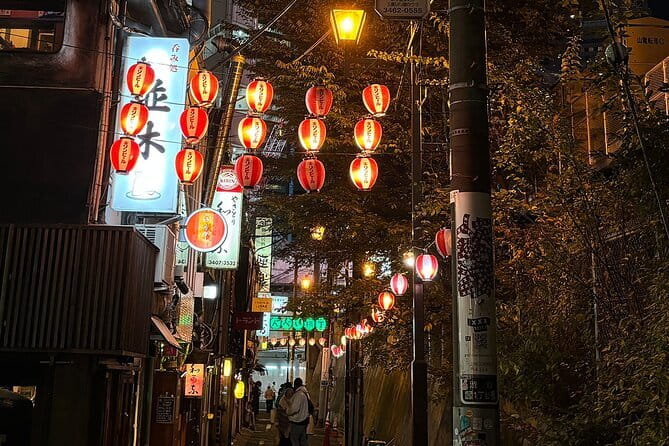
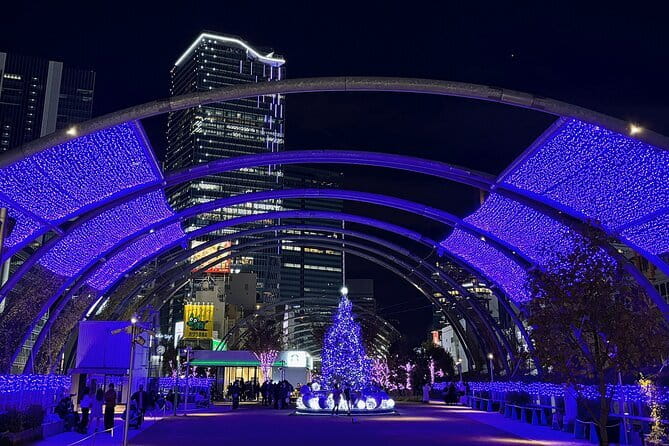
At Miyashita Park, you’ll spend about 20 minutes. This is a known meeting point for a younger crowd, and the tour focuses on the park’s illuminations.
Nighttime—or at least evening lighting—changes Miyashita a lot. The park gives you space to pause. It’s not just a shortcut. You get a moment to breathe, watch people, and see how Shibuya’s modern side looks when the sun goes down.
If you’re the kind of traveler who likes street scenes and casual people-watching, this stop will click for you. If you’re only chasing shopping and monuments, it may feel like a pause—but in a good way. It resets your senses.
Stop 5: Shibuya Center-gai for street-level orientation
Shibuya Center-gai is the main streets area where the district’s energy becomes practical. This part of the walk is about orientation: where the corridors are, how the foot traffic moves, and how the main commercial stretch is laid out.
You’ll get around 20 minutes here, which is long enough to take in the feel without turning it into a retail slog. Your guide’s commentary helps you spot what’s where so later, if you want to come back on your own, you won’t feel like you’re starting over from zero.
This is also one of the best stops for first-timers because it’s hard to “learn” Center-gai from a photo. You really need to walk it once to understand the grid and the flow.
Stop 6: Shibuya Mark City basement browsing
Finally, the walk ends at Shibuya Mark City, with time to explore the basement floor.
Basements in Tokyo can be their own mini-worlds. They often connect you to shops and food options in a way that feels less chaotic than walking the sidewalk. In Shibuya, that’s especially useful: weather changes quickly, crowds peak, and the basement gives you a slightly calmer environment to wrap up your circuit.
This last stop is a smart move for value. Even if you don’t buy anything, the basement layout helps you understand how Shibuya “thinks.” The district isn’t just street-level. It’s vertical and layered.
And because the tour returns to the meeting point, you don’t need a new exit strategy at the end. You’ve got a clean landing zone.
The guides make the difference: Hannah and Mao as examples
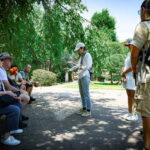
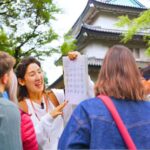
A walking tour lives or dies by the guide. In this case, the standout theme from the experience is people praise the English-speaking local guide for being friendly, helpful, and ready with stories that actually connect to what you’re seeing.
Names that show up include Hannah and Mao. What I’d take from that pattern, even before you book: look for guides who don’t just list facts, but help you navigate. The best ones guide your photo positions, point out streets you might not choose, and share small recommendations that make your next hour in Tokyo easier.
If you want a tour that doesn’t feel like a walking lecture, this is the right format. You’ll hear enough to understand Shibuya, but you’ll still have time to look around on your own.
What you’ll likely do with the photos
The tour includes photos during the tour. That’s a practical perk because Shibuya Crossing and the deck/view spots are the hardest places to stop and shoot without dropping your phone into the chaos.
I like tours that handle the “take a group photo” moment. It keeps you from playing photographer for yourself the whole trip. You can focus on enjoying the moment and let the guide handle the timing.
Small group size: why 10 people changes everything
A cap around 10 people (with an overall maximum stated at 20) is a big deal in Tokyo. Shibuya has tight lanes at times, and crowds can stretch across multiple intersections. With a smaller group, you move with less bumping, and your guide can give more specific guidance.
Also, when the group is smaller, people ask more questions. That can be very useful when you’re trying to understand what’s worth revisiting later versus what’s just scenery.
Possible drawback: deck expectations and the need to stay flexible
Here’s the one caution I’d put in bold in your mental checklist: if your top priority is a specific panoramic view from an observation deck, be ready for the reality of schedules, routing, and what’s included in the day’s flow.
One person felt the panoramic viewing part didn’t happen as expected. That doesn’t mean it will be your outcome. It does mean you should go in with flexibility and treat the deck stop as part of the plan, not an automatic guarantee of a specific angle or access level.
My advice: when you arrive at the deck area, double-check with your guide what you’ll be able to see and where the best viewpoint will be during your time.
Who should book this Shibuya highlights tour
This tour is a great fit if:
- You’re short on time and want a smart overview of Shibuya’s major stops
- You’d rather walk with guidance than risk getting stuck between crossings
- You want photos at the big iconic spots without constant phone juggling
- You like a mix of modern landmarks and older-feeling lanes like Nonbei Yokocho
It’s less ideal if:
- You want a long, slow hangout at just one location
- You only care about shopping and don’t want stops like izakaya lanes or parks
- You’re hoping for deep, long museum-style time at indoor sites (this is mostly a street walk)
Should you book Tokyo: Shibuya Highlights Walking Tour & Secret View Spot?
Yes, if you want Shibuya to feel understandable in one short stretch. For $25.20, you’re buying route clarity, photo help, and local context across Shibuya Crossing, Shibuya Scramble Square deck time, Nonbei Yokocho, Miyashita Park, Center-gai, and Shibuya Mark City. That’s a lot of ground covered without the stress of figuring out the best path on your own.
I’d especially recommend it for first-time visitors who don’t want to spend their day reading maps or backtracking. The tour’s small-group vibe and English-speaking guide make a real difference when the streets get crowded.
If you’re picky about deck viewpoints, go in prepared to confirm the exact view plan once you reach the observation stop. With that mindset, this tour becomes a fast, fun way to get the core Shibuya experience—and leave with a clearer sense of how the neighborhood connects.
FAQ
How long is the Shibuya highlights walking tour?
It’s about 1 hour 30 minutes.
How much does the tour cost?
The price is $25.20 per person.
How big is the group?
It’s designed as a small-group experience with a limit of 10 people, with a maximum of 20 travelers.
Do I get a ticket on my phone?
Yes. It uses a mobile ticket.
Where do I meet the guide?
The meeting point is SHIBU HACHI BOX, 2-chōme-1-1 Dōgenzaka, Shibuya, Tokyo 150-0043, Japan.
Where does the tour end?
The activity ends back at the meeting point.
What stops are included during the walk?
You’ll visit Shibuya Crossing, Shibuya scramble square (observation deck), Shibuya Nonbei Yokocho, Miyashita Park, Shibuya Center-gai, and Shibuya Mark City.
Are entrance fees and photo services included?
Yes. The entrance fee and experience fee are included, and photos are included during the tour.
Is private transportation provided?
No private transportation is included.
What if the weather is bad?
The experience requires good weather. If it’s canceled due to poor weather, you’ll be offered a different date or a full refund.
Can I cancel for a full refund?
Yes. You can cancel up to 24 hours in advance for a full refund.