REVIEW · TOKYO
Tokyo: Shinjuku Local Bar and Izakaya Guided Walking Tour
Book on GetYourGuide →Operated by Travel Japan Together · Bookable on GetYourGuide
Shinjuku has a secret nightlife rhythm. I like that this tour strings together three very different drinking areas, starting in Omoide Yokocho and moving through the neon energy of Kabukicho to the tight lanes of Golden Gai. I also like the human factor: you’re with an English-speaking guide who can steer you through the local bar etiquette and even wrap the night with karaoke. One possible drawback: food and drinks are not included, so you’ll want extra cash for orders (not just admission).
The vibe works especially well on your first night in Tokyo, because you get orientation fast and you’re not wandering blind through dark alleys and maze-like blocks. I also appreciate that the plan includes admission fees for each stop and takes photos along the way, so you don’t feel like you’re constantly budgeting mid-walk.
Logistics are straightforward but worth noting. Your guide contacts you via WhatsApp, and the tour starts at a specific landmark in Omoide Yokocho, so be there early. And the schedule can shift if a bar can’t take groups that night, though you can ask ahead for the day’s likely locations.
In This Review
- Quick hits before you go
- Why Shinjuku’s bar-hopping tour feels different
- Your 3-hour route: Omoide Yokocho, Kabukicho, Golden Gai, then karaoke
- Omoide Yokocho: start in the red lantern izakaya alley
- Kabukicho: neon energy as a contrast stop
- Golden Gai: tiny bar lanes and local-only doors
- The karaoke finish: a classic nightcap where you can actually join in
- Price reality check: what $34 really covers
- Meeting point, cash, and WhatsApp: the small stuff that makes the night smooth
- Who this Shinjuku izakaya walk suits best (and who should skip)
- Should you book this Shinjuku bar-hopping tour?
- FAQ
- How long is the Shinjuku local bar and izakaya guided walking tour?
- Is food and drink included in the price?
- What does the tour price include?
- Where do I meet the guide?
- Do I need to bring cash?
- Will I meet the guide using WhatsApp?
- Is there an age limit?
Quick hits before you go
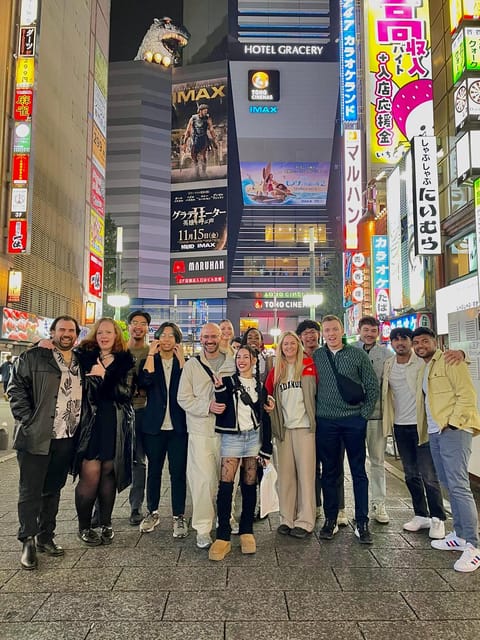
- Omoide Yokocho to Golden Gai: you’ll see how Tokyo drinking changes block by block
- English-speaking guide: helps you order and behave like you belong
- Local-only access at Golden Gai: your guide’s connections matter here
- Kabukicho as a contrast stop: neon, shops, and characters before the smaller bars
- Karaoke finish: a classic Japanese nightcap where the group can really bond
Why Shinjuku’s bar-hopping tour feels different
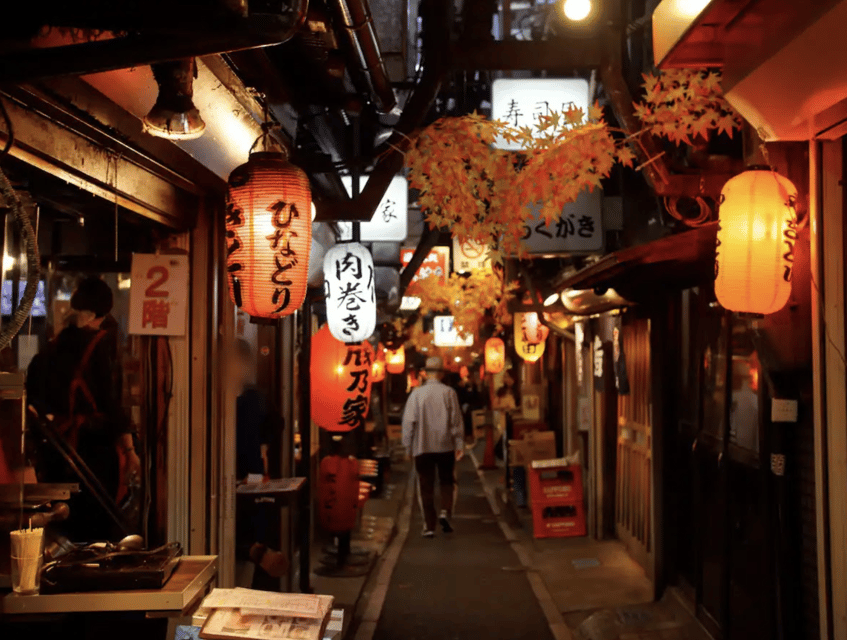
Tokyo nightlife can be a little like a puzzle with the picture missing. Shinjuku, especially, looks fun from the outside, but the good stuff often sits behind small doors, inside narrow alleys, or in bars that won’t bother explaining themselves to non-regulars.
This is why a guided walking bar route helps. You’re not just moving between names on a map. You’re being guided through three atmospheres that each say something different about Japanese social drinking. Omoide Yokocho gives you that old-school alley feel with red lantern energy. Kabukicho throws you into the bigger entertainment-district machine. Then Golden Gai slows everything down into tiny bars where your guide’s presence can make the difference between watching from outside and getting seated inside.
The other thing I like: the tour is built for real people, including solo visitors. The group tends to stay social without feeling like a big bus tour, and the guides often keep things inclusive so nobody feels stuck translating on their own. You’ll see this in the way different guides run the night (for example, people have had standout evenings with guides like Naoya, Kei, and Toshi), but the core promise stays the same: you’ll learn how locals actually move through an evening.
The tradeoff is also real: it’s a nightlife walk, and food and drinks aren’t included. So you’ll spend some money during the night. Think of the tour fee as paying for access, guidance, and admission—not as an all-you-can-eat drinking package.
You can also read our reviews of more walking tours in Tokyo


Your 3-hour route: Omoide Yokocho, Kabukicho, Golden Gai, then karaoke
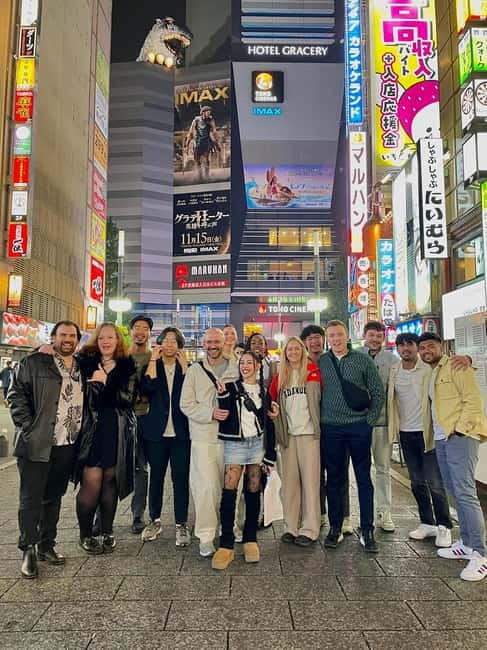
You’re out for about three hours, and that time is used like a sampler platter. The tour starts in Omoide Yokocho at a very specific spot: in front of Kitakata Ramen Bannai Omoide Yokocho. Showing up around 10 minutes early matters, because night starts fast there.
From the start, the pacing is designed to keep you from getting “lost in translation.” You begin in a local izakaya area with red lanterns and tight streets. That first stop sets the tone: it’s casual, it’s loud, and it’s meant for socializing. Then you walk to Kabukicho, where the scene turns brighter and wider. Expect more neon signage, more shops, and that lively crowd energy that makes Shinjuku feel like a different planet after dark.
After that you head to Golden Gai, where the bars are smaller, the lanes feel more secretive, and the experience becomes more about the feel of the room than the size of the menu. The tour includes local connections that can take you to bars that don’t take general walk-ins, which is a big deal in this part of Tokyo.
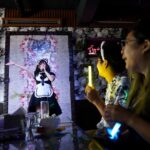
Finally, you end at a bar where you can join locals for karaoke. Even if karaoke isn’t your thing, it’s a fun finish because it’s a shared activity, not just another drink stop. It also gives the group a natural ending point when the night starts to blur.
Omoide Yokocho: start in the red lantern izakaya alley
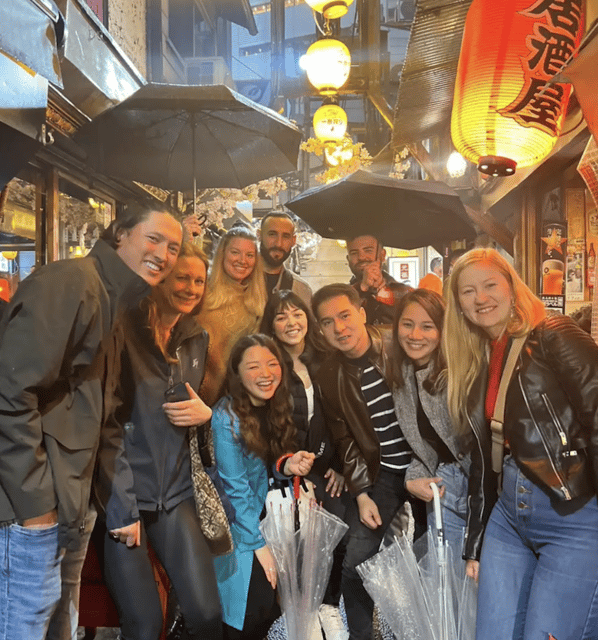
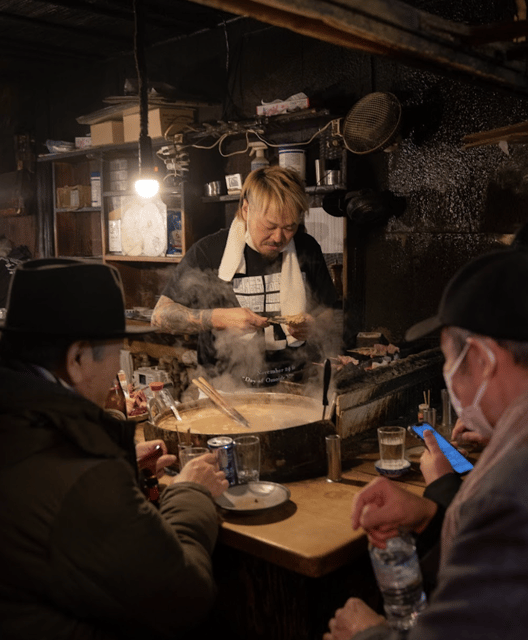
Omoide Yokocho is one of those Tokyo places that feels like it’s been living its life for decades. You’ll start there in a local izakaya area, right around lantern glow and narrow entrances. This is the best kind of kickoff because it’s close enough to your meeting point to settle in quickly, and it’s familiar enough to understand the basic rhythm of how a Japanese drinking evening flows.
What makes this start valuable is the small-scale social structure. Izakaya culture is less about formal dining and more about sharing snacks, sipping drinks, and chatting as the night moves. A guide helps you get past the awkward early moments—like deciding what to order, how to signal you’re ready for service, and how to fit your pace into the group’s energy.
Another practical benefit: starting here reduces the “I’m nervous” factor. You’re not dropping into Golden Gai first, where tiny bars can feel intimidating. Omoide Yokocho is your warm-up room, and the red lantern atmosphere does a lot of the heavy lifting for mood.
Kabukicho: neon energy as a contrast stop
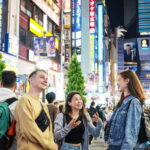
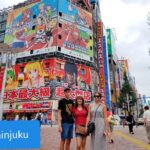
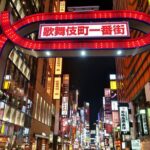
Then you shift to Kabukicho, Japan’s largest neon-lit entertainment district. This part of Shinjuku has a bigger footprint, more storefronts, and a louder, more chaotic feel. The tour doesn’t treat Kabukicho as just a photo stop, though. It’s there to show you the contrast: how a city can change character from alley-level izakaya nights to high-volume entertainment spaces in a few streets.
This contrast helps if you’re trying to understand Tokyo beyond postcards. One of the best ways to learn a place is to watch how the vibe changes by neighborhood. In Kabukicho, you’ll spot the kinds of shops that cater to after-dark crowds and you’ll see the variety of people passing through. It’s also where you’ll likely feel how huge Shinjuku is, which makes later navigation easier on your own.
A small consideration: Kabukicho is intense. If crowds and bright lights stress you out, you’ll still be fine—you’re with a guide—but mentally prepare for a higher stimulation block inside your three-hour night.
Golden Gai: tiny bar lanes and local-only doors
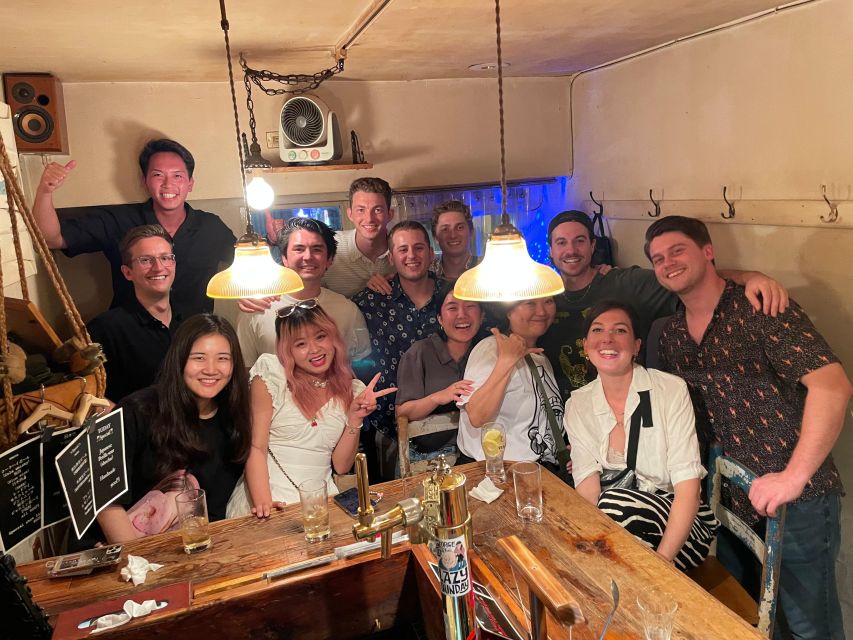
Golden Gai is where the tour earns its reputation. This area is famous for its tight lanes and small bars, and the experience often depends on whether you can get through the door. That’s exactly where your guide’s local connections matter.
The big promise here is simple: you’re not just looking from the street. You’re led to bars where you can’t count on general walk-in access. That changes the night. Instead of hearing other groups inside or watching people sit comfortably through the glass, you’re actually participating in the room you came for.
What you’ll do in Golden Gai is more about ordering, trying, and learning than checking off “must-sees.” The tour description includes the idea of trying local beers, spirits, and sake, but since food and drink aren’t included, you should plan to pay for what you order. Think of it like a guided menu sampler where you decide your own spend.
Also, these rooms tend to feel more like conversation spaces than dining halls. So bring your social side. If you’re shy, that’s okay too. The guide can help manage the group flow, and karaoke at the end gives you a second chance to connect once the ice is broken.
You can also read our reviews of more guided tours in Tokyo


The karaoke finish: a classic nightcap where you can actually join in
Ending at a karaoke bar is a smart move for two reasons. First, karaoke is one of those Japanese activities that cuts through language barriers. Second, it turns the night from a sequence of visits into a shared moment.
Even if you don’t sing at full volume, you’ll still be part of the group energy. Karaoke tends to become the easiest way to bond when you’re bouncing from place to place. It’s also a practical ending point. After a few drinking stops, your legs and attention start to fade; karaoke gives the night a clear landing spot.
A key note: your guide will take you to a bar where you can join locals for karaoke. If you’re thinking about whether you’ll like it, consider this—karaoke is often more about participation and laughs than about performance.
Price reality check: what $34 really covers
At $34 per person for roughly three hours, this tour is priced like a value-focused experience. You’re paying for several things that add up fast on your own: an English-speaking guide, walking time and route planning, admission fees for each venue, and photos taken during the tour.
What it does not include is the big-ticket cost of nightlife: food and drinks. That means your total night spend will depend on what you order. The good news is that you’re walking between places, so you can keep your spending controlled by choosing lighter orders at one stop and saving more appetite or budget for another.
For me, the value is strongest if you’re trying to avoid common Tokyo nightlife mistakes:
- Overpaying or misunderstanding menus because you’re alone
- Getting turned away at bars because you show up without a connection
- Wandering too long and ending up in the same kind of touristy spot
This tour is built to prevent those headaches by combining guidance with venue access.
Meeting point, cash, and WhatsApp: the small stuff that makes the night smooth
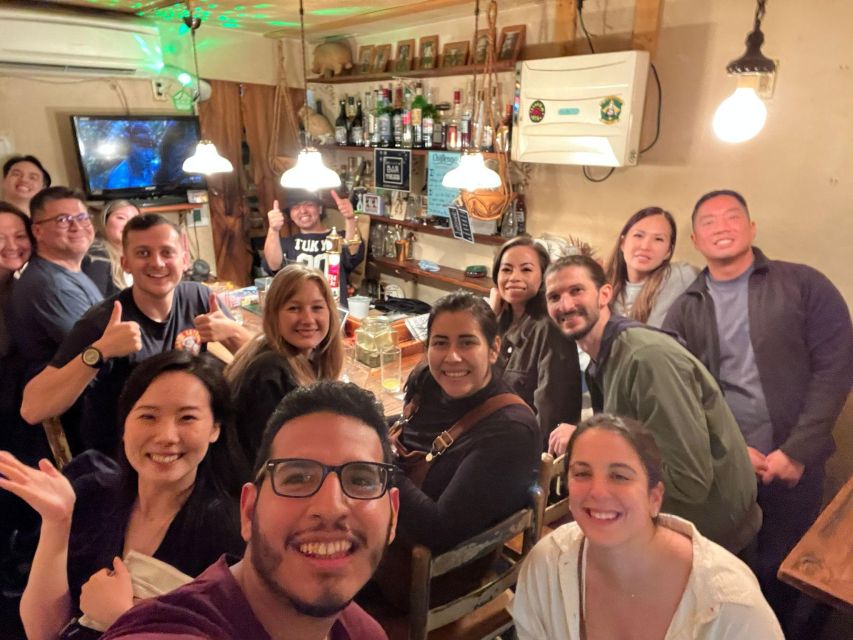
Here’s what you need to know so the night starts without stress.
First, the meeting point is very specific: meet your guide in front of Kitakata Ramen Bannai Omoide Yokocho. Show up 10 minutes early. In busy nightlife areas, being on time is the difference between a smooth start and a slightly frantic one.
Second, bring cash. Food and drinks aren’t included, and cash is required for the tour’s expectations. Even in Tokyo, it’s common to see places that prefer cash for smaller purchases, so don’t gamble on cards.
Third, download WhatsApp. Your guide contacts you through WhatsApp to help you meet smoothly. If you skip this, you’ll spend your first minutes trying to catch up instead of enjoying the evening.
Also note one flexible detail: the tour generally goes to Omoide Yokocho, Kabukicho, and Golden Gai. But if a specific bar can’t accommodate the group that night, the guide may adjust the stop. If you’re worried about where you’ll go, ask ahead and get the likely locations for the day.
Who this Shinjuku izakaya walk suits best (and who should skip)
This tour fits best if you want Tokyo nightlife without the guesswork. It’s a strong pick for:
- First-time visitors who want a fast orientation to Shinjuku
- People who like social evenings and don’t want to sit alone at a bar
- Solo travelers who want a guided way to meet others and stay included
- Anyone who enjoys izakaya culture and wants to understand the rhythm of an evening
It’s not suitable for people under 20 years, based on the activity’s rules.
If you’re the type who hates crowds, bright lights, or loud rooms, you might still enjoy parts of the walk, but you should expect Kabukicho to be the most intense segment.
Finally, if you’re aiming for a quiet, early night, this isn’t the match. This is nightlife by design.
Should you book this Shinjuku bar-hopping tour?
I’d book it if you want the best chance of having a fun first night in Shinjuku without getting turned away at the wrong doors or spending your evening trying to decode etiquette alone. The tour fee is reasonable because it covers guide time, admission to each venue, and photos, while you control how much you actually spend on drinks.
Book it sooner than later if this is your first night and you want your bearings set fast. Also, if karaoke at the end sounds like a good memory-making close, you’ll probably love the finish.
Skip it if you only want a museum-style, quiet cultural walk, or if you’d rather have food and drinks included in one set price. This one works best when you’re comfortable budgeting separately for nightlife orders and enjoying the social energy of Tokyo after dark.
FAQ
How long is the Shinjuku local bar and izakaya guided walking tour?
It lasts about 3 hours.
Is food and drink included in the price?
No. Food and drinks are not included, so you’ll need cash to cover what you order.
What does the tour price include?
The tour includes an English-speaking guide, a walking tour, admission fees for each venue, and photos during the tour.
Where do I meet the guide?
Meet the guide in front of Kitakata Ramen Bannai Omoide Yokocho. Aim to arrive about 10 minutes early.
Do I need to bring cash?
Yes. You should bring cash, since food and drinks are not included.
Will I meet the guide using WhatsApp?
Your guide will contact you through WhatsApp, so you should download WhatsApp before the tour.
Is there an age limit?
Yes. The tour is not suitable for people under 20 years.