REVIEW · TOKYO
Tokyo: Tsukiji Market Walking Tour & Sushi Cooking Class
Book on GetYourGuide →Operated by ABC Cooking Travel · Bookable on GetYourGuide
One street noise in Tokyo, then suddenly food becomes the map. This Tsukiji walking tour pairs the Tsukiji Outer Fish Market with a hands-on cooking class at Japan’s biggest cooking school. It’s a practical mix of market savvy and real kitchen skills in just 3 hours.
What I like most: you get guided time in the market (not just wandering), and you leave with a lunch you made yourself. A small group cap of 6 also keeps things moving without feeling rushed—my favorite way to do a crowded place like Tsukiji.
One consideration: you do not tour the inner wholesale market. You’re also looking at limited time in the outer stalls (around 70 minutes), so if your main goal is hanging out and shopping for hours, you may want a plan B for extra market time.
In This Review
- Key highlights to watch for
- Meeting at Tsukiji Hongwanji Temple and getting your bearings fast
- Tsukiji Outer Fish Market: what a guide actually helps you see
- The move to the cooking school: turn street smells into kitchen skills
- Sushi and washoku class: temari, maki, tamagoyaki, miso soup
- Temari sushi (ball-shaped sushi)
- Maki sushi (rolled sushi)
- Tamagoyaki (Japanese egg roll)
- Miso soup
- Lunch: eating the dishes you actually made
- Price, group size, and what feels like value here
- Who this tour fits best (and who might be frustrated)
- Tips to get the most out of Tsukiji and the sushi class
- Should you book this Tsukiji Market & Sushi Cooking Class?
- FAQ
- Where is the meeting point for the tour?
- Is this tour visiting the inner wholesale fish market?
- What part of Tsukiji will we explore?
- How long is the experience?
- What dishes will I make in the cooking class?
- What’s included in the price?
- Is the tour taught in English?
- Do I need to bring anything?
- Is it okay to bring a stroller, pets, or large bags?
- Is the class suitable for everyone?
Key highlights to watch for
- Meeting at Tsukiji Hongwanji Temple: clear start point, and the tour begins with local context before the seafood chaos.
- Small group format (max 6): easier questions, more attention, and better pacing through narrow market aisles.
- Market time plus a real cooking class: you learn washoku fundamentals, not just how to roll sushi.
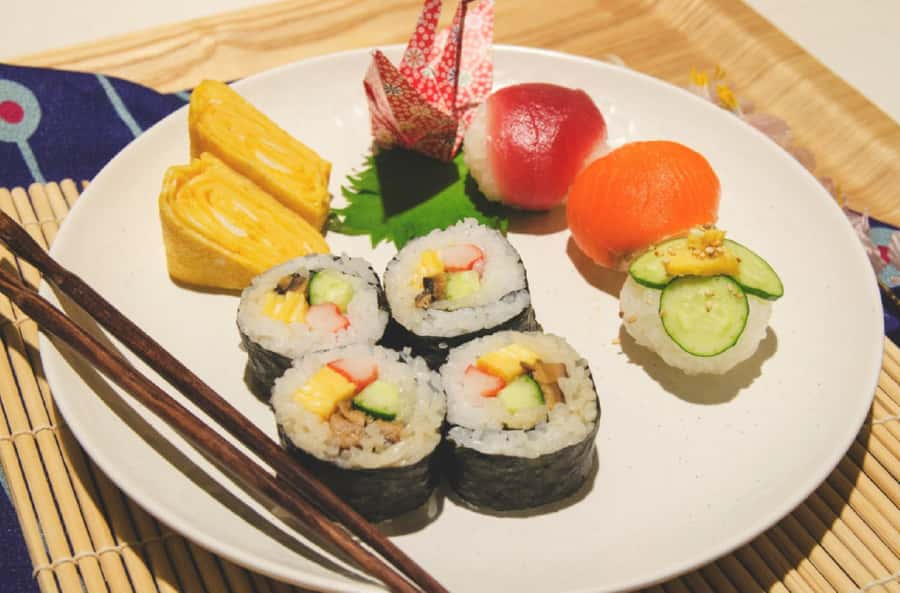
- Multiple dishes on the menu: you’ll work on Temari sushi, maki sushi, tamagoyaki, and miso soup.
- Lunch is your own work: the meal is part of the experience, not an afterthought.
Meeting at Tsukiji Hongwanji Temple and getting your bearings fast
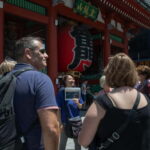
The tour starts at the main gate of Tsukiji Hongwanji Temple, with your guide holding a sign with your name. That sounds simple, but in practice it helps a lot. Tsukiji can feel like a maze when you’re staring at stalls and signs. Having a fixed meet point means you’ll spend your energy where it matters: watching what’s being sold and asking questions.
From the start, you’re set up for what this area really is. Tsukiji is not a museum and it’s not polite. It’s a working food district where people move quickly, vendors call out, and ingredients look like they have their own backstory.
If you’ve read about the tuna auction, this experience is not that. You’ll be doing the outer market—public-facing, lively, and full of snacks, dried goods, and seafood-adjacent temptations. The trade-off is that you’ll spend more time eating the story of Japanese seafood through storefronts and then turn that into a cooking lesson.
You can also read our reviews of more walking tours in Tokyo


Tsukiji Outer Fish Market: what a guide actually helps you see
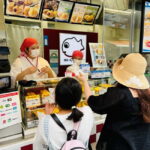
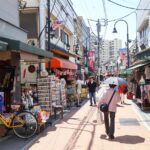
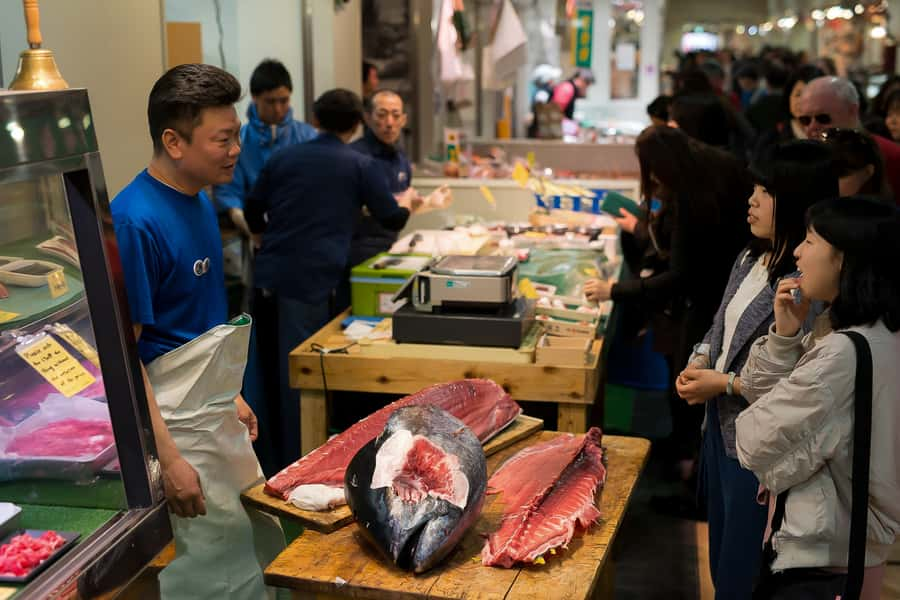
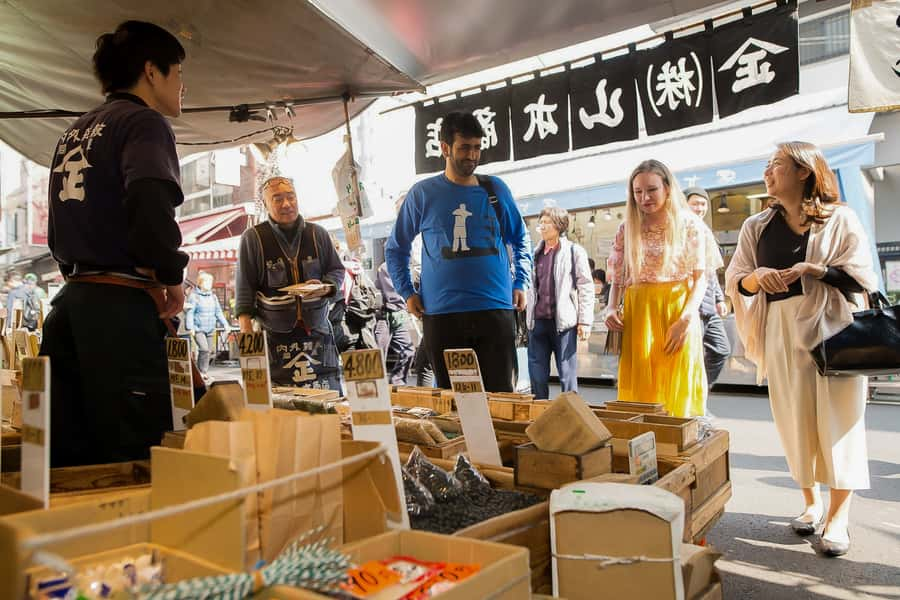
Your market portion is guided walking through the Tsukiji Outer Fish Market. That’s the part you’ll feel immediately: the noise, the foot traffic, and the sheer variety. The outer market is where visitors naturally gravitate, but with a guide you get more than photos.
Here’s what your guide helps you do:
- Spot what different stall types sell (fresh seafood, packaged specialties, and typical pantry items).
- Learn what makes Japanese seafood cooking different from other cuisines you’ve tried.
- Understand what you’re seeing before you decide what to buy or taste.
In reviews, guides like Takeshita, Akiko, Aki, Lucy, Naomi, and Nobu come up again and again for being friendly and quick to answer questions. One of the best practical benefits of that: you’re not stuck guessing which items are useful for home cooking or which are only for here-and-now tasting.
A key timing reality: you’ll likely spend about 70 minutes in the outer shopping market. That’s enough time to get a sense of the place, sample if you want, and pick up a few ideas. It’s not enough time to browse every stall like it’s a weekend market festival. I think that’s why many people come out feeling the tour did its job, then wish they’d added their own extra hour before or after.
Also note what you’re not doing. There is no tour of the inner wholesale fish market. So if you booked specifically for the working inner sections, this is the wrong ticket. If you want outer-market energy plus cooking skills, it’s a strong match.
The move to the cooking school: turn street smells into kitchen skills
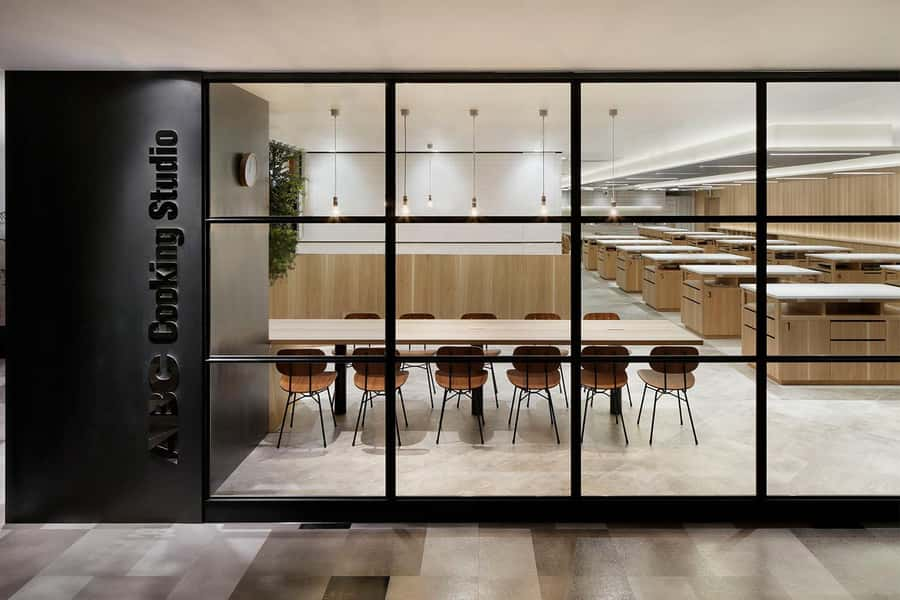
After the market walk, you head to the cooking studio for your class at Japan’s largest cooking school. This transition matters more than it sounds. The market gives you ingredients and inspiration; the kitchen class gives you method.
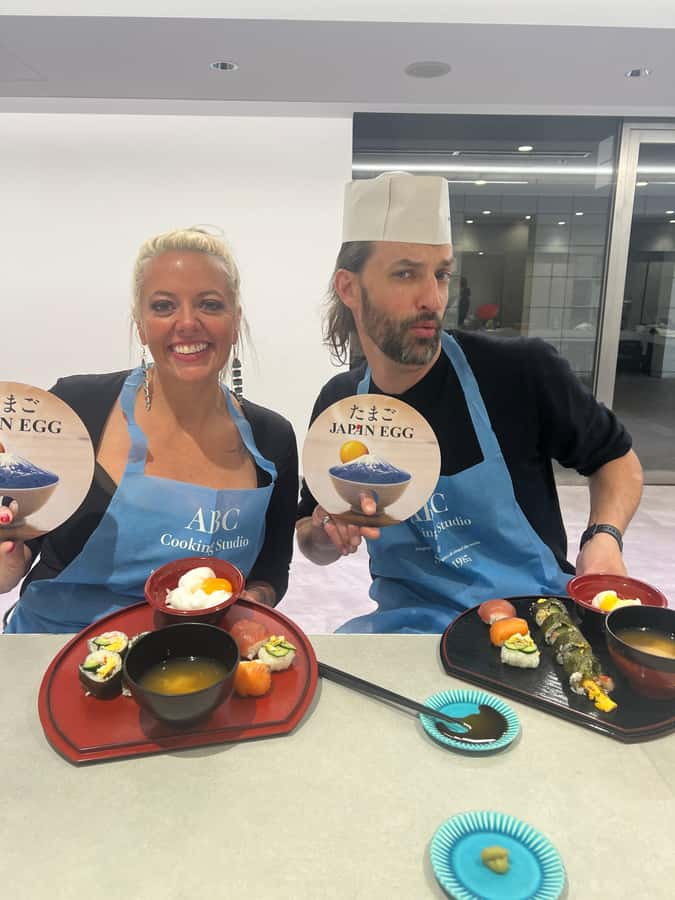
You get a few helpful extras as part of the experience: an apron, drinking water at the studio, and a digital recipe after the class. There’s also a digital certificate, which is mostly for fun, but it’s a nice keep-sake if you like proof you actually learned something.
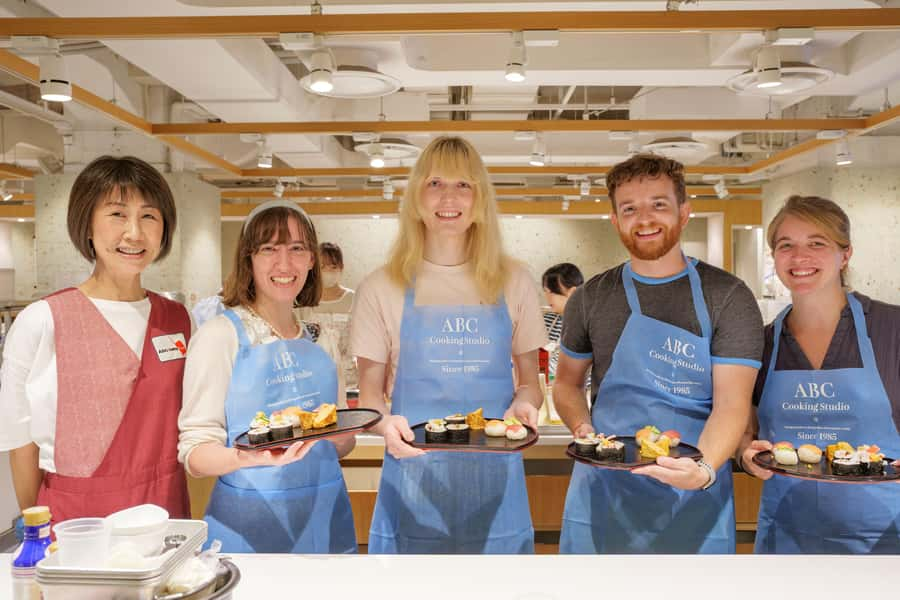
The format is also a good clue about value. It’s a small group setting, so you’re not watching from the sidelines. The instructor demonstrates techniques, then you practice. In reviews, people often highlight the patience of instructors like Megumi, Hiroko, Yukari, Miwa, Hatsuko, and Keiko. That kind of teaching makes a difference with sushi rolling and egg cooking, where the first attempts are usually messy.
Sushi and washoku class: temari, maki, tamagoyaki, miso soup
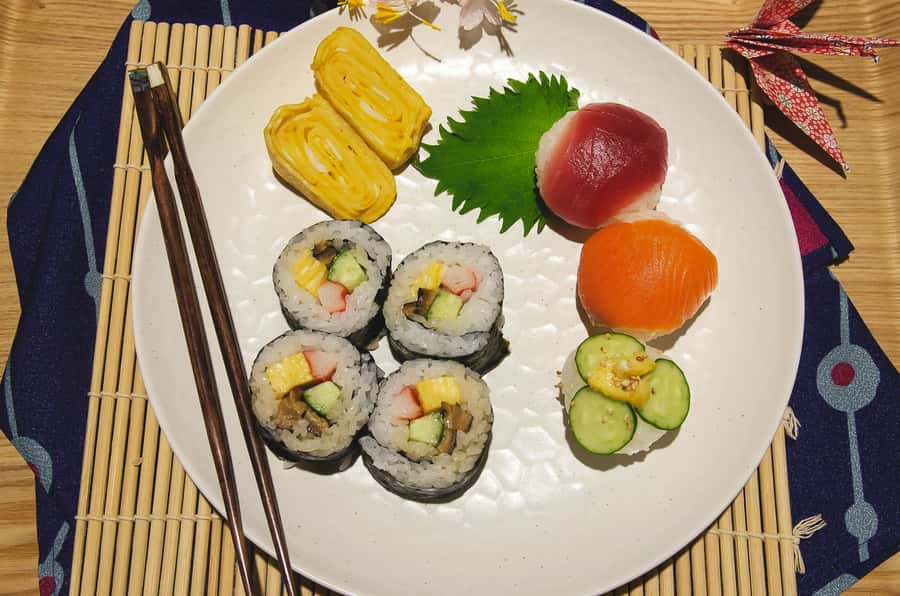
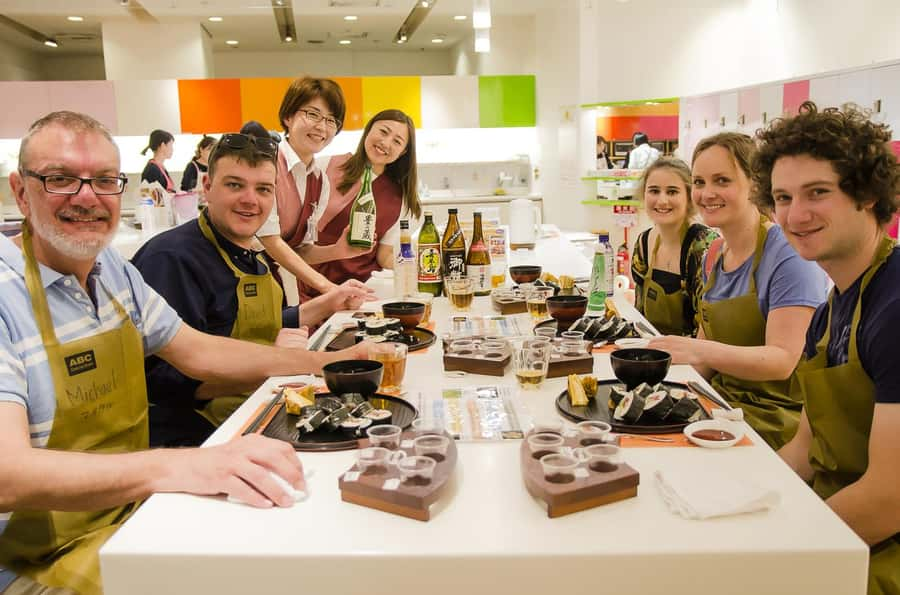
This is the heart of the experience. The class isn’t just a sushi demo—it’s a guided session where you prepare several dishes and then eat them as lunch.
Temari sushi (ball-shaped sushi)
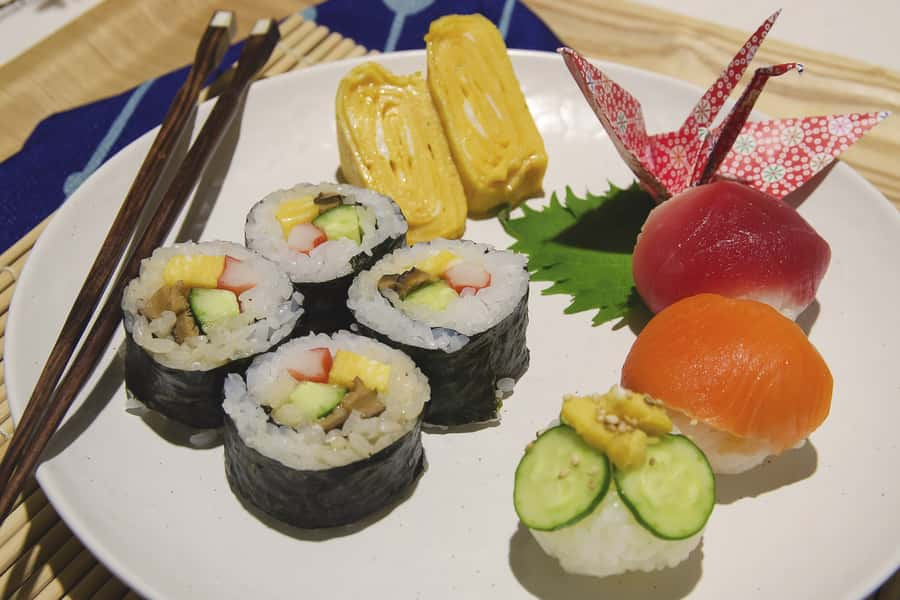
Temari sushi is an excellent beginner-friendly dish because the goal is shape and flavor balance. You learn how sushi rice should feel when handled and how to build bite-sized pieces. It’s also a nice change from the usual image of sushi as only rolls.
You can also read our reviews of more shopping tours in Tokyo



Maki sushi (rolled sushi)
Maki sushi is where technique matters. You’re learning how to roll cleanly, keep layers aligned, and avoid the classic problems like overfilling or uneven thickness. This is where the instructor’s hand cues pay off. In reviews, people describe sushi classes as fun and hands-on, especially with teachers like Akiko and Yukari, who were patient and guided students through steps.
Tamagoyaki (Japanese egg roll)
Tamago yaki is a very Japan skill. The trick isn’t just cooking an egg—it’s learning how to repeat layers without turning it into scrambled chaos. When you master tamago yaki, you understand why Japanese kitchens treat eggs with respect.
Miso soup
Miso soup might sound simple, but miso is all about timing and balance. You learn how to handle the bowl flavor properly and how it fits into a washoku meal. It’s also a relief after sushi rolling, because it’s less fiddly and you can focus on taste.
A practical mindset shift: you’re not just making food for eating. You’re building small technique loops—rice handling, rolling pressure, egg timing, and seasoning discipline. Those are the skills that will let you cook again at home without needing a miracle.
Lunch: eating the dishes you actually made
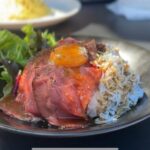
The best part of many classes is also the part people forget to mention: you sit down and savor lunch made from your own dishes. That means your effort turns into an immediate reward, not a meal voucher.
And because you’re eating what you made—temari, maki, tamagoyaki, and miso soup—you’ll have a clearer idea of what to adjust next time. If your roll came out too loose, you notice it in the bite. If your tamago needed more careful layering, you feel it in the texture. That kind of feedback is hard to get from a restaurant meal alone.
Some reviews also reflect a common theme: people leave feeling more appreciative of Japanese meal prep. That’s exactly what this setup does. The market creates curiosity; the class creates understanding; the lunch makes it stick.
Price, group size, and what feels like value here
At $96 per person for about 3 hours, this is not a budget lunch experience. But it also isn’t just paying for a cooking class. You’re paying for three things at once:
- A market walking tour with a guide (outer Tsukiji, paced so you don’t get lost)
- A hands-on class at a major cooking school, with an instructor teaching multiple dishes
- A sit-down lunch using what you made, plus apron, water, and digital recipe support
The small group cap (max 6) is part of the value equation too. In a crowded market, small groups keep the experience human. In the kitchen, small groups mean more attention and fewer long waiting gaps.
If your main goal is food shopping, you might get more ingredients for less money by wandering Tsukiji on your own. But if you want structure, guidance, and an end product you can repeat at home, this price starts to look fair.
You should also consider what you’re avoiding: you’re not spending the time figuring out what to look for in the market, and you’re not guessing how sushi rice, egg, and miso should be handled. That guidance is the hidden cost saver.
Who this tour fits best (and who might be frustrated)
This experience fits you if:
- You want a guided way to see the outer Tsukiji market without getting overwhelmed.
- You love sushi and want more than the basics, including temari and tamagoyaki.
- You enjoy learning in a small group setting where questions are welcome.
- You want a full meal out of the class, not just a tasting.
It may feel less satisfying if:
- You’re aiming for the inner wholesale market experience. This tour does not include it.
- You like slow, hours-long browsing and shopping time in markets. Expect around 70 minutes in the outer shopping area.
- You prefer private instruction. Small group is capped at 6, which is great for attention, but it’s not a one-on-one class.
One more heads-up from the activity info: it’s not recommended for people with certain medical conditions like back or heart problems, and it’s not suited for wheelchair users. Also, pets, baby strollers, and large bags or luggage aren’t allowed. Wear comfortable shoes—Tsukiji walking adds up.
Tips to get the most out of Tsukiji and the sushi class
- Come with comfy shoes and expect time on your feet. The market is active and not the kind of place where you stop every two minutes.
- Have a hunger mindset for the market portion. The outer stalls are designed for sampling and snacking, and your class will feel better if you’re not over-stuffed.
- Treat the cooking class as technique practice. You’re learning the method behind the food, not just collecting dishes to eat.
- If you’re planning other Tsukiji activities, give yourself room before or after the tour if you want extra browsing. Many people wish they had more time in the outer market.
Should you book this Tsukiji Market & Sushi Cooking Class?
Book it if you want a strong combo: outer-market context plus real cooking skills, ending with a meal you made. The small group size, multiple dish targets, and digital recipe support make it feel like more than a tourist detour.
Skip it if you’re specifically chasing the inner wholesale fish market or you want a long, free-form market day with unlimited browsing. For that, you’ll likely prefer building your own Tsukiji route and spending the extra time on shopping and tasting.
If you’re on the fence, I’d base the decision on one question: do you want to learn how to make Japanese dishes, or do you mostly want to browse and snack? This tour is built for the first answer.
FAQ
Where is the meeting point for the tour?
You meet your guide in front of the main gate of the Tsukiji Hongwanji Temple, located at 3-15-1, Tsukiji, Chuo, Tokyo. Your guide will be holding a sign with your name.
Is this tour visiting the inner wholesale fish market?
No. This experience does not include a tour of the inner wholesale fish market.
What part of Tsukiji will we explore?
You’ll visit the Tsukiji Outer Fish Market. The tour info notes you may spend around 70 minutes in the outer shopping market.
How long is the experience?
The duration is 3 hours.
What dishes will I make in the cooking class?
You’ll prepare washoku dishes including rolled sushi (maki sushi), ball-shaped sushi (temari sushi), tamagoyaki (egg roll), and miso soup.
What’s included in the price?
The included items are the market walking tour, tour guide, lunch (your creation), use of an apron, drinking water at the cooking studio, digital recipe, and a digital certificate.
Is the tour taught in English?
Yes, the live tour guide is in English.
Do I need to bring anything?
You should bring comfortable shoes and comfortable clothes.
Is it okay to bring a stroller, pets, or large bags?
No—pets, baby strollers, and luggage or large bags are not allowed.
Is the class suitable for everyone?
The info says the minimum age is 9, and it is not suitable for wheelchair users or for people with certain medical conditions such as back or heart problems or pregnancy.