REVIEW · KRAKOW
Krakow: Jewish Ghetto Walking Tour
Book on GetYourGuide →Operated by excursions.city · Bookable on GetYourGuide
This walk hits fast and stays with you. A licensed guide leads you through Podgórze, showing where fear, survival, and resistance unfolded—especially at the Ghetto Wall remains and the Chair Memorial. One thing to keep in mind: at just 1 hour, you’ll get focused highlights, not an all-day, blow-by-blow account.
I like the way this tour balances street-level realism with human stories. You’ll hear about daily life under Nazi occupation, deportations, and what survival looked like on the ground, then finish with a quieter moment of reflection.
In This Review
- Key takeaways before you go
- Podgórze streets: how the tour sets the scene
- Tracing the Ghetto Wall remains you can still locate
- Ghetto Heroes Square and the Chair Memorial’s quiet impact
- Under the Eagle Pharmacy and the story of Tadeusz Pankiewicz
- Walking through wartime buildings and real street layouts
- The 1-hour format: good value, but plan for limits
- Price and $11 value: what you’re really paying for
- Timing and getting oriented with Schindler’s Factory nearby
- Hearing the guide: headsets, cold-weather reality, and language choices
- Who should book this Kraków Jewish Ghetto walking tour?
- Should you book it?
- FAQ
- FAQ
- How long is the Kraków Jewish Ghetto Walking Tour?
- Where does the tour take place?
- What are the main stops on the tour?
- Is food or drink included?
- What languages are available for the guided tour?
- Will the group tour be in multiple languages?
- Will I be able to hear the guide while walking?
- What should I wear or bring?
- What if I arrive late?
- Can I cancel for a refund?
Key takeaways before you go
- Podgórze first: start in the district that became the Kraków Ghetto site
- Ghetto Wall remnants: see one of the few surviving fragments tied to the original boundary
- Ghetto Heroes Square: understand the deportation site and its haunting Chair Memorial
- Under the Eagle Pharmacy: hear how Tadeusz Pankiewicz and staff helped people at great personal risk
- Easy-to-follow pace: 1 hour that feels manageable, with headsets/ear mics mentioned in guest feedback
Podgórze streets: how the tour sets the scene
The tour starts in Podgórze, the Kraków district that became the ghetto area during World War II. What I appreciate here is that you’re not dropped into a museum-style story. Instead, you’re walking real streets, so your brain has to do the work of imagining daily routines under impossible conditions.
A good guide approach matters at a site like this, and the tour is built around a licensed storyteller who helps you connect locations with what happened there. As you move through quieter blocks, you’ll get a clearer sense of what it meant to live confined—fear in the background, hope when you could find it, and constant uncertainty about what came next.
You can also read our reviews of more walking tours in Krakow

Tracing the Ghetto Wall remains you can still locate
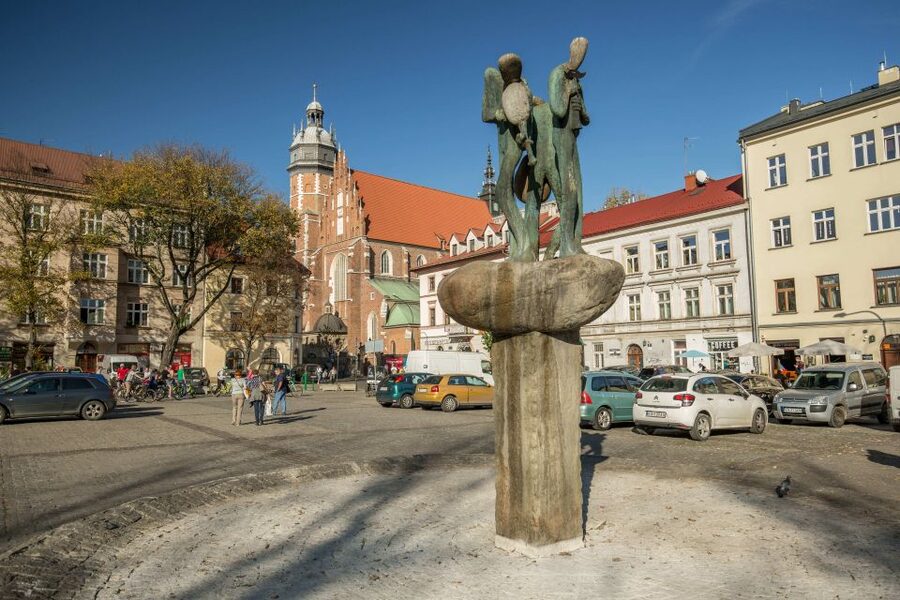
One of the strongest stops is the remains of the original Ghetto Wall. Even if so much has changed since the war, the value is in what the guide makes you notice: where the boundary was, how tight the space became for the people inside, and how the wall wasn’t just a physical barrier. It was a tool of control.
You’ll learn how more than 15,000 people were enclosed within just a few city blocks. That scale is hard to grasp from distance. Seeing the surviving fragment helps the facts stick, and it gives you a fixed point to compare with the city you’re standing in now.
There’s also a practical takeaway: without a guide, it’s easy to walk past the remaining features and miss their significance. The tour is built to point you at what still matters in the streetscape.
Ghetto Heroes Square and the Chair Memorial’s quiet impact
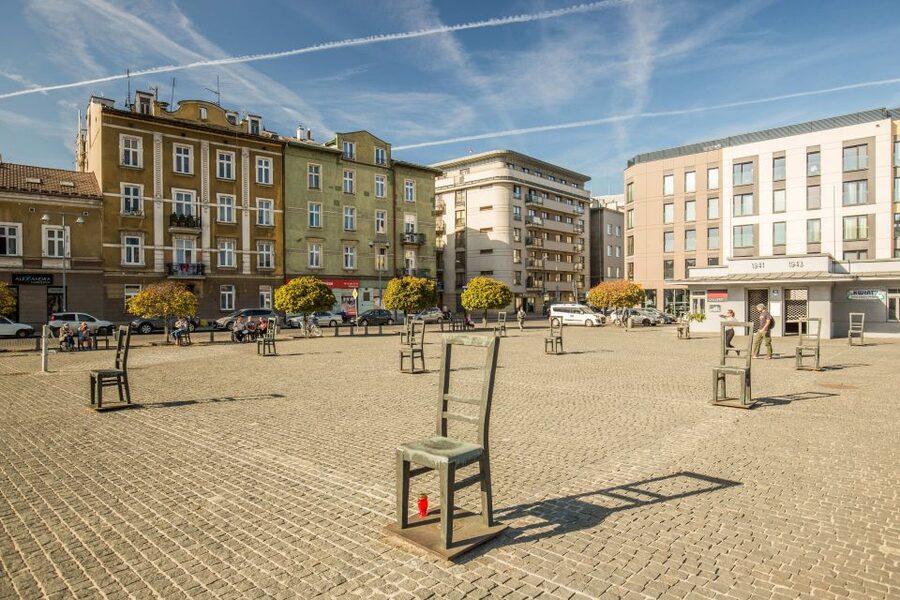
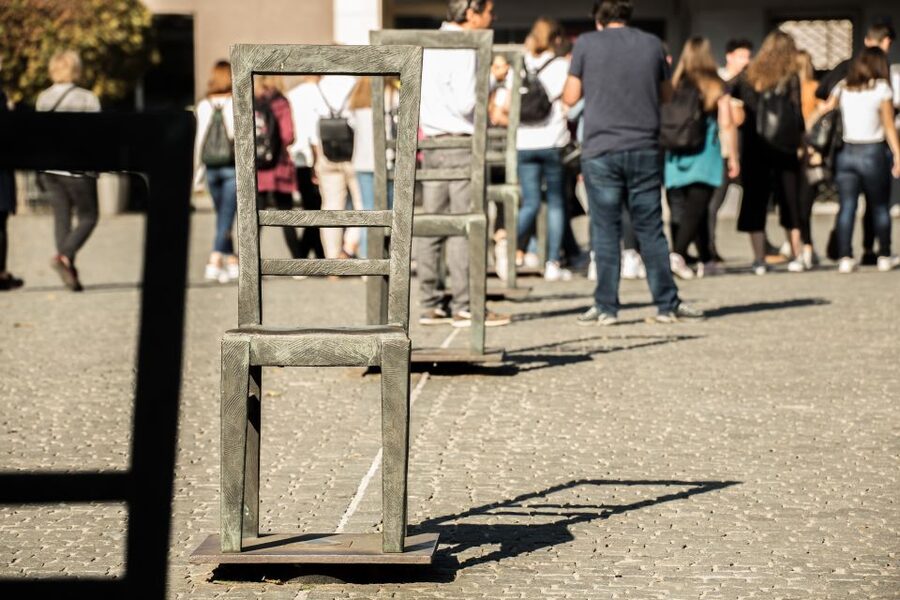
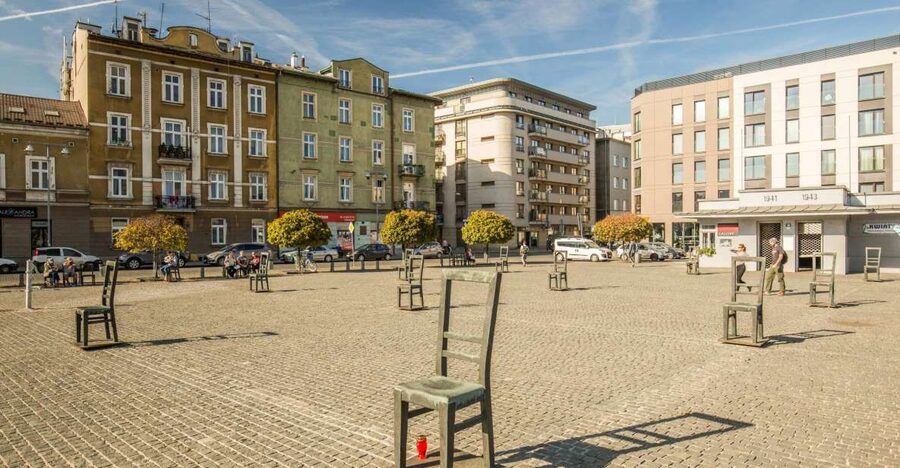
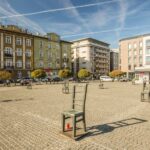
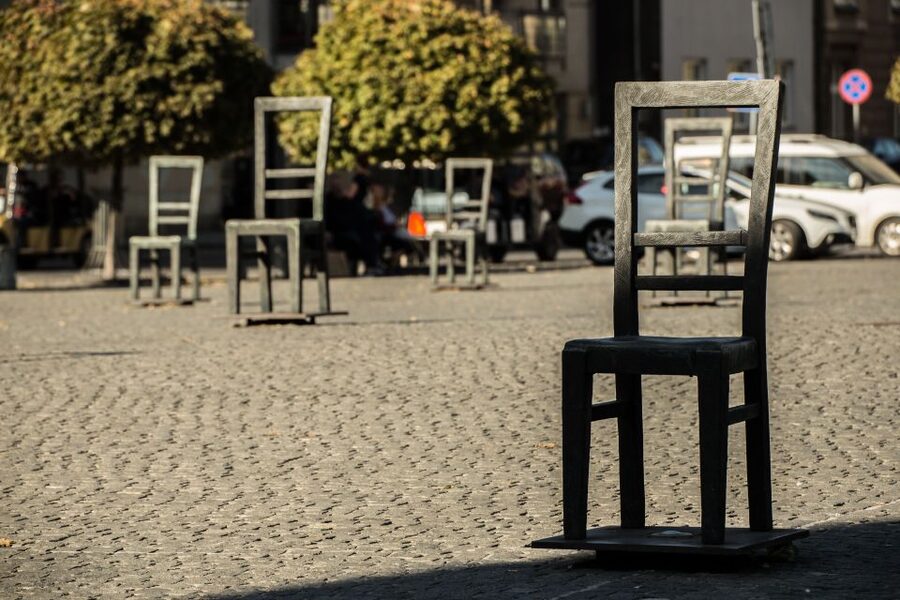
At Ghetto Heroes Square, the tone shifts from boundaries and layout to what those boundaries were used for. This square was a gathering point connected to deportations to concentration camps. Today, it works as a memorial space, and the Chair Memorial is the focal symbol.
Do yourself a favor and slow down here. The empty metal chairs are simple, but that simplicity is the point: they represent people who were taken away, many never returning. Your guide’s job is to connect the symbol to real human lives—who they were, what they faced each day, and what happened when deportations began.
One subtle reason this stop works so well is pacing. You’ve already walked the perimeter idea at the wall remains. Then you arrive at the square and you can understand the full arc: enclosure, desperation, and forced removal—without the tour rushing past the emotional weight.
Under the Eagle Pharmacy and the story of Tadeusz Pankiewicz
Next comes the historic Under the Eagle Pharmacy, a site that adds a different shade to the narrative: not only suffering, but also courageous care. The tour highlights how Tadeusz Pankiewicz and his staff risked their lives to help ghetto residents by providing medicine and shelter.
This is the part of the tour I think most people remember, because it breaks the usual pattern of only hearing about victims. You still learn about brutality and survival, but you also see that there were people willing to endanger themselves to keep others alive.
Expect stories told with respect and care. In guest feedback, guides like Olga and Joanna are singled out for how they handle sensitive detail with compassion, and how they keep the story understandable rather than overwhelming. If you’ve already visited other major memorial sites in Kraków or the region, this one is a strong complement because it brings the focus back to specific acts of help—what compassion looked like in practice.
Walking through wartime buildings and real street layouts
Another reason this tour feels worthwhile is that it sticks to what’s actually there: authentic wartime buildings you can see today and the way streets still guide your movement. That’s important because the ghetto wasn’t just an abstract concept. It was a system operating in a real urban grid—people trying to find space, food, safety, and information in a city that had turned against them.
In some guest notes, people point out that not much of the original buildings may remain. That can sound discouraging at first. But the tour isn’t pretending everything is preserved. It uses what’s left—plus the guidance that reconstructs the missing parts—to help you build a reliable mental map.
If you like historical context tied to places you can point to, you’ll probably enjoy this format. It’s the opposite of a detached lecture.


The 1-hour format: good value, but plan for limits
At 1 hour, this tour is designed as an efficient, emotionally powerful overview. For many visitors, that’s exactly the sweet spot: enough time to cover the big landmarks (wall remains, Heroes Square, Under the Eagle Pharmacy) without dragging you through a long schedule on foot.
Still, it’s worth setting expectations. Because the tour has to fit into a single hour, it can’t slow down for every individual story or every building fact. One guest comment even notes that an hour can feel short compared with how much a guide may want to explain.
So here’s my practical advice: if you’re doing other Holocaust-related visits during your Kraków stay (for example, Schindler’s Factory), this tour works well as a focused counterpoint. You get day-to-day ghetto reality and the local geography behind it.
Also, the route is described as relatively manageable in walking terms, with flat sections and not too much distance. That makes it a good option even if you’re planning a busy day.
Price and $11 value: what you’re really paying for
The price is $11 per person for a 1-hour walking tour with an expert guide. That’s low for a guided experience at a site that demands care and accuracy.
What makes it good value isn’t just the cost. It’s that your guide’s job is hard to do solo: explaining how the wall, the square, and the pharmacy connect to deportations, daily survival, and acts of rescue. On your own, you can read signs and see monuments, but you lose the connective tissue that makes the geography meaningful.
You also get time efficiency. One hour lets you add something powerful without sacrificing a whole day. That matters in Kraków, where people often have several major stops stacked into a short window.
Timing and getting oriented with Schindler’s Factory nearby
The meeting point can vary depending on which option you book. But in real-world planning, a lot of visitors like pairing this tour with other WWII-related sites in central Kraków. One guest even mentioned starting from the area near Schindler’s Factory, which can help you build a logical route for your day.
If you’re thinking that way, the main benefit is momentum. You’re already in the historical zone mentally, and the ghetto walk becomes a direct next step instead of a separate detour.
For your schedule, aim to arrive 10 minutes early. Late arrivals can’t join once the group has departed, and tickets can’t be refunded, so it’s better to be early than stressed.
Hearing the guide: headsets, cold-weather reality, and language choices
This tour is run in a single language per group. The available languages listed include French, German, Italian, English, Spanish, Russian, Portuguese, Swedish, Slovak. When you book, pick your language option so you’re not stuck guessing what you’ll understand.
Communication is also handled in a way that can really help on a walking tour. Some guest feedback mentions headsets and ear mics, which can make a difference—especially when you’re outside, moving, and possibly in cold weather.
Weather-wise, the tour goes ahead in all conditions. So dress for the day you’re actually getting, not the weather forecast you wish you’d had. Good footwear matters because you’ll be walking through memorial areas where you naturally slow down.
Who should book this Kraków Jewish Ghetto walking tour?
I think this tour is ideal for you if:
- you want a one-hour guided overview of the Podgórze ghetto area with key landmarks
- you prefer street-level history over a purely indoor museum format
- you’re trying to understand daily life, deportations, and survival—not just the end result
- you’re doing other WWII sites and want a local, neighborhood-specific perspective
It may be less ideal if you’re hoping for a super long route with extra stops and lots of spare time to wander independently. In that case, you might want a longer format so the story has room to breathe. But for most first-time Kraków visitors who want meaning without a day-long commitment, this hits a strong balance.
Should you book it?
Yes, if you want an efficient, respectful way to understand the Kraków Jewish Ghetto area through real locations. The combination of Ghetto Wall remains, the Chair Memorial at Ghetto Heroes Square, and the story connected to Under the Eagle Pharmacy makes the tour memorable even at 1 hour. Just plan for the fact that it’s a highlights route—powerful, but not exhaustive—so pair it with other context during your trip if you want more depth.
FAQ
FAQ
How long is the Kraków Jewish Ghetto Walking Tour?
It lasts 1 hour.
Where does the tour take place?
The tour focuses on the former Jewish Ghetto in Kraków’s Podgórze district in Lesser Poland.
What are the main stops on the tour?
You’ll see the remains of the Ghetto Wall, visit Ghetto Heroes Square with the Chair Memorial, and hear stories connected to the Under the Eagle Pharmacy.
Is food or drink included?
No. Food and drink aren’t included.
What languages are available for the guided tour?
The tour is available in French, German, Italian, English, Spanish, Russian, Portuguese, Swedish, Slovak.
Will the group tour be in multiple languages?
No. Group tours run in 1 language, so you choose your preferred language when booking.
Will I be able to hear the guide while walking?
Headsets/ear mics have been mentioned in guest feedback, which can help you follow along during the walk.
What should I wear or bring?
Wear comfortable, suitable footwear and check the forecast. The tour runs in all weather (rain or shine).
What if I arrive late?
You’re asked to arrive 10 minutes before the tour starts. Once the group has departed, latecomers can’t join and tickets can’t be refunded.
Can I cancel for a refund?
Yes. Free cancellation is available up to 24 hours in advance for a full refund.