Shibuya hits you fast, in the best way. This 2-hour walk mixes the big neon moments with quieter, older streets, and it’s guided live in English. I especially love the start at The Myth of Tomorrow mural and the emotional finish at Hachiko in the middle of the action.
Two things make it feel worth it right away: you get context (so Shibuya isn’t just chaos) and you move through different “versions” of the district—old Tokyo, modern hangouts, and nightlife streets. The one drawback to plan for is the meeting point inside Mark City 3rd floor, which can be confusing your first day in Japan. Don’t be late; the guide will be there with a sign, but you’ll still want to arrive early.
If you’ve got only a short time in Shibuya—or you want your bearings so the rest of your day goes smoother—this tour is a strong, practical introduction.
In This Review
- Key highlights at a glance
- Finding the meeting point at SABON Shibuya Mark City (and not losing time)
- The tour opens with The Myth of Tomorrow mural by Taro Okamoto
- Shibuya Crossing: what you should actually notice
- Nonbei Yokocho (Drunkard’s Alley): old Tokyo in a small pocket
- Miyashita Park: the multi-level pause you didn’t know you needed
- Center Gai: street-level youth energy and practical orientation
- Maruyamacho: where older lanes meet newer nightlife
- Ending at Hachiko Memorial Statue: loyalty right where you’re walking
- English live guiding: how the narration changes the whole walk
- Walking time, timing, and how to dress for Shibuya
- Price value: why $22 can actually pay back later
- Who this tour is best for
- Should you book this Shibuya Crossing & Hidden Streets walking tour?
- FAQ
- How long is the Shibuya Crossing & Hidden Streets walking tour?
- How much does the tour cost?
- Where is the meeting point?
- What language is the tour in?
- Is the tour guided by a live guide?
- Can I get a refund if I cancel?
- Can I reserve without paying right away?
Key highlights at a glance
- The Myth of Tomorrow mural by Taro Okamoto sets an unexpected tone with a message about hope and nuclear impacts.
- Shibuya Crossing photo moments help you time the crowd and make sense of the chaos on foot.
- Nonbei Yokocho (Drunkard’s Alley) gives you a tight hit of old Tokyo vibes and local street life.
- Miyashita Park’s multi-level layout makes it easy to pause, reset, and spot how Shibuya breathes.
- Center Gai and Maruyama-cho connect the shopping-and-people energy to modern nightlife streets.
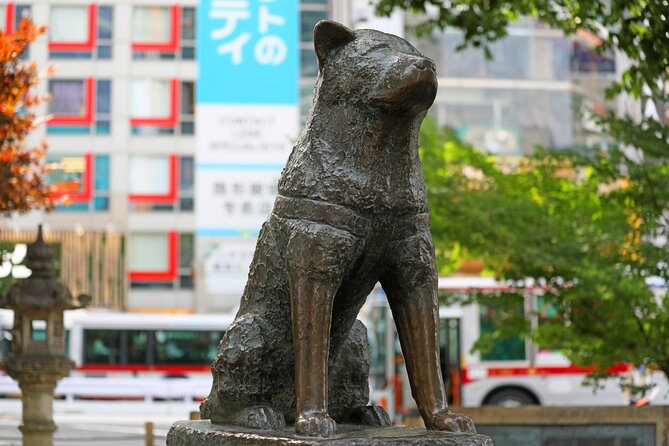
- Hachiko Memorial Statue lands the tour with symbolism of loyalty right where you want it.
Finding the meeting point at SABON Shibuya Mark City (and not losing time)
The tour starts at SABON Shibuya Mark City, on the Mark City 3rd floor. If it’s your first day in Tokyo, this is the one part that can slow you down—because Shibuya is confusing even when it’s not actively raining, yelling, or doing the world’s most famous pedestrian shuffle.
Here’s the simple approach: head to the building, go up until you’re at Mark City 3rd floor, and look for the guide holding a sign. If you’re even slightly unsure, give yourself extra minutes. The tour runs only two hours, so arriving late just steals time from the best parts.
You can also read our reviews of more walking tours in Tokyo


The tour opens with The Myth of Tomorrow mural by Taro Okamoto
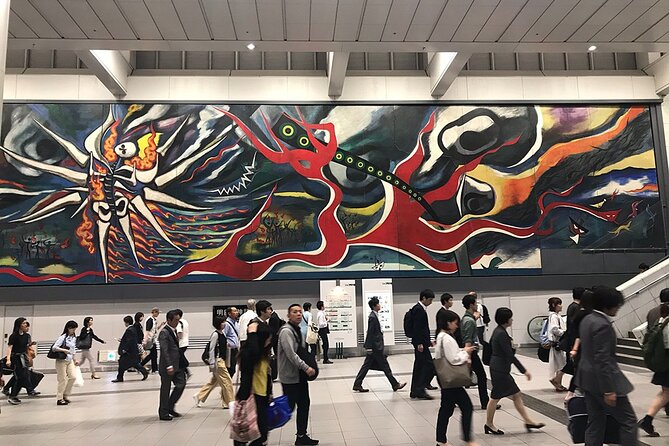
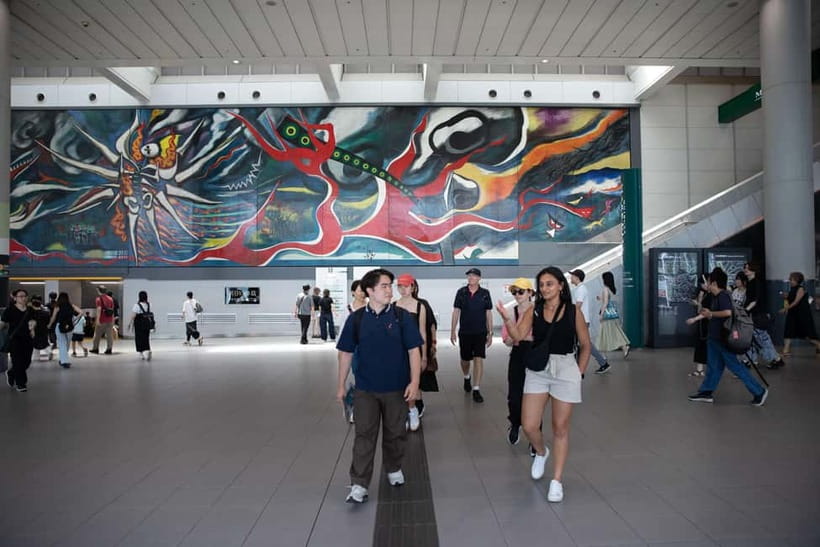
Most Shibuya tours jump straight to the intersection. This one starts with an art moment that makes you stop and think—at The Myth of Tomorrow, a powerful mural by Taro Okamoto.
You’ll get a quick, guided look and a photo stop, and the message centers on nuclear impacts with a theme of hope. I like this kind of opening because it gives you a lens for the rest of the walk. Shibuya is modern and fast, but you still understand that people here process big history with real emotion, not just slogans and screens.
Practical tip: treat this as your warm-up. Slow down, take a couple photos, and let your eyes adjust before you step into Shibuya Crossing’s intensity.
Shibuya Crossing: what you should actually notice
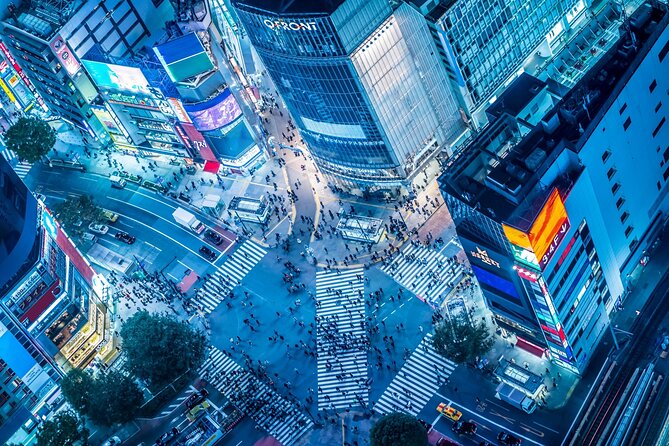
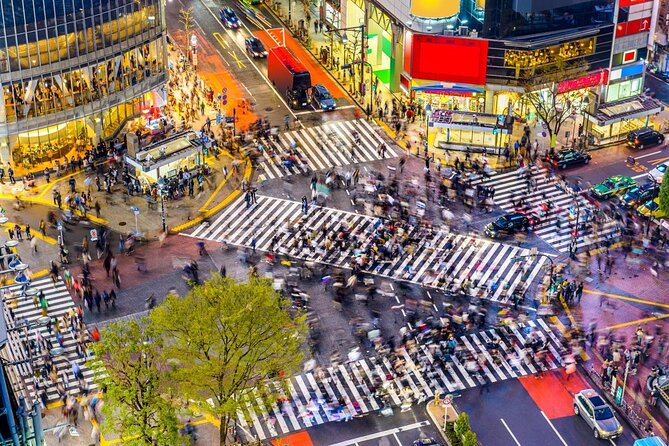
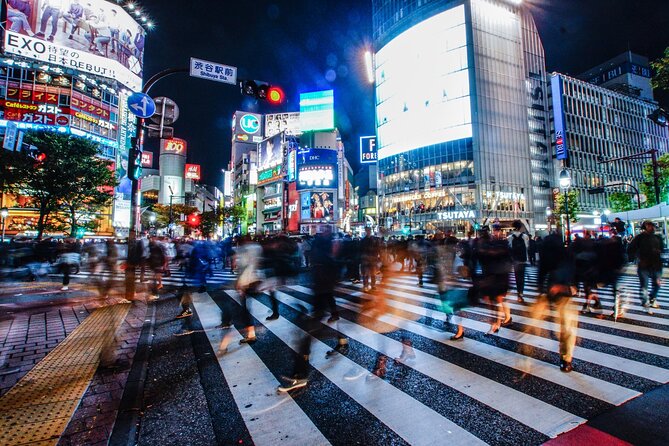
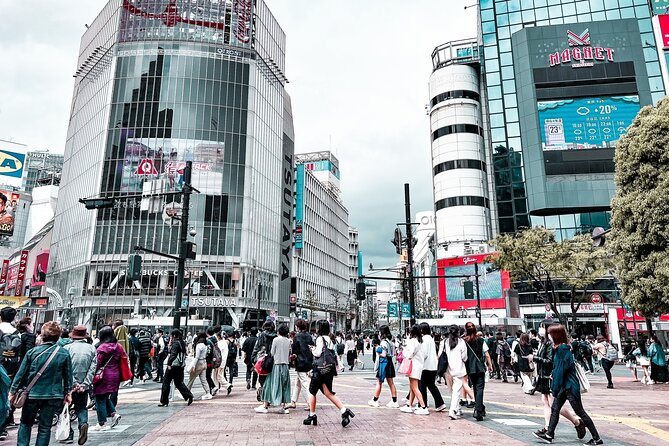
Yes, Shibuya Crossing is famous. It’s also famous because it works—like a choreography of signals, streams of people, and timing.
During the walk, you’ll hit a photo stop and then get a short guided tour around the area. You’re not just looking at the intersection; you’re learning how to read it. That matters because the first time you’re there, you can feel like you’re in a video game you didn’t install.
What I’d focus on:
- where people naturally bunch up before crossing
- how crowds split and reunite on the other side
- how the surrounding streets “feed” the crossing
If you’re traveling solo, this part is extra useful. A good guide can help you time pictures so you’re not stuck photographing the back of someone else’s hat. And it turns out this tour’s guides are good at that kind of practical help.
Nonbei Yokocho (Drunkard’s Alley): old Tokyo in a small pocket
Then the tour shifts gears. Nonbei Yokocho, often called Drunkard’s Alley, is where Shibuya slows down and becomes human-scale.
You’ll spend a short guided stop here, around ten minutes. That’s not long, but it’s enough to feel the character: narrow lanes, old-school street energy, and a sense that this area has been entertaining people long before modern Shibuya became the poster child for Japan.
This stop is valuable because it breaks the “everything looks new” trap. Tokyo has layers, and Nonbei Yokocho shows you one layer clearly without turning it into a museum visit. You’ll walk away with an instinct for where the local nightlife mood comes from—and where you might want to eat later.
Miyashita Park: the multi-level pause you didn’t know you needed
After the alley-style lanes, Miyashita Park acts like a pressure release valve. It’s a multi-level urban oasis, and you’ll get about twenty minutes to experience it with guidance.
Here’s why I like this stop: it gives your feet a break without making the tour feel like it’s stopped. You can watch how people use the space, and you get a better sense of Shibuya’s design—how it’s built for movement and rest.
Think of it as a mid-tour reset button:
- step away from the densest streets
- take a breath
- get your bearings again before you move toward the busier shopping areas
Even if you’re not a “park person,” this stop helps you understand Shibuya as more than a single landmark.


Center Gai: street-level youth energy and practical orientation
Next up: Center Gai. You’ll spend around ten minutes here, with guidance to help you interpret what you’re seeing.
Center Gai is where Shibuya’s modern identity comes into focus—shopping, people-watching, and that specific feeling of Tokyo youth culture you can’t really recreate from photos. It’s also a strategic stop. You’ll learn how this area connects to the broader Shibuya web of streets, which makes it easier later to find things without constantly backtracking.
If you like wandering, this is the part that sparks it. If you prefer structure, it’s still useful because it clarifies which streets matter for what you want to do next—snacks, shopping, or simply walking with purpose.
Maruyamacho: where older lanes meet newer nightlife
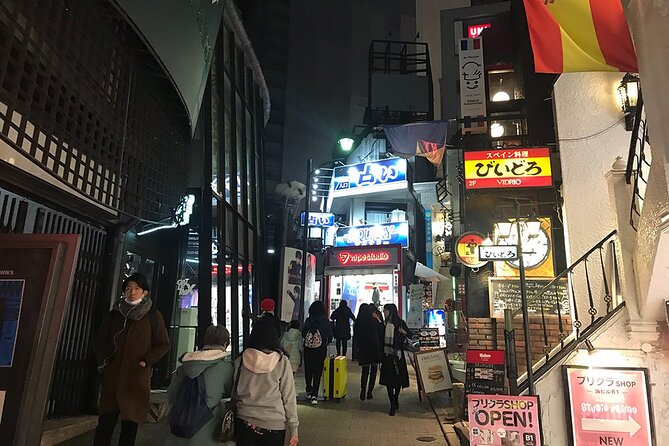
The tour then heads into Maruyama-cho (listed as Maruyamacho), where historical street lines and modern night energy overlap.
You’ll get another guided stop of about ten minutes. This is a good timing choice because it lands near the evening feel without swallowing your whole day. You get the atmosphere and enough context to know what kind of night this neighborhood supports—without needing to commit to a long, late outing.
This part also helps you understand Shibuya as a 24-hour district rather than a single-time-of-day destination. You leave knowing that the shopping streets and the nightlife streets aren’t separate worlds; they’re adjacent expressions.
Ending at Hachiko Memorial Statue: loyalty right where you’re walking
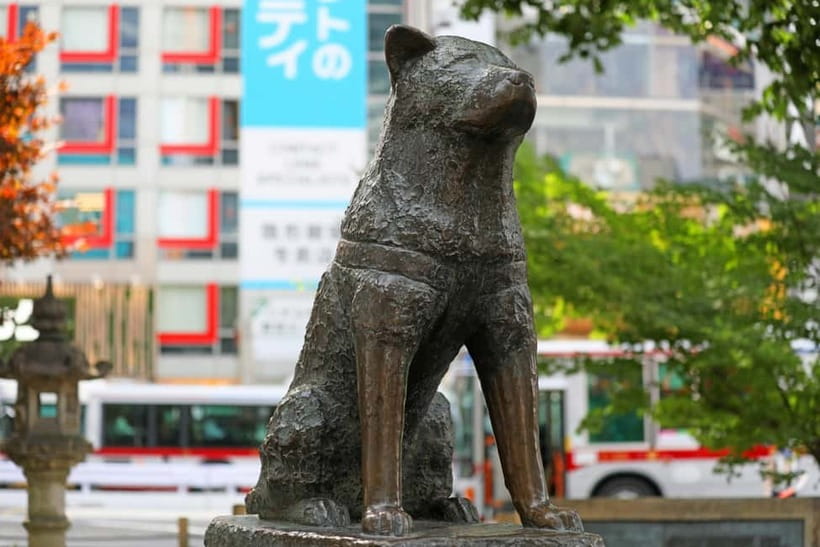
Every great Shibuya tour needs a closer. Yours ends at the Hachikō Memorial Statue, a symbol of loyalty in the heart of Shibuya.
You’ll finish here for the final payoff: the moment most people recognize, now placed inside the bigger story you just walked through. It’s easier to appreciate Hachiko after you’ve seen the district’s variety—modern parks, old alleys, shopping corridors, and side streets with attitude.
I also like that it’s a natural place to end. It gives you a familiar reference point for the rest of your day. You’re not wandering out into uncertainty at the finish line.
English live guiding: how the narration changes the whole walk
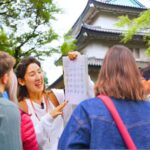
This is a live walking tour with an English guide, and the difference shows up in how the walk feels.
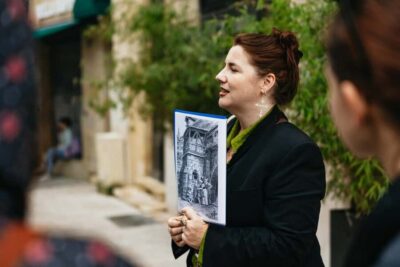
The guides on this tour style the experience around you. Multiple guides (like Loc, Rio, Kumi, Grey, Zach, Daichi, and Ryo—names you may see depending on the date) are praised for explaining context at each stop, answering questions, and keeping the pace comfortable. If you’re the kind of traveler who asks why things look the way they do, you’ll probably enjoy the back-and-forth.
A big standout from the experience: flexibility and friendliness. People mention guides working with delays and being patient with timing, which matters in Shibuya where trains, escalators, and crowds can test your schedule.
Also, if you’re a solo traveler, you’ll appreciate that photo support can be part of the service—not just a quick snapshot and “good luck.” The guide will help you set up better shots at the key landmarks.
Walking time, timing, and how to dress for Shibuya
The tour runs about two hours, so it’s not a half-day commitment. It’s a smart length for a first visit because it gives you movement and variety without draining your entire day.
That said, you’re still walking. Wear comfortable shoes and plan for normal Tokyo weather swings. One review noted the tour running in a little rain, which is a reminder that you should bring a light layer and a plan for damp weather.
If you’re photo-heavy, give yourself a little grace. The tour includes photo stops, but it still needs to move. The guide’s pacing helps keep things from turning into a long wait for the perfect shot.
Price value: why $22 can actually pay back later
The price is $22 per person for a 2-hour guided walk. On paper, that can sound modest—until you factor in what you get: a guided route through major landmarks plus side streets, with context that helps you understand where you are.
Here’s how that translates into value for you:
- You learn the district layout faster, so later wandering costs less time
- You get a mix of old alley vibes and modern Shibuya design in one outing
- You end at a major landmark, which makes it easier to plan your next meal or walk
This is the type of tour that can make your remaining hours in Shibuya feel more confident, not just more crowded.
Who this tour is best for
This tour fits best if you want a clear Shibuya introduction without a full-day plan. I’d especially recommend it for:
- first-time visitors who want the famous sights explained
- solo travelers who want help with photos and navigation
- people with a busy schedule who still want local streets, not just one landmark
- families and mixed-age groups who may appreciate a pace that doesn’t run all day
Guides are also reported to adjust to different comfort levels, including sharing information in a way that keeps teens engaged.
Should you book this Shibuya Crossing & Hidden Streets walking tour?
Book it if you want Shibuya to make sense fast. The mix of The Myth of Tomorrow, Nonbei Yokocho, Miyashita Park, Center Gai, Maruyamacho, and Hachiko is exactly the kind of route that gives you both emotion and orientation.
Skip it if you already know Shibuya well and you’re craving a longer, deeper neighborhood program. Also, if meeting points stress you out, just plan extra time for SABON Shibuya Mark City (Mark City 3rd floor)—because that’s the only real friction point in an otherwise smooth, two-hour experience.
If you’re on your first Tokyo trip or you only have one shot at Shibuya, this tour is a smart use of time.
FAQ
How long is the Shibuya Crossing & Hidden Streets walking tour?
The tour lasts 2 hours.
How much does the tour cost?
It costs $22 per person.
Where is the meeting point?
You meet at SABON Shibuya Mark City, inside Mark City on the 3rd floor. The guide will be holding a sign. The coordinates are 35.6586643, 139.6999525.
What language is the tour in?
The tour is guided in English.
Is the tour guided by a live guide?
Yes, it includes a live tour guide.
Can I get a refund if I cancel?
Yes. Free cancellation is available up to 24 hours in advance for a full refund.
Can I reserve without paying right away?
Yes. There is a reserve now & pay later option, so you can book your spot and pay nothing today.