REVIEW · BOSTON
Downtown Freedom Trail Walking Tour – History & Architecture
Book on Viator →Operated by Boston CityWalks · Bookable on Viator
Boston’s Revolution starts with a sidewalk ring. This Downtown Freedom Trail tour strings together the big moments between Faneuil Hall and Boston Common, using street-level architecture to make the American Revolution make sense. I love the small-group feel (max 20) and the way the guide connects what you see—churches, meetinghouses, brick facades—to what happened there.
The main thing to watch: it is mostly outdoors, so weather and street activity can affect comfort and how clearly you hear the guide.
In This Review
- Key things to know before you go
- Downtown Freedom Trail: a practical way to get your bearings in 70 minutes
- Where you meet, where you finish, and how to plan your day
- The Freedom Trail walk in order: what each stop teaches you
- Faneuil Hall and Quincy Market: the “Cradle of Liberty” vibe
- The Boston Massacre site: rebellion starts with a specific spot
- Old State House and the balcony moment
- Old South Meeting House and the Tea Party signals
- Old Corner Bookstore: authors in a working commercial building
- Boston Irish Famine Memorial: a different kind of history
- Old City Hall: architecture that signals civic power
- Boston Latin School’s original site: education as a foundation
- King’s Chapel: a church with a long timeline
- Tremont Temple: the first integrated church story
- Old Granary Cemetery: the final resting place of founders
- Park Street Church and the move toward Boston Common
- The New State House: gold dome and modern government
- Guides matter: humor, Q&A, and clear explanations on foot
- Architecture + history: why this mix is worth your time
- Price and value: is $45 a smart use of your time?
- Who should book this tour, and who might want a different format
- Should you book the Downtown Freedom Trail Walking Tour?
- FAQ
- How long is the Downtown Freedom Trail walking tour?
- What does the tour cost?
- Where does the tour start and where does it end?
- What time does the tour begin?
- Is the tour offered in English?
- Do I need a printed ticket?
- Is there a group size limit?
- What stops are included along the Freedom Trail route?
- Does the tour run in bad weather, and are children allowed?
- Is admission charged for stops?
Key things to know before you go
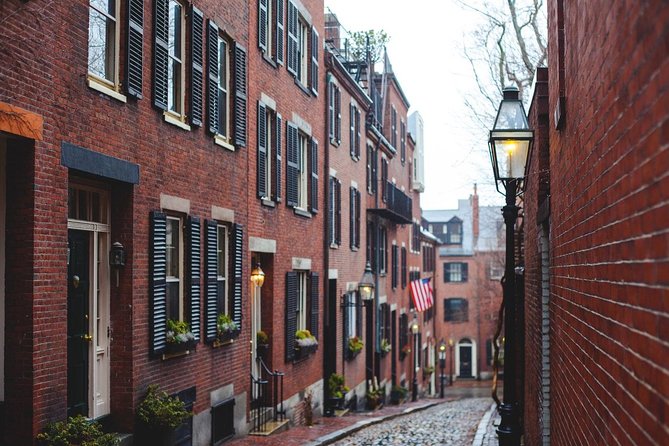
- A tight, high-impact route: Faneuil Hall and Quincy Market down to Boston Common and the New State House.
- Architecture gets explained, not just named: churches, courthouses, and landmark civic buildings all tie back to events.
- You get context fast: you learn what each site meant at the time, then see how Boston remembers it today.
- Photo-friendly landmark pacing: lots of stops with short explanations so you keep moving (and can still look up).
- Guides can make it funny and human: docents such as Alan and Andrew are called out for humor and answering questions.
- Outdoor walking in real Boston conditions: plan for rain or cold, since it runs in all weather.
Downtown Freedom Trail: a practical way to get your bearings in 70 minutes
Boston is one of those cities where the streets feel like a history textbook. The trick is turning that into something you actually remember. This tour does that for you by walking a clear line—more or less a downtown loop tied to the Freedom Trail—so you are not bouncing around chasing plaques.
You start where the action and civic power are close together, and you end near the park and government core. That matters because Boston’s best historic buildings are not spread out like a theme park. They sit next to modern storefronts, busy intersections, and everyday foot traffic. A guided walk helps you read the city in the moment.
And because the group size caps at 20, you are not stuck behind a crowd. You can hear explanations and still take your own time looking at details like weather vanes, burial markers, and the geometry of church interiors from the street.
You can also read our reviews of more walking tours in Boston


Where you meet, where you finish, and how to plan your day
The meeting point is State Street at Congress Street. The tour ends at Brewer Fountain on the Freedom Trail. Start at the posted time (10:00 am), and plan to spend a little extra time afterward if Boston Common is part of your agenda.
Here is why the start-and-finish matters: Boston Common is a natural place to reconnect with the rest of your sightseeing. From there, you can branch into nearby areas on foot. If you have another plan right after the tour, build in a 15–20 minute buffer for slow walkers, photos, and the simple reality of city corners.
Also, this tour is in English and uses a mobile ticket. That is one less thing to manage in an area where street names and landmarks can be confusing at first.
The Freedom Trail walk in order: what each stop teaches you
This route focuses on the downtown segment from the Faneuil Hall side over to Boston Common. In practice, you will pass a sequence of Revolution-era sites plus a handful of important civic and educational landmarks that help you understand how Boston worked.
Faneuil Hall and Quincy Market: the “Cradle of Liberty” vibe
You begin in the marketplace zone, where political drama played out in public. Faneuil Hall is tied to protests that pushed the colonies toward rebellion. One practical tip here: look up. The site is famous for a grasshopper weathervane, and it is the kind of detail your guide will point out so you do not miss it while walking.
If you like history you can picture, this is a good opener. It sets the tone: in Boston, public debate was not quiet. It was loud, physical, and right where people gathered to shop.
The Boston Massacre site: rebellion starts with a specific spot
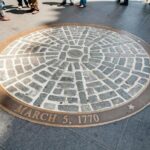
Next comes the moment that lit the fuse. You will see the marked area for the skirmish in 1770, where violence between Redcoats and colonists sparked rebellion. The tour calls it out with a pavement marker—a cobblestone ring—so you can stand on the exact place instead of just imagining it.
This stop is valuable because it teaches you how the Revolution is made of many small escalations, not one single event. You leave with a clearer timeline, which makes later stops hit harder.
You can also read our reviews of more historical tours in Boston




Old State House and the balcony moment
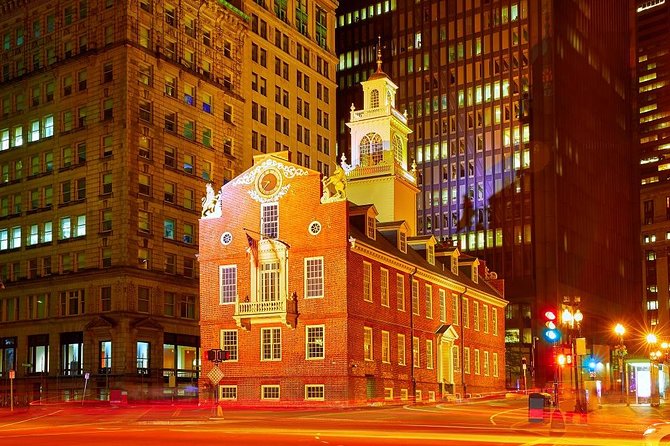
Then you shift to the political heart. The Old State House—built as the seat of British colonial government—plays a huge role because it is where the Declaration of Independence was first read to Bostonians from its balcony.
Architecturally, it is a classic downtown “official building” presence. Historically, it is a turning point. Your guide’s job here is to connect the building’s role as government space to the idea that public communication mattered.
Old South Meeting House and the Tea Party signals
You move through the next major Revolution hinge: the signals for the Boston Tea Party. The tour highlights the large brick church tied to the 1773 events, where signals were given to start the action.
For many first-timers, this is where the story stops feeling abstract. You begin to see how Boston’s religious and civic buildings functioned as community infrastructure—places people knew, trusted, and could gather around quickly.
Old Corner Bookstore: authors in a working commercial building
The Old Corner Bookstore is a perfect detour for people who like the intellectual side of history. The building began as a residence and apothecary, then became a bookstore in 1828. It also connects to major writers who once gathered here, including Ralph Waldo Emerson and Charles Dickens.
If you are the type who loves “who met where,” this stop delivers. It also balances the political weight of the Revolution with the cultural side—ideas still mattered, and they traveled through real meeting places.
Boston Irish Famine Memorial: a different kind of history
The Boston Irish Famine Memorial sits on a plaza between Washington Street and School Street. It uses two contrasting groups of statues: one side shows a family suffering during the Great Famine of 1845–1852, and the other shows a prosperous family who immigrated to America.
This stop is meaningful because it reminds you that Boston’s story does not end with the founding. It continues through immigration and survival. The guide’s explanations help you see the memorial as a design choice, not just a plaque.
Old City Hall: architecture that signals civic power
Old City Hall, on School Street, housed the Boston City Council from 1865 to 1969. The tour points out the French Second Empire style, and it is one of those buildings that makes the city feel official and permanent in a way that a smaller structure cannot.
This is a good place to pay attention to style. You will often hear that “architecture reflects power.” Here, you can actually see it in the building’s design language.
Boston Latin School’s original site: education as a foundation
The Boston Latin School was founded in 1635 and is described as the first public school in America. You will see how its original site is marked with a statue of Benjamin Franklin and a sidewalk mosaic.
If you came for the Revolution, this stop adds a key missing piece: education and ideas. It also helps you understand how Puritan-era priorities influenced civic life long before independence.
King’s Chapel: a church with a long timeline
King’s Chapel is part of the Freedom Trail network, but it also has its own distinct sweep of history, spanning more than 330 years. Founded in 1686, it covers periods from the Revolution through major changes into modern Boston.
Architecturally and emotionally, this stop works because it slows you down. Churches carry memory in stone and layout, even when you are seeing them from the street. When the guide links that to historical change, the building stops being a background object.
Tremont Temple: the first integrated church story
Tremont Temple is where the tour turns toward community, inclusion, and social change. It is described as the first integrated church in America, connected to open attendance without charge. The guide also highlights unusual historical moments, including a public event tied to an Egyptian mummy display in 1850, and speeches against slavery by figures like Sam Houston and Frederick Douglass.
This stop is a real contrast to the Revolutionary thread. It widens the story without losing focus. If you care about how freedom and civil rights evolved over time, you will appreciate the arc.
Old Granary Cemetery: the final resting place of founders
You end up at Old Granary Cemetery, known for being one of the most visited cemeteries in the U.S. The tour focuses on the final resting places of Paul Revere, Samuel Adams, and John Hancock.
Even if you are not big on graveyards, this one hits because the names are not abstract. They were the people tied to earlier stops. Seeing them in one place makes the Revolution feel less like a mural and more like a human story.
Park Street Church and the move toward Boston Common
Park Street Church appears on the route. Then you approach Boston Common, which the tour frames as the oldest city park in the United States, spanning 50 acres bounded by major downtown streets.
Boston Common is not just a scenic reset. It is part of the Freedom Trail’s pacing. You finish with a sense of open space after tight downtown streets, which makes the whole experience feel complete.
The New State House: gold dome and modern government
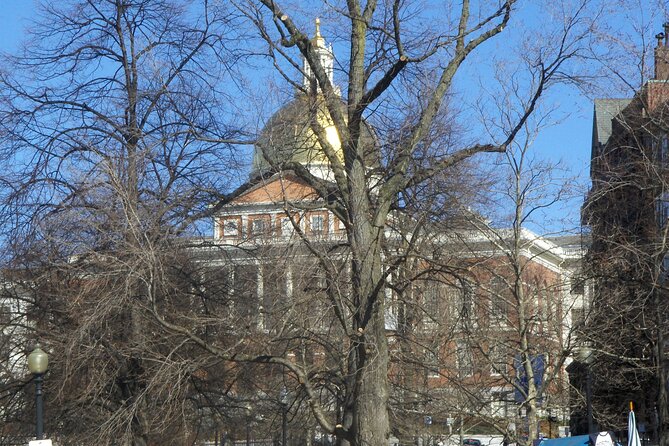
Finally, you overlook the New State House with its iconic gold dome. Built in 1798, it is described as the modern seat of government and it looks down toward the park.
This is where you get the “so what” feeling. You are not only learning the past. You are seeing how government and public space still share the same neighborhoods.
Guides matter: humor, Q&A, and clear explanations on foot
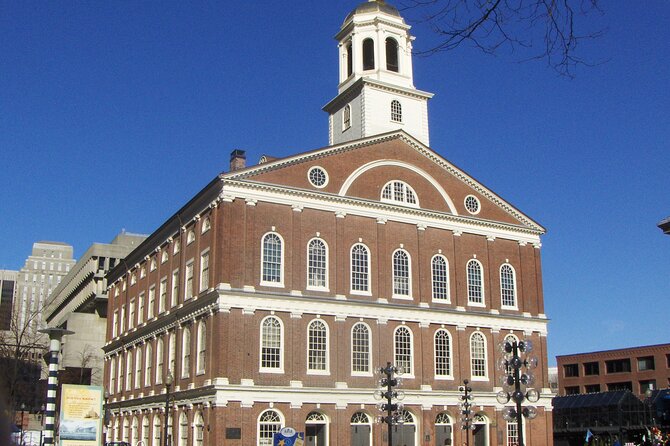
The difference between a good walking tour and a great one is simple: can your guide adapt to the group. This operator keeps the group small, and the guides are often praised for engagement and humor.
Alan and Andrew are names that show up in the guide story. Both are associated with making the talk easy to follow, answering questions, and keeping kids and adults involved. If you have ever sat through a lecture while standing on a sidewalk, you know how rare that is.
One practical note from the experience format: since the walk happens outdoors, hearing can vary with wind and crowd noise. If sound is a concern for you, arrive a bit early so you are not stuck too far back at the first stop.
Architecture + history: why this mix is worth your time
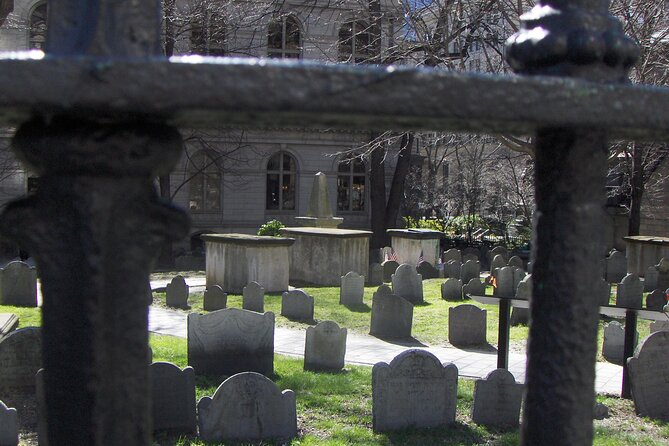
Many people book the Freedom Trail to learn stories. This tour also cares about building design and location. That combination is not random. Architecture acts like a time machine.
A church’s layout, a historic townhouse’s scale, the presence of civic domes and government balconies—these are physical signals of what mattered then: authority, gathering, communication, and public performance.
So you end up doing more than memorizing names. You learn to recognize why a place was chosen. You start reading the city like a map of decisions.
Price and value: is $45 a smart use of your time?
At $45 per person for about 70 minutes, you are paying for three things: a guide, a structured route, and time saved. You could walk the Freedom Trail on your own, sure. But you would likely miss the connections that make the timeline click: why each building mattered, and how one event links to the next.
This tour also includes access to the key landmarks in the downtown stretch, and the itinerary notes admission ticket free. In plain terms: you are not budgeting for a string of paid entries. You are paying for explanations and guidance where the streets themselves are the museum.
If you only have one day in Boston—or you are trying to see a lot without over-planning—this price can feel fair fast.
Who should book this tour, and who might want a different format
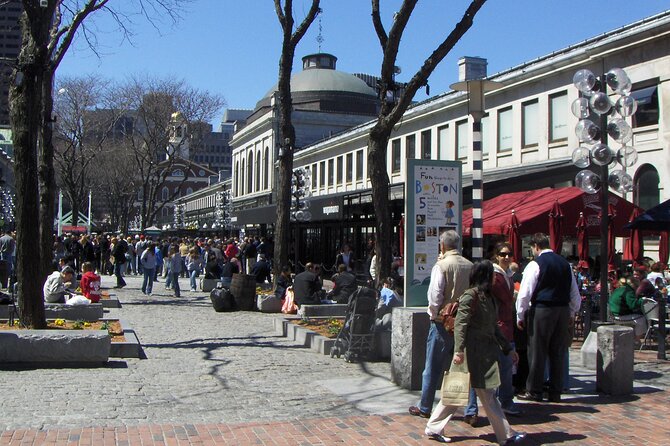
This tour is a strong fit if you:
- want a first pass at Boston’s founding story without getting lost
- care about both architecture and political history
- are traveling with families (kids need structure and a rhythm, not just long museum stops)
- like guides who answer questions and keep the pace steady
You might want to temper expectations if your top priority is only Freedom Trail events and you want every minute spent on that thread. The route also includes civic and later historical sites, like the Irish Famine Memorial and education-related landmarks. It is not a one-note tour, and that is the point.
Also, plan for a small chance of discomfort if the weather turns. The tour operates in all weather conditions, so pack accordingly.
Should you book the Downtown Freedom Trail Walking Tour?
I think you should book it if you want to get oriented quickly and leave with a timeline that actually sticks. The route covers the core landmarks people expect—Faneuil Hall, the Boston Massacre site, the major churches, Boston Common, and the New State House—while also adding the kind of context that makes architecture and public memory feel connected.
Book it especially if you like walking tours where the guide keeps things readable and lively. With a max group size of 20 and a starting point that puts you right into the downtown story, it is a solid use of a morning.
If you are extremely noise-sensitive or dislike walking in changeable weather, prepare for that reality with good layers and a bit of flexibility.
FAQ
How long is the Downtown Freedom Trail walking tour?
It lasts about 1 hour 10 minutes.
What does the tour cost?
The price is $45.00 per person.
Where does the tour start and where does it end?
It starts at State Street at Congress Street in Boston and ends at Brewer Fountain on the Freedom Trail.
What time does the tour begin?
The listed start time is 10:00 am.
Is the tour offered in English?
Yes, the tour is offered in English.
Do I need a printed ticket?
No. You can use a mobile ticket.
Is there a group size limit?
Yes. The tour has a maximum of 20 travelers.
What stops are included along the Freedom Trail route?
The tour includes major downtown sites such as Faneuil Hall and Quincy Market, the Old State House, the Boston Massacre site, Old South Meeting House, Old Corner Bookstore, Old City Hall, the Boston Latin School site, King’s Chapel, Tremont Temple, Old Granary Cemetery, Park Street Church, the New State House, and Boston Common.
Does the tour run in bad weather, and are children allowed?
The tour operates in all weather conditions, so you should dress appropriately. Children must be accompanied by an adult.
Is admission charged for stops?
The tour notes admission ticket free for the route it covers, and it includes pass coverage for the landmarks it visits.