REVIEW · LISBON
3-Hour Guided Street Art Walking Tour of Lisbon
Book on Viator →Operated by TheCityGuru · Bookable on Viator
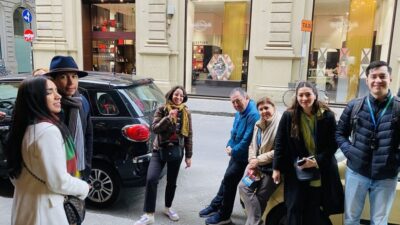
Lisbon street art is a walking history lesson. I love the small-group pace, and I love how guides like Erica and Maria connect murals, graffiti, and even tilework to the city’s culture and politics. You see Lisbon through walls, not guidebook pages.
There is one big trade-off: you’ll cover a lot of hilly, uneven walking. If you get winded on cobblestones or slopes, plan accordingly and wear shoes with real grip.
In This Review
- Key highlights you’ll feel fast
- Why Lisbon’s street art works as a city primer
- Price and how the 3-hour format fits real trips
- Start point, shoes, and what you’re signing up for
- Bairro Alto nightlife walls: Stop 1
- Elevador da Glória and Calçada da Glória: the outdoor gallery feeling
- Baixa de Lisboa azulejos and the art of symbols: Stop 3
- Miradouro da Graça: worker-rights legacy in Stop 4
- Alfama’s Chão do Loureiro: a car park turned gallery in Stop 5
- How the guides turn walls into stories
- What to expect on the walk: pace, breaks, and photo time
- Who should book this street art tour (and who should skip)
- Should you book this 3-hour Lisbon street art walk?
- FAQ
- How long is the street art walking tour in Lisbon?
- What does the tour cost per person?
- Where does the tour start and where does it end?
- Is the tour offered in English, and is it a small group?
- What’s included in the price?
- What should I wear or bring for the walk?
- What happens if the weather is poor, or if I cancel?
Key highlights you’ll feel fast
- Small group, more guide attention: maximum of about a dozen (with an overall cap listed at 15).
- Real context, not just photos: street art tied to neighborhood identity and social issues.
- Photo-friendly stops: from viewpoints to façade details like azulejos and symbols.
- Free-to-enter locations: each stop is set up so you’re not paying admission fees.
- A half-way rest break: built in so you’re not running on fumes for all three hours.
- English-led tour: and guides in English have gotten high praise for clarity and care.
Why Lisbon’s street art works as a city primer
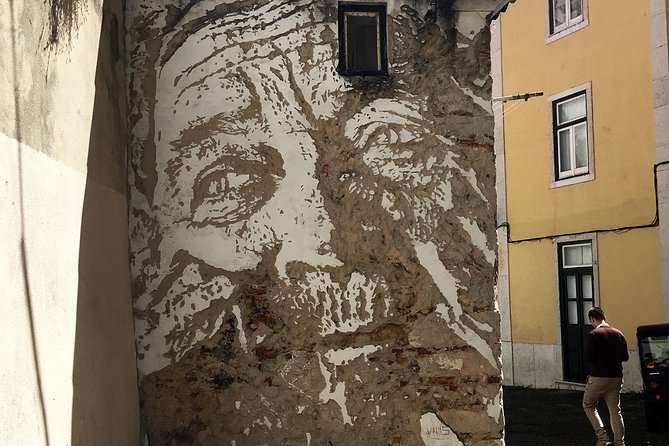
Lisbon has a special habit: it writes its stories on walls, steps, and tiles. On this tour, street art isn’t treated like random decoration. You learn how it connects to daily life in neighborhoods like Bairro Alto, Alfama, and Graça.
What I like is that the tour frames graffiti, murals, and tile-style artwork as part of Lisbon’s identity—not an afterthought. When guides such as Erica or Maria explain what you’re looking at, you start noticing the little details. A symbol on a wall, a color choice, even the spot where the art appears can lead you to a bigger idea about community, work, and change.
Also, the tour is built for people who love photos. You’re moving through places where turning a corner can feel like getting a new frame.
You can also read our reviews of more walking tours in Lisbon



Price and how the 3-hour format fits real trips
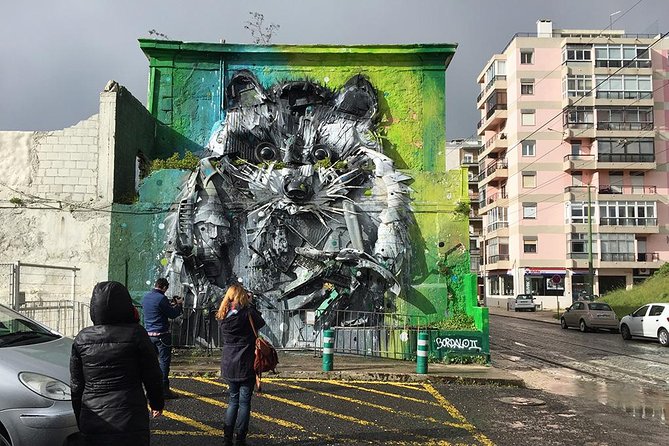
At $42.27 per person for about three hours, this isn’t a budget-by-the-hour activity. But the value comes from three things you can feel right away: you get a local guide, a small group, and multiple planned stops that don’t rely on you guessing where to go.
Since it’s been booked well ahead on average (about a month in advance), I’d treat it like a popular city experience. If street art is on your must-do list, don’t wait until the last day and hope there’s space.
The timing matters, too. Three hours is long enough to cover real neighborhoods and see a variety of art styles. It’s also short enough that you won’t feel like you’ve used up your whole day just to find a few walls.
Start point, shoes, and what you’re signing up for
The tour meets at R. Luz Soriano 67, 1200-246 Lisboa, Portugal, and ends near Miradouro da Graça on Calçada da Graça, 1100-265 Lisboa. It’s near public transportation, so you can usually get there without a major detour.
Come prepared for walking. This is a walking tour, and you need to be able to walk on unpaved or uneven terrain. Expect slopes and cobbles. Reviews consistently flag that it’s a hilly route, so comfortable clothes and shoes with good traction aren’t optional.
One more practical note: it’s small-group and guided, so you’ll want to stay with the group during transitions. If you stop to examine every tag up close, you’ll miss the rhythm the guide is building.
Bairro Alto nightlife walls: Stop 1
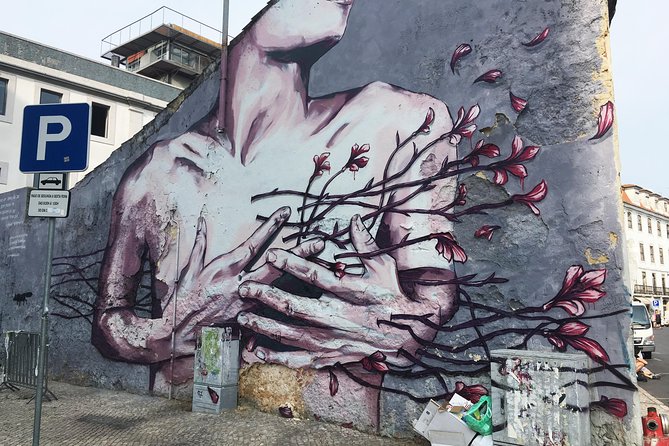
Bairro Alto is where Lisbon leans into nighttime energy and old-quarter character. This stop focuses on street art tied to the neighborhood’s nightlife traditions. That matters because the art here isn’t just decorative—it reflects a place where people gather, meet, and move through the city after dark.
In a short 30 minutes, you’re not trying to memorize everything. You’re learning how to read the wall: what symbols might suggest a theme, what kinds of pieces show up in nightlife-linked areas, and how the local setting shapes what artists create.
A bonus for photographers: Bairro Alto can give you both façade-level art and street-level details. You’re walking in the kind of streets where a mural can be visible from one corner, then disappear behind a doorway the next.
Elevador da Glória and Calçada da Glória: the outdoor gallery feeling
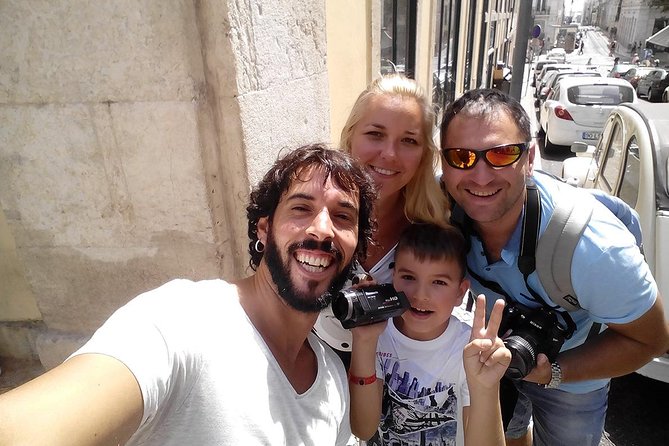
Next you head to Elevador da Glória and the stretch of Calçada da Glória. This is where the tour leans into the idea of Lisbon as an outdoor gallery. Artists from all over the world gather here to create projects, so you’re not only seeing local style—you’re seeing how Lisbon fits into a wider street art conversation.
The walkway and the street texture help you understand why this works as a “gallery.” You’re not in a flat open space where everything looks the same. You’re in a real street environment where the art is part of the movement and the sightlines.
Expect another 30-minute window here. That’s enough time to register style differences—what looks more like a mural vs. a tag vs. a broader project. And because you’re moving with a guide, you’re not stuck asking the classic question: is it graffiti or just random paint? You learn the distinctions and why they matter.
You can also read our reviews of more guided tours in Lisbon

Baixa de Lisboa azulejos and the art of symbols: Stop 3
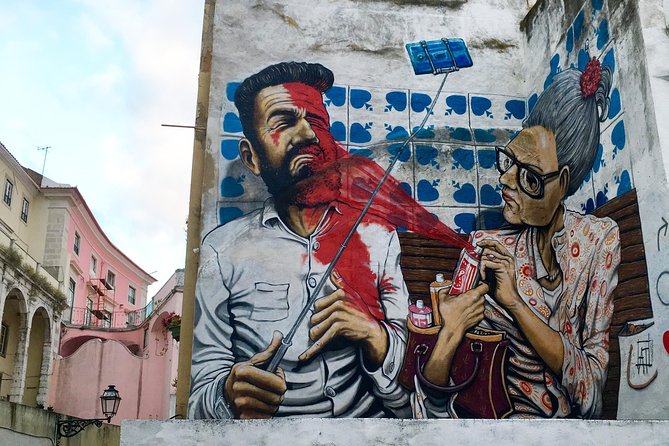
Baixa de Lisboa is a different kind of art lesson. Here, the tour shifts from street art as spray or paint-on-wall to street art as storytelling in design and symbols—especially through Lisbon tiles, azulejos, and cobblestone streets.
This stop is one of the smartest moves on the route because it broadens what you mean by street art. Azulejos often get treated as heritage decor, but the tour helps you see them as a visual language. When you start spotting patterns and recurring motifs, Lisbon feels less like a collection of buildings and more like one big, readable surface.
You’ll spend around 30 minutes here. Use that time to look for symbols and details you normally ignore while walking fast. If you’ve been taking photos, this is where you can slow down and capture the “why this tile matters” moments, not just the pretty surfaces.
Miradouro da Graça: worker-rights legacy in Stop 4

Miradouro da Graça (Sophia de Mello Breyner Andresen) brings the tour into Bairro da Graça, a more residential district. What makes it interesting is the connection to Portugal’s worker unions and workers’ rights. The street art here reflects that legacy.
This is where the tour gets more thoughtful without getting heavy. The guide helps you connect what you see on walls to themes like labor, social change, and the messages communities choose to display. You start noticing when artwork is making a point versus simply expressing style.
Because Miradouro areas are naturally tied to views, this stop also works well for a breather. Even if the route is short, you’ll likely feel the difference between open vantage points and tighter streets. And those breaks matter on a three-hour walk with hills.
Alfama’s Chão do Loureiro: a car park turned gallery in Stop 5
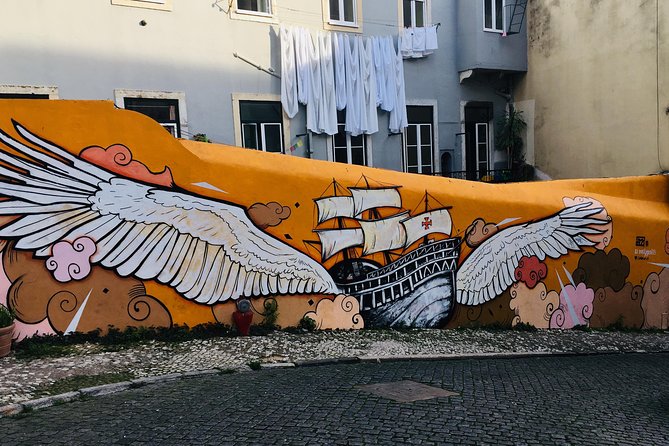
The tour ends in Alfama at Chão do Loureiro. This is one of the most fun descriptions on the whole route: a car-park transformed into a street-art gallery, and a five-floor building where prominent Lisbon street-artists’ work appears along the south margin.
You’re dealing with a building setting now, not just a wall tucked beside a street. That changes what you can photograph and what you can understand. From lower levels, you see the building as a vertical canvas. From farther back, you can spot how pieces relate to the structure around them.
This stop is also where you can compare styles you learned earlier. You’ll likely recognize design choices and themes that you didn’t notice in the first neighborhoods. It’s the “wrap-up” moment, and it’s built to land with impact after you’ve learned how to look.
How the guides turn walls into stories
The biggest reason this tour gets a 4.9 rating with a huge number of reviews isn’t just that it covers good art. It’s that the guide connects the art to people and place.
You can see that pattern in the guide names people mention most: Erica, Maria, Leigh, Laith, and Lake, plus others like Luis. They get praised for explaining the meaning and context of each piece, and for putting street art into a wider cultural and historical frame. The tour also keeps moving with a pace that lets you see a lot without feeling rushed.
One detail I especially appreciate from the guide style: you’re encouraged to ask questions. That turns the walk into a two-way conversation, not a lecture. And because it’s a small group, your questions don’t disappear in the crowd.
If you’re hoping for hands-on fun, note that at least one guide (Laith, in particular) has brought a spray can for participants to try. That’s not something I’d bank on every time, but it’s a good sign that some guides keep the experience playful, not just observational.
What to expect on the walk: pace, breaks, and photo time
This tour is built as a steady circuit: five stops, about 30 minutes each, plus the built-in half-way rest break. In practice, you should expect a bit of “watch, walk, stop, talk” rhythm. The guide is showing you things while also guiding you to the next best angle.
Reviews mention the route has breaks that line up with scenic spots, including viewpoint-style pauses and opportunities to grab water. Even if that’s not guaranteed at every step, you should still plan for at least one true reset moment. Bring a small water plan for yourself, especially in warmer months.
For photography, the best strategy is to photograph in two passes. First pass: capture the art quickly so you don’t lose the shot. Second pass: return to fewer “finalists” and focus on details the guide points out—symbols, tags, and tile motifs that make the art feel specific to Lisbon.
Who should book this street art tour (and who should skip)
This is a great fit for art fans and photographers who want Lisbon with context. If you love murals, graffiti, or any street-level visual storytelling, you’ll have plenty to chew on here.
It also suits people who like small group experiences. With a maximum group size around a dozen, you’re not fighting to hear explanations or find your spot for photos.
Skip it if you need a fully flat route. This walk is not recommended for travelers with mobility issues, and you must be able to handle unpaved or uneven terrain.
One more “read between the lines” tip: this tour is excellent for first-timers who feel overwhelmed by Lisbon’s hills and maze-like streets. A guide helps you avoid getting lost while you learn what to look for.
Should you book this 3-hour Lisbon street art walk?
Book it if you want Lisbon to make sense fast through street-level visuals. For about three hours, you’ll get a structured route, a small group, free-entry stops, and a guide who explains meaning, not just locations. At $42.27, the price feels reasonable when you compare it to solo searching for the best art spots while also paying for time lost on the wrong streets.
Don’t book it if your plan can’t handle hills, uneven ground, and long walking segments. In Lisbon, that matters more than you’d think until you’re halfway up a slope with cobbles underfoot.
If you check those boxes—comfortable shoes, a curiosity for culture, and an interest in reading walls—this tour is one of the best ways to start seeing Lisbon as a city where art is part of daily life.
FAQ
How long is the street art walking tour in Lisbon?
The tour lasts about 3 hours.
What does the tour cost per person?
The price is $42.27 per person.
Where does the tour start and where does it end?
It starts at R. Luz Soriano 67, 1200-246 Lisboa, Portugal, and ends at Miradouro da Graça on Calçada da Graça, 1100-265 Lisboa.
Is the tour offered in English, and is it a small group?
Yes, it’s offered in English. The maximum group size is listed as 12, and the overall maximum travelers for the activity is listed as 15.
What’s included in the price?
Included are a local guide, a rest break at the half-way point, and a small group tour. Admission at the stops is free.
What should I wear or bring for the walk?
Wear comfortable clothes and shoes. You must be able to walk on unpaved or uneven terrain. Food and drinks are not included.
What happens if the weather is poor, or if I cancel?
This experience requires good weather. If it’s canceled due to poor weather, you’ll be offered a different date or a full refund. You can cancel for a full refund up to 24 hours in advance.