REVIEW · LISBON
Best of Lisbon Small-Group Guided Walking Tour
Book on Viator →Operated by Inside Lisbon · Bookable on Viator
Lisbon in four hours, and it actually makes sense. This small-group walk strings together Rossio, Carmo, Chiado, Alfama, and the Tagus waterfront, with stories that connect independence, the 1755 earthquake rebuild, and fado streets.
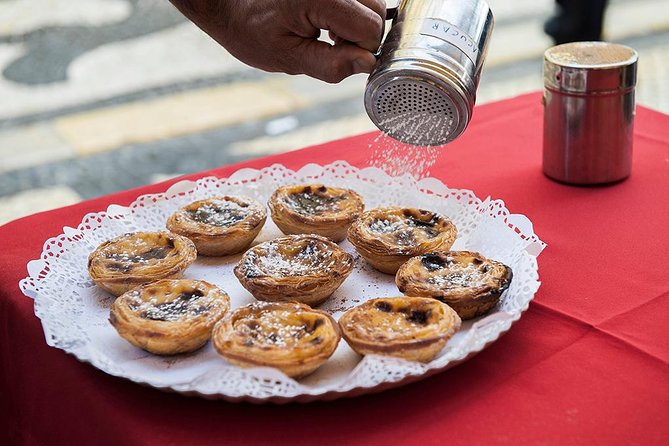
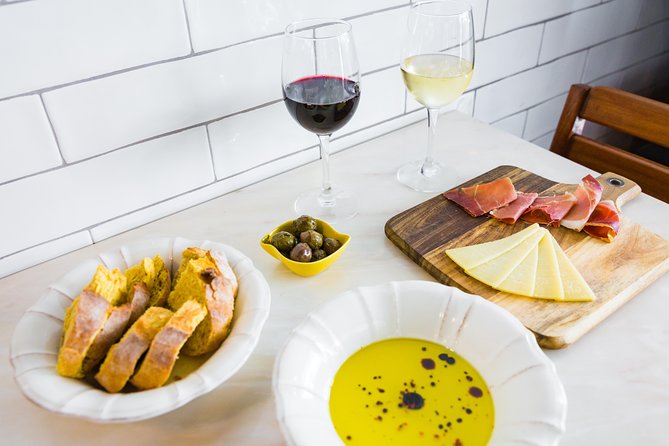
I love that the tour includes a classic pastel de nata plus wine tasting and a tapa, so you get breaks that feel like part of the route, not an interruption.
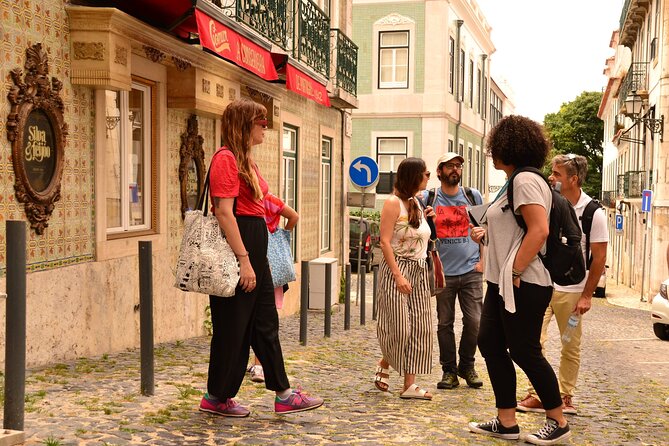
I also like the intimacy: the group caps at 14 travelers, which makes it easier to ask questions and keep a comfortable pace through hilly streets. One possible drawback: you’re mostly doing exterior sights and walking, and admission to museums/monuments isn’t included.
Key takeaways before you lace up
- A tight, high-contrast route: Rossio → squares → Baixa → Chiado → Alfama → Praça do Comércio
- Included tastings: pastel de nata, wine tasting, and a tapa/snacks to keep energy steady
- Great orientation value: you learn where neighborhoods sit and how they connect
- Photo-friendly stops: viewpoints plus big architectural moments
- Small-group pace (max 14): easier to manage hills and questions
- Local-guide storytelling: expect guides to bring the places to life, often with humor and lots of Q&A
In This Review
- A best-of loop that helps you understand Lisbon fast
- Rossio Square to Restauradores: where independence and engineering are explained in plain terms
- São Domingos Church and the square stops that keep the pace moving
- Rossio Central Station: a Manueline-style showpiece tied to Sintra plans
- Largo do Carmo and the Carnation Revolution: Lisbon political history without the textbook vibe
- Elevador de Santa Justa and Chiado: viewpoints plus the city’s stylish middle class
- Rua Augusta: the main street moment where the city compresses
- Baixa after the 1755 earthquake: how the city got rebuilt with anti-seismic thinking
- Miradouro Chão do Loureiro: the quick panoramic payoff
- Alfama’s narrow lanes and fado restaurants: where the melancholic vibe makes sense
- Praça do Comércio: finishing at the Tagus, where arrivals were welcomed
- What I think is strongest: the guides and the pacing
- Food and drink stops: what’s included, and how to use it well
- Price and value: is $23.94 worth it for 3 to 4 hours?
- Who this tour suits best (and who might want a different plan)
- Practical tips for a smoother walk
- Should you book this Best of Lisbon small-group walking tour?
- FAQ
- How long is the walking tour?
- How large is the group?
- What language is the tour offered in?
- What does the price include?
- Where do I meet and where does the tour end?
- Is admission to museums or monuments included?
- Can I cancel for a full refund?
A best-of loop that helps you understand Lisbon fast
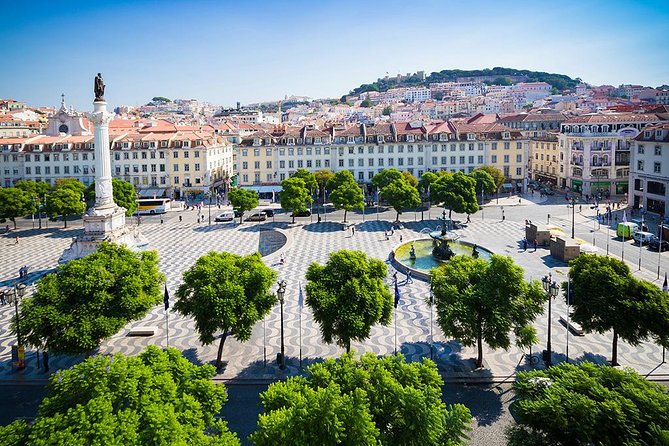
This is the kind of walking tour that gives Lisbon structure. You start in the Baixa area, then work your way through the city’s historic backbone: grand squares, major streets, and the neighborhoods that tell different chapters of the country’s story.
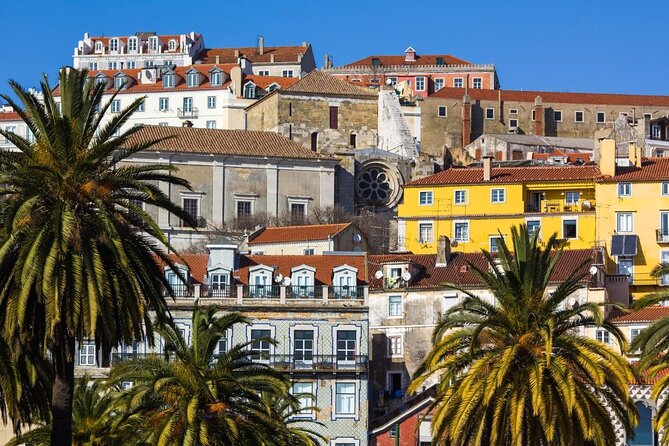
What makes it especially useful is how the route teaches you the city’s geography. You’ll connect the “center of government and commerce” feel of Baixa with the more tangled, uphill mood of Alfama. Even if you don’t memorize everything, you’ll remember how the areas link.
Rossio Square to Restauradores: where independence and engineering are explained in plain terms
The walk opens at Praça Dom Pedro IV (Rossio Square), Lisbon’s nerve center. You learn how the 19th-century square uses Portuguese stones designed to mimic the waves of the nearby ocean—one of those details that sounds small until you spot it on the ground.
From there, you head toward the Restauradores Square area, marked by a monument tied to Portugal’s restoration of independence from Spain in 1640. The obelisk in the middle is inaugurated in 1886, and it carries names and dates of battles from the Portuguese Restoration War. This is a great stop for two reasons: it’s visually dramatic, and it gives you a timeline you can reuse later when you read signs or visit other parts of Lisbon.
You can also read our reviews of more walking tours in Lisbon



São Domingos Church and the square stops that keep the pace moving
You also pass by São Domingos square and its church. It’s not meant to be a deep museum visit; it’s more like a quick landmark break that helps you keep your bearings while the guide keeps the stories flowing.
These short stop-and-explain moments matter. With a tour that lasts about 3 to 4 hours, you want rhythm: walk, look, listen, move on. The structure here helps you stay engaged instead of getting “lecture fatigue.”
Rossio Central Station: a Manueline-style showpiece tied to Sintra plans
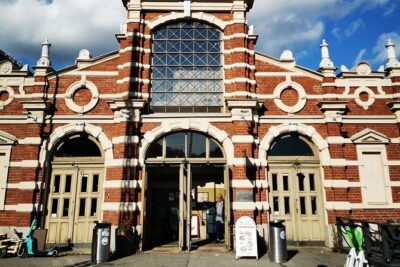
Next up is Estação do Rossio (Rossio Central Station). Even on the outside, it’s a star. The exterior is inspired by 16th-century Manueline architecture, so you get ornate details while still being in the real movement of the city.
Then there’s the Sintra connection: you’ll hear how a train heads into the tunnel toward Sintra, and you learn about the engineering and why the station works as such an impressive landmark. If you’re planning a day trip to Sintra, this stop helps you understand the logistics in a memorable way. You’ll also know the station isn’t just a building—it’s the start of an actual route people take every day.
Largo do Carmo and the Carnation Revolution: Lisbon political history without the textbook vibe
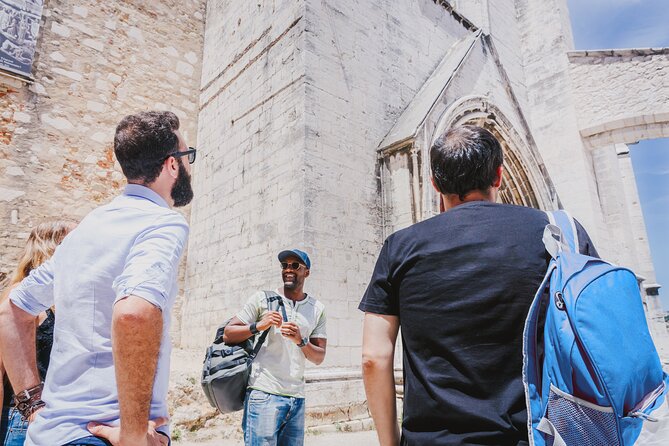
Largo do Carmo is a turning point in the tour story. This small square is tied to the Carnation Revolution in 1974. The guide explains how Portugal’s dictatorial regime collapsed after 48 years.
This stop is worth your attention if you care about why modern Lisbon looks the way it does. It’s also one of those places where you can feel the contrast: pretty streets, strong history, and a reminder that a city’s identity can change quickly when politics does.
Elevador de Santa Justa and Chiado: viewpoints plus the city’s stylish middle class

As the route moves toward Chiado, you hit the Elevador de Santa Justa area. The big goal here is the view: you admire the historic-center scenery from a spot that shows how Lisbon’s hills work.
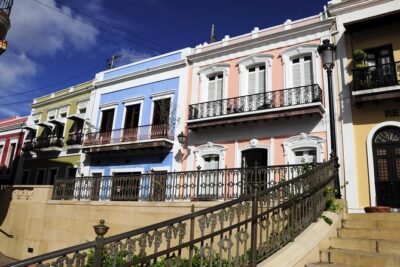
Chiado itself is a different mood. You’ll walk through a neighborhood known for boutiques, theaters, bookstores, and vintage cafés. The guide frames it as an area that grew in the 19th century for the city’s intellectual and wealthier circles. In practice, that means you’ll notice how the shopfronts and streets feel more “designed for strolling” than the chaotic alley maze of Alfama.
You can also read our reviews of more guided tours in Lisbon

Rua Augusta: the main street moment where the city compresses
You’ll spend time along Rua Augusta, Lisbon’s main street in the center. It’s described as the most expensive and fancy avenue, and that lines up with what you’ll likely notice: big pedestrian flow, lots of storefront energy, and an easy “walkable artery” feel.
If you’re the type who likes to understand where to shop or where to people-watch, this is a helpful checkpoint. You’ll also get a quick sense of where you’ll want to return later on your own.
Baixa after the 1755 earthquake: how the city got rebuilt with anti-seismic thinking
Baixa is where you slow down a little, because the lesson matters. Lisbon’s Downtown was rebuilt after the 18th-century earthquake, following new urban rules and anti-systemic architecture principles designed for the challenges of the ground under your feet.
This stop is more than a trivia moment. When you stand in Baixa’s layout, you start to see why it feels “organized” compared with the older hills. It’s not just that the buildings are pretty; it’s that the street design tells you the city learned something the hard way.
You’ll also get a short break of about 15 minutes here, which is smart. By the time you reach Baixa, your legs have started to notice Lisbon’s elevation changes, even if the walking isn’t extreme.
Miradouro Chão do Loureiro: the quick panoramic payoff
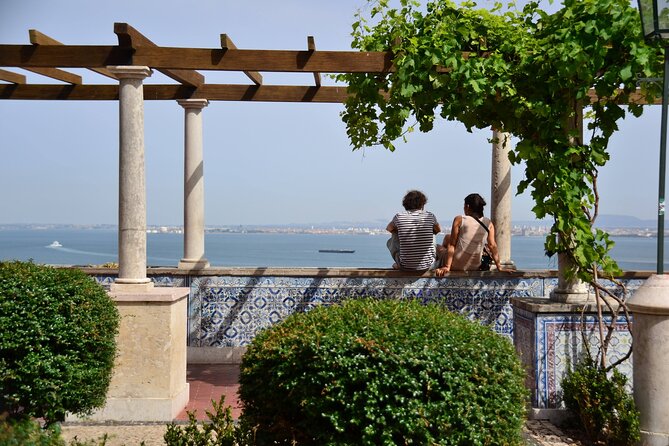
Mid-route you reach Miradouro Chão do Loureiro, a panoramic viewpoint stop. It’s short, but that’s the point. You get the visual reward without burning an extra hour on a big detour.
Use this moment like a reset button: drink water, check the group photo spot you want, and look back toward what you just walked. Lisbon’s hills make direction tricky, and viewpoints help your mental map click into place.
Alfama’s narrow lanes and fado restaurants: where the melancholic vibe makes sense
Then you shift into Alfama, Lisbon’s oldest neighborhood, famous for fado music and narrow streets. The tour doesn’t turn Alfama into a staged performance. Instead, you walk by fado restaurants tucked between alleys and down winding streets, and the guide explains why the music feels the way it does.
This is where Lisbon starts to feel most itself. Even if you’re not planning to attend a fado show tonight, you’ll understand why people associate Alfama with mood and memory.
One practical note: Alfama is where “comfortable shoes” stops being optional. Even when guides keep the pace reasonable, narrow lanes and uneven surfaces do their own kind of exercise.
Praça do Comércio: finishing at the Tagus, where arrivals were welcomed
Your last stop is Praça do Comércio (Commerce Square), near the Tagus. The tour ties the square to Terreiro do Paço, because it was once the site of the Paços da Ribeira (Royal Ribeira Palace) until it was destroyed by the great 1755 Lisbon earthquake.
You also hear about how the reception hall was used to welcome travelers arriving from the Atlantic. That ending matters. You end by water, in a wide open space that contrasts with the tight Alfama alleys. It’s a clean wrap that helps the city’s story feel complete.
What I think is strongest: the guides and the pacing
The tour lives or dies on the guide, and this one is consistently praised for that. Names like Felipe, Maria, Jose, and Guillermo show up again and again, and the common theme is how well they balance story, humor, and patience during questions.
Here’s what that means for you in real terms:
- You’ll get enough context to connect squares and neighborhoods instead of treating them like random photo stops.
- You’ll have room to ask questions without feeling rushed.
- Guides often manage elevation with smart timing and the practical use of elevators/escalators where available in the area.
You’ll also notice that many guides keep the tone fun. If you’re worried about a walking tour turning into a nonstop lecture, this one tends to avoid that trap.
Food and drink stops: what’s included, and how to use it well
The included food and drink are part of the tour design, not an add-on. You get a classic pastel de nata plus wine tasting and a tapa/snacks. That’s a solid package for a tour in the $20s—especially because it keeps the energy steady during a half-day walk.
If you have dietary needs, do plan ahead. One past group reported that vegetarian requests were accommodated, but that’s not the same as a guaranteed policy stated here. Your best move is to mention it when you book so the provider can plan correctly.
Also, if you want to take photos of your whole group, don’t assume it will happen automatically. One person felt it was a bit awkward to ask. So: if you want a photo, it’s totally fair to request it during a scenic pause.
Price and value: is $23.94 worth it for 3 to 4 hours?
At $23.94 per person, this is strong value if you want an efficient first pass through Lisbon’s highlights. You’re paying for three things at once: a local guide, multiple neighborhood introductions, and included tastings (pastel de nata plus wine tasting and a tapa/snacks).
If you were to walk these streets on your own, you’d still see the sights. The difference is that the guide connects the dots—independence details at Restauradores, the engineering story at Rossio station, the 1974 revolution at Carmo, and the earthquake rebuild principles in Baixa and Commerce Square.
In short: the cost makes sense if you want orientation plus context, not just movement.
Who this tour suits best (and who might want a different plan)
This is ideal for first-timers who want to understand Lisbon’s layout quickly. It’s also a good pick if you’re short on time and you like the idea of a structured route without locking yourself into museum hours.
It suits couples, solo travelers (you can absorb the stories while still moving at your own pace), and small friend groups who want a shared rhythm.
It might feel less satisfying if you already know Lisbon well. One person felt the route contained places they already recognized, with more time spent on squares and major landmarks than on deeper detours. If that’s you, consider pairing this with a neighborhood-focused walk later on, or pick a different style of tour that goes less broad and more specific.
Practical tips for a smoother walk
Wear shoes you can trust. Several people made a point of this—Lisbon’s surfaces and slopes can be more demanding than they look on a map.
Bring layers. The tour is outdoors for a few hours and Lisbon mornings can be chilly, especially outside the summer peak.
Be ready for a moderate fitness level. The route involves walking through different neighborhoods, including hilly streets, even if guides keep it manageable.
If you care about a specific landmark you expect to see (like major cathedral interiors), check your priorities ahead. The tour is focused on squares, views, and street-level history rather than turning into a stop-by-stop museum crawl.
Should you book this Best of Lisbon small-group walking tour?
Yes, if you want a low-stress, high-return orientation to central Lisbon. The included tasting breaks help keep it enjoyable, and the small group size makes the stories feel personal instead of generic.
I would book it early in your trip—ideally your first day—so you can use what you learn to plan the rest of your stay. Use the Rossio-to-Sintra engineering moment as a jumping-off point, and use the Baixa and Alfama contrast to decide where you want to spend more time later.
FAQ
How long is the walking tour?
It runs about 3 to 4 hours.
How large is the group?
The tour is limited to a maximum of 14 travelers.
What language is the tour offered in?
The tour is offered in English.
What does the price include?
It includes a local guide, a pastel de nata pastry, plus wine tasting and tapa/snacks.
Where do I meet and where does the tour end?
You meet at Praça Dom Pedro IV, 1100 Lisboa, Portugal, and the tour ends at Praça do Comércio, 1100-148 Portugal.
Is admission to museums or monuments included?
No. Entry to museums and monuments is not included.
Can I cancel for a full refund?
Yes. You can cancel up to 24 hours in advance for a full refund.